
Understanding the value of your Benelli M3 is essential for a successful sale. As a highly regarded combat and tactical shotgun, the M3 holds its value well due to its unique dual-mode (pump-action and semi-automatic) operation and robust build quality. Prices for new models range from approximately $1,700 to over $2,100, while used examples can be found for significantly less. This guide will break down the key factors that influence your firearm’s worth, from its specific configuration to market conditions.
What Determines Your benelli m3’s Worth
The primary factors determining your Benelli M3’s value are its overall condition and specific configuration. A firearm in excellent cosmetic and mechanical shape will always command a higher price than one showing significant wear. The market distinguishes between new and used models, with new retail prices typically ranging from $1,700 to $2,149. In contrast, used M3s can be found for as low as $780, creating a wide valuation spectrum. Tactical or “LE” models equipped with features like collapsing stocks or extended magazine tubes are often valued more highly than standard versions, as these configurations are more sought-after by enthusiasts.
2026 Price Breakdown by Generation
Heckler & Koch Imports
The earliest Benelli M3 shotguns available in the United States were imported by Heckler & Koch. These models are often distinguished by H&K markings and may have minor cosmetic differences compared to later production firearms. While some collectors appreciate these early imports, there is no consistent market data suggesting they carry a significant or reliable price premium over standard Benelli-marked versions. Their value is not primarily driven by the importer but rather by the same factors that affect all M3s: physical condition and mechanical function, making them part of the broader used market price range.
Consequently, the valuation for an H&K-imported Benelli M3 aligns closely with other used models, typically falling between $700 and $1,200 depending on its state of preservation. A pristine, well-maintained example will naturally command a price at the higher end of this spectrum, while a well-used shotgun will be valued closer to the lower end. Sellers should focus on accurately representing the firearm’s condition rather than expecting the H&K branding alone to substantially inflate its worth, as most buyers prioritize functionality and wear over historical import markings.
Standard Benelli Production
Standard production Benelli M3 models represent the most common examples found on the market. These shotguns are valued based on a straightforward assessment of their condition and functionality. A new model carries an MSRP between $1,949 and $2,149, with typical retail prices hovering around $1,700. Once used, these firearms enter a secondary market where prices can range from approximately $780 for a well-worn example to over $1,200 for one in excellent shape. The key for a seller is to objectively assess wear and tear to set a realistic price within this established range.
A crucial aspect supporting the stable value of standard Benelli M3s is their classification as a non-NFA firearm. With a standard barrel length of 19.75 inches, the M3 comfortably exceeds the 18-inch legal minimum for a shotgun, avoiding the complex regulations, tax stamps, and transfer processes associated with National Firearms Act items. This broadens its appeal and accessibility to a larger pool of potential buyers across the country, ensuring consistent demand and helping to maintain a solid price floor on the used market, making it a relatively liquid asset for owners.
Modern Tactical / LE Models
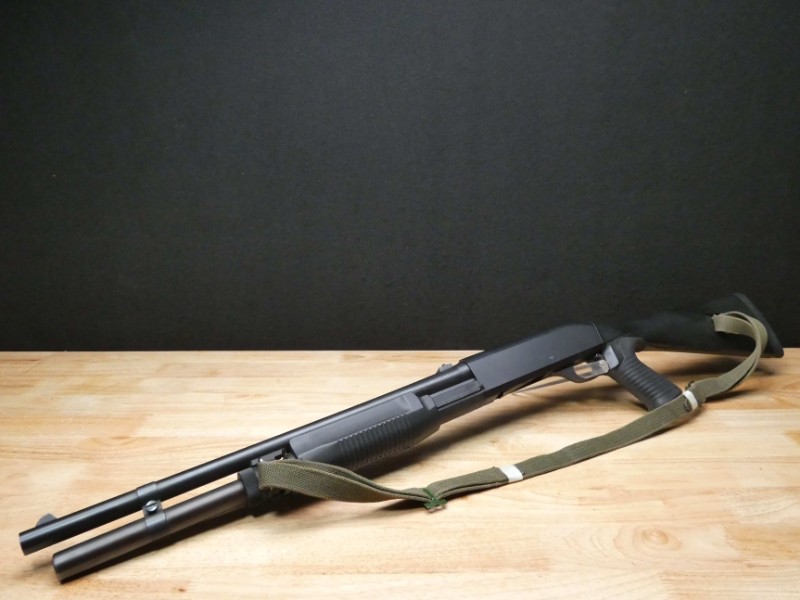
More recent tactical or Law Enforcement (LE) configurations of the Benelli M3 often command a higher value due to their specialized, factory-installed features. Models such as the SKU 11608, which comes equipped with a collapsing stock and an extended magazine tube, are particularly desirable. These enhancements are sought after for practical applications and are costly to add aftermarket, making factory-built tactical models a premium product. New prices for these specialized variants can be seen around $1,839, and they tend to retain a higher percentage of their original value on the used market compared to standard models.
The premium on these models is a direct reflection of supply and demand. Buyers seeking a turnkey tactical shotgun are often willing to pay more for a factory-configured M3 with features like a pistol grip and adjustable stock. Because these components are integral to the firearm’s intended use in defensive or professional roles, their presence significantly increases the shotgun’s appeal. As a result, sellers with a tactical or LE model in very good condition can confidently price their firearm at the upper end of the used market spectrum, often well above the value of a basic field model.
Special Editions & Limited Runs
While Benelli has produced various configurations of the M3 over the years, the existence of officially designated “special editions” or limited runs is not a prominent feature of its market history. Unlike other firearms that see frequent commemorative or small-batch releases, the M3’s value is overwhelmingly tied to its functional configuration and condition rather than any manufactured rarity. A seller might encounter a unique setup, but it is more likely a specific agency order or a less common import configuration rather than a formal limited edition designed to attract collectors with artificial scarcity.
Due to the lack of consistent market data for such unique variants, establishing a definitive value can be challenging. There is no established consensus or price guide for these less common M3s. Their worth would be determined on a case-by-case basis, heavily influenced by the specific features, the number produced, and the interest from a niche segment of Benelli collectors. For most sellers, pricing will still rely on the foundational principles of condition and comparison to standard tactical models, as a significant premium for rarity is not guaranteed without documented provenance.
How Modifications Affect Value
Modifications can have a significant impact on the resale value of a Benelli M3, and few additions actually increase its worth. The most likely modification to add value is a high-quality, reputable red dot sight. Because the M3 is a premium tactical shotgun, buyers often expect or desire a top-tier optic to match. Brands like Aimpoint, particularly the H-2/T-2 Micro or P-2 ACRO models, and Trijicon with its RMR, are highly respected. Adding one of these optics can make the firearm a more attractive package and may allow the seller to recoup a portion of the optic’s cost.
Conversely, most other aftermarket parts tend to hurt rather than help the firearm’s value. The general market consensus is that custom triggers, stocks, or other non-factory components do not increase resale price and can potentially lower it. Many prospective buyers prefer the original factory configuration, as it guarantees proven reliability and function. It is highly recommended for sellers to retain all original parts. When listing the firearm for sale, including the original components alongside any installed modifications allows the new owner to revert the shotgun to its stock form, broadening its appeal and preserving its maximum potential value.
Regional Price Variations in 2026
The value and marketability of a Benelli M3 can be significantly affected by state-level firearm regulations. In California, for example, a semi-automatic shotgun is restricted if it possesses certain features concurrently, such as a folding or telescoping stock combined with a pistol grip, or if it lacks a fixed magazine. This means that many common tactical configurations of the M3 are illegal to sell or transfer within the state. As a result, the demand for California-compliant versions may be higher, potentially leading to increased prices for legally configured models within that specific, restricted market.
Similarly, New York state law places restrictions on features like adjustable stocks for semi-automatic shotguns. While a model with a pistol grip might be permissible in some parts of the state, New York City imposes its own, much stricter regulations that would likely prohibit the Benelli M3 in its most common tactical forms. These legal barriers limit the pool of potential buyers in these populous regions, which can either suppress local prices due to a smaller market or, conversely, create a premium for the few legally transferable configurations available, leading to notable price disparities compared to less-regulated states.
Online vs Local Sales
When selling a Benelli M3 privately, the process differs between local and online transactions. For a local, in-person sale, a bill of sale is a crucial document. While not a federal requirement, it serves as a record of the ownership transfer, containing details of the buyer, seller, and the firearm’s serial number. This protects both parties after the transaction. However, sellers must be aware that state and local laws vary widely and may mandate that even private sales be conducted through a Federal Firearms Licensee (FFL) to perform a background check on the buyer.
Selling online to a buyer in another state introduces mandatory federal regulations. The Gun Control Act requires that all interstate firearm transfers must be shipped to an FFL in the buyer’s state of residence. The buyer must then go to that dealer, complete the necessary ATF Form 4473, and pass a background check before taking possession. This non-negotiable process ensures legal compliance for both parties. Furthermore, carrier policies at both UPS and FedEx now prohibit private individuals from shipping firearms, making it necessary to use an FFL to handle the shipment itself, even for in-state online sales.
Alternatively, selling directly to a local gun dealer offers a path of maximum convenience and speed. This option eliminates the complexities of finding a private buyer and navigating transfer laws. However, this convenience comes at a cost. Dealers must account for their own overhead and profit margin, so their cash offer will be based on a wholesale value. Typically, a dealer will offer between 50% and 65% of the firearm’s estimated used retail price. For a highly desirable model like a tactical M3 that is likely to sell quickly, the offer might increase to the 65% to 70% range.
The FFL Buying Advantage
Utilizing a Federal Firearms Licensee (FFL) for the transfer of your Benelli M3 provides a critical layer of legal protection and compliance. When selling to a buyer in another state, federal law mandates that the firearm be shipped to an FFL in the buyer’s home state. This ensures the transaction adheres to the Gun Control Act, as the receiving FFL is responsible for conducting a proper background check and completing all required paperwork. This process formally and legally removes the firearm from the seller’s name, mitigating future liability and creating an official record of the transfer.
Beyond legal compliance, using an FFL offers significant logistical and security benefits. Major shipping carriers like UPS and FedEx have company policies that prohibit private individuals from shipping firearms, requiring such shipments to be sent from one FFL to another. An FFL is equipped to handle these requirements, ensuring the Benelli M3 is packaged correctly, shipped without identifying external markings, and fully insured. This professional handling guarantees that the firearm is transported safely and discreetly, providing peace of mind that the transaction will be completed securely and in accordance with all applicable laws and carrier regulations.
What Increases Your Offer
A thorough pre-sale cleaning is one of the most effective ways to increase the value of your Benelli M3. Before listing it for sale, fully disassemble the shotgun and meticulously clean the barrel, receiver, bolt, and trigger group to remove all carbon buildup and residue. A common mistake is over-lubricating after cleaning, which can attract dirt and grime. Instead, apply a light coat of high-quality gun oil only to key moving parts, such as the bolt rails. A professionally cleaned firearm signals to potential buyers that it has been well-maintained, inspiring confidence and justifying a higher price.
High-quality presentation is crucial, especially for online sales. To best showcase your Benelli M3, use a simple, clutter-free background that makes the firearm the center of attention. Ample natural light is ideal for capturing true-to-life colors and details. To ensure sharp, clear images, use a tripod or rest your camera on a steady surface to eliminate shake. Capture multiple high-resolution photos from various angles, including close-ups of any markings, modifications, and areas of wear. This transparency builds trust with buyers and accurately represents the shotgun’s condition, which can lead to better offers.
Completeness and desirable features will also significantly boost your offer. Including the original box, owner’s manual, and any factory accessories like choke tubes or tools adds considerable value. Furthermore, certain factory configurations are inherently more valuable. As noted in market data, tactical or “LE” models that come standard with features like a collapsing stock and an extended magazine tube are in higher demand. If you are selling one of these more sought-after variants, be sure to highlight these features in your listing, as they are a primary driver of the firearm’s premium market price.
When to Sell Your benelli m3
Timing your sale can have a notable impact on the final price you receive for your Benelli M3. A general consensus among sellers indicates that tax refund season, which typically runs from February through April, is one of the most opportune times to sell. During this period, many consumers have more disposable income and are actively looking to make larger purchases. This increased demand can lead to a faster sale and potentially a higher selling price, as more buyers are competing in the marketplace for desirable firearms like the M3.
While the Benelli M3 is primarily a tactical shotgun, its sale can still benefit from the general increase in market activity surrounding hunting seasons. The months leading up to and during peak hunting times, generally in the late summer and fall, often see a surge in firearm sales overall. This heightened interest can create a more active market, even for non-hunting models. Listing your firearm during this period can expose it to a larger audience of engaged buyers who are already in the mindset of purchasing firearms and related gear, improving your chances of a successful transaction.
Conversely, some periods are less ideal for selling. The summer months are frequently cited by dealers and private sellers as the slowest time of year for firearm sales. With potential buyers often focused on vacations and outdoor activities other than shooting, market demand tends to dip. Selling during this lull could mean your firearm sits on the market for longer, potentially requiring you to lower your asking price to attract interest. If maximizing your return is the primary goal, it may be strategic to avoid listing your Benelli M3 during this sluggish summer season.
Common Pricing Mistakes
One of the most frequent pricing errors is attempting to recoup the full cost of aftermarket modifications. While you may have spent a significant amount on a custom trigger, stock, or forend, the market rarely rewards these changes. In fact, such modifications can lower the value, as many buyers prefer the proven reliability and aesthetics of the original factory configuration. To avoid this pitfall, it is best to reinstall the original parts before selling and offer the aftermarket components separately, or include them as an optional add-on without inflating the base price of the shotgun.
Another common mistake is having unrealistic expectations when selling to a dealer. A private seller often expects to receive a price close to what they see similar firearms listed for online. However, a Federal Firearms Licensee (FFL) must purchase inventory at a wholesale price to cover overhead and make a profit. Dealers will typically offer between 50% and 65% of the used retail value. Understanding this business model is crucial; mistaking a fair wholesale offer for a lowball can cause a seller to miss out on a quick, secure, and hassle-free transaction.
Failing to properly research the specific model and configuration of your Benelli M3 can also lead to mispricing. While a formal appraisal is not usually necessary for a standard model, it is a mistake to assume all M3s are valued equally. A newer tactical “LE” model with a factory collapsing stock is worth significantly more than an older, standard-stocked version with visible wear. Sellers should research recent sales of comparable models online to understand the current market rate for their specific configuration, ensuring they neither undervalue a premium model nor overprice a common one.
Market Outlook for 2026
Forecasting the precise market value of the Benelli M3 for 2026 is inherently speculative, as the firearms market is subject to a multitude of unpredictable influences. Factors such as new federal or state legislation, shifts in the national economy, and evolving consumer preferences can all impact future pricing. However, the Benelli M3’s established reputation as a top-tier, reliable, and versatile combat shotgun provides a strong foundation for value retention. Its unique dual-action system and robust build quality ensure it remains a desirable firearm for tactical enthusiasts, professionals, and home defenders alike.
As there is no clear market consensus on future price predictions, the M3’s value in 2026 will likely continue to be dictated by the same core factors that drive its price today. Condition will remain paramount, with firearms in excellent shape commanding a premium. Furthermore, specific factory configurations, particularly the more sought-after tactical and LE models with features like collapsing stocks, will likely hold their value better than standard field models. The M3’s price will probably follow the general trends of the premium tactical shotgun market rather than experiencing any drastic, model-specific shifts in valuation.
Frequently Asked Questions
Is a professional appraisal necessary to determine my M3’s value?
No, for a standard used Benelli M3, a professional appraisal is likely not worth the associated cost. The firearm’s value is primarily determined by its physical and mechanical condition, which can be accurately assessed by researching comparable sales on online marketplaces or by receiving a free valuation from a local gun dealer. The market for common, modern firearms like the M3 is transparent enough that these methods will provide a realistic and accurate price range without the need for a formal, paid appraisal service, which is better suited for rare or antique firearms.
Do early H&K imported Benelli M3s command a higher price?
While early Heckler & Koch imported Benelli M3s are of interest to some collectors due to their history and markings, there is no consistent market evidence to suggest they command a significant or reliable price premium. The value of these older shotguns is still overwhelmingly dictated by their condition rather than the importer’s mark. A well-maintained, standard Benelli-marked M3 will almost always be worth more than a heavily used H&K-marked version. Sellers should price these firearms based on their physical state, not on the assumption that the H&K connection automatically adds substantial value.
How much will I be offered if I sell my Benelli M3 to a gun dealer?
When selling your Benelli M3 to a gun dealer, you should expect to receive a wholesale offer, not a retail price. Dealers typically offer between 50% and 65% of the firearm’s current used retail value. This margin allows them to cover business expenses and generate a profit upon resale. If your shotgun is a particularly desirable configuration, such as a tactical model in excellent condition that is likely to sell quickly, the offer might increase into the 65% to 70% range, but it will still be below what you could achieve in a private sale.
Will adding a high-end optic increase my shotgun’s resale value?
Yes, adding a high-quality optic is one of the few modifications that can genuinely increase the resale value of a Benelli M3. Because the M3 is a premium firearm, a top-tier red dot sight from a reputable brand like Aimpoint or Trijicon is seen as a complementary and value-adding accessory. While you may not recoup the full retail price of the optic, its inclusion makes for a more attractive and complete tactical package, often allowing you to ask for a higher price than you could for the shotgun alone.
Does the Benelli M3’s NFA status affect its value?
The Benelli M3’s status as a non-NFA firearm is a significant positive factor for its value. Standard models feature a 19.75-inch barrel, which is longer than the 18-inch minimum required for a shotgun to avoid classification as a National Firearms Act item. This means buyers do not need to deal with the additional taxes, extensive paperwork, and long wait times associated with NFA-regulated firearms. This accessibility makes the M3 available to a much broader market, which helps maintain stable demand and supports a strong and consistent resale value across the country.
Get a Cash Offer Today
Ready to sell your Benelli M3? We make the process simple, safe, and transparent. Skip the hassles of private listings and get a fair, competitive cash offer for your firearm today. Our expert team understands the true value of your shotgun and is ready to provide you with a no-obligation quote.
Click the button below to submit your firearm’s information through our secure online form. We provide a quick response, a fair price, and a prepaid shipping label for your convenience. Turn your Benelli M3 into cash with a trusted, professional buyer who makes your security and satisfaction the top priority.