
The Ruger American rifle has earned a stellar reputation as a reliable, accurate, and budget-friendly firearm, making it a popular choice for hunters and shooting enthusiasts alike. Whether you own the classic original or the enhanced Generation II, understanding its market value is key to a successful sale. This guide will break down the essential factors that determine your Ruger American’s worth, from its generation and condition to the nuances of the selling process.
What Determines Your Ruger American’s Worth
The value of a Ruger American is not determined by a single factor but by a combination of key elements. As a widely available and affordable firearm, a formal professional appraisal is generally not worth the cost. Instead, its worth is primarily established by its generation, overall condition, any included accessories, and current market demand. The distinction between the original Gen I and the newer, feature-rich Gen II plays a significant role in pricing. Researching completed sales on auction sites and using online valuation tools can provide a highly accurate assessment of what buyers are currently willing to pay for a rifle like yours.
2026 Price Breakdown by Generation
Generation I (Original Model)
The original Generation I Ruger American established the line’s reputation for affordable performance. This model is a more basic, yet still highly capable, rifle that serves as a no-frills workhorse. When new, these rifles had an average price of around $529, but on the used market, they now average approximately $403 depending on condition and caliber. For buyers on a strict budget, a well-maintained Gen I can offer tremendous value, providing core reliability and accuracy at a significant discount compared to newer models. Its enduring popularity ensures it remains a sought-after option in the used marketplace.
As the foundational model, the Gen I’s value is cemented by its proven track record. While it lacks the Cerakote finish, adjustable stock, and threaded barrel of its successor, its simple and robust design appeals to hunters and shooters who prioritize function over features. A clean, unmodified Gen I with its original components will always find a buyer, as it represents an accessible entry point into a dependable, American-made bolt-action rifle. Its value has stabilized, making it a predictable and safe commodity on the secondhand market, less susceptible to sharp depreciation.
Generation II (Introduced 2024)
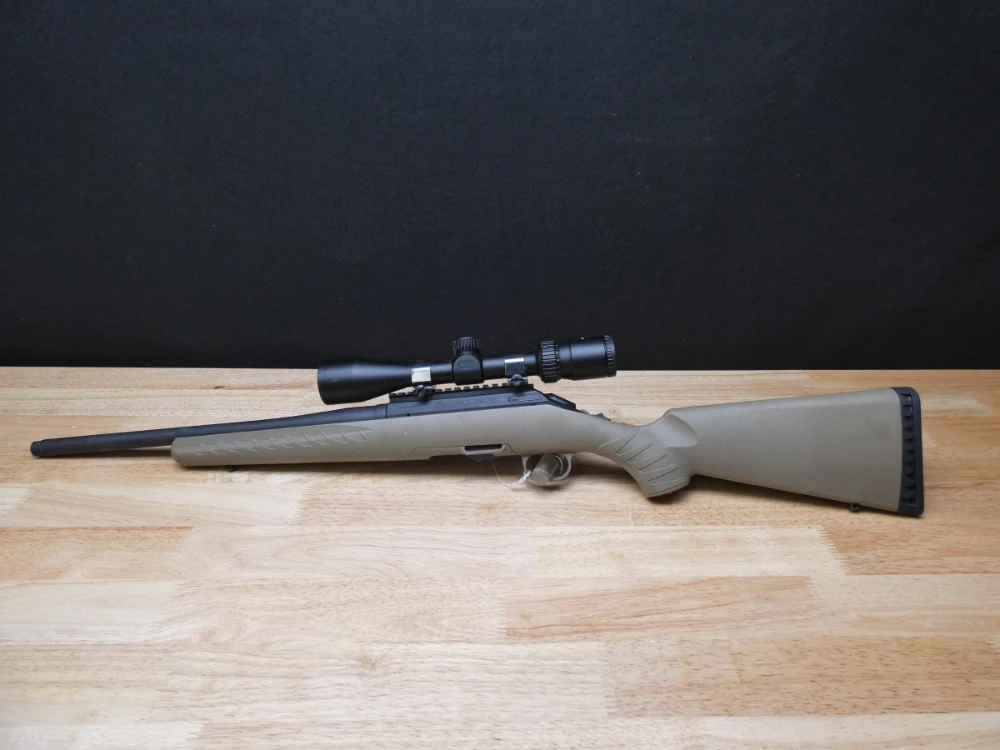
Introduced in 2024, the Ruger American Rifle Generation II represents a significant upgrade over the original. This model boasts several modern enhancements, including a durable Cerakote finish, a more ergonomic and adjustable stock, and a threaded, fluted barrel for improved performance and accessory compatibility. These premium features are reflected in its consistent Manufacturer’s Suggested Retail Price (MSRP) of $729.00 across the Standard, Ranch, Predator, and Patrol versions. The Gen II appeals directly to buyers seeking a more refined, feature-complete rifle straight from the box, justifying its higher price point over the first generation.
The value proposition of the Gen II is its combination of modern features at a still-competitive price. For a modest increase in cost, owners get a rifle that is better equipped for a variety of shooting disciplines and conditions. Because it is a relatively new model, used Gen II rifles are less common and will command a resale price much closer to their original retail value. As more of these rifles enter the used market, they are expected to hold their value well, appealing to buyers who want the latest upgrades without paying the full price for a brand-new firearm.
Generation III (Hypothetical)
As of today, a third generation of the Ruger American rifle has not been announced by the manufacturer. The firearms market is currently focused on the substantial improvements and features introduced with the Generation II model in 2024. Any future Generation III would likely build upon the Gen II’s modular platform, possibly incorporating further ergonomic refinements, new stock materials, or an expanded range of factory caliber options based on consumer feedback and advancements in manufacturing technology. Its introduction would signal the next evolution of this popular and accessible rifle series.
Should a Generation III be released in the future, its value would initially be dictated by its MSRP and feature set. Its arrival would predictably impact the resale value of previous generations, likely causing a moderate depreciation in used Generation II prices as it becomes the new standard. This would, in turn, further solidify the Generation I’s position as the definitive budget-friendly classic within the lineup. A new generation would create clearer, more distinct value tiers, giving buyers on the used market a wider range of options based on features and price.
Generation IV (Hypothetical)
Looking further into the future, a potential Generation IV of the Ruger American rifle is purely speculative and would be many years away. Such a model would likely represent a major leap in the platform’s design, possibly incorporating advanced materials, a fundamentally different action, or even the integration of smart technology. Its value upon release is impossible to predict, but it would undoubtedly set a new performance and price benchmark for the entire Ruger American series, redefining what shooters expect from a bolt-action rifle in this market segment.
The eventual introduction of a fourth generation would create a significant ripple effect across the entire used market for the product line. A Gen IV would relegate the Gen III to the premium used category, while the Gen II would settle comfortably into the mid-range value position. This would cement the original Gen I as a highly affordable, almost historical, entry-level option for new shooters. The value of each preceding generation would stabilize at a new, lower price point, offering clear choices for every budget and need.
How Modifications Affect Value
When it comes to value-adding modifications, there is no clear market consensus for the Ruger American. Upgrades such as a high-end aftermarket chassis, a premium trigger, or a custom barrel can be highly subjective. While these enhancements may improve the rifle’s performance and appeal to a niche buyer looking for those exact features, sellers rarely recoup the full investment. It is often more financially prudent to sell the rifle in its original configuration and sell the upgraded parts separately, as the base firearm has a much broader appeal to a wider audience of potential buyers.
Similarly, a consensus on what modifications hurt the Ruger American’s value is difficult to define, but a general rule applies: permanent and amateur alterations are detrimental. Irreversible changes like cutting down the barrel or stock, non-professional custom paint or Cerakote jobs, or any home gunsmithing that alters the firearm’s core components can drastically reduce its value and safety. Any modification that limits the rifle’s functionality or strays too far from its well-regarded factory design will narrow the pool of interested buyers and almost certainly result in a lower selling price.
Regional Price Variations in 2026
While the Ruger American is a bolt-action rifle that is broadly legal across the United States, specific state laws can create regional price variations. In states with strict firearm regulations like California and New York, the rifle itself is generally legal, but restrictions on magazine capacity are a key factor. Both states ban magazines with a capacity greater than 10 rounds. Therefore, any standard-capacity magazines included in a sale would have no legal value in these markets, potentially lowering the overall value of a package deal compared to a sale in a less restrictive state.
Beyond legal restrictions, local market demand plays a crucial role. In regions with strong hunting traditions, the demand for reliable bolt-action rifles like the Ruger American often surges before hunting season, which can support higher resale prices. Conversely, in more urban areas with less emphasis on hunting, the demand may be lower, leading to more competitive pricing on the used market. These local dynamics, driven by a combination of state laws and regional culture, are a significant factor in determining the final transaction price and how quickly the rifle will sell.
Online vs Local Sales
Selling your Ruger American privately will almost always yield a higher price than selling it to a dealer. This direct-to-consumer approach allows you to set a price that reflects the firearm’s true market value. However, this route demands more personal effort, including creating compelling listings, photographing the rifle, communicating with potential buyers, and navigating the legal requirements for the transfer. For any private sale, using a bill of sale is a highly recommended practice to create a record of the transaction and protect both the buyer and seller from future liability.
Opting to sell to a licensed gun dealer or pawn shop offers maximum convenience and speed. The process is typically fast and simple, with the dealer handling all the necessary paperwork and legalities. This ease of transaction comes at a significant cost, however. Dealers must account for their business overhead and profit margin, so their offers will be substantially lower than what you could get in a private sale. You can typically expect an offer between 50% and 65% of the firearm’s actual used market value, making it the fastest but least profitable option.
Selling online to a buyer in a different state broadens your customer base but involves a mandatory legal process. Federal law requires that all interstate firearm sales must be conducted through a Federal Firearms Licensee (FFL). This means you must ship the rifle from an FFL in your state to an FFL in the buyer’s state. It is also important to note that major carriers like FedEx and UPS have policies that only permit FFLs to ship firearms. As an alternative for long guns, private individuals can legally ship the unloaded rifle via the United States Postal Service directly to the buyer’s FFL.
The FFL Buying Advantage
The most significant advantage of involving a Federal Firearms Licensee (FFL) in a firearm transaction is the assurance of absolute legal compliance. For any sale that crosses state lines, using the FFL-to-FFL transfer system is not just an advantage—it is a federal requirement. This process ensures the firearm is legally transferred and that the buyer undergoes a mandatory background check through the National Instant Criminal Background Check System (NICS) before taking possession. This protects the seller from the severe legal ramifications of unknowingly transferring a firearm to a prohibited individual.
Even for private sales occurring within the same state, utilizing an FFL for the transfer offers a crucial layer of security and verification for both parties. While not required in all states, it is a highly recommended best practice. The FFL will manage all the necessary paperwork, including the ATF Form 4473, and conduct the background check. This formalizes the transaction, creates an official record of the change in ownership, and provides both the buyer and seller with peace of mind that the sale was conducted responsibly and in accordance with the law.
What Increases Your Offer
A firearm that has been meticulously prepared for sale will always command a better offer. Before listing your Ruger American, ensure it is completely unloaded and give it a thorough cleaning. A clean bore, a spotless action free of carbon buildup, and a well-maintained exterior signal to a potential buyer that the rifle has been cared for. Lightly lubricate the bolt and all metal surfaces, then wipe down the stock and barrel to remove any fingerprints or residue. This simple step takes little time but can significantly boost the rifle’s perceived value and buyer confidence.
High-quality photography is one of the most critical elements for maximizing offers in an online sale. Use a simple, neutral background to make the rifle the sole focus of the image. Take photos in bright, natural light, such as near a window during the day, and avoid using a direct flash, which creates harsh glare and shadows. Capture numerous sharp, in-focus images from all angles, including full-length shots of both sides, and close-ups of the receiver markings, muzzle, bolt, and any visible wear. Comprehensive photos provide transparency and build the trust needed for a buyer to make a strong offer.
While specific data on penalties for missing items is unavailable, presenting a complete package invariably increases a firearm’s value. Including the original box, owner’s manual, factory-supplied scope mounts, and any other accessories that came with the rifle will make your listing more attractive. If you have upgraded parts, such as the stock or trigger, be sure to include the original factory parts with the sale. This allows the new owner the option to return the rifle to its stock configuration, broadening its appeal and demonstrating a level of care that justifies a higher price.
When to Sell Your Ruger american
The market for hunting rifles like the Ruger American is highly seasonal, and timing your sale can significantly impact the outcome. The best time to sell is generally in the months leading up to and at the very beginning of hunting season. This period, typically spanning from late summer to early fall, sees a dramatic increase in demand as hunters prepare their gear for the upcoming season. Listing your rifle during this peak window ensures maximum visibility and often creates more competition among buyers, leading to a faster sale at a higher price.
Conversely, the worst time to sell a hunting rifle is often in the off-season, particularly during the late winter and early spring months. During this period, demand is at its lowest point for the year. The market is also frequently saturated with firearms from other sellers who are upgrading their equipment after the season has ended. While it is still possible to make a sale, it will likely take much longer to find an interested buyer, and you may have to lower your asking price considerably to stand out from the competition.
Beyond the primary hunting season driver, other factors can create favorable selling conditions. Some sellers report success during the spring, immediately following the issuance of tax refunds, as many buyers have more disposable income to spend on hobbies. The holiday season around Christmas can also see a spike in sales. Ultimately, the best strategy is to monitor online marketplaces to gauge current inventory levels. Listing your rifle when there are fewer competing listings can give you an advantage, regardless of the time of year.
Common Pricing Mistakes
One of the most frequent errors sellers make is overvaluing their used firearm by pricing it too close to the cost of a new one. A used Ruger American, even in excellent condition, has depreciated. For example, the MSRP for a new Generation II is $729, while a used Generation I averages around $403. It is crucial to research the current market for *used* models by checking completed auctions and classifieds. Setting a realistic price based on the rifle’s generation, condition, and actual market data is key to attracting serious buyers.
Sellers often fail to grasp the significant price difference between a private sale and a dealer trade-in. Expecting a gun store to offer you the same amount you could get from a private buyer is a common and unrealistic expectation. Dealers must purchase inventory at a low enough price to cover their overhead and make a profit on the resale, which means their offers typically fall between 50% and 65% of the firearm’s true market value. If your goal is to maximize your return, you must be prepared for the added effort of a private sale.
A critical but sometimes overlooked mistake is failing to properly classify the firearm. The “Ruger American” brand includes both the popular bolt-action rifle and a line of semi-automatic pistols. Each of these firearms has a completely different market, demand, and value structure. Using pricing data for the pistol to value the rifle, or vice-versa, will lead to a wildly inaccurate price. Ensure your research and your listing are specific to the Ruger American Rifle, its correct generation, and its caliber to avoid confusing buyers and undermining your sale.
Market Outlook for 2026
While there is no definitive consensus for future price predictions, the market outlook for the Ruger American rifle line remains strong and stable. Its established reputation as a reliable, accurate, and American-made firearm at an affordable price point insulates it from significant market volatility. The introduction of the Generation II has successfully segmented the market, creating two distinct value tiers. We expect the Gen I to continue to be a highly sought-after option for first-time buyers and those on a tight budget, ensuring its value remains consistent.
The Generation II, with its modern features like a Cerakote finish and an improved stock, will likely hold its value exceptionally well and become the dominant model on the used market by 2026. Its higher MSRP of $729 provides a strong anchor for its resale value, which will depreciate slowly and predictably. Barring any major legislative changes or the unexpected release of a new generation, the Ruger American line will continue to be a popular and liquid asset, representing a safe and dependable choice for both buyers and sellers in the years to come.
Frequently Asked Questions
Is it worth getting a professional appraisal for my Ruger American?
No, a professional appraisal is generally not cost-effective for a standard Ruger American rifle. As a widely produced and budget-friendly firearm, its value is primarily dictated by its condition, generation, and current market demand rather than rarity or historical significance. You can accurately determine its worth by using free online valuation tools and researching the prices of recently completed sales on auction websites, which provides a realistic market value without the added expense of a formal appraisal.
How much does a high round count affect the rifle’s value?
While there is no specific formula for how a high round count impacts value, it is a significant factor in a rifle’s condition. Excessive use can lead to throat erosion in the barrel, which affects accuracy and reduces the firearm’s value. However, for a typical hunting rifle, even a “high” round count may only be a few hundred rounds. The overall cosmetic and mechanical condition is often a better indicator of value than the round count itself, as a well-maintained rifle will hold its value better than a neglected one, regardless of use.
Will I get more money if I sell my rifle with the scope?
Selling a rifle with a scope can increase the value, but you will rarely recoup the full retail price of the optic. A high-quality scope from a reputable brand like Leupold, Vortex, or Nightforce will add more value than a generic, budget-friendly optic. For many buyers, a package deal is convenient and appealing. However, some experienced shooters prefer to choose their own optics, so offering the rifle with and without the scope can sometimes broaden your potential customer base and lead to a faster sale.
Does the rifle’s caliber affect its resale value?
Yes, the caliber can significantly influence resale value based on ammunition availability and popularity. Common and widely available calibers like .308 Winchester, 6.5 Creedmoor, or .223 Remington tend to have a broader appeal and hold their value well. Rifles chambered in more obscure or niche calibers might take longer to sell and may need to be priced more competitively to attract a buyer specifically looking for that chambering. The highest resale values are typically found in the most popular hunting and target shooting calibers.
Is a Gen I rifle still a good value compared to the Gen II?
The Generation I Ruger American can represent an excellent value, particularly on the used market. While the Generation II offers significant upgrades like a Cerakote finish and an improved stock for its $729 MSRP, a used Gen I can often be found for around $400. For a shooter on a budget who doesn’t require the latest features, the Gen I provides the same core reliability and accuracy at a much lower price point, making it a very smart purchase if found in good condition at a significant discount.
Get a Cash Offer Today
Ready to sell your Ruger American? We make the process simple and secure. Avoid the hassle of private listings and the low offers from local shops. We provide fair, market-based cash offers and handle all the necessary FFL paperwork, ensuring a fast and legally compliant transaction from start to finish.
Click the button below to submit your firearm’s information. Our team of experts will review the details and get back to you with a no-obligation cash offer. Sell your rifle with confidence and get paid quickly. Let us show you the easiest way to turn your firearm into cash today.