
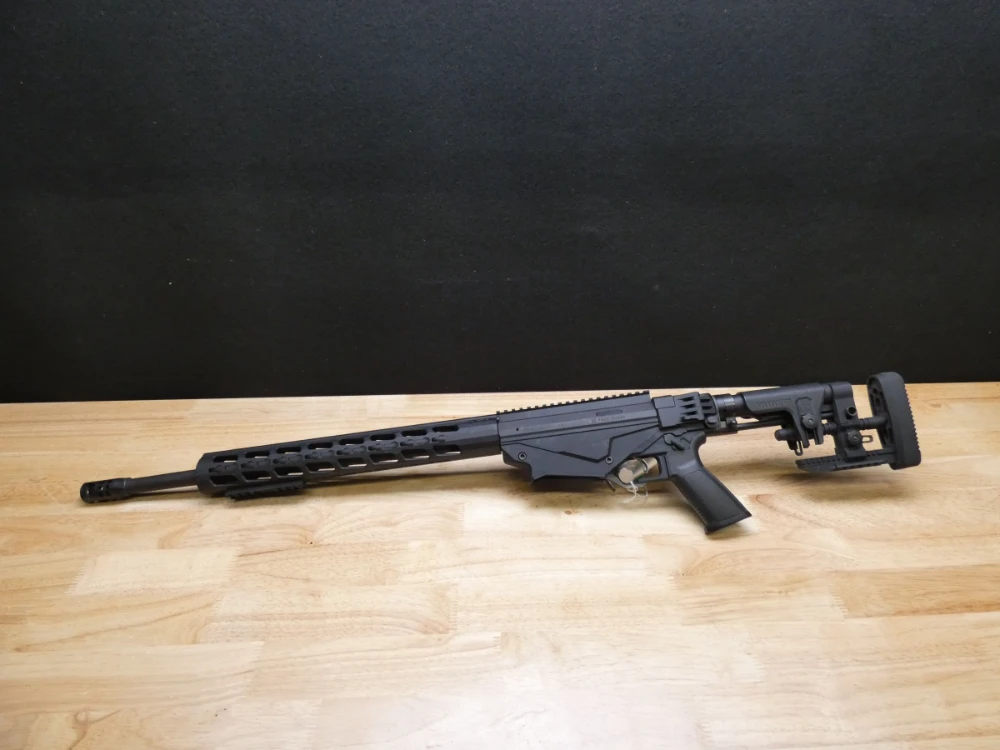
The Ruger Precision Rifle (RPR) in .308 Winchester is a highly regarded bolt-action long gun, celebrated for its exceptional out-of-the-box accuracy and modular design. As a popular choice for both entry-level and experienced long-range shooters, its resale value is influenced by several key factors. The specific generation, overall condition, included accessories, and current market demand all play a crucial role in determining its worth, making a well-maintained example a consistently desirable firearm on the used market.
What Determines Your Ruger Precision Rifle 308’s Worth
The primary factors determining your Ruger Precision Rifle’s value are its generation, mechanical condition, and completeness. Newer generations with factory improvements command higher prices. The most recent model carries an MSRP of $2,149.00, but new market prices average closer to $1,500, while the typical used price falls between $798 and $944. Because the standard rifle is a bolt-action long gun, it is not classified as an NFA item, which broadens its legal market and helps sustain a stable value. A rifle that is well-maintained, has a low round count, and includes all original accessories will always fetch a premium price.
2026 Price Breakdown by Generation
First Generation (Pre-2016)
The first-generation Ruger Precision Rifle introduced the platform’s core concepts but is identifiable by its original bolt shroud and KeyMod handguard. While still a capable rifle, these earlier features have been superseded by more popular and robust designs in later iterations. Consequently, Gen 1 models typically represent the lowest price point on the used market. They are an excellent entry point for shooters on a budget who are willing to forego the refinements of the newer versions, but sellers should expect their value to be at the lower end of the established used price range.
On the used market, a first-generation model in good condition will likely fall into the approximate range of $750 to $850. The value is impacted by the desirability of the M-LOK handguards and other upgrades found on later models. While functionally sound, many prospective buyers will either seek out a newer generation or factor the cost of upgrading the handguard into their offer. For sellers, this means pricing competitively is key to attracting a buyer for an older, less-featured version of this popular precision rifle.
Second Generation (2016-2019)
The second generation of the RPR introduced several key upgrades that significantly increased its appeal and market value over the original. The most notable change was the switch from a KeyMod handguard to the more popular M-LOK system, offering greater accessory compatibility. Additionally, Ruger included an improved bolt shroud and a muzzle brake as standard. These enhancements made the Gen 2 a more refined and desirable package, and it remains a very popular choice on the used market for its balance of features and affordability, holding its value well.
A second-generation Ruger Precision Rifle in .308 typically commands a price that aligns closely with the average used value, generally between $850 and $950, depending on condition and round count. It represents a sweet spot for many buyers, offering significant improvements over the Gen 1 without the higher cost of a brand-new model. Its value is well-established, as the upgrades are widely recognized as being substantial, making it a liquid and sought-after firearm in private sales and on the dealer market.
Third Generation (2020-Present)
The third and most recent generation of the Ruger Precision Rifle (Model #18104) features further refinements, including a new, free-floated M-LOK handguard with a more aggressive design that improves scope clearance. This generation solidified the RPR’s reputation as a top contender in the production precision rifle class. With an MSRP of $2,149.00, new models typically sell for an average market price of around $1,500. These rifles represent the most updated version, and their value on the used market reflects their modern features and desirability among competitive shooters and enthusiasts.
A used third-generation RPR in excellent condition will fetch the highest price among all used models, often selling for between $1,000 and $1,200. The price reflects its modern feature set and proximity to new condition. The average value for a used RPR across all generations is noted to be around $926, but a Gen 3 model will consistently be on the higher side of this figure. Sellers with a recent, well-maintained Gen 3 rifle can expect a quicker sale and a higher return on their initial investment.
Enhanced/Special Edition Models
Beyond the standard generations, various enhanced or special distributor-exclusive models of the Ruger Precision Rifle have been released over the years. These versions may feature unique Cerakote finishes, different barrel lengths or contours, or other factory-installed upgrades that set them apart from the standard production runs. Their value is not strictly tied to the generational timeline but is instead determined by their rarity, specific features, and overall appeal to collectors or shooters looking for a more distinct platform. Pricing these models requires careful research into their specific configuration.
When selling a special edition RPR, it’s crucial to research comparable sales for that exact model, as general pricing guides may not apply. The value can be significantly higher or simply different depending on the enhancements offered. Documenting the unique features with high-quality photos and detailed descriptions is essential to conveying its value to potential buyers. These rifles often appeal to a more niche market, so finding the right buyer may take longer, but the final sale price can exceed that of a standard-generation model.
How Modifications Affect Value
While the Ruger Precision Rifle is designed for modularity and upgrades, there is no market consensus that specific modifications universally add to its resale value. High-quality aftermarket triggers, chassis, or premium barrels may appeal to a discerning buyer, but sellers rarely recoup their full investment. The value of modifications is highly subjective; what one shooter sees as a perfect upgrade, another may see as an undesirable change. Therefore, it is best to price the rifle based on its intrinsic value and consider any high-cost additions as a potential bonus rather than a guaranteed price increase.
Given the subjective nature of modifications, it is widely considered best practice to include all original factory parts with the sale of a modified rifle. While there is no clear consensus that buyers universally demand them, providing the original parts broadens the rifle’s appeal to a wider range of potential buyers, including those who may wish to restore it to its factory configuration. This small step can enhance resale value and build buyer confidence, making for a smoother and potentially more profitable transaction, as it shows transparency and completeness.
Regional Price Variations in 2026
The Ruger Precision Rifle in .308 enjoys broad legality across the United States, which helps stabilize its price nationally. Because it is a bolt-action firearm, it is exempt from the feature-based “assault weapon” bans that affect semi-automatic rifles in states like California and New York. In California, the rifle is generally legal, though it is subject to the state’s 10-round magazine capacity limit. Similarly, in New York, the SAFE Act’s restrictions on features like pistol grips and threaded barrels do not apply, making it a popular choice for precision shooters in restrictive states.
While the rifle itself is widely legal at the state level, sellers must remain aware of stricter local ordinances that can influence saleability and value. For instance, some municipalities like New York City may impose a 5-round capacity limit for all long guns, which would require sellers to either exclude standard capacity magazines from the sale or replace them. These local variations can create niche compliance challenges that may affect the final price or the pool of eligible buyers, making it essential to verify all applicable laws before listing a firearm for sale.
Online vs Local Sales
Conducting a local, private sale of a Ruger Precision Rifle can be an effective way to maximize your return by avoiding shipping and transfer fees. For such a transaction, creating a bill of sale is a common and prudent practice for record-keeping. This document typically includes the names and addresses of both parties, a full description of the firearm, the sale price, and signatures. It often includes a statement certifying the buyer is legally allowed to own a firearm, helping to ensure a responsible and documented transfer in accordance with state laws.
Selling online requires navigating strict federal shipping regulations. Private individuals are prohibited from shipping a firearm directly through common carriers like UPS or FedEx. Both companies require the shipper to hold a Federal Firearms License (FFL) and have a specific shipping agreement in place. This means that for a private seller, the only legal way to ship the rifle is to take it to a local FFL, who will then package and ship it to the buyer’s designated FFL. This process adds both cost and logistical steps to the transaction.
Furthermore, any sale to a resident of another state must legally be processed through the FFL system. Federal law prohibits direct sales between unlicensed individuals across state lines. The standard procedure involves the seller’s FFL shipping the rifle to the buyer’s FFL. The buyer must then visit their FFL, complete a federal background check (Form 4473), and comply with any state-specific waiting periods or paperwork before taking legal possession. This ensures the entire transaction is federally compliant, but the associated fees can impact the seller’s net profit.
The FFL Buying Advantage
Selling your Ruger Precision Rifle directly to a Federal Firearms Licensee (FFL), such as a local gun shop, offers a path of maximum convenience and legal security, though it comes at a price. Dealers will typically offer between 50% and 65% of the firearm’s current used retail value. This lower offer accounts for their business overhead, the time the rifle may sit in inventory, and their need to make a profit upon resale. The primary benefit for the seller is a guaranteed, immediate cash payment without the risks or hassles of finding and vetting a private buyer.
For a popular and fast-selling firearm like the RPR, a dealer’s offer might climb as high as 70% of its used value, but this is less common. As a general rule, a seller can expect to net about half of the gun’s potential private sale value when selling to a shop. This makes the decision a clear trade-off: sacrifice potential profit for a swift, simple, and legally sound transaction. It is an ideal option for those who prioritize speed and ease over achieving the highest possible selling price.
What Increases Your Offer
A complete, factory-original package is one of the most effective ways to increase the value of your Ruger Precision Rifle. A rifle missing its original hard case and two magazines can see a value penalty between $160 and $220. This is based on the approximate replacement cost of a factory-style case ($100-$150) and two new magazines ($30-$35 each). Presenting the firearm with all its original accessories, including the manual and any included tools, signals to the buyer that the rifle has been well-cared for and justifies a higher asking price.
A meticulous pre-sale cleaning will significantly enhance your rifle’s appeal. Before photographing or showing the firearm, ensure it is unloaded and then thoroughly clean the bolt, paying close attention to the bolt face and locking lugs. Use a quality solvent, brush, and patches to clean the bore until the patches emerge clean, then apply a light coat of oil to prevent rust. Avoid common mistakes like over-lubricating, which attracts grime, or pulling a dirty bore snake back through the barrel, which can reintroduce debris and potentially damage the crown.
High-quality photography is non-negotiable for securing a top-dollar offer, especially in online listings. Use a clean, uncluttered background and soft, even lighting to avoid harsh shadows that can obscure details. Take numerous high-resolution photos from all angles, capturing close-ups of any markings, the condition of the bore, and any signs of wear. A short video demonstrating the smooth functionality of the bolt and trigger can also build significant buyer confidence. A professional presentation suggests a professional and well-maintained firearm, directly translating to higher offers.
When to Sell Your Ruger precision rifle 308
Timing the sale of your firearm can significantly impact your final return, and the market often follows predictable seasonal trends. The most opportune time to sell is generally during tax return season, from February through April. During this period, many consumers have more disposable income and are actively looking to make larger purchases. Listing your Ruger Precision Rifle during this window increases its visibility to a larger pool of motivated buyers, often resulting in a faster sale at a more favorable price point due to heightened demand.
Conversely, the summer months and the holiday season toward the end of the year are typically slower periods for firearm sales. Potential buyers are often focused on vacations, family events, and other spending priorities, leading to a smaller active market. If you need to sell during these off-peak times, you may need to price your rifle more competitively to attract attention. Patience or strategic pricing is key to making a successful sale when overall market activity is lower and buyers are more discerning with their purchases.
While seasonal trends are a reliable guide, the firearms market is also uniquely sensitive to the political climate. Although this effect is often more pronounced for semi-automatic rifles and handguns, discussions surrounding new legislation can drive demand for all types of firearms, including bolt-action rifles. An unexpected surge in market activity can create a seller’s market at any time of the year. Staying informed about current events can help you identify these opportune moments to list your rifle and potentially secure a premium price outside of the typical seasonal peaks.
Common Pricing Mistakes
One of the most common pricing mistakes is attempting to recover the full retail cost of aftermarket upgrades. While a high-end trigger or a premium optic adds functional value, its monetary value is subjective and rarely translates to a dollar-for-dollar increase in the rifle’s price. Most buyers are not willing to pay a premium for modifications they did not choose themselves. It is far more effective to price the rifle based on its stock condition and sell expensive accessories separately to buyers who are specifically seeking those items.
Another frequent error is underestimating the financial impact of an incomplete package. Forgetting to include the original hard case, factory magazines, or owner’s manual can lead to a significant price reduction. Buyers will mentally deduct the replacement cost of these items from their offer, which can be a penalty of $160 to $220 for a missing case and two magazines. Before listing your rifle, take the time to gather all original components to present a complete, well-maintained package that justifies your full asking price.
For a standard production firearm like the Ruger Precision Rifle, paying for a professional appraisal is an unnecessary expense and a pricing mistake. Its market value is well-established and can be accurately determined for free by researching completed sales on online marketplaces and forums. A used RPR in good condition reliably sells for between $800 and $1,200. A formal appraisal is only cost-effective for rare, collectible, or historically significant firearms, not for a modern rifle with a transparent and easily accessible market value.
Market Outlook for 2026
Forecasting the precise value of the Ruger Precision Rifle for 2026 is challenging, as there is no definitive market consensus on its future price trajectory. The firearms market is subject to a wide range of variables, including economic shifts, new product introductions, and the political landscape. However, the RPR has firmly established itself as a benchmark for accessible, high-performance precision shooting. This strong reputation suggests that it will continue to be a desirable firearm and is unlikely to experience significant, unexpected depreciation in the coming years, holding its value well.
The rifle’s continued popularity, combined with the ubiquitous availability of the .308 Winchester cartridge, provides a stable foundation for its value. Potential factors that could influence its price include the release of a new, significantly improved generation from Ruger, which would likely soften the value of older models. Barring major market disruptions or technological leaps in competing products, owners can reasonably expect the Ruger Precision Rifle to remain a sought-after and respected platform, maintaining a solid position in the used rifle market through 2026.
Frequently Asked Questions
Does a high round count significantly hurt the rifle’s value?
Yes, a high round count will lower the rifle’s value, primarily due to expected barrel wear. The .308 Winchester barrel is generally estimated to have a peak accuracy life of around 5,000 rounds. A potential buyer will factor in the eventual cost of a barrel replacement, which is a significant expense. Because the Ruger Precision Rifle is designed for relatively easy barrel swaps, the value reduction is tied more to the barrel as a consumable part rather than an issue with the rifle’s core action or chassis, but it remains a key negotiation point.
Is my rifle worth less if it’s not a .308 Winchester model?
The value of your Ruger Precision Rifle is more influenced by market demand for a specific caliber than by an inherent superiority of one over another. While .308 Winchester is extremely popular due to its long barrel life and widespread ammunition availability, other chamberings like 6.5 Creedmoor are highly sought after by the precision shooting community. Your rifle’s value in a different caliber will depend on current shooting trends and regional ammo availability. It may appeal to a different subset of buyers but can command a comparable price.
How much does cosmetic damage affect the selling price?
While there isn’t a fixed penalty for cosmetic damage, the rifle’s appearance is a critical value factor. Minor scuffs from normal handling might be overlooked, but significant scratches, worn-off finish on the receiver, or damage to the adjustable stock will absolutely lower offers. Buyers of precision instruments expect them to be well-cared for. A rifle in pristine cosmetic condition will always sell faster and for a higher price than one that shows clear signs of heavy or careless use, as pristine condition implies better overall maintenance.
Will I get more money if I sell the scope with the rifle?
Typically, you will get more money by selling the rifle and scope separately. Packaging them together often forces you to discount both items to attract a buyer who wants that specific combination. A buyer may not like your choice of optic or may feel it’s overpriced, leading to a lower offer on the entire package. Selling them individually allows you to market the rifle to a broad audience and the scope to a niche audience willing to pay its fair market value, maximizing your total return.
Does the rifle being a specific generation (e.g., Gen 2 vs. Gen 3) really change the price?
Yes, the generation has a direct and significant impact on the rifle’s price. Each new generation of the Ruger Precision Rifle introduced tangible improvements, such as the switch to an M-LOK handguard in Gen 2 or the enhanced handguard design in Gen 3. Buyers are typically well-aware of these upgrades and are willing to pay a premium for the more refined features of the later models. Consequently, a Gen 3 rifle in good condition will consistently command a higher price than a Gen 1 or Gen 2 in similar condition.
Get a Cash Offer Today
Ready to sell your Ruger Precision Rifle? We take the guesswork out of the process. Submit your firearm’s details through our secure online form, and our experts will provide a fair, transparent cash offer based on its condition, generation, and current market data. No haggling, no waiting for buyers.
The process is simple, legal, and fast. We provide a prepaid shipping label and handle all the FFL transfer requirements, ensuring a fully compliant transaction. Get paid quickly without the hassle of private sales. Click here to see what your rifle is worth and get your cash offer today!