
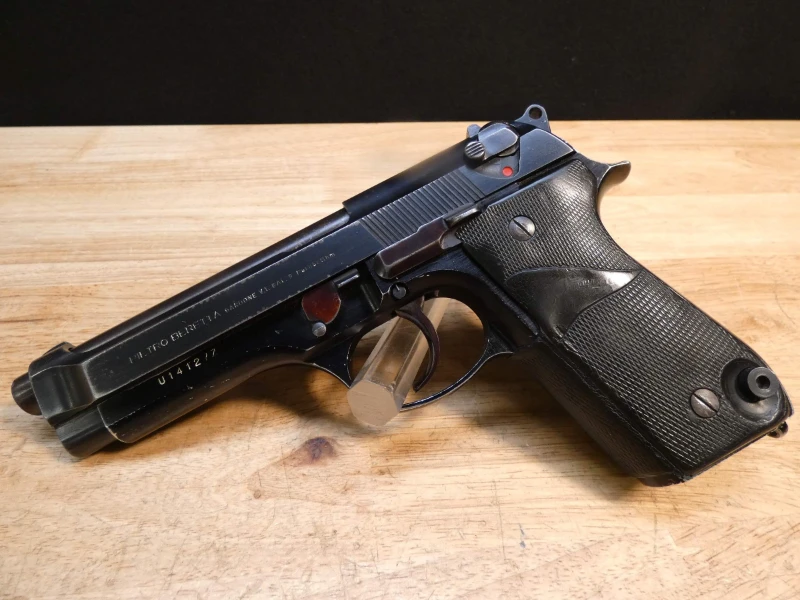
The Beretta 92 is a legendary semi-automatic pistol, renowned for its service as the M9 in the U.S. military. Classified as a full-sized handgun, it was engineered for demanding military, police, and tactical applications. Its iconic status, proven reliability, and widespread recognition are significant factors that contribute to its enduring market value. Understanding the specific model, condition, and market trends is crucial for any owner looking to accurately assess its current worth for a potential sale.
What Determines Your Beretta 92’s Worth
The value of a Beretta 92 is primarily determined by its specific model, condition, and market demand. New models, such as the latest 92GTS generation, carry an MSRP between $819 and $999, setting the ceiling for pricing. In the used market, a common Beretta 92FS typically fetches an average price of $593, with the range spanning from as low as $440 for well-used examples to around $630 for certified used pistols in excellent condition. Specialized variants like the Brigadier or custom models from Langdon Tactical will command significantly higher prices due to their enhanced features and relative rarity, showcasing the importance of model identification in valuation.
2026 Price Breakdown by Generation
Standard Models (92FS)
The Beretta 92FS remains the most recognizable and common model on the market, serving as the benchmark for the platform’s value. A new 92FS typically retails for between $700 and $730, making it an accessible yet high-quality option. In the used market, these pistols demonstrate strong value retention, averaging around $613. Prices can fluctuate based on condition, with examples showing more wear selling for as low as $440, while pristine, certified used models can approach the price of a new firearm. This consistent demand ensures the 92FS remains a liquid asset for owners and a popular choice for first-time buyers and collectors alike.
As a standard semi-automatic pistol, the Beretta 92FS is not regulated as an NFA item, simplifying its transfer and ownership process in most states. This accessibility contributes to its stable market value and broad appeal. Potential sellers and buyers should be aware that while the firearm itself is not an NFA weapon, certain state laws, particularly in places like California and New York, impose restrictions on magazine capacity, typically limiting them to 10 rounds. These regional regulations can influence local market pricing and the desirability of pre-ban, standard-capacity magazines where they remain legal, adding another layer to the firearm’s overall valuation.
Specialized Variants (Brigadier)
Specialized variants of the Beretta 92, such as the 92FS Brigadier, command higher prices due to their enhanced features and more robust construction. The Brigadier model is distinguished by its heavier, reinforced slide, which is designed to increase durability and reduce felt recoil, making it a popular choice for competitive shooters and enthusiasts. A new Brigadier is priced around $900, reflecting its premium positioning over the standard 92FS. This price difference carries over to the used market, where these models are sought after for their improved shooting characteristics and are valued more highly than their standard-production counterparts, assuming they are in comparable condition.
The inherent value of a specialized model like the Brigadier is tied directly to its factory-installed enhancements. These are not simple cosmetic changes but functional upgrades that improve the firearm’s performance and service life. When selling a Brigadier, it is essential to highlight these features, as they justify the higher asking price compared to a standard 92FS. Buyers seeking these specific attributes are often willing to pay a premium, making the Brigadier a strong performer in terms of value retention. Its appeal lies in offering a factory-upgraded experience without the need for aftermarket modifications, which can have an unpredictable effect on resale value.
Premium & Custom Models (Elite LTT, 92GTS)
Premium and custom-tuned Beretta 92 models represent the upper echelon of the platform’s value. Variants like the 92G Elite LTT (Langdon Tactical Technology) can reach prices of up to $1,500 due to their extensive, performance-oriented modifications performed by a respected custom shop. These enhancements often include improved triggers, sights, and ergonomic grips. Similarly, the newest factory generation, the 92GTS, carries a manufacturer’s suggested retail price ranging from approximately $819 to $999. These figures reflect the advanced features and refined engineering incorporated into the latest iterations of this classic design, appealing to discerning shooters who demand peak performance straight from the box.
The value of these high-end models is sustained by their reputation for quality and performance. A seller with a 92G Elite LTT can justify the premium price by detailing the specific Langdon Tactical upgrades, which are well-regarded within the shooting community. For the 92GTS, its value is tied to its status as the most modern version of the 92 series, featuring contemporary updates that attract buyers looking for the latest technology. In both cases, the higher cost is a direct reflection of tangible improvements, making these models less susceptible to the price depreciation seen in more common, standard-issue firearms. They cater to a niche but dedicated segment of the market.
NFA-Regulated Variants (93R)
While the standard Beretta 92 is a widely available semi-automatic pistol, a rare and highly regulated variant exists: the Beretta 93R. This model is a machine pistol capable of firing in three-round bursts, which classifies it as a National Firearms Act (NFA) item. Due to this classification, its ownership, sale, and transfer are strictly controlled by federal law, requiring extensive paperwork and tax stamps through the ATF. The 93R is not a firearm one can purchase through standard channels, and its scarcity and legal status place its value in a completely different category, often reaching tens of thousands of dollars in the highly specialized NFA market.
For the vast majority of owners, the NFA status of the 93R has no direct bearing on the value of their semi-automatic Beretta 92. However, it is a crucial distinction to understand. Mistaking a standard 92 for a 93R is highly unlikely, but knowing that NFA-regulated versions exist highlights the importance of correctly identifying your specific model. The value of a standard Beretta 92 is determined by factors like its condition and model (e.g., FS, G, Brigadier), not by the existence of its rare, machine-pistol cousin. The 93R remains a collector’s piece for a very specific type of licensed enthusiast.
How Modifications Affect Value
Modifications can significantly influence the resale value of a Beretta 92, and quality upgrades are often seen as a net positive. The most common value-adding enhancements involve the sighting system. Upgrading the stock iron sights to a modern red dot optic or a high-visibility fiber optic set is highly desirable. Brands like Trijicon (with its RMR or SRO models), Holosun (507C or 509T), and Langdon Tactical Design (LTT) are consistently recognized for their quality and performance. While these additions may not recoup their full retail cost, they make the firearm more appealing to a modern buyer and can justify a higher asking price over a stock model.
While certain upgrades can add value, the market consensus on modifications that definitively hurt the value of a Beretta 92 is less clear. There is no specific modification universally agreed upon as detrimental. However, a general rule is that irreversible changes or poorly executed custom work can negatively impact price. Permanent alterations to the frame or slide, amateur gunsmithing, or highly personalized cosmetic changes like extreme custom paint jobs can narrow the pool of potential buyers. A firearm that can be easily returned to its original factory configuration is often a safer bet for preserving its core market value and broad appeal.
Regional Price Variations in 2026
The value and saleability of a Beretta 92 can be significantly impacted by state-specific firearm laws, creating regional price variations. In California, for instance, a handgun must be on the state’s official roster of approved firearms to be sold by a dealer. While certain models like the 92FS are on this roster, they must be sold with magazines limited to a 10-round capacity. This restriction means that standard capacity magazines, while not illegal to possess for some, cannot be included in a new sale from a dealer, potentially affecting the overall package value. Furthermore, features like a threaded barrel are prohibited as they can classify the pistol as an “assault weapon.”
Similarly, New York state imposes strict regulations that affect the Beretta 92’s configuration and value. Under the NY SAFE Act, magazine capacity is also restricted to 10 rounds, meaning that factory-standard 15- or 17-round magazines cannot be legally sold or transferred within the state. This makes pistols compliant with the 10-round limit the standard, and out-of-state firearms must be modified to comply before being transferred. Like California, New York also prohibits features such as threaded barrels. These legal constraints in restrictive states can make compliant models more sought-after locally, while potentially lowering the value of non-compliant configurations that require modification.
Online vs Local Sales
Selling a Beretta 92 online to a buyer in another state requires adherence to strict federal laws. An interstate handgun transfer cannot be conducted directly between two private individuals. The transaction must be facilitated by a Federal Firearms Licensee (FFL). The seller is required to ship the pistol to an FFL dealer located in the buyer’s state of residence. Once the firearm arrives, the buyer must visit that FFL, complete all necessary federal and state paperwork (such as the ATF Form 4473), and successfully pass a background check before they are legally allowed to take possession of the Beretta 92.
The logistics of shipping a handgun like the Beretta 92 have become more complex for private sellers. Major carriers such as UPS and FedEx have implemented policies that generally prohibit private individuals from directly shipping handguns. Instead, the seller must take the firearm to a local FFL, who will then handle the packaging and legal shipment to the buyer’s designated FFL. Federal law mandates that the shipper must provide written notification to the carrier that the package contains a firearm, but the exterior of the box itself should have no markings indicating its contents, ensuring a secure and discreet transfer process.
Regardless of whether a sale is local or online, proper documentation is highly recommended. While federal law does not mandate a bill of sale for a private firearm transaction, creating one serves as a crucial legal record for both parties. A comprehensive bill of sale should include the full names and contact information of the buyer and seller, the firearm’s details—make, model, and serial number—and the date of the transaction. Furthermore, state laws vary widely; some states require all private sales to be conducted through an FFL, which involves federal paperwork and a background check even for in-state transfers, making it essential to know local regulations.
The FFL Buying Advantage
Selling your Beretta 92 to a Federal Firearms Licensee (FFL), such as a local gun shop, offers a fast and convenient alternative to a private sale, though it comes at a different price point. Dealers typically offer between 50% and 70% of the firearm’s estimated private party market value. For example, a pricing guide might estimate the trade-in value for a 92FS at approximately 65% of what it could fetch in a private transaction. While some sellers report offers as high as 80%, this is less common. This price difference accounts for the dealer’s need to cover overhead, processing, and make a profit upon resale.
The primary advantage of using an FFL for the transaction—whether selling to them or using them as a transfer agent—is the assurance of a legal and secure process. For the seller, transferring the firearm through a dealer formally removes the weapon from their name and mitigates future liability. For the buyer, it guarantees that all legal requirements, including the mandatory background check, are met. This creates a clear and verifiable chain of custody, providing peace of mind for both parties and ensuring the entire transaction is conducted in full compliance with all federal, state, and local laws, which is the most significant advantage.
What Increases Your Offer
Presenting a Beretta 92 as a complete package is one of the surest ways to maximize its value. While the absence of the original case does not significantly penalize the price for a common used model, missing magazines will. The deduction in value is directly tied to the cost of replacing them, which can range from $25 to $50 per magazine. Therefore, including the original factory case, owner’s manual, and all original magazines will make your firearm more attractive to buyers and help you secure a top-dollar offer by presenting it as a well-kept, complete set straight from the manufacturer.
A thorough pre-sale cleaning can substantially increase the perceived value of your Beretta 92. Before listing it for sale, you should field strip the pistol and meticulously clean the barrel, slide, and frame using a quality gun solvent and non-abrasive brushes. After cleaning, apply a light coat of lubricant to key areas like the slide rails and the exterior of the barrel, then wipe down all external surfaces to remove any fingerprints or excess oil. A clean, properly maintained firearm suggests responsible ownership and assures the potential buyer that the weapon has been well cared for, often leading to a quicker sale at a higher price.
High-quality photographs are essential for attracting the best offers, especially in an online marketplace. To effectively showcase your Beretta 92, use a simple, neutral-colored background that provides contrast without being distracting. Utilize ample, diffused natural light, such as from a window, and avoid using a harsh camera flash, which can create glare. Take numerous clear, high-resolution photos from every angle, including close-ups of the serial number, manufacturer markings, any modifications, and areas of wear. Ensuring the pistol fills the frame helps to display important details and gives potential buyers the confidence to make a strong offer.
When to Sell Your Beretta 92
Timing the sale of your Beretta 92 can have a noticeable impact on the final price you receive. Generally, the market for used firearms sees increased activity during specific periods of the year. One of the most opportune times to sell is between February and April. This window aligns with tax return season, when many potential buyers have more disposable income and are actively looking to make purchases. Capitalizing on this seasonal demand can result in a faster sale and a more competitive offer as more buyers are actively participating in the market, increasing competition for available firearms.
Another strong period for selling firearms often occurs in the months leading up to various hunting seasons, typically from August through October. While this trend is more pronounced for rifles and shotguns, the overall heightened interest in firearms during this time can create a favorable selling environment for handguns as well. Additionally, some market analysis suggests that the holiday season, from mid-November to mid-January, can also be a good time to sell, as firearms are often purchased as gifts. Listing your Beretta 92 during these peak times increases its visibility among a larger pool of motivated buyers.
Conversely, it is wise to be aware of the slowest periods in the firearm sales cycle. The summer months, particularly June and July, are often considered the off-season for the gun market. During this time, potential buyers may be more focused on vacations and outdoor activities not related to shooting, leading to a general slowdown in sales. While a well-priced Beretta 92 can certainly sell at any time of year, listing it during these slower months might require more patience or a more competitive price point to attract the attention of the fewer active buyers in the marketplace.
Common Pricing Mistakes
One of the most frequent mistakes owners make is overvaluing a standard, mass-produced model. For a common firearm like the Beretta 92FS, a professional appraisal is generally not a worthwhile expense. The pistol’s value, which typically falls in the $400 to $600 used range, can be accurately determined by researching recent sales on online gun marketplaces. Owners should avoid assuming their firearm is a rare collectible and instead base their asking price on current, real-world market data. Setting a price that is too high based on sentimental value or an appraisal fee will only deter potential buyers.
Another common misstep is to heavily discount the price due to a high round count. The Beretta 92 platform is renowned for its exceptional durability, with a reported service life that can extend up to 35,000 rounds. Because of this robust reputation, a high round count is not a primary factor in diminishing its resale value unless there is visible, excessive wear and tear on key components. Sellers should be confident in the pistol’s longevity and avoid unnecessarily lowering their price based on usage alone, as informed buyers understand the platform’s ability to withstand extensive use without significant degradation in performance.
Having unrealistic expectations when selling to a dealer is a mistake that can lead to frustration. A Federal Firearms Licensee (FFL) is running a business and must account for overhead, shelf time, and profit margin. Consequently, their cash or trade-in offer for a used Beretta 92 will typically be between 50% and 70% of its private party value. Understanding this business reality is crucial. A seller should not be offended by a fair trade-in offer but should instead view it as a trade-off: a lower price in exchange for a fast, secure, and hassle-free transaction without the complexities of a private sale.
Market Outlook for 2026
Looking ahead to 2026, the market for the Beretta 92 is expected to remain stable, with values influenced by the introduction of new models. A new Beretta 92FS model slated for release in 2026 is anticipated to have a starting price of around $899 for the standard version. This new price point will likely serve as an anchor for the entire 92 series market, potentially pulling up the value of both new and used current-generation pistols. As the cost of new firearms increases, the appeal of well-maintained used models as a cost-effective alternative typically grows, which should support strong resale values.
The current market provides a solid foundation for this future outlook. In 2025, new Beretta 92 models are already selling in a range from approximately $700 for a standard 92FS to over $1,000 for specialized variants. The used market for a 92FS is robust, with prices averaging around $593. This indicates healthy demand and solid value retention for the platform. As the new, higher-priced 2026 models enter the market, existing firearms will likely be seen as an even better value, helping to maintain or even slightly increase their price floor in the coming years, especially for pistols in excellent condition.
Frequently Asked Questions
Does a high round count significantly lower my Beretta 92’s value?
A high round count does not appear to have a significant negative impact on the value of a Beretta 92. This is largely due to the platform’s legendary durability and a service life that has been reported to be as high as 35,000 rounds. While an exceptionally high number of rounds fired might be a point of discussion regarding potential wear on parts like the barrel or springs, the pistol’s reputation for longevity means that buyers do not typically consider it a primary factor in price negotiation. A well-maintained 92 with many rounds through it often holds its value better than less durable firearms.
How much value is lost without the original case and magazines?
The primary loss in value for an incomplete Beretta 92 package comes from the missing magazines. The deduction is essentially the direct replacement cost for each magazine, which typically ranges from $25 to $50. While having the original factory case and paperwork is a desirable bonus, especially for collectors, its absence does not substantially decrease the price for a typical used model intended for shooting. To maximize your offer, it is always best to sell the firearm with all of its original accessories, but the financial penalty is mostly limited to the cost of the magazines.
Is it worth getting a professional appraisal for my 92FS?
For a standard, common model like the Beretta 92FS, a professional appraisal is generally not worth the associated cost. The market value for these pistols, which usually falls within the $400 to $600 range for used examples, is well-documented and can be accurately assessed by researching completed sales on online gun marketplaces and forums. Professional appraisals are more appropriate and cost-effective for firearms that are rare, have significant historical value, or feature extensive custom work where the value is not easily determined by looking at standard market data.
Do aftermarket sights increase the resale price?
Yes, upgrading the stock sights on a Beretta 92 is a common modification that can add value and increase its appeal to potential buyers. Installing a quality red dot optic or a high-performance fiber optic iron sight set is a significant functional enhancement. Upgrades from reputable brands such as Trijicon, Holosun, and Langdon Tactical Design are particularly desirable. While you may not recoup the full cost of the parts and installation, these modifications can justify a higher asking price and make your pistol stand out from stock models, often leading to a quicker sale.
How much less will a dealer offer compared to a private sale?
When selling your Beretta 92 to a gun dealer or FFL, you can typically expect to be offered between 50% and 70% of its private party market value. For instance, some pricing guides estimate the trade-in value for a 92FS at around 65% of what you could get from a private buyer. This lower offer reflects the dealer’s need to cover business overhead, account for the time the gun may sit in inventory, and ultimately make a profit on its resale. The trade-off for the seller is a significantly faster, more convenient, and legally secure transaction.
Get a Cash Offer Today
Ready to sell your Beretta 92? We make the process simple, safe, and transparent. Avoid the hassle of private listings and legal complexities by getting a fair cash offer from a trusted buyer. Our process ensures you get a competitive price for your firearm without any hidden fees or delays.
Submit your firearm’s information through our secure online form today to receive a no-obligation quote. We handle all the necessary FFL paperwork and cover shipping costs, providing you with a straightforward way to turn your used firearm into cash. Let us show you the easiest way to sell your gun.