
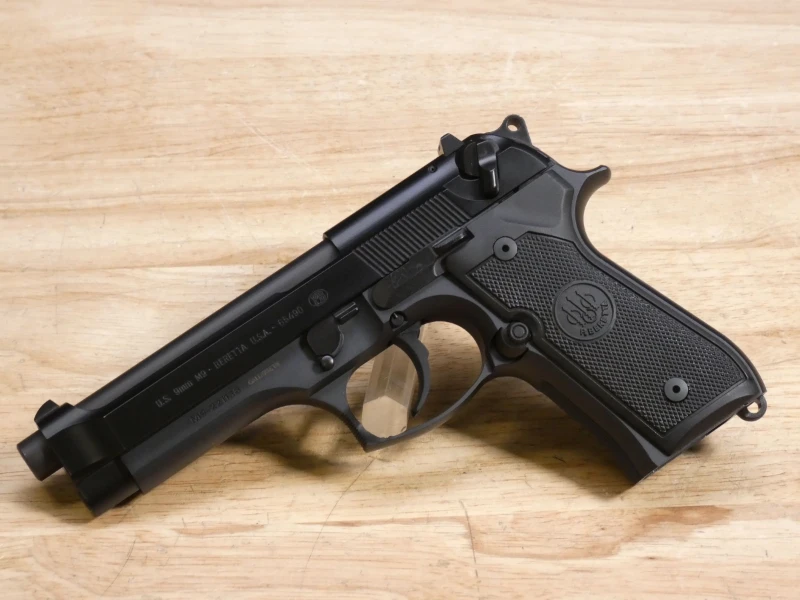
The Beretta M9, officially designated as the Pistol, Semiautomatic, 9mm, M9, is an iconic firearm with a rich history as the standard-issue sidearm for the U.S. military for over three decades. Its reputation for reliability and durability makes it a popular choice on the civilian market. The value of a used Beretta M9 is determined by its specific model, overall condition, included accessories, and current market demand, making a clear understanding of these factors essential for any potential seller.
What Determines Your Beretta M9’s Worth
The primary factors determining your Beretta M9’s worth are its specific model, physical condition, and mechanical integrity. Newer variants like the M9A1 and M9A4 command higher prices due to modern features such as accessory rails and optics-ready slides. Condition is paramount, with cosmetic blemishes like scratches or holster wear reducing value. However, the M9 is famously durable, with a service life expectancy of around 25,000 rounds. Consequently, the condition of wearable parts like the barrel, springs, and locking block often carries more weight than the sheer round count, as a well-maintained, high-use pistol can still be in excellent functional shape.
2026 Price Breakdown by Generation
Standard M9 / 92FS
The value of a Beretta M9 is primarily determined by its specific model rather than distinct generations. The standard M9 and its civilian counterpart, the 92FS, are functionally identical and form the baseline for valuation. A new Beretta M9 has an MSRP starting at $479, though retail prices often fall between $600 and $800. On the used market, the average price is approximately $584. Well-maintained police trade-in models represent a significant value, often available for around $480 to $500, making these classic pistols an accessible and reliable choice for many shooters.
Because the standard M9 and 92FS models are so common, their market value is well-established, typically ranging from $370 to $450 depending on condition, accessories, and location. For this reason, seeking a professional appraisal is generally not a cost-effective measure. Owners can get a reliable estimate of their firearm’s worth by consulting online forums and recent sales on auction websites. The value of these foundational models is stable, driven by their proven design and widespread availability rather than rarity, making them a consistent and predictable asset on the used market.
M9A1
The Beretta M9A1 represents a significant evolution from the standard model, introducing features that enhance its tactical utility and, consequently, its market value. The most notable upgrade is the inclusion of an integrated one-slot Picatinny rail on the frame, allowing for the easy attachment of modern accessories like weapon lights and lasers. This single feature makes the M9A1 far more appealing to users focused on home defense or tactical applications. Additionally, the M9A1 features more aggressive checkering on the front and back straps, providing a more secure grip than the original M9, which further increases its desirability.
These enhancements ensure the M9A1 consistently commands a higher price than its predecessor on both the new and used markets. It effectively bridges the gap between the classic military sidearm and a more modern, versatile handgun. For sellers, highlighting these specific upgrades is key to justifying its premium value. For buyers, the M9A1 offers a tangible improvement in functionality that many find well worth the additional cost over the standard model, solidifying its place as a popular and more valuable variant in the Beretta lineup.
M9A3
The Beretta M9A3 introduced a comprehensive set of modernizations that significantly increased its value over previous models. This variant features a slimmer, more vertical Vertec-style grip, which is highly sought after by shooters with smaller hands, though it can be swapped for a traditional M9-style grip. A crucial value-adding feature is its factory-threaded barrel, making it suppressor-ready right out of the box. Finished in a distinctive Flat Dark Earth color, the M9A3’s aesthetics and functional upgrades cater directly to the demands of the modern firearms enthusiast, placing it in a higher price bracket.
The combination of its enhanced ergonomics, suppressor compatibility, and other improvements like a 3-slot Picatinny rail makes the M9A3 a premium offering. Its value is consistently higher than that of the M9 and M9A1 because it incorporates upgrades that would be costly to add via the aftermarket. The M9A3 is seen not just as a service pistol but as a complete tactical package, and its resale value reflects this comprehensive feature set. Owners of an M9A3 can expect to receive a significantly higher offer than they would for a standard model in similar condition.
M9A4
The M9A4 stands at the pinnacle of the M9 series, incorporating the most advanced features and commanding the highest value. Its most significant upgrade is the factory red-dot-optic-ready slide, allowing for the direct mounting of various popular micro red dot sights. This feature alone places it in a different class from its predecessors. Building on the M9A3’s design, it also includes a threaded barrel, an enhanced short-reset trigger for faster follow-up shots, and the ergonomic Vertec grip. These features make the M9A4 a top-tier, competition-ready pistol straight from the factory, justifying its premium price point.
The market recognizes the M9A4’s advanced capabilities, with its value being approximately $300 more than a standard 92FS. This substantial price difference is a direct reflection of the cost and convenience of having these modern features integrated from the manufacturer. For sellers, the M9A4 is the most valuable non-special-edition model to have, as it appeals directly to the contemporary shooter who prioritizes performance, optics, and suppressor use. Its position as the most feature-rich variant ensures it holds its value exceptionally well compared to older models in the M9 family.
How Modifications Affect Value
While modifications can enhance the performance of a Beretta M9, they do not guarantee an increase in its resale value. Upgrading to a quality red dot sight from a reputable brand like Trijicon, Holosun, or Leupold is a popular choice for improving accuracy and speed. However, there is no market consensus that this adds to the firearm’s resale price. The cost of the optic and any necessary slide modifications are considered personal preferences, and a seller is unlikely to recoup the full investment. Potential buyers may prefer a different brand or an unmodified slide, making such upgrades a subjective value proposition.
Similarly, aftermarket triggers are a common performance enhancement, but their effect on value is subjective. While one buyer might appreciate an upgraded trigger, a collector or purist may prefer the original factory configuration, potentially lowering the firearm’s value in their eyes. Because of this divided opinion, it is highly recommended to retain all original parts. Including the factory trigger and other components with the sale allows the new owner to revert the pistol to its stock condition, thereby appealing to the widest possible range of potential buyers and preserving the firearm’s market value.
Regional Price Variations in 2026
The value and legality of a Beretta M9 can vary significantly based on state and local laws, creating distinct regional markets. In states with strict firearm regulations, such as California, the M9 is legal for purchase only if it is a specific, state-compliant model listed on the official handgun roster. These models are typically sold with 10-round magazines to adhere to the state’s capacity restrictions. This requirement can impact the value of standard capacity magazines and limits the pool of available firearms for residents, potentially influencing local pricing for compliant models.
Similarly, New York’s SAFE Act imposes a 10-round magazine capacity limit and requires a valid New York Pistol License for handgun possession. These regulations mean that a standard Beretta M9 must be sold with compliant magazines to be legal in the state. Such state-specific laws affect not only local pricing but also the complexity of interstate sales. A firearm that is standard in a less-restrictive state may require modification or be less desirable in a state like California or New York, thereby influencing its market value depending on the buyer’s location.
Online vs Local Sales
When selling a Beretta M9, owners must choose between the convenience of a local dealer and the potentially higher return of a private sale. Gun dealers typically offer between 50% and 70% of the used retail value, providing a quick and simple transaction but at a lower price. A private sale, whether local or online, can yield a better financial outcome. However, it requires the seller to navigate legal requirements carefully. A bill of sale is highly recommended to document the transfer, and sellers must be diligent in complying with all state and local laws, which may require using an FFL for background checks.
Selling a firearm online to an out-of-state resident introduces mandatory federal regulations. To legally sell a Beretta M9 across state lines, the transaction must be processed through a Federal Firearms Licensee (FFL). The seller is required to ship the handgun to an FFL dealer located in the buyer’s state of residence. The buyer must then visit that dealer to complete all necessary paperwork, including the ATF Form 4473 and a NICS background check, before they can legally take possession of the firearm. This process ensures full legal compliance for both parties.
The logistics of shipping a handgun add another layer of complexity to online sales. Federal law requires a private seller to use a common carrier like UPS or FedEx and to declare to the carrier that the package contains a firearm. However, carrier policies are often more restrictive than the law. For example, UPS requires that handguns be shipped via its Next Day Air service and will only accept such shipments from a licensed dealer holding a specific contract. This policy makes it practically necessary for a private seller to use their local FFL to execute the shipment legally and correctly.
The FFL Buying Advantage
Utilizing a Federal Firearms Licensee (FFL) for a handgun transaction is not merely an advantage; it is a federal requirement for any sale conducted between residents of different states. The FFL serves as a crucial, legally mandated intermediary that ensures the entire process adheres to the law. By managing the transfer, the FFL verifies the buyer’s eligibility through a mandatory NICS background check and ensures all federal, state, and local paperwork is completed accurately. This shields both the buyer and the seller from the significant legal risks associated with an improper firearm transfer.
Beyond ensuring strict legal compliance, an FFL provides a secure and structured environment for the final transaction. They are equipped to handle the complexities of receiving firearm shipments and can navigate carrier policies more easily than a private citizen. While FFLs charge a fee for this service, the cost is a small price to pay for the peace of mind that comes with knowing the transfer of a handgun like the Beretta M9 has been conducted professionally and in full accordance with all applicable laws, protecting all parties involved from potential liability.
What Increases Your Offer
A meticulous pre-sale cleaning is one of the most effective ways to increase the perceived value of your Beretta M9. Before listing, ensure the weapon is unloaded and then field strip it according to the owner’s manual. Use a quality solvent and nylon brushes to thoroughly clean the barrel, slide, frame, and all small components to remove carbon buildup and grime. Pay special attention to critical areas like the slide rails and the feed ramp. A common error is over-lubrication; apply a light coat of high-quality gun oil only to metal-on-metal contact points and wipe off any excess.
High-quality presentation is crucial for attracting the best offers, particularly in an online marketplace. To effectively photograph your Beretta M9, use a simple, neutral background that won’t distract from the firearm. Ample natural light is best, as it minimizes harsh shadows and accurately portrays the gun’s finish. Capture clear, high-resolution images from multiple angles, filling the frame with the pistol. It is also important to photograph any markings, unique features, and imperfections to represent the item honestly and build trust with potential buyers, which can lead to more confident and higher offers.
While the market lacks a consensus on a specific monetary penalty for an incomplete package, providing the firearm with its original box, manual, lock, and all factory-included magazines significantly boosts its appeal. A complete set suggests that the firearm was well-maintained by a meticulous owner. This completeness can be a deciding factor for a buyer choosing between two similar firearms, often leading to a faster sale and a higher final offer. Retaining and including these original items is a simple yet powerful way to maximize your Beretta M9’s resale value.
When to Sell Your Beretta m9
Timing the sale of your Beretta M9 can have a notable impact on the final price and speed of the transaction. The market for used firearms generally experiences a significant upswing during tax refund season, which typically runs from February through April. During this period, many potential buyers have more discretionary income, leading to increased demand across the board. Listing your firearm during this window can attract a larger pool of motivated buyers, potentially resulting in a quicker sale at a more favorable price point for a popular handgun like the M9.
Another strategic time to sell is in the late summer and early fall, specifically August and September. While the Beretta M9 is not a primary hunting firearm, this period leading into various hunting seasons sees a general increase in firearm-related interest and purchases. Conversely, sales often slow down during the summer months and immediately around the major December holidays, as consumers’ budgets and attention are typically focused elsewhere. Aligning your sale with these peak seasons can help you capitalize on heightened market activity and buyer enthusiasm for firearms.
Although the Beretta M9 enjoys consistent demand year-round due to its status as a reliable defensive and collectible handgun, leveraging these seasonal trends is a smart strategy. By listing your pistol when market activity is at its highest, you increase the likelihood of a competitive selling environment. Monitoring online marketplaces during these peak times can provide valuable insight into current pricing and demand, allowing you to position your Beretta M9 for the most successful sale possible, ensuring you receive its maximum market value from an engaged audience.
Common Pricing Mistakes
A frequent error sellers make is attempting to recoup the full cost of personal modifications. While you may have invested in an expensive red dot sight or a custom trigger job, these upgrades rarely translate to a dollar-for-dollar increase in resale value. The market for such modifications is highly subjective; a potential buyer may not value your specific choice of optic or trigger. Therefore, you should price your Beretta M9 based on the condition and model of the base firearm, treating any aftermarket parts as potential bonuses rather than core components of its value.
Another critical mistake is failing to research the current market value for your specific Beretta M9 model. Prices can vary significantly between a standard M9, a police trade-in, and a modern, feature-rich M9A4. Relying on the original purchase price from years ago is unrealistic and will likely lead to an overpriced listing that languishes without offers. Before setting a price, sellers should consult recent sales on online gun auctions and forums to establish a realistic, competitive asking price based on current, real-world data for comparable firearms.
Finally, spending money on a professional appraisal for a common, mass-produced firearm like the Beretta M9 is often an unnecessary expense. The market for these pistols is transparent and well-documented, with typical used values for standard models falling within a predictable range of $370 to $450, depending on condition. Abundant free resources, including online communities and pricing guides, can provide a reliable and accurate estimate of your M9’s value, saving you the cost of a formal appraisal that is unlikely to provide any additional insight.
Market Outlook for 2026
While specific future price predictions are unavailable, the market outlook for the Beretta M9 in 2026 appears stable, anchored by its enduring legacy and reputation. As a former U.S. military service pistol, it holds a special place for collectors, veterans, and enthusiasts, which ensures a consistent baseline of demand. Its proven track record for reliability and durability also makes it a perennial favorite for first-time handgun owners and those seeking a dependable home defense option. Barring unforeseen, significant shifts in firearms legislation, the M9’s value is expected to remain steady rather than experience dramatic fluctuations.
Looking ahead, market trends suggest a continued divergence in value between different M9 models. The newer, more advanced variants like the M9A4, with its factory optics-ready slide and threaded barrel, will likely hold their value more effectively and appeal to the modern shooter. In contrast, the standard M9 and 92FS models will continue to be valued for their classic design and historical significance. While a major price increase is unlikely for these base models, their iconic status should prevent any significant depreciation, securing the Beretta M9’s position as a solid asset in the used firearms market.
Frequently Asked Questions
Does the “Made in Italy” vs. “Made in USA” marking affect the M9’s value?
For the vast majority of buyers and shooters, the country of manufacture—whether Italy or the United States—has a negligible impact on a standard Beretta M9’s value. Both Italian and American factories produce the firearms to the same high-quality specifications. However, a small segment of dedicated collectors and purists may show a slight preference for the Italian-made models, which can occasionally result in a minor price premium in those niche circles. For the general used market, condition and model are far more significant value drivers than the manufacturing location.
How much does a high round count really impact the M9’s price?
Due to the Beretta M9’s exceptional durability and a service life expectancy of around 25,000 rounds, a high round count has less of a negative impact on its value compared to many other handguns. Prospective buyers are typically more concerned with the actual condition of key wearable components, such as the barrel’s rifling, the locking block, and the recoil spring. A well-maintained M9 with a higher round count can often be in better mechanical shape, and thus more valuable, than a low-round-count pistol that has been neglected or improperly stored.
Will having the original box and paperwork increase my offer?
Yes, including the original box, owner’s manual, and any factory accessories will almost always increase the value and appeal of your Beretta M9. While there isn’t a fixed dollar amount associated with these items, a complete package signals to potential buyers that the firearm was well-cared-for by a meticulous owner. For collectors, the original packaging is often a critical component of the firearm’s value. For the average buyer, it enhances the overall presentation and can lead to a faster sale at a higher price compared to an identical firearm being sold alone.
Do police trade-in models have a lower value?
Police trade-in Beretta M9s typically have a lower market value than their privately owned counterparts, often selling in the $480 to $500 range. This price difference is almost entirely due to external cosmetic issues, such as holster wear, scratches, and dings acquired during duty use. Mechanically, these firearms are often meticulously maintained by department armorers and may have been shot very little. This makes them an excellent value for buyers who prioritize function and reliability over a pristine finish, as they offer proven performance at a discounted price.
Is an older Beretta M9 more valuable than a new one?
In most cases, an older, standard-production Beretta M9 is not more valuable than a new one. The M9 market generally prioritizes modern features over age. Newer models like the M9A1, M9A3, and M9A4 command higher prices because of their desirable upgrades, such as accessory rails, threaded barrels, and optics-ready slides. An older M9 would only command a premium if it were a rare variant, had historical significance, or was in new-in-box, unfired condition. For the common shooter and collector, newer models with enhanced features typically hold more value.
Get a Cash Offer Today
Ready to sell your Beretta M9? We make the process simple and secure. Avoid the hassle of private listings and legal complexities. Submit your firearm’s details through our easy-to-use online form, and our experts will provide a fair, competitive cash offer based on the latest market data.
We are a fully licensed FFL dealer, ensuring every transaction is 100% compliant with federal and state laws. Once you accept our offer, we provide a prepaid shipping label for a safe and legal transfer. Get paid quickly without the uncertainty of private sales. Discover your Beretta M9’s true value today.