
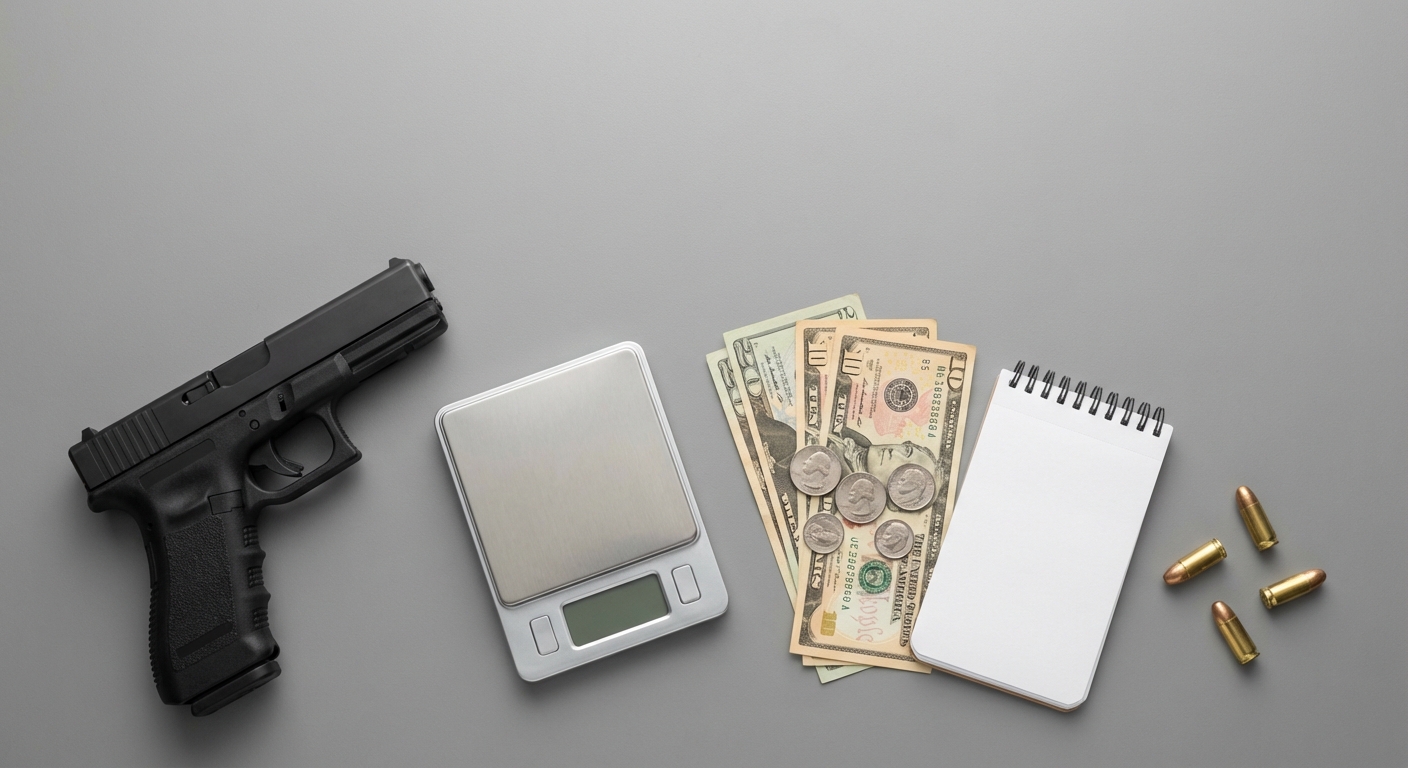

Most people price a Glock 17 wrong because they treat “worth” like a single number. It isn’t. It’s a moving target driven by your exact configuration, your gun’s condition, the market this week, and where, and how you sell.
If you’re about to list yours, you’ve probably already seen the problem: one person swears a “Glock 17” is worth X, a shop offers you way less, and online listings are all over the place. That happens because “Glock 17” can mean a Gen5 or an older Gen3, and Gen5 is the current mainstream production generation for general nationwide retail in the U.S. It also comes new as both a standard (non-MOS) model and a Glock 17 MOS, meaning the factory optics-ready slide cut designed to mount a red-dot using adapter plates, which changes what buyers will pay versus a standard slide.
Then reality kicks in: an LE trade-in versus a clean privately owned gun, dim night sights, missing mags or the case, and an unknown round count all move your number fast. Fast cash versus top dollar is the tension.
Start by nailing down your exact Gen, MOS or non-MOS, condition, and selling channel, then only trust numbers that match, and always follow your state rules and use legal transfer methods.
You’ll walk away with a practical breakdown and a checklist to estimate your own Glock 17 value without overpricing or leaving money on the table.
Glock 17 Value Baselines
Most Glock 17 pricing arguments disappear once you separate three baselines, because each one bakes in a different amount of effort, time, and risk.
Anchor your top end to street price, the real going rate people actually pay, not a catalog number, because MSRP rarely matches what retailers move inventory for. As of 2026-02-23, the average new price snapshot sits around $603.11, with a typical new range of about $550 to $650. On the same 2026-02-23 snapshot, another line lists $611.66 new, which is normal when feeds roll up different listings and dates.
Person-to-person used pricing is the cleanest read on what a private buyer will pay, but it still depends on timing and how well your listing is presented. The 2026-02-23 snapshot pegs average used around $440.17, while an alternate line shows $443.58 used, essentially the same market within rounding and sample differences. Over the last 12 months, the averages run about $608.07 new and $451.33 used, which is a helpful market-timing context when today’s snapshot feels noisy.
A dealer trade-in offer is lower because the shop needs wholesale-to-retail margin and they’re paying you for convenience, fast payment, and reduced compliance friction on your side. A reliable rule of thumb is about 60% of new-gun value, which puts a store offer around $300 as likely, with roughly $350 to $400 as an absolute max in many scenarios.
Why the tiers separate comes down to convenience and overhead: private sales demand more time and buyer screening, dealers carry compliance workload, storage, and resale risk, and every step adds margin. Treat these numbers as starting points, then adjust for Gen, MOS, condition, and any included extras.
Sanity-check tip: pull a few recent comps from GunBroker’s Completed Items view and match the sold price with the end date, then compare like-for-like configurations before you pick your number.
These baselines get you in the right ballpark; the rest of the work is figuring out where your specific Glock 17 lands inside that range (see this Glock 17 worth guide for a dedicated valuation walkthrough).
Key Factors That Change Price
After you’ve got a baseline in mind, most of the real price swing comes from three buyer-preference variables: which generation it is, whether it’s MOS, and how it presents on inspection. Nail those three in your listing, and you stop leaving money on the table.
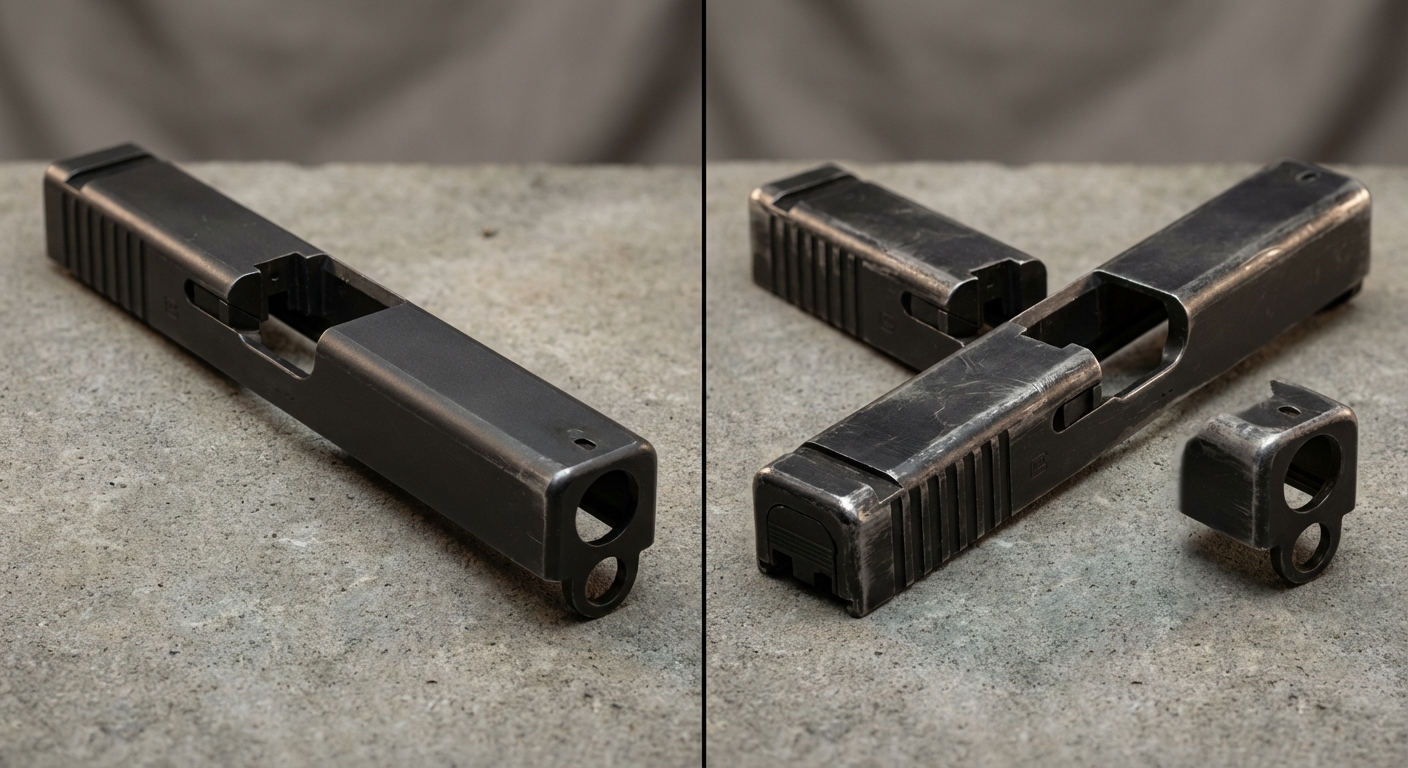
Buyers use “Gen” as shorthand for ergonomics and controls, not a long spec sheet. A Gen3 Glock 17 has the magazine catch on the left side only, and it’s not reversible, so left-handed buyers often discount it. Gen4 is the easy middle ground because it has an enlarged magazine release that’s reversible. Gen5 is the broadest-appeal setup: reversible magazine catch plus an ambidextrous slide stop lever, so nobody feels like they’re compromising just to run the gun.
MOS models usually move faster because the optic-cut slide is already done, but “MOS” only commands full value when it’s complete. From the factory, an MOS ships with the cover plate installed and includes the MOS adapter plate set. That set is four numbered plates, 01 through 04, packaged with mounting screws. Screw sets vary by plate and optic per the instructions, so buyers look for the actual bag of screws, not just the plates. If your box is missing the cover plate, plates, or screws, expect pushback because the buyer has to source parts before they can even mount anything.
On a kitchen-table inspection, most buyers are hunting for honest wear versus neglect. Here’s the tight checklist that answers their questions fast:
- Slide and finish wear: look at the muzzle corners and slide flats where holsters rub.
- Barrel and bore: sharp rifling, no pitting, no obvious crown damage.
- Frame and rails: no cracks, peening, or chewed-up rail surfaces.
- Controls function: trigger reset, slide stop engagement, mag release feel, safeties working as designed.
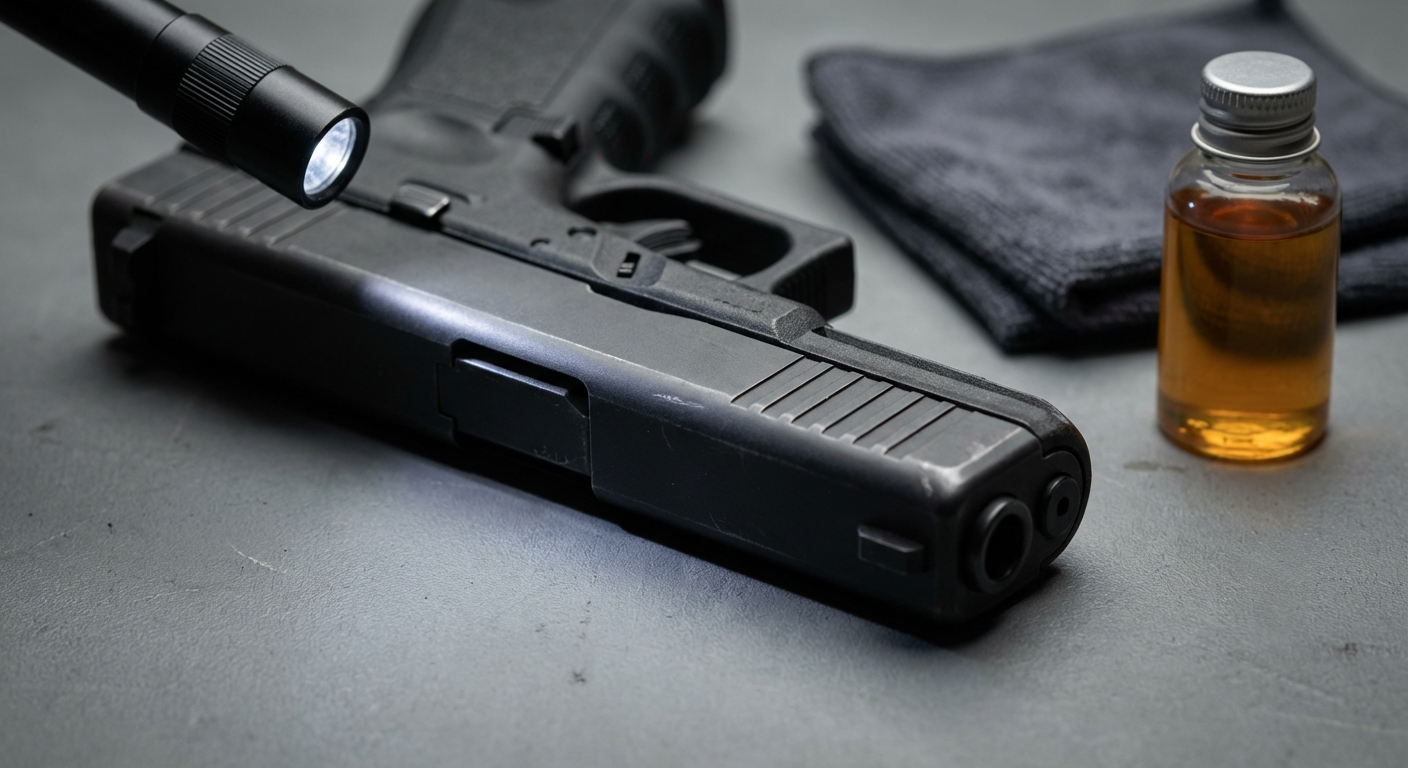
- Night sight brightness: confirm they still glow in a dark room, “dim” reads as old.
- Matching serials: buyers pay more when major parts match and nothing feels pieced together.
- Original case and magazine count: more complete packages sell cleaner and for more.
When you see LE trade-in grading in listings, buyers translate it into dollars. “Good” means noticeable holster wear but mechanically functional. “Very Good” is light-to-moderate wear. “Excellent” is minimal external wear with a clean bore. Those labels mostly describe cosmetics, so your job is to be precise: identify your Gen, confirm MOS parts are present (if applicable), then grade condition the way expert appraisers already interpret those words when valuing firearm collections.
Once the core gun is clearly described, the next question buyers ask is whether any extras help them-or just complicate the deal (and how supply and demand affects firearm resale prices in your area).
Upgrades, Optics, and Included Extras
Upgrades rarely pay you back dollar-for-dollar. If you spent $300 chasing a “perfect” setup, expect buyers to treat a lot of that spend as personal preference, and some of it as a risk that shrinks your buyer pool.
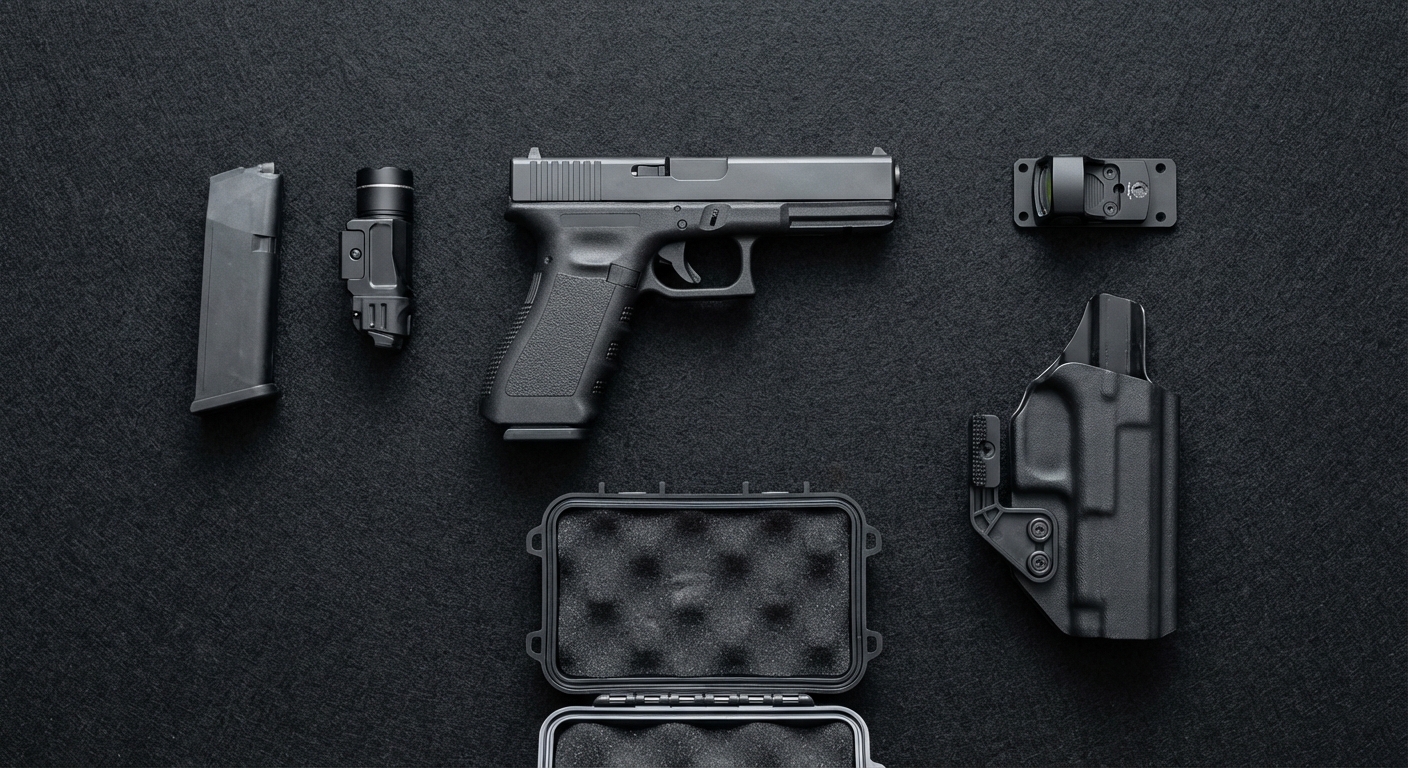
Reversible, name-brand add-ons with proof are the easiest to price in. A quality red dot included on a factory optics-ready (MOS) gun can add real value because the buyer avoids the mounting hassle and the full retail hit. Professional slide milling also lands better when it’s from a known provider and you can show exactly what was done.
For example, JagerWerks offers Glock slide milling for optic cuts plus additional machining options like front-side cuts and a debadging pocket, with add-ons such as corner, top, and rear cuts. When work is documented and the cut is a common footprint, buyers trust it more and negotiate less.
Aftermarket small parts, springs, connectors, magwells, and “trigger work” without a paper trail usually don’t move the needle. Buyers see two problems: they can’t verify the parts, and they can’t verify the work. If you don’t have receipts or the original parts, most shoppers just value the gun like a clean stock example and treat the extras as freebies.
Permanent changes are where resale gets fragile. Stippling, frame reductions, aggressive undercuts, and oddball compensator or barrel setups push your gun into “someone else’s taste,” and that often means lower offers. Unknown gunsmithing is the fastest value killer, especially if reliability is a question and the factory parts are gone.
Quick warranty heads up: the Glock limited warranty excludes defects or damage from “unauthorized alterations or modifications,” and it excludes malfunctions or damage caused by installation or use of parts not manufactured by GLOCK. Glock decides whether warranty coverage applies.
Best way to package it for resale: include every OEM part you removed, list the exact parts currently installed, include receipts and work orders, and disclose who did the milling or trigger work (this is also how expert appraisers evaluate modified firearms). If buyers won’t pay for accessories, you’ll usually do better selling the optic and add-ons separately.
How It Stacks Up in Value
Your Glock 17’s value makes more sense when you compare how supply and demand works across categories.
Among other striker-fired 9mm service pistols, pricing behaves like a commodity market: tons of inventory, tons of buyers, and small feature differences. That keeps used values relatively steady, but it also keeps them competitive, because a shopper can usually find three similar options in the same week and pick the cleanest example.
Collector-leaning guns play by different rules. Discontinued variants, limited runs, and region-specific constraints create scarcity, and scarcity is what separates “easy to replace” from “hard to replace.” The same condition variables still move the needle across models-finish wear, bore condition, matching numbers, and aftermarket parts-they just matter more when the buyer pool is chasing a specific configuration.
Long guns split the difference. Common AR-platform rifles and pump shotguns are widely produced, so supply caps the upside, while short-barreled or pistol-style variants can swing harder based on local rules and local appetite.
That context is why comps matter so much with a Glock 17: you’re not guessing value in a vacuum, you’re competing against whatever the buyer can replace it with this week, including adjacent models like a current Glock 19 worth guide.
Call a deal “good” only after you’ve checked market data from dealer listings and auctions, then sanity-checked it against seasonality, regional demand, and your closest sold comps.
Set Your Price and Net Proceeds
The “best” Glock 17 price is the one that fits your selling lane and actually closes. Fees, time, a realistic negotiation buffer, and transfer logistics change what you keep far more than another $10 on the tag.
- Pick your baseline tier based on who’s buying.
If you’re aiming at a dealer or an instant-offer style buyer, judge the number against the new-gun wholesale context, not what a private seller lists online. Dealers have to leave room for overhead and resale margin, so the “right” baseline is different than a peer-to-peer ask. - Adjust for Gen, MOS, and condition using the same sliders you already identified.
Don’t re-litigate the whole model history, just apply your reality: MOS readiness, visible wear, round count, and any parts that affect buyer confidence. Condition moves the needle because it changes how fast the gun sells, not just the number you type. - Price the extras like a buyer, not like a builder.
Use the prior section’s “helps, neutral, hurts” mindset. Helpful extras can justify a higher ask, neutral extras make your listing easier to choose, and hurtful mods mean you either revert to stock or expect to discount to get it done. - Add a small negotiation buffer, then stop.
For Glocks, a typical negotiation spread is tight: $0 to $20 between asking and the number you actually agree on. If you pad by $75 “just in case,” you mostly invite tire-kickers. - Sanity-check with sold comps and local listings.
Sold prices tell you what cleared. Local listings tell you what you’re competing against this week. If your ask is higher, you need a specific reason a buyer can see in one glance.
A private-party sale, meaning a sale directly between individuals subject to applicable federal and state rules, usually maximizes price but adds coordination and transfer friction. Transfer fees commonly run about $25 to $50 per firearm at many FFLs; in California, the DROS fee is $37.19 collected at transfer, and a CA PPT through an FFL typically stacks DROS plus a dealer PPT fee.
- Selling channel:Private-party sale (PPT)
Net proceeds: Highest when it closes
Speed: Variable
Your effort: Highest, messaging, meetups, coordinating the FFL transfer - Selling channel: Consignment
Net proceeds: Medium to high, minus commission
Speed: Medium
Your effort: Lower, the shop handles showings, you wait for it to sell - Selling channel:Dealer buyout / instant-offer (online buyers)
Net proceeds: Lower, priced for certainty
Speed: Fast
Your effort: Lowest, trade margin for convenience
If you want the “sell it, ship it, get paid” lane, services like Cash My Guns, operated by Dunlap Gun Buyers (an FFL) and marketed as “Safe • Legal • Hassle-Free,” build convenience into the offer with things like a no-obligation appraisal, prepaid shipping label, full insurance coverage, packing guidance, and compliance handling.
Pick your lane first: if you need speed and certainty, accept a lower but cleaner net. If you want max price, set your ask from comps, bake in a realistic $0 to $20 buffer, and be ready to do the work to close.
And because the channel you choose determines the transfer process, the last step is making sure the handoff is as clean legally as it is financially.
Selling Safely and Final Takeaways
The fastest way to mess up a sale is assuming your state works like the internet comment you read. The rules change the buyer pool, the required steps, and sometimes the going price because availability is either wide open or tightly constrained. An “FFL transfer” is the compliant route many sales run through a Federal Firearms Licensee when required, so the paperwork and background check happen the way your state expects (see a state-by-state guide to selling a gun).
California is where “same model” can mean “totally different market.” As of 2025-08, the CA DOJ Roster of Certified Handguns includes Glock 17 Gen3 variants, but Glock 17 Gen4 and Gen5 variants are not roster-listed for standard new retail sale to non-exempt buyers. Roster status is configuration-specific, meaning the listing only covers the exact variant on the roster, not every Glock 17 in every generation or feature set. That reality directly affects legal retail availability and pushes buyers toward whatever they can actually transfer through a CA FFL.
Texas does not require private-party handgun transfers to go through an FFL or a background check, but it is still unlawful to transfer to a prohibited person (Tex. Penal Code §46.06). Expect buyers to care about clear, lawful eligibility, even without a mandated process.
Florida background checks apply to licensed dealer sales, and there is no statewide requirement that private-party handgun sales go through an FFL or background check (Fla. Stat. §790.065). Many sellers still choose an FFL transfer for clean documentation and compliance comfort.
- Verify your exact model and configuration.
- Confirm your state’s current rules using official resources or a local FFL.
- Decide your sales channel and whether an FFL transfer is required or preferred.
- Gather accessories and any docs you have.
- Photograph it clearly, including serial-number area (without posting the full number publicly).
- Price it realistically for your local buyer pool.
Conclusion
Your Glock 17 is worth what the right buyer will pay in the lane you choose: private-party retail, used-market pricing, or a dealer-style offer. Start by anchoring to a clean baseline, then adjust for the stuff buyers actually pay for-Gen, MOS vs non-MOS, and honest condition-because that’s where the big swings come from. Accessories are the usual trap: lights, optics, spare mags, and holsters rarely pay back dollar-for-dollar, so price them as sweeteners, not reimbursements. Your selling channel decides your net, and fees, shipping, and negotiation spread change the take-home, so sanity-check your ask against sold comps before you commit, and double-check your state’s rules before you transfer.
If speed and simplicity matter more than squeezing out top private-party dollars, Cash My Guns (operated by Dunlap Gun Buyers, an FFL) positions the process as “Safe • Legal • Hassle-Free,” “Trusted Since 2013,” and offers a no-obligation appraisal with shipping and compliance handling built into the lane. Pull your sold comps, run your condition checklist, then get a Cash My Guns quote if that tradeoff fits what you’re trying to do.