
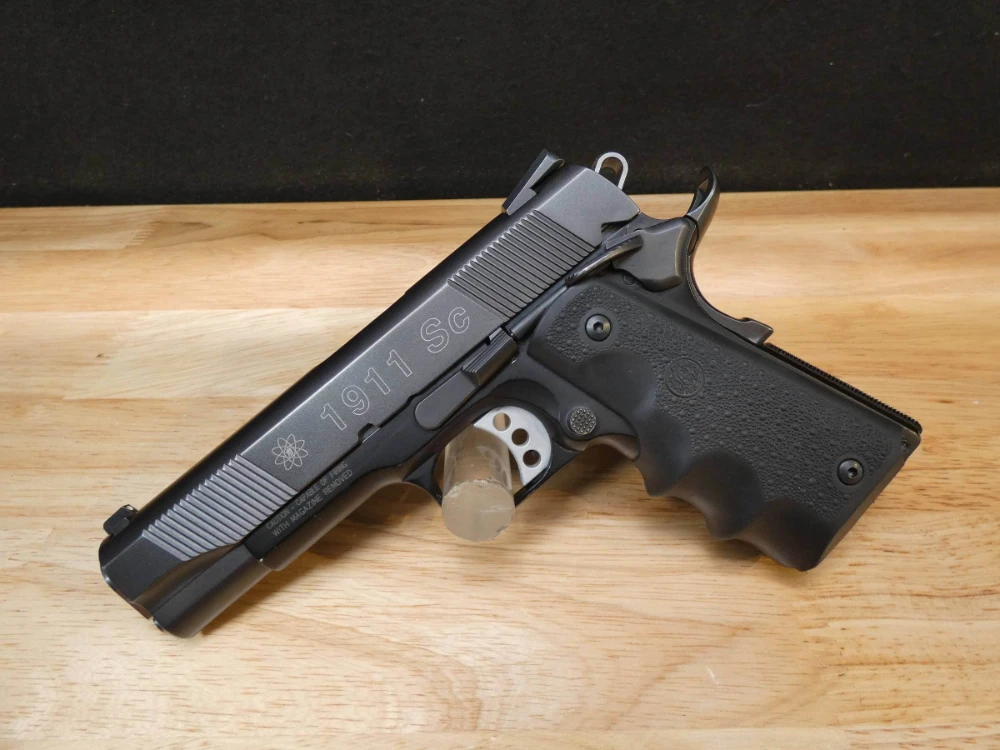
The Smith & Wesson Model 1911 represents a modern take on a timeless American classic. As a semi-automatic pistol based on the iconic M1911 design, it holds a significant place in the firearms community for its reliability and performance. Understanding the key factors that determine its resale value is crucial for any owner looking to sell. This guide provides a comprehensive breakdown of its market worth, from model-specific pricing and the impact of modifications to navigating the legalities of a sale.
What Determines Your Smith & Wesson model 1911’s Worth
The value of a Smith & Wesson Model 1911 is primarily driven by its specific series and overall condition, rather than age or generation. High-end variants from the Performance Center will naturally command a higher price than standard SW1911 models. Cosmetic condition, mechanical tightness, and a documented maintenance history are far more critical than the sheer number of rounds fired. In fact, a well-maintained pistol can endure over 100,000 rounds with only routine spring replacements. Therefore, a seller should focus on presenting a clean, mechanically sound firearm with any original accessories to maximize its market value.
2026 Price Breakdown by Generation
Standard SW1911 Models
The standard Smith & Wesson SW1911 models form the backbone of the product line and have a well-documented market value. When purchased new, the Manufacturer’s Suggested Retail Price (MSRP) for the entire SW1911 series ranges from $1,129 to $1,869, with the average new price for a standard model hovering around $1,054. These figures reflect the quality and reputation of the Smith & Wesson brand, offering a solid entry point into their 1911 family. These pistols are known for their reliability and classic aesthetics, making them a popular choice for both enthusiasts and first-time 1911 owners looking for a dependable firearm.
In the used market, a standard SW1911 in very good to excellent condition typically sells for between $650 and $1,000. The average used price is approximately $766, with a 12-month trailing average sitting slightly lower at about $743. This demonstrates that the pistols hold their value reasonably well, depreciating from their new price but maintaining a stable and predictable resale value. The final price within this range depends heavily on cosmetic condition, the inclusion of the original box and paperwork, and any included accessories like extra magazines or holsters, which can make a private listing more attractive to potential buyers.
E-Series Models
The Smith & Wesson 1911 E-Series stands out with its distinctive fish-scale-like slide serrations and enhanced features, which places it in a specific niche within the used market. These models are valued slightly differently than their standard counterparts, reflecting their upgraded design and components. The average used value for an E-Series pistol is approximately $738, which is very close to the overall average for the SW1911 line. This indicates that while they are a premium offering, their value in the secondary market remains competitive and accessible. Buyers seeking an E-Series are often looking for its unique aesthetic and performance enhancements right out of the box.
When considering a new purchase, the E-Series models are positioned as a step up from the base models, with an average new price of around $954. This price point is attractive for buyers who want factory-installed upgrades without moving into the much higher-priced Performance Center category. The value proposition of the E-Series lies in its blend of custom-style features and factory reliability. For sellers, this means the pistol appeals to a knowledgeable segment of the market that recognizes and appreciates the specific enhancements that define the E-Series, helping it maintain a solid resale value compared to more basic configurations.
Performance Center Models
The Performance Center line of Smith & Wesson 1911s represents the pinnacle of the company’s production, featuring hand-fitted components, precision tuning, and premium materials. These firearms are built for competition and discerning enthusiasts, which is directly reflected in their market value. New models from the Performance Center are valued significantly higher than standard or E-Series pistols, typically falling within the $1,450 to $1,560 price range. This premium is justified by the enhanced accuracy, smoother action, and superior craftsmanship that come from the specialized attention these handguns receive during assembly, making them a top-tier choice for serious shooters.
In the used market, Performance Center models retain their value exceptionally well due to their reputation and limited production numbers compared to standard models. While specific used prices can vary based on condition and exact model, they consistently fetch a higher price than their more common counterparts. Owners of these firearms can expect strong demand from buyers who are specifically seeking the competitive edge and refined quality that the Performance Center brand guarantees. The value is less about age and more about the inherent quality and performance capabilities built into each pistol from the factory.
Specialty & Limited Editions
Beyond the standard production lines, Smith & Wesson occasionally releases specialty or limited-edition 1911 models that can command a premium on the resale market. The value of these firearms is less predictable and is heavily influenced by factors such as production numbers, unique features, commemorative engravings, and overall collector demand. Unlike a standard SW1911, whose value is well-documented online, these rare variants may require more specific research to price accurately. For such firearms, obtaining a professional appraisal could be a worthwhile investment, as their unique status may not be reflected in general market data, potentially leading to a much higher valuation.
The market for limited-edition firearms is often driven by collectors who are willing to pay more for exclusivity and pristine condition. A seller with a rare Smith & Wesson 1911, especially one that is new-in-box with all original documentation, is in a strong position. The value of these pistols is less about utility and more about their collectible nature. Therefore, maintaining the firearm in its original, unmodified condition is paramount to preserving its enhanced value. Any alterations could significantly diminish its appeal to the collectors who are the primary audience for such a piece.
How Modifications Affect Value
When it comes to modifying a Smith & Wesson Model 1911, sellers should proceed with caution, as changes can negatively impact resale value. Installing an aftermarket trigger, for instance, is unlikely to increase the pistol’s worth and may even decrease it. Many potential buyers prefer firearms in their original factory configuration, viewing them as more reliable and unadulterated. While a trigger job performed by a top-tier, nationally recognized gunsmith might appeal to a small subset of knowledgeable buyers, modifications from unknown smiths or DIY installations are typically a red flag. Most sellers should not expect to recoup the cost of the trigger or the labor upon resale.
Regarding modifications that consistently add value, there is no clear market consensus. The value of a modified pistol is highly subjective and depends more on the quality of the aftermarket components and the gunsmith’s reputation than on the modifications themselves. While some buyers may appreciate high-quality sights or custom grips, others may see them as a reason to offer a lower price. Including the original factory parts with the sale is often appreciated, but providing receipts for professional gunsmithing work can be more influential in justifying the condition and quality of the firearm, even if it doesn’t directly increase the price.
Regional Price Variations in 2026
The value and marketability of a Smith & Wesson 1911 can be significantly influenced by state and local firearm laws, creating regional price variations. In California, for example, a handgun must be listed on the state’s Roster of Handguns Certified for Sale to be sold by a dealer. This means many newer Smith & Wesson 1911 models are not available for purchase from retailers. As a result, “off-roster” models that are already in the state can sometimes command a premium in private-party sales, as they are the only legal means for a resident to acquire them, creating a unique and isolated market dynamic.
Similarly, states like New York have specific regulations that affect a firearm’s features. A Smith & Wesson 1911 is generally legal to own with a valid pistol license, but it must comply with restrictions such as a magazine capacity limit of 10 rounds and cannot have features like a threaded barrel that would classify it as an “assault weapon.” These limitations can affect which models are popular or even legal in the state, thereby shaping local demand and pricing. Sellers must be acutely aware of these regional regulations, as they directly impact the pool of potential buyers and the firearm’s ultimate sale price.
Online vs Local Sales
When selling a Smith & Wesson Model 1911 privately, documentation and adherence to local laws are paramount. While federal law does not mandate a bill of sale, creating one is highly recommended for both the buyer’s and seller’s records. This document should detail the firearm’s make, model, and serial number, along with the transaction date and information for both parties. It is crucial to remember that state and local laws vary widely; some jurisdictions require all private firearm transfers to be conducted through a Federal Firearms License (FFL) holder to facilitate a background check, making it essential to verify all local regulations before proceeding.
Opting to sell to a local gun dealer offers convenience but typically results in a lower cash offer. A dealer’s offer for a used Smith & Wesson 1911 will generally be between 50% and 70% of its private party market value. For a pistol valued between $650 and $1,000 in a private sale, a dealer might offer approximately $325 to $700. This reduced price accounts for the dealer’s need to cover overhead and make a profit upon resale. The final offer will depend on the firearm’s condition, what accessories are included, and the current local market demand for that specific model.
For an online sale to a buyer in another state, strict shipping regulations must be followed. A private seller must ship a handgun like the Smith & Wesson 1911 to a licensed FFL dealer in the buyer’s state of residence. The firearm must be shipped via a common carrier, such as UPS, which requires the use of a next-day air service for all handguns. It’s important to note that FedEx policy generally prohibits non-licensees from shipping firearms. The handgun must be unloaded, and the seller is required to provide written notification to the carrier that the package contains a firearm, ensuring a legal and transparent process.
The FFL Buying Advantage
Utilizing a Federal Firearms License (FFL) holder is a mandatory and critical component of any interstate handgun sale. To legally transfer a Smith & Wesson Model 1911 to a resident of another state, the seller must ship the firearm directly to an FFL dealer in the buyer’s state. This process ensures full legal compliance, as the buyer is then required to visit that dealer in person to complete all necessary federal and state paperwork, including the ATF Form 4473 and a NICS background check. This non-negotiable step protects both the seller from legal liability and ensures the firearm is transferred only to an eligible individual.
The involvement of an FFL provides an essential layer of security and legitimacy to the transaction. The FFL dealer acts as a neutral third party, verifying the buyer’s identity and eligibility to own a firearm. This formal process creates a clear and legal chain of custody for the handgun, which is beneficial for both parties. For the seller, it provides proof of a lawful transfer, and for the buyer, it offers assurance that they are taking possession of the firearm in accordance with all applicable laws. This regulated system is the cornerstone of responsible and legal long-distance firearm sales in the United States.
What Increases Your Offer
A simple but highly effective way to increase the perceived value of your Smith & Wesson 1911 is to perform a thorough pre-sale cleaning. Before listing the firearm, it should be field stripped so the barrel, slide, and frame can be properly cleaned with solvent and brushes. Pay close attention to the slide rails and breech face to remove any carbon buildup. After cleaning, ensure all parts are dry and properly lubricated before reassembly. A clean, well-maintained firearm signals to a potential buyer that the gun has been cared for, which can lead to a quicker sale and a better offer.
High-quality photography is non-negotiable for attracting the best offers, especially in online marketplaces. Use a simple, clutter-free background like a white poster board to make the firearm the center of attention. Ensure your lighting is soft and even—natural light from a window is often sufficient. Take multiple clear, high-resolution photos from every angle, including close-ups of any engravings, the serial number, and any visible wear. These detailed images build buyer confidence and trust, demonstrating transparency about the pistol’s condition and justifying your asking price. A modern smartphone is perfectly capable of capturing excellent photos for this purpose.
Presenting a complete package can significantly enhance your offer. While not a universal requirement, including the original factory parts from any modifications is appreciated by many buyers who may wish to return the pistol to its stock configuration. More importantly, including the original box, owner’s manual, and any accessories that came with the firearm adds to its completeness. If you have made high-quality upgrades, providing receipts from a reputable gunsmith can be more influential than just including the old parts, as it documents professional workmanship and can help justify the pistol’s condition and price.
When to Sell Your Smith & Wesson model 1911
Strategic timing can play a significant role in maximizing the sale price of your Smith & Wesson Model 1911. The most opportune time to sell a used handgun is generally during tax return season, which typically runs from February through May. During this period, many potential buyers have more disposable income, leading to increased demand across the firearms market. Listing your pistol during this window increases the likelihood of a faster sale at a more favorable price, as more buyers are actively looking to make purchases. This seasonal trend provides a distinct advantage for sellers looking to get top dollar.
While handguns like the 1911 are generally less susceptible to seasonal fluctuations than hunting rifles, there is another period that often sees a boost in sales. The arrival of early spring and warmer weather tends to motivate people to get back to the shooting range, which can translate into increased interest in purchasing firearms. This uptick in shooting activity can create a secondary peak season for handgun sales. By aligning your sale with these periods of heightened consumer interest, you can tap into a larger and more motivated pool of potential buyers, improving your chances of achieving your desired asking price.
Conversely, certain times of the year may be less ideal for selling. The late fall and the holiday season, for example, can sometimes be slower for the used firearms market as consumer spending is often directed toward holiday gifts and travel. While a well-priced, quality firearm can sell at any time, listing it outside of peak seasons might mean it stays on the market longer or requires a more competitive price to attract a buyer. Therefore, if possible, timing your sale for the late winter and spring months is the most strategic approach to ensure the best possible outcome.
Common Pricing Mistakes
One of the most frequent errors sellers make is overvaluing their personal modifications. It is a significant mistake to add the full retail cost of an aftermarket trigger, custom grips, or other parts directly to the asking price of the Smith & Wesson 1911. The reality of the used market is that customizations are highly subjective, and many buyers prefer a firearm in its original factory state. Sellers must understand that they will rarely, if ever, recoup the full expense of modifications. Pricing a modified gun as if those parts add dollar-for-dollar value will likely deter buyers and leave the firearm sitting on the market.
Another common mistake is ignoring readily available market data and pricing the firearm based on emotion or its original purchase price. For a standard used Smith & Wesson Model 1911, a formal appraisal is generally not worth the cost because its value is well-documented online. Sellers can easily research current market trends and see that these pistols typically sell for between $650 and $1,000 depending on condition. Setting an asking price that is disconnected from this established range is a recipe for a frustrating and unsuccessful sale. A realistic price based on current data is key.
Finally, many sellers incorrectly assume that a high round count automatically equates to a major drop in value. For a robust platform like the Smith & Wesson 1911, this is often not the case. The gun’s cosmetic condition, mechanical tightness, and overall maintenance history are far more critical valuation factors. A well-cared-for 1911 with 5,000 rounds through it is often considered more desirable than a neglected, scratched pistol with only 500 rounds. Unnecessarily discounting a firearm due to a moderate or even high round count without considering its excellent condition is a mistake that leaves money on the table.
Market Outlook for 2026
Predicting the future value of any firearm with absolute certainty is a challenge, as the market is subject to a variety of unpredictable influences, including the political climate, economic conditions, and shifts in consumer preferences. As such, there is no definitive industry consensus on the specific price trajectory for the Smith & Wesson Model 1911 heading into 2026. While market speculation is common, sellers should base their expectations on current, verifiable data rather than on uncertain future predictions. The firearm’s value will likely continue to be determined by established factors like condition, model, and demand rather than speculative market timing.
Despite the lack of a specific forecast, the Smith & Wesson 1911 is well-positioned to maintain its value over time. The 1911 platform itself has an enduring legacy and a dedicated following, and Smith & Wesson is a highly reputable manufacturer known for quality. This combination ensures that the SW1911 will likely remain a desirable handgun. While significant market appreciation is not guaranteed, its status as a classic, American-made pistol suggests it will continue to be a stable asset in the used firearms market, making it a relatively safe bet against major depreciation compared to less iconic or lower-quality firearms.
Frequently Asked Questions
How much does a high round count affect my Smith & Wesson 1911’s value?
A high round count does not significantly lower the value of a Smith & Wesson Model 1911. The platform is known for its durability, with some owners reporting over 100,000 rounds fired with only routine maintenance. For valuation purposes, the gun’s cosmetic condition, mechanical tightness, and maintenance history are far more critical factors. For many buyers, especially for higher-end models, a round count of 5,000 is not considered a major issue, and the pistol’s price will be determined more by its overall care and appearance than by the number of rounds fired.
Do I need a professional appraisal to sell my SW1911?
For a standard used Smith & Wesson Model 1911, a professional appraisal is likely not worth the cost. The value of these firearms is well-documented and readily available through online marketplaces and firearm forums, typically falling between $650 and $1,000 depending on condition and model. A formal appraisal will likely only confirm this existing market data. An appraisal would only be recommended if the firearm is a particularly rare, limited edition, or has significant historical value that would not be captured by standard market pricing for production models.
Will installing a custom trigger increase the resale price?
In general, installing an aftermarket trigger on a Smith & Wesson Model 1911 is unlikely to increase its resale value and may actually decrease it. Many buyers in the used market prefer firearms in their original factory configuration, as they trust the manufacturer’s reliability. While a trigger installed by a top-tier, well-known gunsmith could potentially add value for some knowledgeable buyers, most sellers should not expect to recoup the cost of the part or the installation when they decide to sell the pistol. It is best viewed as a personal upgrade, not a financial investment.
Is it worth more if I include the original factory parts with my modified 1911?
While including the original factory parts with a modified Smith & Wesson Model 1911 is generally appreciated by potential buyers, it is not a universal requirement that dramatically increases value. The worth of a modified pistol is more often judged by the quality of the aftermarket components and the gunsmith’s workmanship. In many cases, providing receipts for professional upgrades can be more influential in a sale than simply including the old parts in a bag. It shows the work was done properly, though it may not add significant monetary value.
How does the specific model, like an E-Series, impact the price?
The specific model or series is a primary driver of a Smith & Wesson 1911’s value. Standard SW1911 models in very good used condition typically range from $650 to $1,000. The E-Series, with its distinct features, has an average used value of around $738. Higher-end models, such as those from the Performance Center, command a significant premium due to their custom-tuned nature, with new values ranging from $1,450 to $1,560. Therefore, identifying the exact model is crucial for accurately determining its market price, as there is a wide value gap between the base models and the premium offerings.
Get a Cash Offer Today
Ready to sell your Smith & Wesson Model 1911? We make the process simple and secure. Find out what your firearm is worth with our fair, market-based pricing. Click below to start your appraisal and receive a no-obligation cash offer today.
Our streamlined process ensures you get paid quickly and without the hassle of private listings. We are a trusted, licensed dealer dedicated to providing a safe and legal way to sell your firearm. Let us handle the paperwork and logistics for you.