
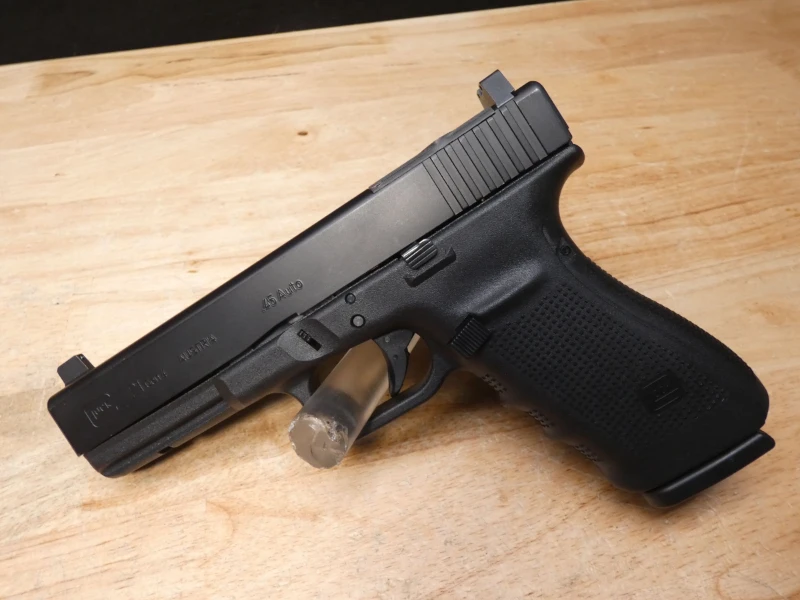
The Glock 21, a full-sized pistol chambered in the formidable .45 ACP, has earned a stellar reputation for its unwavering reliability and potent performance. As a popular choice for law enforcement, self-defense, and recreational shooting, it maintains a strong presence in the secondary market. Understanding its value requires looking beyond the base price, considering factors like its generation, overall condition, included accessories, and the specific legal landscape of your region, all of which influence its final sale price.
What Determines Your Glock 21’s Worth
The value of a Glock 21 is established by several key factors, beginning with its market price range. A new model, such as the latest Gen5, typically has an MSRP between $545 and $745, while a used one in good condition often sells for $330 to $500. Unlike many firearms, a high round count has a minimal impact on a Glock’s value, provided it has been properly maintained. These pistols are renowned for their durability, often exceeding 100,000 rounds with routine care. Consequently, buyers place more emphasis on cosmetic condition, the state of the bore, and the inclusion of original accessories rather than the sheer number of rounds fired.
2026 Price Breakdown by Generation
Generation 2 (The Original)
The Glock 21 was first introduced as a Generation 2 model, establishing its legacy as a robust, large-frame .45 ACP pistol. These early models are characterized by their distinct grip texture and lack of an accessory rail or finger grooves. While they don’t have the modern features of later generations, they are prized by some collectors and purists for their historical significance and simpler design. Their value is heavily dependent on condition, with well-preserved examples holding a steady place in the used market, often appealing to those who appreciate the original Glock aesthetic and proven performance without modern enhancements.
In today’s market, a Gen 2 Glock 21’s value typically falls within the lower to middle end of the used price spectrum, generally ranging from $300 to $450. The price is influenced more by its physical condition and mechanical soundness than by any specific features. A police trade-in model might be on the lower end due to holster wear, while a pristine, privately owned example with its original “Tupperware” style box and accessories will command a higher price. These models represent the foundational reliability that the Glock brand was built upon, making them a solid, functional piece of firearm history.
Generation 3
The Generation 3 Glock 21 introduced significant ergonomic and functional upgrades that solidified its popularity. Key additions included the introduction of an integrated accessory rail on the frame, allowing for the attachment of lights and lasers, as well as the implementation of finger grooves and thumb rests on the grip for a more secure hold. These enhancements made the Gen 3 a more versatile and user-friendly platform, appealing to a broader range of shooters. Its proven track record and balanced feature set make it a highly sought-after model on the used market, often seen as a reliable workhorse.
Due to its widespread adoption and long production run, the Gen 3 remains one of the most common Glock 21 models available. Its value typically hovers around the average used price of $398 but can fluctuate based on condition and local regulations. For instance, in California, the Gen 3 is one of the few versions on the state’s Roster of Handguns Certified for Sale, which can slightly inflate its value in that specific market. It represents a sweet spot for many buyers, offering key modern features without the modularity—or higher price—of later generations, ensuring it remains a popular and valuable choice.
Generation 4
With the release of the Generation 4, the Glock 21 embraced modularity and user customization. The most significant upgrade was the introduction of the Modular Backstrap System, which allows the owner to change the grip size to better fit their hand. This model also featured a new, more aggressive grip texture for improved handling and a dual recoil spring assembly, designed to reduce felt recoil and increase the service life of the pistol. These features made the Gen 4 a substantial step up in terms of ergonomics and shooter comfort, appealing to those who found previous generations too large.
The added features of the Gen 4 typically place its resale value slightly higher than that of the Gen 3, often in the $400 to $500 range for a model in excellent condition. The ability to customize the grip makes it a more attractive option for a wider variety of shooters, which helps sustain its demand and value in the used market. As a more refined version of the classic design, the Gen 4 Glock 21 is often viewed as a significant upgrade, and its price reflects the enhanced functionality and improved shooting experience it provides over its predecessors.
How Modifications Affect Value
When it comes to modifications, upgrades that enhance performance without compromising reliability are most likely to add value. Premium red dot sights from respected brands like Trijicon, Aimpoint, or Holosun can increase the pistol’s appeal and price, as can high-quality iron sights from manufacturers such as Trijicon HD and Dawson Precision. These additions are seen as functional improvements over factory components. However, the actual monetary value added is subjective and rarely equals the full retail cost of the parts, as buyers are still purchasing a used firearm with used accessories. The key is choosing reputable, performance-oriented upgrades that appeal to a broad audience.
Conversely, the impact of other modifications on resale value is less certain, as there is no clear market consensus on what hurts a Glock 21’s price. Highly personalized alterations like custom slide cuts, frame stippling, or vibrant Cerakote finishes can be polarizing and may narrow the pool of potential buyers. While one person might see these as desirable custom features, another may view them as detrimental to the firearm’s original design. For this reason, there is a strong preference among many buyers for the inclusion of all original factory parts with a modified pistol, as they value the proven reliability of OEM components for critical applications like self-defense.
Regional Price Variations in 2026
The value and availability of a Glock 21 can vary significantly from one state to another due to local laws and regulations. In states with strict firearm laws, such as California, the market is heavily influenced by a state-approved roster. The Glock 21 Gen 3 is legal for purchase there, but only if it is on the Roster of Handguns Certified for Sale and is equipped with a 10-round magazine. This limited availability can create a micro-market where approved models command a premium. Furthermore, a new law is set to ban the sale of new Glocks by dealers starting July 1, 2026, which will likely increase demand for used models.
Similarly, in New York, owning a Glock 21 is legal but requires a valid pistol permit, and magazines must be limited to a capacity of 10 rounds or less. These restrictions on magazine capacity affect which models are readily available and can influence the price of compliant firearms and magazines. In contrast, states with more permissive firearm laws have a more open market, where supply and demand are dictated more by general market trends than by regulatory hurdles. This often results in more competitive and standardized pricing, free from the artificial scarcity created by state-level restrictions on features or sales.
Online vs Local Sales
Selling a Glock 21 locally through a private sale is governed by state and local laws, as federal law does not mandate specific paperwork for transactions between two private individuals residing in the same state. However, it is highly recommended to create a detailed bill of sale to document the transfer. This document should include the firearm’s make, model, and serial number, along with the buyer’s and seller’s information, to serve as proof of the ownership change. It is crucial to be aware that some states now require all private party sales, especially for handguns, to be conducted through a Federal Firearms Licensee (FFL) to facilitate a background check.
When selling to a buyer in another state, the transaction becomes more complex and must adhere to federal law. The Glock 21 must be transferred through a Federal Firearms Licensee (FFL) located in the buyer’s state of residence. The seller is responsible for legally shipping the handgun to the buyer’s chosen FFL. This process requires using a common carrier like UPS or FedEx, both of which mandate that handguns be shipped via their respective overnight air services. The package must be declared to the carrier as a firearm, be unloaded, and have no exterior markings indicating its contents, ensuring a secure and legally compliant transfer.
The logistics of shipping a handgun like the Glock 21 are strict. Private sellers must follow carrier policies, which often restrict firearm shipments to be between FFL holders. This means a non-licensed individual may need to have their local FFL ship the firearm on their behalf. The firearm must be unloaded and securely packaged. Adhering to these federal and carrier-specific regulations is non-negotiable and ensures that the interstate sale is conducted legally, protecting both the seller from liability and the buyer as they complete the required paperwork and background check at their FFL to take possession of the pistol.
The FFL Buying Advantage
Selling your Glock 21 to a Federal Firearms Licensee (FFL), such as a local gun store, offers a fast, simple, and legally secure transaction. This route eliminates the complexities of finding a private buyer, verifying their eligibility, and navigating the paperwork required by state laws. The dealer handles all legal requirements, providing the seller with immediate payment and peace of mind. However, this convenience comes at a cost. Dealers typically offer between 50% and 65% of the firearm’s used retail value. For a popular and quick-selling model like the Glock 21, the offer might reach as high as 70%, but it will still be significantly less than what you could get from a private sale.
The primary advantage of selling to a dealer is the guaranteed, hassle-free sale. There is no need to create online listings, photograph the firearm, or communicate with potential buyers. You simply bring the firearm to the dealer and walk out with cash. This is an excellent option for those who prioritize speed and simplicity over maximizing their return. While the offer may seem low, it reflects the dealer’s need to cover overhead costs, manage inventory, and make a profit upon resale. For many sellers, trading a portion of the firearm’s value for a risk-free and immediate transaction is a worthwhile compromise.
What Increases Your Offer
One of the most straightforward ways to maximize the value of your Glock 21 is to present it as a complete package. A significant penalty, estimated between $75 and $125, can be applied if the original factory case and magazines are missing. This deduction reflects the cost a dealer or new owner would incur to replace these essential items. Including the original box, owner’s manual, all factory-supplied magazines, and any other accessories like backstraps or a cleaning rod demonstrates that the firearm has been well-cared-for and helps you command a higher price, closer to the top of its potential market value.
A thorough pre-sale cleaning is another critical step that can significantly increase your offer. Before showing or photographing your Glock 21, field-strip it and meticulously clean the barrel, slide, and frame using a quality CLP and nylon brushes. Pay close attention to high-friction areas like the slide rails and the extractor. A common mistake to avoid is over-lubrication; apply only a very light coat of oil to the specific points recommended by the manufacturer. An immaculately clean firearm not only looks more appealing but also signals to a potential buyer that it has been diligently maintained, justifying a higher asking price.
High-quality photographs are essential when selling online, as they are the first impression a potential buyer will have of your Glock 21. Use a simple, neutral background to ensure the firearm is the main focus. Ample, indirect natural light, such as from a window on an overcast day, is ideal for preventing harsh shadows and accurately representing the pistol’s condition. Take numerous high-resolution photos from every angle, including close-ups of the serial number, any markings, and areas of wear. Using a tripod will help ensure your images are sharp and in focus, conveying professionalism and building buyer confidence.
When to Sell Your Glock 21
Timing the sale of your Glock 21 can have a noticeable impact on the final price and the speed of the transaction. While certain firearms, like hunting rifles, have a clear peak season in the months leading up to fall, handguns follow a different trend. A widely cited ideal period for selling is from February to April. This timeframe often aligns with when potential buyers have more disposable income, largely due to receiving tax refunds. Capitalizing on this period of increased consumer spending can lead to a quicker sale at a more favorable price, as more buyers are actively looking to make purchases.
Conversely, some periods are generally considered slower for firearm sales, and it may be wise to avoid listing your pistol during these times if you are not in a hurry. The holiday season, from late November through December, is often a challenging time to sell, as consumer spending is heavily focused on gifts and holiday-related expenses. Similarly, the end of any given month can be a slower period as many people are waiting for their next paycheck. By avoiding these lulls and targeting periods of higher consumer liquidity, you can better position your Glock 21 to attract serious buyers and secure a better offer.
Understanding these seasonal trends allows you to be strategic. If you can wait, listing your firearm as tax season approaches may yield better results than listing it in the middle of the summer or during the year-end holidays. While a desirable handgun like the Glock 21 will always have a market, aligning your sale with peak buying seasons increases your chances of connecting with a motivated buyer who is ready to pay a fair market price. Patience and strategic timing can be just as important as the condition of the firearm itself in maximizing your financial return.
Common Pricing Mistakes
A frequent error sellers make is assuming that a formal, paid appraisal is necessary for a common firearm like the Glock 21. While appraisals are invaluable for rare, antique, or custom firearms, the market value for standard production models is well-established and easily researched. A professional appraisal is generally not worth the cost, as an expert can typically assess the value of a Glock in very good to excellent condition—usually between $300 and $500—without a formal process. Sellers can determine a fair price by researching completed sales on online forums and auction sites, saving both time and money.
Another common mistake is overvaluing the firearm due to emotional attachment or misunderstanding the impact of cosmetic wear. While a Glock is a durable tool, sellers must be objective about its condition. Minor holster wear is expected on a used pistol, but significant scratches, dings, or damage to the finish will detract from its value. It is crucial to price the firearm based on its actual condition relative to the current market, not its original purchase price or sentimental worth. A realistic assessment of cosmetic flaws will lead to a faster and more successful sale by aligning the price with buyer expectations.
Finally, many sellers incorrectly believe that a high round count drastically reduces a Glock 21’s value. This is a significant misconception, as Glocks are famous for their longevity and ability to function reliably well past 100,000 rounds with proper maintenance. Buyers familiar with the brand are far more concerned with signs of abuse or neglect, such as bore condition and frame damage, than the number of rounds fired. Over-emphasizing or unnecessarily discounting for a high round count on a well-maintained Glock is a pricing mistake that can leave money on the table. Focus on its physical condition and proper function instead.
Market Outlook for 2026
Predicting the future price of any firearm with certainty is challenging, as the market is influenced by a complex interplay of political, economic, and social factors. However, the Glock 21’s established reputation for reliability, durability, and performance in a popular caliber provides a strong foundation for stable value. As a widely recognized and trusted platform, it is likely to remain in high demand in the used market. Barring any major federal legislative changes, its value should continue to follow established trends, holding steady and depreciating far slower than less popular or unproven handgun models, making it a relatively safe store of value.
One specific regional factor to watch is the changing legal landscape in states like California. A new law set to take effect on July 1, 2026, will effectively ban the sale of new Glock models by dealers in the state. This could significantly increase demand and, consequently, the market value for used, roster-approved Glocks like the Gen 3 Model 21 within California. Such state-level regulations can create unique market bubbles, driving prices for legally transferable used firearms well above the national average. This highlights how regional legislation can be a powerful driver of future value, independent of broader market trends.
Frequently Asked Questions
How much does a high round count affect my Glock 21’s value?
A high round count has a surprisingly minimal effect on a Glock 21’s resale value, as long as the pistol has been properly cared for. Glocks are engineered for extreme durability, with many examples documented to have fired over 100,000 rounds while maintaining functional reliability with only routine parts replacement. Consequently, educated buyers are more concerned with the firearm’s current condition. Factors like cosmetic wear, the condition of the barrel’s rifling, frame integrity, and the inclusion of original accessories will have a much more substantial impact on the price you can ask than the number of rounds it has fired.
Do I need a professional appraisal to sell my Glock 21?
For a standard Glock 21, a professional appraisal is generally an unnecessary expense. The market value for common, modern firearms is well-established and can be easily researched by looking at recent sales on online gun forums and auction websites. Appraisals are most beneficial for firearms that are rare, antique, custom, or have a unique historical significance where the value is not easily determined. For a Glock 21 in very good to excellent condition, the value typically falls within a predictable range of $300 to $500, a figure that an experienced dealer or knowledgeable individual can quickly assess.
Will I lose a lot of money if I don’t have the original case and magazines?
Yes, selling a Glock 21 without its original case and all factory-supplied magazines will result in a notable reduction in its value. The estimated penalty for this incompleteness is typically between $75 and $125. This amount reflects what a new owner or dealer would have to spend to source replacement magazines and a proper case. Presenting the firearm as a complete, “like new” package with all its original components is a simple and effective way to maximize your offer and demonstrates to potential buyers that the firearm has been well-kept since its initial purchase.
Are aftermarket sights a good investment for resale value?
Upgrading to premium sights can be a good investment, but you will rarely recoup the full cost of the parts and installation. High-quality red dot sights from reputable brands like Trijicon, Aimpoint, or Holosun are most likely to add tangible value, as they are a significant functional enhancement. Similarly, top-tier iron sights from Dawson Precision or Trijicon HD are seen favorably. However, the value added is subjective. While these upgrades make the pistol more attractive to discerning buyers, the price increase is typically only a fraction of the upgrade’s retail cost, as it is still part of a used firearm package.
Does my Glock 21 need to be registered as an NFA item?
A standard, semi-automatic Glock 21 is classified as a handgun and is not an NFA (National Firearms Act) item, so it does not require special federal registration. However, its classification and value would change dramatically if it were modified in specific ways. For example, converting it to be fully automatic would reclassify it as a machine gun, which is a Class III NFA item. Such a modification is highly regulated, expensive, and requires extensive federal paperwork. For virtually all sellers, a standard Glock 21 is a non-NFA firearm, and its value is determined within the conventional handgun market.
Get a Cash Offer Today
Ready to sell your Glock 21? We make the process simple, safe, and transparent. Avoid the hassle of private listings and legal complexities by getting a fair, no-obligation cash offer from us today. Our streamlined process ensures you get paid quickly and confidently, knowing every transaction is handled professionally and securely.
Click the button below to submit your firearm’s information. We will review the details and provide you with a competitive offer based on current market values. Sell your Glock the easy way and turn your firearm into cash with a trusted, licensed dealer. Get started now and see what your Glock 21 is worth.