
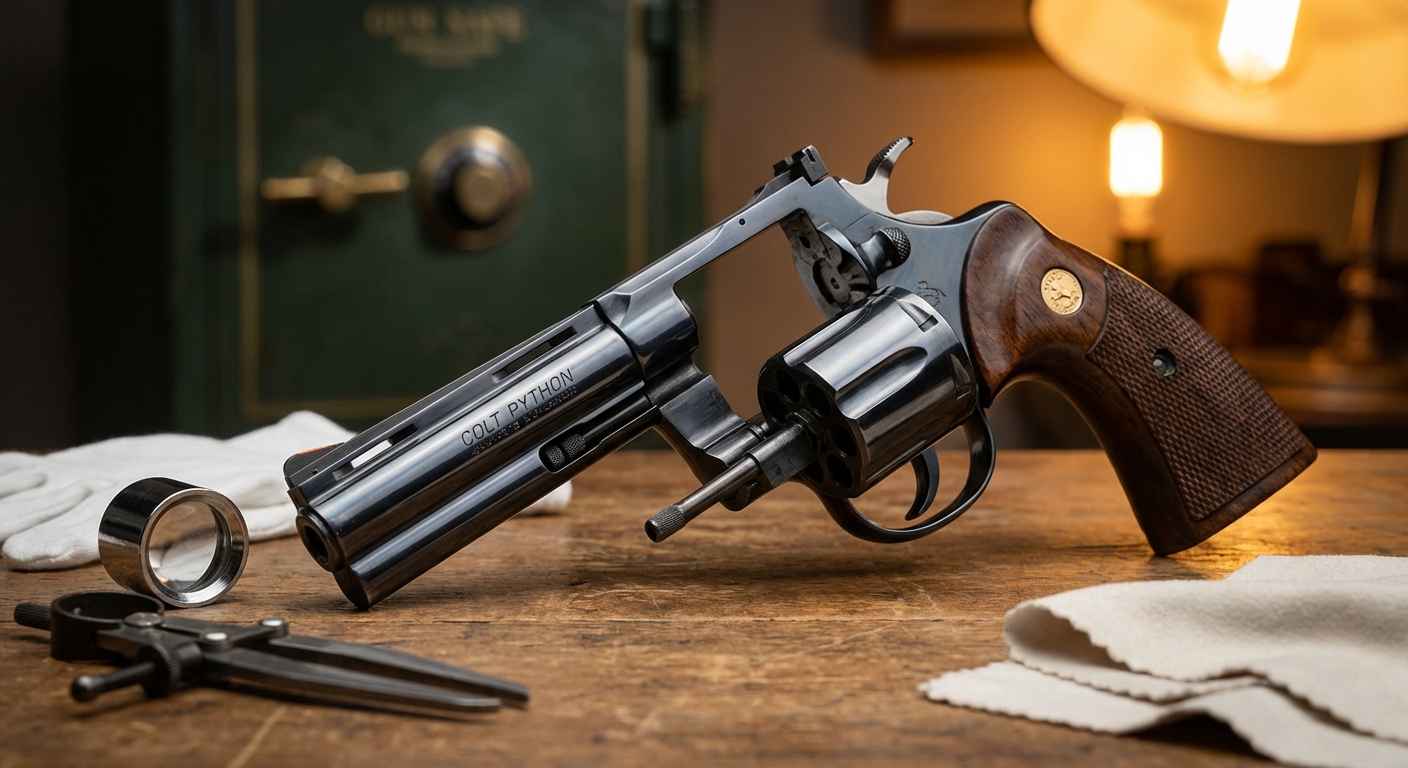

The price you’re seeing isn’t the price your Python will bring. If you’ve been Googling and scrolling listings, you’ve probably seen the same revolver “worth” everything from reasonable to absurd, and none of those numbers tells you what yours will actually sell for.
That’s maddening because you’re not shopping for trivia, you’re trying to make a decision: sell it, insure it, or at least understand what you’ve got. Asking prices, nostalgia, and one-number “estimates” don’t help when real buyers are the ones setting the market.
The biggest fork is whether you’re holding a vintage Colt Python (1955-2005) or a modern Colt Python (2020-present). Vintage guns can pull collector premiums, modern guns are often priced more like shooters, and that gap widens fast with condition and originality.
On top of era, value is always a range. A major direct-buy service notes valuations hinge on make and model plus condition, market data from dealer listings and auctions, seasonality, and regional demand, which is exactly why two identical-looking Pythons can get very different offers.
You’ll be able to identify your Python, estimate a realistic value range, and choose a selling path that fits 2026 realities.
Identify Your Python Precisely
If you can’t describe your Python the way buyers do, you’ll never get clean price signals. The friction is that tiny configuration differences, plus swapped parts, change which comps apply, so the only “fast” path to a real number is identifying the exact era and spec line a buyer would type into search.
First, decide if you’re holding a vintage Colt Python (1955-2005) or a modern Colt Python (2020-present). Vintage identifiers buyers routinely search for include barrel markings like “PYTHON.357,” traditional Colt Hartford address rollmarks, and the Colt “rampant pony” logo. A hallmark of original-era guns is the ventilated rib barrel with a full-length underlug, it’s the quick visual cue that tells shoppers they’re looking at the classic configuration.
Modern reintroduction guns tend to telegraph themselves through newer corporate-style rollmarks (for example, “Colt’s Manufacturing Company LLC”) rather than the older Hartford address formats. Getting the era right up front keeps you from comparing a 2020s production revolver against 1970s collector comps that don’t track to your gun.
Write down the details that show up in listings and search filters, not a condition essay. Capture barrel length exactly as marked, finish (blue, stainless, nickel, or other factory finish), sight setup (what’s on the gun right now), and grips (material and style). Then add the one or two standout features a buyer will notice in photos, like an uncommon finish, target-style stocks, or any packaging you’re including.
Also note anything that looks “too new” for the gun: non-original grips, swapped sights, or aftermarket add-ons are quiet value killers because they break collector originality and muddy the comps.
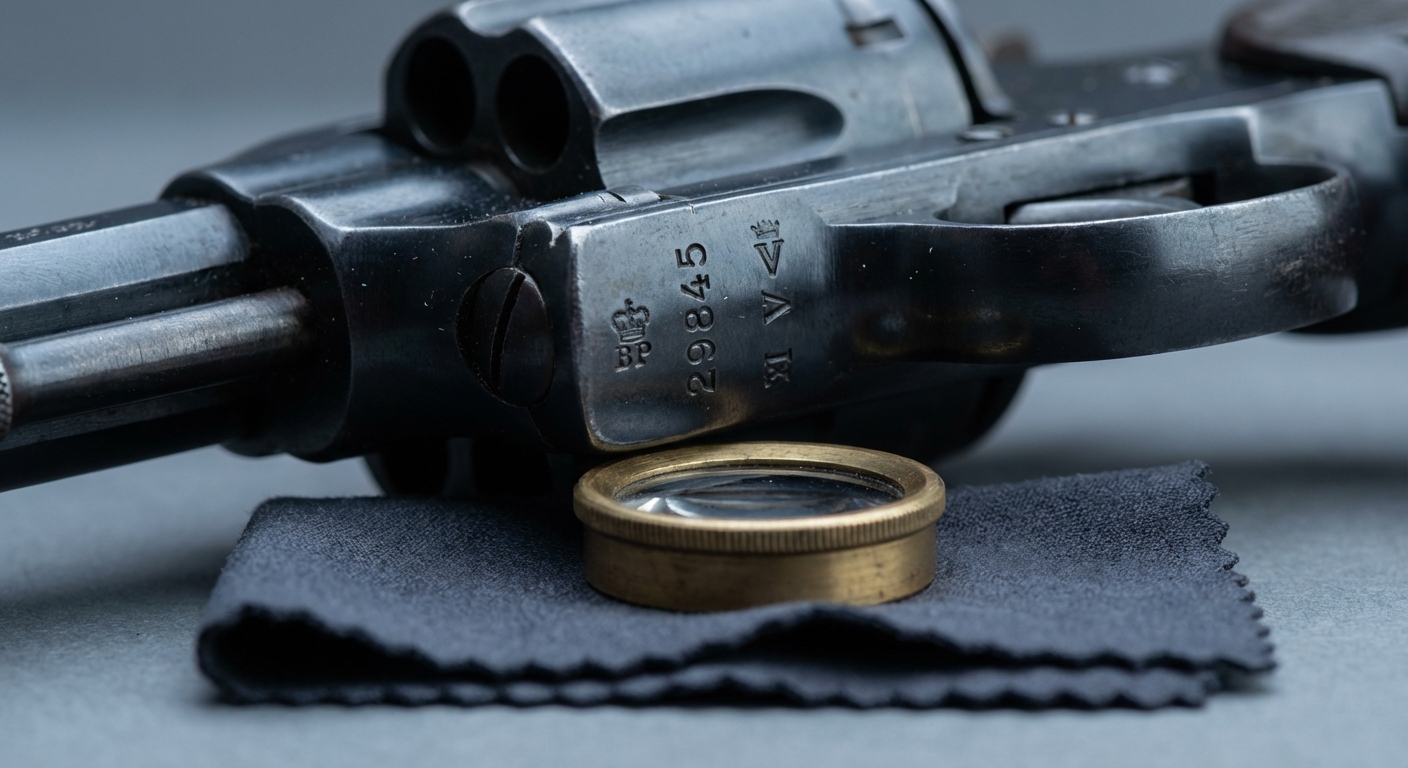
The serial number is typically in the crane/yoke cut, open the cylinder and look at the frame window. Record it exactly, including any letter prefix or suffix. Serial-date tables floating around online are unreliable for older Colts, especially when serial formats change across runs.
For higher-stakes valuations, Colt’s official guidance for confirming production and shipping details is ordering a Colt Archive Letter using that serial number, it’s the cleanest way to verify what the gun left the factory as.
Before you try to price it, have a tight spec line written (era, barrel length, finish, sights, grips, serial noted) and take clear photos of both sides, barrel markings and address, the logo area, the sights, the grips, and the serial in the yoke cut, plus any box and papers if you have them. If you’re unsure about any of those details, use this guide to identifying your gun to confirm what you have.
Once the gun is identified on paper, the next thing buyers do is sort it into “collector” versus “shooter.” That’s mostly a condition-and-originality conversation, not an era conversation.
Condition, Originality, and Completeness
Condition isn’t just “nice” or “used”, it’s where buyers decide whether they’re paying shooter money or collector money. Two Pythons can look “about the same” across a counter, then land in totally different price brackets once wear, parts correctness, and what’s included get factored in.
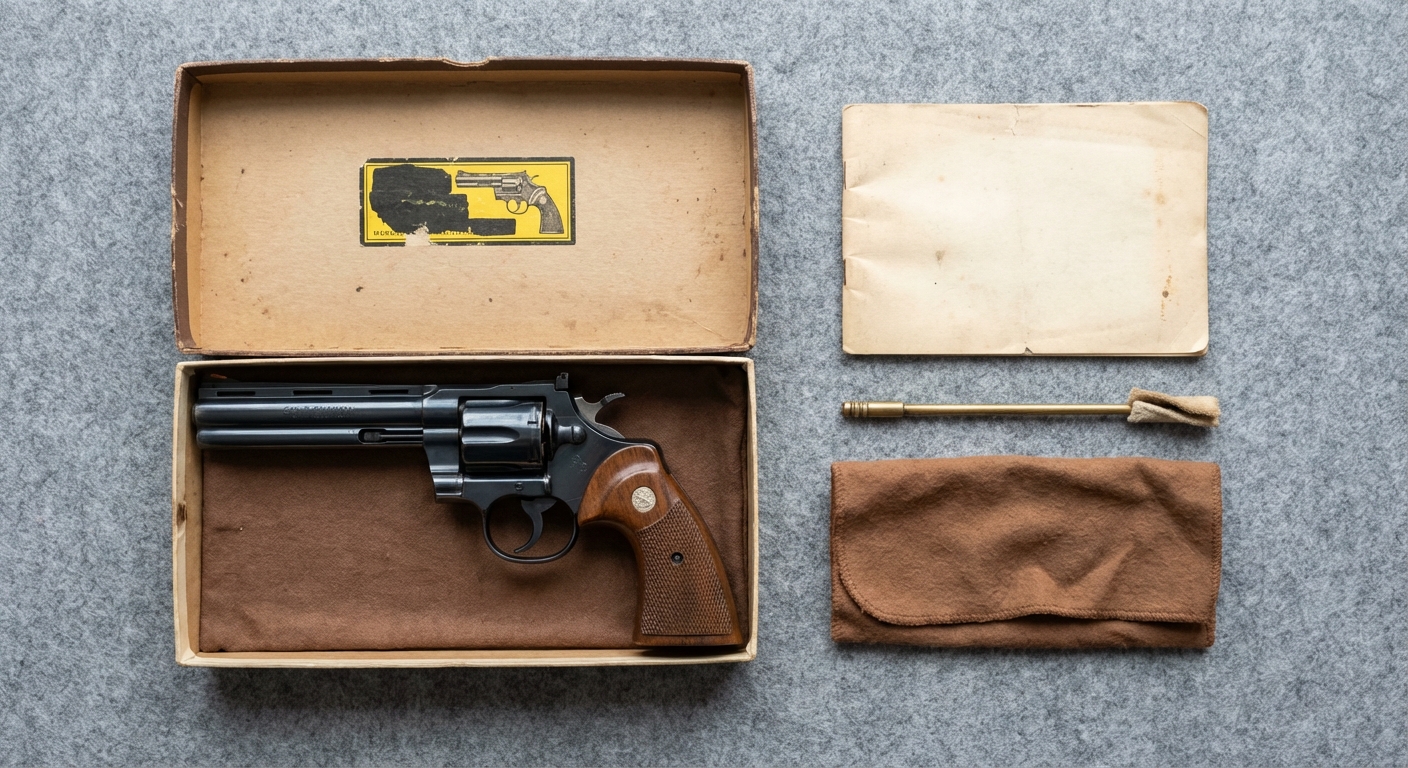
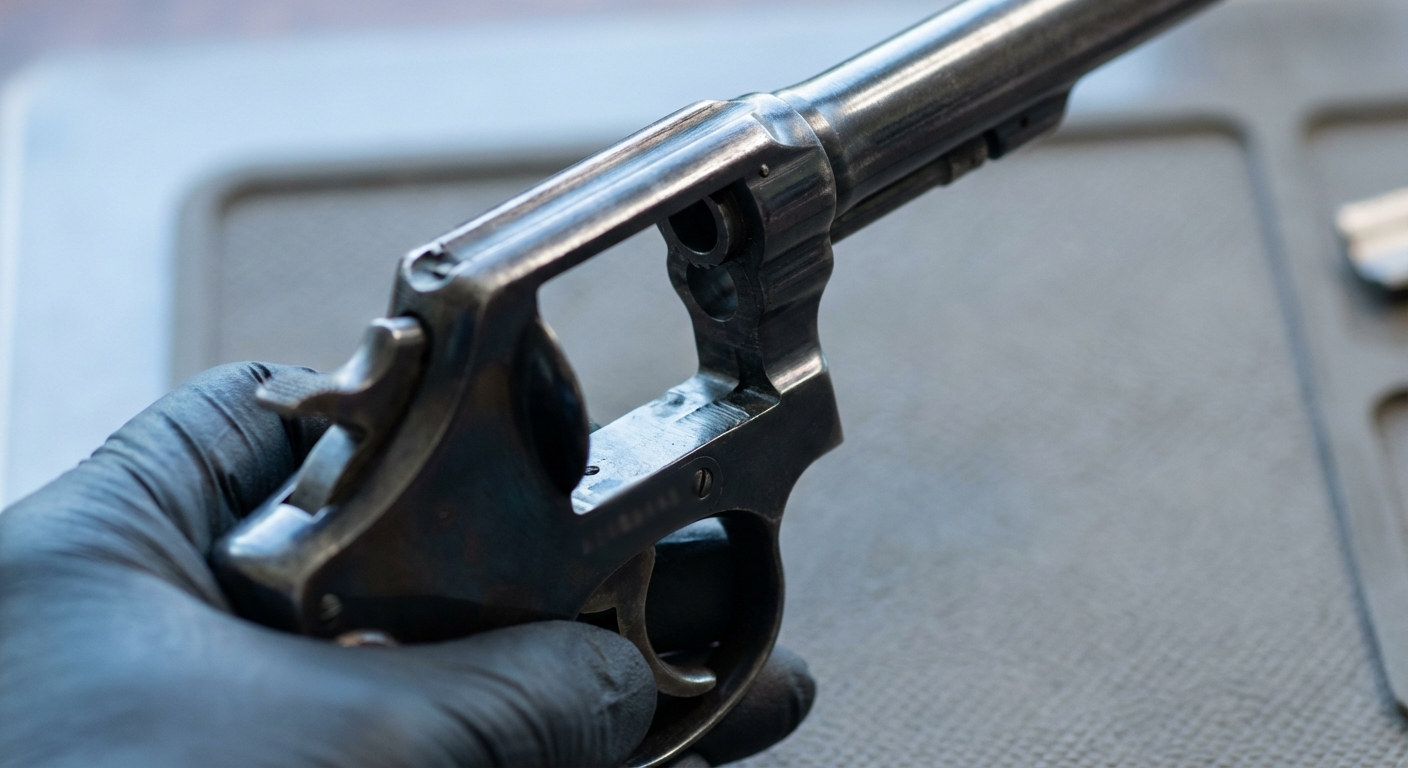
Buyers start with the easy tells: finish wear on sharp edges, scratches on the sideplate, and the cylinder turn line. They’ll also ask about the bore because a bright bore reads “cared for,” while visible pitting reads “neglect,” and a dinged crown is an accuracy red flag. Corrosion can hide too, so a quick under-the-grips check matters, pitting there is hard to unsee once it’s found.
Keep the mechanical talk simple and honest. If you know it has timing or lockup issues, or noticeable endshake, disclose it. Most buyers aren’t scared of “used,” they’re scared of surprises.
Originality, meaning the degree to which the gun still wears correct factory parts and finish, is where collector offers separate from shooter offers. A refinish can look gorgeous and still spook collectors because it erases the factory surface they’re paying for. Common value-changing swaps include replacement grips, non-factory sights, aftermarket springs or internal “action jobs,” added engraving, or any non-factory metalwork.
Completeness, meaning the package you can prove came with the gun, changes the tone fast on collector pieces. As a single anecdote (not a market rate), a reported local shop sale mentioned a 1976 Python described as ANIB selling for $1,900, specifically with the original grips and the original box.
Here’s what to do: write down what’s original, what’s changed, and what’s included, then photograph it. Get clear shots of both sides, the muzzle crown, the bore (with light), the cylinder line and face, and under the grips, plus the box and papers if you have them. Expert appraisers also focus on finish, bore, matching numbers, and aftermarket parts as value drivers, and those are exactly the details you want to document before you price or list.
After that, your gun hasn’t changed-but the market around it might have. That’s where timing, location, and buyer leverage start to nudge the range up or down.
2026 Market Forces That Move Prices
Market context can move your price even if your gun doesn’t change. Your Python’s true price depends on when and where you sell just as much as what you’re holding, because buyer leverage shifts with inventory, discounting, and how supply and demand affects firearm resale prices.
The August 2025 gun market report put it plainly: gun racks were “fuller than they’ve been in years,” and many owners were willing to accept soft market prices. In that kind of environment, prices usually don’t “crash,” they slide, dealers discount, trade-ins stack up, and buyers learn they can negotiate instead of paying the first number they see.
For a Colt Python, that softness shows up differently than it does for commodity polymer pistols. A niche collector piece can stay comparatively steadier because the buyer is chasing a specific variant, finish, or complete package, not just “a.357 revolver.” But even collector demand has limits when shoppers have more choices and more time.
Professional valuations don’t rely on one signal. In the same way your condition notes and photos need to be specific, valuation inputs often include things like seasonality, regional demand, and market data pulled from dealer listings and auctions, which is why a Python can draw very different offers depending on where interest is concentrated and what’s moving in that channel.
Use this by getting clear on your goal. If you want maximum price, plan for more patience and tighter buyer standards. If you want speed, price like you’re competing with a fuller rack, because 2026 rewards clarity more than optimism.
That market backdrop is useful, but it still won’t give you a number by itself. To get to a defensible range, you have to translate your exact spec and condition into comparable sold prices.
Estimate Your Colt Python Value
Your best estimate comes from what buyers just paid, not what sellers are still hoping to get. The fastest way to ground your number is to build a short list of sold comps, meaning completed sales that match your Python’s variant and configuration as closely as possible.
You already did the hard part by nailing down the exact Python and its condition. Use that same precision when you comp. Start with GunBroker’s “Completed Items,” then cross-check with major auction house sold archives (Rock Island, Morphy). You are looking for matches on barrel length, finish, generation, and any standout features, then you tighten the list further by condition language and what’s included.
Your comp list only works if you keep the inputs consistent. Value tracks condition, year, and completeness, especially whether the original box and papers are present, so record those details next to every comp you save.
Once you have close matches, handle differences with explicit dollar adjustments rather than gut feel. Quantitative adjustments are measurable, data-supported dollar amounts applied to comparable sales to account for differences, for example, subtracting for missing box or adding for a documented, original accessory.
- Collect 8 to 15 sold comps from Completed Items and sold auction archives, saving the final price and sale date.
- Filter down to the closest 5 to 8 by barrel length, finish, generation, and condition notes.
- Adjust each comp with simple line items, box and papers, grips, sight changes, refinishing, and any verified factory letter documentation.
- Bracket your “fair” number using the adjusted middle, take the median and note the low and high.
- Write three targets: quick-sale cash = adjusted low minus your selling costs, fair private-party = adjusted median, top-end collector or auction = adjusted high minus seller fees and shipping.
Finish by writing a single range anchored to your fair private-party number, plus your quick-sale cash floor and your top-end target. Revise the range if you find new matching sold comps within the last 60 to 90 days, discover originality issues (refinish, swapped parts), or turn up completeness items you forgot you had (box, papers, correct grips).
Once you’ve got those three numbers, the selling decision gets a lot cleaner. Different channels don’t just change how fast you sell-they change your likely net, your workload, and how much risk you’re taking on, so it helps to review current Colt Python pricing factors and what drives value.
Best Ways to Sell in 2026
Selling safely and getting paid are part of the value. The “best” way to sell your Python depends on what you’re optimizing, speed, net dollars, or low hassle, and any route can go sideways if you skip the basics. The highest headline price usually comes with more time, more risk, and more logistics.
A local gun shop sale is typically the fastest and least complicated, but you give up pricing control. Consignment buys you more exposure while the shop handles showings and paperwork, but you wait for the right buyer and you’re trusting their process. An online marketplace listing gives you the most control and reach, but you also inherit the most screening, payment, and shipping stress. Auction houses can put your revolver in front of serious bidders fast, but you’re handing over timing and presentation. Direct-to-buyer services trade maximum upside for convenience, predictable logistics, and fewer “no-show” conversations—see your options for selling a gun for a side-by-side view.
For a convenience-first example, Cash My Guns is a nationwide online firearms purchasing service operated by Dunlap Gun Buyers, a federally licensed firearms dealer (FFL), and it positions the process as “Safe • Legal • Hassle-Free.” It buys directly from private sellers through a remote, mail-in process routed through licensed FFL dealers, and it provides prepaid shipping and promotes full insurance coverage on accepted offers.
- Write a one-line spec card, model variant, barrel length, finish, serial range if you’re comfortable, and what’s included (box, papers, grips).
- Disclose modifications and replaced parts up front, so nobody “discovers” them later and tries to renegotiate.
- Photograph it like a buyer, both sides, close-ups of markings, muzzle and crown, and the bore or cylinder face as appropriate, with clear lighting and zero filters.
Clean deals are boring deals. In practice, many firearm transfers route through an FFL (Federal Firearms Licensee), which gives you a straightforward, documented handoff instead of a sketchy parking-lot transaction. If you’re shipping a high-value revolver, insured shipping protects your downside, because a lost or damaged box turns “great price” into a long fight—follow how to package and ship a firearm so it arrives safely. Confirm the receiving dealer’s current requirements before anything moves, and verify current laws where you live and where it’s going.
Use your three-number range as the filter: if you’re near the “take-it-today” number, a fast shop sale or direct buyer makes sense; if you’re chasing the top number, plan for more outreach and more moving parts. Once you pick the channel, stick to the prep checklist so you don’t create avoidable problems that cost real money.
The questions below are the ones that tend to derail pricing after the listing goes live. They’re also the same “small details, big swings” issues you’ve already been tracking-era, originality, completeness, and expectations.
Common Questions and Next Steps
These five situations explain most price surprises. Tiny differences in era, finish, parts, and what you expect to do with the gun change which buyers even show up, and those buyers don’t bid the same way.
Vintage Colt Pythons and modern Colt Pythons pull different crowds. Collectors commonly talk up the older hand-fitting and polishing, plus the classic Colt V-spring feel. The modern action is redesigned around durability and timing robustness, which makes it a great shooter, just a different kind of “want.”
A refinish usually turns into “excellent shooter” territory and weaker collector demand. Collector-leaning buyers pay for originality (factory-correct, untouched), and refinishing breaks that storyline. Price it like a shooter and you’ll get fewer arguments.
On collector-leaning examples, completeness (box, papers, correct extras) is part of the appeal. On a shooter, it’s usually background noise. Don’t panic, just describe what’s missing clearly.
Pick your lane honestly. If you want collector money, present it like a collector piece and avoid casual parts swaps. If you want a reliable range gun, accept shooter pricing and move faster.
Don’t refinish impulsively. Restoration can erase the very details collectors pay for, even if the end result looks prettier. Get a second opinion before you change anything permanent.
Your framework is simple: lock down the era, write clean condition notes, sanity-check against sold comps, then choose a selling path that matches “collector” or “shooter.” If you want a reality-check number before you commit, get an appraisal or a direct offer (see what your Colt Python is worth), for example from Cash My Guns, which states its valuation considers matching numbers and aftermarket parts.
Conclusion
You can get to a defensible 2026 Colt Python value range, and a smart next move, by staying disciplined: pin down the exact configuration (vintage vs modern, and the specific setup), weigh condition plus originality and completeness (finish, bore, matching numbers, aftermarket parts), sanity-check against the 2026 backdrop of fuller inventory and discounting, anchor your number to sold comps, then pick the selling path that matches your goal. The friction is real, small details swing outcomes fast.
Think in “range + goal,” then act, either you’re optimizing for top dollar or for speed, simplicity, and certainty.
If you want a fast sanity check, Cash My Guns offers a no-obligation expert appraisal and offer through a nationwide online buying service operated by an FFL, built to be “Safe • Legal • Hassle-Free.” If you accept, they highlight prepaid shipping and insurance coverage for accepted offers through an FFL-routed process, just confirm any state-specific requirements before you ship.