
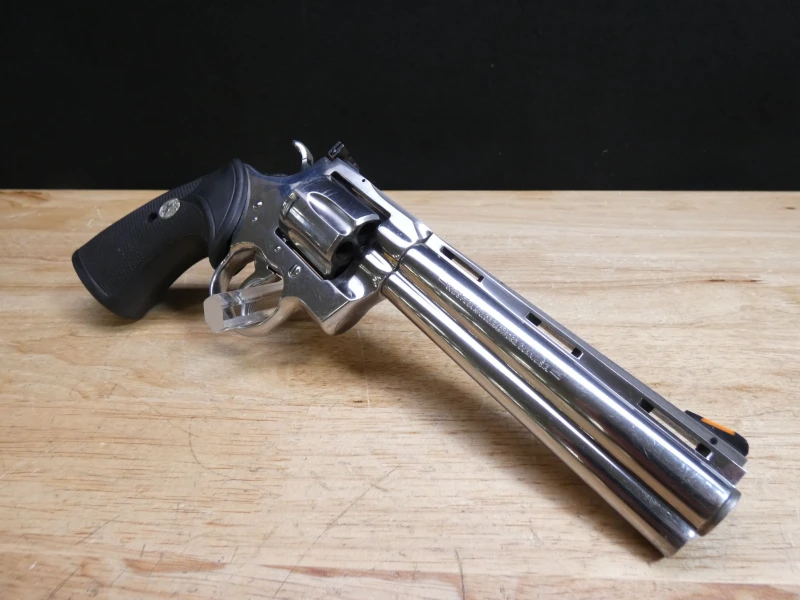
The Colt Python is a legendary double-action revolver, revered for its premium finish and smooth trigger pull. As a handgun chambered in .357 Magnum, its value is influenced by a blend of historical significance, impeccable craftsmanship, and market demand. Whether you own a vintage classic or a modern reissue, understanding the key factors that determine its worth is crucial. Prices for new models start around $1,499, but collector-grade examples can command significantly more, making accurate valuation essential.
What Determines Your Colt Python’s Worth
A professional appraisal is highly recommended for a Colt Python due to the firearm’s wide market value, which can span from $1,500 to over $8,000. An expert assessment is crucial for an accurate valuation because numerous factors significantly impact the final price. These include the revolver’s overall condition, its year of manufacture, the rarity of its specific configuration, and the inclusion of original accessories like the box and paperwork. A high round count can also lower the value, especially when compared to unfired collector examples that command a premium, though well-maintained Pythons are known to hold their value well.
2026 Price Breakdown by Generation
First Generation (1955-2005)
Original, first-generation Colt Pythons are highly sought-after collectibles, representing the pinnacle of Colt’s craftsmanship. Standard models in good to excellent condition typically command prices ranging from $2,000 to over $4,000. The value within this generation varies dramatically based on factors like barrel length, finish (such as the famous Royal Blue), and production year. These revolvers are not just firearms but pieces of history, and their pricing reflects their status among serious collectors. The market for these vintage models remains strong, driven by a consistent demand for their legendary quality and aesthetic appeal, which the modern variants aim to replicate.
Among the first-generation models, provenance and rarity can escalate the value exponentially. For instance, first-year production models from 1955 are exceptionally rare and can achieve prices exceeding $25,000 at auction. Condition is paramount; a pristine, unfired example with its original box and documentation will always fetch a top-tier price. Even minor wear can significantly impact the final valuation, making a thorough inspection by a knowledgeable appraiser a critical step for any seller. These early Pythons are the benchmark against which all others are measured, and their investment potential continues to attract discerning buyers willing to pay a premium.
Second Generation (2020-Present)
The reintroduction of the Colt Python in 2020 marked the beginning of the second generation, bringing the iconic revolver back to the commercial market with modern manufacturing techniques. These new models are priced based on current production costs, with a Manufacturer’s Suggested Retail Price (MSRP) of around $1,500 to $1,699. While they honor the design and feel of the original, they are considered shooter-grade firearms rather than high-value collectibles like their vintage predecessors. Their value is more straightforward, primarily determined by their condition as a used firearm rather than the historical rarity that defines the first generation’s market.
Unlike the vintage models, the value of a second-generation Python is less influenced by minor variations and more by its functional and cosmetic condition. A used 2020-present Python in excellent shape will typically sell for a price close to its original retail cost, holding its value well due to strong demand. However, these models do not yet possess the collector’s premium associated with the 1955-2005 production run. They offer enthusiasts the opportunity to own and shoot a legendary design without the significant financial investment required for a first-generation collectible, making them a popular choice for modern shooters.
Third Generation
The Colt Python’s production history is not officially categorized into a third generation by collectors or the manufacturer. The market clearly distinguishes between the original production run (1955-2005) and the modern, second-generation models introduced in 2020. Any discussion of a “third generation” is speculative and not based on established market classifications. Therefore, when assessing a Python’s value, the primary focus remains on whether it is a vintage, hand-fitted original or a current-production firearm. This distinction is the most significant driver of its price, with the former being a collectible and the latter being a high-quality contemporary revolver.
Because a third generation of the Colt Python is not a recognized classification, there is no specific market data or value range to analyze for such a model. Sellers and buyers should be wary of any claims regarding a third-generation variant, as value is firmly rooted in the two established production eras. The financial gap between a classic first-generation and a new second-generation model is substantial, and any valuation must accurately place the firearm into one of these two categories. The legacy and pricing structure of the Python are built upon this clear generational divide.
Fourth Generation
Similar to the absence of a third generation, there is no recognized fourth generation for the Colt Python. The firearm’s lineage is defined by the classic era ending in 2005 and the modern revival beginning in 2020. The terminology of different “generations” beyond these two is not used in the collector or sales markets. Consequently, there are no pricing models, feature sets, or historical data associated with a fourth-generation Python. Valuing a Python requires identifying its place in the original production run or confirming it as a current-generation model, as these are the only classifications that determine its market worth.
Attempting to assign a value based on a non-existent fourth generation would be a fundamental pricing mistake. The market operates on the established history and production facts of the firearm. The value conversation for a Colt Python will always revolve around the premium placed on vintage originals versus the accessible pricing of the new models. Any further generational labels are not supported by the industry consensus and have no bearing on a Python’s potential resale price. The focus for an accurate appraisal remains on condition, originality, and its production era—either classic or modern.
How Modifications Affect Value
Modifying a Colt Python, especially a vintage model, is a significant financial risk that often decreases its resale value. Collectors and experienced owners strongly discourage altering the original trigger, as non-factory work can negatively impact the revolver’s famously complex action and precise timing. The consensus among enthusiasts is that such modifications detract from the firearm’s originality, which is a primary component of its value. While a professional gunsmith might perform a quality action job, many potential buyers will see it as a detriment, preferring an untouched, factory-spec revolver. Ruining an original Python only serves to make untouched examples more valuable.
While there is no market consensus on modifications that definitively add value, there is a strong agreement on the importance of original parts. If a Python has been modified, a buyer would either require or highly prefer that the original factory parts be included with the sale. This allows a future owner the option to revert the firearm back to its factory configuration, potentially restoring some of its lost value. The absence of these original components after a modification can result in a significant price reduction, as the gun is permanently in a non-factory state, which is far less desirable to collectors.
Regional Price Variations in 2026
State-level firearm restrictions can create significant regional price variations for the Colt Python. In California, for example, a handgun must be on the state’s approved roster to be sold by a dealer. As of early 2025, the 4.25-inch and 6-inch blued Python models are listed, making them available for dealer sale. However, other variants not on the roster can only be acquired through private party transfers or by exempt individuals, which can inflate their prices in the secondary market due to limited supply. This regulatory landscape directly impacts both availability and cost, creating a distinct market dynamic compared to less restrictive states.
In states with stricter handgun licensing laws, such as New York, the overall process of acquiring a firearm like the Colt Python can be more arduous, though the revolver itself is generally legal for licensed individuals to own. While the Python is not classified as an assault weapon under the SAFE Act, local ordinances, particularly in New York City, can impose even more stringent regulations. These legal hurdles can influence the local market, potentially affecting both the number of buyers and the prices they are willing to pay, leading to values that may differ from national averages.
Online vs Local Sales
Selling a Colt Python online provides access to a national market of collectors and enthusiasts, potentially leading to a higher final sale price. However, this method involves strict legal and logistical complexities. Federal law requires that any interstate firearm transfer must be shipped from one Federal Firearms Licensee (FFL) to another FFL in the buyer’s state. The buyer must then complete all necessary paperwork and a background check at their local FFL. This process ensures legal compliance but adds shipping costs and transfer fees, which should be factored into the transaction for both parties involved in the sale.
Navigating the shipping process itself presents another challenge for private sellers. Major carriers like UPS prohibit private individuals from shipping handguns, requiring the shipper to be a federally licensed dealer with a specific contract. While FedEx may be an option if properly declared, the most secure and common method is to have an FFL handle the shipment to the buyer’s FFL. Furthermore, federal law mandates that any non-licensed individual shipping a firearm must provide written notification to the carrier that the package contains a firearm, adding another layer of required diligence to the process.
In contrast, a local private sale can be far simpler, though it reaches a much smaller pool of potential buyers. For a private, in-state transaction, the primary paperwork is often a bill of sale. This document should detail the firearm’s make, model, and serial number, along with the buyer’s and seller’s information and signatures. While a bill of sale provides a record, it is crucial to remember that state and local laws may impose additional requirements, such as mandating that the transfer occur through an FFL to conduct a background check, even for private sales.
The FFL Buying Advantage
Utilizing a Federal Firearms Licensee (FFL) is not just an advantage but a legal necessity for most firearm sales, particularly those conducted across state lines. According to the Gun Control Act, a seller cannot legally ship a firearm directly to a buyer in another state. The Colt Python must be sent to an FFL in the buyer’s state of residence, where the transaction is finalized. This ensures that the buyer complies with all local and federal laws, including completing the required ATF Form 4473 and passing a NICS background check before taking possession of the handgun.
For sellers, working with an FFL or a licensed dealer offers a blend of convenience and security at the cost of a lower payout. Gun dealers typically offer between 50% and 65% of a used firearm’s retail value. However, for a highly desirable and easily resalable revolver like the Colt Python, that offer might increase to as high as 70%. This trade-off eliminates the complexities of finding a private buyer, navigating shipping laws, and verifying the legality of the sale, providing a quick and hassle-free, albeit less profitable, transaction for the seller.
What Increases Your Offer
The originality and completeness of your Colt Python package are paramount for maximizing its value. A firearm that includes its original factory box, owner’s manual, and any other accompanying paperwork is significantly more appealing to collectors. For modified Pythons, including the original factory parts is crucial, as it gives the new owner the option to restore the revolver to its factory configuration. This attention to preserving the firearm’s original state demonstrates provenance and care, which translates directly into a higher offer from discerning buyers who prioritize authenticity over aftermarket alterations.
Exceptional condition is another key driver of value. A well-maintained Python with a low round count will always command a premium. Before a sale, a meticulous cleaning is essential, focusing on the cylinder face and forcing cone where fouling accumulates. It is critical to use proper firearm-specific solvents and tools, avoiding abrasive materials that could damage the finish, especially the classic bluing. A clean, well-oiled firearm not only looks better but also signals to the buyer that it has been properly cared for, justifying a higher price point and instilling confidence in the purchase.
Professional presentation and documentation can substantially increase your offer. High-quality photographs taken with diffused natural light against a simple background will accurately showcase the Python’s condition, highlighting its finish and any distinguishing marks. For vintage or rare models, obtaining a professional appraisal is a wise investment. An appraisal provides an authoritative valuation that substantiates your asking price, giving potential buyers confidence. This level of transparency and professionalism helps eliminate haggling and ensures you receive a fair market price for your high-caliber revolver.
When to Sell Your Colt python
The market for handguns like the Colt Python is often less seasonal than that for hunting firearms. While rifles and shotguns see a surge in sales during the late summer and early fall leading up to hunting seasons, handgun sales are more consistently influenced by the political climate. Periods of heightened political debate surrounding firearm regulations frequently drive increased demand across the board for all types of firearms, including premium revolvers. A savvy seller should monitor current events, as these can create favorable market conditions and a larger pool of motivated buyers, leading to quicker sales and better prices.
Beyond political factors, general consumer spending habits can also signal opportune times to sell. The period from February to April is often considered strong for sales, as many potential buyers are receiving tax refunds and have more disposable income. Similarly, the time around Christmas can see an uptick in purchasing activity. By aligning the sale of your Colt Python with these periods of increased consumer spending, you can capitalize on the higher likelihood of buyers being ready and able to make a significant purchase, improving your chances of achieving your desired asking price.
Ultimately, the best time to sell is when demand is high and inventory is low. For a collectible firearm like the Python, this means paying close attention to auction results and discussions in online collector communities. These platforms can provide real-time insights into what specific models are currently fetching and whether market sentiment is trending upward. Identifying a spike in interest for a particular barrel length or finish of the Python can allow a seller to list their firearm at the most opportune moment, maximizing their potential return by meeting a specific market demand.
Common Pricing Mistakes
One of the most common pricing mistakes is failing to accurately assess the firearm’s condition relative to its usage. A high round count can negatively impact a Colt Python’s value, particularly if it has led to mechanical wear or timing issues, which can be exacerbated by frequent use of high-pressure ammunition. Owners sometimes overprice a well-used “shooter” grade Python, expecting it to fetch the same premium as a low-count collector’s piece. It is crucial to be objective about the revolver’s condition and adjust the price to reflect its history of use and mechanical integrity.
Another critical error is disregarding the revolver’s specific provenance and rarity. The value of a Colt Python can range from $1,500 to over $8,000, a spread largely determined by its year of manufacture, specific model features, and originality. Simply assigning a generic price without researching these details—or better yet, getting a professional appraisal—can lead to leaving a significant amount of money on the table or setting an unrealistically high price that deters serious buyers. Each Python has a unique story that contributes to its value, and ignoring this is a major oversight.
Underestimating the impact of cosmetic flaws is another frequent misstep. While specific market data on penalties for cosmetic damage was not available for consensus, experience shows that collectors place a huge premium on the original finish. Scratches, holster wear, or damage to the famous Royal Blue finish can drastically reduce a Python’s appeal and value. Sellers may overlook minor blemishes, but a discerning buyer will not. It is a mistake to price a firearm with visible wear the same as a pristine example, as the cosmetic condition is a primary factor for any high-end collectible.
Market Outlook for 2026
Predicting the future price of any collectible firearm, including the Colt Python, is an inherently speculative endeavor, as there is no definitive market consensus on future values. However, historical trends suggest that high-quality, iconic firearms like the original Python tend to be a stable store of value and often appreciate over time. Their timeless design, legendary craftsmanship, and cultural significance ensure a consistent level of demand from both established and new collectors. As pristine examples become scarcer, their value is likely to continue its upward trajectory, barring any major economic downturns that could temper discretionary spending.
The market for the new, second-generation Pythons will likely behave differently. Their value will be more closely tied to Colt’s production output and the price of new models. While they are not expected to achieve the same collectible status as the originals in the near future, their popularity as high-end “shooter” revolvers should ensure they hold their value well in the used market. The overall outlook for the Python brand remains strong, but sellers should temper expectations and recognize that future prices will be subject to broader economic conditions, inflation, and shifts in collector preferences.
Frequently Asked Questions
Does the year of manufacture significantly affect my Python’s value?
Yes, the year of manufacture is one of the most critical factors in a Colt Python’s value. Original, first-generation models produced between 1955 and 2005 are considered valuable collectibles, with prices often ranging from $2,000 to over $4,000. In particular, first-year production models from 1955 are exceptionally rare and can sell for over $25,000. In contrast, the new second-generation models made from 2020 onward are valued based on modern production costs, with an MSRP around $1,500, making them significantly less expensive than their vintage counterparts. This stark difference underscores the importance of dating your Python correctly.
How much does a high round count really lower the price?
A high round count can lower the value of a Colt Python, but the exact reduction depends heavily on the revolver’s overall condition. Unfired or low-count examples will always command a premium from collectors. For a Python that has been shot extensively, the primary concern is mechanical wear, such as timing issues, which can be exacerbated by high-pressure ammunition. However, these revolvers are famously durable. If a high-count Python has been meticulously maintained and shows no significant mechanical or cosmetic wear, it can still hold its value remarkably well and remain a very valuable firearm to the right buyer.
Is it worth getting a professional appraisal for a standard Python?
Yes, a professional appraisal is highly recommended even for a standard used Colt Python. The market value for these revolvers has an exceptionally wide range, from as low as $1,500 to over $8,000 for certain models. Factors such as the precise year of manufacture, the condition of the finish, the barrel length, and the inclusion of the original box and papers can cause dramatic swings in value. An expert assessment is crucial to navigate this complexity and arrive at an accurate valuation, ensuring you don’t undervalue a rare piece or overprice a more common one.
If I sell to a dealer, what percentage of its value should I expect?
When selling a used firearm to a gun dealer, you can typically expect an offer between 50% and 65% of its current retail market value. However, the Colt Python is a highly desirable and quickly resalable firearm, which works in the seller’s favor. Because of its popularity and strong demand, a dealer might be willing to increase their offer to as high as 70% of its value. While this is less than you would likely get in a private sale, it offers the significant advantages of a quick, secure, and legally compliant transaction.
Will I lose money if I’ve modified the trigger?
Yes, modifying the original trigger on a Colt Python is very likely to decrease its resale value. Collectors and purists, who make up a large portion of the high-end market, place a premium on originality. The Python’s action is complex and finely tuned at the factory, and non-factory alterations are generally viewed as detrimental, regardless of the gunsmith’s skill. The consensus is that such modifications negatively impact the revolver’s value, as buyers prefer an untouched, factory-spec firearm. Ruining an original Python only makes pristine examples worth more to serious collectors.
Get a Cash Offer Today
Ready to sell your Colt Python? We buy, and we make the process simple and secure. Skip the uncertainties of private sales and the low offers from local shops. We provide fair, market-based offers and handle all the necessary FFL paperwork for a hassle-free transaction.
Click the button below to submit your firearm for a no-obligation cash offer. Our team of experts will review your Colt Python and get back to you quickly. Turn your classic revolver into cash today with a partner you can trust to value your firearm properly.