
That matters because your next move, sell, trade, or hold, hinges on not getting lowballed or leaving money on the table. In 2026, “worth” doesn’t mean one magic number, it means what your pistol is likely to sell for in the current market.
The trap is confusing an asking price (what someone hopes to get) with a completed-sale price (what buyers actually paid). Those can be far apart, and prices feel jumpy right now because market conditions shift month-to-month, so last year’s forum thread is mostly noise.
Your fastest reality check is GunBroker. Active listings show asking prices via Buy Now and/or opening bids, while the “Completed Items” filter shows closed auctions with the final winning bid and end date. By the end, you’ll be able to estimate a realistic number for your specific Glock 19 and pick the right next step.
Identify Your Exact Glock 19
You can’t price “a Glock 19” until you’ve pinned down which Glock 19 you actually have. Misidentifying the variant is the #1 way sellers misprice, because buyer demand tracks details like generation, optics readiness, and any special or compliance configuration, not just the name on the slide.
The fix is simple and hands-on: trust what the gun and its factory packaging say. Check the slide markings, read the factory case label, then confirm the included factory parts match the configuration (use this guide to identifying your gun if you want a quick checklist). That’s the same identifier-first approach a professional FFL buyer like Cash My Guns uses when it appraises a handgun.
Cash My Guns operates under Dunlap Gun Buyers, a federally licensed firearms dealer (FFL).
Generation is your first “pricing identity” anchor because it changes what features a buyer expects. GLOCK lists Glock 19 Gen3 and Gen4 frames as having finger grooves, so a quick grip check can eliminate a lot of confusion. GLOCK lists the Glock 19 Gen5 as having no finger grooves, which makes Gen5 easy to spot at a glance.
If you’re holding a Gen4, look for the Gen4 Modular Back Strap System, which GLOCK lists as part of the Gen4 configuration. If the factory backstraps are still in the case, that’s a clean verification clue and a completeness note you can include when you price (completed-sale price).
MOS is the optics-ready configuration, and “MOS vs non-MOS” materially shifts demand because it decides whether a buyer can mount a dot using factory-style hardware. Verify it in three places: the slide markings, the case label, and any included MOS-specific factory parts that should be in the box.
Some Glock 19s exist in narrower channels, like compliance-oriented models or limited runs. You do not need to memorize rules to recognize the market impact; these variants can be harder to find locally, which changes availability and demand.
That’s why the same exact variant can be worth different amounts in different states. Local supply, buyer preferences, and what’s readily available on shelves all move the number.
- Identify your Glock 19 generation (Gen3, Gen4, Gen5) using the finger-groove tell and case label.
- Confirm MOS vs non-MOS from slide markings, the case label, and included factory parts.
- Record your line: “G19 Gen4, non-MOS, [finish], [what’s in the case].”
Condition, Round Count, and Add‑Ons
Once you know which Glock 19 you’re actually pricing, the next question is what a buyer thinks they’re getting when they see your specific example. On a used Glock 19, buyers don’t pay extra just because “it works.” They pay for condition signals and a complete, easy-to-trust package that feels low-risk the second they see it.
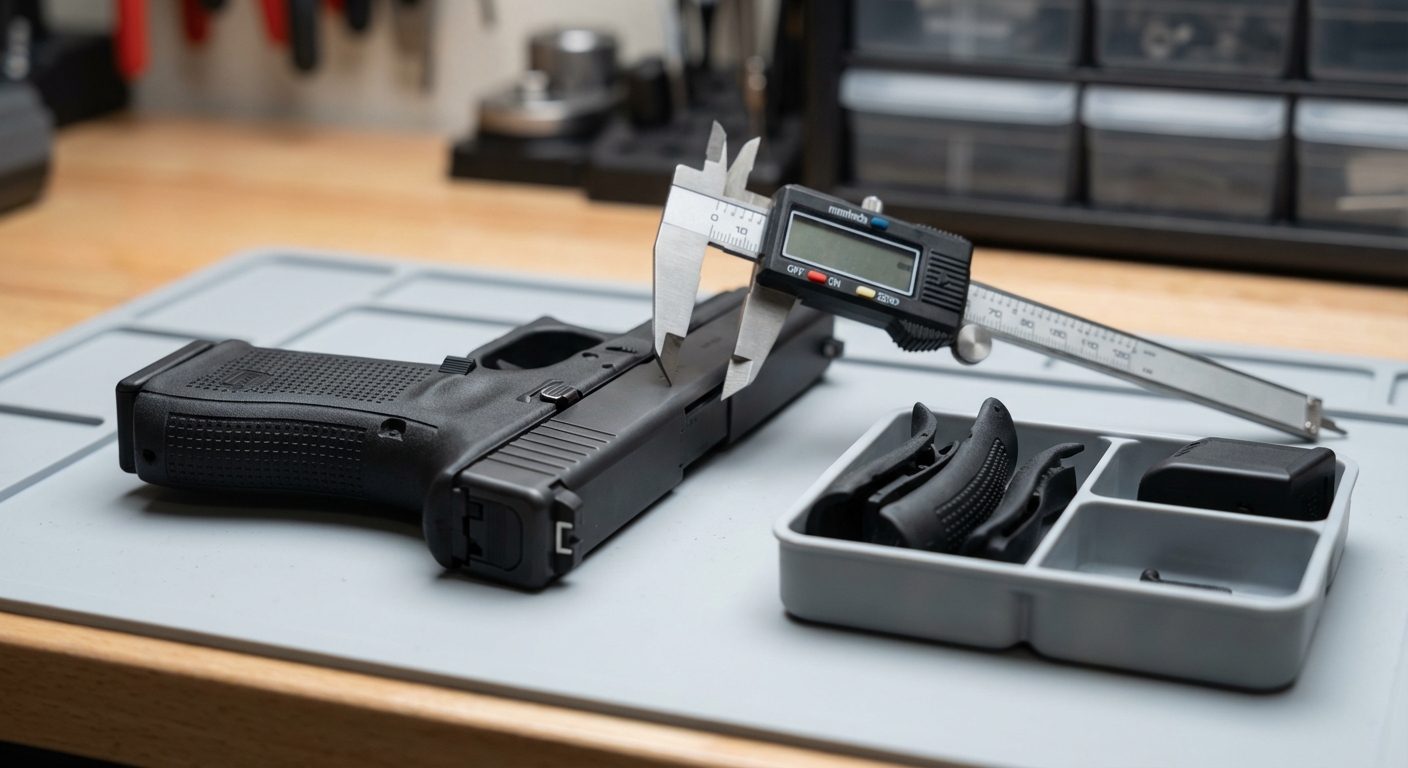
The complication is that “normal use” and “hard use” can look similar in a couple photos, so buyers lean on quick visual tells and your reliability story to decide how confident they feel. Your job is to make honest wear look like exactly what it is, normal carry and normal shooting, with nothing hidden.
Most buyers do a fast scan for wear patterns that match real-world use. Holster wear on the slide’s high edges reads like carry, not abuse. A polished “smile” on the barrel hood is normal cycling wear, and it’s a common round-count proxy because it shows repeated slide movement. Breech-face wear and carbon staining around the striker and extractor area read as firing-use indicators, not just time in a holster. The nuance: these marks aren’t “bad,” but mismatched wear, odd gouges, or a vague story makes people assume the worst. A simple, consistent reliability note, like how often it was shot, cleaned, and whether it ever choked, does more than a long explanation.
A factory-ish Glock 19 package typically means the OEM hard case, at least two OEM magazines, the OEM magazine loader, and the basic paperwork. OEM matters here because buyers trust OEM magazines more than unknown aftermarket mags when they’re judging reliability. Generation details also set expectations: Gen3 commonly ships with 2 mags and no backstraps, while Gen4 commonly ships with 3 mags and includes the Modular Backstrap System, although some restricted packages reduce that to 2 mags. Missing the box, case, or papers doesn’t just remove “stuff,” it removes confidence.
Reversible upgrades sell easier than permanent ones because they keep options open. A quality light or optic can help if it matches how the buyer plans to run the gun, but it also narrows the audience to people who want that exact setup. Permanent mods, like irreversible frame work or aggressive slide cuts, often narrow the buyer pool. Keeping the OEM parts lets you restore the pistol to stock before selling, which increases liquidity by widening who will say “yes.”
- Gather the OEM case, all OEM mags, the OEM loader, paperwork, and any backstraps your variant originally included.
- Pull any original OEM parts you removed (sights, trigger parts, barrel, recoil spring assembly), and bag them together.
- Photograph the full left and right sides, the barrel hood through the ejection port, the breech-face area, and the slide high edges where holster wear shows up.
- Write a one-paragraph reliability and round-count summary that matches what the wear shows.
2026 Glock 19 Price Benchmarks
With your variant, condition, and “what’s included” nailed down, you’re finally in a position to compare apples to apples. You can estimate a realistic 2026 Glock 19 value the same way working buyers do: start from real completed sales for your exact variant, then make a few consistent adjustments. The repeatable part is the comp set, not your gut feel.

Use completed auctions, not active listings (asking price). Supply-and-demand swings are exactly why asking prices drift away from what actually clears, and on GunBroker the completed-auction pages also show objective transaction signals, like bid count and whether the reserve was met, so you can tell the final amount reflects a competitive completed sale rather than an unsold listing.
Comps only work if they’re actually your gun. Filter your results until the model details match the variant you already identified earlier (Gen, MOS vs non-MOS, frame color, special runs) and the condition tier you already chose. If your comp is “close enough” but not exact, treat it as a backup data point, not the anchor.
The friction here is temptation: the best-looking sale you find is rarely the closest match. Your best comp set is the boring one that matches.
- Start with the median of your best 5 to 10 completed sales.
- Adjust for completeness, because buyers pay differently for “gun only” vs “factory-ish,” meaning correct case, backstraps, and the magazine count you’re comparing against.
- Adjust for optics readiness or installed optics as a concept, not a wish. A slide cut, an MOS configuration, or an included optic changes the buyer pool, but it still has to match what your comps actually sold for.
- Subtract for permanent modifications that narrow demand, like aggressive frame work or irreversible cuts, because you can’t “un-mod” the gun for the next buyer.
Before you fall in love with your number, compare it to what “new” really costs. A Gen 5 Glock 19 is cited at about $475 from a distributor versus MSRP $647, and very few gun shops list new Glock pistols at full MSRP. That pricing stack is also why distributor-to-dealer markup for a gun sold just under MSRP is often described around 30%.
If your used number is brushing up against common new-gun street pricing, your comps are probably inflated, mismatched, or bundle-driven.
Your comp-based number is a retail-market outcome. A trade-in (wholesale offer) lands lower because the shop has margin, overhead, and time-on-shelf risk, but it’s still useful as a floor when you’re deciding how much effort private sale or consignment is worth.
Write your result as a range you can defend: “Based on recent completed sales for my exact variant in my chosen condition tier, I’m at $X to $Y, high confidence if it includes two mags and factory case, lower confidence if the buyer values the optic cut differently.” That range mindset matches how real buyers price guns, including a Glock 19 current-worth guide, since they explicitly weigh make and model, condition factors (finish, bore, matching numbers, aftermarket parts), market data (dealer listings plus auctions), seasonality, and regional demand.
- Reserve met and the item actually sold, not “relisted.”
- Bid activity that looks competitive, not a single lucky click.
- Match on the variant details you already pinned down.
- Read the description for missing mags, swapped parts, or “project gun” tells.
How Other Guns Hold Value
Those comps give you the “what did it really sell for” answer, but it also helps to know what kind of value curve you’re on. Some guns depreciate like tools, others hold, or even gain, value like collectibles. If you pick the wrong category, you’ll anchor to the wrong number and every offer will feel “insulting” even when it’s normal market behavior.
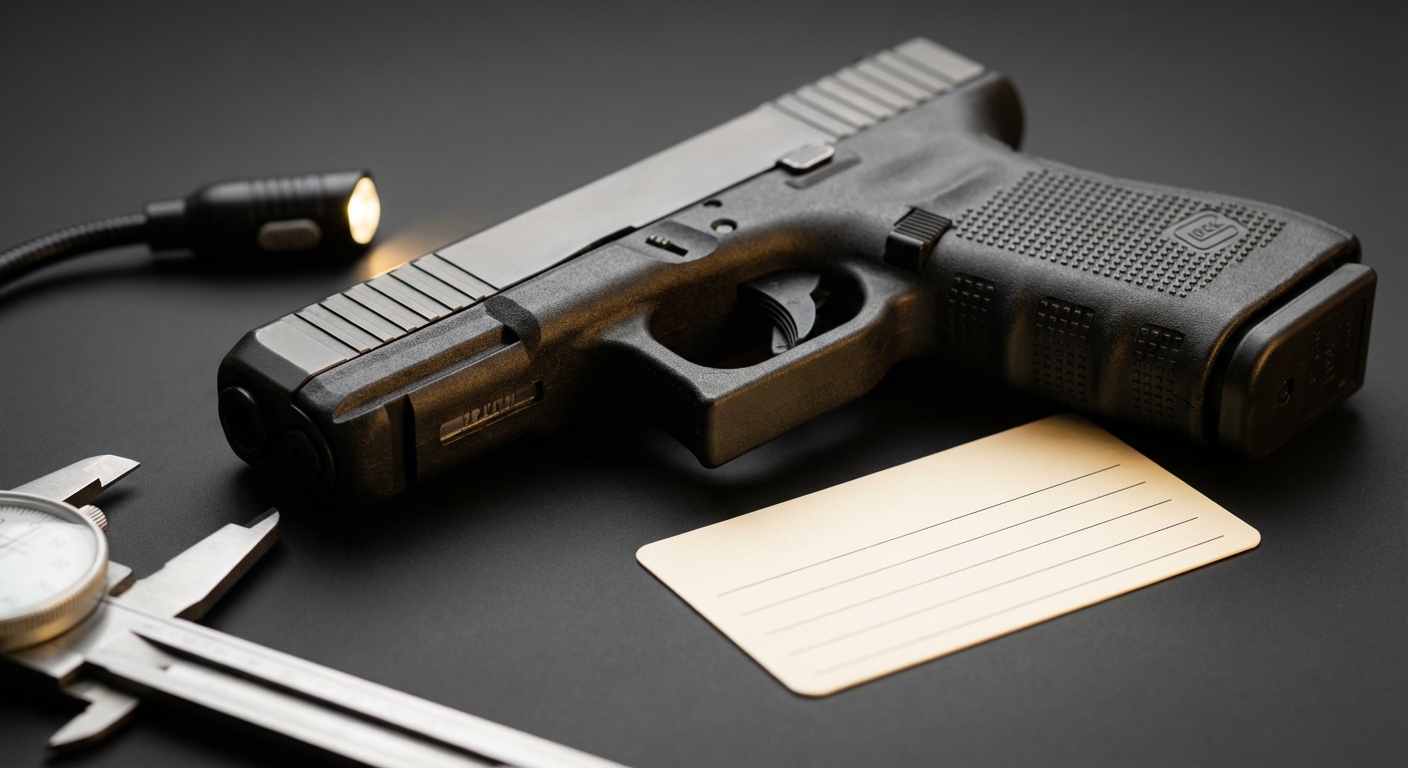
A modern polymer striker pistol is usually “high-demand tool” pricing. One clean calibration point: a Walther PDP averages $839.64 new and $534.87 used, about 63.7% retention (used/new). That spread is the market telling you the first owner eats most of the depreciation.
Metal-frame classics sometimes bend that curve because the design has decades of cultural gravity. The used value of a CZ 75 is up $49.57 over the past 12 months to $647.53, and a basic Beretta 92FS or CZ75B used is commonly stated around $450-$550 depending on magazines and extras.
Once you’re dealing with scarce variants, documentation, and family history, “tool” math breaks. Cash My Guns, an FFL buyer, explicitly positions appraisals for collectible and inherited collections, because provenance and originality can outweigh typical wear-and-tear pricing.
Use those snapshots as your sanity check. For a Glock 19, default to “high-demand tool” expectations unless you truly have a special-run, collector-leaning example.
Sell Safely for Top Dollar
Once you’ve got a defendable range, the “right” price is also about how you sell. The “best price” isn’t the biggest number a buyer texts you, it’s what you actually net after fees, time-on-market, and the risk of a deal going sideways. If your price target is already set from your chosen condition tier, the smart move is picking the selling lane that protects that number instead of bleeding it out in little cuts.
- Local private sale (where legal)
Best when you prioritize: Highest net
Fee drag (what usually eats your net): Minimal, but budget for a transfer if you choose to use one
Risk profile: Higher scam and meet-up risk - Consignment at a shop
Best when you prioritize: Higher headline price with less legwork
Fee drag (what usually eats your net): Commission and sometimes processing fees
Risk profile: Lower buyer drama, slower payout - Sell to a dealer/buyer
Best when you prioritize: Fast cash, low hassle
Fee drag (what usually eats your net): Dealer margin, you trade net for speed
Risk profile: Lowest scam exposure - Online sale routed through an FFL shipment
Best when you prioritize: More buyers, stronger pricing
Fee drag (what usually eats your net): Platform fees, shipping, insurance, transfer fees
Risk profile: Manageable if you control payment and ship only to an FFL
Local FFL transfer fees average about $20 to $75 per firearm, with many standard transfers landing in the $25 to $50 range. Some shops charge more for specialized services or higher-end handling, so call before you promise a buyer “cheap transfer.”
On the legal side, using an FFL (Federal Firearms Licensee) is the clean way to handle required transfers. Under U.S. federal law, interstate handgun transfers to non-licensees must be completed through an FFL in the recipient’s state. You also cannot ship a handgun directly to a non-FFL in another state, but you can ship a handgun to an FFL for sale or transfer if you follow the law and carrier rules.
- Clean it like you’re handing it to an inspector, then keep your fingerprints off it.
- Photograph in bright, even light: both sides, top of slide, barrel hood, sights, and any honest wear.
- Show what’s included in one “inventory” photo, case, mags, backstraps, paperwork, accessories.
- Disclose functional issues and permanent changes upfront, surprises trigger renegotiation.
- Protect your serial, don’t post the full number, show only partial if needed.
Assume the first person to overpay is testing you. Red flags are simple: pressure to ship fast, “my cousin will pick it up,” weird payment instructions, or refusal to use an FFL when required. Public guides on selling a gun to a stranger and liability stress the right mindset even if you sell elsewhere: prioritize clean payment, clean transfer, clean paper trail.
- Meet at a reputable gun shop for the transfer when possible.
- Confirm the receiving FFL’s info independently before you ship.
- Do not accept reversible payments for a firearm.
- Decide your lane: maximum net, fastest cash, or lowest hassle.
- Call one local shop to confirm transfer fee and process, and check your state’s private-sale rules.
- Build the listing using the checklist, then post or request a quote the same day.
- Schedule the meet-up or shipment window, and stick to your price unless your own disclosures change it.
Your Next Best Step
The two “identical” Glock 19 listings that kicked this off usually aren’t identical at all, and your best leverage comes from separating asking prices from completed-sale reality. Nail the exact variant first (generation plus MOS status), then audit the condition signals and completeness (mags, case, OEM parts). Sanity-check your math against recent completed sales and keep your answer as a range, not a single magic number. Then choose the selling route that fits your speed-versus-payout priorities.
Do this today: write one “pricing identity line” with your Gen, MOS or non-MOS, condition notes, and what’s included; then take clean, well-lit photos that prove it. A serious appraisal or offer depends on the exact model, Gen, MOS status, condition photos, and included mags and accessories, because each input moves the valuation. If you want a fast, straightforward offer, Cash My Guns is a nationwide online purchasing service that buys directly from private sellers.
Local demand and compliance requirements still decide the final number, so the method beats chasing one perfect price.