

You’ve got an SKS, you start Googling prices, and the numbers look like they’re pulled from different universes. That’s not your imagination. Two details change everything fast: (1) origin and variant, and (2) condition and originality. You can see the spread right in plain sight, with a Russian SKS Izhevsk listing shown at $3,999.00 and a Chinese SKS Public Security variant listing shown at $2,975.00.
The frustration is that a lot of SKS rifles look nearly identical in photos, even when collectors see them as totally different animals. Small tells around matching parts, refurb marks, and correct originals swing demand hard, and they swing your price with it. One buyer even reported paying $700 for an all-matching Russian SKS with no refurb marks, purely because it checked the “untouched and correct” boxes. Then there’s the money you don’t see on the tag: your selling path changes what you actually pocket. A federally licensed, FFL-run, “Safe • Legal • Hassle-Free” style process comes with a different kind of friction than an informal local sale.
Here’s the plan: you’ll pin down what you actually have, judge how original and clean it really is, price it using real sold data, and pick a sale route that matches your timeline, not someone else’s hype.
What Your SKS Is Worth
Your SKS doesn’t have one “worth” number. It has four, and mixing them up is how sellers end up feeling like they got lowballed.
Asking price is the optimistic tag you see in listings, what someone hopes to get, not what the market proves. Sold price is the receipt number, what a buyer actually paid when the deal closed.
Trade-in or consignment expectation is what you should expect when a shop is doing the work or taking the risk, and they get paid for that; consignment commonly runs 20 to 25% of the final sale price. Dealer or buyer cash-offer is the fastest, simplest number, a direct buy where the buyer builds in overhead and resale margin, the way a what gun stores typically pay for guns model works (for example, Cash My Guns).
The sold price is rarely what you keep. Real-world friction eats into it: platform fees, payment handling, shipping, and the cost of running the transfer through an FFL. Transfer fees are commonly cited around $20 to $75 depending on the dealer and location; one posted schedule lists $35 per long gun transfer, and one posted policy states a $55 transfer fee plus shipping.
Even on big marketplaces, the math matters: GunBroker Final Value Fees for firearms are 6% on the first $400 plus 4% above $400. Add time-to-sell risk, returns, and buyer flake-outs, and “highest price” starts competing with “least hassle.”
Book values are snapshots, and the market moves faster than published updates. A guide can be behind current demand, recent import swings, or what people are actually paying this month.
Decide which “worth” you need, fast cash or max sale price, before you price anything—and it helps to understand how gun value is determined beyond the listing number.
SKS Value Drivers That Matter
The SKS market rewards scarcity and originality more than most first-time sellers expect, and scarcity starts with where your rifle was made. Russian SKS production was short: primarily Tula from 1949 to 1956, with the much scarcer Izhevsk run limited to 1953 and 1954. When the AK replaced the SKS in Soviet service, Russian production ended in the mid-1950s, which is why Russian examples usually carry more collector heat than later mass-produced variants.
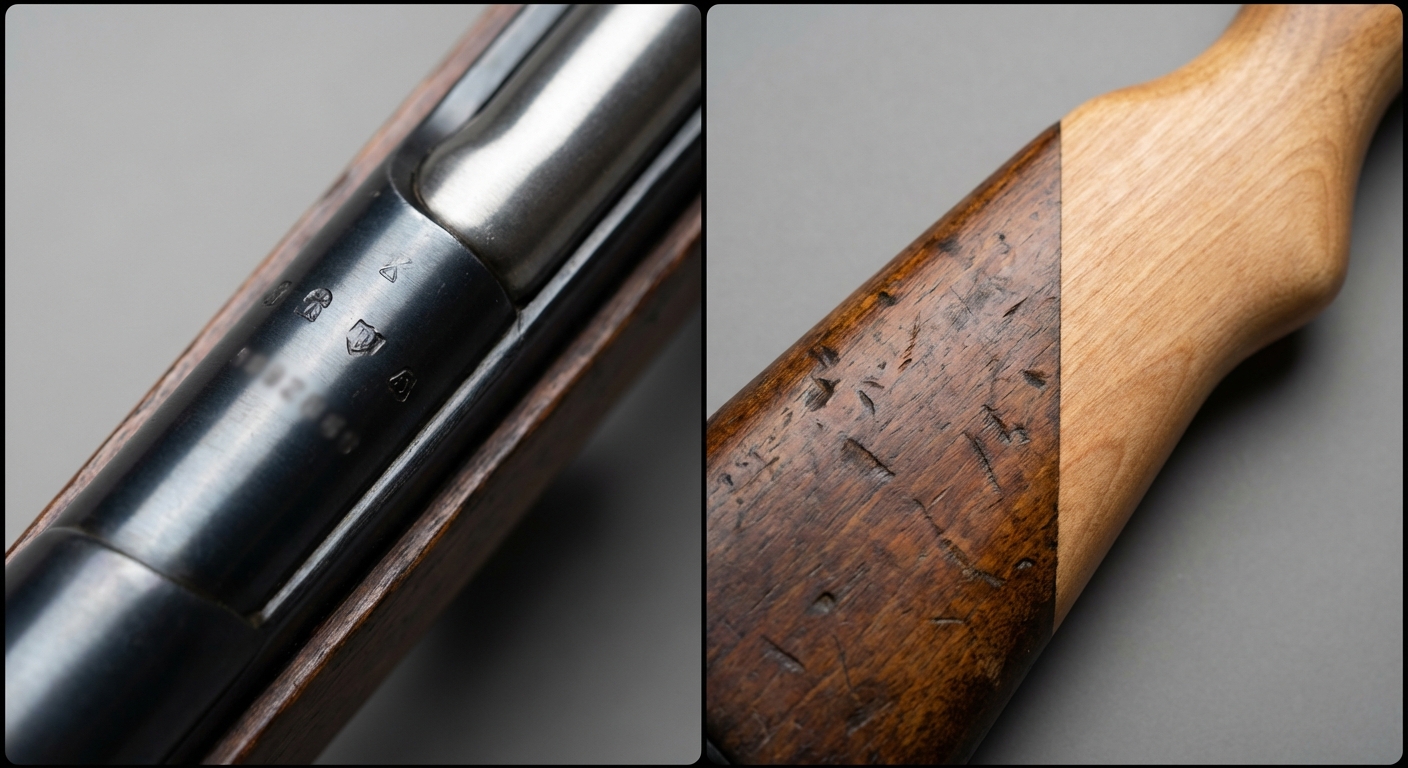
China is the opposite story. Most Chinese SKSs you’ll see are Type 56 rifles, produced for decades, and many imports wear factory codes. The best-known, widely documented early-production code is /26, and that one marking alone can shift how a buyer talks about your rifle, even before they look at condition.
Yugoslav and other variants sit in the middle: distinct enough to be collectible, common enough that the details matter. Buyers will key in on variant signals and markings that support the story, such as arsenal marks, factory codes, year patterns, and sometimes the import mark (small stamp on the barrel/receiver).
Collectors pay a clear premium for matching serial numbers, meaning the serial-numbered parts all wear the same original serial because it signals the rifle stayed together as-built. If the “matching” was created later, trust drops and so does the price, even if the rifle looks great.
This is where force-matched comes in. Refurb programs commonly force-matched parts by restamping or electro-penciling a replacement part to match the receiver serial. Buyers spot the tell fast: a lined-out number, a scrubbed surface, or that thin, jittery electro-pencil on a bolt carrier. It can still be a solid shooter, but it is not the same thing as original-matching.
On Russian SKSs, the typical serial set buyers check includes the receiver (primary), bolt, bolt carrier, trigger group housing or guard, magazine floorplate, and stock, with the dust cover often numbered as well. If you can’t account for the numbered parts, expect the conversation to get skeptical fast.
After origin and originality, buyers judge the obvious stuff immediately: finish wear, bore condition, stock integrity, and overall completeness. A clean bore and an intact stock do more for buyer confidence than any “I barely shot it” story. Missing standard components or swapped furniture reads as a project, and project guns get project offers.
That sounds like a lot, but in practice it boils down to a few checks you can do quickly and document with decent photos.
- Confirm the origin and variant signals (Russian Tula vs Izhevsk, Chinese Type 56 factory codes like /26, Yugoslav pattern).
- Verify whether it’s truly matching serial numbers or force-matched, focusing on the receiver, bolt, carrier, trigger group, magazine, and stock.
- Scan the big-condition tells: finish, bore, stock cracks or repairs, and whether it’s complete enough to feel “whole” to a buyer.
Identify Your SKS in Minutes
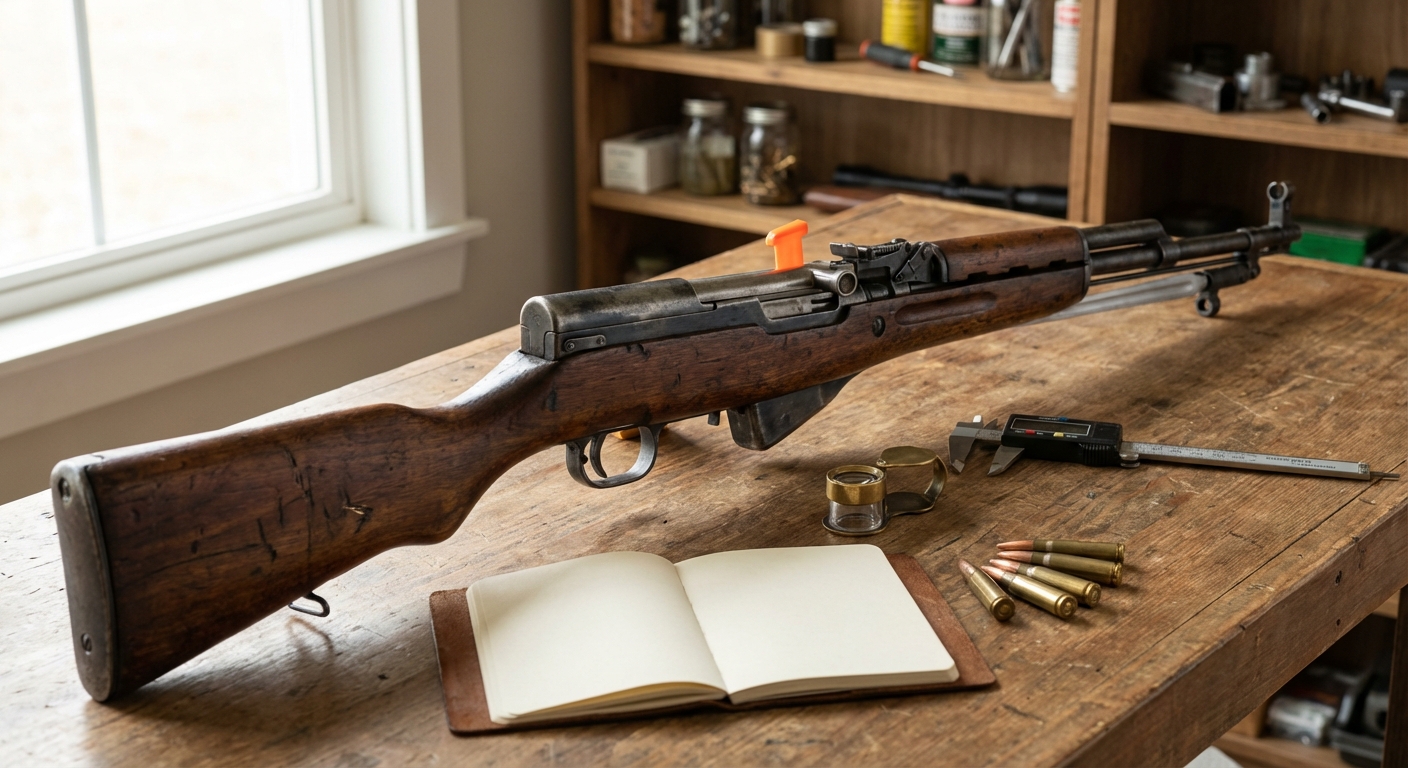
- Confirm you’re looking at a classic SKS layout: folding bayonet, fixed 10-round magazine, and a 20-inch barrel.
- See a permanently attached rifle grenade launcher (often called a spigot) plus a gas shutoff system at the front sight area, you’re holding a Yugoslav M59/66.
- Flip the rifle over and check the sling swivels. All Russian SKS rifles use bottom sling swivels on the stock, not side swivels.
- Collector trivia: the 1949 series is exceedingly rare, and originals are known for a cruciform spike bayonet.
Most bad quotes start with one blurry receiver pic and a guess. You can lock down the basics fast if you check the right marks in order.
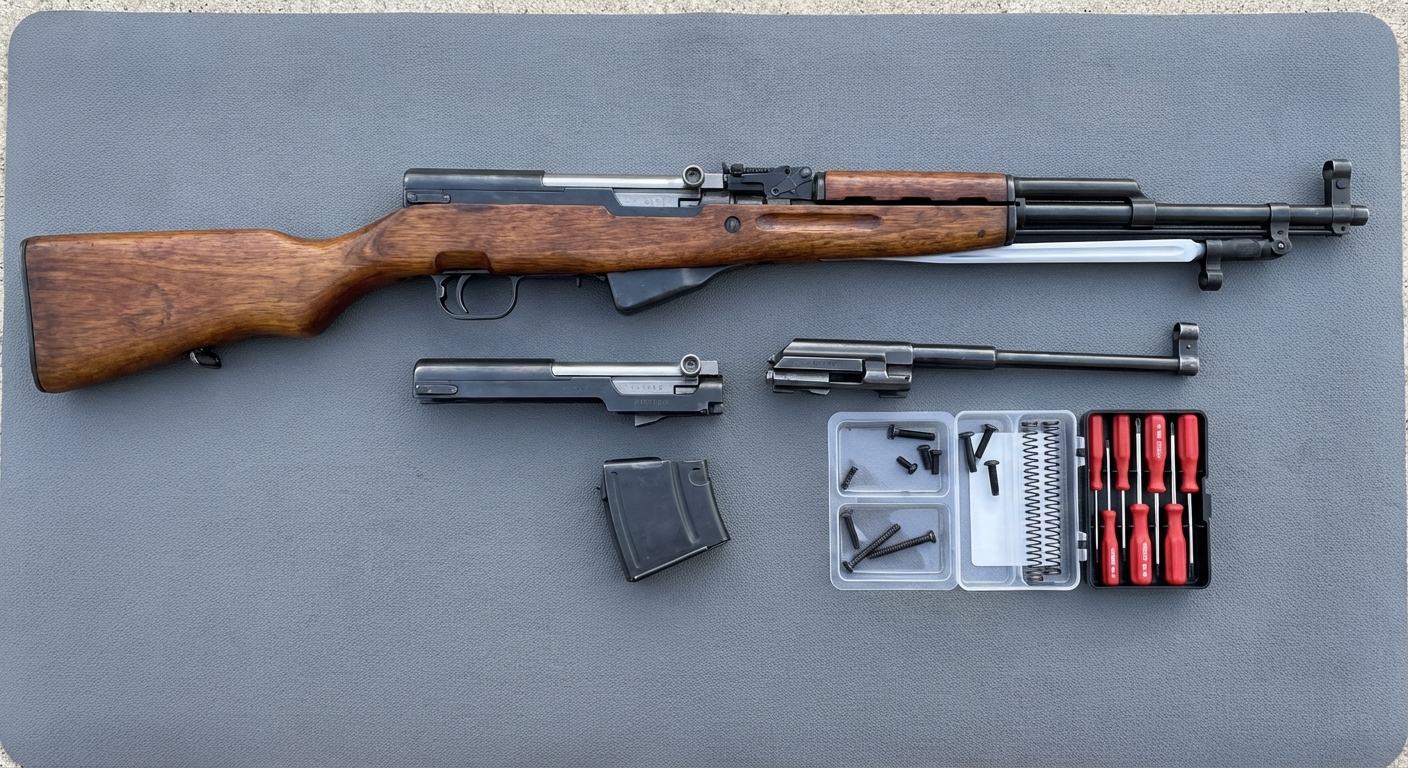
- Start with the receiver, it’s the primary serial to document.
- Match-check the obvious parts next: bolt, bolt carrier, trigger group, magazine, and top cover (dust cover), just confirm what matches and what doesn’t.
- Find the import mark and photograph it clearly, those legally required importer identification markings can confirm origin or import batch and sometimes affect collectibility.
- Left receiver (full view) and right receiver (full view)
- Top cover (dust cover), including any markings
- Bolt and bolt carrier (both sides if possible)
- Trigger group
- Magazine
- Stock cartouches and any numbers on the stock
- Muzzle and crown (straight-on)
- Import mark (close, readable)
- Included accessories (sling, oil bottle, cleaning kit, bayonet, etc.)
Tip: use bright indirect light and tap to focus on the stampings, angled glare hides numbers. This is the same photo discipline remote buyers like Cash My Guns need to avoid assumptions.
Those photos also make pricing cleaner, because you can compare your markings and condition directly against confirmed sold listings.
Estimate Price Using Real Sold Data
The fastest way to stop guessing your SKS value is to anchor it to sold comps, recent confirmed sold listings for comparable items used to estimate current market value. Completed sales are the reality check because they reflect what buyers actually paid.
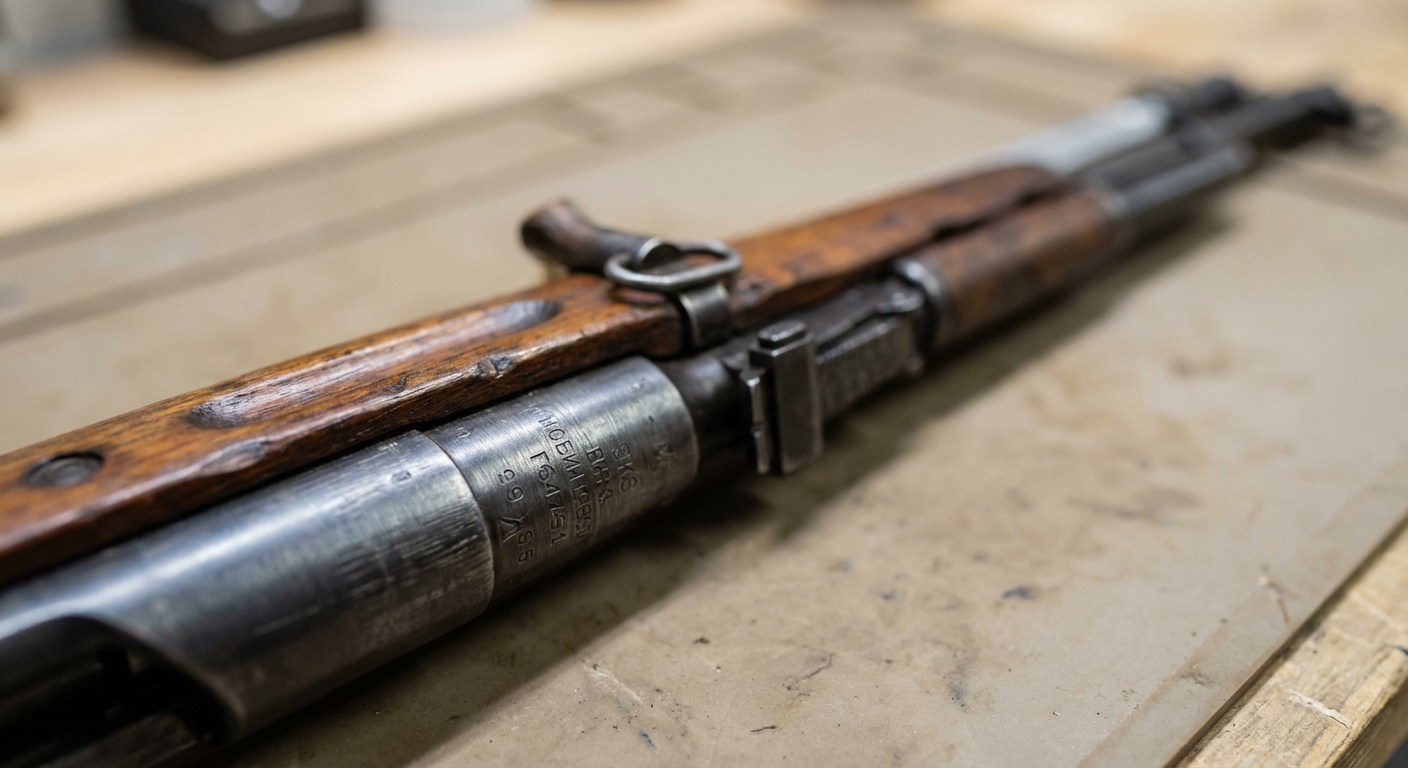
If you’re comparing your rifle to listings that are still sitting unsold, you’re pricing against other people’s optimism. Sold comps force you to confront the market as it is, which is exactly what you need before you decide on a list price (gross) versus what you’ll actually clear after selling costs (net).
“Similar SKS” falls apart fast if condition isn’t standardized. That’s why condition grading (NRA/Blue Book-style), a standardized tier set (Excellent/Very Good/Good and so on) for pricing consistency, matters more than most sellers think.
Excellent typically means about 98-100% original finish, a bright bore, and no mechanical issues. Very Good commonly lands around 80-97% finish with light wear and a mechanically sound action. If your rifle is Very Good and your comp is Excellent, you’re not looking at the same price lane.
- Pull 5-10 truly comparable sold listings, not one “perfect” outlier.
- Filter to the same variant and origin first, then tighten to similar originality and completeness.
- Grade each comp and your rifle using the same condition tier.
- Average the closest matches, then adjust for clear differences like matching numbers, aftermarket parts, and included accessories.
- Discount for speed if you need a fast sale, price below the comp-average to shorten time to sell.
Mini example: you find eight sold comps for your same SKS variant. Three are closest because they match your condition tier and originality. You average those three, then make a disciplined adjustment if yours is all-matching, since matching numbers signal an as-issued configuration and command higher value.
Even professional offers do this. Cash My Guns, for example, bases valuation on market data (dealer listings plus auctions) and condition inputs like finish, bore condition, matching numbers, and aftermarket parts, and it also considers how supply and demand affects firearm resale prices (including seasonality and regional demand).
Your output should be a price range, not a single number, plus a confidence level (high, medium, low) based on how tightly your sold comps match your exact rifle.
Best Way to Sell Your SKS
The “best” way to sell your SKS is the one that matches what you actually need this week: the highest net, cash fast, or the least paperwork and back-and-forth. Your pricing work above helps here, because a strong comp-based range tells you what you’re giving up (or gaining) when you choose speed over maximum net.
The catch is that your buyer pool is not just market-driven, it is rule-driven, and one legal constraint can turn a great-looking offer into a dead end.
Sell path comparison (non-table summary)
- Private sale (in-state)
- Speed: Fast if you already have local buyers
- Net: Usually highest, no middleman cut
- Paperwork and coordination: You handle meeting, eligibility comfort checks, and any state-required steps
- Risk and friction: Highest hassle and “no-show” factor
- Consignment at a shop
- Speed: Slow to unpredictable
- Net: Lower after commission
- Paperwork and coordination: Shop typically handles the transfer process
- Risk and friction: You wait on foot traffic and pricing reality
- Online auction
- Speed: Moderate, listing to close takes time
- Net: Can be strong on desirable variants, minus fees and shipping
- Paperwork and coordination: You coordinate shipment to an FFL on the buyer side
- Risk and friction: More logistics, returns and disputes are a real workload
- Direct-to-buyer or dealer
- Speed: Fastest path to “done”
- Net: Lower, you’re taking a convenience haircut
- Paperwork and coordination: Typically standardized process
- Risk and friction: Lowest hassle if the offer is fair
If you want a deeper breakdown of your options for selling a gun, the key is to match the channel to your priorities: speed, net, and how much coordination you want to handle. The bad fit is a rare, collectible SKS where your upside depends on patient top-dollar shoppers, not a fast wholesale-style offer.
This is general information, not legal advice.
Federal law sets the big boundary: 18 U.S.C. § 922(a)(5) generally bars an unlicensed person from transferring a firearm to another unlicensed person who lives in a different state. For interstate sales, using an FFL (Federal Firearms Licensee), a person or business licensed by the federal government to legally handle firearm transfers, is the common compliant path, because the receiving FFL can run the background check and book the transfer.
State rules can narrow things further (see state-by-state gun selling rules for a starting point). In California, an “SKS with detachable magazine” is specifically listed as a named/prohibited assault weapon under CA Penal Code § 30510, which sharply limits lawful in-state transfer options for that configuration. Texas is the opposite snapshot: private long-gun transfers between Texas residents generally do not require an FFL or a background check, there is no statewide waiting period, and there is no FOID-type card requirement, but prohibited-person rules still apply.
Bottom line: pick the channel that fits your legal reality and your timeline, then price for the tradeoff instead of chasing the highest headline number.
Quick Checklist and Next Steps
You don’t need a perfect appraisal to make a smart move. You need a clean documentation packet and a selling plan you can follow without second-guessing.
- Photograph the rifle clearly, including key markings and the serial number, plus any accessories you’re including.
- Write down the basics you already pulled, variant, condition notes, matching numbers status, and obvious modifications.
- Sanity-check your transfer path, private sale vs dealer consignment vs shipping to an FFL, and confirm your state guide rules before you list.
- Set a price range using the sold-data approach you used earlier, then decide speed vs maximum net.
- Verify if it’s Curio & Relic (C&R), under 27 CFR 478.11, 50+ years from its actual manufacture date can qualify, which can expand options with licensed collectors in the right circumstances.
- Get help if it looks uncommon, a quick quote from Cash My Guns can keep you from underselling.
Don’t let a payment mistake cost more than a small pricing error. The FTC warns that “funds available” doesn’t mean a check cleared, fake checks can bounce weeks later, and you can owe your bank the full amount. Watch for the overpayment scam too, a buyer “overpays,” pushes you to refund the difference, then the original check is fake.
Next step: gather your photos and notes, then choose the route that fits your priority, fastest sale or highest net.
Conclusion
SKS prices move because supply and demand move, and supply is shaped by what’s actually available to buyers in the U.S. Since 1994, U.S. import prohibitions ended large-scale Chinese Norinco SKS imports; the 1989 non-sporting semiautomatic ban narrowed import configs; and Rock Island Auction’s average SKS prices rose from 2015 to 2022. That’s why the basics in this guide matter: identify your origin and variant, be honest about condition and originality, anchor your price to sold comps, and sell through a compliant channel that matches your timeline.