
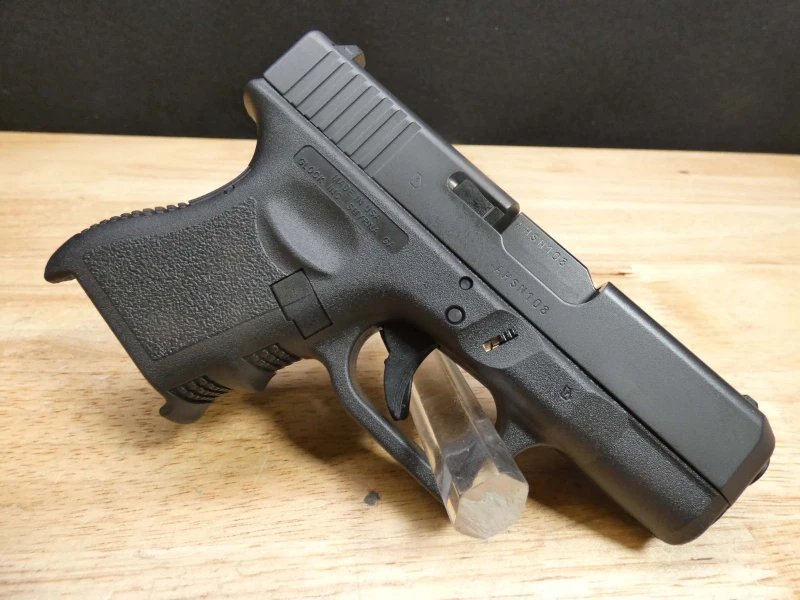
The Glock 28 is a subcompact, polymer-framed pistol chambered in .380 ACP, designed primarily for deep concealment and backup use. Its unique position in the American market, largely due to historical import restrictions under the Gun Control Act of 1968, makes it a relatively rare find compared to its 9mm counterparts. This rarity, combined with Glock’s renowned reliability, creates a distinct set of value considerations for owners looking to sell this capable and compact handgun.
What Determines Your Glock 28’s Worth
The value of a Glock 28 is primarily determined by its condition, completeness, and unique market status. Because it was not widely imported for commercial sales in the United States, its relative rarity can influence its price among collectors and enthusiasts. A pistol in very good to excellent condition will command a higher price, typically fetching between $300 and $400 on the used market. Furthermore, the inclusion of the original factory case and all original magazines is crucial; a missing set can result in a value deduction of $65 to $100, reflecting the cost of replacing these essential factory items.
2026 Price Breakdown by Generation
Generation 1 (Not Applicable)
The Glock 28 was not produced during the era of Glock’s 1st generation pistols. The Gen1 models are characterized by their uniform pebble-grip texture and lack of an accessory rail, features that were established with the original Glock 17 in the early 1980s. The subcompact .380 ACP model was developed much later in Glock’s production history. Consequently, there are no Generation 1 Glock 28s in existence, and any search for one would be fruitless. The value discussion for this firearm begins with later generations, where its design and features were first established and brought to market.
Because no Generation 1 models of the Glock 28 exist, there is no associated market value or price data to analyze. The firearm’s lineage begins with subsequent design updates from the manufacturer. Collectors and sellers should focus their research and pricing strategies on the generations that were actually produced, as this is where all market activity and value are concentrated. Any listing or claim of a “Gen1 Glock 28” should be considered inaccurate and disregarded when assessing the firearm’s history or potential worth. The model’s story and value are entirely contained within its later iterations.
Generation 2 (Not Applicable)
Similar to the first generation, the Glock 28 was not manufactured as a Generation 2 model. The Gen2 updates, introduced in the late 1980s, added checkering on the front and back straps of the grip but still predated the introduction of the subcompact .380 ACP pistol into Glock’s lineup. Therefore, buyers and sellers will not find any factory-original Gen2 Glock 28s on the market. The development of this specific model occurred later, aligning with more modern Glock design standards and features. Its value is not influenced by this earlier period of Glock’s manufacturing history.
As there are no Generation 2 Glock 28s, establishing a price point or value breakdown for this generation is not possible. The market for this handgun is exclusively focused on the single configuration that was eventually produced. Owners and prospective buyers should be aware of this fact to avoid confusion or misinformation. The entire valuation of the Glock 28 is based on the features and market availability of its Gen3-style production run, which represents the only version of this firearm widely recognized and traded among firearm enthusiasts and collectors in the United States.
Generation 3 (Primary Model)
The Glock 28 is primarily available in a single configuration that aligns with Glock’s 3rd generation design, featuring finger grooves and an accessory rail. This is the most common, and essentially only, version found in the U.S. market. Due to its rarity from import restrictions, its value is distinct. The most recent limited TALO Edition Gen3 model carries an official MSRP of $599. However, the average new price is closer to $428, with market prices seen as low as $391. This version’s unique status makes it a point of interest for both shooters and collectors.
On the used market, a Glock 28 in very good to excellent condition typically sells for between $300 and $400, with the average reported price hovering around $347. Because a direct comparison between different generations is not possible, the value of a G28 is assessed based on its condition and completeness within this single Gen3 framework. Its scarcity in the American market can sometimes drive prices slightly higher among motivated buyers seeking to fill a gap in their collection, making it a stable asset compared to more common Glock models.
Generation 4 (Not Applicable)
The Glock 28 was not officially released or widely distributed as a Generation 4 model in the United States. The Gen4 updates, which included a new grip texture, interchangeable backstraps, and a dual recoil spring assembly, were applied to many other models in the Glock lineup, but the .380 ACP subcompact was not among them for the American commercial market. As a result, a factory Gen4 Glock 28 is not a standard item that sellers or buyers will encounter, and it does not have an established market value or price history.
Without a production run for the U.S. market, there is no pricing data or value assessment for a Generation 4 Glock 28. The firearm’s value remains entirely concentrated in the Gen3-style models that have been made available, most notably through recent US-based manufacturing efforts. Any discussion of a Gen4 G28’s worth would be purely speculative, as it does not exist as a traded commodity in the same way its predecessors or other Glock models do. All valuation should remain focused on the available Gen3 configuration.
How Modifications Affect Value
When considering modifications for a Glock 28, it is crucial to understand their impact on resale value, particularly for a firearm intended for self-defense. The market consensus suggests that altering the factory trigger can introduce reliability concerns, which is a significant drawback for potential buyers. Most purchasers prefer the proven dependability of factory-original parts. Consequently, installing an aftermarket trigger is likely to hurt the resale value of a Glock 28, as the assurance of factory performance is a key selling point for this type of pistol. Sellers may find it beneficial to reinstall the original trigger before listing the firearm.
While some modifications can detract from value, there is no strong market consensus on specific upgrades that consistently add significant monetary worth to a Glock 28. Practical additions like high-quality night sights may appeal to some buyers, but they rarely allow a seller to recoup the full cost of the parts and installation. Given the Glock 28’s relative rarity and appeal to collectors, many potential buyers will place a higher value on a firearm that remains in its original, factory-stock configuration. Alterations are often seen as personal preferences rather than universal value-adding enhancements.
Regional Price Variations in 2026
The value and availability of the Glock 28 can vary significantly based on state and local laws. A major factor is its status on state-approved handgun rosters. For instance, the Glock 28 is not on the California Roster of Handguns Certified for Sale, making it illegal for civilian purchase in that state and thus creating a non-existent market there. This pattern is repeated in other states with restrictive handgun laws and specific roster requirements. Its historical inability to be imported for civilian sales already limited its distribution, and these state-level restrictions further concentrate its availability in less-regulated regions.
In states with fewer restrictions, the price will be dictated more by local supply and demand. Given that the Glock 28 is relatively rare nationwide, areas with a higher concentration of firearm collectors or Glock enthusiasts might see slightly higher prices. Conversely, in regions where the .380 ACP cartridge is less popular, demand may be softer. Laws regarding magazine capacity, such as those in New York, could also impact the value or desirability of a standard-capacity Glock 28, potentially requiring modification or the use of compliant magazines, which can affect the final sale price.
Online vs Local Sales
When selling a Glock 28 privately, whether online or locally, understanding the paperwork requirements is essential. While federal law does not mandate a bill of sale for a private transaction, the ATF highly recommends one to document the transfer of ownership. This document should include the buyer’s and seller’s information, firearm details like make, model, and serial number, and the transaction date. State laws vary significantly; some states require private sales to be conducted through a licensed dealer to facilitate a background check, while others have no such regulations, making local laws a critical factor in the process.
Selling to a local gun dealer offers a faster and more straightforward transaction, but typically at a lower price. Dealers will generally offer between 50% and 70% of a used firearm’s retail value. For a popular brand like Glock, the offer may be on the higher end of this range, from 65% to 70%, especially if the G28 is in excellent condition. While this path provides immediate payment and removes the complexities of a private sale, the financial return will be noticeably less than what could be achieved by selling directly to another individual.
Selling online requires navigating strict shipping regulations. A private seller is prohibited from directly shipping a Glock 28 or any handgun via common carriers like UPS and FedEx. Instead, the seller must take the firearm to a Federal Firearms Licensee (FFL), who will handle the shipment to the buyer’s designated FFL. This process ensures legal compliance and typically requires the firearm to be sent via an overnight service. The package must not have any external markings indicating it contains a firearm, and the buyer will complete a background check at their FFL to take legal possession.
The FFL Buying Advantage
Utilizing a Federal Firearms Licensee (FFL) is a mandatory component for any legal interstate sale of a handgun like the Glock 28. This process provides critical legal protection for both the buyer and the seller. The firearm must be shipped from the seller’s FFL to an FFL in the buyer’s state of residence. Upon its arrival, the buyer is required to complete all necessary paperwork, including the ATF Form 4473, and undergo a federal background check. This ensures the recipient is legally eligible to own a firearm, removing liability from the seller and guaranteeing the transfer complies with federal law.
Beyond federal compliance, the FFL system ensures that all state and local regulations are met. An FFL dealer is responsible for staying current on the complex web of firearm laws, which vary dramatically from one state to another. This is particularly important for the Glock 28, which is restricted in states like California. By facilitating the transfer, the FFL confirms that the sale is permissible in the buyer’s location, preventing an illegal transaction. This professional oversight provides peace of mind and is a non-negotiable aspect of responsible, legal firearm commerce across state lines.
What Increases Your Offer
The overall condition and maintenance of a Glock 28 are generally more significant in determining its value than its round count. Glocks are renowned for their durability and ability to withstand extensive use. As long as the firearm has been well-maintained, cleaned regularly, and shows minimal external wear, a higher number of rounds fired may not significantly decrease its value. Potential buyers often prioritize a thorough visual inspection over a logbook, so a clean pistol with well-kept slide rails, a pristine breech face, and a sharp extractor claw will always command a better offer.
Completeness is a simple yet highly effective way to maximize the sale price. A Glock 28 sold with its original factory case and the correct number of magazines (typically two) is considered a complete package. Failing to include these items can result in a value deduction estimated to be between $65 and $100, as the buyer will have to source these factory items separately. Ensuring you have all original accessories and documentation that came with the pistol when it was new will help you achieve the highest possible offer from an informed buyer.
Excellent presentation is key to attracting serious buyers and securing a top-dollar offer, especially in an online marketplace. Before listing, perform a thorough field-stripping and cleaning as detailed in the owner’s manual, avoiding over-lubrication. When photographing the pistol, use bright, natural light on a simple, non-distracting background. Take numerous clear, in-focus photos from multiple angles, including close-ups of markings and any imperfections. High-quality images build buyer confidence and signal that the firearm has been well cared for, directly translating to a higher perceived value.
When to Sell Your Glock 28
Understanding seasonal market trends can help you maximize the selling price of your Glock 28. Generally, the demand for handguns and other firearms sees a notable increase during two key periods of the year. The first is the holiday season, which runs from mid-November through mid-January, as firearms are often purchased as gifts. The second peak occurs during tax refund season, typically from February through April, when potential buyers have more disposable income. Listing your firearm for sale during these high-demand windows can lead to a faster sale at a more favorable price.
Conversely, the summer months are generally considered a slower period for firearm sales. With many people focused on vacations and outdoor activities not related to shooting, overall market demand tends to dip. Selling during this time might mean your firearm stays on the market longer or that you may have to accept a lower offer to complete the sale. While not a strict rule, patience can be a virtue; waiting until the market picks back up in the fall or winter could yield a better financial return on your investment in the Glock 28.
However, the unique nature of the Glock 28 as a relatively rare item in the U.S. can sometimes insulate it from the most dramatic seasonal swings. Its value is also tied to collector interest, which may not follow conventional market trends. If you are not in a hurry to sell, the best time is simply when the right buyer comes along. An enthusiast specifically seeking a Glock 28 to complete their collection may be willing to pay a premium regardless of the time of year, making a well-presented, year-round listing a viable strategy.
Common Pricing Mistakes
A frequent error is overvaluing the Glock 28 based on its rarity alone. While its limited availability in the U.S. is a key value factor, the market has established a relatively clear price range. A standard used model in good condition is typically valued between $300 and $400. A professional appraisal is generally not cost-effective for a firearm in this price bracket, as the appraisal fee would consume a significant portion of its value. Sellers should research recent sales of comparable models on online forums and marketplaces to set a realistic price rather than assuming rarity equates to a high-dollar collectible.
Another common mistake is failing to account for an incomplete package. Many sellers forget that the original case and magazines are integral to the firearm’s total value. As noted, the absence of these items can result in a deduction of $65 to $100 from the final price. When setting an asking price, a seller must be honest about what is included. Pricing the gun as if it were complete and then revealing that the original accessories are missing will likely lead to difficult negotiations or a failed sale, as informed buyers will factor in the cost of replacing those items.
Misunderstanding the value of modifications is a third critical error. Sellers often believe that the money they spent on aftermarket parts should be added to the gun’s asking price. However, for a defensive pistol like the Glock 28, modifications like a custom trigger can actually decrease its value due to perceived reliability issues. Most buyers prefer a factory-stock configuration. If you have modified your pistol, it is often best to reinstall the original parts before selling and list the aftermarket components separately to recoup their value, rather than expecting them to increase the firearm’s price.
Market Outlook for 2026
Predicting the future market value for any firearm, including the Glock 28, is an inherently speculative exercise, and there is no definitive industry consensus for its price trajectory leading into 2026. The value of the Glock 28 will likely remain closely tied to its unique status within the United States. Its history of import restrictions has cemented its position as a less common model, which provides a stable floor for its value among Glock collectors and enthusiasts who appreciate its distinct place in the company’s lineup. This inherent scarcity should prevent it from depreciating like more common firearms.
Several factors could influence its future price. If US-based manufacturing of the Glock 28 increases, the greater supply could put downward pressure on the prices of used models. Conversely, increased availability could also generate new interest in the platform, potentially boosting overall demand and stabilizing its value. Ultimately, the Glock 28’s worth will be determined by a balance between its availability, its appeal as a concealed carry option in .380 ACP, and its desirability as a niche collector’s piece. It is expected to remain a stable, if not appreciating, asset in the coming years.
Frequently Asked Questions
Does the rarity of the Glock 28 automatically make it more valuable?
While the Glock 28’s rarity in the U.S. due to import restrictions is a significant factor, it doesn’t automatically translate to a high-dollar collector’s price. Its market value is well-documented, with used models typically selling for $300 to $400. It is considered rare compared to a Glock 19, but its value is more aligned with that of a niche, functional handgun rather than a premier collectible. Rarity supports its value and prevents steep depreciation, but sellers should not expect it to command a price far beyond this established range for a standard model in good condition.
How much will a high round count hurt my Glock 28’s price?
For a Glock 28, the overall condition and maintenance history are far more important than the specific round count. Glocks are engineered for extreme durability and can function reliably for tens of thousands of rounds. A potential buyer will be more concerned with visible signs of wear, such as holster wear on the slide, or signs of neglect, like rust or dirt buildup. As long as the pistol has been properly cleaned and maintained, a high round count will likely have a minimal impact on its resale value compared to its cosmetic and mechanical condition.
Will I lose a lot of money if I don’t have the original box?
Yes, selling a Glock 28 without its original factory case and the correct number of magazines will negatively impact its value. This is considered an incomplete package, and the deduction in price is estimated to be between $65 and $100. This amount reflects what a buyer would have to spend to purchase replacement factory items to make the set whole again. To get the maximum value from your sale, it is always best to include all the original accessories that came with the firearm when it was purchased new.
Is it better to sell my Glock 28 to a dealer or privately?
The best sales method depends on your priority. Selling privately will almost always yield a higher price, as you can set the value closer to its retail market worth. However, this requires more effort in listing, communicating, and legally transferring the firearm. Selling to a gun dealer is much faster and simpler, but the offer will be significantly lower, typically between 50% and 70% of its used retail value. If you prioritize convenience and speed, a dealer is a good choice; if you want to maximize your financial return, a private sale is better.
Why can’t I find a new Glock 28 in my state?
The availability of the Glock 28 is limited by two main factors that affect its value. First, it was historically not imported for civilian sale in the U.S. due to the points system of the Gun Control Act of 1968. Recent availability is due to limited US-based production. Second, many states like California have handgun rosters that certify specific models for sale, and the Glock 28 is not on many of these lists. This combination of federal import history and restrictive state laws makes the firearm difficult to find in certain regions, directly influencing its market presence and price.
Get a Cash Offer Today
Ready to sell your Glock 28? We make the process fast, safe, and simple. Avoid the hassle of private listings and get a fair cash offer based on your firearm’s condition and the current market. We are fully licensed and ready to buy your gun today.
Click the button below to submit your firearm’s information. Our experts will review the details and provide you with a competitive, no-obligation offer. Turn your used Glock into cash with a trusted and professional buyer. Start the process now and see what your gun is worth!