
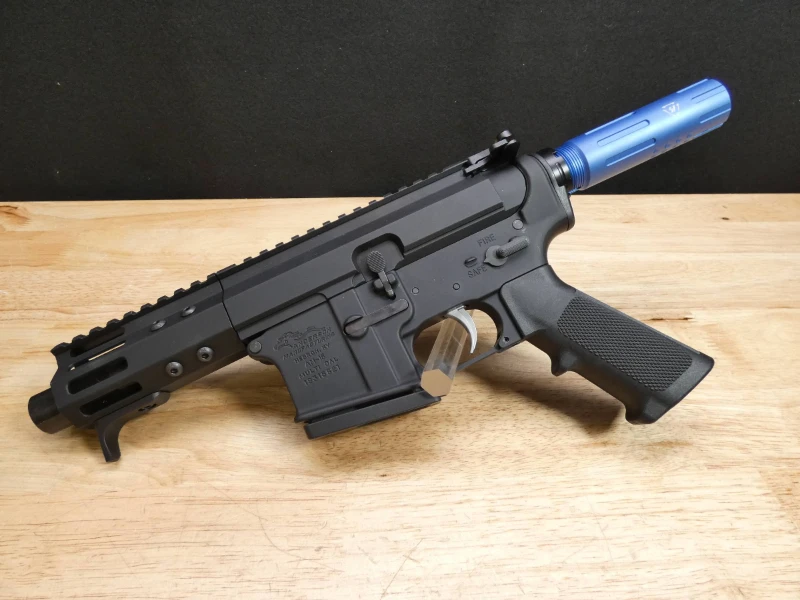
The Anderson Manufacturing AM-15 stands as a cornerstone in the budget-friendly AR-15 market, offering accessibility and reliability to a wide range of firearm enthusiasts. Understanding its market value involves looking beyond its initial price tag to consider factors like configuration, condition, and regional regulations. This guide provides a comprehensive analysis of the AM-15’s worth, detailing how modifications, sales channels, and market timing can influence its final price, ensuring you have the necessary information for a successful transaction.
What Determines Your anderson manufacturing AN-15’s Worth
The value of an Anderson Manufacturing AM-15 is primarily dictated by its specific configuration and overall functional condition rather than a particular manufacturing year or generation. As a widely produced and accessible AR-15 platform, its worth is closely tied to the current market for new models, with used prices typically falling within a predictable range. The manufacturer’s suggested retail price for new rifles spans from approximately $320 to over $950, depending on features. Consequently, a used AM-15 in good working order generally fetches between $315 and $340 on the private market, making its condition and included components the most significant value drivers for potential buyers.
2026 Price Breakdown by Generation
Basic “Utility” Configurations
Anderson Manufacturing does not use distinct generational models to categorize its AM-15 rifles; instead, value is determined by the specific build and features. At the entry-level end of the spectrum are the basic or “Utility” configurations. These models represent the most affordable way to acquire a new AM-15, with prices often starting around the $400 mark. They typically feature standard M4-style furniture, a basic handguard, and mil-spec components without extensive upgrades. The value proposition for these rifles is their function and affordability, making them a popular choice for first-time AR-15 owners or those seeking a simple, reliable platform for customization.
When sold on the used market, these basic configurations see a modest depreciation from their new price. Given their already low initial cost, the primary factor influencing their resale value is their functional condition. A well-maintained but high-round-count Utility model will hold its value surprisingly well, as buyers in this price bracket prioritize reliability over cosmetic perfection. The monetary impact of usage is minimal as long as the rifle is in good working order, with prices staying close to the established used market average. These models form the baseline for AM-15 valuation, representing the core of its reputation as a budget-friendly workhorse.
Feature-Rich Configurations
At the higher end of the AM-15 lineup are the more feature-rich configurations, which can command new prices upwards of $950. These models come factory-equipped with upgraded components that appeal to more discerning shooters. Common enhancements include free-float M-LOK or KeyMod handguards, improved triggers, more ergonomic pistol grips and stocks, and sometimes specialized barrels or coatings. The value of these rifles is derived from the sum of their parts and the convenience of receiving a pre-upgraded platform directly from the manufacturer. They are designed to offer enhanced performance and aesthetics out of the box, competing with other mid-tier AR-15s on the market.
In the secondary market, these upgraded models retain a higher value than their basic counterparts, but they also experience a greater initial depreciation. While the included features add to the rifle’s appeal, their value is subjective, and sellers rarely recoup the full premium paid for factory upgrades. A potential buyer might find a used, feature-rich AM-15 to be an excellent value, acquiring premium components at a significant discount compared to buying and installing them separately. The final sale price will depend heavily on the specific upgrades included and the overall condition of the firearm, but they consistently represent the upper tier of AM-15 resale values.
Legacy and Older Configurations
While the AM-15 platform lacks formal generational updates, older versions can be identified by their components, which reflect the industry standards of their time. For instance, early models were more likely to feature non-free-floated, clamshell-style handguards or quad rails rather than the more modern M-LOK systems common today. These legacy configurations are still fully functional and reliable, but their components are considered less modern by current standards. Their value is not significantly lower due to their age but is instead assessed based on the desirability of their specific features in the current market. A rifle with an older quad rail might appeal to a specific buyer but may be less desirable to others.
The primary value driver for these older models remains the specific build and overall condition of the rifle, not a designated generation or production date. The core components, such as the receivers and bolt carrier group, have remained largely consistent in quality over the years. Therefore, an older AM-15 in excellent condition will be valued similarly to a newer basic model. The key takeaway is that the Anderson AM-15’s worth is a reflection of its current configuration and functionality, with older, less modern components placing it within the standard used price range rather than creating a separate, lower-value category based on age alone.
Pistol and Other Configurations
Beyond the common 16-inch rifle, the Anderson Manufacturing AM-15 platform also includes pistol configurations. These variants feature barrels shorter than 16 inches and are equipped with a pistol brace instead of a buttstock. Legally, these are classified as pistols, not rifles, which can affect their transfer and ownership requirements depending on state and federal regulations. Their market value is distinct from the rifle models and is influenced by the specific brace, barrel length, and other included components. While the standard rifle is not an NFA item, modifying it with a barrel shorter than 16 inches without proper registration would reclassify it, significantly altering its legal status and value.
The value of these alternative configurations is determined by their unique features and the demand within their specific market niche. An AM-15 pistol’s price will fluctuate based on the quality of its components, just like its rifle counterpart. However, due to the evolving legal landscape surrounding pistol braces and short-barreled firearms, their value can be more volatile. A seller with an AM-15 pistol should be aware of current regulations, as this will heavily influence its marketability and the pool of eligible buyers. Ultimately, these non-standard models are priced based on their specific build and legal classification rather than a simple generational timeline.
How Modifications Affect Value
When it comes to a budget-conscious rifle like the Anderson Manufacturing AM-15, modifications are a matter of personal preference and rarely translate to a higher resale price. An aftermarket trigger, for example, is unlikely to increase the firearm’s value and may even lower it. A potential buyer may not share the seller’s taste in trigger weight or style, viewing the modification as something they will have to replace. To maximize your return, it is almost always recommended to reinstall the original, factory trigger before listing the rifle for sale. The upgraded aftermarket part can then be sold separately to a buyer specifically seeking that component.
For value-adding modifications, there is no clear market consensus, as the AM-15’s appeal lies in its affordability. Upgrades like premium optics, handguards, or stocks can make the rifle more appealing, but sellers should not expect to recoup the full retail cost of these additions. The total value of a heavily modified AM-15 often falls short of the sum of its parts. Buyers looking for a customized rifle are often just as likely to purchase a basic model and build it to their own specifications. Therefore, any modification should be made for the owner’s enjoyment rather than as a financial investment aimed at increasing resale value.
Regional Price Variations in 2026
The value and legality of an Anderson Manufacturing AM-15 can change dramatically depending on state laws, creating significant regional price variations. In states with stringent firearm regulations, such as California and New York, the standard AM-15 is considered an “assault weapon” and is not legal to own in its factory configuration. To be compliant, the rifle must be modified with either a fixed magazine or a “featureless” setup, which involves removing characteristics like the pistol grip and adjustable stock. These compliance requirements can add cost and complexity, affecting both the supply and demand for these rifles within those states.
Conversely, in states with fewer restrictions on semi-automatic rifles, the AM-15’s value aligns more closely with the national average of $315 to $340 for a used model. The widespread availability and ease of transfer in these regions create a stable and predictable market. Sellers in restrictive states may face a smaller pool of eligible buyers, potentially impacting the final sale price, while buyers may have to pay a premium for a state-compliant model. This legal landscape means a rifle’s worth is not just about its condition but also its geographic location and its conformity to local laws.
Online vs Local Sales
Selling an Anderson Manufacturing AM-15 online to a buyer in another state introduces specific legal requirements that must be followed. Federal law prohibits the direct private sale of firearms across state lines. Instead, the seller must ship the firearm to a Federal Firearms Licensee (FFL) located in the buyer’s state of residence. The buyer then visits the FFL to complete all necessary paperwork, including a background check, before they can legally take possession of the rifle. This process ensures the transfer complies with the laws of both the seller’s and buyer’s states, adding a layer of security and legality to the transaction.
The logistics of shipping a firearm also present challenges. While federal law permits shipping, private carriers like UPS and FedEx have their own corporate policies that generally require firearms to be shipped by a licensed dealer, manufacturer, or collector, often prohibiting shipments from private individuals. When shipping is permitted, the rifle must be unloaded, and ammunition must be sent separately. Furthermore, the exterior of the package cannot have any markings that indicate its contents, ensuring discreet and secure transport. These logistical hurdles and FFL transfer fees are important considerations for anyone planning an online, interstate sale.
In contrast, a local private sale can be a more straightforward process, though it is highly dependent on state and local laws. Some jurisdictions have very few regulations for private rifle sales between residents, while others may require the transaction to be conducted through an FFL, mirroring an interstate transfer. To document the change of ownership and protect both parties, creating a bill of sale is often recommended, even if not legally required. This document typically includes the firearm’s serial number, the date of sale, and the names and signatures of the buyer and seller, providing a clear record of the transaction.
The FFL Buying Advantage
When selling your Anderson Manufacturing AM-15 to a gun dealer or Federal Firearms Licensee (FFL), you are trading convenience for a lower price. Dealers must account for overhead, potential time on the shelf, and their own profit margin, so their cash offers are significantly less than what you might get in a private sale. Typically, a dealer will offer around 65% of the firearm’s private party market value. For an AM-15 with a private sale value of approximately $315 to $330, a realistic trade-in or cash offer from a dealer would likely be in the range of $205 to $215.
While the offer is lower, the FFL advantage is the speed, simplicity, and security of the transaction. Selling to a dealer eliminates the need to find a private buyer, verify their eligibility to own a firearm, and navigate the varying legal requirements for a private transfer. The sale is immediate, and the legal transfer of ownership is handled professionally by the licensee, absolving the seller of future liability. For many, this hassle-free process is worth the reduced payout, providing a quick and guaranteed way to convert their firearm into cash without the uncertainties of the private market.
What Increases Your Offer
Presenting your Anderson Manufacturing AM-15 in a clean and well-maintained condition is one of the most effective ways to increase its appeal and secure a better offer. Before listing it for sale, perform a thorough pre-sale cleaning. This involves carefully cleaning the bore and chamber to remove any carbon fouling, disassembling and cleaning the bolt carrier group, and wiping down the upper and lower receivers. Afterward, apply a light coat of high-quality lubricant to the essential moving parts. Avoid the common mistake of over-lubricating, which can attract dirt and make the rifle appear messy to a potential buyer.
High-quality photography is crucial for building buyer confidence, especially in online listings. Use a clean, uncluttered background that doesn’t distract from the firearm. Ensure the rifle is well-lit, preferably with natural or diffuse light, to prevent harsh shadows and reflections that can obscure details. Use a tripod to keep your camera steady and capture numerous sharp, clear photos from various angles. Be sure to photograph all markings, unique features, and any cosmetic imperfections. This transparency shows that you are an honest seller and gives the buyer a complete and accurate understanding of the rifle’s condition before they commit to a purchase.
While a complete package with the original box and accessories is often preferred in firearm sales, there is no established market consensus on a specific monetary penalty for missing items with a budget-friendly rifle like the AM-15. Its value is overwhelmingly tied to its functional condition. Similarly, having all original parts is not a major value driver, as many owners replace components like stocks and grips. The key to a higher offer is not necessarily originality but rather a clean, functional firearm presented honestly and professionally. This focus on condition and presentation will have a far greater impact than the presence of a cardboard box.
When to Sell Your anderson manufacturing am15
Maximizing the sale price of your firearm can often come down to timing the market correctly. Historically, one of the best times to sell a used firearm is during the months leading up to hunting season. From late summer into early fall, specifically around September and October, there is a noticeable increase in demand as hunters and outdoor enthusiasts prepare for the upcoming season. This surge in buyer activity can lead to quicker sales and potentially higher offers as more people are actively looking to purchase rifles like the Anderson Manufacturing AM-15 for sporting purposes.
Another prime selling window occurs during tax return season, typically from February through April. During this period, many potential buyers have more disposable income and are looking to make larger purchases they may have put off during the rest of the year. This influx of cash into the market often stimulates sales across the firearms industry. Listing your AM-15 during this time can expose it to a larger pool of motivated buyers who have the funds readily available, increasing the likelihood of a sale at your desired price point.
Conversely, the summer months are often considered the slowest period for firearm sales, with July frequently cited as the bottom of the market. During this time, potential buyers are often focused on vacations, holidays, and other outdoor activities not related to shooting or hunting. With less market activity and fewer buyers, sellers may find it takes longer to find a buyer and may have to accept a lower offer to complete a sale. Therefore, if possible, it is generally advisable to avoid listing your firearm during the mid-summer slump and wait for the more active selling seasons.
Common Pricing Mistakes
One of the most common mistakes when selling a budget-friendly rifle like the Anderson Manufacturing AM-15 is overvaluing it based on emotional attachment or a misunderstanding of the market. Given its well-established and relatively low market value, paying for a professional appraisal is unnecessary and not cost-effective. A formal appraisal could cost a significant percentage of the rifle’s total worth, which current estimates place around $315 for a used model. Instead of paying a professional, sellers can get an accurate valuation by researching recent sales of comparable models on online forums and marketplaces, providing a realistic price point without the extra expense.
Another frequent misconception is that a high round count drastically reduces the AM-15’s value. While this can be a significant factor for high-end or collectible firearms, it has a minimal monetary impact on a budget rifle. The AM-15’s value is primarily based on its functional condition, not its usage history. Because the average used price is only slightly lower than the price of a new one, the deduction for a high round count is negligible as long as the rifle is in good working order. Sellers should price based on functionality and cosmetic condition rather than worrying about the number of rounds fired.
A third pricing error is attempting to recoup the full cost of aftermarket modifications. Adding an expensive trigger or a premium handguard is a personal choice that rarely translates into a dollar-for-dollar increase in resale value. In fact, some modifications can even lower the rifle’s appeal to a broader audience. A savvy seller will understand that the market for a used AM-15 is driven by its affordability. To maximize returns, it is best to return the rifle to its original configuration and sell the aftermarket parts separately to buyers who are specifically looking for those upgrades, rather than bundling them and expecting a higher price.
Market Outlook for 2026
Predicting the future market value for any firearm, including the Anderson Manufacturing AM-15, is an inherently speculative endeavor. The firearms market is notoriously volatile and can be influenced by a wide range of unpredictable factors, including political elections, proposed legislation, and shifts in social sentiment. These external pressures can cause sudden spikes or dips in demand that are difficult to forecast with any degree of certainty. Therefore, a precise future price prediction for 2026 remains elusive, as the market landscape can change rapidly in response to current events that are impossible to foresee years in advance.
However, for a widely available and budget-friendly rifle like the AM-15, prices are more likely to remain relatively stable compared to more collectible or niche firearms. Its value is closely tied to the cost of raw materials, manufacturing expenses, and the general rate of inflation rather than collector-driven demand. Barring any major legislative changes that specifically target AR-15 style rifles, the AM-15’s price in 2026 will likely follow general economic trends. It is expected to remain one of the most accessible and affordable entry points into the AR-15 platform, maintaining its position in the market through consistent demand from new shooters and budget-conscious buyers.
Frequently Asked Questions
Is an Anderson AM-15 considered an NFA item?
In its standard configuration with a 16-inch barrel, the Anderson Manufacturing AM-15 is not an NFA (National Firearms Act) item. It is classified as a semi-automatic rifle and is regulated under the Gun Control Act of 1968. This classification is crucial for its value, as it means the rifle can be transferred through a standard FFL dealer without the additional taxes, paperwork, and lengthy wait times associated with NFA items like short-barreled rifles or machine guns. Its non-NFA status ensures a larger pool of potential buyers and a more straightforward sales process, which helps maintain its stable market value.
How much does a high round count affect my AM-15’s value?
A high round count does not significantly lower the value of an Anderson Manufacturing AM-15. Because the rifle’s initial cost is already in the budget range, its resale value is primarily based on its current functional condition rather than its usage history. The price difference between a new and a used AM-15 is relatively small, so the monetary impact of extensive use is minimal as long as the firearm is well-maintained and in good working order. Buyers in this market segment are typically more concerned with reliability and affordability than a pristine, unfired condition, making round count a minor factor in its valuation.
Will adding an expensive trigger increase the resale price?
No, adding an expensive aftermarket trigger is unlikely to increase the resale value of an Anderson Manufacturing AM-15 and may even lower it. Modifications are a matter of personal preference, and a potential buyer may not value the specific trigger you have chosen. To recoup the cost of such an upgrade, the best strategy is to reinstall the original factory trigger before selling the rifle. You can then sell the aftermarket trigger separately to a buyer who is specifically seeking that component, which is a more effective way to recover your investment than bundling it with the firearm.
Why is a dealer’s trade-in offer so much lower than a private sale price?
A gun dealer’s offer for a used Anderson Manufacturing AM-15 is typically around 65% of its private party market value due to business necessities. For example, a rifle that could sell for $315 privately might only receive a trade-in offer of about $205. Dealers must account for their business overhead, the time the firearm may sit in their inventory, and the need to make a profit upon its eventual resale. While the offer is lower, it provides the seller with an immediate, guaranteed, and legally secure transaction, which is a convenience that many find valuable.
Is it worth paying for a professional appraisal for my AM-15?
A professional appraisal is likely not worth the cost for a standard used Anderson Manufacturing AM-15. The market value for these rifles is well-established and relatively low, with current estimates for used models around $315. The fee for a formal appraisal would constitute a significant percentage of the firearm’s total value. Owners can obtain a reasonably accurate valuation without the additional expense by researching recent sales data on online forums and gun marketplaces, making a paid appraisal an unnecessary cost that would detract from the net proceeds of the sale.
Get a Cash Offer Today
Ready to sell your anderson manufacturing am15? We make the process simple and secure. With our expertise in firearm valuation, you can be confident you’re getting a fair and competitive offer based on the latest market data. Avoid the hassle and uncertainty of private sales and dealer trade-ins.
Click the button below to submit your firearm’s information and receive a no-obligation cash offer. Our streamlined process ensures you get paid quickly and efficiently, with all legal transfers handled professionally. Discover the best way to sell your firearm and get started with your free quote today.