
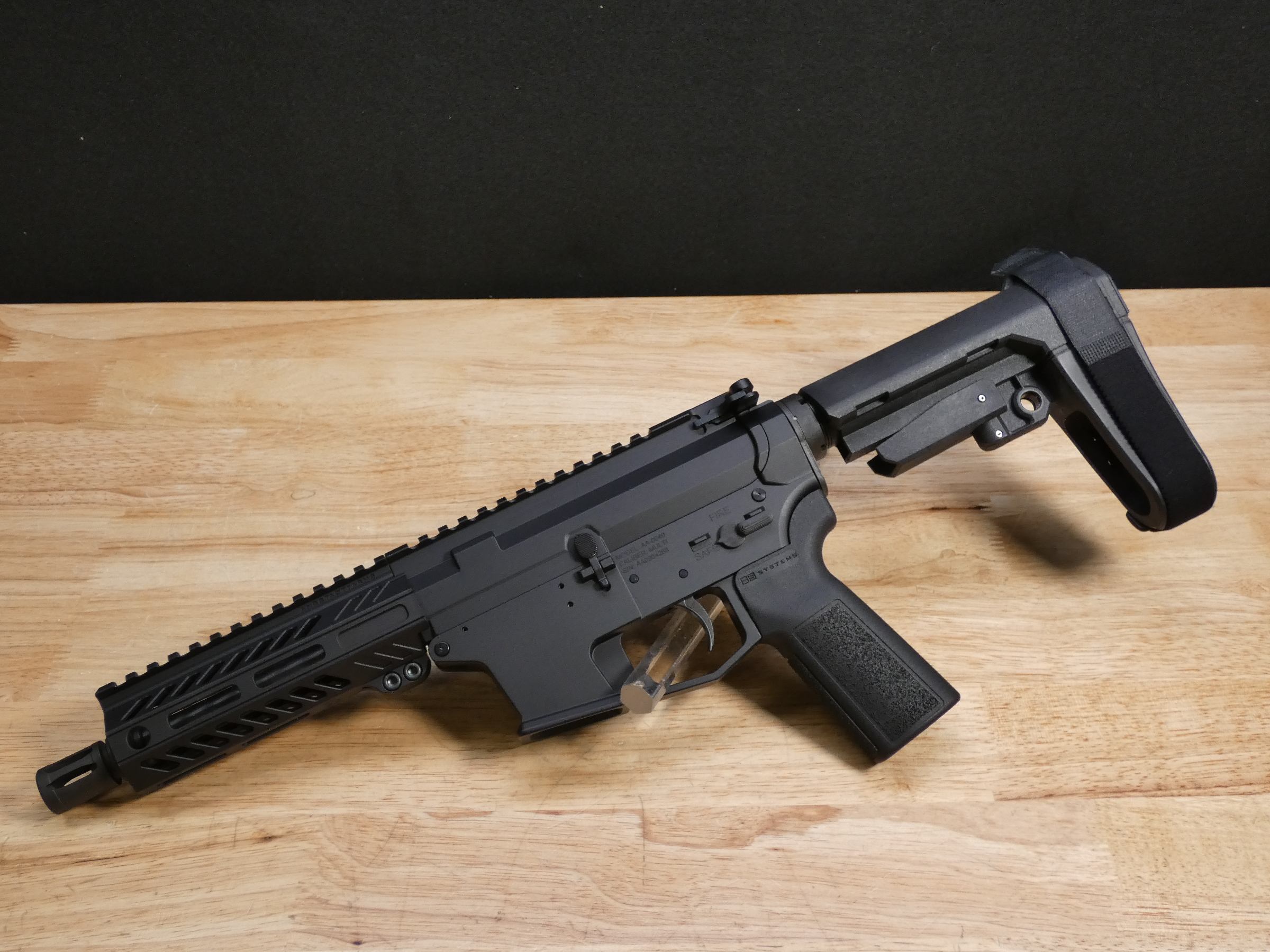
The Angstadt Arms UDP-9 is a premium AR-9 style pistol known for its compact design, high-quality construction, and compatibility with Glock magazines. As a popular choice in the pistol-caliber carbine market, its value is influenced by its specific configuration, condition, and included accessories. Understanding these key factors, from its legal classification as a pistol to the impact of aftermarket optics, is essential for any owner looking to accurately assess its current market worth before a potential sale.
What Determines Your Angstadt Arms UPD-9’s Worth
The value of an Angstadt Arms UDP-9 is primarily determined by its specific model, condition, and configuration. The main distinction affecting price is between the standard UDP-9, which uses a straight blowback system, and the more expensive MDP-9 model featuring a roller-delayed system. Furthermore, its classification plays a crucial role; the standard pistol configuration with a stabilizing brace is not an NFA item, making it more accessible and valuable to a wider market. In contrast, a registered Short Barreled Rifle (SBR) version involves more complex legal transfers, which can limit the buyer pool. Condition, particularly the round count and any wear on the barrel or bolt carrier group, will also significantly impact its final resale price.
2026 Price Breakdown by Generation
UDP-9 Pistol Configuration
The standard Angstadt Arms UDP-9 pistol is the most common configuration found on the market. As a non-NFA firearm, it can be transferred easily between private parties through an FFL without the need for a tax stamp. New models have a manufacturer’s suggested retail price of $1,495, though street prices can be found ranging from approximately $1,225 to $1,375. This accessibility makes it highly desirable for those seeking a compact and reliable pistol-caliber firearm. Its value is heavily dependent on its cosmetic and mechanical condition, with well-maintained examples retaining a strong percentage of their original cost in the private market.
When assessing the value of a used UDP-9 pistol, the overall condition and any included accessories are paramount. While comprehensive data on used pricing is not widely available, the market generally values these firearms based on perceived wear and tear. A UDP-9 with a low round count, minimal cosmetic blemishes, and the original factory components will command a higher price. Including desirable upgrades, such as a quality red dot sight from a reputable brand, can further enhance its appeal and justify a higher asking price compared to a base model with visible signs of heavy use.
UDP-9 SBR Configuration
The Angstadt Arms UDP-9 configured as a Short Barreled Rifle (SBR) is classified as an NFA item under federal law. This classification significantly impacts its resale process and value. Transferring an SBR requires the buyer to complete an ATF Form 4 and pay a $200 tax stamp, a process that can take several months. This added complexity and wait time inherently narrows the pool of potential buyers to those willing to navigate the NFA process. Consequently, a UDP-9 SBR may see a lower resale value compared to its pistol counterpart, despite potentially having more desirable components like a rifle stock.
Sellers of a UDP-9 SBR must factor the NFA transfer requirements into their pricing strategy. The firearm’s value is still tied to its condition and any included accessories, but the logistical hurdles of the sale are a major consideration. Some sellers may choose to remove the rifle stock and sell the firearm as a pistol to simplify the transaction and appeal to a broader audience. This de-registration process allows the firearm to be sold through a standard FFL transfer, often making it easier to sell and potentially increasing its net value by avoiding the NFA-related market limitations.
MDP-9 Pistol Configuration
The Angstadt Arms MDP-9 represents a more premium offering compared to the standard UDP-9, primarily due to its advanced roller-delayed blowback operating system. This system results in reduced felt recoil and a smoother shooting experience, making it highly sought after by enthusiasts. As a result, the MDP-9 carries a higher price point when new, and this premium is generally reflected in the used market. Like the UDP-9, the MDP-9 is most commonly sold in a pistol configuration with a stabilizing brace, keeping it outside of NFA regulations and ensuring a simpler, more accessible transfer process for potential buyers.
Due to its higher initial cost and more complex operating system, the MDP-9’s resale value is particularly sensitive to its condition and maintenance history. Buyers will be looking for evidence of proper care, especially concerning the roller-delayed bolt carrier group. A well-maintained MDP-9 pistol with a low round count will retain its value exceptionally well. While specific used market data is limited, sellers can expect to command a significant premium over a comparable UDP-9, especially if the firearm includes high-quality accessories that complement its performance-oriented design.
MDP-9 SBR Configuration
An MDP-9 configured as a Short Barreled Rifle (SBR) combines the platform’s premium roller-delayed operating system with the stability of a true rifle stock. This creates a top-tier pistol-caliber carbine experience, but as an NFA-regulated item, it faces the same market challenges as the UDP-9 SBR. The required ATF Form 4 transfer and $200 tax stamp create a barrier for many potential buyers, which can negatively impact its liquidity and final resale value. The target audience for an MDP-9 SBR is smaller and more niche, consisting of serious collectors and enthusiasts already familiar with the NFA process.
When selling an MDP-9 SBR, the price must reflect both its premium features and the complexities of its transfer. While the roller-delayed system makes it inherently more valuable than a UDP-9, the NFA status may temper the final sale price. To maximize its value, sellers should highlight the benefits of the SBR configuration, such as enhanced control and accuracy, and be prepared to guide potential buyers through the NFA transfer process. Presenting a well-maintained, high-performance firearm can help offset the inconvenience of the required legal paperwork for the right buyer.
How Modifications Affect Value
Modifications can significantly influence the resale value of an Angstadt Arms UDP-9, often in a positive direction if chosen wisely. The addition of a high-quality red dot sight is one of the most common and value-adding upgrades. Reputable brands such as Trijicon, Aimpoint, Holosun, and Sig Sauer are highly regarded in the firearms community. Equipping the UDP-9 with a popular model like a Trijicon RMR or an Aimpoint Micro T-2 enhances its functionality and appeal, making it a more complete package. Buyers are often willing to pay a premium for a turnkey setup, saving them the additional cost and effort of purchasing and mounting an optic themselves.
While no market consensus exists on specific modifications that universally hurt the UDP-9’s value, a general rule is that permanent, irreversible changes carry the most risk. Custom paint or Cerakote jobs in niche patterns can deter buyers who prefer the original factory finish. Likewise, amateur gunsmithing, such as a poorly executed trigger job or permanent alterations to the receiver, can severely diminish the firearm’s worth and raise concerns about its safety and reliability. To preserve maximum value, it is best to stick to high-quality, bolt-on accessories that can be easily removed without altering the firearm’s original state.
Regional Price Variations in 2026
The value and marketability of an Angstadt Arms UDP-9 are heavily influenced by state and local firearm regulations. In states with stringent laws, such as California and New York, the market is severely restricted. Angstadt Arms explicitly states they do not ship complete firearms, receivers, or uppers to these states and do not offer a compliant version. This effectively eliminates the legal market for the UDP-9 in those regions, meaning its value there is negligible as it cannot be legally sold or transferred. Sellers in other states must be aware of these restrictions, as they cannot legally sell to residents of these prohibited locations.
Conversely, in states with more permissive firearm laws, the value of a UDP-9 is dictated by standard market forces of supply and demand. In these regions, the price will align more closely with national averages, influenced by factors like the firearm’s condition, included accessories, and local competition among sellers. The absence of prohibitive legal barriers creates a larger pool of potential buyers, allowing for a more fluid and predictable market. Therefore, a seller’s geographic location is a critical factor, with those in “gun-friendly” states having a significant advantage in finding a buyer and achieving a fair market price for their firearm.
Online vs Local Sales
Selling an Angstadt Arms UDP-9 online provides access to a nationwide market, potentially leading to a faster sale and a higher selling price due to increased competition among buyers. However, this process is governed by strict federal regulations. An interstate transfer requires the seller to ship the firearm to a Federal Firearms Licensee (FFL) in the buyer’s state of residence. The buyer then completes the necessary background checks and paperwork at their local FFL to take legal possession. This multi-step process, while secure, adds complexity and cost, including shipping fees and FFL transfer fees that must be factored into the transaction.
Shipping the UDP-9 requires adherence to specific carrier rules. Federal law mandates that the seller must provide written notification to the carrier, such as UPS or FedEx, that the package contains a firearm. The package itself should have no external markings indicating its contents. Because the UDP-9 is classified as a handgun, UPS requires it to be shipped via a next-day air service, which can be costly. Ammunition must never be included in the same package as the firearm and must be shipped separately. These logistical requirements are crucial for ensuring a legal and safe online transaction.
Local private sales can offer a simpler and more immediate alternative, though the process is dictated by state and local laws. In some jurisdictions, private transfers must still be conducted through an FFL, requiring a background check and federal form 4473, similar to a retail purchase. In other, less restrictive states, a direct sale between two eligible private citizens may be legal, with a bill of sale often recommended for record-keeping. While a local sale limits the potential buyer pool, it eliminates the complexities and costs associated with shipping and interstate FFL transfers, making it a more straightforward option for many sellers.
The FFL Buying Advantage
Selling your Angstadt Arms UDP-9 directly to a Federal Firearms Licensee (FFL), such as a local gun store, offers unmatched convenience and legal security. This path eliminates the challenges of finding a private buyer, verifying their eligibility, and navigating the complexities of transfer laws. The process is typically fast and straightforward: you bring the firearm to the dealer, they assess its condition and make a cash offer. While this is the simplest way to sell, the trade-off is a lower price. Dealers typically offer between 50% and 65% of the firearm’s current market value, as they need to cover their overhead and generate a profit upon resale.
The primary advantage of selling to an FFL is the immediate and complete transfer of liability. Once the sale is complete, the dealer assumes all legal responsibility for the firearm. This provides peace of mind, as the seller is no longer concerned with where the firearm ends up or how it might be used. For interstate transactions, using an FFL is not just an advantage but a federal legal requirement. A private individual cannot legally ship a firearm directly to a buyer in another state; the transaction must be mediated by an FFL in the buyer’s state, making dealers an integral part of the national firearms market.
What Increases Your Offer
A thorough pre-sale cleaning is one of the most effective ways to increase the perceived value of your Angstadt Arms UDP-9. A meticulously cleaned firearm suggests proper maintenance and care, which builds confidence in potential buyers. Focus on the chamber and barrel, using a quality solvent designed for carbon and lead deposits. It is critical to use products specifically made for firearms, as household cleaners can damage the finish. For firearms with a Cerakote finish, avoid soaking parts in harsh solvents for extended periods. A clean, well-presented firearm will always photograph better and command a higher offer.
High-quality photography is essential for attracting top-dollar offers, especially in online listings. To make your UDP-9 stand out, use a clean, solid-colored background that eliminates distractions. Utilize diffused, off-camera lighting, such as natural light on a cloudy day or softboxes, to prevent harsh shadows and glare on the firearm’s finish. A tripod is crucial for ensuring your camera remains steady, resulting in sharp, clear images. Capture the firearm from multiple angles and include detailed close-ups of markings, controls, and any areas of wear to provide a transparent and professional presentation to prospective buyers.
Including desirable, high-quality accessories can significantly boost your final offer. While the firearm itself is the main attraction, a turnkey package is often more appealing. Equipping the UDP-9 with a reputable red dot sight from a brand like Trijicon, Aimpoint, or Holosun adds immediate value. Buyers appreciate the convenience of acquiring a ready-to-use firearm and are often willing to pay more to avoid the separate expense and hassle of sourcing and mounting their own accessories. Retaining the original box, manual, and any included factory parts also adds to the completeness of the package and can positively influence the price.
When to Sell Your angstadt arms udp 9
The most opportune time to sell a used handgun like the Angstadt Arms UDP-9 is typically during tax refund season, which generally runs from February through April. During this period, many potential buyers have more disposable income, leading to a surge in demand across the firearms market. This heightened activity can result in a quicker sale and potentially a higher selling price, as more buyers are actively looking to purchase. Listing your firearm at the beginning of this season allows you to take full advantage of this predictable annual trend in consumer spending.
Conversely, the holiday season, from late November through December, is often considered the most challenging time to sell. During these months, consumer spending is heavily focused on holiday gifts and travel, leaving less discretionary income for significant purchases like firearms. Furthermore, the market can become saturated with other sellers trying to generate extra holiday cash, which increases competition and can drive prices down. To maximize your return, it is generally advisable to avoid listing your UDP-9 during this period unless absolutely necessary.
Beyond seasonal trends, sellers should also pay attention to the broader political and economic climate. Periods of heightened legislative debate concerning firearm regulations often spur increased demand as consumers look to purchase items they fear may be restricted in the future. While unpredictable, these market surges can create a strong seller’s market, providing an excellent opportunity to sell your UDP-9 for a premium price. Monitoring current events and industry news can help you identify these windows of opportunity and time your sale for the best possible outcome.
Common Pricing Mistakes
One of the most frequent pricing errors is basing the asking price on the original Manufacturer’s Suggested Retail Price (MSRP). The MSRP for a new UDP-9 is listed at $1,495, but retailers often sell them for less, sometimes as low as $1,225. A used firearm, even in excellent condition, will have depreciated. Sellers must research the current *street price* of new models and price their used firearm accordingly to be competitive. Asking for a price too close to what a buyer could pay for a brand-new one is a sure way to deter interest and prolong the sale.
Another common mistake is failing to honestly assess and account for the firearm’s condition. A high round count directly impacts the lifespan of critical components like the barrel and bolt carrier group, and this wear diminishes the firearm’s value. Sellers who neglect to factor in cosmetic blemishes, scratches, or mechanical wear into their asking price will find their firearm overvalued compared to others on the market. It is crucial to provide a transparent description of the UDP-9’s condition and set a price that is a fair reflection of its history and use.
Misunderstanding the difference between private party value and dealer trade-in value can lead to unrealistic expectations. A dealer will typically offer between 50% and 65% of what the firearm is worth on the private market to cover their own costs and profit margin. A seller should not expect a dealer to pay the same price they could get from a private buyer. Conversely, when selling privately, failing to include the value of high-quality aftermarket accessories, like a premium red dot sight, means leaving money on the table. The final price should reflect the total value of the package being offered.
Market Outlook for 2026
Forecasting a precise market value for the Angstadt Arms UDP-9 in 2026 is challenging due to the inherent volatility of the firearms market. As no definitive future price predictions are available, its value will likely follow broader industry trends for pistol-caliber carbines and AR-style pistols. The UDP-9’s strong reputation for quality and reliability should help it retain value well compared to lower-tier competitors. However, the introduction of new, innovative models from other manufacturers could increase competition and potentially soften demand, placing downward pressure on used prices for older platforms.
The most significant variable affecting the UDP-9’s future value is the potential for new legislation at the state or federal level. Any new regulations targeting firearms with features common to the UDP-9, such as stabilizing braces, threaded barrels, or magazine capacity, could drastically alter its marketability and legal status. Owners and potential sellers should remain vigilant and informed about the evolving legal landscape, as regulatory changes have historically been the single most powerful driver of price fluctuations and demand within the firearms industry.
Frequently Asked Questions
Does the UDP-9’s NFA status affect its resale value?
Yes, the NFA status has a significant impact on value. A standard UDP-9 pistol with a stabilizing brace is not an NFA item and can be sold easily through an FFL. However, a version registered as a Short Barreled Rifle (SBR) is a regulated NFA item. The transfer process for an SBR is more complex, requiring a $200 tax stamp and a lengthy ATF approval period. This complexity limits the pool of potential buyers to those willing to navigate the NFA system, which can result in a lower resale value and a longer time on the market compared to its non-NFA pistol counterpart.
How much does a high round count impact the UDP-9’s price?
While no specific data quantifies the exact value reduction, a high round count will diminish the value of any firearm, including the UDP-9. Key components like the barrel, bolt carrier group, and springs experience wear with every shot fired, which can affect accuracy and reliability over time. A prospective buyer will view a high-round-count firearm as having a shorter remaining service life and will expect a significant discount. A UDP-9 with a documented low round count will always command a premium over an identical model that has seen extensive use.
Is there a value difference between the UDP-9 and the MDP-9?
Yes, there is a clear value distinction between the two models. The primary difference is the operating system: the UDP-9 uses a standard straight blowback mechanism, while the more advanced MDP-9 utilizes a roller-delayed system. This makes the MDP-9 a softer-shooting and more premium firearm, which is reflected in its higher MSRP. This price difference carries over to the used market, where an MDP-9 in comparable condition will consistently be valued higher than a UDP-9. The model type is a more significant value driver than any generational changes.
Will adding a red dot sight increase my UDP-9’s selling price?
Adding a quality red dot sight can certainly increase the overall value and appeal of your UDP-9 package. Optics from reputable brands like Trijicon, Aimpoint, Holosun, or Sig Sauer are seen as desirable upgrades. While you may not recoup 100% of the optic’s retail cost, including it makes the firearm a more complete, ready-to-use system. This convenience is attractive to buyers and can justify a higher asking price than a bare firearm, often leading to a faster sale and a better net return on your investment.
Why do dealers offer so much less than the private sale value?
Dealers typically offer between 50% and 65% of a firearm’s private market value because they operate a business with overhead costs and a need for profit. Their offer must account for expenses such as rent, employee salaries, licensing fees, and the time the firearm may sit in their inventory. The lower price reflects the convenience, speed, and legal security they provide the seller. By selling to a dealer, you are trading a portion of the firearm’s value for an immediate, hassle-free transaction where all legal liability is transferred to the FFL.
Get a Cash Offer Today
Ready to sell your Angstadt Arms UDP-9? We make the process simple and secure. Click here to submit your firearm’s information and our team of experts will provide you with a fair, competitive cash offer. Avoid the hassle of private listings and get paid quickly.
Our streamlined system ensures you receive top dollar for your firearm with a process that is fully compliant with all federal and state laws. Let us handle the paperwork and logistics while you enjoy a fast, safe, and profitable sale. Get your quote today!