
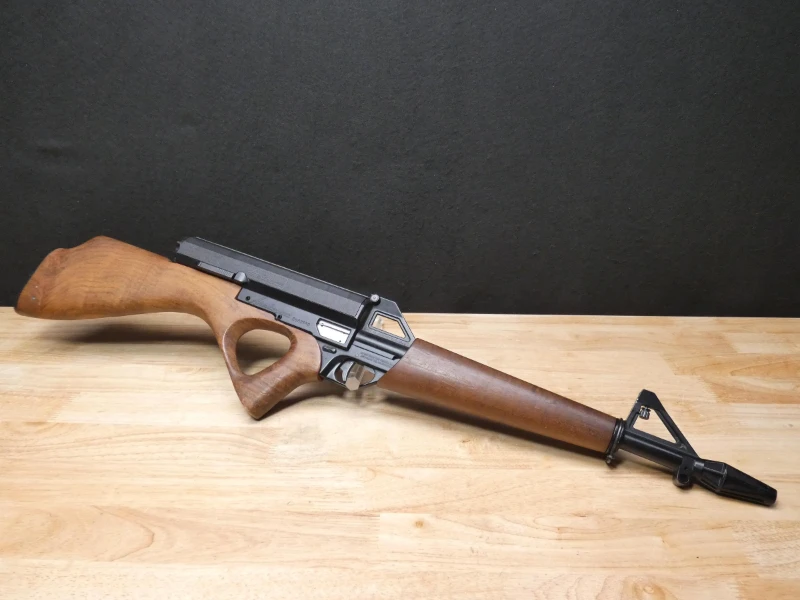
The Calico M100, with its distinctive helical-feed magazine and futuristic design, stands as a unique piece of firearms history. Chambered in the ubiquitous .22 LR, this semi-automatic rifle offers a high-capacity shooting experience that captures the attention of collectors and enthusiasts alike. Understanding its market value involves looking beyond its unconventional appearance to consider factors like condition, specific model variation, legal restrictions, and the completeness of the package, all of which play a crucial role in determining its final price.
What Determines Your Calico M100’s Worth
The value of a Calico M100 is primarily dictated by its overall condition, mechanical functionality, and the presence of its signature 100-round helical magazine. On the used market, these rifles typically trade for between $400 and $1,100. Prices at the lower end of this spectrum often reflect firearms with significant cosmetic wear or missing accessories, while examples in excellent condition with the original box and paperwork command a premium. The specific variant also matters; while the M100 is classified as a semi-automatic long gun, pistol versions like the M-100P exist and have their own distinct market value based on rarity and demand.
2026 Price Breakdown by Generation
Early Production Models
While firearms collectors often place a premium on early production models of certain firearms, the market for the Calico M100 does not show a clear or consistent value distinction for its initial runs. There is no established consensus that assigns a specific monetary value increase or decrease based on an early serial number alone. Instead, potential buyers and sellers tend to focus on more tangible factors that apply across all production periods. The firearm’s value is more directly tied to its physical condition, operational integrity, and whether it includes sought-after original accessories like the magazine and manual.
Ultimately, an early production Calico M100 in poor condition will be worth considerably less than a later model in pristine, like-new condition. The novelty and unique design of the M100 are its main draws, and these qualities are best represented by a well-maintained example, regardless of its manufacturing date. Sellers should therefore price their firearm based on a realistic assessment of its wear and tear rather than assuming its age alone adds significant value. Researching recent sales of comparable models provides the most accurate pricing benchmark.
Mid-Production Variants
Similar to early models, there is no widely accepted market consensus that separates mid-production Calico M100 rifles into a distinct value tier. The valuation of these firearms remains consistent across their manufacturing history, with the primary determinants of price being tangible attributes rather than the specific era of production. Factors such as cosmetic finish, bore condition, and the functionality of the complex helical magazine system are far more influential in appraisal. A mid-production model is judged on its own merits, directly against other M100s available on the market at any given time.
Whether dealing with the standard M100 rifle or a variant like the M-100P pistol, the core value drivers do not change. The market does not differentiate in price simply because a unit was made in the middle of the company’s production timeline. A complete package with the original box, manual, and accessories will always fetch a higher price than a bare firearm, and excellent physical condition will always be the most important factor in achieving a value at the higher end of the typical $400 to $1,100 range.
Later Production Models
Later production models of the Calico M100 follow the same valuation principles as their earlier counterparts, with no established market data suggesting a premium or penalty based on their more recent manufacturing date. The collector and shooter markets for this particular firearm have not developed a preference for specific production years, meaning a later model is not inherently more or less valuable. The focus remains steadfastly on the individual firearm’s condition, completeness, and proper mechanical function. Any potential improvements or changes in manufacturing over the years have not translated into a discernible impact on resale value.
Therefore, owners of a later-production M100 should assess its worth using the same criteria as any other model. A thorough evaluation of its cosmetic state, the inclusion of the original 100-round magazine, and overall functionality will provide a solid basis for pricing. The market for these unique .22 LR rifles is driven more by their novelty and condition than by subtle variations in their production history, making a universal valuation approach the most reliable method for determining a fair market price.
Special Editions or Variants
Calico produced several variants based on the M100 platform, most notably the M-100P pistol. While these different configurations are certainly distinct, the market has not established a rigid, tiered value structure where one is consistently worth more than another. The value of an M-100P pistol versus an M100 rifle is determined on a case-by-case basis, heavily influenced by relative rarity in a specific market, buyer demand, and, as always, the firearm’s physical condition. A pristine rifle could easily be worth more than a heavily used pistol, and vice versa.
Because there is no clear consensus on which variant holds more intrinsic value, sellers must research recent sales of the specific model they possess. The M100 rifle is generally more common, but this does not automatically make the pistol variant more valuable. The final price is a reflection of what a buyer is willing to pay for that particular firearm at that moment. Condition, accessories, and local market dynamics will ultimately have a greater impact on the final sale price than the simple distinction between the rifle and pistol configurations.
How Modifications Affect Value
When it comes to modifying a firearm like the Calico M100, the general market consensus often favors originality. Collectors and purists typically seek examples that are as close to their factory configuration as possible. Any permanent alterations, such as custom paint jobs, drilled holes for non-standard optics, or changes to the stock, can significantly deter this segment of buyers. While some modifications may seem like functional improvements to the owner, they can be perceived as damage by a potential buyer, thereby lowering the firearm’s overall marketability and potential resale price. Reversible modifications are generally safer, but originality remains key.
For the Calico M100 specifically, there is no established list of modifications that are widely recognized as value-adding or value-hurting. The market is not large enough to have formed a consensus on what constitutes a desirable upgrade. Because of this ambiguity, any modification is a gamble. A custom part that appeals to one shooter may be a deal-breaker for another. Therefore, the safest approach for preserving value is to maintain the firearm in its original factory state. Selling a modified M100 means you are looking for a very specific buyer who shares your personal taste.
Regional Price Variations in 2026
The value and legality of a Calico M100 are heavily influenced by state and local laws, creating significant regional price variations. In states with strict firearm regulations like California and New York, the M100 is effectively illegal for civilian ownership. This is primarily due to its high-capacity helical magazine, which typically holds 100 rounds, far exceeding the 10-round limit in these jurisdictions. Consequently, the market value in these states is zero, as legal sales are impossible. Attempting to sell one in these regions can lead to serious legal consequences for both the buyer and seller.
Conversely, in states with more permissive firearm laws, the Calico M100 can be bought and sold freely, and its value will align with the national average of approximately $400 to $1,100. In these markets, the price is dictated by standard factors like local supply, demand, and the firearm’s condition. The absence of restrictive laws on magazine capacity or so-called “assault weapon” features allows the M100 to be valued based on its unique characteristics and collector appeal rather than its legal status, creating a robust market where it can be traded without legal impediment.
Online vs Local Sales
Selling a Calico M100 online provides access to a nationwide market of collectors and enthusiasts, potentially leading to a faster sale and a higher price. Platforms like online auction sites can connect you with buyers specifically seeking this unique firearm. However, this route involves strict legal protocols. Federal law mandates that when an unlicensed individual sells a firearm to a resident of another state, the gun must be shipped from a local Federal Firearms Licensee (FFL) to an FFL in the buyer’s state. This process adds shipping costs and transfer fees for both parties.
A local, private sale can be more straightforward and avoid shipping hassles and extra fees. However, the seller is responsible for adhering to all state and local laws, which vary significantly. Some jurisdictions require private firearm transfers to be conducted through an FFL to facilitate a background check, while others do not. Regardless of local requirements, it is highly recommended to create a comprehensive bill of sale. This document should include the personal information of both the buyer and seller, detailed firearm information like the make, model, caliber, and serial number, and the transaction date and price to protect both parties.
The choice between online and local sales depends on your priorities. If maximizing your potential profit and reaching the widest audience is the goal, an online sale is often superior, despite the logistical requirements of using FFLs for transfer. If you prefer a simpler, faster transaction and are comfortable navigating your state’s specific laws, a local sale may be more appealing. In either case, prioritizing legal compliance is paramount to ensure a smooth and lawful transfer of ownership, protecting you from potential liability down the road.
The FFL Buying Advantage
Selling your Calico M100 directly to a gun dealer or a Federal Firearms Licensee (FFL) offers a path of maximum convenience and legal security. The primary advantage is the immediacy and simplicity of the transaction. You can walk into a shop, receive an offer, and complete the sale on the spot with minimal paperwork, confident that the transfer of ownership is being handled in full compliance with all federal and state laws. This eliminates the complexities of finding a private buyer, verifying their eligibility, and navigating the legal requirements of a private transfer.
However, this convenience comes at a financial cost. A dealer must account for overhead and profit margin, so their cash offer will be significantly lower than what you might get in a private sale. Typically, you can expect an offer between 50% and 65% of the firearm’s current market value. Furthermore, if you need to ship the firearm for an online sale, you must use an FFL. Carriers like UPS and FedEx prohibit private individuals from shipping firearms and require the shipper to hold an FFL and have an approved shipping agreement.
What Increases Your Offer
Presenting a well-maintained and thoroughly cleaned Calico M100 is the first step to securing a higher offer. A clean firearm not only looks better but also signals to a potential buyer that it has been properly cared for, suggesting reliable mechanical function. Before listing, ensure the firearm is unloaded and perform a detailed cleaning. Use firearm-specific solvents and lubricants sparingly, as excessive oil can attract dirt and grime. This small investment of time can significantly improve a buyer’s first impression and their willingness to pay a premium price.
High-quality photography is crucial for attracting the best offers, especially in online sales. Use a simple, non-distracting background and ensure the lighting is bright and even to eliminate harsh shadows. Take numerous clear, high-resolution photos from every angle, capturing close-ups of all markings, the serial number, the bore, and any imperfections. This transparency builds trust with potential buyers. Using a square aspect ratio helps your images fill the frame on most sales platforms, making your listing stand out and appear more professional, which can directly translate to better offers.
Finally, the completeness of the package is a major value driver. The iconic 100-round helical magazine is the heart of the Calico M100’s appeal; a firearm sold without it will see its value drastically reduced. Including the original box, owner’s manual, and any other factory accessories will make your firearm far more desirable to collectors. These items demonstrate authenticity and completeness, often justifying a price at the highest end of the market range. A complete, clean, and well-photographed M100 will always command the strongest possible offer.
When to Sell Your calico m100
The firearm market experiences distinct seasonal trends that can influence the final sale price of your Calico M100. Generally, the most opportune times to sell are during tax return season, from roughly February through April, and in the months leading up to hunting season, from August through October. During these periods, buyers often have more disposable income or are actively looking to purchase firearms, leading to increased demand and potentially higher prices. Listing your M100 during these peak seasons can maximize your visibility and the likelihood of a favorable sale.
Conversely, the summer months are often considered the slowest period for firearm sales. With potential buyers focused on vacations and outdoor activities other than shooting, market activity tends to dip, which can result in lower offers and longer listing times. While these trends most strongly affect traditional hunting rifles and shotguns, the overall market climate impacts sales across the board. The unique nature of the Calico M100 may insulate it slightly, but selling during a peak season is still the most strategic approach to ensure you connect with the largest possible pool of motivated buyers.
Beyond seasonal trends, the political climate can also create surges in demand for semi-automatic rifles. Discussions of potential new firearm regulations often motivate individuals to make purchases, which can temporarily drive up prices. While timing the market based on political events is unpredictable, being aware of this dynamic can be advantageous. If you are not in a hurry to sell, monitoring both seasonal and political trends can help you choose the most profitable moment to list your Calico M100 for sale.
Common Pricing Mistakes
One of the most frequent errors sellers make is overvaluing their Calico M100 based on its Manufacturer’s Suggested Retail Price (MSRP) or personal attachment. The MSRP for a new M100 was around $602 in 2021, but the used market operates independently of new prices. The actual value is determined by what buyers are currently willing to pay, which for this model falls within a wide range of $400 to $1,100. Setting a price based on what you paid or what you feel it’s worth, rather than on current market data, will likely result in a listing that languishes without offers.
Another common mistake is paying for a professional appraisal. While useful for high-value, rare collector’s items, the cost of an appraisal—typically $25 to $80—is not justified for a Calico M100. This fee can represent a significant percentage of the firearm’s total value. A more cost-effective and accurate method is to research recent, completed sales on online gun auction websites. This real-world data provides a much better snapshot of the current market value and helps you set a realistic and competitive price without any upfront cost.
Failing to accurately assess and disclose the firearm’s condition is a third critical error. Sellers may overlook cosmetic blemishes or minor functional issues, but discerning buyers will not. It is essential to honestly evaluate the rifle’s wear and tear and price it accordingly. Trying to pass off a “good” condition firearm as “excellent” will only lead to difficult negotiations or a failed sale. Providing clear photos of any imperfections builds trust and ensures that the price you set is fair and defensible, leading to a smoother transaction for both parties.
Market Outlook for 2026
Looking ahead to 2026, the market for the Calico M100 is expected to remain stable, driven primarily by niche collector interest rather than broad shooting trends. As there is no market consensus on a future price prediction, its value will likely continue to be influenced by its unique status as a retro-futuristic firearm from the 1980s and 90s. This novelty appeal ensures a consistent, if small, pool of interested buyers. The affordability of its .22 LR chambering is a positive factor, making it an accessible and inexpensive firearm to shoot for those who own one.
However, several factors could limit significant appreciation in its value. The M100’s design, particularly its helical magazine, can be perceived as complex and potentially less reliable than more conventional designs. Furthermore, increasing legislative restrictions on magazine capacity and “assault weapon” features in various states could continue to shrink its potential market. Therefore, while its unique design will prevent its value from collapsing, these practical and legal challenges will likely keep its price within the established collector range, making it a stable but not rapidly appreciating asset.
Frequently Asked Questions
Does the 100-round magazine significantly impact the Calico M100’s value?
Absolutely. The high-capacity helical magazine is the most iconic and defining feature of the Calico M100. Its presence and condition are critical to the firearm’s value. A rifle sold with a functional, original 100-round magazine will command a price within the expected market range. However, an M100 offered without its magazine, or with a damaged or non-functional one, would be considered incomplete and suffer a substantial reduction in value. Many buyers would pass on such a sale altogether, as sourcing a replacement magazine can be difficult and expensive.
Is a pistol variant like the M-100P worth more than the M100 rifle?
There is no consistent rule that makes the M-100P pistol variant inherently more or less valuable than the standard M100 rifle. The market value for these firearms is determined more by individual condition, rarity in a specific region, and current buyer demand rather than the configuration alone. A pristine, boxed rifle could easily be worth more than a heavily used pistol, and vice versa. Sellers should research recent sales of their specific model to determine a fair price, as one is not automatically more prized than the other.
Will having the original box and papers increase my offer?
Yes, including the original box, manual, and any other factory-included paperwork will almost always increase the value and desirability of a Calico M100. For collectors, these items confirm the firearm’s authenticity and create a complete, “as it left the factory” package. While the M100 may not be a high-end collectible, the presence of these original items can easily add a premium to the final sale price and make your firearm stand out against other listings that are for the gun only, often leading to a quicker sale.
Is my semi-automatic Calico M100 an NFA item?
The standard, common Calico M100 is a semi-automatic rifle with a 16-inch barrel and is not classified as a National Firearms Act (NFA) item. It can be bought and sold like any other standard long gun, without the need for a federal tax stamp or registration. While fully automatic versions were produced, which are NFA items, these are extremely rare. The non-NFA status of the common semi-automatic model is a positive for its value, as it makes the firearm much easier and less expensive to legally transfer between owners.
How much does poor condition affect the M100’s price?
Condition is one of the most significant factors in determining a Calico M100’s value. While there is no specific formula, significant cosmetic flaws like deep scratches, rust, or cracks in the polymer body can drastically reduce the price. Mechanical issues are even more detrimental. A firearm that is in pristine condition may fetch a price at the top of the $400 to $1,100 range, whereas a model with heavy wear and tear will fall to the absolute bottom of that spectrum. In cases of severe damage or functional problems, the firearm may only be worth its value in parts.
Get a Cash Offer Today
Ready to sell your Calico M100? We make the process simple, safe, and transparent. Avoid the hassle of private listings and legal complexities by getting a fair, no-obligation cash offer from us today. Our expertise ensures you get a competitive price for your firearm based on its true market value.
Click the button below to submit your firearm’s information. We’ll review the details and get back to you quickly with a cash offer. Sell with confidence and get paid fast—it’s the easiest way to turn your used firearm into cash without the typical challenges of a private sale.