
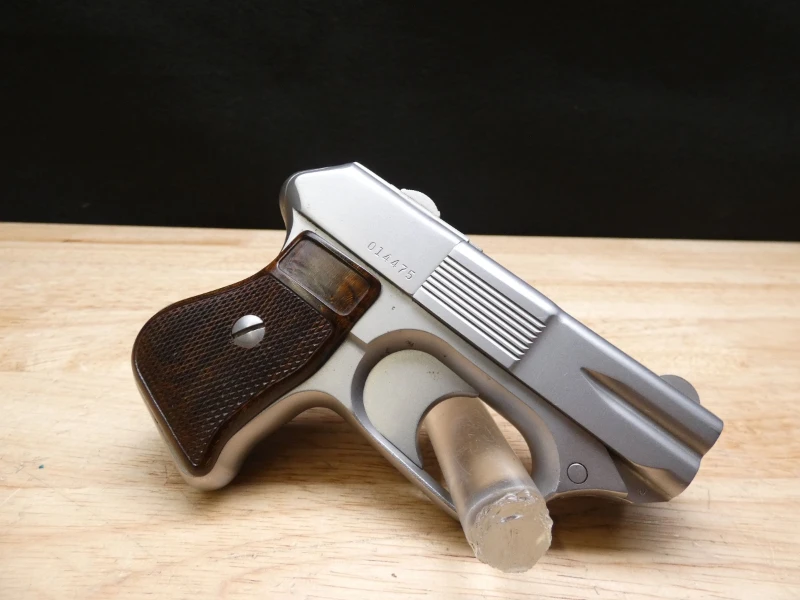
The COP .357 Derringer, a unique four-shot handgun, holds a distinct place in firearms history due to its innovative design and pop culture appearances. Officially classified as a 4-shot Derringer-type pistol, its value is driven less by practical application and more by its novelty and collector appeal. Understanding the key factors that influence its market price, from physical condition to the nuances of legal transfer, is essential for any owner looking to accurately assess its current worth.
What Determines Your COP .357 Derringer’s Worth
The primary determinant of a COP .357 Derringer’s value is its physical and mechanical condition. As a collectible firearm, pristine examples with minimal wear command the highest prices. The market value is heavily influenced by recent sales data, which currently places the average used price between $1,075 and $1,675. While a professional appraisal is generally not cost-effective for standard models, researching completed online auctions provides a realistic benchmark. Unlike modern utility handguns, its worth is tied to its unique four-barrel design and rarity rather than performance, making originality and cosmetic preservation paramount for potential buyers and collectors.
2026 Price Breakdown by Generation
New-in-Box / Excellent Condition
For a COP .357 Derringer, the highest valuation is reserved for examples that are either new-in-box (NIB) or in pristine, unfired condition. These top-tier firearms represent the pinnacle of collectibility, appealing to discerning buyers who prioritize originality and preservation. Recent market data shows that NIB examples have achieved sale prices as high as $1,800. To reach this valuation, the firearm must show no signs of wear, handling marks, or mechanical use. The presence of the original box, manual, and any accompanying paperwork is critical for substantiating its condition and maximizing its value within this premium category.
Firearms in excellent, near-mint condition that may have been fired but are meticulously maintained also fall into the upper echelon of the value spectrum. These pieces will typically fetch prices just below the NIB peak, often landing in the $1,500 to $1,700 range. The key is the absence of any noticeable cosmetic flaws like scratches, dings, or holster wear. A clean bore and crisp mechanical function are assumed. For sellers, providing high-resolution photographs that clearly document this exceptional state is crucial to attracting offers that reflect the firearm’s superior condition and justify a price at the top of the market.
Average Used Condition
The most common category for the COP .357 Derringer is “average used condition,” where the majority of market transactions occur. These firearms are mechanically sound but show visible signs of light use, such as minor finish wear on sharp edges, faint scratches, or small handling marks. According to recent market analysis, the value for these models typically falls between $1,075 and $1,200, with a 12-month running average price estimated at $1,449. This average reflects the strong current demand from collectors for this unique firearm, even in less-than-perfect condition. The price within this range is dictated by the specific degree of cosmetic wear.
When assessing a COP Derringer in this tier, potential buyers will closely inspect for any issues beyond normal wear. The overall functionality, including the trigger mechanism and barrel selector, must be perfect. Any degradation in performance can push the value down significantly. Sellers should be transparent about any cosmetic imperfections, as this builds trust and helps set realistic price expectations. A well-maintained but clearly used COP Derringer remains a highly desirable piece, holding its value well due to its distinct design and limited availability, making it a staple of the collector’s market.
Lower-End & Auction Sales
At the lower end of the value spectrum are COP Derringers that exhibit significant cosmetic wear, mechanical issues, or are being sold in less competitive venues like local auctions. Historical auction data has shown estimates as low as $400 to $600, though these figures may not reflect the current stronger market. A firearm in this price range would likely have noticeable holster wear, scratches, or potentially a less-than-perfect mechanical function. These examples appeal more to budget-conscious collectors or individuals looking for a “shooter” grade piece rather than a pristine display item, and the price reflects this reduced collector appeal.
It is crucial to understand that the sales venue dramatically impacts the final price. A quick sale at a local gun show or a no-reserve online auction might result in a price closer to these lower historical estimates. Conversely, the same firearm sold on a specialized collector’s forum could achieve a higher price. Sellers with a firearm in this condition must set realistic expectations. While the unique nature of the COP Derringer prevents its value from dropping to negligible levels, significant condition issues will place it firmly at the bottom of its established market range, well below the current four-figure average.
Factors Influencing the Price Range
The significant price variance for the COP .357 Derringer is primarily driven by the firearm’s niche, collector-focused market. Unlike mass-produced handguns, its value is not based on utility but on rarity and desirability. A small pool of passionate collectors can create price volatility, where a few competitive bidders can drive a price well above the average. Conversely, a lack of interested buyers at a specific auction can result in a sale price that is surprisingly low. This makes timing and sales platform critical components of achieving a high valuation for this particular firearm model.
Furthermore, completeness of the original package plays a vital role. While the firearm itself is the core asset, the presence of the original factory box, owner’s manual, and any sales documentation can easily add hundreds of dollars to the final price. These items authenticate the firearm’s history and appeal directly to serious collectors who seek out complete sets. A derringer sold by itself will almost always be valued lower than an identical one sold as a full kit, creating a distinct tier within each condition grade that further explains the broad range of observed sale prices.
How Modifications Affect Value
The market for the COP .357 Derringer does not have a consensus on value-adding modifications, primarily because its worth is intrinsically linked to its original factory configuration. As a collector’s piece, any deviation from its classic design is generally viewed with skepticism. There is no established aftermarket for performance-enhancing parts like triggers or sights, and custom work is rare. Any modification would be a bespoke effort, and its impact on value would be entirely subjective, depending on the individual buyer’s taste. For the vast majority of collectors, originality is paramount, meaning even high-quality custom work is unlikely to increase the firearm’s market price.
Consequently, any non-factory modification is highly likely to hurt the firearm’s value. Changes such as custom finishes, aftermarket grips, or any alteration to the frame or barrels would be detrimental to its collector appeal. The target audience for this handgun seeks the specific, unique design as it was produced. Permanently altering that design, even if intended as an improvement, effectively removes it from the pool of original-condition examples that command the highest prices. To preserve the investment potential and market value of a COP Derringer, it should be kept in its factory-standard state without any modifications.
Regional Price Variations in 2026
The value of a COP .357 Derringer can be influenced by state-specific firearm laws, which create distinct regional markets. In states with restrictive handgun rosters, such as California, the legality of the firearm is a primary concern. If the COP Derringer is not on the state’s Roster of Handguns Certified for Sale, private party transfers may be the only legal way to acquire one, potentially creating a smaller, more competitive market where prices are higher due to scarcity. Conversely, in states with fewer restrictions, the value will be dictated more by general market demand and collector interest rather than legislative hurdles.
Anecdotal evidence from past years, such as a report of one for sale at a licensed dealer in New York, suggests it may be legal in some highly regulated states, but sellers and buyers must verify current laws. Because the COP Derringer is classified as a standard handgun and not an NFA weapon, it avoids federal restrictions that can impact value. However, the concentration of collectors in certain geographic areas can also create localized price bubbles. A region with a robust community of firearms enthusiasts may see higher and more frequent sales compared to areas where such collecting is less common.
Online vs Local Sales
Engaging in a private, local sale of a COP Derringer offers simplicity and immediacy. While federal law does not require a bill of sale for such a transaction, creating one is a highly recommended best practice for the protection of both parties. This document should detail the firearm’s make, model, and serial number, along with the names and addresses of the buyer and seller, and the date of the sale. It is crucial to remember that state and local laws regarding private firearm sales vary significantly, and both parties are responsible for ensuring the entire transaction is compliant with all applicable regulations.
Selling to a local gun dealer provides a faster, more secure transaction at the cost of a lower price. Dealers typically offer between 50% and 65% of a used firearm’s retail value. For a more collectible and less common piece like the COP Derringer, the offer may lean toward the higher end of that spectrum, potentially reaching 70%, as the dealer can anticipate a quicker resale to a niche market. This route eliminates the complexities of finding a private buyer and navigating the legal requirements of a private transfer, offering a convenient option for sellers prioritizing speed over maximum profit.
Selling online opens up a national market of potential buyers but introduces logistical and legal complexities. To legally sell a handgun to a buyer in another state, the firearm must be shipped from the seller to a Federal Firearms Licensee (FFL) in the buyer’s state. The buyer then completes the background check and final paperwork at their local FFL. Furthermore, private sellers are generally prohibited by corporate policy from shipping handguns via common carriers like UPS and FedEx, meaning the seller must typically use their own local FFL to handle the shipment, adding another layer of cost and coordination to the process.
The FFL Buying Advantage
Utilizing a Federal Firearms Licensee (FFL) for any firearm transaction, especially one involving a unique piece like the COP Derringer, offers unparalleled legal protection. The FFL serves as a regulated intermediary, ensuring that every step of the transfer complies with federal, state, and local laws. This includes conducting a mandatory background check on the buyer, which absolves the seller of the significant liability associated with a private sale to an unknown individual. For the seller, this process creates a clear and legal record of the transfer, protecting them from future legal complications should the firearm be used improperly.
For interstate sales, an FFL is not just an advantage—it is a legal necessity for handguns. The seller must ship the COP Derringer to an FFL in the buyer’s state of residence. This system provides a secure and verifiable chain of custody. Furthermore, FFLs are equipped to handle the complexities of shipping firearms, as private citizens are often restricted by the policies of major carriers like FedEx and UPS. By managing the logistics and paperwork, the FFL streamlines the process, builds trust between distant parties, and ensures the entire transaction is conducted safely and in full accordance with the law.
What Increases Your Offer
Exceptional presentation is paramount when selling a collectible firearm like the COP Derringer. To attract the best offers, sellers should invest time in high-quality photography. Use a simple, uncluttered background with soft, even lighting to eliminate harsh shadows and accurately represent the firearm’s finish. A tripod or steady surface is essential for sharp, clear images. Capture multiple high-resolution photos from various angles, including close-ups of the manufacturer’s markings, serial number, and any notable imperfections. A modern smartphone is sufficient, but basic editing to adjust brightness and contrast can create a more professional and appealing listing.
A thoroughly cleaned firearm signals to a potential buyer that it has been well-maintained, directly increasing its perceived value. Before listing, perform a detailed field-strip cleaning. Use only solvents and lubricants specifically designed for firearms, as household cleaners can damage the finish. Carefully remove all carbon buildup and residue, then apply a light coat of protective oil to prevent corrosion and ensure moving parts function smoothly. Over-lubrication should be avoided, as it can attract dirt. A clean, properly lubricated derringer not only looks better but also gives the buyer confidence in its mechanical condition.
While the firearm itself is the main attraction, including the complete original package can significantly boost an offer. If you have the original box, owner’s manual, or any sales receipts, these items should be prominently featured in your listing. For collectors, this “completeness” is a major value-add, as it enhances the firearm’s provenance and historical integrity. A COP Derringer with its full set of original accessories will consistently command a higher price than the gun alone, often pushing its value to the upper end of its market range and making it a much more desirable piece for serious buyers.
When to Sell Your cop derringer
Market analysis consistently shows that the best time to sell a used handgun is during the period from late fall through early spring. This window, generally from November to April, encompasses the holiday season and tax refund time, two periods when buyers often have more disposable income for hobby purchases. Conversely, the summer months are typically the slowest season for firearm sales. Listing your COP Derringer during this peak demand period increases the likelihood of a faster sale and can lead to more competitive offers as more buyers are actively looking.
Beyond seasonal trends, the political climate can be a powerful, albeit unpredictable, driver of firearm sales. An election year or widespread discussion of potential new gun control legislation often creates a surge in demand. This can cause prices to spike across the board, affecting even collectible firearms like the COP Derringer as general interest in gun ownership rises. Sellers who are attuned to these political shifts can potentially capitalize on these moments of heightened market activity to achieve a sale price that exceeds typical seasonal expectations, making it a crucial factor to monitor.
Ultimately, the ideal time to sell is when you are fully prepared to do so. This means having the firearm properly cleaned, taking high-quality photographs, and gathering all relevant documentation like the original box or manual. Rushing to list the derringer during a perceived market peak without proper preparation can lead to a lackluster listing that fails to attract top offers. A well-presented firearm listed with a clear, detailed description will always perform better, so ensuring you are ready to make the best possible impression on buyers is just as important as timing the market.
Common Pricing Mistakes
One of the most frequent errors sellers make is allowing sentimental value to dictate the asking price. While a firearm may have personal history, the market values it based on condition, rarity, and current demand. It is essential to research recent, verifiable sales of the COP Derringer on auction sites and collector forums to establish a realistic price range. Pricing a firearm based on emotion or an inflated sense of worth will deter knowledgeable buyers and cause the listing to languish, ultimately forcing a price reduction or preventing a sale altogether.
Failing to accurately assess and disclose the firearm’s condition is another critical mistake. The value of a COP Derringer can vary by hundreds of dollars between a “like new” example and one with average holster wear. Sellers who overstate the condition or use vague descriptions create distrust. A buyer who discovers undisclosed scratches or wear upon inspection will likely back out of the sale or demand a significant price reduction. An honest, detailed assessment, supported by clear photographs of any imperfections, builds credibility and leads to a smoother transaction at a fair market price.
A third common oversight is neglecting to factor in the total cost of the transaction when setting a price. Selling a handgun online, especially across state lines, involves multiple expenses, including shipping, insurance, and FFL transfer fees on both the seller’s and buyer’s end. If these costs are not anticipated, they can significantly erode the seller’s net profit. It is wise to calculate these potential expenses beforehand and decide whether they will be included in the asking price or negotiated with the buyer, ensuring there are no financial surprises after a deal is made.
Market Outlook for 2026
Predicting the future value of a niche collectible like the COP .357 Derringer is inherently difficult, as there is no market consensus on its long-term price trajectory. Its value is firmly tied to its unique status as a four-barrel handgun and its appearances in popular culture, which sustains a dedicated but limited collector base. Given its finite production numbers, it is highly unlikely that the value of examples in excellent or new-in-box condition will decrease. Instead, a slow but steady appreciation is the most probable outcome, provided the broader market for collectible firearms remains healthy.
The primary factors that will influence its 2026 value are continued collector interest and the overall economic climate. As long as the firearm remains a point of fascination for enthusiasts of “movie guns” and unique firearm designs, demand should remain stable. However, collectible firearms are luxury goods, and their market can be sensitive to economic downturns. While the COP Derringer is not expected to experience rapid price surges, its distinctiveness should help insulate it from significant value loss, positioning it as a stable asset for collectors over the coming years.
Frequently Asked Questions
Is a professional appraisal necessary to determine my COP Derringer’s value?
For a standard used COP .357 Derringer, a formal, paid appraisal is likely not worth the cost. The value of these firearms is fairly well-established and can be accurately determined by researching recent sales on major online gun auction websites and collector forums. These platforms provide a real-time snapshot of what buyers are actually willing to pay. A professional appraisal is typically better suited for exceptionally rare variants or firearms with significant historical provenance, which is not the case for the majority of COP derringers on the market.
How much does the original box and paperwork add to the price?
While there is no fixed dollar amount, the inclusion of the original box, manual, and any sales documents significantly increases the value and desirability of a COP Derringer. For a collector-grade firearm, completeness is a key factor. The presence of these items can easily elevate the firearm’s price to the highest end of its condition bracket, potentially adding several hundred dollars to its value compared to an identical gun sold by itself. The original packaging authenticates the piece and makes it far more appealing to serious collectors who prioritize originality.
Will minor cosmetic damage significantly lower the selling price?
Yes, for a collector’s firearm like the COP Derringer, condition is paramount, and even minor cosmetic damage can have a notable impact on its value. Flaws such as light scratches, holster wear on the finish, or dings in the metal will prevent the gun from being classified as “excellent” or “near-mint.” This can lower its position within the established price range, potentially reducing its value by 15-25% or more compared to a pristine example. Buyers in this market are often paying a premium for cosmetic perfection, so any deviation will be reflected in the offers received.
Does the COP Derringer’s NFA status affect its value?
The standard COP .357 Derringer is classified as a regular handgun and is not a National Firearms Act (NFA) item. This is a crucial point for its value, as it means the firearm is not subject to the additional taxes, extensive paperwork, and long wait times associated with NFA weapons. Its status as a standard handgun makes it much easier and cheaper to buy and sell, contributing to a more liquid and straightforward market. A derringer would only become an NFA item if it were disguised to look like something else, which is not the case for the factory model.
Why is there such a large price gap between recent sales and older auction results?
The significant difference between current prices, often over $1,000, and older auction estimates in the $400-$600 range reflects a growing collector interest in the COP Derringer over the last decade. The firearm’s unique design and pop culture fame have elevated its status from a mere curiosity to a desirable collectible. As more enthusiasts have sought them out, the increased demand acting on a fixed supply has driven market prices upward. Therefore, the lower historical figures are no longer an accurate reflection of its current valuation in the collector community.
Get a Cash Offer Today
Ready to sell your COP Derringer? We make the process simple and secure. Submit your firearm’s details through our easy-to-use platform, and our experts will provide a fair, market-based cash offer. Skip the hassle of private listings and uncertain auctions by choosing a trusted name in firearm purchasing.
Our streamlined process ensures you receive prompt payment and that all legal transfer requirements are handled professionally. From valuation to shipping, we manage every step to provide you with a safe and satisfactory selling experience. Click here to begin and see what your COP Derringer is worth today.