
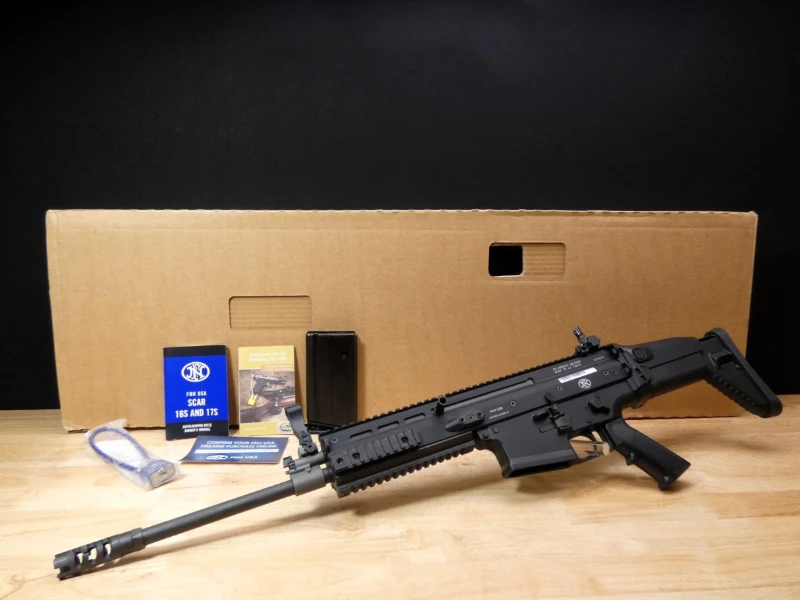
The FN SCAR is a legendary rifle platform renowned for its reliability, modularity, and combat-proven heritage, making it a highly sought-after firearm in the civilian market. Its value is consistently strong, with new models like the NRCH variants typically priced between $3,100 and $4,900. In the used market, a popular model like the SCAR 17S averages around $3,200, reflecting its excellent value retention. Understanding the key factors that influence its price is essential for any owner looking to sell.
What Determines Your FN SCAR’s Worth
The resale value of an FN SCAR is determined by a combination of key factors, starting with the specific model and its generation. The primary value differentiator is the transition from the original reciprocating charging handle to the newer Non-Reciprocating Charging Handle (NRCH) design, with NRCH models commanding a premium. Core models like the SCAR 16S (5.56 NATO), 17S (7.62 NATO), and the 20S precision rifle each occupy different price brackets. Furthermore, the rifle’s overall condition, documented round count, and the inclusion of original parts and high-quality accessories are critical in establishing its final market price among discerning buyers.
2026 Price Breakdown by Generation
Early Reciprocating Models
The first generation of civilian FN SCAR rifles is defined by its signature reciprocating charging handle. While functionally robust, this design was known to interfere with certain grip styles and optics mounts, a factor that led to its eventual redesign. These earlier SCAR 16S and 17S models are now the most affordable entry point into the platform on the used market. Though they are less desirable than their modern counterparts, their proven durability and iconic status ensure they still retain significant value, often appealing to collectors or budget-conscious enthusiasts who appreciate the original military-style configuration and history of the platform.
Despite being an older design, these reciprocating models are built to the same high standards of durability as the newer versions. Many have been tested to function well past 20,000 rounds, making round count less of a concern than overall condition. When selling an early model, its value is heavily influenced by cosmetic wear, any included accessories, and whether it is a Belgian-made or US-made variant, with some collectors showing a preference for the former. They represent a solid investment that continues to be a capable and highly respected rifle, holding its value better than many contemporary platforms from the same era.
Current NRCH Rifle Models
The most significant evolution in the SCAR platform is the introduction of the Non-Reciprocating Charging Handle (NRCH). This upgrade addressed the primary ergonomic complaint of the original design, making the rifle more user-friendly and compatible with a wider array of shooting techniques and accessories. As the current production standard, NRCH versions of the SCAR 16S and 17S are the most sought-after variants in the market. Their enhanced functionality makes them the benchmark for SCAR value, with new models commanding prices in the upper end of the $3,100 to $4,900 MSRP range, depending on the specific configuration and included features.
In the used market, an NRCH model will consistently fetch a higher price than an equivalent reciprocating handle version in similar condition. The demand for this modern feature set is high, and sellers with NRCH models can expect a quicker sale and a better return. The average used price for a SCAR 17S NRCH is currently around $3,200 but can climb as high as $3,600 depending on its condition and any bundled premium accessories. This generation represents the perfected vision of the SCAR rifle for the civilian shooter and is valued accordingly by the firearms community.
Precision Models (SCAR 20S)
The FN SCAR 20S represents the pinnacle of the platform’s accuracy and long-range capability, positioning it in a premium price tier. Chambered in 7.62 NATO or the flat-shooting 6.5 Creedmoor, the 20S is engineered as a designated marksman rifle (DMR) with features like an extended monolithic receiver, a Geissele “Super SCAR” trigger, and a fully adjustable precision stock. These enhancements contribute to its higher market value, with current prices for a SCAR 20S ranging from approximately $4,100 to over $5,900. This model appeals to serious precision shooters who demand exceptional performance straight out of the box.
As a specialized variant, the 20S has a more niche market, but its buyers are typically willing to pay a premium for its capabilities. Its value is less affected by minor cosmetic wear and more by the condition of the barrel and the inclusion of its high-end factory components. Like its rifle counterparts, the 20S also transitioned to the NRCH system, making the newer models the most desirable. Selling a SCAR 20S often means connecting with a buyer focused on performance, where the rifle’s inherent accuracy and feature set are the primary drivers of its substantial resale value.
Compact & Pistol Variants (SCAR 15P)
FN expanded the SCAR family by introducing ultra-compact variants like the SCAR 15P, which is legally classified as a pistol. This model caters to the growing demand for compact, high-performance firearms suitable for close-quarters applications or as personal defense weapons. The 15P features a much shorter barrel and is typically equipped with a pistol brace or a simple end cap instead of a stock. While it shares the same robust operating system, its classification and configuration place it in a unique market segment. New pistol variants like the 15P can often be found in the lower end of the SCAR’s MSRP range.
The value of a SCAR pistol is heavily influenced by its NFA status. In its standard configuration, it is a pistol; however, adding a stock without proper registration would illegally create a Short Barreled Rifle (SBR), a serious federal offense. This legal complexity means buyers are often cautious, and sellers must be clear about the firearm’s legal configuration. The demand for these compact powerhouses is strong, but their value is closely tied to local and federal laws, making them a specialized but still highly desirable part of the SCAR lineup, especially for collectors and tactical enthusiasts.
How Modifications Affect Value
Modifications to an FN SCAR can have a varied impact on its resale value, largely depending on the quality and type of upgrade. Adding premium optics from reputable brands like Trijicon, Elcan, Leupold, Nightforce, or EOTech is often seen as a necessary enhancement by the SCAR community. While a seller is unlikely to recoup the full retail cost of the optic, including a high-quality, durable scope or red dot makes the entire package significantly more attractive to potential buyers. Such additions signal that the rifle was well-maintained and properly equipped, potentially leading to a faster sale at a higher price point.
Conversely, some modifications have a more neutral effect. For instance, upgrading the widely criticized stock trigger to a well-regarded aftermarket option like a Geissele is a very common and recommended modification. This change is unlikely to hurt the rifle’s value and may even make it more appealing. However, it is crucial to include the original factory parts with the sale. Many prospective buyers express a strong preference for purchasing a stock rifle to modify themselves, often due to concerns about the proper installation of aftermarket components. Providing the original parts gives the new owner the option to return the rifle to its factory configuration.
Regional Price Variations in 2026
The value and legality of an FN SCAR can vary dramatically depending on state and local laws, creating significant regional price differences. In states with strict “assault weapon” bans like California and New York, a standard SCAR is not legal for sale. To comply, the rifle must be significantly modified into a “featureless” configuration by pinning the stock, removing the flash hider, and adding a grip wrap, or by converting it to a fixed-magazine design. These compliant models exist in a niche market where they may command a premium due to their scarcity and the cost of conversion.
Furthermore, federal NFA regulations introduce another layer of regional variation. Standard civilian SCAR models with barrels of 16 inches or more are classified as long guns and are not NFA items. However, any SCAR configured with a barrel shorter than 16 inches is legally a Short Barreled Rifle (SBR) and is subject to NFA rules, including a tax stamp and federal registration. The pool of eligible buyers for an SBR is smaller and more geographically concentrated, and the complex transfer process can influence its final selling price compared to a non-NFA rifle in a less restrictive state.
Online vs Local Sales
When selling an FN SCAR locally as a private citizen, the paperwork requirements can vary significantly by state. While federal law does not mandate a bill of sale for private transactions, it is highly recommended for liability protection for both the buyer and seller. A comprehensive bill of sale should document the names and addresses of both parties, the firearm’s make, model, caliber, and serial number, and the date of sale. Some states, however, go further and legally require that all private firearm transactions be processed through a licensed dealer (FFL), which includes a background check on the buyer.
Selling a firearm online to a buyer in another state introduces mandatory federal regulations. Under federal law, it is illegal for a private citizen to directly transfer a firearm to a resident of another state. The seller must ship the firearm to a Federal Firearms Licensee (FFL) in the buyer’s state of residence. The buyer must then go to that FFL, complete all required paperwork, including the ATF Form 4473 and a NICS background check, and then legally take possession of the rifle. This process adds shipping costs and FFL transfer fees to the final price.
Shipping the SCAR itself is also subject to strict rules. Both UPS and FedEx have corporate policies that effectively prohibit private individuals from shipping firearms, requiring the shipper to be an FFL with a specific agreement in place. When shipping a firearm across state lines to an FFL, federal law mandates that the carrier must be notified in writing that the package contains a firearm. However, the exterior of the package must not have any markings that would indicate its contents, ensuring discreet and secure transport. These logistical hurdles often make local sales more appealing for private sellers.
The FFL Buying Advantage
Selling your FN SCAR to a Federal Firearms Licensee (FFL), such as a local gun store, offers a significant advantage in speed and convenience. This route eliminates the complexities of finding a qualified private buyer, navigating state-specific transfer laws, and dealing with shipping regulations. The transaction is immediate and legally sound. However, this convenience comes at a cost. Dealers typically offer between 50% and 70% of a used firearm’s market value. For a highly desirable and quick-selling rifle like the SCAR, you can expect an offer in the higher end of that range, likely 65% to 70%.
From the buyer’s perspective, purchasing from an FFL provides a crucial layer of security and peace of mind. The dealer guarantees the firearm is legally transferred, handling all necessary paperwork and background checks. This eliminates the risks associated with private sales, such as unknowingly purchasing a stolen firearm or dealing with an ineligible individual. While the price at a dealer may be slightly higher than in a private sale, many buyers are willing to pay a premium for the assurance that the transaction is conducted professionally, safely, and in full compliance with all federal and state laws.
What Increases Your Offer
Maximizing the offer for your FN SCAR begins with outstanding presentation. A thorough pre-sale cleaning is essential, with special attention paid to the piston and gas system, which are prone to significant carbon buildup. Use quality CLP and polymer tools to avoid marring the finish. Equally important is high-quality photography. Use ample natural light against a simple, uncluttered background to make the rifle the sole focus. Capture high-resolution images from multiple angles, including close-ups of markings, modifications, and any blemishes to accurately and honestly represent its condition for potential buyers.
Completeness is another key factor that will increase your offer. Buyers of high-end firearms like the SCAR generally prefer to receive the original factory parts, especially if you have made modifications. Including the original trigger, stock, or muzzle device allows the new owner to return the rifle to its factory state if they choose. Many buyers are wary of pre-owned modified firearms due to concerns about proper installation, so providing the original components alleviates these worries and adds tangible value to the overall package. Having the original box and manual further enhances the rifle’s appeal.
While the market lacks a standardized consensus on specific monetary penalties for cosmetic damage, a rifle in pristine condition will always command a premium. Minor scuffs from normal use are expected, but deep scratches, significant finish wear, or damage to the polymer components will lower the value. A well-cared-for SCAR with a low round count is the ideal, but because the platform is known for its durability, overall condition is often a more critical factor than the exact number of rounds fired. An honest and detailed description of the rifle’s condition builds trust and leads to better offers.
When to Sell Your fn scar
Strategic timing can play a significant role in the final sale price of your FN SCAR. Generally, the most favorable period to sell a used rifle is in the months leading up to major hunting seasons. This window, typically from late summer through early fall (approximately August to October), sees a surge in demand as hunters and outdoor enthusiasts prepare for the season. Although the SCAR isn’t a traditional hunting rifle for all game, the overall market activity during this time increases visibility and can lead to a quicker sale at a more competitive price point.
Conversely, the summer months are often considered a slower period for firearm sales across the board. With potential buyers focused on vacations and other outdoor activities, market demand tends to dip, which can result in your rifle sitting on the market for longer or attracting lower offers. While a high-demand firearm like the SCAR is somewhat insulated from these trends, selling during this off-peak season may require more patience or a more aggressive pricing strategy to attract interest. For sellers who are not in a hurry, waiting until the fall can be a financially prudent decision.
Beyond seasonal trends, the political climate can be a powerful, albeit unpredictable, driver of firearm sales. While this effect is often more pronounced for handguns and common semi-automatic rifles, discussions around new firearm legislation can create sudden spikes in demand for all types of firearms. An informed seller who pays attention to current events may find strategic opportunities to sell during these periods of heightened market activity, potentially realizing a higher return irrespective of the time of year. This requires careful monitoring of the news and market sentiment to capitalize on these short-lived windows.
Common Pricing Mistakes
One of the most common mistakes when pricing an FN SCAR is overvaluing aftermarket modifications. While upgrading the trigger to a Geissele or adding a premium optic from Trijicon certainly makes the rifle more capable and appealing, sellers rarely recoup the full retail cost of these parts. Buyers are purchasing a used rifle, and the value they place on accessories is secondary to the base value of the firearm itself. It is crucial to price the rifle based on its model, generation (NRCH vs. reciprocating), and condition, considering any included modifications as a bonus that makes the package more attractive rather than a dollar-for-dollar price increase.
Another frequent error is misrepresenting or ignoring the rifle’s condition and round count. The FN SCAR is exceptionally durable, and a high round count does not significantly lower its value as long as it has been well-maintained. However, failing to be transparent about wear, cosmetic blemishes, or the approximate number of rounds fired can quickly erode buyer trust. A seller who accurately documents the rifle’s condition through clear photos and an honest description will have more success than one who prices a well-used rifle as if it were brand new, as discerning buyers will easily spot inconsistencies.
Failing to research the current market is a critical misstep that leads to unrealistic pricing. For a firearm like the SCAR, a professional appraisal is generally not necessary, as its market value is well-documented in online forums, communities, and recent sales listings. Sellers should investigate what similar models in comparable condition have recently sold for. Pricing a SCAR too high will cause potential buyers to ignore the listing, while pricing it too low means leaving significant money on the table. A few hours of research is essential to finding the market’s sweet spot for a timely and profitable sale.
Market Outlook for 2026
The market outlook for the FN SCAR platform heading into 2026 appears strong, bolstered by speculative information regarding a potential new model release. Industry insiders anticipate that if a new generation is introduced, its pricing will likely align with the platform’s premium status, with an estimated MSRP ranging from approximately $3,699 for a SCAR 16S variant to around $5,000 for a top-tier SCAR 20S. This projection indicates that FN intends to maintain the SCAR’s position as a high-end, duty-grade firearm, ensuring that the brand’s value proposition remains intact for the foreseeable future.
The introduction of a new model would likely have a cascading effect on the used market. While it could cause a slight depreciation in the value of older generations, particularly the original reciprocating handle models, the SCAR’s legendary reputation for durability and reliability will prevent any significant price collapse. Instead, older models will become a more accessible entry point for new owners, ensuring continued demand. The market for current NRCH models will likely remain robust, as they represent a modern, proven design that will continue to be highly sought after by enthusiasts and collectors alike.
Frequently Asked Questions
Does a high round count significantly hurt my SCAR’s value?
A high round count does not significantly lower the value of an FN SCAR compared to other rifle platforms. The firearm is renowned for its exceptional durability and longevity, with many examples documented to function reliably well past 20,000 rounds. While some collectors may prefer a lower round count, the rifle’s overall physical condition, including barrel health and cosmetic wear, is a far more critical factor in determining its final resale value. A well-maintained SCAR with many rounds through it will often be valued higher than a neglected, low-round-count example.
Will an aftermarket trigger lower the resale price?
No, an aftermarket trigger is highly unlikely to hurt the resale value of an FN SCAR. The stock factory trigger is widely considered by the firearms community to be one of the platform’s most significant drawbacks. Upgrading to a high-quality trigger from a reputable brand, such as Geissele, is a very common and often recommended modification. This can make the rifle more appealing to potential buyers who are already aware of the stock trigger’s limitations. For best results, it is always advisable to include the original factory trigger with the sale for the new owner.
Is it worth getting a professional appraisal for my SCAR?
For a standard used FN SCAR, a professional appraisal is likely not worth the cost. The market value for common models is well-documented and can be accurately determined by researching recent sales on online forums and gun community websites. Pricing is primarily driven by predictable factors like the specific model (16S, 17S, 20S), the charging handle type (reciprocating vs. NRCH), overall condition, and included accessories. A formal appraisal might only be necessary for insurance purposes or if you own a highly unique, rare, or historically significant variant of the rifle.
How much less will a dealer offer compared to a private sale?
When selling to a gun dealer or FFL, you can typically expect to be offered between 50% and 70% of the firearm’s current used market value. However, because the FN SCAR is a highly desirable and popular firearm that dealers know will be a quick resale, the offer is likely to be in the higher end of this range. It would be reasonable to anticipate an offer from 65% to 70% of its private sale value, depending on the rifle’s condition and the dealer’s current inventory needs.
Do I need to include the original factory parts when I sell?
Yes, it is highly recommended to include the original factory parts when selling a modified FN SCAR. Many prospective buyers express a clear preference for purchasing a stock rifle so they can make their own modifications. They often have concerns about the quality of installation of aftermarket parts on a pre-owned firearm. Including the original components, such as the trigger or muzzle device, gives the new owner the option to return the rifle to its factory configuration, which adds significant appeal and value to the overall package for a large portion of the market.
Get a Cash Offer Today
Ready to sell your FN SCAR without the hassle of private listings and shipping complexities? We make the process simple, safe, and fast. Click here to submit your firearm’s information, and our experts will provide you with a fair, competitive cash offer based on its condition and current market value.
Forget waiting for the right buyer or dealing with lowball offers. Our streamlined process ensures you get paid quickly and that all legal transfer requirements are handled professionally. Turn your firearm into cash today and experience the easiest way to sell your FN SCAR from the comfort of your home.