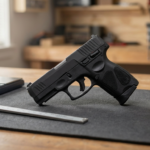

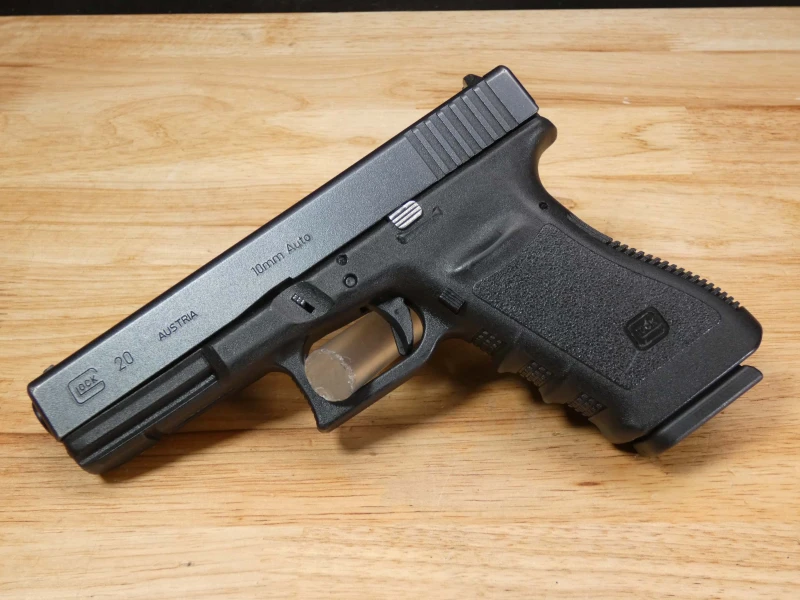
The Glock 20, a full-sized, semi-automatic pistol, has earned a formidable reputation for its power and reliability. Chambered in the potent 10mm Auto cartridge, it stands as a top choice for backcountry defense, hunting, and tactical applications. As a standard handgun, it is not an NFA-regulated item. Understanding its market value, which for new models typically ranges from $620 to $650, is key for any owner looking to sell, trade, or simply assess their asset.
What Determines Your Glock 20’s Worth
The primary factors determining a Glock 20’s value are its generation, overall condition, and market demand. Newer generations, like the Gen 5 MOS, command higher prices around $620 due to features like improved ergonomics and optics-ready slides. In contrast, used Gen 3 and Gen 4 models typically sell in the $470 to $510 range. While physical condition is paramount, a high round count has a surprisingly minimal impact on value. These pistols are renowned for their durability, often exceeding 100,000 rounds with proper care, making cosmetic appearance and included accessories more significant pricing influences for prospective buyers.
2026 Price Breakdown by Generation
Generation 1 Glock 20
The Glock 20 was not produced during the first generation of Glock pistols, which consisted solely of the Glock 17. The 10mm model was introduced later, meaning a “Generation 1” Glock 20 does not exist. Collectors and enthusiasts primarily focus on the earliest available models, which are the second generation. Any listing claiming to be a Gen 1 Glock 20 is incorrect and should be approached with caution. The value history for this firearm truly begins with its Gen 2 iteration, which established its place in the market as a powerful and reliable semi-automatic handgun for serious applications.
Because no Generation 1 models were ever manufactured, there is no established market value or price range. The lineage of the Glock 20 starts with the second generation, which introduced the 10mm chambering to the Glock lineup. Therefore, any valuation discussions must begin with Gen 2 models, which are themselves becoming less common and are often sought by collectors who appreciate the history of the platform. Their value is determined by the specific condition and originality of the firearm, rather than a standardized price point seen with more recent generations that are widely available on the used market.
Generation 2 Glock 20
The Generation 2 Glock 20 marked the introduction of the powerful 10mm pistol to the company’s lineup. These early models are distinguished by their unique grip texture and lack of an accessory rail, features that would be added in later generations. While functionally robust, they are less common on the used market today. Their value is often tied to their condition and appeal to collectors who appreciate the history of the Glock platform. A well-maintained Gen 2 can be a desirable piece, but it lacks the modern features that many current shooters look for, such as modular backstraps or optics-mounting capabilities.
Pricing for a Gen 2 Glock 20 can be more variable than for its successors. While they may not fetch the premium of a new Gen 5, excellent-condition examples can still command a respectable price, often falling within the general used range of $408 to $500, similar to more common models. However, their value is highly dependent on buyer interest. A collector might pay a premium for a clean, early-production model, while a shooter focused purely on performance may prefer a newer generation with more advanced features for a similar price, making its market position unique among Glock 20 variants.
Generation 3 Glock 20
The Generation 3 Glock 20 is a highly significant model, particularly due to its inclusion on state-approved handgun rosters, such as in California. Specific variants like the standard Gen 3, 20C, and 20SF are legal for public sale in these restrictive states, albeit with 10-round magazines. This sustained legal status ensures consistent demand and helps maintain a stable value. Used Gen 3 models typically sell in the $470 to $510 range, a testament to their continued relevance and popularity. The addition of an accessory rail and finger grooves in this generation also made it a more versatile and ergonomic platform than its predecessor.
For many buyers, the Gen 3 represents a sweet spot of proven reliability and affordability. It is a workhorse pistol that has been trusted by outdoorsmen and law enforcement for years. While it lacks the modularity of later generations, its simple, rugged design is a significant draw. Police trade-in models are frequently available, often falling in the lower end of the average used price range of $408 to $500. This availability, combined with its rostered status in key markets, ensures the Generation 3 Glock 20 remains a cornerstone of the used handgun market with a predictable and steady value.
Generation 4 Glock 20
The Generation 4 Glock 20 introduced significant ergonomic enhancements that drive its value in the used market. The most notable upgrade was the introduction of the Modular Back Strap system, allowing users to customize the grip size for a better fit. This model also featured a new, more aggressive grip texture and a larger, reversible magazine catch. These improvements make the Gen 4 a more user-friendly and adaptable pistol than the Gen 3. Consequently, used Gen 4 models are highly sought after and typically sell in the same price bracket as Gen 3s, from approximately $470 to $510, depending on condition and included accessories.
In addition to its improved ergonomics, the Gen 4 incorporated a dual recoil spring assembly, which helps to tame the stout recoil of the 10mm cartridge and increase the service life of the pistol. This feature, combined with the accessory rail and customizable grip, makes it a very capable and modern firearm. While the newer Gen 5 has since been released, the Gen 4 remains an extremely popular choice for those seeking a powerful, reliable, and comfortable-to-shoot 10mm handgun. Its strong feature set ensures it holds its value well against both older and newer generations on the competitive secondary market.
How Modifications Affect Value
Thoughtful modifications can positively impact the Glock 20’s resale value, with sight upgrades being the most common and desirable. Replacing the stock plastic sights with high-quality aftermarket options from reputable brands like Trijicon, Holosun, or TruGlo is a significant value-add. Premium additions, such as Trijicon RMR red dot sights or bright HD XR night sights, are highly regarded within the firearms community. These upgrades enhance the pistol’s usability and appeal to discerning buyers, often allowing a seller to recoup a significant portion of the modification’s cost and justify a higher asking price over a stock model.
While certain upgrades add value, the market consensus on value-hurting modifications is less clear, as it often depends on buyer preference. However, including the original factory parts with a modified Glock 20 is highly recommended. Many buyers perceive OEM parts as a benchmark for reliability and appreciate having the option to revert the firearm to its stock configuration. The presence of these original components can increase the appeal and potential value of the pistol to a broader audience, reassuring them of the firearm’s integrity and providing them with valuable spare parts for future maintenance or customization.
Regional Price Variations in 2026
The value and availability of a Glock 20 can vary significantly based on state laws. In highly restrictive states like California, only specific models are legal for public purchase. The Gen 3, 20C, and 20SF variants are on the state’s Roster of Certified Handguns, which artificially inflates their demand and value within that market. Furthermore, all sales in California must include 10-round capacity magazines, which can affect the pricing of package deals. This roster system creates a distinct market where older generations can command prices comparable to or even exceeding newer, “off-roster” models available elsewhere.
Similarly, New York imposes a strict 10-round magazine capacity limit, which means any Glock 20 sold there must comply with this regulation. While the handgun itself is legal, sellers must provide compliant magazines, potentially altering the value compared to a sale in a state with no capacity restrictions. These regional legal landscapes create pricing bubbles and limitations. A seller in a permissive state must account for these rules when considering a sale to a buyer in a restricted state, as the logistics and legal requirements, such as transferring through an FFL, directly influence the final transaction price and marketability.
Online vs Local Sales
Selling a Glock 20 through a private, local sale is governed by state law, which varies dramatically. While federal law does not require a bill of sale for a private transaction, creating one is highly recommended to document the transfer of ownership. This document should include the full details of the buyer, seller, and firearm, along with the date and sale price. Some states mandate that all private firearm sales must be processed through a licensed dealer, including a background check, while others have no such regulations. Understanding these local requirements is critical to conducting a legal and secure sale.
When selling online to a buyer in another state, federal law is clear: the Glock 20 must be transferred through a Federal Firearms Licensee (FFL). The seller is required to ship the handgun to an FFL dealer in the buyer’s home state. Major carriers like UPS and FedEx have strict policies for shipping handguns, mandating they be sent via their next-day air services. The package must be declared as an unloaded firearm at a main shipping hub and cannot have any external markings that indicate its contents, ensuring a compliant and secure transfer process from seller to buyer.
Alternatively, selling directly to a local gun dealer offers convenience but typically yields a lower return. Dealers generally offer between 50% and 70% of the firearm’s current market value. For a popular and quick-to-resell model like the Glock 20, offers may lean towards the higher end of that spectrum, especially if the gun is in excellent condition. The final offer depends on the dealer’s inventory, local demand, and their assessment of the pistol’s condition. This route eliminates the complexities of a private sale in exchange for a reduced, but immediate, cash payment.
The FFL Buying Advantage
Utilizing a Federal Firearms Licensee (FFL) is a legal necessity for any interstate handgun sale. According to federal law, when selling a Glock 20 to a resident of another state, the firearm cannot be shipped directly to the individual. Instead, the seller must send the handgun to an FFL dealer located in the buyer’s state of residence. This ensures the transaction is handled professionally and legally. The FFL serves as a crucial intermediary, managing the final steps of the transfer and ensuring all regulations are met before the buyer can take possession of the firearm.
Once the Glock 20 arrives at the destination FFL, the buyer must complete the required federal and state paperwork, including the ATF Form 4473, and undergo a NICS background check. This process provides a layer of security and legal protection for both parties. For the seller, it confirms the buyer is legally eligible to own a firearm, mitigating potential liability. For the buyer, it guarantees the transfer is documented and compliant with all laws. The FFL’s role is indispensable for creating a secure, regulated, and legitimate channel for the legal transfer of firearms across state lines.
What Increases Your Offer
One of the most effective ways to maximize an offer for your Glock 20 is to present it as a complete, factory-original package. A firearm that is missing its original case and factory magazines can see its value reduced by $75 to $125. By including the original hard case, all magazines that came with the pistol, the owner’s manual, and any other included accessories like backstraps or a cleaning rod, you present a comprehensive and well-cared-for item. This completeness signals to potential buyers that the firearm has been meticulously maintained, which justifies a higher price and makes your listing more attractive.
Presentation is critical, especially for online sales. Before listing your Glock 20, it should be field-stripped and thoroughly cleaned. Use a quality gun solvent to remove all carbon buildup and residue from the barrel, slide, and frame, paying close attention to the slide rails. This should be paired with excellent photography. Use diffused, natural light against a simple background to avoid glare and shadows. Capture high-resolution photos from multiple angles, including close-ups of markings or any minor imperfections. Clear, professional-looking images build buyer confidence and can significantly increase the final sale price.
Finally, while modifications can be subjective, including desirable upgrades alongside the original parts offers the best of both worlds. If you’ve upgraded the sights to a premium option from Trijicon or Holosun, be sure to include the original plastic sights with the sale. Many buyers value the reliability of OEM parts and appreciate having the option to switch back to the factory configuration. Providing both the high-value modification and the original components broadens your firearm’s appeal to a wider range of buyers and demonstrates a thoughtful approach to ownership, strengthening your negotiating position for a top-dollar offer.
When to Sell Your Glock 20
Timing the sale of your Glock 20 can significantly influence the final price you receive. While hunting firearms see a surge in demand in the months leading up to hunting seasons, handguns follow a different market rhythm. The most opportune time to sell a handgun like the Glock 20 is frequently cited as tax refund season. This period, which generally runs from February through April, sees a notable increase in consumer discretionary income. Many individuals use their tax refunds for significant purchases, leading to heightened demand and potentially faster sales at higher prices in the firearms market.
In contrast to the pre-hunting season rush that benefits sellers of rifles and shotguns, typically in August and September, the handgun market is less tied to specific outdoor activities. The Glock 20, while an excellent hunting sidearm, is also popular for personal defense and recreational shooting, giving it year-round appeal. However, the financial boost many consumers experience in the early spring makes it a prime window for sellers. Capitalizing on this period of increased spending power can result in more buyer interest and a greater likelihood of achieving your desired asking price without lengthy negotiations.
Beyond predictable seasonal trends, sellers should also monitor the broader market environment. Political events, discussions of new legislation, or fluctuations in ammunition availability can create sudden spikes in demand for certain types of firearms. The 10mm chambering of the Glock 20 gives it a dedicated following, and any events that highlight its utility for personal or backcountry defense can drive interest. Staying informed about these market undercurrents can help a seller identify strategic, non-seasonal opportunities to list their firearm when demand is highest, maximizing their potential return regardless of the time of year.
Common Pricing Mistakes
One of the most frequent errors sellers make is overvaluing their Glock 20 based on emotional attachment rather than objective market data. It’s essential to research current prices by consulting online marketplaces and forums. A standard used Glock 20 in good condition typically sells for between $300 and $550, with police trade-ins often available from $408 to $500. For a common firearm like this, a professional appraisal is generally not cost-effective. Setting a realistic price based on its generation, condition, and comparable sales is crucial for attracting serious buyers and achieving a timely sale.
Another common mistake is failing to accurately assess and represent the firearm’s condition and completeness. While the Glock 20’s robust design means a high round count does not significantly lower its value, sellers must be honest about cosmetic wear. Neglecting to mention scratches or holster wear can erode buyer trust. Similarly, not accounting for missing items is a pitfall; the absence of the original case and magazines can result in a value penalty of $75 to $125. A transparent assessment of the pistol’s condition and a complete package will always lead to a smoother transaction and a better price.
Finally, sellers often fail to consider regional market differences and legal restrictions when setting a price. A Glock 20 with standard capacity magazines has a different market in a state like Texas than it does in California or New York, where only 10-round magazines are permitted. Listing a firearm with non-compliant features for a national audience without acknowledging these restrictions can lead to frustrated buyers and failed sales. Understanding the legal landscape and tailoring the sale—or adjusting the price to account for necessary modifications like swapping magazines—is key to successfully navigating the diverse U.S. firearms market.
Market Outlook for 2026
Predicting future firearm values with certainty is challenging, as the market is influenced by numerous economic and political factors. However, the Glock 20 is well-positioned to maintain strong and stable value. Its reputation for extreme durability and reliability, combined with the power of the 10mm Auto cartridge, has cemented its status as a premier choice for outdoor enthusiasts, hunters, and those seeking a potent defensive handgun. This dedicated user base ensures a consistent demand that is less susceptible to fleeting market trends, suggesting its value will remain robust and unlikely to see a significant decline.
The long-term value of the Glock 20 will also be influenced by the continued availability and cost of 10mm ammunition, as well as the introduction of new competing models. However, its legacy as one of the original and most successful 10mm pistols provides a strong foundation for its worth. As newer generations are released, older models like the Gen 3 and Gen 4 will likely settle into a predictable price range, buoyed by their proven performance and, in some cases, their status on restrictive state rosters. The pistol’s inherent utility ensures it will remain a desirable asset in the used market.
Frequently Asked Questions
How much does a high round count really affect my Glock 20’s value?
A high round count has a surprisingly minimal impact on a Glock 20’s resale value. These pistols are legendary for their durability and longevity, with many examples known to exceed 100,000 rounds with only routine maintenance. Consequently, the market places a much higher emphasis on the firearm’s physical and cosmetic condition. A well-maintained Glock 20 with visible holster wear will see a greater price reduction than one in pristine condition with a high but unknown round count. For most buyers, as long as the pistol is in good working order, the round count is not a primary concern.
Is it worth paying for a professional appraisal for my Glock 20?
For a standard, used Glock 20, a professional appraisal is generally not a worthwhile expense. The market value for these common models is well-established and can be easily determined by researching recent sales on online marketplaces and forums. A used Glock 20 in good condition has a predictable value range, typically between $300 and $550. Professional appraisals are most beneficial for firearms that are rare, antique, custom-built, or have historical significance, where the value is not easily determined by public market data. For a modern production pistol, your research will be just as effective.
Will I lose a lot of money if I’m missing the original case and magazines?
Yes, selling a Glock 20 without its original case and factory magazines can lead to a notable reduction in its value. Buyers expect a complete package, and its absence can lower your offer by an estimated $75 to $125. The exact penalty depends on the number of missing magazines and the firearm’s overall condition. To maximize your return, it is always best to include the original hard case, all included magazines, the owner’s manual, and any other factory accessories. Presenting the firearm as it was originally sold builds buyer confidence and helps you command the highest possible price.
Do I get my money back on aftermarket sights when I sell?
While you may not recoup the full retail cost, upgrading the stock plastic sights to a high-quality aftermarket set is one of the few modifications that can genuinely enhance a Glock 20’s resale value. Reputable brands like Trijicon, Holosun, and TruGlo are seen as desirable additions by the firearms community. These upgrades improve the pistol’s functionality and appeal, allowing you to ask for a higher price than a stock model. Including the original sights with the sale is also a good practice, as it gives the new owner more options and broadens the pistol’s appeal.
How much less will a gun dealer offer me compared to a private sale?
When selling to a gun dealer, you can typically expect to be offered between 50% and 70% of the Glock 20’s current private market value. The exact offer will depend on the firearm’s condition, its generation, and the dealer’s current inventory and local demand. Because the Glock 20 is a popular and desirable model that is relatively easy for a dealer to resell, offers may trend towards the higher end of that range. While a private sale will almost always yield more money, selling to a dealer offers immediate payment and eliminates the hassle of finding a buyer.
Get a Cash Offer Today
Ready to sell your Glock 20? We make the process fast, safe, and simple. Avoid the uncertainty of private sales and the low offers from local shops. We provide a fair, market-based cash offer for your firearm, ensuring you get the value you deserve without any hassle.
Our process is fully compliant and designed for your convenience. Simply submit your firearm’s information online to receive a quote. Let us handle the complexities of FFL transfers and shipping. Click here to get started and turn your used Glock 20 into cash today.