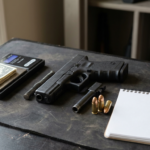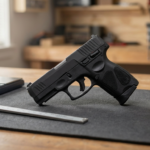


The Glock 27 is a subcompact, polymer-framed, striker-fired semi-automatic pistol renowned for its reliability and concealability. Chambered in the powerful .40 S&W cartridge, it has long been a favorite for concealed carry and as a backup weapon for law enforcement. As a standard handgun, it is not classified as an NFA item. Understanding the key factors that influence its resale value—from its generation and condition to market trends—is essential for any owner looking to sell.
What Determines Your Glock 27’s Worth
The value of a used Glock 27 is primarily determined by its generation, physical condition, and completeness. Newer generations, like the Gen 4 and Gen 5, typically command higher prices due to their enhanced features. Condition is paramount; a pistol with minimal wear, a clean bore, and no scratches will always be worth more than one showing significant signs of use. Furthermore, the inclusion of the original factory case, all original magazines, the owner’s manual, and any included accessories like backstraps can significantly increase an offer. While a new Glock 27 Gen5 has an MSRP of around $647, the used market generally places common models in good condition in a price range between $300 and $450.
2026 Price Breakdown by Generation
Generation 1 & 2
Collectors and new owners should note that the Glock 27 was never manufactured in a Generation 1 or Generation 2 configuration. The Glock pistol family was first introduced in the early 1980s, but the subcompact models did not appear until later. The original Glock 17 featured a uniform grip texture and a two-pin frame that defined the first generation. The second generation introduced checkering on the front and backstraps for a more secure grip, but the subcompact frame was still not part of the lineup at this time, making these early generation G27s non-existent.
The Glock 27 was officially introduced as part of the “subcompact” series during the era often referred to as Generation 2.5. These pistols were the first to feature the smaller frame designed for deep concealment and incorporated Gen 2 styling but added a single finger groove and thumb rests. Because they were a transitional phase leading into the more formally recognized Generation 3, which standardized these features across the product line, you will not find a Glock 27 officially designated or marked as a Gen 1 or Gen 2 model on the secondary market.
Generation 3
The Glock 27 Gen 3 remains a highly popular and valuable model, with a typical used price of around $325. This generation solidified the Glock design with the addition of an integrated accessory rail on the dust cover, allowing for the attachment of lights and lasers. It also features pronounced finger grooves and a thumb rest on the grip, which many shooters find comfortable and ergonomic. Its long-standing reputation for unwavering reliability and parts availability makes it a trusted choice for both seasoned gun owners and first-time buyers looking for a dependable concealed carry weapon.
A key factor supporting the Gen 3’s stable value is its inclusion on state-approved handgun rosters, most notably in California. As one of the few Glock models certified for sale to the public in such restrictive states, it maintains a consistent and dedicated market. This legal standing ensures that demand for the Gen 3 remains strong, preventing its value from declining as significantly as other older models might. For many buyers in these regions, the Gen 3 is not just an option, but one of the best available choices, solidifying its place and price in the used firearm marketplace.
Generation 4
The Glock 27 Gen 4 typically commands a higher price on the used market, with values ranging from approximately $374 to $401. This increase in value is directly tied to the significant upgrades introduced with this generation. The most notable improvement was the Modular Back Strap system, which allows shooters to customize the grip size for a more comfortable and personalized fit. This feature alone makes the Gen 4 more appealing to a wider range of users. Additionally, the enlarged and reversible magazine catch makes the firearm more adaptable for left-handed shooters, further broadening its market appeal.
Beyond ergonomics, the Gen 4 introduced a dual recoil spring assembly. This updated system helps to reduce felt recoil and muzzle flip, making the potent .40 S&W cartridge more manageable in a subcompact frame. It also increases the service life of the pistol. The aggressive new grip texture provides a more secure hold in various conditions. These functional enhancements are highly valued by buyers, who are often willing to pay a premium for the improved shooting experience and durability that the Gen 4 models offer over their Gen 3 predecessors, justifying the higher resale price.
How Modifications Affect Value
While many modifications are personal, some can positively influence the resale value of a Glock 27. Upgrading the factory sights is a common and often appreciated enhancement. While you may not recoup the full cost, installing high-quality aftermarket sights from reputable brands like Trijicon, TruGlo, or XS Sights is seen as a tangible improvement. Potential buyers often value the enhanced sight picture and low-light capabilities these options provide, making a modified pistol more attractive and potentially easier to sell than a completely stock model. These practical upgrades signal a well-maintained and thoughtfully improved firearm.
Conversely, some modifications can be detrimental to a firearm’s value, though market consensus on specific value-hurting mods for the Glock 27 is not firmly established. Highly subjective alterations, such as aggressive custom stippling, unconventional Cerakote colors, or major changes to the trigger mechanism, can narrow the pool of interested buyers. What one owner sees as a perfect customization, another may view as a flaw. Because these changes are tailored to a specific individual’s taste, they often fail to appeal to the broader market, potentially making the pistol harder to sell and forcing the seller to accept a lower price.
Regional Price Variations in 2026
State-specific firearm laws create significant regional price variations, particularly in states with handgun rosters. In California, the Glock 27 Gen3 is a sought-after model because it is on the state’s Roster of Handguns Certified for Sale. This legal status creates a captive market, often keeping its resale value stable or even slightly elevated compared to states with fewer restrictions. However, all sales must adhere to a magazine capacity limit of 10 rounds. Furthermore, a new law set to take effect on July 1, 2026, will prohibit the sale of new Glock pistols, which could further increase the value of existing, legally-owned Glocks within the state.
Similarly, New York’s regulations influence the Glock 27’s market. The pistol is generally legal for purchase, provided it complies with the SAFE Act, which mandates a maximum magazine capacity of 10 rounds and prohibits features that would classify it as an assault weapon. This creates a steady demand for compliant models. Recently, a proposed bill in the New York Senate aims to ban the future sale of all Glocks by classifying them as “convertible pistols” due to their susceptibility to illegal modification. The introduction of such legislation can create market uncertainty, potentially driving up demand and prices for existing Glocks as consumers anticipate future restrictions.
Online vs Local Sales
When selling a Glock 27 locally through a private sale, documentation is key. While federal law does not mandate a bill of sale for private transactions, it is highly recommended to create one. This document serves as a legal record of the transfer, containing the names of the buyer and seller, the firearm’s serial number, and the date of sale. It is crucial to remember that state and local laws vary dramatically; many jurisdictions now require that all private firearm transfers, including handguns, be conducted through a Federal Firearms Licensee (FFL) to facilitate a background check. Always consult local laws to ensure full compliance.
Selling a handgun across state lines introduces federal regulations that prohibit direct sales between private citizens. To legally complete an interstate transaction, the Glock 27 must be sent from an FFL in the seller’s state to an FFL in the buyer’s state of residence. The buyer must then visit their chosen FFL, complete the required ATF Form 4473, and pass a NICS background check before they can legally take possession of the firearm. This process ensures that the transfer adheres to the laws of both states and federal statutes, though it adds shipping and transfer fees to the overall cost.
The logistics of shipping a handgun like the Glock 27 must be handled carefully. A private seller is legally required to use a common carrier such as UPS or FedEx, as shipping via the U.S. Postal Service is prohibited for non-licensees. Furthermore, both UPS and FedEx have implemented policies that largely restrict firearm shipments to be between FFL holders only. This means a private individual will likely need to have their local FFL handle the shipment on their behalf. When shipped, the handgun must be declared to the carrier, confirmed to be unloaded, and sent via a priority service like Next Day Air.
The FFL Buying Advantage
Selling your Glock 27 to a Federal Firearms Licensee (FFL), such as a local gun store, offers a fast, secure, and legally compliant transaction. This route eliminates the complexities and potential risks of finding a private buyer, navigating state laws, and handling transfer paperwork. However, this convenience comes at a cost. Dealers typically offer between 50% and 65% of a used firearm’s retail value. For a straight cash sale, as opposed to a trade-in, the offer may be even lower, potentially in the 30% to 40% range, as the dealer is taking on all the risk and effort of reselling the firearm.
The offer from a dealer reflects their business model, which includes overhead costs like rent, insurance, and employee salaries, plus the need to generate a profit. When a dealer buys your Glock 27, they must account for the time it may sit in their inventory before selling. If the firearm is in high demand and in excellent condition, they may be inclined to offer more, sometimes up to 65% or 70% of its resale value. Ultimately, selling to an FFL is a trade-off: you receive a lower price but gain immediate payment and peace of mind knowing the transfer is handled professionally and legally.
What Increases Your Offer
A thorough pre-sale cleaning is one of the easiest ways to maximize the value of your Glock 27. Before listing it for sale or taking it to a dealer, you should field-strip the pistol according to the owner’s manual. Meticulously clean the barrel, slide, and frame to remove all carbon buildup, powder residue, and debris. After cleaning, apply a very light amount of high-quality lubricant to the specified points. A common mistake is over-lubricating, which can attract dirt and give the impression of a poorly maintained firearm. A clean, properly lubricated pistol looks well-cared-for and functions flawlessly, commanding a higher price.
While there is no universally agreed-upon monetary penalty for missing items, presenting a complete package significantly boosts your offer. A Glock 27 sold with its original factory hard case, owner’s manual, cleaning tools, and all of the magazines that came with it from the factory is far more appealing to buyers. For Gen 4 and newer models, including the interchangeable backstraps is also crucial. A complete set suggests a meticulous owner and gives the buyer the full, as-new experience. This attention to detail can easily set your firearm apart from others and justify a higher asking price.
High-quality photographs are non-negotiable for achieving the best price in an online sale. To properly showcase your Glock 27, use natural, indirect light or a softbox to eliminate harsh shadows and ensure the finish is accurately represented. Place the firearm on a clean, neutral background that won’t distract potential buyers. Use a tripod to ensure your images are sharp and capture the pistol from multiple angles. Be sure to include clear close-ups of any markings, the condition of the slide and frame, the bore, and all included accessories. Setting your camera to a 1:1 aspect ratio will also help images fit perfectly in common online marketplace formats.
When to Sell Your Glock 27
Understanding seasonal market trends can help you sell your Glock 27 for the best possible price. Generally, the firearm market sees an uptick in activity during the late fall and winter months, roughly from November through January. This period often coincides with the holiday season and colder weather, when people may be spending more time on indoor hobbies or using holiday bonuses for purchases. Listing your handgun during this peak time can increase its visibility and the likelihood of a quick sale at a favorable price due to heightened consumer demand across the board.
Another prime window for selling firearms is during tax return season, which typically runs from February through April. Many consumers use their tax refunds to make significant purchases they may have put off during the year, and firearms are a popular category. This influx of cash into the market creates a surge in demand, making it an opportune time to list your Glock 27. Sellers often find more motivated buyers during this period, which can lead to faster sales and stronger offers compared to other times of the year.
Conversely, the summer months are frequently identified as the slowest season for firearm sales. With potential buyers focused on vacations, outdoor activities, and other summer-related expenses, the demand for firearms tends to dip. While it is still possible to sell during this time, you may find that it takes longer to find an interested party or that you need to be more competitive with your pricing. To maximize your return, it is often advisable to wait for the stronger sales seasons in the fall, winter, or early spring if possible.
Common Pricing Mistakes
One of the most frequent errors sellers make is overvaluing their aftermarket modifications. While a set of Trijicon night sights or a custom trigger may have been a significant investment, you will rarely recoup the full retail cost of these upgrades. Buyers in the used market are looking for the value of the core firearm, not to pay a premium for someone else’s personalized setup. It is crucial to price the Glock 27 based on its own merit and consider any high-quality, practical upgrades as a small bonus that makes your pistol more attractive, rather than adding their full cost to your asking price.
Failing to objectively assess the firearm’s condition and completeness is another common pitfall. A seller might price their well-used Glock 27, showing clear holster wear and missing its original box and extra magazines, at the same level as a pristine, like-new example. Every sign of wear, scratch, or missing accessory detracts from the potential value. To set a realistic price, you must honestly compare your pistol to others currently on the market, making fair deductions for any cosmetic flaws or missing original components. Buyers are discerning and will quickly pass over an overpriced firearm.
Many sellers price their Glock 27 based on emotional attachment or its original purchase price rather than current market data. The used firearm market dictates the value, not what you paid for it years ago. The value of a standard Glock 27 is well-established, typically falling within the $300 to $450 range depending on generation and condition. Listing a firearm far above this accepted range without extraordinary justification will deter knowledgeable buyers and lead to a frustratingly long sale process. Researching recent sales of similar models is essential for setting a competitive and realistic price from the start.
Market Outlook for 2026
While it is impossible to provide a precise future price prediction, the market outlook for the Glock 27 remains strong due to its foundational strengths. Its reputation for rock-solid reliability, durability, and the widespread availability of parts and accessories ensures it remains a relevant and desirable handgun. The demand for effective concealed carry pistols is consistent, and the Glock 27 continues to be a top contender in this category. As such, its value in the used market is expected to remain stable, offering a cost-effective and proven option for budget-conscious buyers who still demand Glock’s legendary performance.
Legislative actions at the state level will be a significant factor influencing the Glock 27’s value in 2026 and beyond. In regions like California, the impending prohibition on the sale of new Glocks starting in mid-2026 is likely to increase the value of pre-existing, legally owned models due to a suddenly restricted supply. Similarly, proposed bans in states like New York could create a surge in demand before such laws take effect. These regional legal battles, combined with broader economic trends, will create a dynamic market where the pistol’s value could see notable fluctuations depending on the buyer’s location.
Frequently Asked Questions
Does a high round count hurt my Glock 27’s value?
A high round count does not significantly lower a Glock 27’s value, as these pistols are renowned for their durability and ability to function reliably for many thousands of rounds. Unlike some other firearms, many buyers in the Glock community consider a pistol with a few thousand rounds through it to be merely “broken in.” For most potential buyers, a visual inspection of the firearm’s overall condition—checking for excessive wear on the slide, frame, and barrel—is far more important than the exact number on a logbook. A well-maintained Glock will hold its value regardless of round count.
Is it worth getting a professional appraisal for my Glock 27?
For a standard used Glock 27, a professional appraisal is generally not worth the cost. The market value for these common models is well-established and easily researched, typically falling between $300 and $450 for a firearm in good to excellent condition. A professional appraisal is more appropriate for firearms where the value is not easily determined, such as rare collector’s pieces, antique firearms, or heavily customized competition guns. For a standard Glock, you can determine a fair market price by simply observing current listings on popular online marketplaces and forums.
How much less will a dealer offer me compared to a private sale?
When selling to a gun dealer or FFL, you can expect a significantly lower offer than what you might get in a private sale. Dealers typically offer between 50% and 65% of the firearm’s estimated used retail value. If you are selling the gun for cash outright, rather than trading it in, the offer may be even lower, sometimes in the 30% to 40% range. This price difference accounts for the dealer’s overhead, profit margin, and the convenience of a quick, guaranteed, and legally compliant transaction that they provide.
Will leaving the stock sights on my Glock 27 lower its value?
Leaving the original factory sights on your Glock 27 will not lower its value; it simply establishes the baseline for a stock firearm. The pistol will be valued according to its generation, condition, and market demand for a standard model. While upgrading to premium aftermarket sights from a brand like Trijicon or TruGlo can make the firearm more appealing to some buyers and potentially add a small amount to the asking price, the absence of such an upgrade is not considered a flaw. A stock Glock 27 is still a highly desirable and valuable firearm.
Does my Glock 27’s generation really matter for its price?
Yes, the generation of your Glock 27 is one of the most significant factors influencing its price. Newer generations consistently command higher resale values due to their technological and ergonomic improvements. For example, a Gen 4 model, with its modular backstrap system and dual recoil spring, will typically sell for more than a Gen 3, with recent data showing Gen 4 prices between $374 and $401, while Gen 3 models sell for around $325. This price gap reflects the tangible benefits and increased desirability that each new generation brings to the platform.
Get a Cash Offer Today
Ready to sell your Glock 27? We make the process simple and secure. Avoid the uncertainty of private sales and the low offers from local shops. Our streamlined online process ensures you receive a fair, competitive cash offer based on your firearm’s specific condition and included accessories.
Submit your firearm’s details today to get started. Our team of experts will provide a fast, no-obligation quote, and we handle all the FFL paperwork and shipping logistics for you. Turn your used Glock into cash the easy way. Click here to see what your Glock 27 is worth!