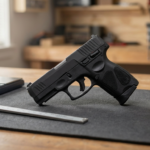

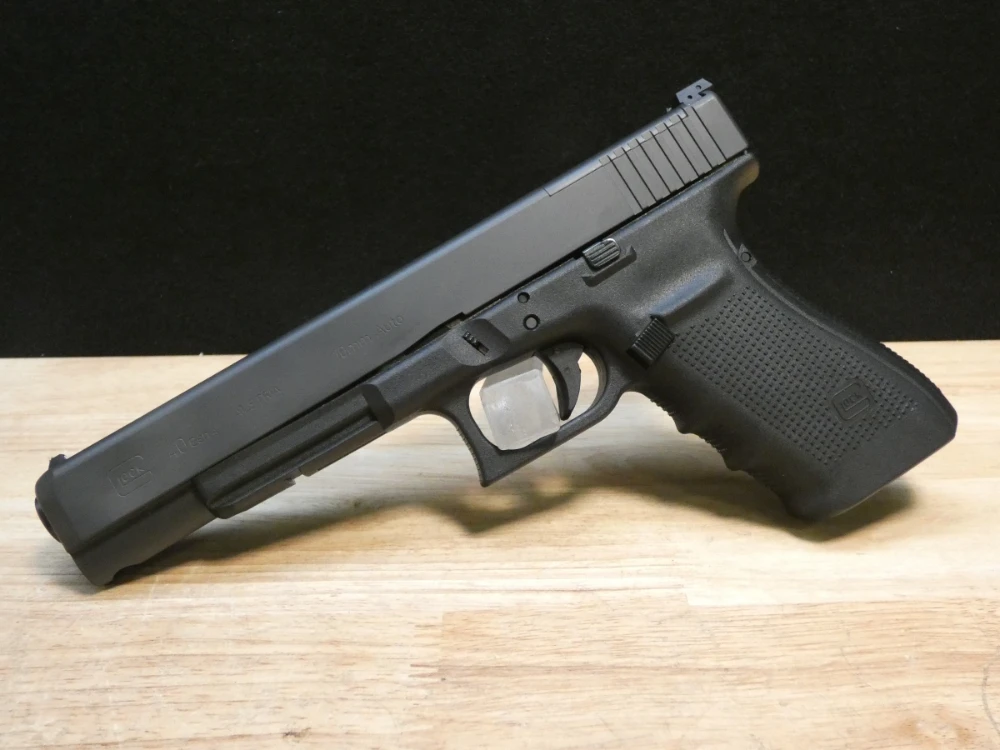
The Glock 40, a long-slide pistol chambered in the powerful 10mm Auto, is a formidable handgun designed for hunting, competition, and personal defense. Its semi-automatic action, robust build, and Modular Optic System (MOS) make it a popular choice for enthusiasts seeking performance and reliability. Understanding its market value is key for owners looking to sell. This guide breaks down the pricing factors, from generation and modifications to regional laws, ensuring you can accurately assess your firearm’s worth.
What Determines Your Glock 40’s Worth
The value of a Glock 40 is primarily determined by its condition, generation, and included accessories. As a semi-automatic, long-slide pistol, it is classified as a standard handgun and is not subject to NFA regulations in its factory configuration. Market demand, which can be influenced by regional laws and the current political climate, also plays a significant role. A well-maintained pistol with its original case, manuals, and magazines will command a higher price. Conversely, visible wear, missing components, or unfavorable modifications can detract from its overall resale value, making a thorough assessment of these factors essential for accurate pricing.
2026 Price Breakdown by Generation
Glock 40 Generation 1
The Glock 40 model was never produced during the first generation of Glock pistols, which ran from 1982 to 1988. Generation 1 Glocks are characterized by their smooth, uniform “pebble-finish” grip texture and a two-piece recoil spring assembly. These early models, most notably the Glock 17, established the brand’s reputation for reliability and simplicity but lacked features that would become standard later, such as an integrated accessory rail. Therefore, a “Gen 1 Glock 40” does not exist, and any valuation must be based on the generations in which this specific model was actually manufactured.
Because the Glock 40 is a modern design tailored for the 10mm cartridge and optic compatibility, its development occurred much later in the company’s history. Collectors and sellers should be aware that the Glock 40 designation is exclusively tied to the later, more advanced generations. Any search for first-generation value data for this model will be fruitless, as its production history begins with the introduction of the Gen4 platform. The pistol’s features, such as the MOS system, are indicative of a much more recent manufacturing period, placing it far beyond the initial product lines.
Glock 40 Generation 2
Similar to the first generation, the Glock 40 was not available during the Generation 2 production run from 1988 to 1998. The second generation introduced significant updates to the Glock platform, including checkering on the front and back straps of the grip for improved handling and the integration of a steel plate with a stamped serial number into the frame. These changes enhanced the firearm’s ergonomics and compliance with regulations. However, the 10mm long-slide model known as the Glock 40 had not yet been conceived or introduced into the company’s catalog during this era.
The focus during the Gen 2 period was on expanding the line-up with new calibers and compact models, but the specialized hunting and competition pistol that the Glock 40 would become was not part of that expansion. Consequently, there is no market value or sales data for a “Gen 2 Glock 40” because the firearm did not exist. Owners and potential buyers must focus their research on the specific generation in which the G40 was actually released to determine an accurate and relevant price point based on its features and market availability.
Glock 40 Generation 3
The Glock 40 model was not manufactured during the third generation, which began in 1998. Generation 3 marked a significant evolution in Glock design, introducing the now-familiar finger grooves and thumb rests on the grip for a more contoured feel. A key addition was the universal “Glock rail” molded into the frame, allowing for the attachment of lights and lasers. This generation also saw the addition of a loaded chamber indicator and an extra cross pin to secure the locking block. Despite these popular enhancements, the long-slide 10mm Glock 40 was still not part of the product lineup.
As a result, no historical or current market data exists for a “Gen 3 Glock 40.” The development and release of this specific model were reserved for the subsequent generation, which introduced a platform better suited for its design, particularly with the implementation of the Modular Optic System. Any valuation of a Glock 40 must therefore be based entirely on the Gen4 models, as this is the only generation in which this powerful, optic-ready handgun has been produced and sold to the public, making earlier generation pricing irrelevant.
Glock 40 Generation 4
The Glock 40 is primarily available as a Gen4 model, which incorporates several key upgrades over previous generations. These include a modular backstrap system to accommodate different hand sizes, a larger and reversible magazine catch, and a dual recoil spring assembly to reduce felt recoil and increase service life. Most notably, the Glock 40 Gen4 is equipped with the Modular Optic System (MOS), allowing for the easy mounting of various red dot sights. This feature makes it highly desirable for hunting and competition, directly influencing its market value as a modern, feature-rich handgun.
Given its specialized nature, the value of a Glock 40 Gen4 is well-defined. New models typically have a market price ranging from approximately $568 to $742. In the used market, a well-maintained Glock 40 can be valued between $360 and $500, depending heavily on its condition, the number of rounds fired, and whether it includes accessories like optics or extra magazines. The average used price settles around $360, but police trade-in Glocks in the parent .40 S&W caliber can range from $270 to $420, providing a broader market context.
How Modifications Affect Value
Modifications can have a polarizing effect on the resale value of a Glock 40. Aftermarket triggers, for example, generally do not increase and can often lower the firearm’s worth. Many potential buyers prioritize factory reliability and may be wary of the quality or safety of custom trigger work. To maximize resale value, it is widely recommended to reinstall the original factory parts before listing the pistol for sale. Any high-quality aftermarket components, such as triggers or custom slides, can then be sold separately, often recouping more of their initial cost than if they were bundled with the firearm.
On the other hand, certain upgrades are widely seen as value-adding. High-quality night sights from reputable brands like Trijicon, TruGlo, or Ameriglo are a prime example. These sights are consistently recommended for their durability and performance, making the firearm more practical and appealing for self-defense or low-light shooting scenarios. Because they are a functional and well-regarded enhancement, the inclusion of premium night sights can make a used Glock 40 more attractive to buyers and may allow a seller to ask for a slightly higher price compared to a model with standard factory sights.
Regional Price Variations in 2026
The value and availability of a Glock 40 can be significantly impacted by state-specific firearm laws. In California, for instance, the Glock 40 is not listed on the state’s Roster of Handguns Certified for Sale. This means that licensed dealers cannot sell this model to the general public. As a result, the only legal way for a resident to acquire one is through a private party transfer from someone who already owns it within the state, often a law enforcement officer or a new resident. This limited availability can create a niche market where the price may be higher than the national average.
In New York, the situation is different but still restrictive. A Glock 40 appears to be legal for purchase and ownership, provided the individual holds a valid pistol license and has the specific firearm registered to that license. However, the state’s regulatory environment is strict, and proposed legislation has targeted Glock pistols due to concerns over their potential for illegal modification. The threat of future bans or increased regulation can influence current market prices, potentially driving up demand in the short term as buyers seek to acquire them before new laws take effect.
Online vs Local Sales
Selling a Glock 40 online requires strict adherence to federal and state laws, as well as carrier policies. A private seller cannot legally ship a handgun directly to a buyer in another state. The firearm must be taken to a Federal Firearms License (FFL) holder, who will then log it and ship it to another FFL holder near the buyer. Major carriers like UPS and FedEx have policies that largely restrict firearm shipments to be between licensed dealers only, further cementing the FFL’s role in the process. These regulations ensure a legal chain of custody for all interstate transfers.
The process for shipping a handgun like the Glock 40 is highly regulated. The firearm must be unloaded and declared to the carrier, typically requiring an overnight air service for transport. Furthermore, the package must be sturdy and discreet, with no external markings that would indicate its contents are a firearm. This entire procedure is governed by the interstate transfer rule, which mandates that any handgun sale across state lines must be facilitated by an FFL in the seller’s state shipping to an FFL in the buyer’s home state, where the final transfer occurs after a background check.
Paperwork requirements for a private sale vary significantly depending on the location of the transaction. For a local, in-state sale, federal law does not mandate a specific form. However, using a bill of sale is highly recommended to create a record of the transfer. Many states have gone further, requiring that all private firearm sales, including handguns, be conducted through an FFL. In these cases, the buyer must complete ATF Form 4473 and pass a background check, just as they would when purchasing from a dealer, ensuring compliance with both state and federal regulations.
The FFL Buying Advantage
Selling your Glock 40 to a Federal Firearms License (FFL) holder, such as a local gun shop, offers a distinct advantage in terms of speed and convenience. The process is straightforward: you present the firearm, the dealer assesses its condition and marketability, and you receive a cash offer on the spot. This eliminates the complexities of finding a private buyer, navigating state transfer laws, and dealing with paperwork. For sellers who prioritize a quick and hassle-free transaction over maximizing their return, selling to a dealer is often the most practical and efficient option available.
However, this convenience comes at a cost. Gun dealers must account for overhead and profit margins, so their offers will be lower than what you could achieve in a private sale. Typically, a dealer will offer between 50% and 65% of the firearm’s used retail value. For a desirable model like the Glock 40, the trade-in value is estimated to be around 65% of its private party sale price. This ratio reflects the balance between the dealer taking on the risk and effort of reselling the firearm and the seller receiving immediate, guaranteed payment.
What Increases Your Offer
To maximize the resale value of your Glock 40, proper pre-sale preparation is crucial. A thorough cleaning will significantly enhance its appeal. This involves field-stripping the pistol and meticulously cleaning the slide rails, barrel, frame, and all other major components to remove any carbon buildup or residue. A common mistake is over-lubricating after cleaning; apply only a minimal amount of gun oil to the manufacturer-specified points. A clean, well-maintained firearm not only looks better to potential buyers but also demonstrates that it has been cared for, which helps it hold its value.
High-quality photographs are essential for attracting buyers, especially in online listings. Use soft, diffuse natural light, such as on an overcast day, to avoid harsh glare and shadows that can obscure details. Place the Glock on a simple, non-reflective background to ensure it is the focus of the image. Capture multiple, in-focus shots from various angles, including close-ups of any markings, the sights, and areas of wear. Including photos of the original case and any accessories provides a comprehensive and transparent view that builds buyer confidence and can lead to better offers.
Including the original factory parts with a modified Glock 40 is a highly advantageous move that can increase your offer. While you may prefer your aftermarket trigger or sights, many buyers value the option to revert the firearm to its stock configuration. The factory setup is trusted for its proven reliability and may be required for certain shooting competitions. Presenting a complete package with all original components assures the buyer of the firearm’s history and gives them the flexibility to customize it to their own preferences, making your pistol a more attractive and valuable proposition.
When to Sell Your Glock 40
The timing of a firearm sale can influence both the speed of the transaction and the final price. While hunting rifles see a surge in demand during the summer and early fall leading up to hunting seasons, the market for handguns like the Glock 40 follows a more general pattern. Many sellers find success during tax return season, from February to April, when potential buyers have more disposable income. Another active period is often from mid-November to mid-January, aligning with holiday bonuses and seasonal interest in shooting sports and personal protection.
Conversely, the summer months are often considered a slower period for firearm sales. With many people focused on vacations and outdoor activities unrelated to shooting, overall market demand can dip, potentially leading to fewer inquiries and lower offers. Selling during this off-peak time may require more patience or a more competitive price point to attract a buyer. Therefore, if maximizing your return is the primary goal, it may be strategic to wait for the more active sales seasons to list your Glock 40 for sale.
Beyond traditional seasonality, the market for firearms is heavily influenced by the broader political and economic climate, which can often be a more significant driver of value. News of proposed firearm legislation or periods of social uncertainty can create sudden spikes in demand, leading to faster sales and higher prices. These external factors are unpredictable but can override any typical seasonal trend. A savvy seller will stay informed about the current climate, as it may present the most opportune moment to sell, regardless of the time of year.
Common Pricing Mistakes
A frequent mistake sellers make is misjudging the impact of a high round count on a Glock 40’s value. These pistols are renowned for their durability and ability to function reliably after tens of thousands of rounds. Consequently, a high round count does not significantly lower the firearm’s value, provided it has been properly maintained. The overall mechanical integrity is rarely compromised by extensive use. Instead, cosmetic condition is often a more significant factor in determining its resale price, and sellers should price their firearm accordingly, focusing on visible wear rather than its shooting history.
Another common error is paying for a professional appraisal on a standard-production firearm like a Glock 40. The market value for such a common handgun is already well-established, typically falling within the $400 to $500 range for a used model in good condition. The cost of a formal appraisal could represent a significant percentage of the firearm’s total value, making it an unnecessary and non-cost-effective measure. Value can be reasonably assessed by researching current online listings and local sales without incurring the extra expense of a professional valuation.
Perhaps the most common pricing mistake is assuming that all modifications add value. Aftermarket triggers, for instance, can actually lower the resale price, as many buyers prefer the proven reliability of the factory configuration. Sellers often lose money by not reinstalling the original parts before the sale. To get the best return, the wisest approach is to return the Glock to its stock setup and sell any aftermarket components separately. This allows the firearm to appeal to the widest possible audience while enabling the seller to recoup a larger portion of their investment in custom parts.
Market Outlook for 2026
Predicting the precise market value of the Glock 40 for 2026 is challenging, as a clear market consensus is not available. The firearms industry is subject to a multitude of volatile influences, including shifts in the political landscape, changes in firearm legislation at both the state and federal levels, and fluctuations in the broader economy. These factors can cause sudden and significant changes in demand and pricing, making long-term financial forecasts for any specific model inherently speculative. Therefore, a definitive price prediction remains elusive due to market unpredictability.
While a specific future price cannot be guaranteed, the Glock 40’s value will likely continue to be anchored by its core attributes. Its reputation for durability, combined with the power and versatility of the 10mm cartridge for hunting and defense, ensures it will remain a desirable handgun. Its value retention will probably mirror the general trends of the used handgun market. Barring any model-specific recalls or major technological shifts in the industry, the Glock 40 is expected to hold its value well relative to other semi-automatic pistols, supported by its strong brand recognition and performance.
Frequently Asked Questions
Does a high round count significantly lower my Glock 40’s value?
No, a high round count does not appear to significantly lower the value of a Glock 40. The platform is widely respected for its exceptional durability and its ability to maintain reliable function even after tens of thousands of rounds. While routine maintenance and the eventual replacement of wear parts like springs are expected over the firearm’s life, its core mechanical integrity is not compromised by extensive use. As a result, potential buyers are often more concerned with the pistol’s cosmetic condition and any visible wear than its firing history, making round count a less critical factor in its final resale value.
Is it worth getting a professional appraisal for my Glock 40?
A professional appraisal is generally not worth the cost for a standard used Glock 40. The market value for this popular handgun is well-established and can be easily researched online, typically falling within the $400 to $500 range for a model in good condition. The final price is primarily determined by its condition, included accessories, and current market demand. Since the fee for a formal appraisal could be a substantial percentage of the firearm’s total value, it is not a cost-effective step for a common, non-collectible handgun like the Glock 40.
Will I get more money if I sell my modified Glock 40 with all the custom parts installed?
It is unlikely you will get more money by selling a Glock 40 with aftermarket parts installed. Modifications like custom triggers can actually lower the value, as many buyers prefer the reliability of the factory configuration. The consensus is that it is highly advantageous to reinstall the original parts before selling. This allows the firearm to appeal to a broader audience, including those who need a stock firearm for competition. You can then sell your high-quality aftermarket components separately, which typically yields a better financial return than bundling them with the pistol.
How much less will a dealer offer me compared to a private sale?
When selling to a gun dealer or FFL, you can expect to receive a significantly lower offer than you would in a private sale. Dealers typically offer between 50% and 65% of the firearm’s estimated used retail value to account for their business overhead and profit margin. For a desirable and quick-to-sell model like the Glock 40, the trade-in value is estimated to be on the higher end of that range, at approximately 65% of its private party sale price. The trade-off is convenience and speed versus maximizing your financial return.
Does the original box and paperwork really matter for the price?
While there is no specific monetary penalty assigned for a missing box or manuals, their inclusion is highly beneficial for the sale. A complete package with the original case, owner’s manual, and any included accessories is always more attractive to potential buyers. It suggests the firearm was well-cared-for and helps build buyer confidence. While you can still sell the firearm without them, having the complete original kit can help you achieve a faster sale at the higher end of the firearm’s current market value, making it an important factor for maximizing your offer.
Get a Cash Offer Today
Ready to sell your Glock 40? We make the process simple, safe, and transparent. Avoid the hassle of private listings and legal complexities by getting a fair, no-obligation cash offer from a trusted buyer. Our expertise ensures you receive a competitive price based on your firearm’s true market value.
Click the button below to submit your firearm’s information. We will review the details and provide you with a prompt offer. Sell your Glock with confidence and get paid quickly. Let us show you how easy selling your firearm can be when you work with experienced professionals.