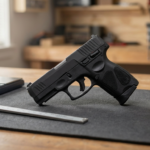

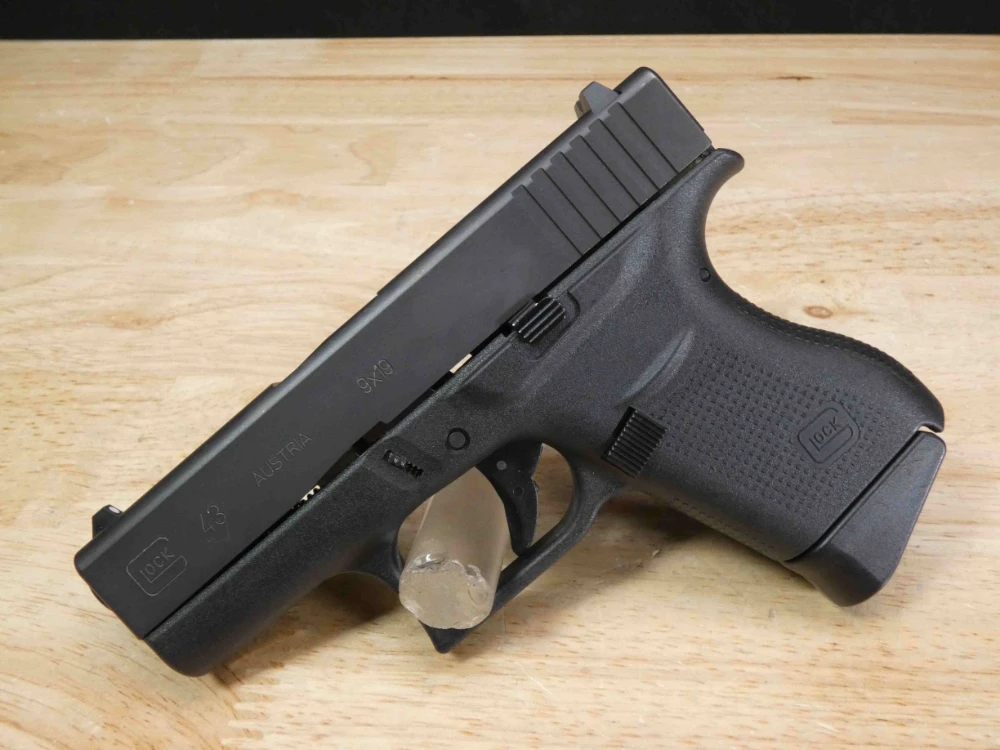
The Glock 43 is a subcompact, single-stack 9mm Luger pistol engineered specifically for the concealed carry market. As a semi-automatic handgun, it offers Glock’s renowned reliability in a slim, easily concealable package. In its standard factory configuration, the Glock 43 is not regulated under the National Firearms Act (NFA), making it straightforward for law-abiding citizens to purchase and own, though state and local laws will always apply to any firearm transaction.
What Determines Your Glock 43’s Worth
The value of a Glock 43 is primarily determined by its condition, current market demand, and any included accessories. A new model typically has a manufacturer’s suggested retail price between $450 and $550, with the average price settling around $532. For a used Glock 43, the average price is approximately $357, with a common range of $325 to $425. Factors that can push the value to the higher end of this range include excellent cosmetic condition, a low round count, the inclusion of the original box and paperwork, and the addition of desirable aftermarket accessories like upgraded sights.
2026 Price Breakdown by Generation
Slimline Model: New Condition
Unlike many other Glock pistols, the Glock 43 does not have the typical generational updates such as Gen4 or Gen5. It is a distinct “slimline” model designed with a single-stack magazine for maximum concealability. Therefore, its value is not determined by a specific generation but is instead almost entirely dependent on its physical condition. A new-in-box or like-new Glock 43 will command the highest price, averaging around $532. This price point reflects a firearm that is free from wear, has all its original factory parts and accessories, and is in perfect operational order, appealing to buyers seeking a pristine example.
The absence of generational variants simplifies the valuation process, focusing buyer attention on tangible factors rather than collectibility. The Glock 43’s worth is tied to its utility as a reliable concealed carry weapon. When assessing a new-condition model, buyers are looking for the complete package as it came from the factory: the original hard case, owner’s manual, cable lock, and all included magazines. Any deviation from this complete, untouched state will shift its classification and value into the used category, even if the firearm has never been fired by the end user.
Slimline Model: Used Condition
For a used Glock 43, the value is primarily dictated by its level of wear and tear, with the average market price hovering around $386. A pistol in excellent condition with minimal holster wear and a clean bore will fetch a price closer to the top of the $325 to $425 range. Conversely, a G43 that shows significant cosmetic damage, such as deep scratches on the slide or frame, will fall to the lower end of that spectrum. Included accessories, like extra magazines or a quality holster, can also help bolster the final sale price within the used market.
Interestingly, while a high round count is a consideration, it does not drastically lower the value of a Glock 43 if the firearm has been properly maintained. Glocks are legendary for their durability, capable of functioning reliably for tens of thousands of rounds with routine maintenance. A well-cared-for pistol with a higher round count can still be a dependable tool, and the market reflects this. As a baseline, even a used Glock 43 with a low round count is noted to sell consistently in the $300 to $350 range, establishing a solid floor for its value.
Comparing to the Glock 43X
It is crucial for sellers to understand that the Glock 43X is a separate and distinct model, not a different generation of the G43. The 43X features the same short slide and barrel as the G43 but incorporates a longer grip to accommodate a higher-capacity, 10-round magazine. This ergonomic change appeals to shooters who want a better grip and more ammunition without the bulk of a double-stack pistol. The introduction and popularity of the 43X has directly impacted the market value of the original G43, as many buyers now prefer the enhanced capacity and handling of the newer variant.
The market’s shift toward higher-capacity micro-compact pistols has positioned the Glock 43 as a slightly older, less feature-rich option. While it remains an excellent choice for deep concealment where its smaller grip is an advantage, its lower standard capacity is a significant factor for many potential buyers. This dynamic has contributed to a surplus of used G43s on the market as owners upgrade, which in turn applies downward pressure on its resale value. Sellers must price their G43 competitively, acknowledging that it competes directly with its more modern and higher-capacity sibling.
Value Stability and Market Position
The Glock 43’s value is anchored in its reputation as a reliable, no-frills concealed carry firearm from a top-tier manufacturer. While it may lack the capacity or optics-ready features of newer models, its slim profile and proven performance give it a stable position in the used market. Its value is not propped up by collector interest or generational rarity but by its practical application. A seller can expect a predictable and relatively stable price range, influenced more by the firearm’s physical condition and the completeness of its package than by volatile market trends that affect more collectible firearms.
Because the G43 is a single, standardized model, its value is easy to determine. The key drivers are simple: cosmetic condition, mechanical function, and the quality of any included accessories. Unlike other firearms where a specific production year or factory configuration can create significant price swings, the G43 is a known quantity. This makes for a straightforward transaction for both buyer and seller, as its worth is based on tangible, easily assessed characteristics rather than nuanced collector knowledge, ensuring a consistent and understandable market value for well-maintained examples of the pistol.
How Modifications Affect Value
Upgrades can have a positive impact on the Glock 43’s resale value, provided they are from reputable brands and enhance the firearm’s core function. The most common and value-adding modification is an upgrade to the stock sights. Installing premium night sights from a top-tier brand like Trijicon, particularly their RMR Type 2 or HD XR models, is highly likely to increase the pistol’s appeal and final sale price. Other quality brands such as TruGlo and Ameriglo are also popular choices that potential buyers recognize and are often willing to pay a premium for, as it saves them the cost and effort of upgrading themselves.
While some modifications can add value, others may have a neutral or even negative effect. However, for the Glock 43, there is no broad market consensus on which specific modifications consistently hurt its resale value. It is generally understood that permanent, subjective alterations like custom frame stippling or non-traditional Cerakote colors can be polarizing. These changes may appeal to a niche group of buyers but will likely narrow the overall pool of interested parties, potentially making the firearm harder to sell and forcing a lower price. Reversible modifications are always a safer bet for preserving value.
Regional Price Variations in 2026
State-specific firearm laws can create significant regional price variations, and California is a prime example. The Glock 43 is not on the state’s Roster of Handguns Certified for Sale, which means it is illegal for a civilian to purchase one new from a licensed dealer. This restriction creates a unique and often inflated market for the pistol within the state. The only way for a non-exempt civilian to legally acquire a G43 is through a private party transfer from an individual who is exempt from the roster, such as a law enforcement officer. This limited supply can drive the price well above the national average.
In other restrictive states like New York, the Glock 43 is legal to own, but the process is still highly regulated. A prospective owner must possess a valid pistol license and officially register the handgun on that license. Beyond these specific examples, paperwork requirements for private sales vary dramatically by state. Some states have no regulations for private transfers, while others mandate that all sales, private or commercial, must be conducted through a licensed dealer to facilitate a background check. These legal hurdles can influence local market demand, convenience, and ultimately, the final selling price of a used Glock 43.
Online vs Local Sales
Selling a Glock 43 to a buyer in another state requires adherence to strict federal laws. An online sale across state lines cannot be completed directly between two private individuals. The transaction must be processed through a Federal Firearms Licensee (FFL). The seller is required to ship the handgun to an FFL in the buyer’s state of residence. Upon its arrival, the buyer must visit their designated FFL, complete the necessary ATF Form 4473, and successfully pass a NICS background check before they can legally take possession of the firearm. This federally mandated process ensures a legal transfer but adds shipping and transfer fees.
The logistics of shipping a handgun add another layer of regulation. Federal law prohibits private citizens from shipping handguns via the U.S. Postal Service. Furthermore, major common carriers like UPS and FedEx have policies that prohibit private individuals from shipping handguns directly; the shipper must hold a Federal Firearms License. Therefore, to legally ship a Glock 43 for an online sale, a private seller must take the firearm to a local FFL. The dealer will then handle the packaging and shipment to the buyer’s FFL, ensuring full compliance with both federal law and carrier policies.
When comparing these regulated online sales to local transactions, the trade-offs become clear. A local private sale can be simpler and may yield a higher net profit by avoiding shipping and transfer fees, though state laws on private transfers must be followed. Alternatively, selling directly to a local gun dealer is the fastest and most convenient option. However, this convenience comes at a cost, as a dealer will typically offer between 50% and 70% of the gun’s used retail value. More desirable firearms that are expected to sell quickly may receive offers in the higher 65% to 70% range.
The FFL Buying Advantage
Utilizing a Federal Firearms Licensee (FFL) for any firearm transfer, especially an interstate one, offers significant advantages, primarily in legal compliance and liability protection. For the seller, having an FFL handle the transaction ensures that the buyer is legally eligible to own a firearm. The FFL is responsible for conducting the mandatory ATF Form 4473 and NICS background check. This process formally and legally transfers the firearm out of the seller’s name, creating an official record of the sale and protecting the seller from potential future liability associated with the handgun.
For the buyer, receiving a firearm through an FFL guarantees that the acquisition is fully compliant with all federal, state, and local laws. The FFL guides the buyer through the required paperwork, ensuring every step is completed accurately. While the FFL charges a fee for this transfer service, it provides invaluable peace of mind. This structured process establishes a clear and legal chain of custody for the Glock 43, which is a cornerstone of responsible firearm ownership. It eliminates any ambiguity about the legality of the purchase, ensuring the new owner’s rights are protected.
What Increases Your Offer
Presenting a clean and well-maintained firearm is one of the most effective ways to increase its value and attract higher offers. Before listing your Glock 43 for sale, perform a thorough field strip and deep clean. This includes cleaning the slide, barrel, frame, and internal components to remove all carbon fouling and residue. A critical mistake to avoid is over-lubrication; Glocks require very little oil, so apply it sparingly only to the specified lubrication points. Wiping down the entire firearm afterward removes excess oil that can attract dirt and dust, presenting a professionally maintained appearance.
High-quality photographs are non-negotiable for maximizing value in an online sale. To best showcase your Glock 43, use diffused natural lighting, such as on an overcast day, or employ off-camera lighting set at a 45-degree angle to prevent harsh shadows and glare off the slide. Place the pistol on a simple, solid-colored background that won’t distract the viewer. Using a tripod is essential to ensure your images are sharp and in focus. Capture multiple angles, including close-ups of key areas, to give potential buyers a clear and honest depiction of its condition.
While the market lacks a clear consensus on a specific monetary penalty for missing items, providing the complete, original package will always make your Glock 43 more appealing and help you secure a top-dollar offer. This includes the original factory hard case, the owner’s manual, the spent casing (if applicable), the cable lock, and all original magazines. A complete set signals to a potential buyer that the firearm was well-cared-for and thoughtfully maintained. This perception of a responsible owner often translates into a faster sale at a higher price point.
When to Sell Your Glock 43
Timing the sale of your Glock 43 can significantly impact the final price you receive. The used handgun market generally experiences peak activity during two primary seasons. The first is the holiday season, running from mid-November through mid-January, when many people are looking to buy gifts or spend holiday bonuses. The second prime window is during tax return season, typically from February through April, as consumers have more disposable income. Listing your firearm during these high-demand periods can lead to a quicker sale at a more favorable price due to increased market competition.
In contrast, the summer months are consistently reported as a slow period for firearm sales. During this time, potential buyers are often preoccupied with vacations, holidays, and other outdoor activities, leading to a general downturn in market demand. Attempting to sell your Glock 43 during the summer may result in it sitting on the market for a longer period or requiring a lower asking price to attract interest. If you are not in a rush to sell, it is often strategically wise to wait until the fall or winter when market activity begins to pick up again.
It is also crucial to recognize that external factors, particularly the political climate, can override typical seasonal trends. An election year or the introduction of new firearms-related legislation can create sudden and significant surges in demand. These politically driven buying waves can dramatically inflate prices and create sellers’ markets at any time of the year. A savvy seller should remain aware of the current political landscape, as it can present unforeseen opportunities to sell a firearm like the Glock 43 for a premium that far exceeds normal market conditions.
Common Pricing Mistakes
One of the most frequent errors sellers make is pricing their Glock 43 based on its original purchase price and the cost of added modifications. The used firearm market does not operate on what you spent, but on what the gun is worth right now. With a new G43 averaging around $532 and used models trading between $325 and $425, it is essential to research current, comparable sales. Overpricing your pistol based on sunk costs will only deter potential buyers who are well-aware of the established market rate for this common handgun.
Another critical mistake is failing to account for market saturation and the pistol’s actual condition. The Glock 43 is an extremely popular model, and the secondary market has a surplus of them as many owners have upgraded to newer, higher-capacity options. This high supply naturally keeps prices competitive. Sellers must be objective about their firearm’s condition, noting any holster wear, scratches, or mechanical issues, and price it accordingly. Ignoring the vast number of other G43s for sale and asking for a top-tier price for a well-used gun is a recipe for a frustrating and unsuccessful sale.
For a common, modern pistol like the Glock 43, paying for a professional appraisal is an unnecessary expense and a significant pricing mistake. The market value for this firearm is well-established and easily researched through online forums and marketplaces, with values in very good condition typically ranging from $200 to $300 according to some dealer metrics. The cost of a formal appraisal would consume a substantial portion of the firearm’s value. This money is better kept by the seller, as the gun’s price can be accurately determined with a small amount of online research.
Market Outlook for 2026
The market forecast for the Glock 43 through 2026 indicates that its value will likely face continued downward pressure. This trend is a direct result of a significant market shift toward newer concealed carry pistols that offer higher magazine capacities and come from the factory ready to mount a red dot optic. As manufacturers continue to innovate in the micro-compact space, the Glock 43, with its standard six-round capacity and lack of optics-ready features, is increasingly viewed by many as a dated design. This perception will almost certainly impact its future resale value negatively.
A surplus of used Glock 43s has already entered the secondary market as original owners sell them to fund upgrades to more modern alternatives. This influx of supply is expected to keep prices depressed or even cause them to decline further in the coming years. While some recent data points show a slight increase in its new price to around $538 and its used price to $362, the broader market consensus suggests this is a minor fluctuation. The overarching trend is that the G43’s position as a top-tier concealed carry option is being challenged, which will erode its long-term market value.
Frequently Asked Questions
Does a high round count significantly hurt my Glock 43’s value?
While a very high round count is a factor buyers consider, it does not drastically reduce the value of a Glock 43 as long as it has been properly cared for. Glocks are renowned for their extreme durability and long service life, often running reliably for tens of thousands of rounds with only routine parts replacement. A well-maintained G43 will hold its value better than many other pistols with similar usage. That said, a model with a verifiably low round count is more attractive and will typically sell faster and for a price in the higher end of the used range.
Will installing expensive night sights increase my resale value?
Yes, upgrading the stock sights to a quality set of night sights from a reputable brand can add to the resale value of your Glock 43. Buyers often look for this feature and are willing to pay more for a pistol that already has them installed. Premium brands like Trijicon, TruGlo, and Ameriglo are well-regarded in the firearms community. While you may not recoup the full retail cost of the sights, their presence makes your firearm more desirable and can help you achieve a higher final sale price compared to a bone-stock model.
Is it worth getting a professional appraisal for my Glock 43?
No, for a common and modern firearm like the Glock 43, a professional appraisal is generally not worth the cost. The market value for this pistol is well-established and can be easily determined by checking online gun marketplaces and forums for recent sales of comparable models. The price of a formal appraisal could easily be a significant percentage of the gun’s total value, which typically falls in the $325 to $425 range for a used model. The expense is not justifiable when the value is so predictable and easy to research on your own.
How much less will a dealer offer me compared to a private sale?
When selling your Glock 43 to a gun dealer, you should expect to receive a cash offer that is significantly lower than what you could get in a private sale. Dealers typically offer between 50% and 70% of the firearm’s current used retail value. For a more desirable and quick-selling model, the offer might be in the higher end of that range, from 65% to 70%. The lower price reflects the dealer’s need to cover overhead costs and make a profit upon resale. The trade-off for the seller is a fast, secure, and hassle-free transaction.
Does the Glock 43 have different generations that affect its price?
No, the Glock 43 does not follow the standard generational (e.g., Gen3, Gen4, Gen5) update cycle of other Glock models. It is a unique “slimline” model with a single design. Therefore, its value is not influenced by a particular generation being more or less desirable. The price of a used Glock 43 is determined almost exclusively by its physical condition, the number and type of included accessories, and current market demand, rather than any collector-driven value associated with a specific production run or generation, which simplifies its valuation process.
Get a Cash Offer Today
Ready to sell your Glock 43? We make the process simple, safe, and secure. Avoid the complexities of private listings, shipping regulations, and finding a trustworthy buyer. Our streamlined system ensures you receive a fair and competitive cash offer for your firearm without any hassle or uncertainty. We handle all the necessary FFL paperwork for a legal transfer.
Submit your firearm’s information on our easy-to-use online form to get started. Our team of experts understands the current market and will provide a fast, no-obligation valuation. Turn your used Glock 43 into cash with a professional and trusted buyer. Click here to see what your firearm is worth and receive your offer today.