
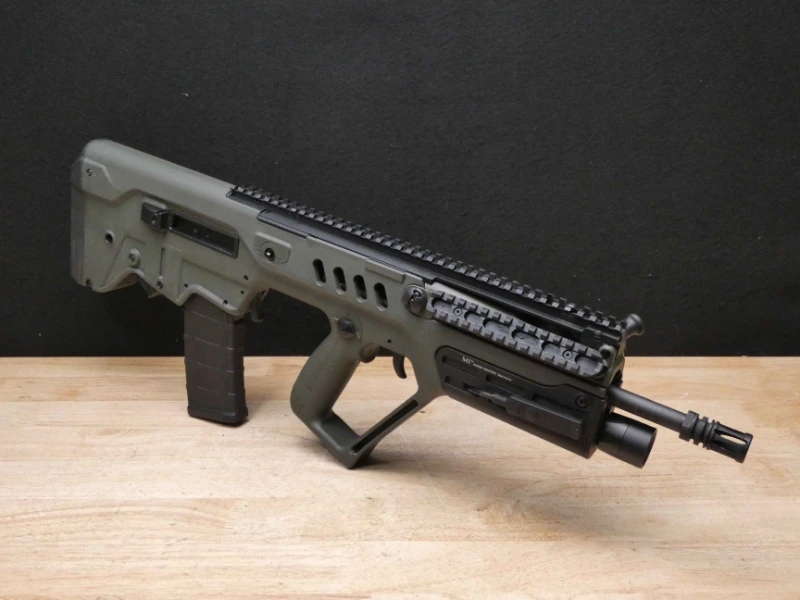
The IWI Tavor is a highly regarded bullpup rifle known for its compact design and combat-proven reliability. Understanding its market value involves more than just its reputation; factors like model, condition, modifications, and even the sales channel play a crucial role. Whether you own the original SAR, the improved X95, or the powerful Tavor 7, this guide will break down the key elements that determine its resale price, ensuring you are well-informed for a successful transaction.
What Determines Your IWI Tavor’s Worth
The overall condition of your IWI Tavor is a primary driver of its value. While these rifles are built for durability, significant use will impact their worth. A high round count can negatively affect the price due to potential wear on critical components like the barrel and bolt assembly, which can degrade accuracy. While any used firearm typically sees a 15-20% decrease from its new price, an exceptionally high round count will reduce its value further. Similarly, cosmetic condition is vital; a Tavor with heavy external damage, such as deep scratches or gouges, may be discounted by 15% to 25% compared to a well-maintained example.
2026 Price Breakdown by Generation
Tavor SAR (Original Model)
The Tavor SAR was the first model introduced to the civilian market and set the standard for modern bullpup rifles. While it established the Tavor’s reputation for reliability and innovative design, it has since been largely rendered obsolete by its successor, the X95. The SAR is known for having a heavier trigger pull and less ergonomic controls, such as its magazine release placement, compared to newer versions. These factors contribute to its lower resale value in the current market, as most buyers prefer the enhanced features of the X95 model, making the SAR a more budget-friendly entry into the Tavor platform.
Due to the improvements made in the X95, the Tavor SAR typically commands a lower price on the used market. The average used price for a Tavor SAR is generally in the range of $1,100 to $1,300, with a common market average hovering around $1,200. While it remains a capable and robust rifle, its value is directly impacted by the availability and desirability of the more refined X95. Sellers should price their SAR accordingly, recognizing that it competes against a product-improved version that addressed many of its noted ergonomic shortcomings, making it a choice for collectors or budget-conscious enthusiasts.
Tavor X95 (Improved Model)
The IWI Tavor X95 represents a significant product improvement over the original SAR, directly addressing user feedback with enhanced ergonomics and functionality. Key upgrades include a relocated magazine release for faster reloads, a lighter and crisper trigger pull, and a more modular forend with integrated Picatinny rails. These refinements have made the X95 the more desirable and dominant model on the market, effectively setting the current standard for the Tavor platform. Its popularity ensures strong and consistent demand in both new and used marketplaces, positioning it as a premium offering compared to its predecessor.
The enhanced features of the X95 are reflected in its market value. The Manufacturer’s Suggested Retail Price (MSRP) for a new Tavor X95 is consistently listed at $1,999. However, the common retail “street price” is typically lower, ranging from $1,700 to $1,750. On the used market, a Tavor X95 in good condition is valued at approximately $1,156, though this can fluctuate based on condition and local demand. This price point demonstrates the model’s ability to retain value while still offering a discount over a brand-new rifle, making it an attractive option for many buyers.
Tavor 7 (7.62 NATO Variant)
The Tavor 7 is a distinct model in the lineup, chambered in the more powerful 7.62x51mm NATO (.308 Winchester) cartridge. This variant caters to shooters seeking a compact, battle-rifle platform with greater long-range capability and stopping power. While it shares design elements with the original SAR, the Tavor 7 incorporates further improvements, including an enhanced trigger system and fully ambidextrous controls, making it one of the most advanced bullpups available. Its unique chambering and specialized role mean it appeals to a different segment of the market than its 5.56mm counterparts, which influences its valuation and demand.
As a more specialized and powerful rifle, the Tavor 7 occupies a higher price bracket. Its advanced features and larger caliber command a premium over the X95. While specific used pricing data can vary more than for the common X95, its value is benchmarked against other .308 semi-automatic platforms. Sellers should emphasize its unique capabilities as a compact and potent battle rifle. Its market is more niche, but for buyers specifically seeking a .308 bullpup, the Tavor 7 is a top-tier option with strong value retention due to its modern design and powerful performance characteristics.
Tavor SBR (NFA Models)
The Tavor platform is also available in Short-Barreled Rifle (SBR) configurations, which are regulated under the National Firearms Act (NFA). The Tavor X95 SBR, for example, features a 13-inch barrel, making it significantly more compact than the standard 16.5-inch rifle. While standard Tavor models are non-NFA firearms, any version with a barrel shorter than 16 inches is classified as an NFA item. This status requires additional federal paperwork, a tax stamp, and a lengthy approval process for transfer, which fundamentally changes its market dynamics and potential buyer pool compared to standard long guns.
The NFA classification significantly impacts the value and sale process of a Tavor SBR. The pool of eligible buyers is smaller, as not everyone is willing or able to navigate the NFA transfer process. This can sometimes lead to a lower resale value compared to a non-NFA firearm of similar initial cost, despite the added expense of the tax stamp. However, for buyers already invested in NFA items, a pre-owned SBR can be an attractive option. Pricing must account for the complexities of the transfer, and sellers often find the most success with buyers who are knowledgeable about NFA regulations.
How Modifications Affect Value
Modifying an IWI Tavor can have a mixed impact on its resale value, largely depending on the type and quality of the upgrade. One of the most common and widely accepted modifications is a trigger upgrade. The factory Tavor trigger is often criticized for its heavy pull, and aftermarket options from reputable brands like Geissele and Timney are considered significant improvements. Because this upgrade addresses a well-known shortcoming of the rifle, it is unlikely to hurt the resale value. In many cases, a potential buyer may see a professionally installed, high-quality trigger as a desirable feature that saves them a future expense.
Beyond widely accepted upgrades like triggers, the impact of other modifications on the Tavor’s value is less certain. While accessories such as optics, lights, or foregrips can enhance a rifle’s usability for the current owner, a clear market consensus on which specific upgrades consistently add monetary value at resale has not been established. Often, sellers find they get the best return by selling the rifle in its original configuration and listing the aftermarket accessories separately. This allows the buyer to purchase a stock rifle at a standard market price without paying for modifications they may not want.
Regional Price Variations in 2026
The value of an IWI Tavor can vary significantly based on state and local firearm regulations. In states with strict “assault weapon” bans, the Tavor may be illegal to own or require substantial modification to be compliant. For instance, in California, a Tavor is only legal if it is a specific state-compliant model. These versions are modified with features like a grip wrap to eliminate the pistol grip, a 10-round magazine, a magazine lock, and an extended muzzle brake to meet the state’s minimum overall length requirement. These modifications make the rifle less functional and desirable to buyers in less restrictive states.
The existence of these state-compliant models creates distinct regional markets. A California-compliant Tavor will have value within that state but may be worth less to a buyer in a state like Texas or Arizona, who would then have to spend money to reverse the compliance features. Conversely, a standard Tavor cannot be legally sold to a resident of a restrictive state like New York, where it is likely illegal. Retailers selling California-compliant models often explicitly state they will not ship to New York, highlighting the fragmented nature of the market and how geography directly impacts a Tavor’s potential buyer pool and ultimate sale price.
Online vs Local Sales
Selling an IWI Tavor locally through a private sale offers simplicity and immediacy. The transaction can often be completed face-to-face, avoiding shipping costs and complex logistics. For this type of sale, the primary paperwork is a bill of sale, which should document the firearm’s details (make, model, serial number), the purchase price, and the contact information of both parties. However, it is crucial to consult and adhere to all state and local laws, as some jurisdictions may have additional requirements for private transfers, such as conducting the sale through a licensed dealer to perform a background check.
Selling online opens up a much larger national market of potential buyers but introduces legal and logistical hurdles. To legally sell a Tavor to a resident of another state, the firearm must be shipped from the seller to a Federal Firearms Licensee (FFL) in the buyer’s state. The buyer then completes the required federal paperwork and background check at their chosen FFL to take legal possession. This interstate transfer rule is a strict federal requirement for all firearm sales across state lines, adding a necessary layer of regulation and cost to the transaction for both parties involved.
Furthermore, the logistics of shipping a firearm like the Tavor have become more complicated. While federal law permits a private individual to ship a rifle to an FFL, major carriers like UPS and FedEx have implemented policies that prohibit non-licensed individuals from shipping firearms directly. This effectively requires a private seller to use their local FFL to package and ship the rifle on their behalf. The firearm must be declared to the carrier, unloaded, and packaged in a discreet container with no external markings indicating its contents, adding another step and potential expense to the online sales process.
The FFL Buying Advantage
Selling your IWI Tavor to a Federal Firearms Licensee (FFL), such as a local gun store, offers a fast, secure, and legally straightforward transaction. The primary advantage is convenience; you can walk in with your firearm and walk out with cash or store credit without the need to find a private buyer, negotiate a price, or worry about the legality of the transfer. The dealer handles all the necessary paperwork, and the sale is completed on the spot. This eliminates the risks and hassles associated with private sales, such as dealing with non-serious inquiries or ensuring the buyer is legally permitted to own a firearm.
However, this convenience comes at a financial cost. Gun dealers must make a profit, so their offer will be significantly lower than what you could achieve in a private sale. Generally, dealers offer between 50% to 65% of a used firearm’s retail market value. For an IWI Tavor, the estimated trade-in value is approximately 65% of its private party market value. For example, if your Tavor is worth $1,200 in a private sale, a dealer might offer you around $780. The choice between selling to a dealer versus a private party is a trade-off between maximizing your return and the speed and simplicity of the sale.
What Increases Your Offer
Presenting your IWI Tavor in the best possible condition is essential to maximizing its value. Before listing it for sale, perform a thorough pre-sale cleaning. This includes cleaning the chamber, bore, bolt carrier group, and trigger pack to remove any carbon buildup and residue. Use nylon brushes and polymer tools to avoid scratching any finishes. Pay special attention to the rails inside the receiver where the bolt carrier rides, as this is a key area of wear. Finishing with a wipe-down of all external surfaces will make the firearm look well-maintained and appealing to prospective buyers, signaling that it has been cared for.
High-quality photography is crucial for attracting buyers, especially in online listings. Use ample natural light, such as on an overcast day or during the “golden hour,” to prevent harsh shadows and accurately represent the rifle’s condition. Place the Tavor on a simple, uncluttered, and neutral-colored background that provides good contrast. Capture numerous high-resolution photos from various angles, including close-ups of all markings, any modifications, and areas of wear. Ensuring the firearm fills the frame and is the sole focus helps potential buyers feel confident in what they are purchasing, which can lead to faster sales and better offers.
While many owners modify their firearms, the impact of retaining original parts on the IWI Tavor’s value lacks a clear market consensus. For some collectors or purists, having all the factory-original components, such as the trigger, muzzle device, and furniture, can be a significant value-add. However, for many practical shooters, well-chosen aftermarket upgrades are seen as improvements. Because there is no universal agreement, the safest approach is to keep all original parts. This allows you to offer the rifle in its stock configuration or include the original parts with the sale, satisfying both types of buyers and potentially increasing your final offer.
When to Sell Your iwi tavor
The timing of your sale can influence both the demand and the final price you receive for your IWI Tavor. The firearms market experiences seasonal trends that vary by firearm type. While rifles and shotguns intended for hunting see a surge in demand in the months leading up to hunting seasons, typically from August through October, the Tavor does not fall into this category. As a modern sporting rifle, its sales trends are more closely aligned with those of handguns and other non-hunting firearms, which are driven by different consumer behaviors and purchasing cycles throughout the year.
For firearms like the IWI Tavor, sales often see an increase during tax return season, which generally runs from February to April. During this period, many consumers have more disposable income, leading to increased spending on discretionary items, including firearms. Listing your Tavor for sale during these months can expose it to a larger pool of buyers who are actively looking to make a purchase. This heightened demand can result in a quicker sale and potentially a higher selling price compared to other times of the year when consumer spending may be lower or focused elsewhere.
Beyond seasonal trends, it is also wise to monitor the broader political and economic climate, as these factors can create sudden shifts in firearm demand and pricing. Periods of political uncertainty or discussions of new firearm legislation often lead to surges in sales, which can drive up prices for popular rifles like the Tavor. While these trends are difficult to predict, being aware of the current market environment can help you decide on the most opportune moment to list your firearm for sale, potentially maximizing your financial return by capitalizing on a period of high demand.
Common Pricing Mistakes
One of the most frequent errors sellers make is confusing a firearm’s Manufacturer’s Suggested Retail Price (MSRP) with its actual market value. The MSRP for a new IWI Tavor X95 is $1,999, but its common retail or “street price” from dealers is often lower, around $1,700 to $1,750. When pricing a used Tavor, it is crucial to base your price on the current used market value, not the original MSRP. A used Tavor SAR, for example, typically sells for $1,100 to $1,300. Pricing it too close to the new street price of an X95 will deter buyers, who would rather pay a little more for a new, improved model.
Another common mistake is failing to accurately assess and account for the rifle’s condition. Sellers may overlook or downplay cosmetic damage, but buyers will not. A used Tavor with significant cosmetic wear, such as scratches and dings from heavy use, should be priced lower than one in excellent condition. The market dictates that heavy cosmetic damage can justify a discount of 15% to 25% relative to the typical price for a used model in good condition. Overlooking this and asking for top dollar for a visually worn rifle will likely result in a prolonged listing with little interest from serious buyers.
Finally, sellers often misjudge the value of their modifications. While an upgraded trigger from Geissele or Timney is a desirable feature that can maintain or slightly boost value, many other personal customizations do not add monetary worth. Optics, lights, and custom paint jobs are highly subjective and rarely allow a seller to recoup their full cost. It is a mistake to add the full price of all accessories to the rifle’s base value. A more effective strategy is to price the rifle competitively based on its stock configuration and offer the accessories for sale separately to appeal to a wider audience.
Market Outlook for 2026
Predicting the future resale value of any firearm, including the IWI Tavor, is inherently challenging due to the market’s sensitivity to political, social, and economic factors. At present, a definitive consensus on the Tavor’s future price trajectory for 2026 is not available. However, its value will likely be influenced by several key variables. The introduction of new, more advanced bullpup rifles from competing manufacturers could potentially soften demand for the Tavor platform, leading to a gradual depreciation in its used market value as consumer interest shifts to newer technology and designs.
Conversely, the Tavor’s established reputation as a durable, reliable, and combat-proven rifle provides a strong foundation for value retention. Its unique status as one of the most successful and recognizable bullpups on the market ensures it will likely remain popular among enthusiasts. Should regulatory environments become more restrictive, prices for existing “pre-ban” rifles like the Tavor could potentially increase due to scarcity. Ultimately, the Tavor’s value in 2026 will depend on a balance between its enduring reputation and the pressures of market innovation and external regulatory changes.
Frequently Asked Questions
How much does a high round count devalue a Tavor?
A high round count negatively impacts an IWI Tavor’s value, primarily due to accelerated wear on the barrel and bolt, which can affect accuracy. While there isn’t a specific monetary consensus, any used firearm already sees a 15-20% value decrease from its new price. A particularly high round count will reduce its worth further. However, because the Tavor is known for its durability, the overall condition and maintenance history are equally significant factors. A well-maintained rifle with many rounds fired may still hold more value than a neglected one with fewer rounds through it.
Does having a California-compliant model affect its value outside of CA?
Yes, a California-compliant model typically has a lower value outside of California. The modifications required for compliance, such as a grip wrap, magazine lock, and 10-round magazine limit, are generally undesirable to buyers in less restrictive states. These buyers would need to spend additional money and effort to restore the rifle to its standard configuration. Therefore, while the rifle is valuable within California’s limited market, sellers should expect to price it lower if they are marketing it to a national audience where standard-configuration models are readily available and preferred.
Is an upgraded trigger a good investment for resale?
An upgraded trigger from a reputable brand like Geissele or Timney is generally considered a worthwhile modification that is unlikely to hurt the IWI Tavor’s resale value. The heavy factory trigger is a common complaint, and a high-quality replacement addresses this known issue. While you may not recoup the full cost of the trigger, it makes the rifle more desirable to knowledgeable buyers. Many see it as a necessary upgrade, so having one already installed can make your rifle stand out and sell faster than a stock model, effectively preserving its value.
How much will I lose selling to a dealer instead of privately?
You can expect to receive significantly less when selling your IWI Tavor to a dealer compared to a private sale. Gun dealers typically offer between 50% to 65% of a firearm’s used retail value to ensure they can make a profit upon resale. For a Tavor, the trade-in value is estimated to be around 65% of its private party market value. For instance, if your Tavor is worth $1,200 on the private market, a dealer might offer approximately $780. The difference is the price you pay for the convenience, speed, and security of the transaction.
Does the Tavor SAR hold its value compared to the newer X95?
The original Tavor SAR does not hold its value as well as the newer Tavor X95. The X95 was a product-improved version that addressed many of the ergonomic complaints of the SAR, such as the trigger feel and magazine release location. These enhancements have made the X95 the more desirable model, largely rendering the SAR obsolete in the eyes of many buyers. Consequently, the SAR commands a lower price on the used market, typically averaging around $1,200, while a used X95 is valued slightly higher, reflecting its more modern and preferred feature set.
Get a Cash Offer Today
Ready to sell your IWI Tavor? We make the process simple and secure. Submit your firearm’s details on our website to receive a fair, no-obligation cash offer. Avoid the hassle of private listings and enjoy a fast, professional transaction with a trusted buyer who understands the true value of your rifle.
Our streamlined process ensures you get paid quickly and that all legal requirements are handled correctly. From initial quote to final payment, we provide a transparent and convenient way to turn your firearm into cash. Click here to begin and see what your IWI Tavor is worth today.