
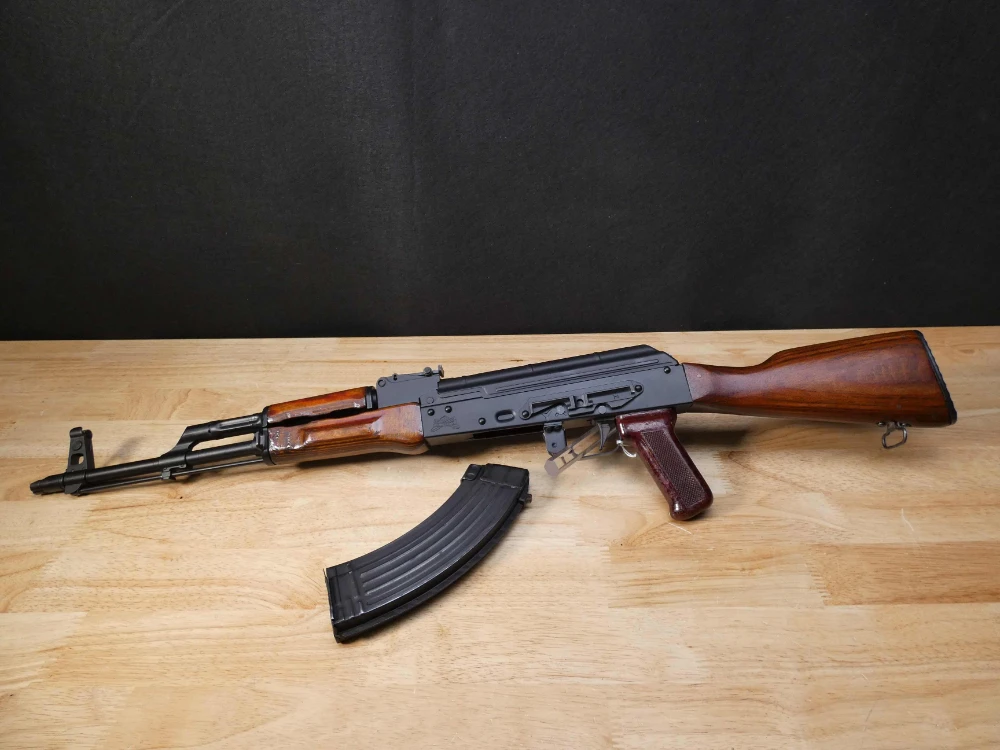
The Palmetto State Armory PSAK-47 has carved out a significant niche as a reliable, American-made AK-pattern rifle. Valued for its accessibility and robust performance, understanding its market worth is key for any owner looking to sell. The rifle’s generation, overall condition, and the current market climate are the primary drivers of its value. This guide will break down these factors to help you accurately determine what your PSAK-47 is worth and how to maximize your return.
What Determines Your PSA PSAK-47’s Worth
The single most important factor determining your PSAK-47’s value is its generation. The GF3 (Gen 3) model marked a significant turning point for the platform, introducing a hammer-forged bolt, carrier, and front trunnion. These components are a substantial upgrade over the cast parts found in earlier generations, making GF3 and newer models much more desirable to informed buyers. While cosmetic condition matters, the rifle’s reputation as a durable “shooter” means that a high round count is not a major deterrent, especially on models with forged components that have been tested to withstand thousands of rounds without issue.
2026 Price Breakdown by Generation
PSAK-47 Gen 1 (Cast Components)
The first generation of the PSAK-47 established Palmetto State Armory’s entry into the AK market. These early models were built with cast components, including the front trunnion, bolt, and carrier. While functional and highly affordable, they are considered the least desirable by today’s standards due to the perceived lower durability of cast parts compared to forged ones. On the used market, these rifles represent the most budget-friendly entry point into the PSAK platform. Their value is primarily as a functional, low-cost shooter, and they will command the lowest prices of any generation, often appealing to first-time AK owners or those on a strict budget.
When selling a Gen 1 model, it is crucial to set realistic price expectations. These rifles typically fall at the very low end of the used price spectrum for PSAK-47s. A seller should expect a value significantly lower than the more sought-after GF3 and subsequent generations. Highlighting its affordability and reliability as a range rifle is the best sales strategy. Because of the cast components, potential buyers will be more sensitive to signs of excessive wear or high round counts, so presenting a clean and well-maintained firearm is essential to achieving a fair price for this foundational but now-outdated model.
PSAK-47 Gen 2 (Billet Components)
The second generation PSAK-47 represented an evolutionary step, moving away from cast parts to components machined from billet steel. This change was seen as a notable improvement in quality and durability, addressing some of the market’s concerns about the original models. While not as robust as the later forged components, the billet parts of the Gen 2 offered enhanced strength and better manufacturing consistency. This places the Gen 2 squarely between the Gen 1 and GF3 in terms of both performance and resale value, making it a solid mid-tier option for buyers looking for a step up from the earliest models.
In the current market, a Gen 2 PSAK-47 holds a value that reflects its intermediate status. It is more valuable than a Gen 1 but will not command the premium of a GF3 or newer rifle. Sellers can highlight the improved billet construction as a key selling point over the original cast versions. Pricing should be set competitively, acknowledging that many buyers may be willing to spend a little more for a GF3. The ideal buyer for a Gen 2 is someone who wants a dependable American-made AK and recognizes the quality improvement over the first generation without wanting to stretch their budget for a forged model.
PSAK-47 GF3 (Forged Components)
The introduction of the GF3 series was a game-changer, elevating the PSAK-47’s reputation significantly. The primary value driver for this generation is its use of a hammer-forged bolt, carrier, and front trunnion—critical components for the longevity and durability of an AK rifle. This upgrade put the GF3 in direct competition with more expensive import rifles. New GF3 models typically range from $600 for blemished versions to over $1,000 depending on furniture and features. On the used market, a standard GF3 often falls in the $575 to $600 range, representing a strong value proposition for a U.S.-made AK with these robust, high-quality parts.
The used price for a common PSAK-47 can range from approximately $470 to $720, and the GF3 models tend to occupy the middle to upper end of that spectrum. Their desirability means they hold their value well compared to earlier generations. When selling a GF3, emphasizing the forged components is paramount, as this is the key feature knowledgeable buyers are looking for. Its proven durability means that even with a moderate round count, the rifle retains significant value, making it one of the most liquid and sought-after models in the Palmetto State Armory lineup.
PSAK-47 GF4/GF5 (Refined Forged Models)
Building on the success of the GF3, the GF4 and GF5 generations introduced further refinements to the platform. These models retained the critical forged components of the GF3 while adding features like a cold hammer-forged, chrome-lined barrel, which enhances durability and barrel life. These incremental but significant upgrades position the GF4 and GF5 at the top of the PSAK-47 hierarchy. Consequently, they command the highest resale value among all generations. They appeal to discerning shooters who want the most refined version of the American-made AK that Palmetto State Armory offers, blending reliability with enhanced, military-grade features for maximum performance and longevity.
When pricing a GF4 or GF5 model for sale, sellers can confidently ask for a premium over the GF3. These rifles compete directly with high-end imports, and their value reflects that quality. On the used market, they will fetch prices at the upper limit of the typical PSAK range, often nearing their original retail price if in excellent condition. Highlighting the chrome-lined, cold hammer-forged barrel is a key selling point that distinguishes these models from their predecessors. Their robust construction means they are less susceptible to value loss from high round counts, as they are built for extreme durability from the factory.
How Modifications Affect Value
The impact of modifications on a PSAK-47’s value is highly subjective, and a clear market consensus on what adds value is difficult to find. Many owners add aftermarket furniture, triggers, optics, and muzzle devices to personalize their rifles. While these upgrades can enhance the shooting experience for the owner, they rarely translate to a dollar-for-dollar increase in resale value. A potential buyer may not share the seller’s taste in accessories or may prefer to customize the rifle themselves. Therefore, high-quality, brand-name additions may add some value, but sellers should not expect to recoup their full investment in aftermarket parts.
Conversely, determining which modifications hurt value is equally challenging, as there is no definitive list. However, permanent alterations such as amateur gunsmithing, irreversible changes to the receiver or barrel, or loud, polarizing custom finishes can significantly narrow the pool of potential buyers and thus lower the rifle’s market value. Generally, the safest approach is to retain all original parts. Selling the rifle in its factory configuration while offering the aftermarket accessories separately often yields the best financial return, as it allows the buyer to purchase a stock rifle at a fair price and choose any upgrades they desire.
Regional Price Variations in 2026
The value and availability of a Palmetto State Armory PSAK-47 can be significantly influenced by state and local laws, creating distinct regional price variations. In states with strict firearms regulations like California, PSA offers “California Compliant” versions of the rifle. These models are modified to be “featureless,” typically equipped with a fin grip, a fixed stock, and a 10-round magazine to comply with the state’s assault weapons ban. The specialized nature and limited availability of these compliant models can create a unique market where they may command a higher price within the state compared to standard models in less restrictive states.
Similarly, in New York, an AK-47 style rifle is only legal if it adheres to the NY SAFE Act, meaning it cannot have features like a pistol grip or threaded barrel and must use magazines with a capacity of 10 rounds or less. While compliant models are available, PSA’s direct shipping policies to New York can be restrictive, potentially limiting supply and affecting local prices. In contrast, states with fewer restrictions will see prices dictated more by general market supply and demand, without the added cost or scarcity associated with legally mandated compliance modifications, leading to a more standardized and often lower average price.
Online vs Local Sales
Selling a PSAK-47 through a local, private sale offers the benefit of a direct, face-to-face transaction. While federal law does not mandate specific paperwork for an in-state private sale, creating a bill of sale is a highly recommended practice for the seller’s legal protection. This document should detail the firearm’s make, model, and serial number, along with the names and identification of both parties. It is the seller’s responsibility to ensure the buyer is legally permitted to own a firearm, and sellers must be diligent in following all state and local laws, which can vary significantly and may require the transaction to occur through an FFL.
Selling online expands your market to a national audience but introduces strict legal and logistical requirements. According to the Gun Control Act, it is a federal crime to transfer a firearm across state lines without using a Federal Firearms Licensee (FFL). A private seller must ship the PSAK-47 to an FFL in the buyer’s state, where the buyer will complete the background check and paperwork. Shipping carriers also have specific rules; for instance, FedEx requires the shipper to have an FFL, while UPS policies for private party long gun shipments should be verified, as they can change. The package must be declared as containing a firearm but cannot have any exterior markings indicating its contents.
Comparing these methods, local sales can be faster and avoid shipping costs and FFL transfer fees, but your pool of potential buyers is much smaller. This can sometimes lead to a lower final sale price if local demand is weak. Online sales, despite the added complexity and costs of shipping and FFL transfers, expose your firearm to a much larger market. This increased exposure can lead to a quicker sale at your desired asking price, as you are more likely to find a buyer specifically looking for your rifle’s configuration. The choice depends on your comfort with logistics and your local market conditions.
The FFL Buying Advantage
For a seller, transacting with a Federal Firearms Licensee (FFL) offers a path of maximum convenience and legal security. When you sell your PSAK-47 directly to a gun dealer, the process is fast and straightforward. The dealer handles all the necessary paperwork, and you are absolved of any future liability associated with the firearm. This eliminates the risks and responsibilities of vetting a private buyer and navigating complex shipping regulations. However, this convenience comes at a cost. Dealers must make a profit, so their offer will be based on wholesale value. Estimates suggest a dealer may offer around 65% of the firearm’s private party value for a trade-in.
From the buyer’s perspective, purchasing from an FFL provides a secure and regulated experience. The firearm is guaranteed to be transferred legally, with a proper background check, ensuring compliance with all federal, state, and local laws. This peace of mind is a significant advantage over the potential uncertainties of a private sale. The PSAK-47 itself, being classified as a long gun with its 16.2-inch barrel and overall length of 35.25 inches, is a standard Title I firearm, making the FFL transfer process routine. Buyers can be confident in the legality of their purchase and often have the added benefit of dealer support.
What Increases Your Offer
One of the most effective ways to increase the value of your PSAK-47 is through meticulous pre-sale preparation. Before listing the rifle, perform a thorough field strip and cleaning. Focus on removing all carbon residue from the bolt carrier group, rails, hammer, and feed ramps. The barrel and gas tube should be cleaned until they are shiny. After cleaning, apply a light coat of high-quality lubricant; a common mistake is over-lubricating, which can attract dust and look messy to a potential buyer. Finally, wipe down all external surfaces and ensure the furniture is clean to present the rifle in its best possible condition.
High-quality photographs are non-negotiable for attracting the best offers, especially in an online sale. Use a clean, neutral background that won’t distract from the firearm. Ample, diffused natural light, such as from a window or on an overcast day, is ideal as it prevents harsh shadows and accurately represents the rifle’s finish. Using a modern smartphone, take clear, high-resolution photos of the entire rifle from both the left and right sides. Additionally, capture close-up shots of important markings, the serial number, the bore, and any notable imperfections or accessories. This transparency builds buyer confidence and justifies a higher asking price.
While the market lacks a specific consensus on a financial penalty for an incomplete package, providing the original components can certainly boost your offer. A firearm sold with its original box, owner’s manual, and any factory-included accessories like a cleaning rod or magazine is more appealing to discerning buyers and collectors. This completeness suggests the rifle was well-cared-for and helps it stand out from other listings. While you may not recoup a large sum for these items alone, they create a more attractive package that can help you achieve your full asking price and lead to a faster sale.
When to Sell Your palmetto state armory psa psak 47
Understanding seasonal market trends can help you time your sale for a better return. Generally, the firearm market sees an uptick in activity during the spring, from February through June. This period often coincides with tax refund season, when consumers have more disposable income and are looking to make purchases. Selling your PSAK-47 during this window can increase the number of potential buyers and may lead to a faster sale at a higher price. Conversely, the market tends to be slower during the summer months and immediately after the holidays in January, making these less ideal times to list your firearm.
Beyond seasonal trends, political events can create significant, often unpredictable, shifts in firearm demand. Major election cycles or the introduction of new firearms-related legislation can cause surges in consumer interest, particularly for semi-automatic rifles like the PSAK-47. During these periods, demand can outstrip supply, driving prices up irrespective of the time of year. While difficult to predict with certainty, being aware of the political climate can present a strategic opportunity to sell your rifle when market demand is at its peak, potentially yielding a much higher return than you would get during a period of political calm.
Ultimately, the best time to sell is when it aligns with your personal financial goals and needs. While market timing can be beneficial, selling when you are not under pressure to liquidate the asset quickly gives you the power to wait for the right offer. Rushing a sale often leads to accepting a lower price than the rifle is worth. By preparing your PSAK-47 properly and understanding its value based on its generation and condition, you can confidently list it and wait for a fair offer, ensuring the transaction is favorable for you regardless of seasonal or political factors.
Common Pricing Mistakes
A frequent error sellers make is overvaluing their PSAK-47 based on its original purchase price or emotional attachment. These are widely available, budget-friendly firearms, and a professional appraisal is likely not worth the cost, as the fee could be a significant portion of the rifle’s value. Instead of relying on MSRP, sellers should research the current used market, which typically ranges from $450 to $550 for standard models in good condition. Pricing your rifle in line with current, comparable sales is essential for attracting serious buyers and avoiding having your listing sit for months without interest.
Another critical mistake is failing to accurately represent the rifle’s condition, particularly its round count. While the PSAK-47, especially the GF3 model and newer, is known for its durability, a high round count will still result in cosmetic wear. Buyers view a high round count on these rifles as proof of functionality rather than a major flaw, but they still expect the price to reflect that it is a used “shooter” and not a pristine collector’s piece. Being transparent about the rifle’s history and condition, supported by clear photos, builds trust and is more likely to result in a successful sale at a fair price.
Finally, sellers often have unrealistic expectations when dealing with an FFL. It’s a common mistake to walk into a gun store expecting to receive the full private party value for your PSAK-47. Dealers are running a business and must purchase inventory at a price that allows for profit upon resale. As data suggests, a dealer’s offer is typically around 65% of the private party value. Understanding this trade-off—lower price for higher convenience and speed—is crucial. A seller who dismisses a dealer’s offer as a “lowball” may be misunderstanding the fundamental difference between the wholesale and retail firearms markets.
Market Outlook for 2026
Predicting the future price of any firearm with certainty is impossible, as the market is influenced by a host of unpredictable economic and political factors. However, for the Palmetto State Armory PSAK-47, its market position as a durable and affordable American-made AK provides a stable foundation for its value. As long as PSA continues to produce these rifles and support the platform, they will remain a popular choice for both new and experienced shooters. The ongoing demand for reliable semi-automatic rifles will likely ensure that the PSAK-47 retains its value well, particularly for the more desirable GF3 and newer generations with forged components.
Looking ahead to 2026, the rifle’s value will be most affected by potential legislative changes and shifts in the broader firearms market. Any new regulations on semi-automatic rifles could cause a surge in demand and prices, while a market saturated with similar platforms could lead to price stagnation. Barring major political shifts, the PSAK-47 is expected to remain a staple in its category. Its value proposition of offering robust, import-style features at an accessible price point should continue to appeal to a wide base of consumers, ensuring it remains a liquid asset on the used market for years to come.
Frequently Asked Questions
Is a PSAK-47 considered an NFA item?
In its standard configuration, the Palmetto State Armory PSAK-47 is not an NFA (National Firearms Act) item. It is sold as a standard Title I long gun, featuring a legal 16-inch barrel. However, owners must be aware that certain modifications could alter its legal status. For example, converting it to a short-barreled rifle (SBR) by installing a barrel shorter than 16 inches would require NFA registration. While product pages often include a general “All NFA Rules Apply” disclaimer, this is a standard advisory; the rifle as sold from the factory does not require any special tax stamps or registration.
How much does the generation, like the GF3, really affect the price?
The generation has a profound impact on the PSAK-47’s price, with the GF3 model representing a major value inflection point. The introduction of a hammer-forged bolt, carrier, and front trunnion in the GF3 series was a significant quality improvement over the cast parts used in earlier generations. This makes GF3 and newer models far more desirable to knowledgeable buyers, and they consistently command a higher price on the used market. An early-generation model with cast parts will be valued significantly lower than a GF3 in similar condition, making the generation a critical factor in any appraisal.
Will a high round count significantly lower my PSAK-47’s value?
While any used firearm is valued lower than a new one, a high round count is not a major deterrent for a PSAK-47, particularly the robust GF3 models and newer. These rifles have a strong reputation as durable “shooters” and have been tested to withstand thousands of rounds. Many buyers view a high round count as proof of the rifle’s reliability rather than a critical flaw. While it will result in cosmetic wear that should be reflected in the price, it does not impact the value as negatively as it might on a less durable or more collectible firearm.
Is it worth getting a professional appraisal for my PSAK-47?
For a standard used Palmetto State Armory PSAK-47, a professional appraisal is generally not worth the cost. These are widely produced, budget-friendly firearms with a well-established used market value, typically ranging from $450 to $550 for common models. The cost of a formal appraisal could represent a significant percentage of the rifle’s total value, making it an impractical expense. Owners can determine a fair market price by researching recent sales of comparable models on online forums and marketplaces, which will provide a more cost-effective and accurate valuation.
How much less should I expect from a dealer compared to a private sale?
When selling your PSAK-47 to a gun dealer (FFL), you should expect to receive a significantly lower offer than you could get in a private sale. Dealers need to cover their overhead and make a profit, so they buy at wholesale prices. On average, a dealer is estimated to offer approximately 65% of the firearm’s private party value. For example, a rifle that might sell for $470 in a private transaction could receive a trade-in offer closer to $300 from a dealer. This lower price is the trade-off for a fast, convenient, and legally simple transaction.
Get a Cash Offer Today
Ready to sell your Palmetto State Armory PSAK-47? We make the process simple, safe, and transparent. Avoid the hassle of private listings and the uncertainty of local markets. Click here to submit your firearm’s information, and our team of experts will provide you with a fair, competitive cash offer based on its specific generation and condition.
There is no obligation. Once you receive our offer, the choice is yours. If you accept, we provide a prepaid shipping label and guide you through the secure and legal shipping process. Get paid quickly without ever leaving your home. Discover the easiest way to turn your used firearm into cash today.