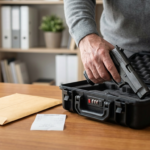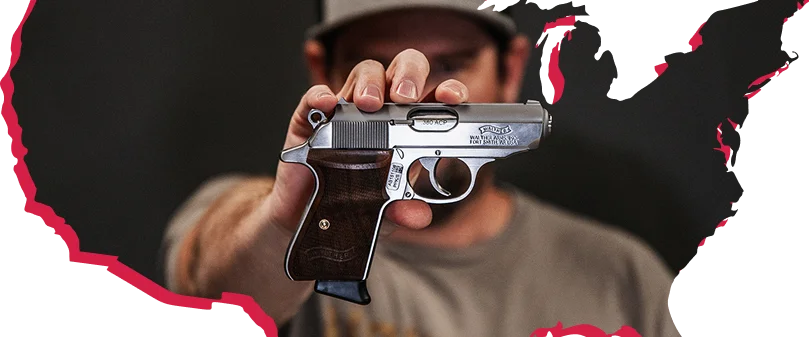

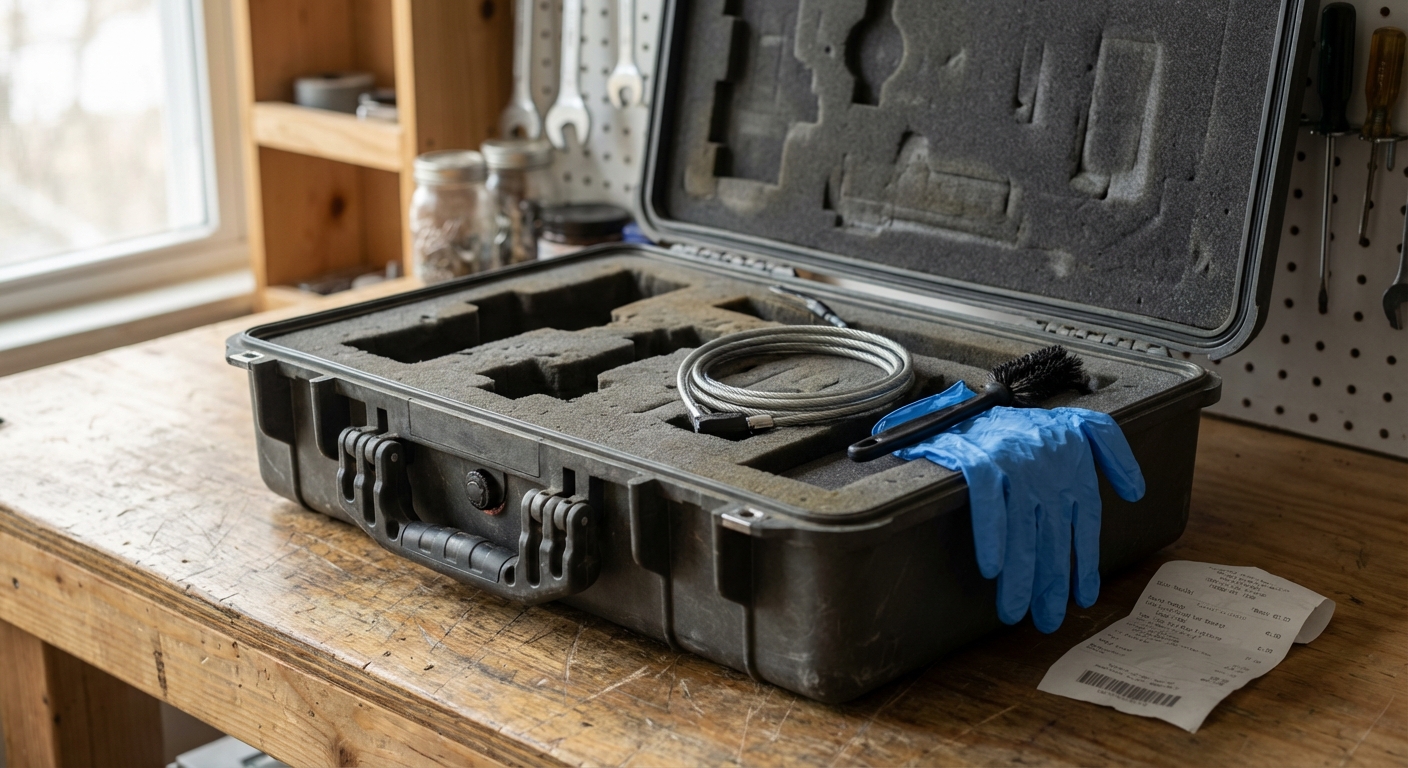

You’ve got a gun that’s clean, runs right, and hasn’t been abused, but the original box, manual, spare backstraps, lock, or other little factory bits are long gone. The worry is predictable: a buyer sees “no box” and decides you’re hiding something, then uses it as leverage to knock you down.
The real decision isn’t “can I sell it?” It’s whether you sell it as-is, spend time tracking down replacements, or take a lower offer just to move it quickly and stop thinking about it.
Here’s the tension that matters: “value” isn’t one number. A collector tends to pay for completeness, matching presentation, and provenance. A shooter tends to pay for condition and function, and treats missing packaging as a mild inconvenience. How common the model is, and how complete the package feels on first glance, can swing which buyer you attract and how hard they negotiate.
Most real-world appraisals lean on current market data from dealer listings and auctions, then adjust for make and model plus condition details like finish wear, bore condition, matching numbers, and aftermarket parts. Even with the same gun, demand can shift by region and season, which changes how forgiving buyers are about missing extras.
You’ll leave knowing how to estimate what the missing box and accessories will do to your likely sale price, which missing items matter most to buyers, and what to do next so offers stay realistic and fair.
Which Missing Items Matter Most
The biggest surprise is which missing pieces actually change a buyer’s mood. Most people are reacting to two things at once: confidence and hassle. If the package doesn’t feel factory-complete (the gun plus the original items it shipped with), buyers stop comparing your listing apples-to-apples with the next one, and they start wondering what else is “off.”
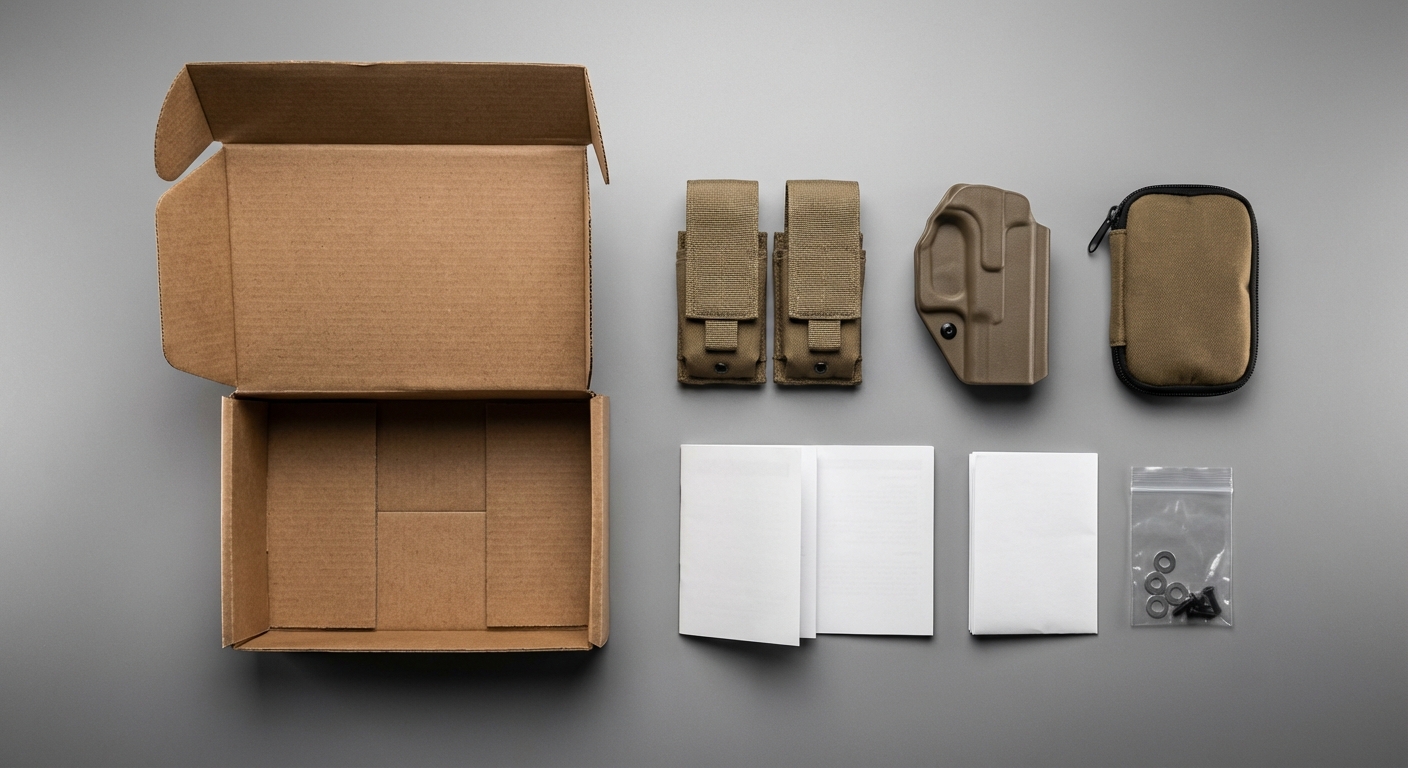
For modern “shooter” guns, missing functional accessories (use-critical parts like magazines, choke tubes, or optic plates) usually creates more friction than missing packaging. The reason is simple: if you’ve only got one mag left, or the right adapter plate is gone, the buyer is solving a problem on day one instead of heading to the range.
Collector-leaning guns flip that weighting. Missing box and papers (original manufacturer packaging and documentation) can be an immediate credibility hit, even if the gun itself is clean, because those originals signal continuity of ownership and careful storage. A matching serial-numbered box is a known cue in collectible circles, and its absence can feel less like “I lost the cardboard” and more like “I can’t fully verify the story.”
Shotguns are a classic trap: missing choke tubes or a choke set looks small, but it can turn into a fitment scavenger hunt. There are multiple choke standards, and compatibility can hinge on the exact system your barrel is cut for, so a buyer may hesitate if they can’t confirm what they need to source later.
Optics-ready pistols have their own version of this: missing optic plates can complicate setup because the buyer may need a specific plate to mount the optic they actually own, and even experienced owners ask for side-by-side plate comparisons when sorting factory versus aftermarket options.
The replacement hassle is not abstract money. A Magpul PMAG 15-round Glock-pattern 9mm mag is listed at $18.99, while an OEM Glock 33-round magazine is listed at $49.99, so “it only comes with one mag” lands as real cost. And because the 2005 Child Safety Lock Act required locking devices be included with nearly all handgun purchases, a missing lock often reads as “incomplete,” even if it won’t kill the deal.
Practical takeaway: describe what’s included through two lenses, (1) can the buyer run it immediately, and (2) does the package look cared-for and straightforward. If you’re missing something, name it clearly, then decide if it’s worth tracking down based on those two questions.
How Much Value You Lose Without the Box or Accessories
Once you’ve figured out whether you’re missing “nice-to-have” items or day-one functional parts, you can put a more realistic number on the discount. For most modern, non-collectible guns, missing packaging usually matters less than missing functional accessories, except when the gun is collector-leaning.
Realistic pricing comes from completed sales, meaning closed transactions, not hopeful asking prices that can sit for months. That’s also why marketplaces are useful: listings commonly flag completeness right in the title or description, “with box/papers” versus “no box,” so you can compare like-for-like instead of guessing how much buyers actually discounted it.
In general, missing packaging tends to shave off less than missing functional accessories, and condition still dominates the outcome. A clean finish and honest wear usually matter more than cardboard, and local demand can wipe out small penalties; how supply and demand affects firearm resale prices may pay “normal” money even without packaging.
Typical discount ranges (using completed sales as your baseline):
- Common pistols (local markets): Missing packaging is often about 0% to 3%. Missing functional accessories is typically 5% to 12%. Timing still matters: bird seasons and regional preferences can push offers up or down more than completeness.
- Many rifles: Missing packaging is often about 0% to 3%, since buyers are usually shopping the rifle, not the “set.” Missing functional accessories is more commonly 5% to 10%. Aftermarket parts can cut both ways, some upgrades help, others scare buyers off, so compare against similarly configured rifles. Regional demand often matters more than the box, especially in states where certain setups sell fast.
- “Package-expected” guns: Packaging often matters more, commonly 2% to 8%, because buyers expect a more complete, better-documented bundle. Missing functional accessories commonly hits 8% to 20%, since competitors price in readiness and replacement cost. The complication is condition sensitivity; a small finish issue or questionable round count can outweigh completeness quickly. Completed sales from dealer listings and auctions tend to show the clearest “ready-to-run” premium.
- True collectible-leaning guns: Missing packaging can cost 10% to 30% or more because originality and provenance are part of what you are selling. Missing functional accessories can also be 10% to 25%+, especially when the “right” parts are tied to authenticity. Here, matching numbers, correct period parts, and untouched finish can dominate everything else. Seasonality still exists, but collector demand is often more niche and more volatile by region.
How to use this: pick a baseline comparable from completed sales with the same condition and configuration, then adjust for missing packaging or functional accessories using the ranges above. Sanity-check the result against your local demand and the season you are selling in, and if you want more on selling a gun with no original box or papers, use that to confirm your baseline before applying discounts.
Model-by-Model Examples
Those ranges get real fast when you plug in a popular model. Buyers “mentally price” a Glock 19 current-worth guide, a 870, or a basic AR the way they usually see it sold, as a predictable factory bundle. When the bundle is incomplete, the offer usually reflects uncertainty and replacement hassle more than “punishment” for missing cardboard.
On collector-leaning guns, provenance, the paper trail and history cues that prove what it is, can be the difference between “just a used gun” and “a premium example,” especially when the box end label shows a serial number that matches the serial number on the gun.
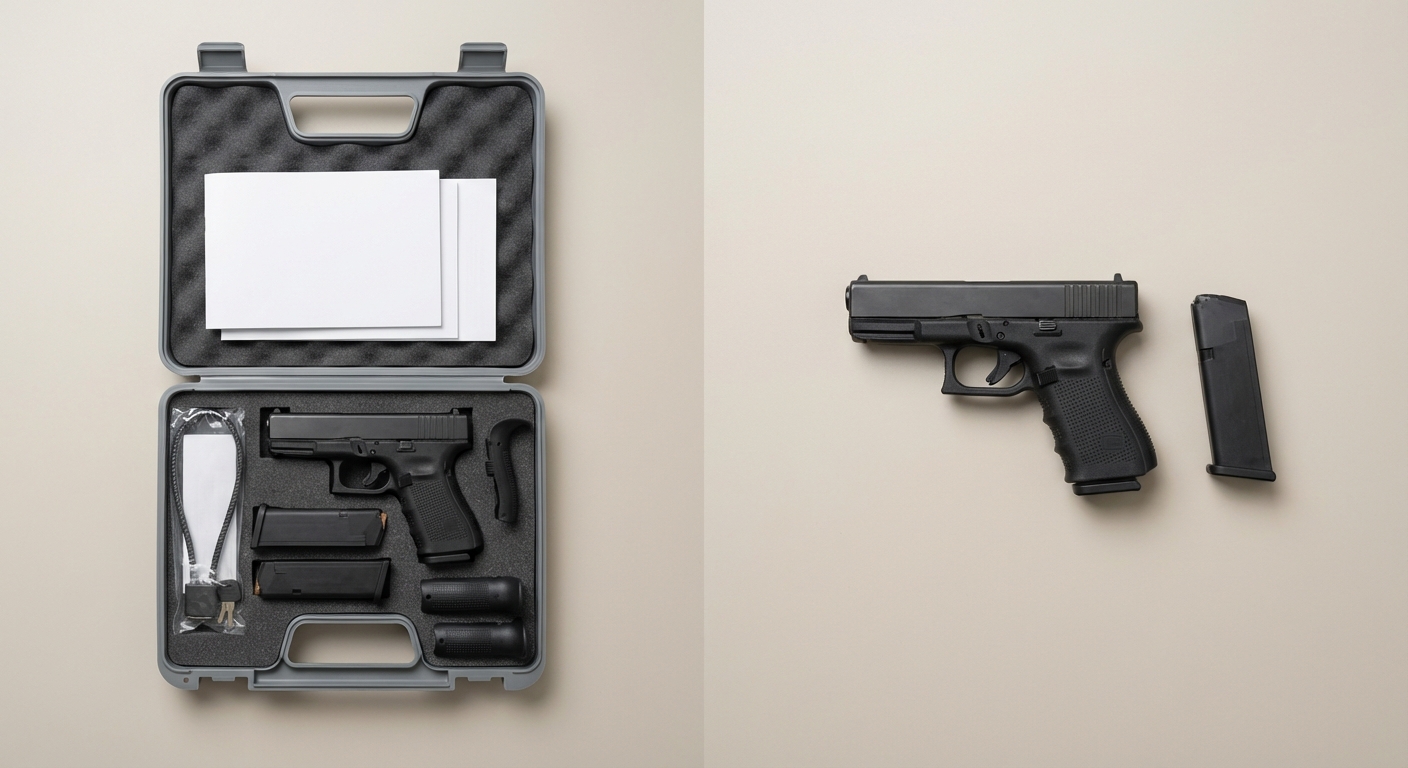
Glock 19 (Gen3 or similar duty pistol): buyers start by checking condition, generation, and whether it’s stock or modified (sights, trigger parts, stippling). Many new-production Glock pistols commonly ship with a factory hard case, owner’s manual, a cable lock, and a magazine loader in addition to the pistol and magazines, so “no box” often reads as “unknown history,” not “missing plastic.” For a Glock 19 Gen3 specifically, retail packages are commonly sold with two 15-round magazines in free-state configurations, so showing up with only one mag can matter more than the missing case because it changes day-one usability and forces an immediate purchase.
AR-15 (common carbine builds): baseline value hinges on the lower receiver markings, barrel length and profile, and whether parts are factory-original or a mix of aftermarket swaps. Missing the original box usually doesn’t move the needle much, but missing functional parts does, a missing rear sight, an absent magazine, or no muzzle device can turn “ready to shoot” into “needs parts before the first range trip,” and buyers bid accordingly.
Glock 19 Gen4 or Gen5: buyers commonly sanity-check the exact package because box contents vary by exact SKU, production year, and state-compliance package. In free-state configurations, Gen4 and Gen5 retail packages are commonly sold with three 15-round magazines, and restricted-state SKUs may ship with 10-round magazines and or fewer total magazines. Gen4 typically includes interchangeable backstraps in the box, while Gen3 does not, so “no box” can also mean “no backstrap kit,” which is small but signals the gun is not factory-complete.
Collector-leaning classic (any model with a following): condition and originality dominate, correct finish, correct grips, no refinishing, no drilled-and-tapped surprises. Here, the box and papers are not nostalgia, they are a credibility multiplier, and a matching serial number on the box end label is the easy cue that convinces a cautious buyer they’re looking at a premium example, not a parts gun with a story.
Pump or semi-auto shotgun with interchangeable chokes: buyers look at barrel length, chambering, and whether the gun includes the choke tubes it’s supposed to. Missing chokes is not just “accessories,” it can limit patterns and intended use on day one. Specialized parts can also be expensive, a Benelli Crio Sporting Choke Extended 12ga in Nickel is listed at $124.99, which is why missing tubes often shows up directly in offers.
Compatibility can reduce the sting, but it adds verification work: ATI technical representatives state that ATI choke-tube model guns interchange with Trulock’s Benelli Mobil style, yet the practical move is still to confirm your exact barrel and thread system before assuming “any Mobil-style choke fits.”
What to verify before you call anything “missing”: box contents vary by exact SKU, production year, and state-compliance package, so confirm what your exact variant originally shipped with. Think like the buyer of your specific model, what they expect to see in the case, and which absence changes “ready today” into “needs parts,” because that’s the gap that tightens or loosens an offer. If you’re unsure what your configuration should include, getting an appraisal from a buyer like Cash My Guns can help you set expectations before you negotiate.
How to Maximize Your Sale Price When the Box and Accessories Are Missing
The theme across all these examples is confidence: missing cardboard rarely scares serious buyers, but vague descriptions and mystery wear do. Your job is to remove doubt and make the deal feel simple.
One practical confidence tool is using an FFL (Federal Firearms Licensee) for the transfer; it is a common way to keep the handoff compliant and comfortable for cautious buyers when the package is incomplete.
- Clean and sanity-check, safely. Verify unloaded, wipe down exterior metal, lightly clean obvious fouling, confirm basic function (safety, trigger reset, slide or action cycling) without modifying anything.
- Lock in the exact identity. Follow GunBroker-style condition standards by stating manufacturer, make, model, and caliber or gauge. If you know the variant (Gen, barrel length, SKU), put it in writing.
- Document what changed. List aftermarket parts, known round count (if known), and maintenance notes (last cleaned, spring replacements, zero confirmation if applicable).
- Shoot a complete photo set. Get clear photos from multiple angles, then close-ups of wear points and markings. If you disclose a scratch, ding, rust spot, or functional issue, photograph that exact flaw, GunBroker standards expect flaws described and referenced in photos.
- Disclose inclusions and omissions. GunBroker standards call for listing included accessories, so explicitly enumerate what is in the sale and what is missing. Factory packages vary by SKU, year, and state-compliance, so don’t rely on “should come with” assumptions.
Replace missing items only when they are immediately needed to use the firearm and easy to source cleanly, then list them explicitly. Otherwise, sell as-is and let your documentation carry the trust.
Clarity beats completeness: the goal is a buyer who feels there are no surprises.
Selling Without the Box
Even if you describe the gun clearly, missing packaging can still change how comfortable a buyer feels depending on where you’re selling and how the transfer works. In states where selling feels paperwork-heavy or dealer-mediated, buyers tend to reward “complete, well-documented” listings because it reduces uncertainty. In places where the process is simpler, missing packaging often matters less, especially if the model is common and the condition is easy to verify in person.
State-by-state selling rules can push you toward different channels: a private sale where allowed, a dealer or consignment setup, or an online buyer that routes the transfer through an FFL (licensed dealer). More friction usually means fewer casual buyers and longer timelines, so presentation and documentation carry more weight.
In Texas, private-party firearm sales within Texas are not required by state law to go through an FFL or include a background check, as long as the seller does not knowingly transfer to a prohibited person. Texas also has no state waiting period or registration requirement for ordinary private-party transfers.
In Florida, private-party firearm transfers are not generally required by state law to be processed through an FFL or include a background check. Federal prohibited-person rules still apply.
If your local buyers keep fixating on the missing packaging, changing channels often moves the needle more than chasing down a cardboard box.
Bottom Line
The same split from the beginning still applies: collectors pay for completeness and provenance, while shooters mostly pay for condition and function. Missing boxes usually sting a little, missing functional parts can sting more, and collector-leaning guns care most about documentation and factory packaging.
The practical play is simple: use completed sales (not optimistic asking prices) as your baseline, then adjust based on what you’re really selling-completeness as a signal versus day-one usability. Clear photos, honest flaws, and an explicit “what’s included” line cut down on lowballing fast. Missing packaging usually doesn’t change legality if you follow applicable laws; it changes buyer comfort and channel fit.
If you’re still unsure, get an expert appraisal for higher-end or collectible guns or offer through a compliant channel like Cash My Guns, a nationwide online firearms purchasing service operated by Dunlap Gun Buyers, a federally licensed firearms dealer (FFL), positioning its process as “Safe • Legal • Hassle-Free” and “Trusted Since 2013.”