

You’ve got a firearm you want to sell, and you want top dollar. You just don’t want to underprice it, burn weekends answering flaky messages, or stumble into a legal mess.
If you want the best price, stop guessing and stop choosing the easiest channel by default. The real win is maximizing what you actually keep while staying square with the rules where you live, even if that means a little more homework up front.
The two expensive mistakes are simple: (1) guessing value off memory or one optimistic asking price instead of grounding it in real-world sale data, and (2) picking a selling route because it feels convenient, without checking your net and what’s legal for your situation. Both mistakes cost you money, time, or both, and the legal part can shut down a deal fast if you don’t plan for a proper transfer through an FFL (Federal Firearms Licensee) when required.
Price isn’t static, either. Regional demand and seasonality change what buyers will actually pay, which is why you’ll look at dealer listings for context, then sanity-check value by checking completed auction-site sales before you set a number.
You’ll walk away with a repeatable, legal plan to research, prep, stay compliant, price, list, negotiate, and complete a safe transfer with confidence.
Step 1 Identify Exactly What You Have
Misidentification is the silent profit-killer. If you call a Glock 19 “a Glock 19” but it’s actually a Gen5 MOS, you’ll pull the wrong comps, attract the wrong buyers, and invite the worst kind of deal friction, disputes, returns, or the inevitable “price renegotiation” after someone notices the mismatch.
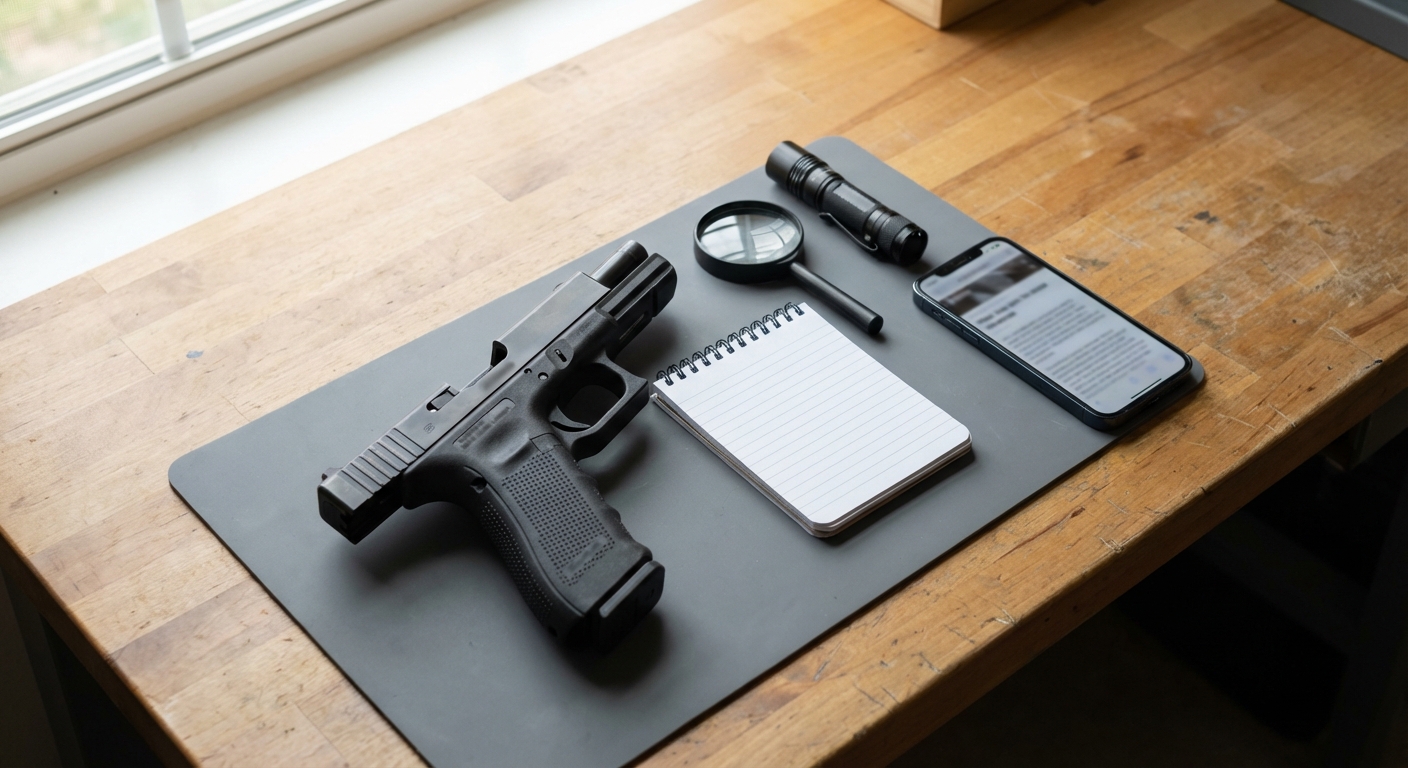
Buyers compare what’s stamped on the gun, not what you remember buying. Capture the details that actually change value: make, model, generation or version, caliber or gauge, barrel length, finish, variant or trim name, and any obvious serial-range era cues (older rollmarks, importer marks, “pre” features) that signal a different production run.
- Value-changing details: optics-ready cut, night sights, threaded barrel, magazine capacity.
- What’s included: factory magazines, original box and papers, factory accessories (backstraps, choke tubes, sling studs), and any included plates.
Common “same name, different gun” traps show up constantly with Glock 19, Sig Sauer P320, Beretta 92, CZ 75, Winchester Model 70, Henry lever action, and SKS variants.
- Record the make/model markings and caliber/gauge.
- Confirm generation/variant cues (e.g., Gen changes, trim names).
- Measure barrel length (or verify stamped length where applicable).
- List value-changing factory options and what’s included.
For Glock, factory optics-ready pistols are typically labeled “MOS” in the model or SKU, the slide is usually marked “MOS,” and the factory case label is your best proof it wasn’t an aftermarket cut. A factory MOS package commonly has a cover plate installed over the optic cut and includes MOS adapter plates in the case, so missing plates is a real valuation flag. Springfield Armory uses “OSP” in the model or SKU to denote a factory optics-ready slide cut, for example “Hellcat OSP,” so check the factory marking and box label for “OSP.”
Write your spec line now, then keep it consistent everywhere: “Make Model, Gen/Version, Caliber, Barrel, Finish, Variant, Optics-ready yes/no, Includes: mags, box, plates.”
Once you can describe the exact configuration without guessing (use this gun identification checklist if you need a quick reference), you can grade it the way buyers do: by what they can verify quickly and confidently.
Step 2 Grade Condition Like a Buyer
Buyers don’t pay for your memories of how it “usually shoots.” They pay for confidence, and condition is how they price risk. Most of the spread between a top-dollar offer and a lowball comes from what a buyer can verify fast: does it function correctly, and does it look like it’s been babied or beaten?
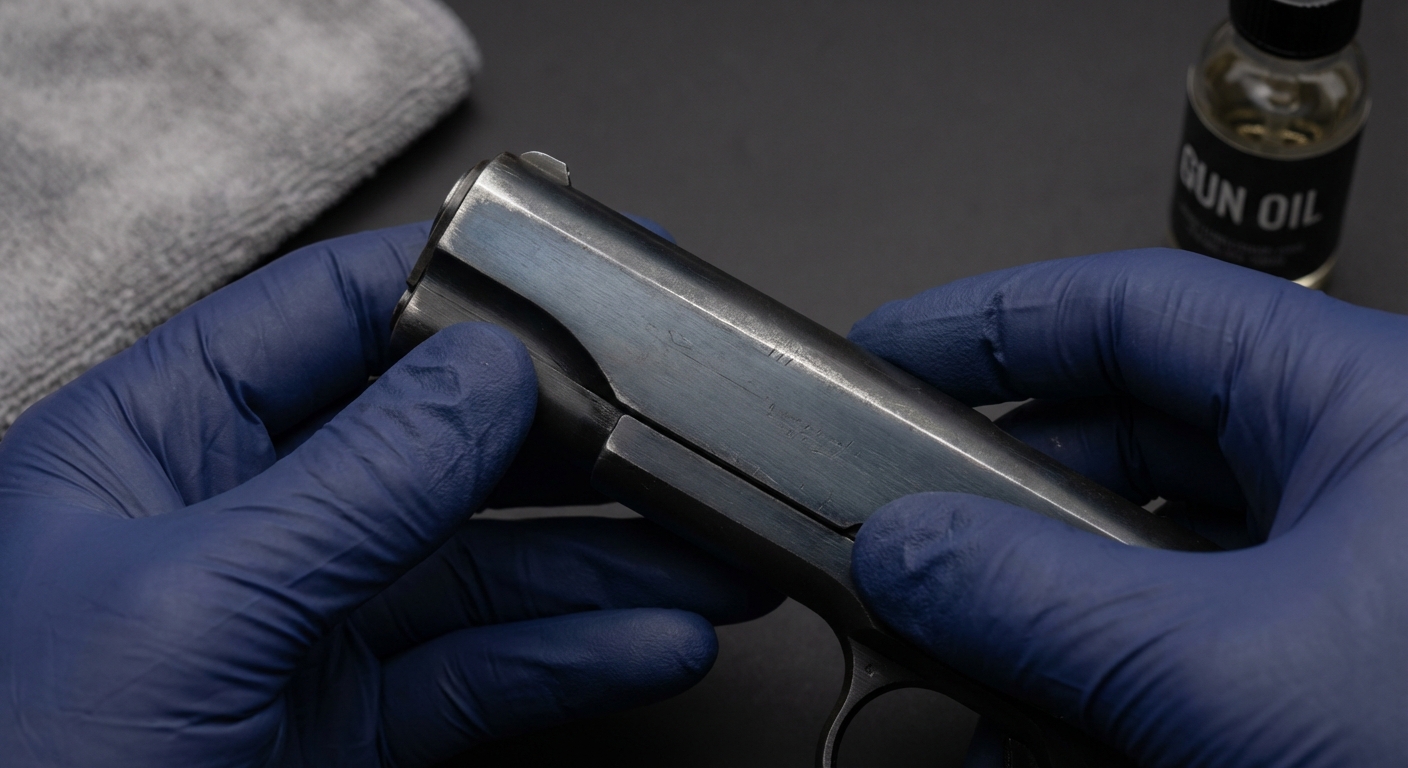
Function: Do a basic, safe function check with the firearm unloaded. Confirm the safety works, the action cycles smoothly, the trigger resets, and controls do what they’re supposed to do. On revolvers, check cylinder lockup and timing feel. On semi-autos, check slide lock, mag release, and that magazines seat and drop cleanly. Then look down the bore for obvious fouling, corrosion, or ringed damage, and inspect the crown for dings, because a nicked crown is an accuracy red flag.
Metal and finish: Buyers grade by what they can see in photos. Edge wear, holster wear, thinning bluing, and freckled rust all push you down a tier fast. Pitting is worse than surface rust, because it signals time and neglect, not just a sweaty range bag.
Wood and polymer: On long guns, check wrist and forend areas for hairline cracks, crushed checkering, and chips. On polymer frames and stocks, look for gouges, warped areas near heat, and stripped screw holes.
Originality plus parts bin: Original parts matter because they let the next owner put the gun back to factory spec. Aftermarket triggers, stippling, slide cuts, refinishes, and swapped stocks or handguards can help if they’re high-quality and documented, but they just as often shrink your buyer pool. Keep the original parts, even if you think nobody cares.
Accessories and paperwork: Factory mags, the factory case or box, receipts, and limited-run documentation all raise perceived value because they reduce “what am I missing?” anxiety (and selling without the box or papers can narrow offers).
- Inspect the firearm’s function and safety basics (unloaded).
- Check the surfaces for wear, rust, pitting, and cracks.
- Separate factory parts from aftermarket changes.
- Gather boxes, mags, and paperwork that support your grade.
To reduce disputes, anchor your grade to the NRA Modern Gun Condition Standards. “New” is “perfect in every respect, inside and out,” and “never fired, except for test firing at the factory.” “Excellent” “appears new,” but “may show slight evidence of handling.” “Very Good” shows “slight wear,” while remaining “mechanically perfect.”
Pick the most defensible tier, then write down 2 to 3 specific observations you’ll disclose, like “clean bore and sharp crown,” “light finish wear on muzzle,” and “includes factory box and two OEM mags.” Overstating condition backfires, because buyers downgrade harder when they feel sold.
Your specs from Step 1 and your condition tier from this step are what make pricing research actually useful-because you’re comparing like to like.
Step 3 Research Real Sale Prices
Your “best price” comes from evidence, not optimism. Asking prices are noise because anyone can list high and never sell. What you want is completed sales, listings that actually closed with money changing hands, because they show what buyers really paid. Build your pricing off comps (comparable sales), not the most confident seller’s dream number.

GunBroker makes this practical if you stay out of active listings. Use search, then switch to ended listings, for example via Advanced Search filters like “Completed” or “Ended,” so you’re looking at auctions that finished. In those completed listings, capture the final sale price and the exact end date and time. Also note bid count and whether it sold or ended without a winning bid, because unsold listings are proof the market rejected that price.
- Search ended listings so you’re using completed sales, not asks.
- Record the final price, end date/time, and whether it actually sold.
- Filter to comps (comparable sales) that truly match your configuration.
- Sanity-check your range across more than one source and timeframe.
Your Step 2 condition grade is your leverage here. Normalize comps by adjusting for condition and what’s included: extra magazines, optics, lights, original box, or aftermarket parts can swing the clear price. If your gun is cleaner or comes with more gear than a comp, treat that comp as a floor, not your target.
Prices move. Event-driven spikes, seasonal demand, and local preferences can all shift what clears this month versus last quarter. Cross-check your GunBroker comp set against at least one other signal, dealer listings and another auction source, so a short-term blip or a region-heavy listing run doesn’t trick you (and remember how supply and demand affects firearm resale prices).
After you’ve got 5 to 10 tight comps, you’ll see a cluster. Set a defensible range around that cluster, then choose a target number that reflects your condition and accessories. If the firearm is rare, unusually high-value, or part of a collection, get an expert appraisal for firearm collections, small pricing mistakes get expensive fast.
Once you know the range the market is actually paying, the next question is where that money will really end up-because different selling channels take different bites out of the same “price.”
Step 4 Pick the Best Selling Channel
Your channel can quietly erase, or protect, hundreds of dollars. Two sellers can agree on the same “price,” then walk away with very different outcomes once fees, transfer steps, and shipping rules hit.
Chasing the highest offer is a trap if your net proceeds, what lands in your pocket after fees, shipping, insurance, and transfer costs, ends up lower. Different ways to sell a gun (private sale where legal, dealer sale, consignment, or online) can change the math fast. Private sales (where legal) often win on net because there’s no shop cut, but you still need a compliant transfer path in many situations. Consignment flips the math: consignment means the shop sells it for you and takes a percentage, commonly ~10% to 20% (sometimes ~25%+), which can be worth it if their foot traffic lifts the sale price enough to offset the cut. Online marketplaces can also net well, but fees stack, for example GunBroker uses a tiered Final Value Fee assessed when the item sells.
Local gun store buyouts and specialized gun buyers are the speed leaders, you’re trading some net for certainty and immediate liquidity. That tradeoff is usually the right call for estates, collections you need to simplify quickly, or any “I need this done this week” situation.
Private sales and online sales add coordination, transfer logistics, and more chances for delays. Selling a gun on consignment can reduce your workload, but you’re waiting on the shop’s timeline. Buyouts are simplest, but priced for the dealer’s resale margin. Expect local FFL transfer fees commonly around $20 to $50, sometimes $60 to $100+.
USPS generally prohibits mailing handguns (limited exceptions), while long guns may be shippable under specific conditions. FedEx policy restricts firearm shipments to federally licensed parties, not typical non-FFL individuals. In practice, that pushes many online sales toward using an FFL to ship, plus shipping and full insurance coverage costs.
- Decide whether you’re optimizing for maximum net proceeds or maximum certainty/speed.
- Estimate your net proceeds by subtracting likely fees and transfer/shipping costs.
- Match the channel to what’s realistic to transfer/ship in your situation.
- Choose the simplest option that still hits your target outcome.
If your constraints are tight, pick the channel built for certainty, for example a specialized buyer like Cash My Guns that emphasizes “Safe • Legal • Hassle-Free.”
That channel decision only works if it fits your transfer requirements. Even the perfect buyer and price can fall apart if the handoff isn’t legal where you live.
Step 5 Follow State and Transfer Rules
Staying legal is how you keep the deal, and avoid the kind of trouble no “best price” is worth. Legality is not a separate box to check. It determines what selling options you actually have, who you can sell to, and whether the transfer can happen face to face or has to run through a dealer.
Federal rules set the floor, then your state and city add the friction. For dealer sales, an FFL cannot sell a handgun to anyone under 21, or a rifle or shotgun to anyone under 18 (18 U.S.C. § 922(b)(1); 27 C.F.R. § 478.99(b)). Interstate issues are another deal-killer: with limited exceptions, an FFL generally cannot sell or deliver a firearm to a nonresident (18 U.S.C. § 922(b)(3); 27 C.F.R. § 478.99(a)).
- Confirm your state’s transfer path (private vs dealer-processed) using state-by-state selling rules.
- Use an FFL when required-or when it materially reduces risk.
- Document the transfer with a bill of sale when appropriate and legal.
- Verify the recipient details before any shipment or handoff.
Texas does not require private-party firearm sales to be processed through an FFL or a background check, but it does prohibit transferring a firearm to someone you know is prohibited from possessing one (Tex. Penal Code § 46.06). Even without a statewide paperwork requirement, you still need a clean, legal handoff.
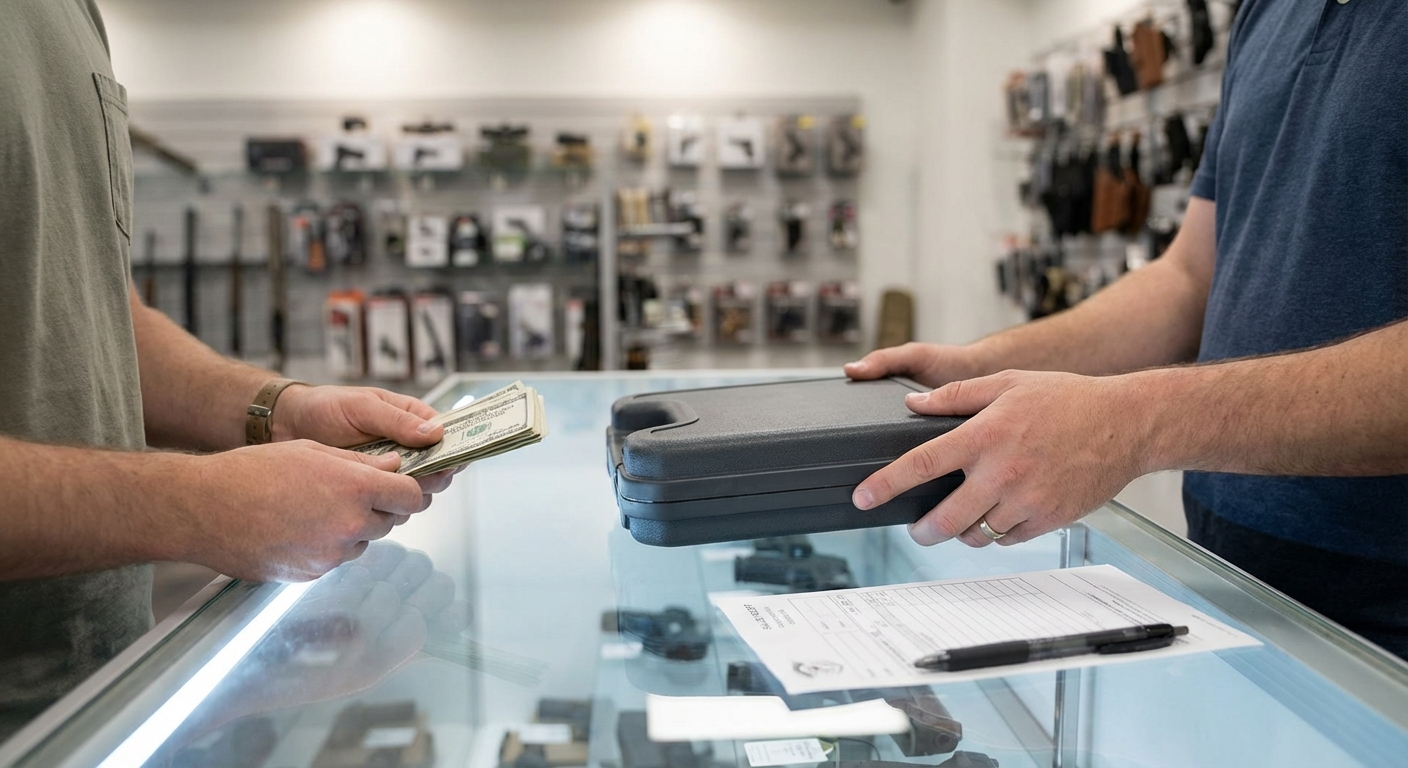
California generally requires transfers between unlicensed persons to be processed through a licensed dealer, so the dealer handles the transfer steps and required checks (Cal. Penal Code § 27545). If you plan a California transfer, assume “dealer-processed” until a local FFL confirms the exact path.
Confirm your required transfer method with a local FFL or official state resources before you accept payment or lock in a meet-up location.
Once you’ve confirmed the legal transfer path, pricing and presentation get a lot easier-because you can write the listing and close the deal without last-minute surprises.
Step 6 Price, List, Negotiate, Close
Your price holds when your listing and process inspire trust. Most “price drops” happen because the seller can’t justify the number, or the presentation looks sloppy, so buyers price in risk and uncertainty.
- Set an asking price from your comp range and a firm minimum you’ll accept.
- Photograph the full firearm and any flaws clearly (good light, multiple angles).
- Write a complete description (make/model/caliber or gauge, condition notes, what’s included).
- Disclose cosmetic/functional issues and match them to photos.
- Screen buyers and avoid risky payment requests or pressure tactics.
- Finalize payment and transfer/shipping only through the compliant process you confirmed.
Turn your comps into two numbers: an asking price and a minimum. Set the ask near the top of your realistic comp range if your condition and included extras justify it; set your minimum at the point where you still like your net (after the costs you already mapped). The catch is psychological: if you don’t decide your minimum before messages start, you’ll negotiate against yourself. Write the minimum down, then treat it as a boundary, not a mood.
High offers follow low uncertainty. Your job is to remove guesswork with a listing that reads like a receipt and photographs like an inspection.
- GunBroker-style required basics: manufacturer, make, model, caliber (or gauge).
- Condition described using platform standards, not vibes.
- Cosmetic or functional flaws disclosed in the description and shown in clear photos.
- What’s included listed explicitly, magazines, box, paperwork, accessories.
Good negotiation is boring. Reply with facts from your listing, stay anchored to your asking price, and only move when the offer is close enough to protect your minimum. Don’t discount for urgency, guilt, or a buyer’s story; impatience is the fastest way to give away margin.
Scammers push speed, unusual payment methods, and off-platform communication. Treat lines like “only accept money transfers if the person is right in front of you” and “never pay beforehand” as hard rules, not suggestions. Treat remote payments with extra suspicion because “This scam exploits services like PayPal, Venmo, and Zelle” and it “can drain your linked bank account or credit cards.”
Before money changes hands, confirm the transfer or shipping process you already vetted in Step 5, follow practical steps to package and ship a firearm, keep all communication in writing, and save the basics (listing, agreed price, tracking or transfer confirmation). If you can’t explain the price and prove the condition, you’ll get discounted.
Conclusion
Best price comes from a repeatable process, not luck: identify → grade → comp → choose channel → comply → list/close. If you skip the basics, like the exact configuration and what’s included, an honest buyer-style condition grade using a shared standard, or real comps from completed sales instead of asking prices, buyers will price in uncertainty and discount you. Then pick the channel based on what you actually net, plus your time and hassle tolerance, because convenience always costs something. Finish strong by following the rules that apply to your transfer, using an FFL when required, documenting appropriately, and protecting your number with a clean listing and safe payment rules-so you get paid without the flaky back-and-forth or a last-minute legal snag.
If speed and simplicity matter more than running the whole framework yourself, use Cash My Guns, operated by Dunlap Gun Buyers, a federally licensed firearms dealer (FFL). Their process is marketed as “Safe • Legal • Hassle-Free.” and “Trusted Since 2013.”