
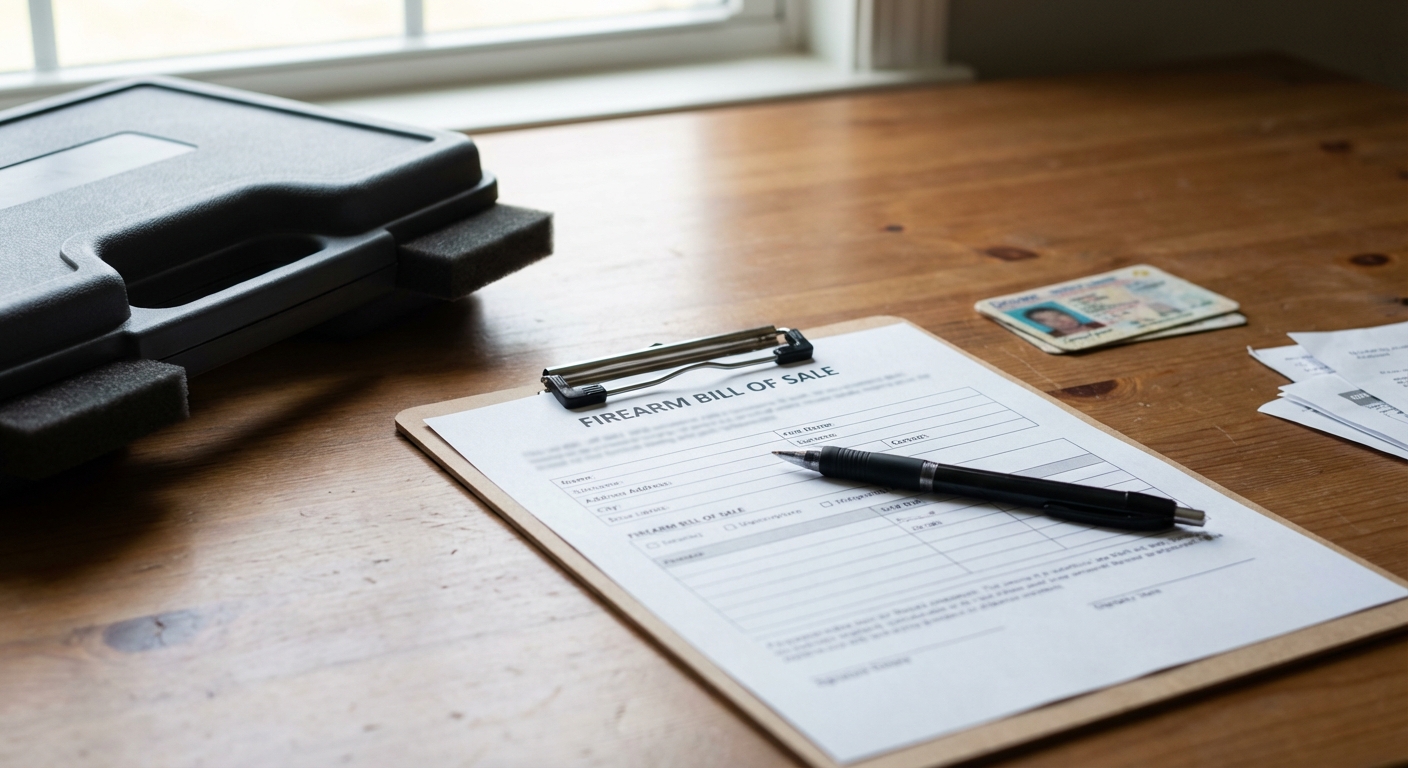

You’re about to do a private sale, and the thought in the back of your mind is loud: “I don’t want this gun coming back on me later.” If the buyer lies, flakes, or does something stupid after the sale, you want a clean paper trail that shows what actually happened.
A firearm bill of sale is that paper trail. It’s a written record, basically a receipt, that spells out who sold what to whom, on what date, and for how much, so both sides have the same story if there’s ever a dispute.
The tradeoff is simple: skipping paperwork is faster, but clarity reduces misunderstandings and lowers your risk when memories get fuzzy or questions come up later.
Here’s the federal reality check: federal law does not require a bill of sale for a private-party transfer, meaning a sale between two unlicensed individuals, so it’s voluntary. The federal recordkeeping system targets dealers, not occasional sellers from a personal collection, so ATF Form 4473 and a Federal Firearms Licensee (FFL) dealer’s bound-book records apply to FFL transfers, not yours. And no bill of sale can make an illegal transfer legal, including selling to a prohibited person under 18 U.S.C. § 922(d) or most interstate private transfers under 18 U.S.C. § 922(a)(5).
You’ll walk away knowing how to confirm you’re on a lawful path, document the deal step-by-step, and copy and paste a free template that covers the essentials.
Step 1
The best bill of sale in the world won’t fix a transfer that should have gone through a dealer. Step 1 is choosing the legally correct pathway first, direct private-party transfer (when allowed) vs. routing the transfer through an FFL (licensed dealer) because of residency, age, or your state and local rules—see private-party transfers versus going through an FFL dealer.

- Confirm residency by checking where each person actually resides right now. If you’re unlicensed and the buyer is a resident of a different state, the transfer generally has to be completed through an FFL under 18 U.S.C. § 922(a)(5).
- Identify the firearm type as a handgun vs. long gun, because age and process rules split here fast.
- Verify the buyer’s age against the rules that can force an FFL pathway. An FFL may not sell or deliver a handgun to anyone under 21, or a long gun to anyone under 18 (18 U.S.C. § 922(b)(1)). Separately, transferring a handgun to someone under 18 is generally prohibited for any person, with limited exceptions (18 U.S.C. § 922(x)).
- Check state and local requirements for where the transfer will occur: do private sales have to run through an FFL or background check, is there a waiting period, and is a permit or credential required before you can transfer—especially when private sales still require background checks or FFL involvement.
- Use official sources as your confirmation layer, start with your state police or DOJ firearms page, then look for county or city rules if your state allows local add-ons.
- Call a local FFL when anything feels unclear (different-state buyer, young buyer, or a state with tighter transfer rules). A two-minute “what’s the current process here” call prevents a bad transfer.
- Illinois: Treat FOID Card verification as a checkpoint. Illinois requires a valid FOID Card to purchase or possess firearms and ammunition, and it generally prohibits knowingly selling to someone without a valid FOID.
- Texas: Texas generally does not require statewide FFL processing for a private, intrastate sale, but the “prohibited person” risk is still on you.
- Florida: Florida has a dealer waiting period in state law, while private-party transfer requirements can differ. Check current state and local rules before you assume the same timeline.
- California: California routes nearly all transfers through a dealer and uses a waiting-period model, so plan on an FFL pathway.
Those examples show how quickly the process can change based on where you live. Once you’ve confirmed the correct pathway for your sale, you can start gathering the exact details you’ll put on paper (and ensure your gun is sold legally).
Step 2
Good paperwork is about precision, not oversharing. Your bill of sale is only as strong as the details you capture, and the goal is “accurate but minimal”, enough to clearly identify the people and the firearm, without creating a privacy mess if the document ever gets lost, copied, or stolen. That’s data minimization in practice: verify identity, don’t build a dossier.
- Seller full legal name
- Buyer full legal name
- Current address (street, city, state, ZIP)
- Practical contact method (phone or email)
- Visually confirm a government-issued photo ID matches the person in front of you and shows their current address (or use a supplemental document if the ID address is outdated).
- Record only what you need to tie the name and address to the signer, not every ID detail on the card.
The FTC’s guidance on safeguarding personal information is blunt: collect only what you need for a specific purpose, keep it only as long as necessary, and avoid unnecessary collection or retention of sensitive data like Social Security numbers. NIST SP 800-63A makes the same point for identity attributes and identity evidence: collect only what’s necessary and limit retention.
- Make
- Model
- Caliber or gauge
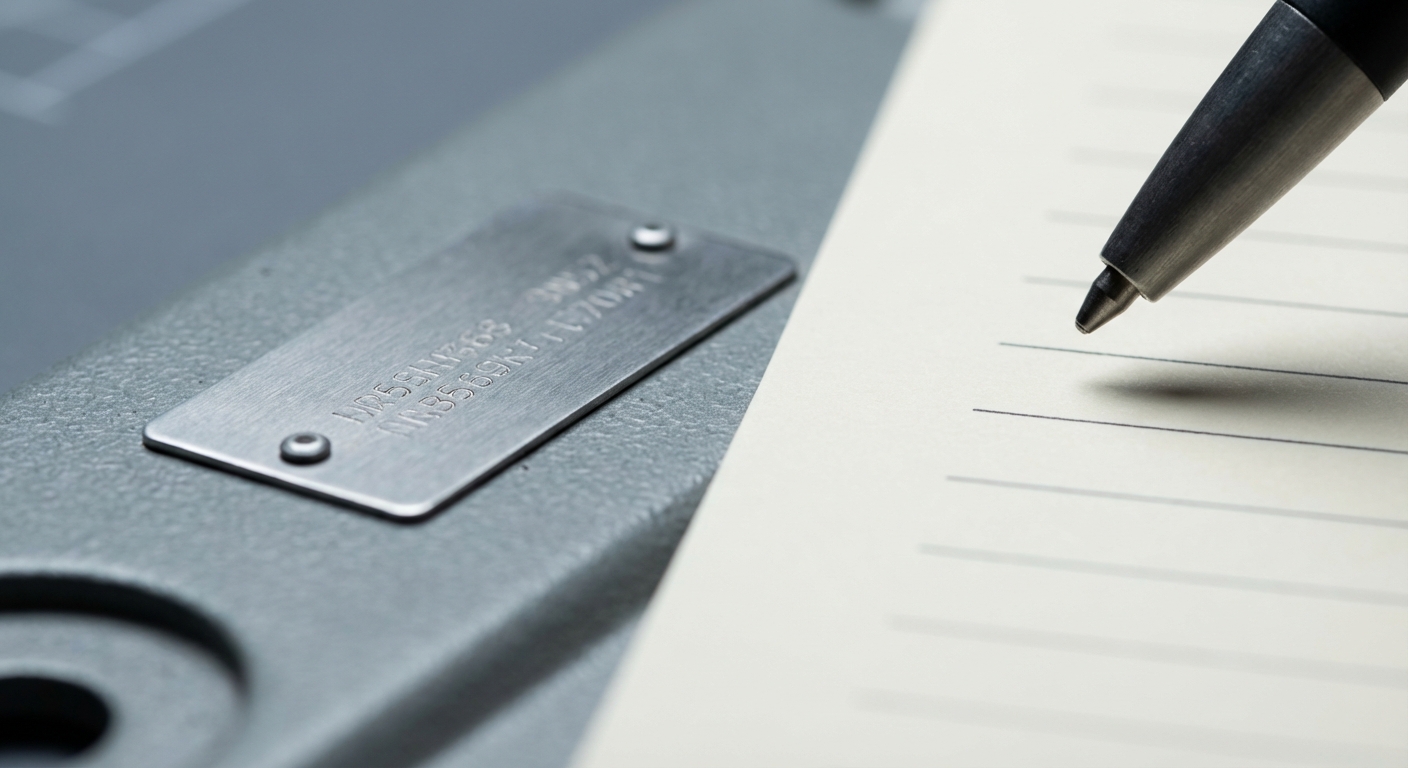
- Serial number
- Optional notes (finish, unique markings, included accessories that identify the gun)
- Sale date and time
- Purchase price
- Payment method (cash, certified funds, other)
- What’s included (magazines, case, optic, sling, ammo)
Pricing sidebar: Don’t write a story. Write the agreed price and exactly how it was paid, then you both sign under the same number.
Privacy tip: Don’t record SSNs. Don’t record a driver’s license number unless you have a state-specific reason. ATF Form 4473 (dealer transfer record) has dealer retention rules for FFLs, which is a good reminder that private sellers shouldn’t over-collect sensitive ID details without a real need.
Gather the details first, then drafting the bill of sale is a simple fill-in exercise.
Step 3
With the basic facts in hand, the writing part should feel straightforward. Aim for a plain-English receipt plus two or three crystal-clear promises, nothing fancy, nothing vague.
- Title it “Firearm Bill of Sale,” then date the transfer, the calendar date the firearm changes hands.
- Identify the seller and buyer using the details you already collected in Step 2.
Write the make, model, caliber (or gauge), and serial number. The serial is the anchor. If anything goes sideways later, “black Glock” is useless, “Glock 19, 9mm, serial ABC123” is definitive.
State the price and payment terms: paid in full vs. deposit and balance, and the method (cash, cashier’s check, etc.). Put the exact amount received on the transfer date.
Keep this calibrated to federal law. 18 U.S.C. § 922(d) bans transfers if you know or have reasonable cause to believe the buyer is a prohibited person, and 18 U.S.C. § 922(g) defines those prohibited-person categories. Example buyer clause: “Buyer affirms they are not prohibited from receiving or possessing firearms or ammunition under 18 U.S.C. § 922(g).” Example seller clause: “Seller affirms lawful ownership and the right to transfer this firearm.”
If you are not making promises about function or finish, use an “as-is” clause. UCC § 2-316 allows excluding implied warranties with conspicuous “AS IS” or “WITH ALL FAULTS” language, but UCC § 2-313 says a disclaimer does not erase specific promises you make. Example: “Firearm is sold AS IS, WITH ALL FAULTS, with no warranties beyond the statements in this bill of sale.”
Include a delivery/receipt line and signatures to reduce liability risk in a private gun sale. Example: “On the date above, Seller delivered and Buyer received the firearm described in this bill of sale.”
- Leaving blanks (write “N/A” instead)
- Missing or mistyping the serial number
- Sloppy descriptions that don’t match the firearm
- Overpromising condition (“perfect,” “like new,” “never fired”)
- Forgetting signatures and the transfer date
If your draft nails precise identifiers, calibrated eligibility and ownership statements, and a conspicuous “as-is” approach when appropriate, you are ready to plug it into the template.
Step 4
Fastest way to avoid missing something in a firearm sale is using the same fill-in template every time. Most headaches come from tiny omissions like a blank price line, a mismatched serial number, or a missing attachment page, so the form only helps if it’s complete.
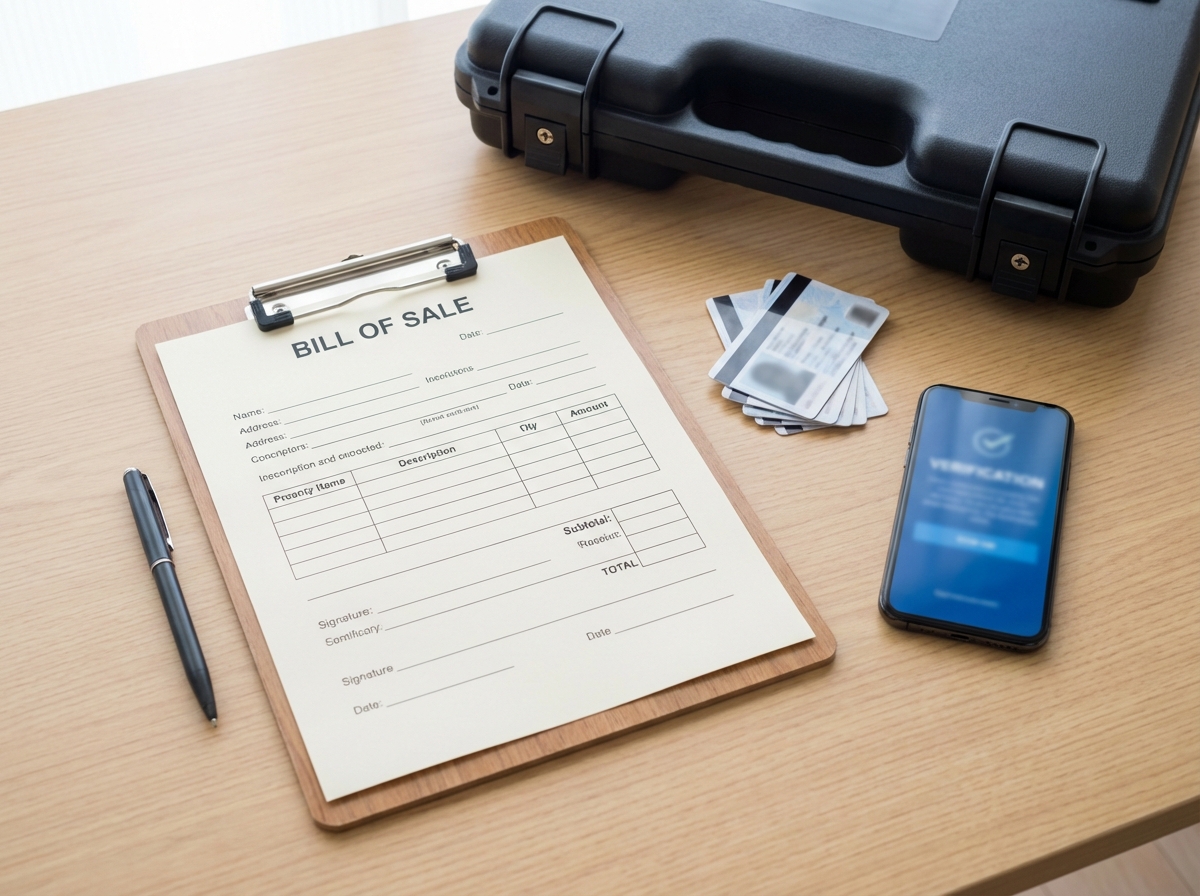
FIREARM BILL OF SALE (Single Firearm)

1) PARTIES
Seller (Legal Name): _______________________________
Address (City/State): ______________________________
Phone/Email (optional): ____________________________

Buyer (Legal Name): ________________________________
Address (City/State): ______________________________
Phone/Email (optional): ____________________________

2) FIREARM DESCRIPTION
Make: ___________________  Model: __________________
Type: ___________________  Caliber/Gauge: ___________
Serial Number: _____________________________________
Condition/Notes (optional): _________________________

3) PRICE AND PAYMENT
Sale Price ($): ______________________
Payment Method: ☐ Cash  ☐ Certified funds  ☐ Other: __________
Paid in Full: ☐ Yes  ☐ No   If no, balance/terms: ______________

4) REPRESENTATIONS
Seller represents they are the lawful owner of the firearm and have the right to sell it.
Buyer represents they are legally permitted to purchase and possess this firearm under applicable law.

5) AS-IS SALE
☐ AS-IS: Buyer accepts the firearm in its current condition, with no warranties.

6) SIGNATURES
Seller Signature: _______________________  Date: _____________
Buyer Signature: ________________________  Date: _____________


SCHEDULE A (Multi-Firearm Add-On, attach to this Bill of Sale)

Transaction Date: ____________   Seller: __________________   Buyer: __________________

Firearm 1
- Make: __________________________
- Model: _________________________
- Caliber/Gauge: _________________
- Serial Number: _________________
- Seller Initials: _______________
- Buyer Initials: ________________

Firearm 2
- Make: __________________________
- Model: _________________________
- Caliber/Gauge: _________________
- Serial Number: _________________
- Seller Initials: _______________
- Buyer Initials: ________________

Firearm 3
- Make: __________________________
- Model: _________________________
- Caliber/Gauge: _________________
- Serial Number: _________________
- Seller Initials: _______________
- Buyer Initials: ________________

Firearm 4
- Make: __________________________
- Model: _________________________
- Caliber/Gauge: _________________
- Serial Number: _________________
- Seller Initials: _______________
- Buyer Initials: ________________

(Attach additional pages as needed. Both parties initial each firearm entry and each page.)

OPTIONAL: WITNESS / NOTARY (if used or required)
Witness Name: __________________  Signature: _______________  Date: _________
Notary Public: __________________  Signature/Seal: __________________________

OPTIONAL: FFL TRANSFER INFO (if processed through a dealer)
FFL/Dealer Name: ________________________________
Address/Phone: _________________________________
FFL License # (optional): ________________________
Transfer Date: _____________  Reference/Receipt #: ___________
Notes (optional): __________________________________________- Write legibly. If you handwrite it, use dark ink.
- Don’t leave blanks, write “N/A” where something doesn’t apply.
- Double-check the serial number character by character before anyone signs.
- Privacy: follow the approach above-no Social Security numbers, and only record driver’s license numbers if you have a real reason.
Use Schedule A and list every firearm as its own line item with make, model, caliber/gauge, and serial number. Best practice is simple: both parties initial each line and keep copies, so a missing page or swapped list can’t rewrite what was actually transferred.
If your exchange runs through a dealer, the “FFL transfer info” box helps your paperwork match the real process, and it complements the dealer’s ATF Form 4473 (dealer transfer record).
Most U.S. states do not require notarization for a bill of sale. If your jurisdiction requires notarization by law, a notary public must witness both parties signing.
Copy it, fill it, sign it, and store a copy for both buyer and seller.
Step 5
A clean form still needs a clean handoff. Execution is where most “good paperwork” falls apart, your goal is simple: make sure the signed bill of sale matches what actually happened, down to the serial number and the handoff details.
- Review the completed document together for accuracy, especially the serial number, date, and both parties’ names.
- Close every blank with N/A so nothing can be added later.
- Correct any typos cleanly and have both parties initial each edit.
- Sign and date it, add the time too if your form includes it.
- Copy it immediately, each party keeps a copy, either paper or a clear scan/photo stored securely.
- Note how the transfer was completed, a direct private-party transfer or processed through an FFL (licensed dealer).
- Decide on a witness or notary only when identity verification or extra formality matters, for most straightforward exchanges it’s unnecessary friction.
Meet in a public place and use a municipal “Safe Exchange Zone” as your default. Oakland Police Department offers Safe Exchange Zones at OPD Headquarters and the Eastmont Substation, and Yonkers Police Department designates Safe Exchange Zones at each of its four precincts. For more best practices for a safe, legal firearms sale, review meeting, documentation, and process considerations.
Keep routine household bills at least 1 year, but keep large-purchase records longer for insurance claims. A firearm bill of sale is commonly treated as proof-of-ownership, store it in an encrypted digital folder or a locked file box, not your camera roll. Many homeowners policies have limited coverage for valuables like firearms, so clean documentation supports claims and makes supplemental coverage easier to set up.
Treat the signed copy like a valuable record and store it securely, especially if you arranged the sale online and need a clear, documented handoff.
Quick Checklist Before You Sell
If you (1) verified the correct transfer pathway for your state, (2) captured the right details without oversharing, and (3) signed and stored copies, you’ve done the practical work that prevents most private-sale problems.
Keep it real-world safe, meet in a public place, and use a police-designated Safe Exchange Zone when you can.
- Confirm your state and local requirements before you meet.
- Confirm the buyer is an in-state resident (or route through an FFL if required).
- Match the firearm details on paper to the firearm in hand.
- Bring two printed copies, collect payment, then both sign and date.
- Save a scan or photo of the signed copy for your records.
File your copy somewhere you can find it later, and keep it at least one year at minimum.
And remember the federal baseline from the start: a bill of sale is voluntary for private-party transfers, but it can’t override prohibited-person transfers (18 U.S.C. § 922(d)) or most interstate private transfers (18 U.S.C. § 922(a)(5)).
Before you meet, estimate a fair price for your gun and keep in mind how supply and demand affects firearm resale prices. Copy and download the firearm bill of sale template so you can print it fast. If you want a fully FFL-routed selling option, Cash My Guns is operated by Dunlap Gun Buyers (an FFL) and markets its process as “Safe • Legal • Hassle-Free.”