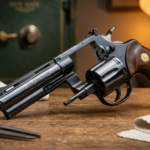

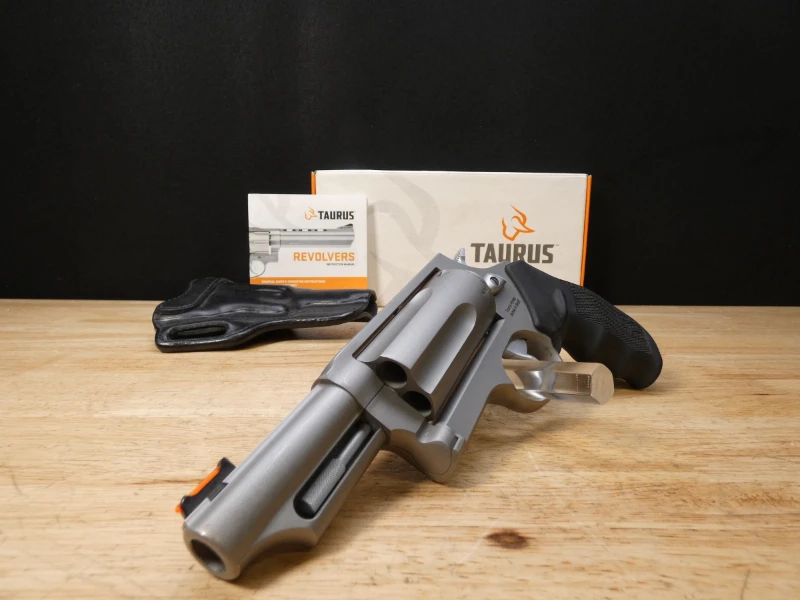
The Taurus Judge is a unique revolver known for its versatility in chambering both .45 Colt cartridges and .410 bore shotshells. This dual-ammo capability makes it a popular choice for personal defense, but its value on the used market is influenced by more than just its function. Factors such as the specific model, its cosmetic and mechanical condition, regional laws, and the completeness of the original package all play a crucial role in determining its final sale price.
What Determines Your Taurus Judge’s Worth
The value of a Taurus Judge is primarily determined by its specific model, overall condition, and legal classification. Federally, the Judge is classified as a handgun due to its rifled barrel, which legally distinguishes it from a short-barreled shotgun under the National Firearms Act. However, this distinction is not universal. Certain states, most notably California, have broader definitions that classify it as an illegal short-barreled shotgun, rendering it worthless for legal sale within that state. Therefore, its market value is heavily dependent on the buyer’s location and the specific model, as variations like the Public Defender or Executive Grade command different prices than the standard base model.
2026 Price Breakdown by Generation
Standard Models
Value for the Taurus Judge is driven more by its specific model than by distinct generational changes. The standard model, often the Model 4510, serves as the baseline for the firearm’s value. A new standard Judge typically has an average price of around $477, while the manufacturer’s suggested retail price can be closer to $530. This model is the most common on the used market, representing the core of the Judge’s brand identity and offering a reliable entry point for those interested in the platform’s unique capabilities. Its widespread availability makes pricing competitive for sellers.
On the used market, a standard Taurus Judge in good condition has an average price of approximately $370. The final sale price can fluctuate within a range of about $330 to $455, depending heavily on its cosmetic condition, round count, and any included accessories like holsters or ammunition. Because these models are mass-produced, sellers should expect prices to be fairly consistent with established market data, as buyers have numerous options available and can easily compare listings to find a fair deal for a well-maintained example of this popular revolver.
Public Defender Models
The Taurus Judge Public Defender is a specialized version designed for concealed carry, featuring a shorter barrel and a more compact frame. This specialization directly influences its market value. While part of the broader Judge family, its specific design caters to a different segment of the market, which is reflected in its pricing. On the used market, a Public Defender model can typically be found for approximately $396. This price point places it slightly above the average for a standard used Judge, highlighting the added value that buyers place on its enhanced concealability and purpose-built defensive features.
The demand for compact, powerful defensive handguns keeps the Public Defender’s value stable. Its pricing relative to the standard model demonstrates a key principle in firearm valuation: specialized configurations often retain their value well, especially when they effectively meet a specific need like concealed carry. Sellers with a Public Defender in excellent condition can often command a premium over the more common, full-sized Judge models, as buyers are specifically seeking out its compact dimensions and are willing to pay for that targeted design advantage in a defensive revolver.
Magnum Models
The Magnum variants of the Taurus Judge, capable of chambering 3-inch .410 shotshells in addition to the standard 2.5-inch shells and .45 Colt, represent a step up in power and versatility. This enhanced capability directly translates to a higher price point. New Magnum models fall within the upper end of the Judge’s overall MSRP range of $429 to $859. The ability to handle more powerful shotshells appeals to buyers seeking maximum defensive performance or utility for trail and ranch use, creating a stronger demand that supports a higher valuation compared to the standard models.
On the used market, the Magnum Judge models consistently command a higher price than their standard counterparts. While specific used pricing data fluctuates, sellers can expect to list these revolvers at a premium, reflecting their enhanced features. The value proposition is clear: for a modest increase in price, the owner gets a significant increase in ammunition flexibility and potential stopping power. This makes the Magnum a desirable option that holds its value well, as it occupies a more powerful niche within the already unique Judge product line.
Executive Grade Models
Positioned at the pinnacle of the Judge lineup, the Executive Grade model is valued significantly higher due to its superior craftsmanship and enhanced features. With new prices hovering around $730, this model is targeted at discerning buyers who are willing to pay a premium for a hand-tuned action, improved trigger, and finer finish. The Executive Grade is not a standard mass-produced variant; it represents a higher level of quality control and performance, which justifies its position at the top of the Judge’s value hierarchy. Its price reflects its status as a top-tier, semi-custom offering from Taurus.
The value of a used Executive Grade Judge remains substantially higher than other models due to its relative rarity and premium features. While they appear less frequently on the second-hand market, they retain a large portion of their original value. Sellers of this model can expect to attract serious buyers who understand and appreciate the upgrades it offers. The significant price gap between the Executive Grade and standard models underscores how much a factory-improved finish, hand-fitted parts, and a smoother action can contribute to a firearm’s overall worth and desirability among enthusiasts.
How Modifications Affect Value
When it comes to value-adding modifications for the Taurus Judge, a clear market consensus is difficult to establish. Upgrades such as aftermarket grips for improved ergonomics or enhanced sights for better accuracy are highly subjective. While one owner may find these changes invaluable, a potential buyer might prefer the original factory configuration. Consequently, sellers should not expect to recoup the full cost of modifications. The value they add is often negligible unless the buyer is specifically seeking a Judge with those exact upgrades, making it a gamble in the broader used market.
Similarly, there is no definitive list of modifications that universally hurt the Judge’s value, but permanent alterations are generally detrimental. Any custom work that involves removing metal, such as amateur trigger jobs, or permanent changes to the frame or barrel can significantly reduce the firearm’s appeal and resale price. Non-reversible cosmetic changes, like custom cerakote jobs in niche colors, can also narrow the pool of potential buyers. To preserve maximum value, it is almost always best to keep the firearm in its original factory condition or ensure any modifications are easily reversible.
Regional Price Variations in 2026
Significant price variations for the Taurus Judge are driven by state-level firearm laws. The most prominent example is California, where the firearm is classified as an illegal short-barreled shotgun under state law, making a legal private sale within the state impossible. This outright ban eliminates a massive market, and any Judge that might be “grandfathered” in would exist in a tiny, specialized market with its own pricing rules. This legal barrier effectively removes California from the national market and demonstrates how state regulations can drastically impact a firearm’s value and transferability, creating distinct regional price ceilings.
In contrast, states with less restrictive firearm laws, such as New York, where the Taurus Judge is considered legal, will see prices that align more closely with the national average. In these locations, value is determined by standard market forces of supply and demand rather than prohibitive legislation. The stark difference between a state where the gun is legal and one where it is banned means a seller in a permissive state has a much larger pool of potential buyers. This dynamic illustrates that a firearm’s worth is not just intrinsic but is also heavily dictated by its legal status in a given jurisdiction.
Online vs Local Sales
When selling a Taurus Judge locally through a private sale, documentation is key to a secure and legal transaction. A comprehensive bill of sale is a highly recommended document, even if not legally mandated in your state. This document should contain the full names and contact information of both the buyer and seller, the firearm’s details including make, model, and serial number, and the date of the sale. Critically, it should also include a declaration from the buyer stating they are not legally prohibited from owning a firearm, protecting the seller by documenting a good-faith transfer.
Opting to sell to a local gun dealer will yield a different financial outcome. Dealers typically offer between 50% and 65% of a used firearm’s retail value, as they need to cover overhead and make a profit on the resale. For a popular and quick-selling firearm like the Judge, an offer might reach the higher end of that range, potentially up to 70%. While this path provides immediate cash and eliminates the complexities of a private sale, the convenience comes at the cost of receiving a lower overall price compared to what could be achieved by selling directly to another individual.
Selling online introduces shipping logistics that are often misunderstood by private sellers. Federal law requires that when a private individual ships a handgun, they must use a common carrier like UPS or FedEx and notify the carrier that the package contains a firearm. However, a critical conflict arises with corporate policy, as both UPS and FedEx prohibit non-licensed individuals from shipping firearms directly. This policy contradiction effectively forces a private seller to use a Federal Firearms Licensee (FFL) to package and ship the Taurus Judge to the buyer’s designated FFL, adding a layer of cost and complexity to the transaction.
The FFL Buying Advantage
Utilizing a Federal Firearms Licensee (FFL) is not just an advantage but a legal necessity for most firearm sales, especially across state lines. According to federal law, it is illegal for an unlicensed individual to directly transfer a handgun to a resident of another state. To complete such a transaction legally, the Taurus Judge must be shipped from the seller to an FFL in the buyer’s state of residence. This rule ensures that all transfers comply with the laws of both the origin and destination states, creating a secure and regulated process for interstate commerce in firearms.
The FFL system provides a clear, legal framework for the final transfer. Once the Taurus Judge arrives at the buyer’s local FFL, the buyer must visit the dealer’s location to complete the transaction. This involves filling out the necessary federal paperwork, primarily ATF Form 4473, and successfully passing a National Instant Criminal Background Check System (NICS) check. This final step confirms the buyer’s eligibility to own a firearm before they can legally take possession. This process protects both the seller from liability and ensures that firearms are transferred safely and in accordance with all regulations.
What Increases Your Offer
To maximize offers when selling a Taurus Judge online, high-quality photography is non-negotiable. Use bright, diffused natural light, such as on an overcast day, to eliminate harsh shadows and accurately display the firearm’s finish and condition. Place the revolver against a simple, neutral background that won’t distract potential buyers. It is essential to take numerous sharp, in-focus photographs from every conceivable angle. Include detailed close-ups of important areas like the manufacturer’s markings, the sights, the front of the cylinder, the bore, and any visible signs of wear or damage to build trust and justify your asking price.
Before taking pictures, a thorough cleaning will significantly boost the firearm’s appeal. First, ensure the Judge is completely unloaded. Then, perform a detailed cleaning, focusing on scrubbing away carbon and lead fouling from the barrel, the front face of the cylinder, and inside each chamber. A critical but often overlooked step is cleaning under the ejector star. Debris and fouling can build up in this area, which can impede the cylinder from closing properly or functioning smoothly. A sparkling clean firearm not only looks better in photos but also signals to buyers that it has been well-maintained.
While there isn’t a specific market consensus on the value added by original parts or accessories, completeness almost always increases a firearm’s desirability and final offer. Including the original box, owner’s manual, factory-included safety keys, and any other accessories that came with the Judge from the manufacturer creates a more attractive package. This appeals to collectors and meticulous buyers who appreciate a complete set. A firearm with its original box and papers is generally perceived as being better cared for and can often command a higher price than the gun alone, making it a simple way to boost your offer.
When to Sell Your Taurus judge
The firearm market experiences distinct seasonal trends, and timing your sale can impact the final price. A general consensus among sellers suggests that the best time to sell a used handgun like the Taurus Judge is during tax return season. This period, typically running from February through April, is when many potential buyers have more disposable income. This influx of cash into the market often leads to increased demand and a greater willingness to spend, allowing sellers to price their firearms more competitively and achieve a quicker sale at their desired price point.
A secondary peak in firearm sales activity often occurs in the late summer and early fall, during the period leading up to various hunting seasons. While the Judge is primarily seen as a defensive revolver, its versatility with .410 shotshells makes it a viable option for some as a trail or snake gun. This increased interest in outdoor and hunting-related firearms can create a spillover effect that boosts the entire market. Selling during this window can capture the attention of buyers who are already in the mindset of purchasing a new firearm for the upcoming season.
Beyond predictable seasonal trends, the political climate remains a major, albeit unpredictable, driver of handgun demand. Discussions of new firearm legislation at the state or federal level can create sudden surges in buying activity as consumers look to purchase firearms before any potential restrictions are enacted. While impossible to time perfectly, sellers who are aware of the current political landscape can sometimes leverage these periods of high demand to their advantage, though it remains a much more volatile factor than the reliable annual sales cycles tied to taxes and hunting.
Common Pricing Mistakes
One of the most frequent mistakes sellers make is overvaluing their Taurus Judge based on sentimental value or an inflated perception of its worth. A professional appraisal is generally not a cost-effective solution for a standard used Judge, as the firearm’s market value typically falls between $370 and $400. Given that a formal appraisal can cost a significant fraction of the gun’s total value, it is far more practical for a seller to research recent sales of comparable models on online marketplaces and forums to establish a realistic, data-driven asking price for their mass-produced firearm.
Another common error is failing to accurately assess and price according to the firearm’s cosmetic condition. While there is no industry-standard formula for deducting value for cosmetic damage, sellers must be objective. A Judge with significant holster wear, scratches on the frame, or dings on the cylinder will not command the same price as one in pristine, like-new condition. Ignoring these imperfections and pricing the gun as if it were flawless will deter knowledgeable buyers and prolong the sales process. Honesty about the condition, reflected in both the description and the price, is crucial.
Sellers, particularly those new to online sales, often neglect to factor in the additional costs the buyer will incur. A buyer purchasing a handgun online must pay for shipping and a transfer fee to their local FFL, which can add anywhere from $50 to $100 or more to their total cost. If a seller’s asking price is already at the top of the market range, these unavoidable extra fees can make the final price uncompetitive compared to a local alternative. A savvy seller will research these costs and set their price accordingly to make their listing attractive to a national audience.
Market Outlook for 2026
Predicting the future price of any firearm with certainty is impossible, as the market is subject to a wide range of influences. For the Taurus Judge, a specific future price prediction is unavailable due to these variables. However, the revolver’s unique position in the market as a multi-caliber handgun gives it a stable and enduring niche appeal. Its ability to chamber both .45 Colt and .410 shotshells provides a level of versatility that few other firearms can match, which should help it retain a consistent level of demand among consumers looking for a powerful and flexible personal defense option.
Looking ahead, the Judge’s value will likely be influenced by several key factors. The continued availability and cost of both .45 Colt and .410 ammunition will play a significant role, as the firearm’s utility is directly tied to its ammo supply. Furthermore, the introduction of new, competing models from other manufacturers could potentially impact its market share and value. As always, any shifts in state or federal firearm legislation could dramatically alter its legal status and, consequently, its market price in various regions, making the political landscape a critical factor to watch.
Frequently Asked Questions
Does the specific model of the Judge significantly impact its price?
Yes, the specific model is one of the primary drivers of the Taurus Judge’s value. A standard model sets the baseline price, with an average used value around $370. More specialized versions, like the compact Public Defender, command a slightly higher price of approximately $396 due to their suitability for concealed carry. At the top end, the premium Executive Grade model, with its enhanced features and finish, is valued significantly more, with new prices around $730. This demonstrates a clear price hierarchy based on the features and target market of each specific variant.
Is it worth getting my used Taurus Judge professionally appraised before selling?
For a standard used Taurus Judge, a professional appraisal is likely not worth the cost. The firearm’s market value is well-established and typically falls within the $370 to $400 range. A formal appraisal can be expensive, potentially costing a substantial portion of the gun’s total value. Because the Judge is a mass-produced firearm with plenty of readily available sales data online, sellers can determine a fair market price through simple research, making a paid appraisal an unnecessary and inefficient expense. It is generally not a cost-effective measure for this type of firearm.
How much less should I expect to get from a dealer compared to a private sale?
When selling to a gun dealer, you should expect to receive a significantly lower offer than you would in a private sale. Dealers typically offer between 50% and 65% of a used firearm’s estimated retail value. This margin allows them to cover their business overhead and make a profit upon resale. For a firearm that is in high demand and expected to sell quickly, like the Judge, a dealer might stretch their offer to the higher end of that range, possibly up to 70%. However, a private sale will almost always yield a higher return.
Will I get more for my Judge if I sell it during a certain time of year?
Yes, timing the sale of your Taurus Judge can influence the offers you receive. The market generally sees a surge in activity during tax return season, which typically runs from February through April. During this period, many buyers have more disposable income, leading to increased demand and potentially higher sale prices. A smaller peak can also occur in the late summer and early fall as people prepare for hunting seasons. Selling during these windows can increase your chances of a faster sale at a better price compared to other times of the year.
Does the Judge’s legal status in states like California affect its value elsewhere?
Yes, the legal status of the Taurus Judge in restrictive states like California can indirectly affect its value in others. Because California, a massive consumer market, classifies the Judge as an illegal short-barreled shotgun, the overall national pool of potential buyers is reduced. This concentrates supply in states where it is legal. While it doesn’t drastically alter prices in permissive states, this legal patchwork creates distinct regional markets. The firearm’s value is therefore highest in states with high demand and no legal barriers, highlighting how localized laws can impact a nationally sold product.
Get a Cash Offer Today
Ready to sell your Taurus Judge? We make the process simple and secure. Submit your firearm’s details on our website to receive a fair, no-obligation cash offer. Forget the hassle of private listings and shipping complexities; we handle everything with a licensed, professional approach.
Our streamlined system ensures you get a competitive price for your firearm without the wait. Click here to begin, and you can turn your used Taurus Judge into cash quickly and legally. Let our experts provide you with a fast and transparent valuation today.