
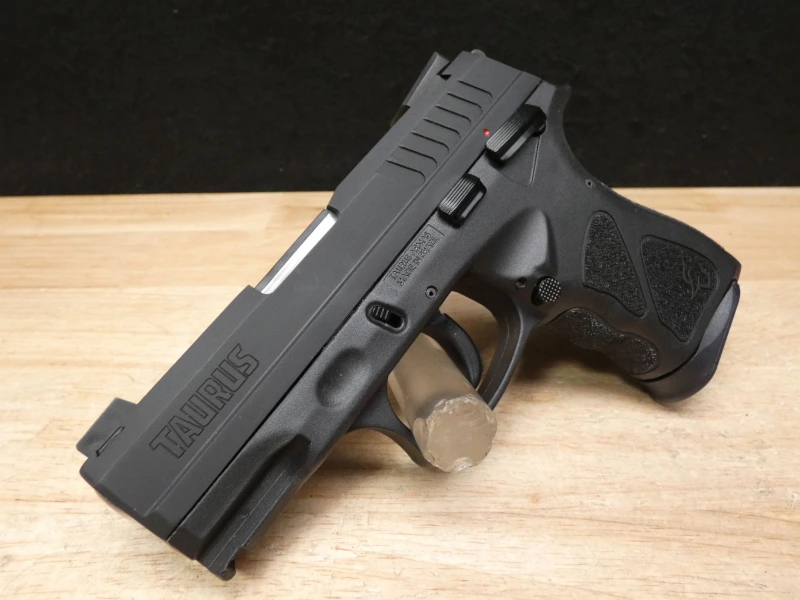
The Taurus TH9 is a polymer-framed, semi-automatic pistol recognized for its affordability and functional design. Available in both full-size and compact models, it occupies a significant space in the budget handgun market. Understanding its value requires looking beyond its initial low price point to factors like condition, included accessories, and the specific sales channel. This guide provides a comprehensive breakdown of the TH9’s current market worth, helping owners determine a fair price for this practical firearm.
What Determines Your Taurus TH9’s Worth
The value of a Taurus TH9 is primarily anchored by its market position as an accessible, budget-friendly handgun. While the manufacturer’s suggested retail price isn’t always firm, new models typically sell for an average price of around $297, with a general market range between $298 and $382. In the used market, the average private sale price settles at approximately $181.67. The most significant factors influencing this used value are the firearm’s cosmetic and mechanical condition, the inclusion of the original box and accessories, and any functional aftermarket upgrades that address common user complaints about the stock model.
2026 Price Breakdown by Generation
TH9 Full-Size Model
The Taurus TH9 series does not have distinct generational updates in the same way as other popular pistol lineups; instead, value is assessed based on the specific model and its condition. The full-size TH9 is the standard offering, and its value is benchmarked against the average used price. A well-maintained example with its original case, manuals, and multiple magazines will command a price closer to the higher end of the used market spectrum. Conversely, a firearm showing significant holster wear or lacking its factory accessories will naturally fall to the lower end of its potential resale value.
Because there is no official consensus on value breakdown by generation, market data does not differentiate prices based on production year or minor manufacturing changes. The most critical factor remains tangible condition. Any evaluation of a full-size TH9 should focus on a thorough inspection of the barrel, slide, frame, and internal components. The price is dictated not by its “generation,” but by its history of use and care. Buyers are primarily looking for a reliable, functional firearm, and its demonstrated condition is the best indicator of its worth in a private sale or trade-in scenario.
TH9 Compact Model
Similar to its full-size counterpart, the Taurus TH9 Compact’s value is not determined by generational variants. As a more concealable version of the standard model, its price is influenced by local market demand for compact handguns. In areas where concealed carry is popular, a TH9 Compact in excellent condition may fetch a price comparable to, or even slightly higher than, a full-size model due to its specific utility. The average used price remains the key reference point, with adjustments made for condition, included accessories like extra magazines, and the presence of the original packaging, all of which enhance its appeal.
The absence of a clear market consensus on generational value means that sellers and buyers must rely on universal firearm valuation principles. For the TH9 Compact, this involves assessing its overall wear and tear, round count if known, and the cleanliness of its action. A model that has been lightly used and meticulously maintained will always be more desirable. Its worth is a direct reflection of its physical state and completeness as a package, rather than any perceived collectible status tied to a specific production run or minor design iteration, as none are officially recognized in the market.
[Generation 3 Label]
N/A – Consensus Not Found
N/A – Consensus Not Found
[Generation 4 Label]
N/A – Consensus Not Found
N/A – Consensus Not Found
How Modifications Affect Value
When considering modifications for a Taurus TH9, it’s important to understand their impact on resale value. An aftermarket trigger is one of the few upgrades unlikely to hurt, and may even increase, the firearm’s worth. The stock trigger is a frequent point of criticism for this model, so a well-regarded aftermarket trigger is often seen as a significant functional improvement by potential buyers. This enhancement directly addresses a known shortcoming, making the pistol more desirable and potentially justifying a higher asking price compared to a stock equivalent, assuming the installation was performed correctly and the part is from a reputable manufacturer.
While a quality trigger can add value, there is no broad market consensus on other value-adding modifications for the TH9. Upgrades such as custom sights, grips, or cerakote finishes are highly subjective and may not provide a return on investment. What one owner sees as a crucial enhancement, a potential buyer might view as an unnecessary expense or an undesirable aesthetic choice. For this reason, most modifications outside of a trigger upgrade do not consistently increase the firearm’s resale price. To maximize value, retaining all original parts to include with the sale is the most prudent strategy for owners.
Regional Price Variations in 2026
The value and marketability of a Taurus TH9 can be significantly impacted by state-level firearm regulations. In states with restrictive handgun rosters like California and New York, the TH9 is not listed as a compliant firearm for civilian purchase. This effectively eliminates it from these large markets, concentrating its sale and demand in less restrictive states. Consequently, the national average price is more reflective of its value in states where it can be legally sold and transferred without issue. The firearm’s legal status in a given state is the primary driver of its regional value, creating distinct markets across the country.
Beyond major state restrictions, local supply and demand play a crucial role in determining the final sale price of a TH9. In areas with a high number of gun stores and a saturated used market, prices may be more competitive and fall closer to the lower end of the national average. Conversely, in more rural areas with fewer sellers, a clean TH9 might command a slightly higher price. Economic factors and local shooting culture also contribute to these variations, making it important for sellers to research recent sales within their own community to set a realistic and competitive price for their specific region.
Online vs Local Sales
A key decision for any seller is whether to sell locally to a private party or trade in at a gun dealer. The financial difference is significant; dealers will typically offer between 50% and 65% of the private sale market value. For a Taurus TH9, this translates to an estimated dealer trade-in value of approximately $118.09, which is about 65% of its average private party used value of $181.67. While selling to a dealer is faster and simpler, a private sale will yield a much higher return, making it the preferred option for those willing to invest more time.
Selling online introduces logistical complexities, particularly with shipping. Private sellers are generally prohibited from directly shipping handguns via common carriers like UPS and FedEx, as these companies now require the shipper to be a Federal Firearms Licensee (FFL). This means a private individual must use an FFL to ship the firearm to the buyer’s FFL. Furthermore, federal law mandates that the carrier be notified the package contains a firearm and that handguns are shipped via an overnight air service with an adult signature required. These requirements add significant cost and effort to an online sale, cutting into the seller’s net profit.
Paperwork requirements also differ between sales channels. For a private sale, federal law does not mandate a bill of sale, but creating one is highly recommended to document the legal transfer of ownership and protect both parties. A thorough bill of sale should include the firearm’s make, model, and serial number, along with the buyer’s and seller’s information. In contrast, an interstate online sale is federally regulated and must be processed through an FFL in the buyer’s state. The buyer must complete federal paperwork and pass a background check before taking possession, ensuring the transaction is fully compliant with federal law.
The FFL Buying Advantage
Utilizing a Federal Firearms Licensee (FFL) is a legal necessity for any interstate firearm transaction. To legally sell a Taurus TH9 to a buyer in another state, the seller must ship the handgun to an FFL dealer located in the buyer’s home state. The buyer is then required to visit that FFL, complete the necessary federal paperwork (Form 4473), and successfully pass a NICS background check before they can legally take possession of the firearm. This process ensures that all interstate sales comply with federal laws and prevents firearms from being transferred to prohibited individuals, providing a crucial layer of security and legality.
The FFL system offers a significant advantage by providing a secure and verifiable framework for firearm transfers, even when not legally required for an in-state private sale. Using an FFL for a local transaction creates an official record, protecting both the seller and the buyer from future liability. The FFL verifies the buyer’s eligibility to own a firearm and documents the transfer, giving the seller peace of mind that the gun did not end up in the wrong hands. For the buyer, it confirms they are receiving the firearm through a legitimate, federally regulated channel, adding a layer of confidence to the purchase.
What Increases Your Offer
While the market has not reached a clear consensus on the value of retaining original parts for the Taurus TH9, a universal principle in firearm sales is that completeness adds value. A used TH9 offered with its original factory case, owner’s manual, cable lock, and any included accessories like additional magazines or interchangeable backstraps will always be more appealing to a potential buyer. This complete package suggests that the firearm was well-cared-for and provides the new owner with everything that came with it from the factory, often justifying a higher asking price than a standalone handgun.
A firearm’s cosmetic condition is paramount, so proper pre-sale preparation can directly increase its value. To prepare a Taurus TH9 for sale, you should field strip it and perform a thorough cleaning of the barrel, slide, and frame using a quality CLP (Cleaner, Lubricant, Protectant). Use soft cloths and polymer picks to avoid scratching any surfaces. A common mistake to avoid is using oversized cleaning patches that can get stuck in the barrel. After reassembly, wipe down any excess lubricant to present a firearm that looks clean and meticulously maintained, which signals reliability and care to prospective buyers.
High-quality photographs are one of the most effective tools for maximizing your offer, especially in online listings. To best showcase a Taurus TH9, use a simple, uncluttered background with ample, soft lighting to prevent harsh shadows. Natural light from a window is often ideal. Use a steady surface or a tripod to ensure your images are sharp and in focus. Capture multiple photos from various angles, including close-ups of the serial number, barrel condition, and any notable features or imperfections. A modern smartphone is perfectly capable of taking excellent photos that will attract more serious buyers and higher offers.
When to Sell Your Taurus th9
Timing the sale of your firearm can have a tangible impact on the final price you receive. Generally, the best time to sell a used handgun like the Taurus TH9 is during the spring, specifically from February through June. This period often aligns with buyers receiving tax refunds, which increases their disposable income for discretionary purchases. Furthermore, the arrival of warmer weather encourages more people to participate in shooting sports and training, boosting overall demand in the firearms market. Capitalizing on this seasonal trend can lead to a quicker sale at a more favorable price point for the seller.
Political events can also create significant spikes in demand. The periods leading up to major presidential or midterm elections frequently see an increase in firearm sales. This is often driven by consumer concerns about potential changes to gun control legislation, prompting both new and existing gun owners to make purchases. Selling your Taurus TH9 during these high-demand windows can be advantageous, as the heightened market activity can result in more interested buyers and potentially higher offers than you would receive during a period of political calm. Monitoring the political climate can be a strategic element of timing your sale effectively.
Ultimately, the best time to sell is when your firearm is in its best possible condition. Delaying a sale could lead to additional wear, scratches, or dings from use and storage, all of which will detract from its value. It is more profitable to sell a well-maintained firearm today than to wait for a potential market upswing while the gun’s condition slowly degrades. If you are no longer using the TH9 regularly, selling it while it remains in excellent cosmetic and mechanical shape will ensure you can ask for a premium price within its typical used market range.
Common Pricing Mistakes
One of the most common mistakes owners of budget-friendly firearms make is paying for a professional appraisal. A formal appraisal is generally not worth the cost for a standard used Taurus TH9. The expense of the appraisal service would likely be disproportionate to the gun’s total value, which can be reasonably and accurately determined by researching completed sales on online forums and listings. The market for the TH9 is well-established, and its value is dictated by condition and completeness, not by a formal assessment that is better suited for rare or high-end collectible firearms.
Misjudging the impact of cosmetic damage is another frequent pricing error. Owners may either overprice a heavily worn gun or underprice one with only minor blemishes. For a non-collectible, functional firearm like the Taurus TH9, heavy cosmetic damage can justify a significant price reduction of approximately 20% to 40% off the typical used market value. Sellers must be objective about the condition of their firearm and adjust their asking price accordingly. Accurately describing and photographing any wear will build trust with buyers and lead to a more realistic and successful transaction.
Failing to understand the difference between private party value and dealer trade-in value often leads to unrealistic expectations. An owner might see a TH9 listed for $180 online and expect a similar amount from a local gun store. However, dealers must account for overhead and profit margin, leading to much lower offers. Knowing that a dealer will likely offer around $118 for a TH9 that could sell for $181 in a private sale helps the seller make an informed decision. This knowledge prevents the frustration of feeling low-balled and allows the seller to choose the sales channel that best suits their needs.
Market Outlook for 2026
Looking ahead to 2026, a specific future price prediction for the Taurus TH9 is unavailable, as the market for used firearms is subject to numerous unpredictable variables. However, the TH9’s position as a budget-friendly, polymer-framed semi-automatic pistol suggests its value will likely remain stable and follow the general trends of the broader used gun market. These types of functional, affordable handguns tend to hold a consistent baseline value, as they remain popular choices for first-time buyers, home defense, and general range use. Its price is not expected to see dramatic increases or decreases barring major market shifts.
Several external factors could influence the TH9’s value in the coming years. The introduction of new, competing models in the same price bracket from Taurus or other manufacturers could soften demand and put downward pressure on its used price. Conversely, significant increases in the cost of new firearms or ammunition could make reliable used handguns like the TH9 a more attractive option, potentially bolstering its value. As with all firearms, its future worth will be closely tied to the political climate, economic conditions, and ongoing consumer trends within the firearms industry.
Frequently Asked Questions
Is it worth getting a professional appraisal for my Taurus TH9?
No, a professional appraisal is generally not a worthwhile expense for a standard Taurus TH9. This firearm is considered a budget-friendly model, and its market value is well-documented and easily researched through online listings and forums. The cost of a formal appraisal would likely be a significant percentage of the gun’s actual worth, making it an impractical investment. You can determine a fair market price by assessing its condition, checking recent sales of similar models, and ensuring you have all original accessories, which will have a much greater impact on its final sale price.
How much does heavy cosmetic damage affect the TH9’s price?
Heavy cosmetic damage can significantly reduce the resale value of a utilitarian firearm like the Taurus TH9. Depending on the severity of the scratches, holster wear, or dings on the slide and frame, you can expect a price reduction of approximately 20% to 40% from the typical used market value. While the firearm may be perfectly functional, its visual appeal is a major factor for most buyers. A lower price is necessary to compensate for the poor cosmetic condition and attract buyers who prioritize function over aesthetics for a non-collectible, working handgun.
Will an aftermarket trigger hurt my TH9’s resale value?
An aftermarket trigger is one of the few modifications that is unlikely to hurt the resale value of a Taurus TH9 and may actually increase it. The stock trigger is a common point of complaint among users of this model. Therefore, a quality upgrade from a reputable brand is often viewed as a significant improvement that enhances the shooting experience. A potential buyer who is knowledgeable about the TH9 will likely see this as a positive feature, making the firearm more desirable and potentially justifying a slightly higher price than a stock model in similar condition.
What’s the typical trade-in value for a TH9 at a gun store?
When trading in a Taurus TH9 at a gun store or dealer, you should expect to be offered a price that is significantly lower than its private sale value. Dealers typically offer between 50% and 65% of the private market price to account for their overhead and profit margin. Based on an average private party value of $181.67, the estimated dealer trade-in value for a TH9 is approximately $118.09. This lower price is the trade-off for a fast, convenient, and hassle-free transaction compared to the effort required for a private sale.
Is the Taurus TH9 considered a collectible or NFA item?
The Taurus TH9 is a conventional semi-automatic pistol and is not considered a National Firearms Act (NFA) item. Its standard specifications, such as a barrel length well over 3 inches, do not place it under the additional regulations of the NFA. Furthermore, it is a mass-produced, modern firearm and does not hold any special collectible status. This classification is important for its value, as it means its price is determined by its utility and condition as a standard handgun, not by rarity or regulatory status, keeping it firmly within the accessible, budget-friendly segment of the market.
Get a Cash Offer Today
Ready to sell your Taurus TH9? We make the process simple and secure. Submit your firearm’s details on our easy-to-use platform, and you’ll receive a fair, no-obligation cash offer. We handle all the complexities of FFL transfers and ensure you get paid quickly and safely.
Don’t let your firearm collect dust. Whether you’re upgrading, downsizing, or simply need the cash, we provide a trustworthy and efficient way to sell your gun. Click here to begin the process and see what your Taurus TH9 is worth today. Get your cash offer now!