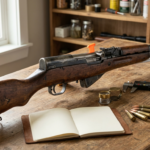


The Tula PPSh-41/43C is a historically significant firearm, an icon of Soviet military might from World War II. Its Russian name, “Pistolet-Pulemyot Shpagina,” translates to “Shpagin machine pistol,” reflecting its use of a pistol cartridge. While original models are classified as submachine guns, the modern market primarily consists of semi-automatic variants, often designated PPSh-41/43C. Understanding the factors that influence the value of these unique rifles is crucial for any owner considering a sale.
What Determines Your Tula PPSh-41/43C’s Worth
The value of a semi-automatic Tula PPSh-41/43C is primarily driven by its origin and build quality. Since these are typically assembled in the U.S. from original parts kits, the reputation of the manufacturer who performed the conversion is paramount. A well-regarded builder known for reliability and historical accuracy will command a premium. The used price for these firearms generally ranges from approximately $2,000 to $4,200. The final price within this spectrum is heavily influenced by the condition of the original parts, the quality of the semi-automatic receiver, overall craftsmanship, and the inclusion of desirable accessories like original drum or stick magazines.
2026 Price Breakdown by Generation
Early Wartime Production (Hypothetical)
Valuing an original early wartime production PPSh-41 is a specialist task, as any transferable, fully automatic version is a highly regulated NFA item with immense collector value. For the semi-automatic builds that utilize parts from this era, value would be influenced by the condition and visible markings of the original components. However, a clear market consensus on a specific premium for using early parts in a modern semi-auto build has not been established. The builder’s reputation and the overall quality of the conversion remain the most significant factors in determining its final market price.
Collectors often seek specific arsenal markings or production years, which could theoretically add a premium to a semi-automatic rifle built from such a parts kit. Despite this collector interest, the market for these firearms does not have a standardized valuation model based on the “generation” of the parts kit used. Therefore, while having components from an early, historically significant period is a great feature, its direct impact on resale value is difficult to quantify and varies greatly from one buyer to the next, making it an unreliable pricing factor.
Late Wartime & Post-War Production (Hypothetical)
Semi-automatic PPSh-41/43C rifles built from late-war or post-war parts kits are the most common on the market. These kits were produced in vast quantities, and their condition is often more consistent than that of earlier examples. As with other variations, there is no established market consensus that assigns a different value based on this production era alone. The price is still dictated by the quality of the U.S.-made receiver and the skill of the gunsmith who assembled the rifle. A well-executed build using a post-war kit will invariably be worth more than a poorly assembled rifle using rare early-war parts.
Ultimately, the “generation” of the parts kit is secondary to the functional and cosmetic quality of the finished semi-automatic firearm. Sellers should focus on documenting the rifle’s reliable performance, the reputation of its builder, and its overall condition rather than expecting a significant price increase based solely on the manufacturing date of the surplus components. The value remains within the established $2,000 to $4,200 range, contingent on these primary factors. Any additional value for specific parts is a negotiation point between an informed buyer and seller.
Modern Semi-Auto Builds
This category represents the entirety of the commercially available Tula PPSh-41/43C market for non-NFA buyers. These firearms are not assigned different generations but are instead valued based on their specific U.S. manufacturer. Builds from well-known companies with a track record for producing reliable and historically faithful replicas command the highest prices, often reaching the upper end of the $4,200 valuation. These firearms are trusted by buyers to function correctly and retain their value over time due to the established quality control and customer support associated with the builder.
Conversely, builds from unknown or less reputable sources, including “home builds,” occupy the lower end of the value spectrum, often closer to the $2,000 mark. Potential buyers are often wary of these rifles due to potential reliability issues and inconsistent build quality. Therefore, the most critical factor in the valuation of any modern semi-auto PPSh-41 is the name stamped on the receiver. This brand recognition serves as the primary indicator of quality and, consequently, the firearm’s position within the established market price range.
[Generation 4 Label]
As the Tula PPSh-41/43C is not produced in distinct, evolving generations like many modern firearms, a “Generation 4” category does not apply. The market for these rifles is static, based on the assembly of historical parts kits onto new semi-automatic receivers. There are no iterative updates or factory-defined generations to track. Value is consistently determined by the factors previously mentioned: the reputation of the American builder, the condition of the parts kit used in the build, and the inclusion of original accessories. Any future changes in value will likely be tied to market supply and demand rather than new product versions.
Because there is no “Generation 4,” sellers and buyers should be cautious of any claims that a particular semi-automatic PPSh-41 represents a newer or more advanced version. The value proposition remains unchanged and is rooted in the quality of a specific firearm’s conversion from its original machine gun configuration. The established price range of approximately $2,000 to $4,200 reflects the existing variety in build quality across the market, not a progression through different manufacturing generations. A high-quality build from ten years ago is valued on the same principles as one completed yesterday.
How Modifications Affect Value
While specific market data on how modifications affect the Tula PPSh-41/43C’s value is not available, general principles for historical firearms apply. Any permanent alteration, such as drilling holes for a modern optic rail, threading the barrel for a non-standard muzzle device, or applying a modern Cerakote finish, would almost certainly decrease its value to collectors. These buyers prioritize historical authenticity, and irreversible changes detract from the firearm’s original character. The semi-automatic PPSh-41’s appeal is its connection to history, and modernizations tend to alienate the core enthusiast market for these rifles, thereby hurting their resale potential.
Conversely, value-adding modifications are typically those that are period-correct, non-permanent, or enhance the firearm’s completeness. For instance, including an original WWII-era sling, a full set of stick and drum magazines in good condition, or an original cleaning kit would add value to the overall package. These are considered accessories rather than modifications and are highly sought after. Because a market consensus on specific value-adding modifications is unavailable, sellers should focus on presenting the firearm in its most authentic configuration possible, bundling it with desirable, period-appropriate accessories to maximize its appeal and final sale price.
Regional Price Variations in 2026
The value and marketability of a semi-automatic Tula PPSh-41/43C can be significantly impacted by state and local laws. In states with strict firearm regulations, such as California, this type of rifle would likely be classified as an illegal assault weapon. To be legally owned, it would need to be configured as a featureless rifle with a fixed magazine limited to 10 rounds, drastically reducing its functionality and appeal. This limited market and the cost of compliance modifications can suppress its value within the state, making it a less attractive asset compared to its worth in a less restrictive state.
Similarly, in New York, a semi-automatic PPSh-41 may only be legal if it is built as a featureless rifle, typically with a 16-inch barrel and a 10-round magazine. These requirements severely limit the potential buyer pool. In contrast, states with more permissive firearm laws have a larger and more accessible market, which helps support stronger and more consistent pricing. The legal complexities and configuration requirements in restrictive states mean that sellers may face a much smaller audience of potential buyers, potentially forcing them to accept a lower price to make a sale.
Online vs Local Sales
Selling a Tula PPSh-41/43C locally through a private sale is governed primarily by state and local laws, which can vary significantly. While federal law does not mandate a bill of sale for private transactions, creating one is highly recommended to document the transfer of ownership for the protection of both parties. Some jurisdictions may even require that all private transfers be processed through a licensed firearms dealer (FFL) to conduct a background check. Sellers must thoroughly research and comply with their specific local regulations to ensure a legal and secure transaction.
Selling online opens up a national market but introduces federal regulations for shipping and transfer. A private individual cannot legally ship a firearm directly to a buyer in another state. The firearm must be shipped to a Federal Firearms Licensee (FFL) in the buyer’s state of residence, who will then conduct the required background check before legally transferring it. This process, known as an FFL transfer, is the only legal method for interstate sales. It adds a layer of security and compliance but also involves additional fees and logistical planning for both seller and buyer.
When shipping the firearm to the receiving FFL, strict rules from carriers like UPS and FedEx must be followed. These companies now require such shipments to be handled by an FFL, meaning a private seller must take the firearm to their local FFL for shipping. It is a federal offense not to provide written notice to the carrier that the package contains a firearm. The firearm must be unloaded, and the package cannot have any markings on the outside that indicate its contents. These logistical requirements are crucial for a legal and successful online sale.
The FFL Buying Advantage
Utilizing a Federal Firearms Licensee (FFL) is not just an advantage but a legal necessity for any interstate firearm transaction. To legally sell a firearm like the PPSh-41/43C to a resident of another state, the seller is required by federal law to ship the firearm to an FFL located in the buyer’s state. This ensures that the transfer adheres to all applicable laws. The receiving FFL is responsible for verifying the buyer’s identity and conducting a thorough background check through the National Instant Criminal Background Check System (NICS) before the firearm can change hands.
This mandatory process offers significant advantages, primarily legal protection and peace of mind for both the seller and the buyer. For the seller, using an FFL creates a clear and legal record of the transfer, absolving them of liability once the firearm is logged into the dealer’s books. For the buyer, it guarantees that the transaction is compliant and legitimate. The FFL acts as a regulated, neutral third party, ensuring that all legal requirements are met and providing a secure framework for what would otherwise be a complex and legally perilous long-distance transaction.
What Increases Your Offer
To maximize the offer for your Tula PPSh-41/43C, comprehensive and high-quality presentation is essential. When selling online, providing detailed photographs is crucial for building trust with potential buyers. Take clear, well-lit pictures from multiple angles, ensuring you showcase all manufacturer markings, the condition of the bore, and the overall finish. It is vital to accurately represent the item’s condition by also photographing any significant wear, scratches, or imperfections. This transparency demonstrates honesty and prevents disputes after the sale, often leading to stronger, more confident offers from serious buyers.
Including a complete set of accessories can significantly increase the value of your firearm package. Original, functional magazines, particularly the iconic 71-round drum magazine, are highly desirable. A period-correct sling, an original cleaning kit, and any documentation related to the firearm’s build or history also add considerable appeal. While a formal market consensus on the value of original parts is unavailable, providing evidence of a high-quality build from a reputable U.S. manufacturer is one of the most effective ways to justify a premium price and secure a higher offer from knowledgeable collectors.
Finally, the overall condition and maintenance of the rifle play a direct role in its value. A firearm that is clean, well-maintained, and in excellent working order will always be more appealing than one that shows signs of neglect. Before listing the firearm for sale, ensure it is thoroughly cleaned and properly lubricated. A well-cared-for rifle not only looks better in photos but also signals to the buyer that they are purchasing a reliable and cherished piece, which can directly translate into a higher final sale price.
When to Sell Your tula ppsh 41 43c
While general market trends suggest that the best time to sell firearms is during the spring, from February to June, this pattern is less pronounced for historical collector pieces like the Tula PPSh-41/43C. This period often aligns with tax refund season and warmer weather, leading to increased discretionary spending and shooting activities. However, the demand for unique, military-style firearms is often more heavily influenced by external factors than by the seasons. Slower sales periods tend to occur during the summer months and immediately following the winter holidays when consumer spending is focused elsewhere.
A far more significant driver of demand for firearms like the PPSh-41 is the political climate. Election years and periods of heightened debate surrounding firearm legislation frequently create the highest demand and can lead to price surges. Buyers may be motivated by concerns over future restrictions, leading them to purchase firearms they have long desired. For a seller, monitoring the political landscape can be more beneficial than watching the calendar. Selling during a period of high political uncertainty can often yield a significantly better return than waiting for the traditional spring selling season.
Therefore, the optimal time to sell your Tula PPSh-41/43C is when market demand is at its peak, which is often tied to national events rather than seasonality. A savvy seller will pay attention to current events and political discussions. Listing the firearm when demand is high due to external pressures will likely attract more interested buyers and result in a faster sale at a more favorable price. This strategic timing can have a much greater impact on your final profit than simply listing it during a specific month of the year.
Common Pricing Mistakes
One of the most common mistakes when pricing a semi-automatic PPSh-41/43C is failing to account for the reputation of the builder. Since these are not factory-produced rifles but rather builds from parts kits, the quality can vary immensely. A rifle assembled by a nationally recognized manufacturer known for excellent craftsmanship will command a price at the high end of the market range. Sellers who price a rifle from an unknown or low-quality builder at the same level as a premium one will find it difficult to attract serious buyers, who are often well-informed about who the best builders are.
Another frequent error is poor presentation, which directly impacts perceived value. A listing with dark, blurry photos and a vague description will deter potential buyers and lead to lowball offers. As photography best practices suggest, it is crucial to provide high-quality images that accurately depict the firearm’s condition, including any flaws. Neglecting to disclose wear or imperfections can damage your credibility and lead to a failed sale. A transparent, well-documented listing builds buyer confidence and supports a higher asking price, reflecting the firearm’s true worth.
Finally, sellers often miscalculate the total cost to the buyer by ignoring shipping and transfer fees. An interstate sale requires shipping to an FFL, which involves carrier fees, insurance, and the receiving FFL’s transfer fee. If your asking price is at the top of the market and doesn’t account for these additional costs, it may appear inflated compared to local options. A smart seller will research these costs and either factor them into the price or clearly state who is responsible for them, ensuring the final price is competitive and transparent for a national audience.
Market Outlook for 2026
While a precise future price prediction for the Tula PPSh-41/43C is not available, the market for historically significant military firearms generally remains robust. The PPSh-41 is an iconic weapon of World War II, and its distinctive appearance ensures it will always have a strong appeal among collectors and history enthusiasts. The supply of high-quality semi-automatic builds is finite, as it depends on the dwindling availability of original parts kits. This limited supply, coupled with steady demand from collectors, suggests that values are likely to remain stable or potentially appreciate over time.
The market’s trajectory will also be heavily influenced by broader economic conditions and, most importantly, future firearms legislation. Any new regulations targeting semi-automatic, military-style rifles could either increase demand in the short term as buyers rush to acquire them, or suppress the market if ownership becomes more difficult or restricted. Barring any major legislative changes, the Tula PPSh-41/43C is expected to hold its value well, with well-made examples from reputable builders continuing to be sought-after items that command a premium price in the collector market.
Frequently Asked Questions
Is an original, fully automatic PPSh-41 more valuable?
Yes, an original and legally transferable Tula PPSh-41 is vastly more valuable than its semi-automatic counterpart. As it was originally manufactured as a machine gun, any original model is regulated under the National Firearms Act (NFA). These NFA items are extremely rare on the civilian market and command a significant premium, often tens of thousands of dollars, due to their scarcity and appeal to advanced collectors. The semi-automatic PPSh-41/43C, while visually similar, is a fundamentally different firearm in legal and mechanical terms, making it much more accessible and affordable.
How much does the manufacturer of the semi-auto build affect the price?
The manufacturer of the semi-automatic build is one of the most critical factors affecting its price. The used price range of $2,000 to $4,200 is largely defined by the builder’s reputation for quality, reliability, and historical accuracy. A firearm from a well-known, respected company will consistently sell at the higher end of this range because buyers trust the craftsmanship. Conversely, a rifle from an unknown builder or one with a poor reputation will fall to the lower end, as potential buyers may be concerned about safety and functionality.
Does having original drum and stick magazines increase the value?
Yes, the inclusion of original, functional magazines, especially the iconic 71-round drum magazine, significantly increases the value and appeal of a PPSh-41/43C package. These accessories are essential to the firearm’s historical identity and are highly sought after by collectors. A sale that includes multiple stick magazines and at least one drum magazine is far more attractive than one with only a single, low-capacity magazine. These original accessories can add several hundred dollars to the total value, as sourcing them separately can be both difficult and expensive.
Will a worn finish lower my PPSh-41’s value?
While a definitive consensus on penalties for cosmetic damage is unavailable, the impact of a worn finish depends on its nature. For historical firearms, many collectors prefer an “honest” patina and wear that reflects the item’s history over a pristine, refinished surface. However, this does not apply to active damage like deep rust, pitting, or significant dents, which will unequivocally lower the value. The key is to be transparent. Accurately representing the condition with high-quality photos allows buyers to make an informed decision, and an authentic, well-maintained finish is often preferred.
Why is the price range for a used PPSh-41 so wide?
The wide price range for a used semi-automatic PPSh-41/43C, from $2,000 to $4,200, is due to the fact that these are not uniform, factory-produced firearms. Each one is a custom build from a historical parts kit and a new U.S.-made receiver. This results in significant variations in quality. The final price is a reflection of the builder’s reputation, the condition of the original parts used, the quality of the assembly, the firearm’s reliability, and what accessories are included, creating a broad spectrum of value from one rifle to the next.
Get a Cash Offer Today
Ready to sell your Tula PPSh-41/43C? We make the process simple and secure. Submit your firearm’s details on our website, and our team of experts will provide you with a fair, market-based cash offer. We handle all the complexities of FFL transfers and ensure a legally compliant sale.
Don’t deal with the uncertainty of private listings or low offers from local shops. Click here to get started and see what your historical firearm is truly worth. Turn your Tula PPSh-41 into cash quickly and confidently with a trusted online buyer who appreciates its value.