
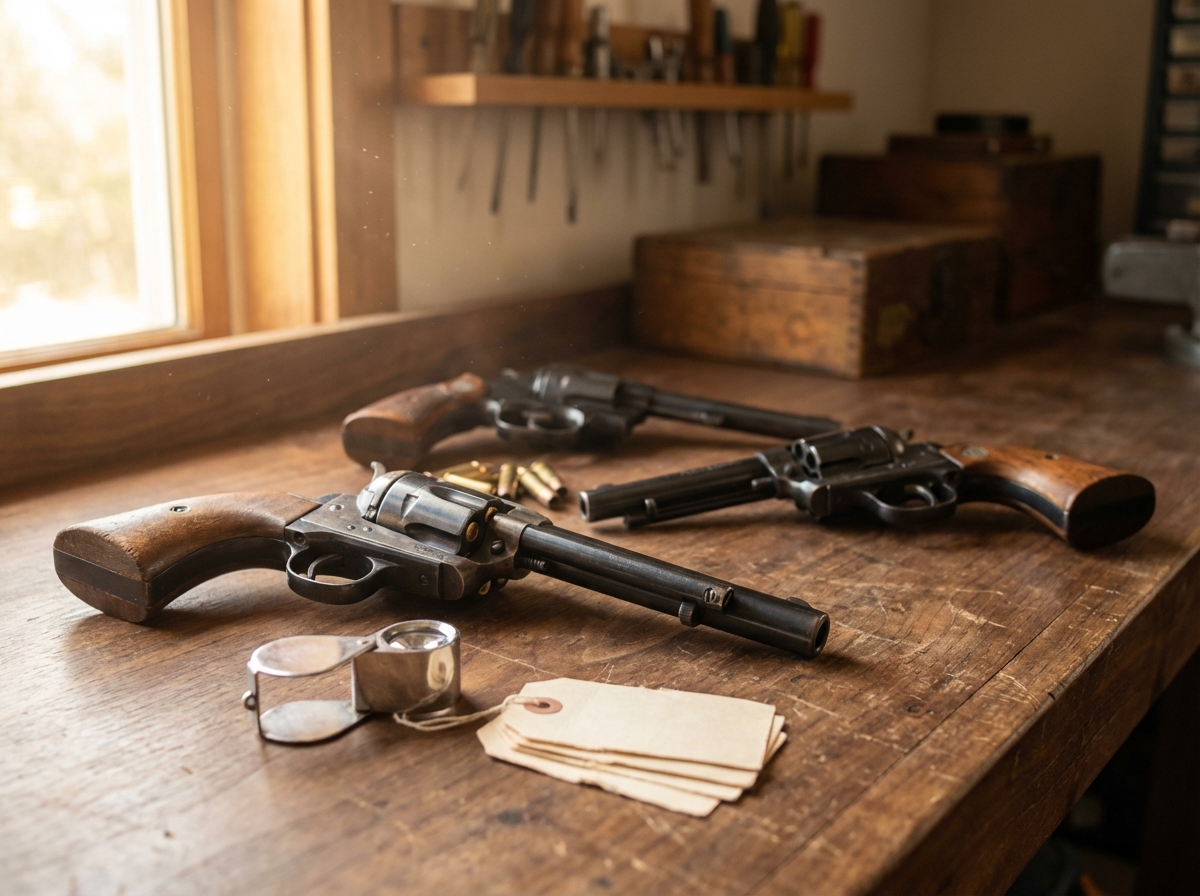

You see a revolver price that doesn’t match the world you thought you lived in, a buddy mentions what his Colt Python brought, or a shop offer lands miles above or below what you expected. Suddenly you’re staring at your own wheelgun and wondering, “Is mine one of the ones that’s climbing?”
And it’s not just curiosity. A surprising number can turn into a real decision fast: do you sell while the number’s hot, hold because it’s trending up, bump your insurance coverage, or sort it out for an estate plan so nobody guesses wrong later.
Here’s the tension that trips people up: there’s a widening price gap. Some revolvers behave like collectibles with real jumps, while common, budget-friendly shooters often stay pretty flat. Mix those categories up and you either leave money on the table or you overprice a gun that the market treats like ordinary used gear.
The Colt Python is the cleanest example because the name spans different eras. Colt introduced the Python in 1955. Colt’s original mass-produced Python run ended in 1999, with remaining production shifting to Colt’s Custom Shop, then it was discontinued in 2005. Colt reintroduced a new-production Python in 2020, creating a clear original-era vs new-era divide.
You’ll walk away able to judge whether your revolver is in the “climbing” category by watching the signals that matter: scarcity, collector demand, brand prestige, and condition, originality, and documentation. The trick is learning where those signals show up in real-world pricing, not just in the loudest listings.
What Actually Moves Gun Values
Revolver “value” doesn’t move on the loudest asking price. It moves on what buyers actually pay, how supply and demand affects firearm resale prices, and how fast a model clears once it’s priced realistically.
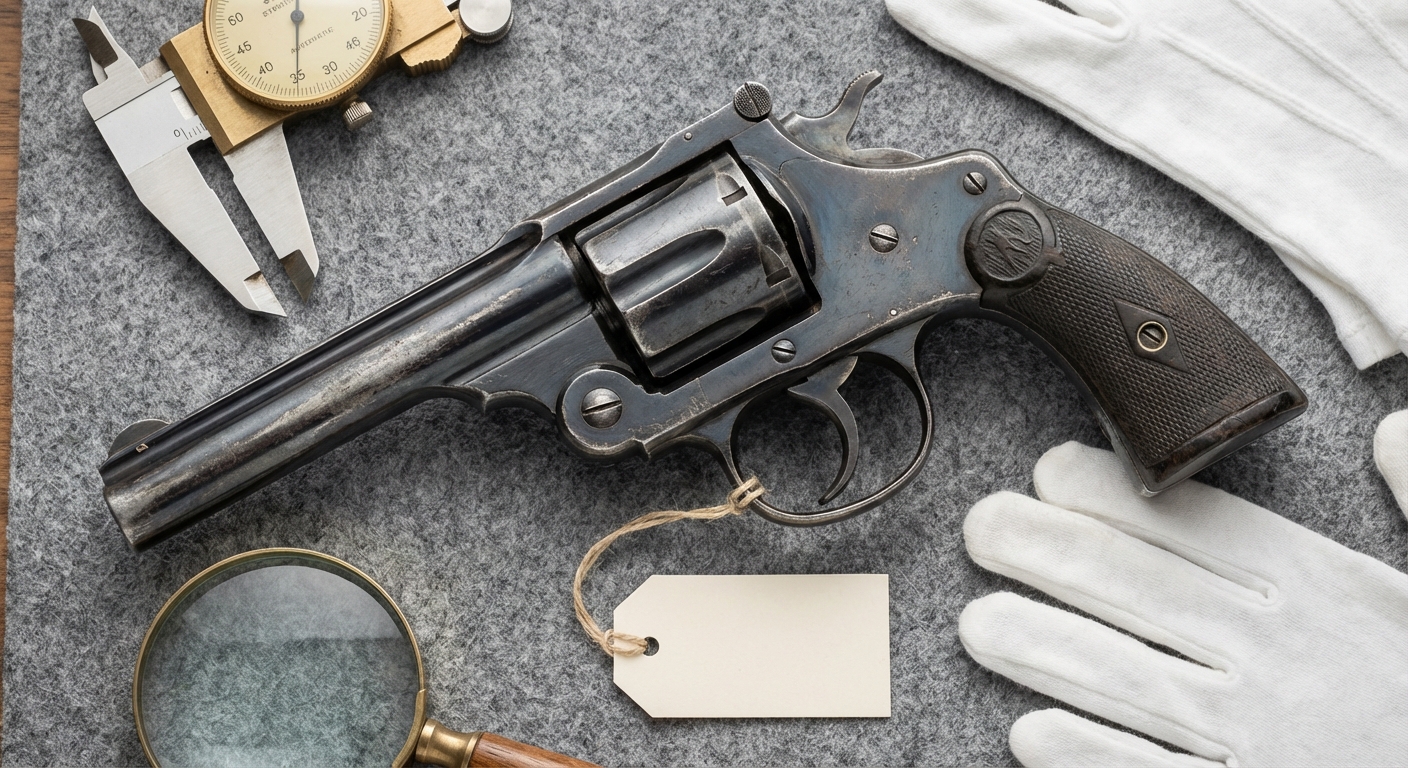
Here’s the trap: listings are marketing, not proof. What you can bank on is completed sales, meaning verified, finalized transactions that show what money actually changed hands. If you’re deciding whether to hold, sell, or insure, realized prices beat optimistic screenshots every time.
When production stops, supply tightens in the only place it can, the secondary market. Colt is a clean case study: Colt discontinued the original-production Anaconda in 2003 and reintroduced it in 2021. Colt ended original production of the Colt Detective Special in 1995. Those gaps create scarcity for original-era guns because there’s no steady stream of new inventory to absorb demand.
The complication is reissues. When a name comes back, you often get two markets that behave differently: original-era examples trading on age, history, and collector preference, and new-production guns trading on current retail availability. The Colt Python is the classic example of a model that stayed culturally “hot” even after a new-production version existed, because buyers still segment by era instead of treating all “Pythons” as interchangeable.
Demand expands for reasons that have nothing to do with your gun safe: a movie puts a wheelgun on screen, influencers revive a style, nostalgia cycles back, collector forums spotlight a model, or politics and breaking news push buyers into action. March 2020 is the reference point for a modern demand shock: the FBI NICS publishes monthly background-check totals in public reports, with a 2016 to 2025 time series available, and March 2020 saw a major surge in NICS volume.
NICS still isn’t a 1:1 count of guns sold. One check can cover multiple firearms, and some checks are permits or renewals rather than a point-of-sale transfer. It’s a demand thermometer, not a receipt printer.
Liquidity is the friction point. You list your revolver at a proud number and it sits, message after message asks for trades, and the only serious cash offer is a haircut. That’s illiquid. List a sought-after model at a fair market number and it sells quickly, because buyers already exist at that level.
The takeaway is simple: if you think a revolver is “going up,” confirm it in completed sales, then sanity-check the speed of sale at those numbers (and compare against recent gun market trend data). That’s what separates real appreciation from listing noise.
Why Some Revolvers Outperform Others
Once you start looking at what actually sells (and how fast), the next question is why two revolvers with the same model name can land in totally different price brackets.
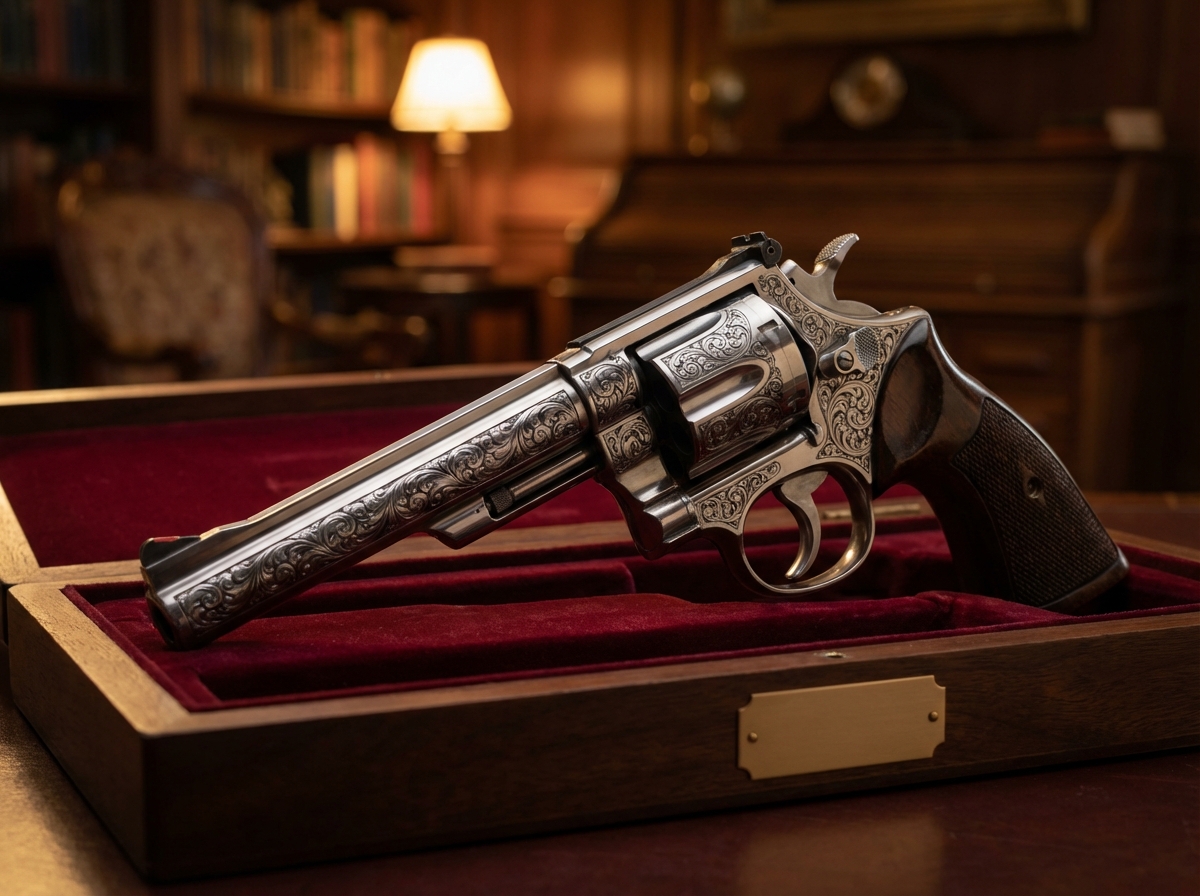
If a revolver leans collectible, tiny details create big price gaps, because collectors aren’t buying “a revolver,” they’re buying a specific version in a specific state. Two guns that look identical across a counter can diverge fast once you change one variable: a 4-inch barrel versus a 6-inch, factory target sights versus a fixed-sight setup, original wood stocks versus later rubber grips, or a scarce caliber run versus the common one. Those aren’t “small” changes to a collector, they’re the difference between “the one I’ve been looking for” and “close enough, pass.”
Older revolvers also carry craftsmanship cues that collectors chase on purpose: more visible hand-fitting, deeper polish and bluing standards, and the simple “they don’t make them like that” perception. That doesn’t mean newer revolvers are bad, it means the buying motive changes. A shooter can be satisfied by function; a collector is paying for the feel of a particular era and configuration, right down to sights, barrel profile, and correct-period grips.
The fastest way to leave money on the table is treating condition like a single bucket. The NRA Modern Gun Condition Standards ties value to condition tiers largely driven by original finish percentage plus mechanical and cosmetic state, and the named tiers bake that in:
- New: 100%
- Excellent: 98-99%
- Very Good: 90-95%
- Good: 80-85%
- Fair: 70-75%
- Poor: below that
In practice, dropping from the high-90% finish range toward roughly 80% typically hits value hard compared with the same model in higher grades, even if “it still shoots great.”
Original finish matters because it’s proof the gun hasn’t been scrubbed, buffed, or reworked in ways that erase collector signals. Mechanical issues matter just as much: endshake, timing problems, and a loose lockup pull a revolver out of the top condition conversation quickly, no matter how pretty the sideplate looks.
Common owner mistake: refinishing to “make it look new” before selling. A reblue can look cleaner, but refinishing is generally treated as a negative originality factor, because the gun is no longer wearing the factory finish and sharp edges and markings are often softened in the process.
On Smith & Wesson revolvers, the model marking often includes a dash number (like 19-2). That dash number denotes an engineering change revision; dash numbers generally rise chronologically, and a “no-dash” gun usually signals the earliest configuration after model-numbering began in 1957, before the first recorded engineering change.
Collectors also key in on era-linked features. A pinned barrel is the transverse pin that locks the barrel shank into the frame, and S&W used that system before 1981. A recessed cylinder (counterbored cylinder) has chamber recesses so the cartridge rims sit flush at the rear, and recessed cylinders were standard on S&W magnum revolvers through approximately 1981 and discontinued after. Pre-roughly-1982 S&W magnums commonly show both pinned barrels and recessed cylinders, which is exactly the kind of “version” detail buyers will pay attention to.
Finally, some buyers prefer pre-lock S&W revolvers, meaning examples made before the later addition of the internal key lock. The practical takeaway is simple: before you swap parts, polish metal, or refinish anything, treat the gun like a collectible until you’ve confirmed what makes a gun collectible and which configuration and untouched condition cues the market actually rewards.
Revolvers Versus Today’s Hot Sellers
Those collector signals are also why revolvers don’t always behave like the guns that dominate today’s shelves and holsters.
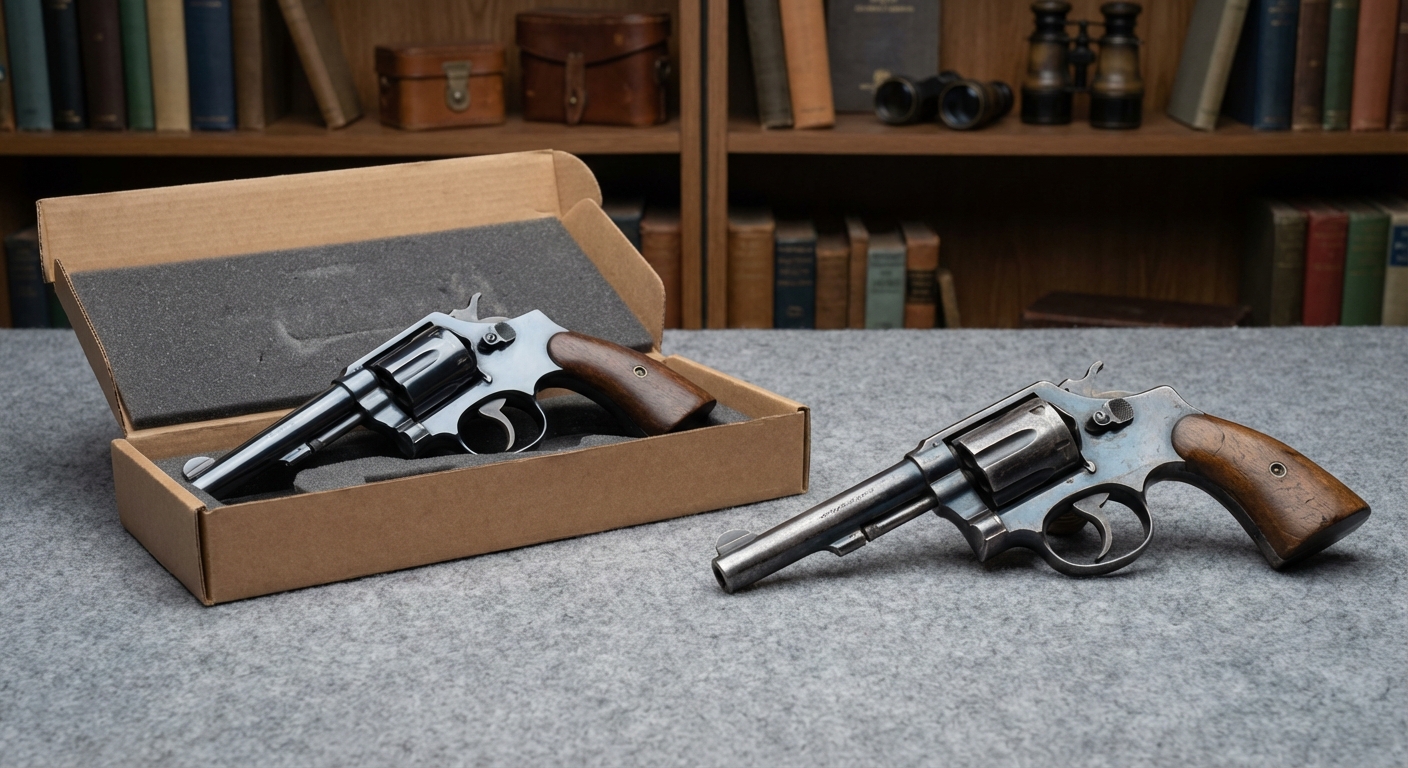
Most modern, high-volume guns price like consumer products on the used market: the newest version sets the tone, and older inventory gets pushed down. Certain revolvers are different, they behave more like collectibles, so the “it should hold value like my carry gun” instinct can send you in the wrong direction.
Glock’s generational cadence is a clean example: Gen 3 (1998), Gen 4 (2010), Gen 5 (2017). When Gen 5 hit in 2017, retailers commonly discounted new-in-box Gen 4 pistols to clear inventory. That clearance cycle quietly resets expectations for what a prior-gen gun is “worth,” and it ripples straight into used pricing even though the older gun is still a solid shooter.
Smith & Wesson did the same thing with the M&P line: the original launched in 2005, then the M&P M2.0 arrived in 2017. The update created a simple “old vs new” split that buyers and shops use as a pricing shorthand, and older versions soften because there’s an obvious newer substitute on the shelf.
If you’re searching models like Glock 19/17, SIG P320, Beretta 92, CZ 75, Taurus G3C, Springfield 1911, or staples like the 10/22, Mossberg 500, and Remington 870, keep it directional. The provided research does not include a consistent MSRP-to-realized dataset for those guns, so the point is the pattern: high-volume guns tend to hold or soften with product churn, while a revolver with real collector signals won’t necessarily follow that curve.
A Practical Revolver Valuation Checklist
You can get surprisingly close to a realistic revolver value at your kitchen table if you do four things well: identify the exact gun, assess condition and originality honestly, use credible comparables, and document what you have. Most bad valuations come from one of two mistakes: mixing up the exact variant or anchoring on the wrong prices.
- Identify the exact make, model, and variant, then write down the specifics that actually move comps: barrel length, finish (blued, stainless, nickel), sights, grips, and caliber. If it’s a Smith & Wesson, record the model marking and any dash number (for example, “19-3”), because that often separates meaningful price tiers in the same “Model 19” family. Many Smith & Wesson revolvers show a dash (“-“) after the model number, and sellers regularly miss it when they’re scanning for a quick answer.
- Confirm serial and date information using authoritative sources, not forum guesses. Ruger’s online serial-number lookup can return the model number, product line, caliber, production status, ship date, and an instruction manual link from the serial you enter. For Smith & Wesson revolvers, an authoritative place to check the serial number is on the bottom or the front of the grip frame, so you’re not relying on a number from the yoke cut or crane. Some manufacturer tools want the serial entered without spaces or dashes, and they can return multiple possible models, so match the returned date and details against what’s stamped on your gun.
- Assess condition and originality fast, but honestly. Note finish wear at edges and high spots, bore condition (shine, pitting, leading), and function at a high level, timing and lockup consistency, cylinder endshake, and whether the ejector rod and cylinder latch feel correct. Also list collector-impacting changes: non-factory grips, swapped sights, refinishing, or any parts that aren’t original, plus whether any numbers are matching where applicable.
- Gather accessories and paperwork, then photograph them with the gun. The original box, papers, factory grips, and any factory letter or receipt help you tell a cleaner story, and “complete package” guns are easier to comp because buyers trust what they’re looking at.
- Comp using completed sales (not listings), then tighten your filters until you’re comparing like to like. Barrel length and finish are non-negotiable, and you also want the right variant identifiers (dash number or era features, short parenthetical: “pinned barrel,” “no lock”) and similar condition language. Expect some spread anyway, realized prices move with region and seasonality, so your goal is a tight range, not a fake-precise single number.
- Escalate to a professional appraisal when the stakes are high or the signals are “collector.” Estates, rarities, inherited collections, or anything with features you can’t confidently judge is worth an expert appraisal for firearm collections before you set insurance values or pick a selling strategy.
Avoid this trap: Active listings can be useful for context, but they’re not the same as what buyers are actually paying, and don’t comp a 4-inch against a 6-inch just because the model name matches.
If your comps are scattered or the gun has collector signals, get an expert opinion before you change parts or list it.
When to Sell and How
Once you’ve got the model details and a defensible price range, the selling question gets a lot simpler: pick the safest lane, then price and time it within that lane.
Selling is usually less about “perfect timing” and more about choosing a compliant path that protects you, then pricing inside that lane while demand is healthy. Waiting for top dollar can work, but it ties up your time and adds uncertainty. If interest is already strong, a clean, low-friction sale often beats squeezing out the last few percent. Keep an eye on sentiment too, reissues, anniversaries, and a media moment can suddenly shift attention toward a specific model, or pull it away just as fast.
At a high level, you have three safe pathways. A local private-party sale, where legal, is fastest but comes with real friction: confirming eligibility, matching local paperwork norms, and verifying the buyer so you do not end up in a bad transaction. An FFL-based option, selling or consigning through a dealer, adds structure and a paper trail, with consignment fees commonly reported around 10% to 20%. The third route is shipping to an FFL for sale or transfer, which is often the simplest way to stay compliant when buyers are not clearly in-state.
The legal red lines are straightforward. Under the Gun Control Act, 18 U.S.C. § 922(a)(2) and § 922(a)(5), a nonlicensee generally cannot transfer directly to an out-of-state nonlicensee, interstate transfers to nonlicensees must go through an FFL in the recipient’s state. Federal law allows a nonlicensee to ship a firearm to an FFL in any state for lawful purposes, as long as the shipment and transfer comply with applicable laws. ATF guidance also recognizes shipping a firearm to yourself in another state under specific conditions, no transfer occurs. State rules shape the “easy” route: Texas, as of 2026, has no state universal background check requirement for private-party transfers, no permit-to-purchase, and no state waiting period. Florida, as of 2026, has no statewide universal background check law for private-party transfers, and FFL sales still require background checks under federal law.
Pick your compliant route first, then optimize timing and price within it. If there’s any chance the buyer is out of state, or you are unsure, default to an FFL-based path, keep records, insure appropriately, avoid sketchy payment methods, and stick to traceable, reputable processes.
Key Takeaways for Revolver Owners
Only some revolvers climb: collectors pay for scarcity, the right version, and originality, while most common guns track the normal used market. Colt names like Python, Cobra, Diamondback, Viper, King Cobra, and Anaconda can hinge on details, and refinishes hurt; on the S&W side, the lock began 2001, rolled 2002-2003, and the left-side keyhole above the cylinder release marks it as not pre-lock.
If you’re making a real decision-selling, holding, insurance, or estate planning-start by confirming the exact variant and comparing it against like-for-like, real-world comps. And if the buyer might be out of state, use an FFL-based path.
Get an informed valuation from Cash My Guns, operated by Dunlap Gun Buyers, an FFL buying nationwide online with a no-obligation expert appraisal.