
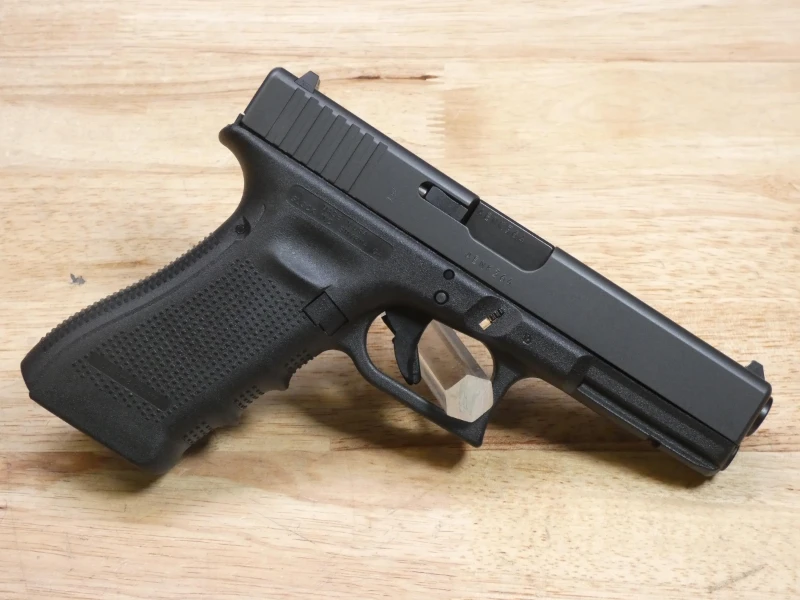
The Glock 22 is a full-sized, semi-automatic pistol renowned for its reliability and widespread adoption by law enforcement agencies across the United States. Chambered in .40 S&W, it has become a staple for both duty use and civilian personal defense. Understanding its market value is key for any owner looking to sell. The average used price for a Glock 22 hovers around $320, but can fluctuate based on its generation, overall condition, and included accessories.
What Determines Your Glock 22’s Worth
Several key factors determine the final resale value of a Glock 22. The specific generation of the pistol plays a significant role, as newer generations often command higher prices. The firearm’s cosmetic and mechanical condition is paramount; a well-maintained pistol with minimal wear will always be worth more than one showing signs of heavy use or neglect. Furthermore, the completeness of the package impacts the price. A Glock 22 sold with its original case and factory magazines can prevent a value reduction of $50 to $80. Finally, a high round count can lower the value due to expected wear on internal components like the barrel and springs.
2026 Price Breakdown by Generation
Glock 22 Gen 1
A common point of confusion in the Glock market is the existence of a “Gen 1” Glock 22. The Glock 22 model was first introduced in 1990, coinciding with the launch of Glock’s second-generation frame design. Therefore, there is no such thing as a factory-produced Generation 1 Glock 22. Any valuation or discussion must begin with the Gen 2 models. This historical detail is crucial for sellers to understand, as incorrectly listing a pistol as a “Gen 1” can undermine credibility and confuse potential buyers who are knowledgeable about the brand’s history and product timeline.
Because the Glock 22 never existed in the Gen 1 format, its value is purely theoretical and has no basis in the real-world market. Sellers should focus on accurately identifying their firearm as a Gen 2, Gen 3, Gen 4, or Gen 5 model to ensure a smooth and transparent transaction. Pricing should be based on the actual generation, condition, and market demand for that specific iteration. Misrepresenting the generation, even unintentionally, can lead to disputes and negatively affect the final sale price, so accurate identification is the essential first step in the valuation process.
Glock 22 Gen 2
As the first iteration of the Glock 22, the Gen 2 models are now becoming more of a collector’s item than a modern utility handgun, though they remain perfectly functional. Their value is heavily influenced by their condition and originality. A Gen 2 in excellent condition with its original “Tupperware” style box and accessories will appeal to Glock enthusiasts and collectors, potentially fetching a price higher than a more common, used Gen 3. However, a well-used Gen 2 police trade-in will likely be valued based on its utility as a budget-friendly firearm, competing with newer generations on the lower end of the price spectrum.
The market for Gen 2 Glock 22s is somewhat niche. While they lack the accessory rails and enhanced ergonomics of later generations, their historical significance as the first .40 S&W Glocks gives them a unique appeal. Pricing for these models can be inconsistent, as it depends on finding the right buyer. For a collector, provenance and condition are everything. For a budget-conscious shooter, it’s just another used handgun. Sellers should research recent sales of similar-condition Gen 2 models to set a realistic price that reflects its specific place in the market between a historical piece and a functional tool.
Glock 22 Gen 3
The Glock 22 Gen 3 remains one of the most common and recognizable versions on the market, largely due to its long production run and its status as a workhorse for countless police departments. In the used market, a Gen 3 typically sells for around $298, making it an accessible entry point. For those seeking a new model, prices for a new Gen 3 can range from approximately $467 to $550. This generation introduced the accessory rail, a feature that significantly increased its versatility and appeal, and it remains a popular choice for its proven reliability and vast aftermarket support.
The Gen 3’s value is also influenced by state-specific laws. For instance, in California, the Glock 22 Gen 3 is on the state’s roster of approved handguns and is legal to purchase, though it must be sold with a 10-round magazine. This legal status keeps demand steady within restrictive states. However, sellers should be aware of changing legislation, as a new California law is set to ban the dealer sale of new Glocks starting in mid-2026, which could affect future market dynamics. Its balance of features, price, and legal availability makes the Gen 3 a consistently relevant model.
Glock 22 Gen 4
The Glock 22 Gen 4 introduced several key upgrades that continue to make it a desirable option for many shooters. These enhancements include a modular backstrap system to accommodate different hand sizes, a more aggressive grip texture for improved control, and a dual recoil spring assembly designed to reduce felt recoil and increase the pistol’s service life. In the new market, a Gen 4 model is typically priced at around $500. These features provide a tangible step up from the Gen 3, often justifying the slight price premium for buyers seeking more modern ergonomics and performance characteristics.
In the used market, a Glock 22 Gen 4 can be found for approximately $316, reflecting a modest increase over its Gen 3 counterpart. This price point makes it a strong value proposition, offering modern features at a very competitive price. The Gen 4 successfully bridged the gap between the classic design of the Gen 3 and the latest innovations of the Gen 5, and as a result, it holds its value well. Sellers with a well-maintained Gen 4 model can expect consistent interest from buyers who see it as a sweet spot in the Glock lineage.
How Modifications Affect Value
When it comes to increasing the resale value of a Glock 22, practical and high-quality modifications tend to have the most positive impact. While a specific monetary increase is never guaranteed, upgrading the stock plastic sights is a widely recommended improvement. Installing premium aftermarket sights from reputable brands like Trijicon, TruGlo, or Ameriglo is most likely to add perceived value for a potential buyer. These brands are consistently praised for their durability and superior performance in various lighting conditions, making them a modification that enhances the firearm’s utility and appeal, which can translate to a quicker sale or a slightly higher price.
Regarding modifications that can hurt a Glock 22’s value, there is no definitive market consensus. The impact of customizations is highly subjective and depends entirely on the preferences of the potential buyer. Permanent alterations such as aggressive frame stippling, custom slide cuts, or non-traditional Cerakote colors can significantly narrow the pool of interested parties. While one buyer might see these as desirable upgrades, many others may view them as detrimental. Because these changes are a matter of personal taste, they often fail to add monetary value and can sometimes make the firearm harder to sell, potentially forcing a lower price to attract a buyer.
Regional Price Variations in 2026
State and local laws create significant regional price variations for the Glock 22. In California, for example, the Gen 3 model is legal for dealer sale because it is on the state’s Roster of Handguns Certified for Sale, but it must be sold with a 10-round magazine. This limited availability of new semi-automatic pistols can bolster the value of roster-approved firearms within the state. However, sellers must be aware that a new law is scheduled to ban the sale of new Glocks from dealers starting July 1, 2026, which will undoubtedly impact the private-party market for existing Glocks within California.
Similarly, New York imposes strict regulations that affect the Glock 22’s market. A valid state permit is required for purchase, and like California, New York enforces a 10-round magazine capacity limit. This means that standard capacity magazines, which are a key feature of the Glock 22, cannot be included in a sale, potentially diminishing its value compared to sales in less restrictive states. These legal hurdles and mandatory modifications mean that a Glock 22’s worth is not uniform across the country, and sellers must price their firearm in accordance with their local market’s specific legal landscape and demand.
Online vs Local Sales
When selling a Glock 22 privately, understanding the paperwork requirements is essential. While federal law does not mandate a bill of sale for a private transaction, creating one is highly recommended as a legal record for both parties. A comprehensive bill of sale should include the names of the buyer and seller, the firearm’s details (make, model, caliber, serial number), the sale price, and the date. State laws vary dramatically; some have no specific requirements for private sales, while others, to ensure a background check is performed, mandate that the transfer must be facilitated by a Federal Firearms Licensee (FFL).
Selling a Glock 22 online to a buyer in another state involves strict shipping regulations. Federal law requires that any handgun shipped across state lines must be sent from one FFL to another FFL in the buyer’s home state. Private sellers are generally prohibited by major carriers like UPS and FedEx from shipping handguns themselves; they must use a local FFL to handle the shipment. The package must be sent via an overnight service, be declared to the carrier as a firearm, and must not have any external markings that indicate its contents, ensuring a secure and legally compliant transfer.
The legal framework for interstate transfers is unambiguous. A direct sale of a handgun like the Glock 22 between private citizens residing in different states is illegal under federal law. The transaction must be mediated by licensed dealers. The seller ships the firearm to an FFL chosen by the buyer in their home state. The buyer must then visit that FFL, complete a federal background check (Form 4473), and satisfy any additional state or local requirements before they can legally take possession of the pistol. This process ensures that all firearm transfers comply with the laws of both the seller’s and buyer’s states.
The FFL Buying Advantage
When selling a Glock 22 to a gun dealer or Federal Firearms Licensee (FFL), it is crucial to have realistic price expectations. Dealers must account for overhead, time on the shelf, and profit margin, so their offers will be significantly lower than the firearm’s private-party retail value. Typically, a dealer will offer between 50% and 65% of the used market price for a common firearm. For a direct cash purchase, as opposed to a trade-in, some sources suggest this offer could be as low as 30% to 40% of its potential resale value, reflecting the immediate cash payment and risk the dealer assumes.
The primary advantages of selling to an FFL are convenience, speed, and legal security. The transaction is immediate, and the seller walks away with cash in hand without the hassle of listing the firearm, communicating with potential buyers, or navigating the legal requirements of a private sale. For firearms that are in high demand and expected to sell quickly, a dealer might offer a slightly higher percentage, potentially up to 70%. This path eliminates the risks and time commitment of a private sale, offering a guaranteed and legally sound way to liquidate the asset, albeit at a lower price.
What Increases Your Offer
One of the most straightforward ways to maximize the offer for your Glock 22 is to sell it as a complete package. Based on market listings, a pistol missing its original factory case and magazines may see a value reduction of approximately $50 to $80. Buyers, whether they are collectors or first-time owners, appreciate receiving the firearm as it came from the manufacturer. Ensuring you have the original hard case, all factory-supplied magazines, the owner’s manual, and any other included accessories like backstraps or a cleaning rod will make your firearm more attractive and help you command its full market value.
Presentation is critical, and a thorough pre-sale cleaning can significantly increase your offer. Before listing or showing your Glock 22, perform a detailed field-strip and clean all components to remove carbon fouling and residue from the barrel, slide, and frame. Use solvents appropriately and ensure all parts are dry before applying a very light coat of lubricant only to the manufacturer-specified points. Over-lubricating is a common error that can attract dirt and affect performance. A clean, well-maintained firearm signals to a potential buyer that it has been cared for, increasing their confidence and willingness to pay your asking price.
For online sales, high-quality photographs are non-negotiable for attracting the best offers. To effectively showcase your Glock 22, use bright, natural light and avoid using a harsh flash, which can create glare and hide details. Place the clean, fingerprint-free pistol on a plain, neutral background that provides good contrast. Take multiple clear, high-resolution photos from various angles, including close-ups of markings, sights, and any areas of wear. For most sales platforms, a square aspect ratio works best. Avoid distracting elements or artistic filters; the goal is to represent the firearm accurately and professionally.
When to Sell Your Glock 22
Market data suggests that firearm sales exhibit seasonal trends, and timing your sale can impact the final price. The best time to sell a used handgun like the Glock 22 appears to be during the late fall and winter months. This period, running from approximately mid-November through January, often sees increased buyer activity. Another strong sales window occurs in the spring, when many potential buyers are looking to spend their tax refunds. Capitalizing on these peak seasons can lead to a faster sale and potentially a higher offer due to increased demand from a larger pool of active buyers.
Conversely, the summer months are generally considered a slower period for firearm sales. With people focused on vacations and outdoor activities, there tends to be less market activity, which can result in fewer inquiries and potentially lower offers for your Glock 22. While it is still possible to sell during this time, sellers may need to be more patient or price their firearm more competitively to attract attention. Understanding this cyclical trend allows you to strategically list your pistol when the market is most favorable, maximizing your chances of a successful and profitable transaction.
While seasonal trends provide a useful baseline, it is crucial to recognize that the political climate can be a far more significant driver of firearm prices. During an election year or periods of debate over new firearm legislation, demand can surge dramatically, overriding typical seasonal patterns. This “panic buying” phenomenon can lead to rapid price increases for popular firearms like the Glock 22. Sellers should therefore pay close attention to the current political landscape, as it can create unexpected windows of opportunity to sell at a premium price, regardless of the time of year.
Common Pricing Mistakes
A frequent mistake sellers make is failing to realistically account for the firearm’s usage. While the Glock 22 is known for its incredible durability and longevity, a high round count will still lower its resale value due to the expected wear on components like the barrel, recoil spring, and trigger assembly. Glocks can fire tens of thousands of rounds without major issues, but savvy buyers will factor this wear into their offer. Sellers should be transparent about the firearm’s history and set a price that reflects its level of use, as overpricing a high-mileage pistol will only deter knowledgeable buyers.
Another common error, particularly for a widely available firearm like the Glock 22, is paying for a professional appraisal. The market value of such a modern, mass-produced pistol is well-established and can be easily determined by researching completed sales on online marketplaces and forums. A professional appraisal is an unnecessary expense that is better suited for rare, antique, or unique firearms where the value is not easily established. For a Glock 22, which typically has a used retail value between $300 and $450, the cost of an appraisal would simply cut into the seller’s net profit.
Many sellers have unrealistic expectations when approaching a gun dealer for a sale. A common pricing mistake is assuming a dealer will pay the same price you see in private sale listings. Dealers have to cover business expenses and make a profit, so they will typically offer between 50% and 65% of the firearm’s used retail value. Walking into a gun store expecting to receive 90% or 100% of the private party price will lead to disappointment. Understanding the business model of an FFL helps in setting realistic expectations for a quick, hassle-free cash offer.
Market Outlook for 2026
Predicting the future value of any firearm with certainty is challenging, as the market is influenced by a complex mix of economic, political, and social factors. For the Glock 22, its value has long been stabilized by the steady supply of law enforcement trade-in models. These surplus pistols tend to keep the market well-stocked, which generally prevents dramatic price increases and maintains the model’s status as an affordable and reliable option. Barring any major shifts in ammunition availability or federal legislation, the Glock 22’s price is likely to remain relatively stable and predictable in the broader national market.
One significant regional factor that will influence the market in 2026 is the changing legal landscape in California. A new law is set to ban the sale of new Glock handguns from licensed dealers starting July 1, 2026. This could have a notable impact on the value of existing, privately-owned Glocks within the state. With the supply of new Glocks cut off, demand for pre-owned models like the Glock 22 Gen 3 on the private market may increase among California residents, potentially driving up their value within that specific, isolated market, while having a less pronounced effect on national pricing.
Frequently Asked Questions
Is a Glock 22 considered an NFA item?
No, a Glock 22 in its standard factory configuration is not regulated as an NFA (National Firearms Act) item. The NFA governs specific categories of firearms such as machine guns, short-barreled rifles, and silencers. As a conventional semi-automatic pistol, the Glock 22 does not fall under these classifications and is legal for civilian purchase, subject to state and local laws. This non-NFA status is crucial to its value, as it can be bought and sold through an FFL without the expensive tax stamps, extensive paperwork, and lengthy wait times associated with NFA-regulated items.
How much does a high round count really affect a Glock 22’s price?
A high round count will generally lower the resale value of a Glock 22, but the impact may be less significant compared to other pistol models. Glocks are legendary for their durability and are capable of firing tens of thousands of rounds without critical failures. Because of this reputation, buyers are often more focused on the firearm’s cosmetic condition and maintenance history. While a very high round count suggests wear on the barrel and springs, the reduction in value is often modest unless the pistol shows clear signs of abuse or neglect, making its overall appearance a more critical price factor.
Will I get more money if I sell my Glock 22 with its original box?
Yes, including the original case, magazines, and any factory accessories is a key factor in maximizing your Glock 22’s value. Market data shows that a firearm sold without these items can see its value reduced by approximately $50 to $80. Presenting a complete, “as it came from the factory” package appeals to all types of buyers, from collectors who value originality to first-time owners who appreciate having the proper case for transport and storage. It is a simple yet highly effective way to ensure you receive the best possible offer for your pistol.
Does my Glock 22 need a bill of sale to be sold legally?
Federally, a bill of sale is not required for a private firearm transaction, but it is a highly recommended document that provides a legal record of the transfer for both the buyer and seller. However, state laws vary significantly on this matter. Some states have no additional requirements for private sales, allowing two eligible individuals to transact directly. In contrast, other states mandate that all private firearm transfers must be conducted through a Federal Firearms Licensee (FFL), a process which involves a background check and official federal paperwork, making a simple bill of sale insufficient.
Is it worth paying for a professional appraisal for my Glock 22?
For a standard Glock 22, a professional appraisal is generally not worth the cost. As a very common, modern, mass-produced firearm, its market value is well-established and typically falls within the $300 to $450 range for a used model. This value can be easily determined by researching recent sales on online gun marketplaces and forums. Professional appraisals are more beneficial and cost-effective for rare, antique, collectible, or limited edition firearms where the value is not common knowledge and requires an expert’s assessment to be accurately established.
Get a Cash Offer Today
Ready to sell your Glock 22? We make the process simple, safe, and transparent. Avoid the uncertainty of private sales and the low offers from local shops. Our process is fully compliant with all federal and state laws, ensuring a secure and legal transaction from the comfort of your home.
Click the button below to submit your firearm’s information and receive a fair, no-obligation cash offer. Let us handle the complexities of paperwork and shipping so you can get paid quickly and confidently. Discover the best way to sell your firearm today and see what your Glock 22 is worth.