
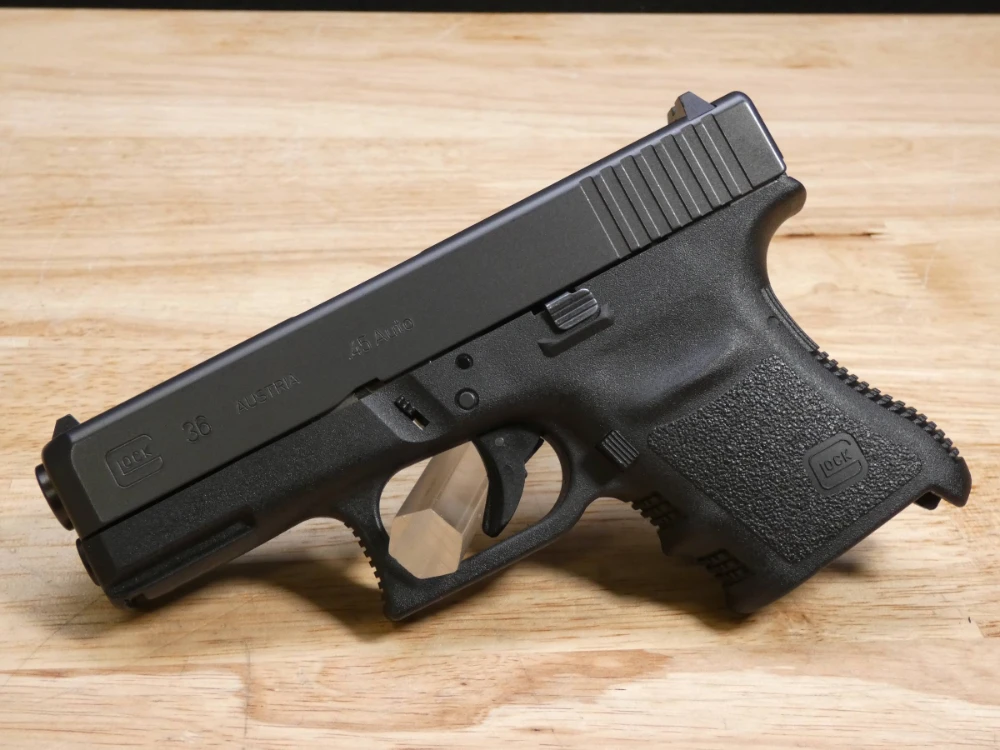
The Glock 36 is a subcompact, semi-automatic pistol renowned for its slim single-stack design chambered in .45 ACP, making it a popular choice for concealed carry. Understanding its market value is key for any potential seller. A new Gen 3 model typically has an MSRP between $518 and $650, while a used Glock 36 in good condition can be found in a price range of $250 to $400, depending heavily on its condition and included accessories.
What Determines Your Glock 36’s Worth
The primary factors determining the value of a Glock 36 are its physical condition, mechanical function, and completeness. A firearm in “Excellent” condition with minimal finish wear will command a much higher price than one with significant cosmetic damage, which can reduce its value by 30% to 50%. Furthermore, the inclusion of the original factory case and magazines is crucial; missing these items can result in a deduction of $60 to $90. While a high round count can be a point of negotiation, Glock’s reputation for durability means that overall maintenance history and visible condition are far more critical to its final worth.
2026 Price Breakdown by Generation
Generation 1
The Glock 36 was never manufactured as a Generation 1 model. The first generation of Glock pistols, introduced in the 1980s, is easily identified by its smooth, uniform “pebble-grip” texture and a frame that lacks finger grooves or an accessory rail. These early models, primarily the Glock 17, established the brand’s reputation for reliability and simplicity. Because the Glock 36 was developed later, it does not share these specific design characteristics, and therefore no Gen 1 version of this subcompact .45 ACP pistol exists on the market, making any price comparison inapplicable.
Collectors and enthusiasts often seek out original Gen 1 Glocks for their historical significance, but this demand does not apply to the Glock 36 model. The value of any firearm is tied to its specific production history, and since the G36 was introduced long after the Gen 1 era concluded, its pricing is entirely independent of this generation. Any search for a “Gen 1 Glock 36” would be fruitless, as its design lineage begins with the features and advancements introduced in later Glock generations, which catered to evolving consumer preferences for ergonomics and modularity.
Generation 2
Similar to the first generation, the Glock 36 was not produced as a Generation 2 model. The Gen 2 Glocks, which appeared in the late 1980s, introduced significant ergonomic updates over their predecessors. These models featured new checkering on the front and back straps of the grip for improved handling and control, a change that became a staple of the brand’s design language. However, the Glock 36 was not part of the product lineup during this period, so there are no Gen 2 variants to evaluate or price on the secondary market.
The absence of a Gen 2 Glock 36 means that its value is not influenced by the features or collector interest associated with that era. The development of the slimline, single-stack .45 ACP pistol came later, incorporating more modern design elements from the outset. Therefore, when assessing the value of a Glock 36, sellers and buyers should focus exclusively on the characteristics and market data relevant to the generation in which it was actually produced, as looking for a Gen 2 is a common point of confusion for those unfamiliar with the model’s history.
Generation 3
The Glock 36 is exclusively a Generation 3 firearm, which is a critical factor in its valuation. The Gen 3 design, introduced in 1998, brought several key upgrades that define this model, including the addition of an integrated accessory rail on the dust cover for mounting lights and lasers. It also features pronounced finger grooves and a thumb rest on the grip for a more secure hold. These ergonomic and functional enhancements are standard across all Glock 36 pistols, making them easily identifiable and placing them firmly within this specific era of Glock manufacturing.
As the only generation available, the value of a Glock 36 is not determined by comparing it to other generations but by its own market performance. A new Gen 3 model has an MSRP ranging from $518 to $650, with retailer prices often starting around $449. On the used market, a G36 in good to excellent condition typically sells for between $250 and $400. The price within this range is dictated almost entirely by its cosmetic condition, the number of included factory magazines, and the presence of its original case.
Generation 4
The Glock 36 was never updated to a Generation 4 configuration, a decision that cemented its status as a Gen 3 exclusive. The Gen 4 series, launched in 2010, was marked by several notable innovations, most prominently the modular backstrap system that allowed users to customize the grip size. Gen 4 models also introduced a more aggressive grip texture and a dual recoil spring assembly designed to reduce felt recoil and increase the service life of the pistol. The Glock 36 was not included in this series of updates, so no Gen 4 version exists.
Because the G36 platform did not continue into the Gen 4 lineup, its value is insulated from any direct comparisons to these newer models. Its pricing and desirability are based on its unique characteristics as a slim, concealable .45 ACP pistol from the Gen 3 era. Buyers seeking the specific features of a Gen 4 Glock, such as the customizable grip or dual recoil spring, would need to look at other models in the Glock catalog, as these were never implemented on the G36, making a Gen 4 price point for this model purely hypothetical.
How Modifications Affect Value
When it comes to value-adding modifications for the Glock 36, there is no clear market consensus. Upgrades such as high-visibility night sights, improved trigger connectors, or extended slide releases can be attractive to certain buyers who value enhanced performance and are willing to pay a premium. However, many other potential buyers, particularly collectors or those prioritizing factory reliability, strongly prefer an unmodified firearm. Consequently, the value added by aftermarket parts is highly subjective and depends entirely on finding a buyer who shares the seller’s taste in modifications, which can sometimes narrow the potential market.
Similarly, there is no definitive list of modifications that universally hurt the Glock 36’s value, as buyer preference varies widely. Permanent alterations like custom slide milling for red dot optics or aggressive grip stippling can be polarizing. While a professionally executed modification might appeal to a niche buyer, it can deter those seeking a stock pistol. Because these changes are irreversible, they have the potential to lower the firearm’s appeal to the broader market, making it harder to sell and potentially reducing its final price compared to a factory-original example.
Regional Price Variations in 2026
State-level firearm laws play a significant role in regional price variations. For instance, the Glock 36 is legal for civilian purchase in states with strict regulations, such as California and New York. In California, it is listed on the state’s Roster of Handguns Certified for Sale, with its certification valid until January 1, 2026. This official approval ensures its availability and can stabilize its price in that market, as “off-roster” handguns often command a significant premium. In states with fewer restrictions, the G36 competes with a wider array of modern handguns, which can influence its local market value.
Beyond state laws, local supply and demand dynamics dictate pricing. In a region where the demand for subcompact .45 ACP pistols for concealed carry is high and the local supply of used Glock 36s is low, private sellers may be able to achieve prices toward the upper end of the typical $250 to $400 range. Conversely, in a market saturated with similar firearms or with less consumer interest in the .45 ACP caliber, prices will likely be more competitive, trending toward the lower end of the valuation spectrum as sellers compete for buyers.
Online vs Local Sales
When selling a Glock 36, the choice between a local private sale and selling to a dealer involves a trade-off between price and convenience. A private sale typically yields a higher return, with the firearm’s estimated private party value hovering around $366. However, this route requires the seller to manage the listing, vet potential buyers, and navigate state-specific transaction laws. In contrast, selling to a gun dealer is faster and simpler but comes at a lower price. Dealers typically offer between 50% and 65% of the used retail value, providing immediate cash but a smaller profit.
Selling a handgun to a resident of another state online introduces mandatory legal procedures. The transaction cannot be direct; federal law requires the firearm to be transferred through a Federal Firearms Licensee (FFL). The seller must take the Glock 36 to an FFL in their state, who will then ship it to an FFL in the buyer’s state. The buyer must then visit their local FFL, complete a background check, and fill out all required paperwork before they can legally take possession of the pistol, adding extra steps and costs for both parties.
Shipping a Glock 36 also presents logistical hurdles, primarily due to restrictive carrier policies. Both UPS and FedEx now generally mandate that handguns can only be shipped by an FFL holder. This means a private seller will almost certainly need to use their local FFL to send the firearm. The handgun must be unloaded, declared to the carrier, packaged in a discreet box with no external markings indicating its contents, and shipped via a priority overnight service. These stringent requirements add to the overall cost and complexity of an online sale compared to a local transaction.
The FFL Buying Advantage
Utilizing a Federal Firearms Licensee (FFL) for the transfer of a Glock 36 offers a significant advantage in legal protection and compliance for both the buyer and the seller. For any sale that crosses state lines, using an FFL is a federal requirement, not an option. The FFL serves as a neutral, regulated third party that ensures the transaction adheres to all applicable laws. They are responsible for conducting the mandatory background check on the buyer through the National Instant Criminal Background Check System (NICS), confirming the recipient is not legally prohibited from owning a firearm.
The FFL also manages all the necessary paperwork, creating an official and traceable record of the transfer of ownership. While a simple bill of sale is recommended for private sales, an FFL transfer provides a much more robust legal document. Paperwork requirements for private firearm sales vary dramatically between states; some mandate that all private transactions go through a licensed dealer, while others have no such rule. Using an FFL standardizes this process, ensuring that the sale is documented correctly and mitigating future liability for the seller by proving the firearm was legally transferred.
What Increases Your Offer
A meticulous pre-sale cleaning is one of the most effective ways to increase the perceived value of your Glock 36. Before listing it for sale, you should field strip the pistol and thoroughly clean the barrel, slide, and frame with a quality gun solvent and brushes. Removing all carbon buildup and residue, especially from the slide rails and extractor, demonstrates proper maintenance. Afterward, wipe all components dry and apply a very light coat of lubricant only to the manufacturer-specified points. Avoid overusing solvents or allowing oil to enter the firing pin channel, as a clean and properly prepped firearm signals a well-cared-for weapon.
Presenting the Glock 36 as a complete package from the factory significantly boosts its value. An offer can be reduced by $60 to $90 if the original hard case and factory magazines are missing. This deduction directly reflects the cost a buyer would incur to replace these items, with factory magazines costing around $21-$25 each and a replacement Glock case priced at approximately $20 to $30. Including all original accessories, manuals, and paperwork shows the firearm has been kept in its original configuration, which is highly appealing to discerning buyers and can justify a higher asking price.
High-quality photography is non-negotiable for maximizing your offer in an online sale. To accurately represent the firearm’s condition, use ample, diffused lighting from several sources to eliminate harsh shadows and glare. Place the Glock 36 against a simple, non-distracting background and capture images from various angles. Be sure to take detailed close-ups of any markings, modifications, or cosmetic imperfections. Providing numerous clear, well-lit photos builds confidence with potential buyers, assures them of the gun’s condition, and can directly lead to a faster sale at a better price.
When to Sell Your Glock 36
Understanding seasonal market trends can help you maximize the sale price of your Glock 36. While long guns like rifles see a predictable surge in demand during the late summer and early fall leading up to hunting seasons, the sales trends for handguns are more closely tied to general consumer spending patterns rather than specific outdoor activities. Recognizing these periods of heightened market activity is key, as listing your firearm during a peak season can attract a larger pool of motivated buyers and result in a quicker, more profitable sale.
The most advantageous times to sell a handgun generally fall into two main windows. The first is the holiday season, running from mid-November through mid-January, when many people are shopping and spending more freely. The second key period is tax refund season, which typically spans from February through April. During this time, many consumers have more disposable income and are looking to make significant purchases. Listing your Glock 36 during either of these high-traffic periods can significantly increase your chances of securing a top-dollar offer from an eager buyer.
Conversely, the summer months are generally considered the slowest period for firearm sales. With potential buyers often focused on vacations, family activities, and other outdoor pursuits, the demand for firearms can temporarily soften. This can lead to a longer time on the market and potentially lower offers as fewer buyers are actively looking. To optimize your financial return, it is often advisable to avoid listing your Glock 36 during this summer slump and instead wait for one of the more active sales seasons to begin.
Common Pricing Mistakes
One of the most common pricing mistakes is failing to honestly assess and account for cosmetic damage. The value of a Glock 36 can be reduced by 30% to 50% if it has heavy wear. Sellers should objectively evaluate their firearm based on NRA condition standards, where “Excellent” implies only slight finish wear. Scratches, holster wear, or dings would downgrade it to “Very Good” or “Good,” significantly impacting its price. Overpricing a cosmetically worn firearm will deter knowledgeable buyers and prolong the sale process, ultimately forcing a price reduction.
Another frequent error is ignoring the financial penalty for an incomplete package. A Glock 36 is considered complete with its original factory hard case and at least two magazines. Sellers who cannot provide these items should expect buyers to deduct their replacement cost from any offer, a penalty that typically falls between $60 and $90. Listing the pistol at the price of a complete set while failing to mention the missing accessories is a mistake that leads to frustrating negotiations and will likely result in a lower final sale price.
Paying for a professional appraisal on a standard-production firearm like the Glock 36 is an unnecessary expense and a poor financial decision. The market value for this common pistol is well-established and easily researched, with used models in very good condition consistently trading between $250 and $400. The cost of a formal appraisal would represent a significant percentage of the gun’s total value, making it impractical. Sellers can determine a fair market price by simply observing current listings on popular online marketplaces and forums, saving both time and money.
Market Outlook for 2026
The market outlook for the Glock 36 in 2026 is poised for a significant shift, driven by reports of its potential discontinuation. According to industry sources, Glock may cease production of most of its models, including the G36, by the end of 2025. Such a move would immediately transform the G36 from a standard production item into a legacy firearm. When a popular and functional model is no longer available new, all consumer demand is funneled into the secondary market, which almost always has a direct and positive impact on its value.
As a result of this reported production halt, prices for the Glock 36 are widely expected to spike on the used market starting in 2026. Scarcity is a powerful driver of value, and the G36’s unique position as Glock’s only slimline, single-stack .45 ACP makes it particularly desirable to enthusiasts of the brand and the caliber. While specific price range predictions for 2026 are not yet available, sellers who hold onto their G36 may find themselves in a favorable position as supply dwindles and demand from collectors and concealed carriers increases.
Frequently Asked Questions
Does a high round count hurt my Glock 36’s value?
While a very high round count can be used as a negotiation point for a lower price, it does not dramatically devalue a Glock 36. This is due to Glock’s legendary reputation for extreme durability and longevity. These pistols are known to function reliably well past 100,000 rounds with only routine maintenance of consumable parts like springs. Therefore, a buyer is likely to be more concerned with the firearm’s overall physical condition, signs of abuse, and maintenance history than the round count alone, which is often difficult to verify anyway.
How much does missing the original case and magazines devalue my pistol?
The deduction in value for a Glock 36 sold without its original factory case and magazines is typically between $60 and $90. This price reduction directly reflects the market cost of replacing these items. Factory Glock 36 magazines generally cost between $21 and $25 each, and acquiring a replacement Glock-branded pistol case usually costs an additional $20 to $30. To maximize your sale price, it is always best to sell the firearm as a complete, original package, just as it came from the manufacturer.
Is it worth getting a professional appraisal for a Glock 36?
No, a professional appraisal is generally not worth the cost for a standard used Glock 36. The market value for this common, mass-produced firearm is well-established and easily researched online. A used G36 in very good to excellent condition typically sells for $250 to $400. The fee for a formal appraisal would likely be a significant percentage of the pistol’s total value, making it an impractical and unnecessary expense. You can determine a fair asking price by observing recent sales and current listings on various online gun marketplaces.
How does heavy cosmetic damage affect the price?
Heavy cosmetic damage, such as deep scratches, significant holster wear, or dings in the slide or frame, will substantially reduce a Glock 36’s value. The typical price reduction is between 30% and 50% of its value in “Excellent” condition. According to NRA modern firearm condition standards, heavy cosmetic issues would likely place the firearm in the “Good” or low “Very Good” category. Since condition is one of the most critical factors in used gun pricing, such wear will be the primary point of negotiation for any informed buyer.
Do I need original parts to get a good price?
There is no universal consensus on whether a Glock 36 must have all original factory parts to command a good price, as it largely depends on buyer preference. Many buyers, especially those focused on self-defense or collecting, strongly prefer factory-original components for their proven reliability. However, another segment of the market may appreciate tasteful, high-quality aftermarket upgrades like improved sights or triggers. A modified Glock may appeal to a smaller, more specific group of buyers, while a stock configuration will always have the broadest market appeal.
Get a Cash Offer Today
Ready to sell your Glock 36? We make the process simple and secure. Avoid the hassle of private listings and legal complexities. Our streamlined system ensures you get a fair, competitive cash offer for your firearm without the wait. See what your Glock is worth today.
Submit your firearm’s details through our easy-to-use online form, and our experts will provide a prompt evaluation. We handle all the FFL paperwork and logistics, offering you a safe and compliant way to turn your used handgun into cash. Get your no-obligation offer now.