
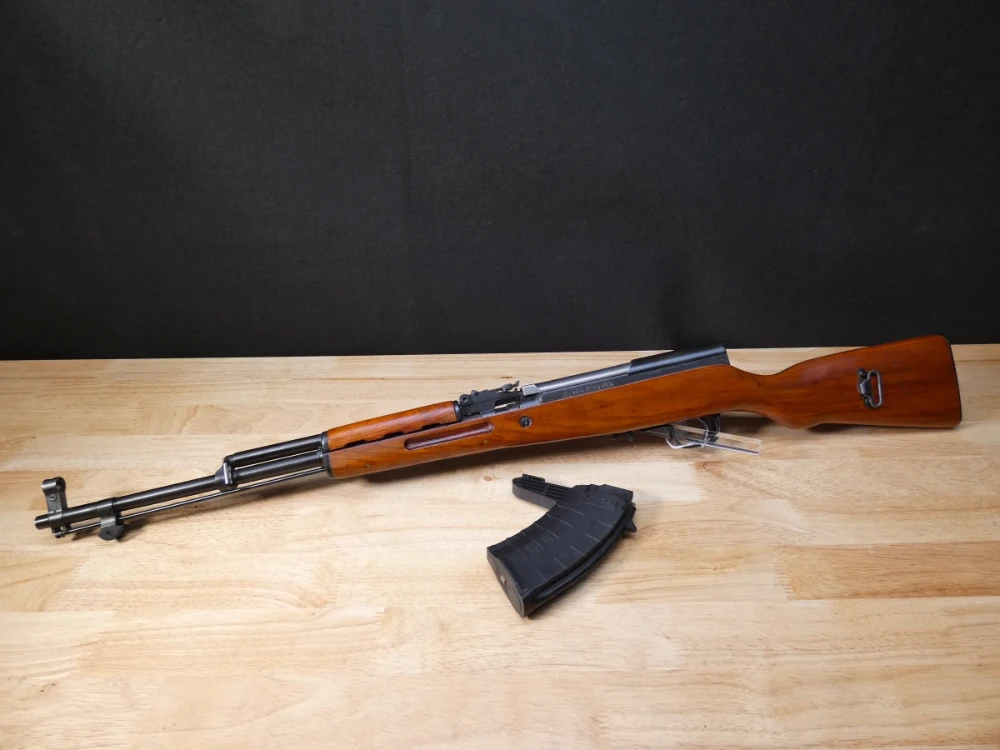
The Norinco Type 56 stands as a renowned and widely recognized Chinese variant of the classic Kalashnikov rifle. Valued for its rugged durability and historical significance, its worth in today’s market is determined by a unique combination of factors, including its pre-ban import status, specific model configuration, and overall condition. Understanding these key value drivers is essential for any owner looking to accurately assess the price of their firearm, whether it’s a well-used shooter or a pristine collector’s piece.
What Determines Your Norinco Type 56’s Worth
The value of a Norinco Type 56 is primarily dictated by its manufacturing era and import status. Pre-ban models, imported before the 1989 and 1994 restrictions, command a significant premium due to their collectibility and features. Specific variations, such as the Type 56S-1 with an under-folding stock or the Type 56-2 with a side-folder, are more sought-after than standard fixed-stock models. Furthermore, the transition from milled to stamped receivers in the mid-1960s created distinct versions that appeal differently to collectors and shooters. Ultimately, the rifle’s condition, originality, and the presence of factory parts are critical factors that separate a high-value collectible from a standard shooter-grade firearm.
2026 Price Breakdown by Generation
Pre-Ban Collector Grade (New Old Stock)
The highest tier of the Norinco Type 56 market consists of unfired, pre-ban models, often referred to as “new old stock.” These firearms represent the pinnacle of collectibility, having been preserved in their original factory condition for decades. Due to long-standing import restrictions, no new Type 56 rifles enter the US market, making these examples exceptionally rare. Their value is driven by this scarcity and the desire of collectors to own a piece of firearms history in pristine, untouched condition. They serve as a benchmark for the model’s potential worth when all factors align perfectly.
On the secondary market, these new old stock rifles command prices that reflect their rarity, with an average value estimated between $1,966 and $2,115. This price point is significantly higher than that of even well-maintained used models, as the “unfired” status places them in a separate category. For sellers who possess such an item, its value is more akin to a historical artifact than a functional firearm, and finding the right collector is key to realizing its full market potential. Documentation and original packaging can further enhance the value of these top-tier examples.
Pre-Ban Variants (Used)
Just below new old stock are the used pre-ban Norinco Type 56 variants, which remain highly desirable among collectors and enthusiasts. Models like the Type 56S-1, featuring its distinct under-folding stock, are particularly sought after for their iconic military configuration. Even with signs of use, their pre-ban status ensures they are legal in more configurations and locations than their post-ban counterparts, and they represent a finite supply of classic AK-pattern rifles. These firearms bridge the gap between pure collectibles and high-end shooters, offering both historical appeal and functional value.
The market value for these premium used variants, such as the underfolder, typically ranges from $1,775 to $2,500, a price heavily influenced by the specific model, condition, and originality. The high demand for these configurations keeps their prices strong, often exceeding the value of new old stock basic models. Sellers with a pre-ban folder or another desirable variant should emphasize its specific features and pre-ban legality, as these are the primary drivers of its elevated price point compared to more common Type 56 rifles on the market.
Standard Post-Ban Models (Stamped Receiver)
The most commonly encountered Norinco Type 56 is the standard used model, typically featuring a stamped receiver and a fixed stock. These post-ban rifles are the workhorses of the family, prized for their legendary durability and reliability rather than their collector appeal. They represent the accessible entry point into Type 56 ownership and are often purchased as “shooter” grade firearms intended for regular use at the range. Their value is less about historical purity and more about functional performance and overall mechanical condition, making them a staple in the used rifle market.
The average used price for a common Norinco Type 56 is estimated to be between $670 and $830. Current market data shows an average price of approximately $748, though the 12-month average has been slightly higher at around $829. This price range reflects a firearm that is mechanically sound but may show signs of cosmetic wear consistent with normal use. For sellers, this is the most competitive segment of the market, where pricing accurately based on condition is crucial to attracting buyers looking for a dependable and iconic rifle.
Early Milled Receiver Models
A distinct and historically significant category includes the early Norinco Type 56 rifles built with milled receivers. Produced before the transition to more cost-effective stamped receivers in the mid-1960s, these models are known for their robust construction and closer resemblance to the original Soviet AK-47 Type 3. While not always carrying the same legal advantages as pre-ban imports, their robust build and historical context make them highly appealing to a specific subset of collectors and shooters who appreciate the classic manufacturing techniques and the heft of a solid steel receiver.
The value of a milled receiver Type 56 is influenced heavily by its condition and specific markings. While a precise market consensus can be difficult, their value generally falls between that of a standard stamped-receiver model and a premium pre-ban variant. These rifles are less common, and their pricing reflects a blend of historical appeal and perceived durability. A seller with a milled receiver model should highlight this key feature, as it distinguishes the firearm from the vast majority of stamped Type 56 rifles available on the secondary market.
How Modifications Affect Value
When it comes to modifications, the general market consensus is that aftermarket changes rarely increase the resale value of a Norinco Type 56 and can often lower it. Many potential buyers, particularly collectors, place a high premium on the original factory configuration. Swapping out parts like the trigger, stock, or handguard may suit a specific user’s preference, but it can be a significant drawback for a future sale. A gun shop or pawn shop is highly unlikely to offer more for a modified firearm, as originality is a known and easily marketable quality. It is often recommended to retain all original parts to include with the sale.
While certain practical upgrades might appeal to a niche buyer, there is no established market consensus on specific value-adding modifications for the Type 56. The firearm’s value is deeply rooted in its classic, military-style identity. Therefore, any deviation from this original state risks diminishing its appeal to the broader market. For sellers, the safest and most profitable approach is to maintain the rifle in its factory state or, if modifications have been made, to offer the original parts alongside the firearm. This allows the new owner to appreciate the upgrades or restore the rifle to its classic appearance, satisfying both shooters and collectors.
Regional Price Variations in 2026
The value and legality of a Norinco Type 56 can vary dramatically depending on state and local laws, creating significant regional price variations. In states with strict firearms regulations, the rifle may be heavily restricted or banned outright. For example, in California, the AK variant, including the “Norinco 56,” is explicitly banned as a Category 1 assault weapon, rendering its market nonexistent there. However, the Type 56 SKS variant may be legal in the same state if it lacks a detachable magazine. This patchwork of laws directly impacts demand and, consequently, the firearm’s potential selling price in a given area.
In contrast, states with more permissive firearm laws will have a more stable and predictable market for the Type 56. Even in these areas, local supply and demand can cause fluctuations. The legal status in some states, like New York, can be less clear, with discussions suggesting that a pre-ban model may be permissible while others are not. This legal complexity can suppress value by shrinking the pool of confident buyers. Therefore, a seller’s geographic location is a critical factor, as a rifle that is highly desirable in one state may be illegal to possess just across the border.
Online vs Local Sales
Selling a Norinco Type 56 online opens up a nationwide market of potential buyers, which can lead to a higher selling price compared to a local sale. However, this process is governed by strict federal regulations. To legally sell the firearm to a resident of another state, the seller must ship it to a Federal Firearms Licensee (FFL) in the buyer’s state of residence. The buyer then completes the necessary background check and paperwork at their local FFL to take possession. This ensures all interstate transfers are conducted legally and with proper oversight, a crucial step for both private sellers and licensed dealers.
The logistics of shipping a firearm also come with specific rules. Private sellers are prohibited from shipping any firearm directly through common carriers like UPS and FedEx; these services require the shipment to originate from an FFL holder. As the Norinco Type 56 is a long gun, it may be possible for a private individual to ship it through the U.S. Postal Service (USPS), provided the rifle is unloaded and all postal regulations are meticulously followed. This complexity often makes using a local FFL to handle the entire shipping process the simplest and most compliant method for private sellers.
A local, in-person sale can be more straightforward but is subject to a wide range of state and local laws. While federal law does not mandate specific paperwork for a private sale, the ATF strongly recommends using a bill of sale to document the transfer. This document should detail the buyer’s and seller’s information, the firearm’s make, model, and serial number, and the date of sale. However, some states require all private sales to be processed through a licensed dealer, which involves a background check and official paperwork, effectively mirroring an interstate transfer process.
The FFL Buying Advantage
When selling your Norinco Type 56 to a Federal Firearms Licensee (FFL), such as a gun shop or pawn shop, it is important to understand their business model to set realistic expectations. Dealers typically offer a trade-in or cash value that is a percentage of the firearm’s private party market value. For a similar rifle like the Type 56 SKS, this is often around 65% of its potential private sale price. This margin allows the dealer to cover overhead costs, account for the time the rifle may sit in inventory, and ultimately generate a profit upon its resale.
While the cash offer from a dealer will be lower than what you might achieve in a private sale, it offers significant advantages in convenience, speed, and liability. The transaction is immediate, eliminating the need to find a buyer, negotiate a price, and navigate the legal requirements of a transfer. Once the sale to the FFL is complete, the legal ownership is transferred, and the seller is no longer responsible for the firearm. This immediate, hassle-free process is a compelling trade-off for sellers who prioritize a quick and secure transaction over maximizing their final profit.
What Increases Your Offer
The single most important factor for increasing an offer on your Norinco Type 56 is its physical condition. A firearm with minimal wear, a clean bore, and no significant cosmetic damage will always command a higher price. The market penalizes damage heavily; a rifle with heavy cosmetic issues, classified in ‘Fair’ to ‘Poor’ condition, can see its value reduced by 25% to 50% compared to a similar model in ‘Good’ condition. Similarly, a high round count can substantially lower the value, particularly for collector-grade examples, by moving the rifle from a “like-new” status to that of a standard “shooter.”
Originality and completeness also play a crucial role in maximizing value. For collectors, the inclusion of all original factory parts is generally expected, and retaining them with a modified rifle is essential for preserving its worth. While market consensus on a specific penalty for missing items was not found, it is a universal best practice to include any original accessories, such as the box, manual, sling, or bayonet, as these items enhance the firearm’s appeal and historical authenticity. For buyers who are more interested in a functional firearm, original parts may be less critical, but their presence never detracts from the value.
Finally, excellent presentation can directly translate to better offers, especially in online sales. Following photography best practices is key to accurately and attractively representing your rifle’s condition. Use indirect natural light by shooting outdoors at dusk or on an overcast day to avoid harsh shadows. Place the firearm against a simple, non-reflective background and use a tripod to ensure sharp, clear images. Capturing multiple high-resolution photos from various angles, including detailed close-ups of markings, features, and any wear, builds buyer confidence and can justify a premium price.
When to Sell Your norinco type 56
Determining the optimal time to sell a Norinco Type 56 is less about seasonal trends and more about broader market forces. Unlike hunting rifles and shotguns, which see a surge in demand during the fall hunting seasons, firearms like the Type 56 do not exhibit a strong, predictable seasonal price cycle. Their demand is more consistent throughout the year, driven by factors other than specific outdoor activities. Therefore, sellers do not need to feel pressured to list their rifle during a particular season to achieve the best price, as the market for these firearms remains relatively stable year-round.
The primary driver influencing the value of semi-automatic rifles like the Type 56 is often the political climate. Discussions surrounding new firearms legislation can create spikes in demand as consumers look to purchase certain types of firearms before potential restrictions are enacted. This can create opportune moments to sell, though they are unpredictable. A more regular, albeit smaller, trend is an increase in sales activity during tax return season, typically from February through April. During this period, some buyers have more disposable income, which can lead to a modest uptick in the market for used firearms.
Given these factors, the best time to sell is less about timing the market and more about being prepared to act when personal circumstances or market conditions are favorable. Since the supply of Norinco rifles is finite due to import bans, their value is not prone to sudden drops. The most effective strategy is to focus on presenting the rifle in its best possible condition with excellent documentation and photography. A well-maintained and well-presented firearm will always find a willing buyer, regardless of the time of year, making readiness more important than seasonality.
Common Pricing Mistakes
One of the most frequent pricing errors is overvaluing a firearm based on sentiment rather than its actual market condition. A seller must objectively assess their Norinco Type 56 for wear and tear. A rifle with significant cosmetic damage or a documented high round count cannot command the same price as a pristine example. As market data suggests, heavy cosmetic damage can reduce a firearm’s value by 25% to 50%. Ignoring these realities and listing a “shooter” grade rifle at a “collector” grade price will deter knowledgeable buyers and leave the firearm sitting on the market indefinitely.
Another common mistake is misidentifying the specific model and its corresponding market value. Not all Type 56 rifles are created equal. A standard, post-ban model with a stamped receiver holds a vastly different value than a rare, pre-ban Type 56S-1 underfolder. Sellers who fail to research their rifle’s specific markings, features, and import history may either drastically underprice a valuable collectible or, more commonly, overprice a standard model based on auction results for premium variants. Accurate identification is the foundation of accurate pricing and is essential for a successful sale.
Finally, sellers often fail to understand the difference between private party value and a dealer’s trade-in offer. Expecting a gun shop to pay the full private market price is an unrealistic expectation that leads to disappointment. Dealers must purchase inventory at a wholesale rate to cover costs and make a profit, typically offering around 65% of the private sale value. A seller must decide whether the convenience and security of an immediate dealer sale are worth the lower price, or if they are willing to put in the effort to achieve the higher value of a private transaction.
Market Outlook for 2026
While a definitive, data-driven future price prediction for the Norinco Type 56 is not available, we can analyze the fundamental market factors that will influence its value moving forward. The most significant factor is the fixed supply. Due to long-standing import restrictions, the number of these rifles in the United States is finite. This scarcity, combined with the rifle’s enduring popularity and reputation for being a robust and reliable AK variant, creates a strong foundation for value retention. Unlike firearms still in production, the available pool of Type 56 rifles can only shrink over time.
Barring any major shifts in federal firearms legislation, it is reasonable to expect that the value of the Norinco Type 56 will remain stable or continue its trend of gradual appreciation. Collector-grade, pre-ban models are especially likely to increase in value as they become rarer and more sought-after by enthusiasts of Cold War-era firearms. The rifle’s iconic status and proven durability ensure that it will remain in demand as both a functional “shooter” and a historical collectible, insulating it from the market volatility that can affect more common, modern firearms.
Frequently Asked Questions
Is a pre-ban Norinco Type 56 worth significantly more?
Yes, a pre-ban Norinco Type 56 is worth significantly more than a standard, post-ban model. The pre-ban status makes it a collectible item due to the import restrictions enacted in 1989 and 1994. This finite supply drives up demand among collectors. For example, a standard used Type 56 may average around $750, whereas a pre-ban variant like the Type 56S-1 underfolder can command prices ranging from $1,775 to $2,500. This substantial price difference highlights the premium the market places on the rifle’s import history and features.
How much does a high round count affect my rifle’s value?
A high round count can significantly lower the value of a Norinco Type 56, especially for models that are otherwise in collector-grade condition. While these rifles are known for their durability, extensive use transitions a firearm from a “like-new” collectible to a “shooter” grade weapon. This change in classification directly impacts its market value, as collectors pay a premium for pristine, unfired, or low-mileage examples. For a common shooter, the impact is less severe but still present, as buyers will factor in potential wear on the barrel and key components.
Will adding an aftermarket trigger increase the resale price?
No, adding an aftermarket trigger or other modifications will generally not increase the resale price of a Norinco Type 56 and may even lower it. The consensus among buyers, especially collectors, is a strong preference for the original factory configuration. While a specific buyer might appreciate an upgrade, it narrows the pool of potential purchasers. Gun shops and pawn shops are particularly unlikely to offer more for a modified firearm. To preserve value, it is always recommended to keep the original parts and include them with the sale.
Does the receiver type (milled vs. stamped) matter for value?
Yes, the receiver type is an important factor in determining a Norinco Type 56’s value. Early models were produced with heavier, more labor-intensive milled receivers, similar to the original Soviet AK-47s. Later, production shifted to lighter, more cost-effective stamped receivers. Collectors often place a higher value on the historical significance and robust feel of the milled receiver models, making them more sought-after than the more common stamped versions. This distinction is a key feature that can differentiate your rifle and influence its price on the secondary market.
How much will I lose for cosmetic damage like scratches and rust?
Cosmetic damage can have a substantial impact on your rifle’s value. According to market analysis, a firearm with heavy cosmetic damage, which would likely classify it in the ‘Fair’ to ‘Poor’ condition range, can expect a price reduction of 25% to 50% compared to a similar model in ‘Good’ condition. Even minor scratches and dings will detract from the price, particularly for a collector-grade piece where pristine condition is paramount. For shooter-grade rifles, some wear is expected, but significant rust or deep gouges will still result in a lower offer.
Get a Cash Offer Today
Ready to sell your Norinco Type 56? We make the process simple and secure. Submit a few photos and a brief description of your rifle, and our team of experts will provide you with a fair, competitive cash offer based on the latest market data for your specific model.
Avoid the hassle and uncertainty of private sales and online listings. With our streamlined process, you can get a quote quickly, ship your firearm safely with a prepaid label, and receive your payment promptly. Get started now and see what your Norinco Type 56 is truly worth today.