
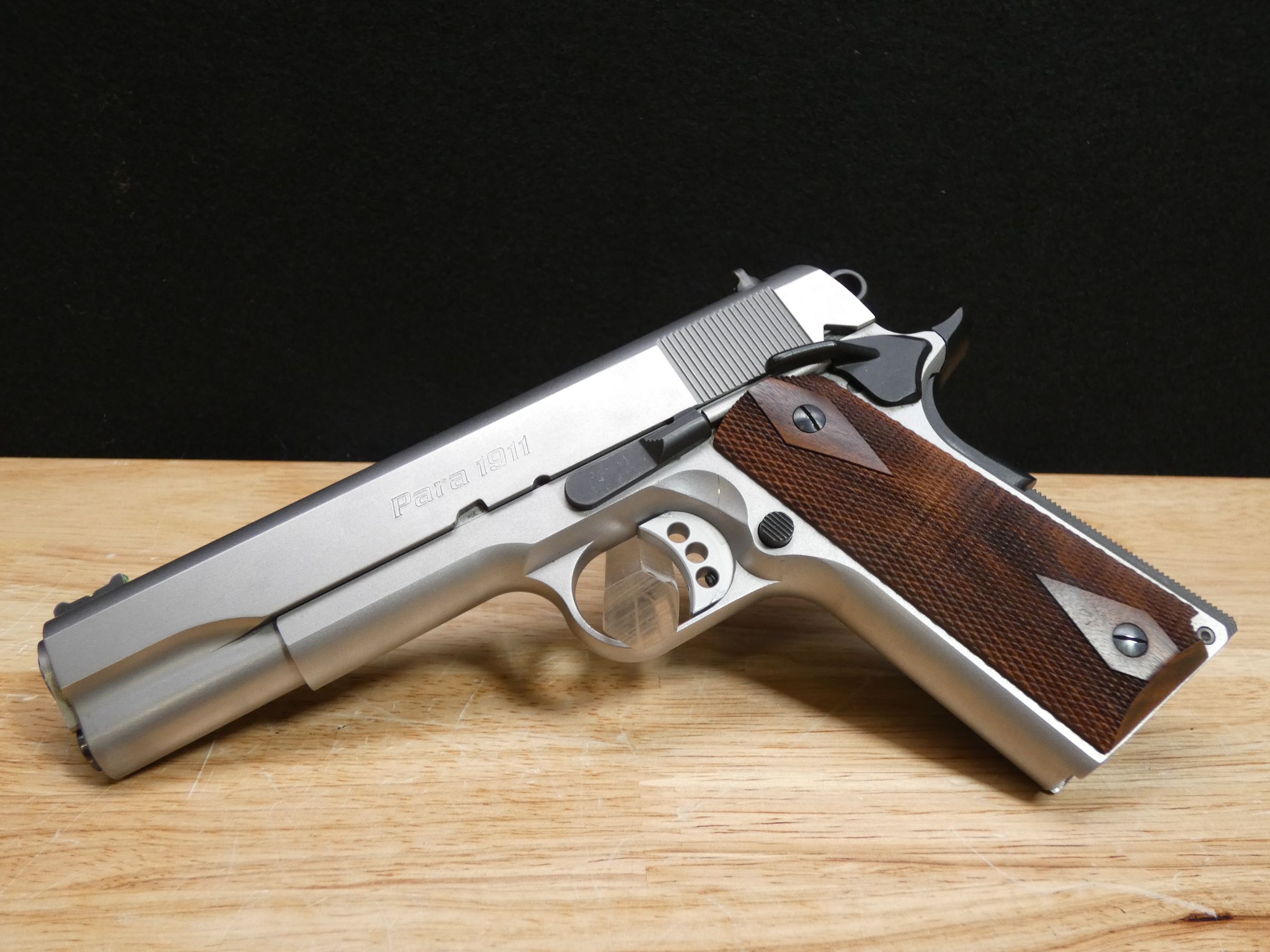
The Para Ordnance 1911 holds a unique place in firearms history, celebrated for innovating the classic M1911 design, most notably with its high-capacity, double-stack magazine. As a semi-automatic pistol that is no longer in production, its value is determined by a blend of collector interest, model rarity, and practical shooting appeal. Understanding the specific factors that influence its worth, from its manufacturing era to its specific model, is key to accurately assessing its price on the contemporary used market.
What Determines Your Para Ordnance 1911’s Worth
The value of a Para Ordnance 1911 is shaped by several key factors, primarily its specific model, condition, and manufacturing era. Higher-end variants like the “Black Ops” or “Limited” models consistently command higher prices than standard production models such as the Expert. Furthermore, a significant distinction is made for “pre-Remington” pistols, which are often favored by collectors for their perceived authenticity to the original brand. While a high round count is less of a concern than the firearm’s overall physical condition, the market value for these pistols generally spans a wide range from approximately $400 to over $1,100, reflecting this diverse hierarchy of desirability.
2026 Price Breakdown by Generation
Standard Production Models
The most common Para Ordnance 1911s found on the used market are the standard production models, with the Expert being a prime example. These firearms are valued as reliable workhorses and serve as an accessible entry point into the brand. Based on market data, the average used price for a Para Ordnance Expert is approximately $566, with most private sale listings falling within the $450 to $550 range. These prices reflect a functional, no-frills 1911 platform that appeals to shooters looking for performance without the premium cost of more feature-rich variants.
Broadening the scope to include other standard models, the average used price settles between $580 and $665. This category includes various configurations that were part of Para’s main production runs. Their value is primarily determined by physical condition rather than inherent rarity. For sellers, this means that a well-maintained standard model can still fetch a respectable price, as there is consistent demand from enthusiasts and first-time 1911 owners who appreciate the brand’s history and innovative designs, such as the double-stack frame that set Para Ordnance apart from its competitors.
Enhanced & Limited Models
Para Ordnance’s “Limited” models represent a step up from their standard offerings and command a higher price on the secondary market, averaging around $809. These pistols were factory-equipped with enhancements that appeal to more discerning shooters, such as improved sights, upgraded triggers, superior finishes, and often more precise slide-to-frame fitting. The premium price reflects the added value of these components, making them a desirable option for buyers who want a more refined shooting experience without having to resort to aftermarket customization. These models bridge the gap between a standard service pistol and a full-blown custom 1911.
At the top of the production hierarchy are high-end models like the Black Ops, which can trade for anywhere between $900 and $1,200 on the used market, not far from their original new price of about $1,300. These firearms were designed with tactical applications in mind, featuring accessory rails, night sights, and specialized coatings like Ionbond. Their value is driven by both their advanced feature set and their more limited availability compared to standard models. For collectors and serious shooters, the Black Ops and similar high-tier models represent the pinnacle of Para Ordnance’s factory production.
Pre-Remington Era Models
A significant factor in determining a Para Ordnance 1911’s value is its manufacturing era, specifically whether it is a “pre-Remington” model. After Para Ordnance was acquired, its designs were eventually integrated into the Remington R1 product line. Because of this, many collectors and brand purists place a higher value on firearms produced before this corporate transition. These earlier pistols are often considered more authentic to the original vision and Canadian manufacturing roots of the Para Ordnance brand, creating a distinct sub-market for them among enthusiasts who appreciate their history.
This preference for pre-Remington firearms often translates into a modest price premium, especially for models in excellent, all-original condition. While the value increase may not be astronomical, the distinction is a critical selling point that can attract serious buyers and justify a higher asking price compared to an equivalent post-acquisition model. When listing one of these pistols for sale, highlighting its pre-Remington provenance is a key strategy to appeal to knowledgeable collectors and maximize its potential value, as it represents a specific and desirable chapter in the company’s history.
New Old Stock (NOS)
Since Para Ordnance is no longer in business, a current Manufacturer’s Suggested Retail Price (MSRP) is not available. However, a market exists for “new old stock” (NOS) firearms—pistols that remain in unfired, factory-new condition. These examples are highly sought after by collectors and command a significant premium over used models. Depending on the specific model’s rarity and desirability, the price for an NOS Para Ordnance 1911 can range from approximately $700 for a more common variant to as high as $1,350 for a top-tier or limited-edition pistol, reflecting its pristine, time-capsule status.
The primary driver of an NOS firearm’s value is its completeness and untouched condition. A true NOS Para 1911 will include its original box, all factory paperwork, and any included accessories like magazines or tools. This represents the closest a buyer can get to purchasing the firearm as it was originally sold. For enthusiasts looking to complete a collection or own a perfect example of a specific Para model, the premium price is justified by the extreme scarcity of finding these pistols in such a preserved state years after the company ceased production.
How Modifications Affect Value
There is no clear market consensus regarding which aftermarket modifications consistently add value to a Para Ordnance 1911. The impact of upgrades is highly subjective and depends heavily on the individual buyer’s preferences. While professionally installed parts from reputable brands like Wilson Combat or Nighthawk Custom may appeal to a performance-oriented shooter, many collectors and purists strongly prefer the firearm to be in its original factory configuration. As a result, sellers may find that the cost of modifications is rarely fully recovered in the final sale price, as any alteration narrows the pool of potential buyers.
Conversely, while no definitive list of value-hurting modifications exists, some changes are almost universally detrimental. Irreversible cosmetic alterations, such as aggressive frame stippling or amateur engraving, can significantly reduce a pistol’s appeal. Likewise, any modification performed with poor workmanship that compromises the firearm’s safety or reliability will drastically lower its value. Selling a modified Para 1911 often means finding a specific buyer who shares the same taste in upgrades, whereas a firearm in its original state appeals to the broadest possible audience and generally represents a safer investment for resale.
Regional Price Variations in 2026
The value and legality of a Para Ordnance 1911 can be significantly influenced by state and local firearm laws, creating regional price variations. In a highly restrictive state like California, the market is dictated by the Roster of Handguns Certified for Sale. Certain Para Ordnance models, such as the Standard Pistol (96671) and S14-45SR, are on this roster, making them legal for dealers to sell. This limited availability of approved handguns can increase the value of roster-compliant models within the state, as buyers have fewer options to choose from.
In contrast, off-roster Para 1911 models in California can typically only be acquired through specific legal channels like a private party transfer, which creates a separate market where their scarcity can drive prices well above the national average. In states with less stringent regulations, where general firearm laws apply without a specific roster, the value of a Para Ordnance pistol will align more closely with national market trends based on condition, model, and demand. This makes the firearm’s location a critical, and often overlooked, component of its overall market value.
Online vs Local Sales
When selling a Para Ordnance 1911, owners must weigh the pros and cons of different sales channels. Selling to a local gun dealer is convenient but often yields a lower return, as dealers typically offer between 50% and 65% of the firearm’s true used market value. More common models will receive offers toward the lower end of that range. A private sale, whether local or online, allows the seller to capture the full retail value but requires more effort, including navigating legal transfer requirements and finding a qualified buyer for the transaction.
Selling online to an out-of-state resident introduces mandatory federal regulations. The transaction must be facilitated by a Federal Firearms Licensee (FFL). The seller is required to ship the handgun directly to an FFL in the buyer’s home state. The buyer must then visit their local FFL, complete the required ATF Form 4473, and pass a background check before they can legally take possession of the pistol. This process ensures the transfer is compliant with federal law and provides a secure framework for both parties involved in the sale.
Shipping a handgun yourself requires adherence to strict carrier policies. Private individuals are prohibited from shipping handguns via the U.S. Postal Service (USPS). Instead, you must use a common carrier such as UPS or FedEx. These companies mandate that handguns be shipped using an express service, like Next Day Air, and require an adult signature upon delivery. While you must declare the contents to the carrier, the package itself must not have any external markings that indicate it contains a firearm, ensuring a discreet and secure transit to the destination FFL.
The FFL Buying Advantage
Engaging a Federal Firearms Licensee (FFL) is not just an advantage but a legal necessity for all interstate handgun sales. For private sales, even within the same state, using an FFL is a crucial best practice that protects both the buyer and the seller. The FFL dealer is responsible for verifying the buyer’s eligibility to own a firearm by conducting a mandatory background check through the National Instant Criminal Background Check System (NICS). This ensures the Para Ordnance 1911 is not transferred to a prohibited person, mitigating the seller’s potential legal liability after the sale.
While a detailed Bill of Sale is highly recommended to create a personal record of the transaction—capturing the firearm’s make, model, serial number, and the details of both parties—it is not a substitute for the official transfer process. The FFL handles the legally required paperwork, most notably the ATF Form 4473, which serves as the official record of the transfer. This professional oversight guarantees that all federal, state, and local laws are meticulously followed, providing a secure and legally sound conclusion to the transaction for everyone involved.
What Increases Your Offer
To maximize the offer on your Para Ordnance 1911, proper presentation is paramount. Before listing it for sale, perform a thorough field strip and cleaning. A meticulously cleaned firearm signals to potential buyers that it has been well-maintained. Use quality solvents to clean the barrel, slide, and frame, paying close attention to high-friction areas like the slide rails. After cleaning, apply a light coat of lubricant to key components. Avoid common mistakes like over-lubricating, which can attract fouling, or using excessive force during disassembly, which can damage parts.
Exceptional photography is essential for attracting serious buyers and justifying a premium price. Use a simple, neutral background and soft, diffused lighting, such as natural light from a window, to avoid harsh shadows and glare. A modern smartphone camera is more than capable of capturing high-quality images. Take clear, detailed photos from various angles, ensuring that all markings, the serial number, and any unique features are clearly visible. Honesty is key, so also photograph any noticeable wear or imperfections to build trust and manage buyer expectations accurately.
While a high round count is generally considered less impactful on a 1911’s value than its overall condition, providing a complete package will always increase an offer. If you have the original box, owner’s manual, and any accessories that came with the pistol, be sure to include them in the sale and feature them in your photos. A complete set is far more attractive to collectors and discerning buyers. This attention to detail demonstrates pride of ownership and can be the deciding factor that elevates your firearm above others on the market.
When to Sell Your para ordnance 1911
Timing the sale of your Para Ordnance 1911 can significantly impact the final price you receive. The used handgun market exhibits distinct seasonal trends, with the most favorable selling period typically occurring from late winter through spring. This window, running from approximately February to June, aligns with tax refund season, when many buyers have increased disposable income. The warmer weather also encourages more people to visit the shooting range, further stimulating demand for firearms and creating a seller’s market where you can expect more interest and higher offers.
A second, smaller peak in market activity often occurs in the late summer and early fall, particularly from August through September. This period sees a surge in interest as shooters and hunters prepare for upcoming seasons and outdoor activities. Listing your pistol during this time can capitalize on this renewed enthusiasm. By aligning your sale with these predictable peaks in consumer demand, you increase the visibility of your firearm and improve your chances of a quick and profitable transaction, avoiding the slower periods in the market cycle.
It is crucial to recognize that the firearms market is uniquely sensitive to the political climate, which can sometimes override typical seasonal trends. Discussions of new firearm legislation or major political events can trigger sudden spikes in demand. An astute seller should remain aware of the current news cycle, as these periods of heightened consumer concern can create unforeseen windows of opportunity. Selling during one of these surges can often lead to a faster sale at a price point that exceeds normal market expectations, making it a powerful variable to consider.
Common Pricing Mistakes
A frequent error when selling a Para Ordnance 1911 is overvaluing a common, standard model. For example, while the brand has a dedicated following, a used Para Expert model has an established market value in the $450 to $550 range. Listing it for significantly more based on sentimental value or an inflated perception of the brand will deter knowledgeable buyers who have done their research. Setting a realistic price based on recent sales of the same model in comparable condition is essential for attracting serious offers and facilitating a timely sale.
Another common mistake is failing to differentiate between manufacturing eras. A “pre-Remington” Para Ordnance pistol often carries a premium among collectors compared to a later-production model. Neglecting to research your firearm’s serial number and history could lead you to underprice a more desirable piece. Conversely, assuming any Para is a rare collectible without verification is equally problematic. Understanding where your specific pistol falls in the company’s production history is crucial for accurate pricing and effective marketing to the right audience of potential buyers.
Finally, paying for a professional appraisal for a standard-issue Para Ordnance 1911 is usually an unnecessary expense. The market for these firearms is well-documented, with values for most models falling within a predictable range of roughly $400 to $1,100. The cost of a formal appraisal would consume a significant percentage of the pistol’s actual worth, offering little return on investment. This step should be reserved only for exceptionally rare, limited-edition, or historically significant examples where its unique status might not be reflected in general market data.
Market Outlook for 2026
Forecasting the future value of Para Ordnance 1911s is challenging, as there is no definitive market consensus on their long-term price trajectory. As a brand that is no longer in production, the finite supply of these pistols could lead to a gradual appreciation in value over time. Collectors seeking to acquire different variants of the 1911 platform may increasingly turn to defunct brands like Para Ordnance, potentially driving up demand and prices for well-maintained examples, especially for the more innovative or rare models that the company produced during its operational years.
Conversely, several factors could temper this potential growth and lead to stable or modestly increasing prices. The brand’s value is intrinsically linked to its reputation for quality, which varied throughout its production history. Furthermore, the absorption of its designs into the Remington R1 line may dilute the uniqueness of the Para brand in the eyes of some buyers. The availability of spare parts and gunsmithing support will also play a crucial role. Ultimately, the market will likely remain steady, with values primarily influenced by overall economic conditions and the enduring popularity of the 1911 platform.
Frequently Asked Questions
Does a high round count significantly lower my Para Ordnance 1911’s value?
For a Para Ordnance 1911, a high round count is generally less of a concern to buyers than the firearm’s overall physical condition and maintenance history. The 1911 platform is known for its durability, and many enthusiasts consider a few thousand rounds to be insignificant for a well-cared-for pistol. Visible signs of abuse, neglect, or excessive wear on the frame and slide will have a much greater negative impact on its value than the number of rounds fired. A clean, well-maintained pistol will always be more valuable, regardless of its usage history.
Is it worth getting a professional appraisal for my Para 1911?
For a standard used Para Ordnance 1911, a professional appraisal is likely not a worthwhile expense. The market value for most common models is well-established and typically falls into a range of approximately $400 to $1,100, depending on the specific model and its condition. Given that the cost of a formal appraisal can be substantial, it would consume a significant portion of the firearm’s value. An appraisal should only be considered for exceptionally rare, custom, or historically significant pieces where the value is not easily determined by public market data.
How does the “pre-Remington” era affect my pistol’s price?
The “pre-Remington” designation can add a modest premium to your Para Ordnance 1911’s value. After Para was acquired, its designs were later absorbed into Remington’s product lines. Many collectors and brand purists prefer the earlier pistols made before this change, viewing them as more authentic to the original Canadian-based company. While not a massive price increase, highlighting that your firearm is a pre-Remington model can make it more desirable to knowledgeable buyers and can be a key factor in achieving a higher final sale price compared to a later-production equivalent.
Will I get more money selling to a dealer or a private individual?
You will almost always get a higher price by selling your Para Ordnance 1911 to a private individual. Gun dealers must account for overhead and profit margin, so their cash offers are typically between 50% and 65% of the firearm’s used retail market value. For common models, the offer will be closer to 50%. A private sale allows you to sell at the full market rate, though it requires more personal effort in terms of listing the firearm, communicating with buyers, and arranging for a legal transfer through an FFL.
Are specific models like the “Limited” or “Black Ops” worth more?
Yes, the value of a Para Ordnance 1911 varies significantly by model. Enhanced models like the “Limited” series command a higher price than standard versions, averaging around $809 due to their factory upgrades. Top-tier tactical models like the “Black Ops” are worth even more, with used prices ranging from $900 to $1,200. These premium models included features like accessory rails, night sights, and improved finishes, making them more desirable and valuable to both shooters and collectors compared to the more common, entry-level pistols in the Para Ordnance lineup.
Get a Cash Offer Today
Ready to sell your Para Ordnance 1911? We make the process simple, safe, and transparent. Get a fair cash offer based on the latest market data without the hassle of private listings. Our expertise ensures you receive the true value for your firearm.
Our secure, federally licensed process guarantees a legal and confidential transaction from start to finish. Don’t let your firearm collect dust—turn it into cash today. Click here to submit your firearm’s information and receive a no-obligation offer from our experts.