
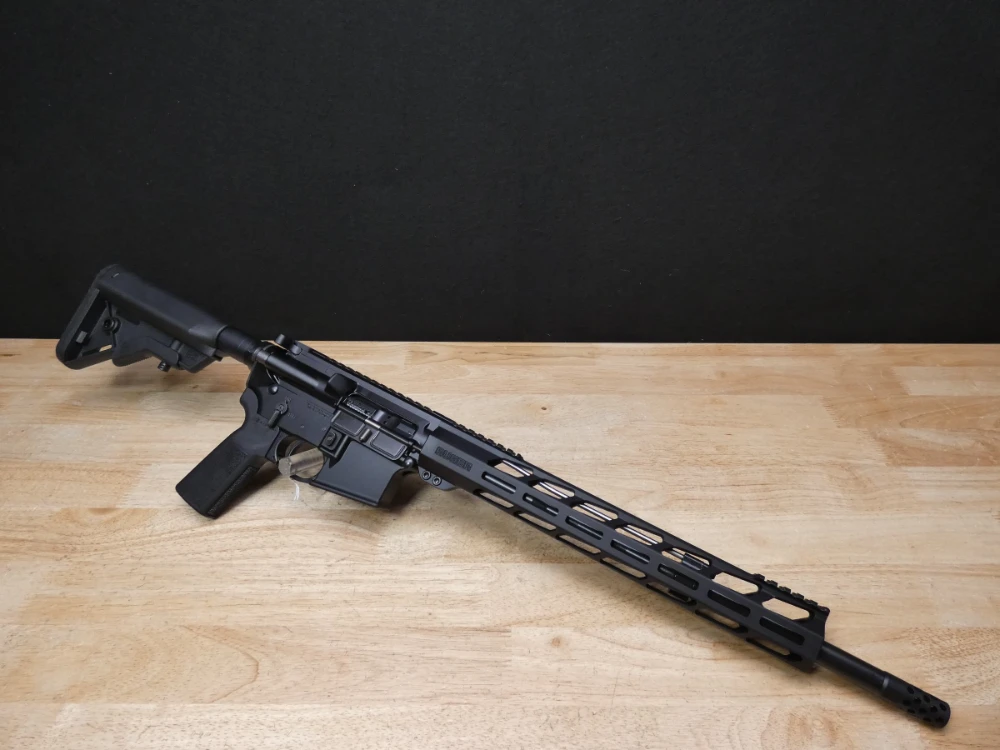
The Ruger MPR (Multi-Purpose Rifle) stands out in the crowded AR-15 market as a feature-rich, high-value firearm. Classified as a long gun, this rifle builds upon the standard AR-556 platform with significant factory upgrades, making it a popular choice for both new and experienced shooters. Understanding its market position, key features, and the factors that influence its resale price is essential for any owner looking to accurately assess its current worth before selling or trading.
What Determines Your Ruger MPR’s Worth
The value of a Ruger MPR is primarily determined by its condition, specific model, and the current market demand. A new AR-556 MPR typically has an MSRP of $1,129.00, though specialized versions with features like carbon fiber barrels can reach up to $2,049.00. In the retail space, these rifles are often found for lower prices, commonly between $850 and $900. For a used model in approximately 80% condition, the average private sale price is around $551.92. This value can fluctuate based on cosmetic wear, the inclusion of original accessories, and regional market trends, making a thorough assessment crucial for accurate pricing.
2026 Price Breakdown by Generation
Standard AR-556 Model
While not a “generation” of the MPR, the standard Ruger AR-556 serves as the foundational model and the primary value comparison point. This base rifle offers the core reliability and functionality expected from Ruger but lacks the premium features that define its upgraded counterpart. Its value is typically lower than any MPR variant due to its basic furniture, standard trigger, and non-free-floated handguard. Owners of a standard AR-556 often invest in aftermarket parts to achieve a similar performance level to the MPR, highlighting the inherent value gap between the two models from the factory.
On the used market, a standard AR-556 will consistently command a lower price than an MPR in similar condition. The price difference reflects the cost and labor a buyer would need to invest to upgrade the base rifle to MPR specifications. Therefore, when assessing value, it’s critical to distinguish the MPR from the standard model, as the “MPR” designation itself signifies a significant step up in both features and price point. The market clearly recognizes the MPR as a distinct and more valuable tier within the Ruger AR-556 family of rifles.
MPR (Multi-Purpose Rifle) Upgrade
The key value driver for the Ruger MPR is its comprehensive package of factory-installed upgrades over the standard model. This rifle is widely considered a higher-tier firearm offered at an entry-level price, which bolsters its desirability and resale value. The most significant enhancements include a free-float handguard for improved accuracy, a crisp Ruger Elite 452 two-stage trigger, and premium Magpul furniture, including the stock and pistol grip. These components are not merely cosmetic; they directly contribute to better performance, handling, and ergonomics, making the MPR a ready-to-go platform without immediate need for modification.
Because these upgrades come directly from the factory, they are integrated seamlessly and are recognized by the market as a cohesive, high-value package. A seller can confidently list these features as standard, which is more appealing to buyers than a base model with a collection of disparate aftermarket parts. The MPR’s reputation for providing premium features at an accessible price point helps it retain value better than many of its competitors, as owners are selling a well-regarded, factory-optimized system rather than just a basic rifle.
18-inch Barrel MPR Variant
The most common configuration of the Ruger MPR features an 18-inch cold hammer-forged barrel, which offers a slight velocity increase for the 5.56 NATO cartridge compared to shorter barrels. This particular feature contributes to its appeal among shooters focused on precision and performance at longer ranges. Critically, with an 18-inch barrel, the rifle comfortably exceeds the 16-inch minimum legal length for rifles under the National Firearms Act (NFA). This classifies it as a standard long gun, ensuring it is not an NFA-regulated item that would require a tax stamp and lengthy approval process to purchase.
This non-NFA status is a significant factor in maintaining its broad market appeal and stable value. The ease of transfer makes it accessible to a wider pool of potential buyers who are not interested in or able to navigate the complexities of NFA regulations. While barrel length preferences can vary, the 18-inch model’s blend of enhanced ballistics and straightforward legality makes it a highly desirable and easily sellable configuration on the used market, forming the baseline for the MPR’s valuation.
Specialized MPR Configurations
Beyond the common 18-inch model, Ruger has offered variations of the MPR that can influence its market value, including models with 16-inch barrels or those chambered in different calibers. While the 16-inch barrel version offers a more compact and maneuverable platform, the primary value distinction remains the MPR feature set itself rather than a minor difference in barrel length. The market does not typically show a significant price variance between the 16-inch and 18-inch used models, as both are non-NFA items and offer the same core upgrades like the two-stage trigger and free-float handguard.
Higher-end models, such as those featuring carbon fiber barrels, command a much higher MSRP, sometimes approaching $2,049.00. These specialized configurations are designed for shooters seeking maximum weight reduction and performance, and their value on the used market reflects their niche appeal and higher initial cost. While they may not retain the same percentage of their MSRP as the standard MPR, their unique features make them attractive to a specific segment of buyers and can result in a higher selling price compared to the more common variants.
How Modifications Affect Value
Adding high-quality modifications is one of the most effective ways to increase the appeal and potential value of a Ruger MPR. The consensus among owners is that upgrading the sights is a primary enhancement. While the rifle is highly capable out of the box, adding reputable iron sights from brands like Magpul or advanced optics significantly boosts its utility. Quality red dot sights or Low-Power Variable Optics (LPVOs) from trusted manufacturers such as Holosun, Sig Sauer, Vortex, or Trijicon are seen as substantial improvements that make the rifle more attractive and can justify a higher asking price to a potential buyer.
Conversely, while specific data on value-hurting modifications is not readily available, a general market principle applies. Permanent alterations, such as amateur gunsmithing or radical changes to the firearm’s core components, can severely diminish its value. Likewise, adding low-quality, unreliable accessories can detract from the rifle’s appeal and may lead buyers to offer less, assuming they will need to replace the parts. To preserve value, it is always best to stick to reputable brands for any upgrades and to avoid irreversible changes that could deter a future owner seeking a factory-standard configuration.
Regional Price Variations in 2026
The value and legality of a Ruger MPR can vary dramatically depending on state and local laws. In states with strict firearms regulations, such as California, the standard MPR configuration is not legal for sale. This has led to the availability of state-compliant models, which are modified to meet specific legal requirements. Similarly, in New York, a standard MPR may be considered an “assault weapon” under the SAFE Act due to features like a muzzle brake or a collapsible stock. Consequently, a modified, compliant version is likely required for legal ownership in that state.
These regional restrictions directly impact market dynamics and pricing. In restrictive states, the demand for compliant models can keep their prices stable or even elevated due to limited availability. A seller with a factory-compliant or properly modified MPR in such a location may find a strong local market. Conversely, in states with fewer restrictions, the value of the MPR is dictated more by national supply-and-demand trends and less by regulatory pressures. The presence of compliance features on a rifle being sold in an unrestricted state may even slightly deter some buyers who prefer the standard configuration.
Online vs Local Sales
Choosing between a private local sale and selling to a dealer significantly impacts your financial return. A private party sale for a used Ruger MPR typically yields a price between $551 and $569, allowing you to capture its full market value. In contrast, a gun dealer will likely offer between 50% to 65% of its retail value, which translates to a trade-in offer of approximately $358 to $370. While selling to a dealer is faster and simpler, the convenience comes at the cost of a substantially lower payout compared to a private transaction.
Selling online introduces logistical and legal complexities, particularly regarding shipping. Recent policy changes from carriers like UPS and FedEx prohibit private individuals from shipping firearms; the shipper must hold a Federal Firearms License (FFL). Therefore, a private seller must take the rifle to a local FFL dealer to have it shipped to the buyer’s designated FFL. Federal law mandates that you inform the carrier that the package contains a firearm, but the exterior of the box must not have any markings that indicate its contents, ensuring a secure and discreet transfer process.
Regardless of whether a sale is local or online, paperwork is a critical component. For a private sale, a bill of sale is a key document that should detail the firearm’s serial number, description, and sale price. However, state laws vary significantly and may impose additional requirements. For a semi-automatic rifle like the Ruger MPR, many states now mandate that private sales be conducted through an FFL to facilitate a background check. This requirement often makes the process for a private sale nearly identical to a dealer transaction, ensuring legal compliance for both parties involved.
The FFL Buying Advantage
Utilizing a Federal Firearms Licensee (FFL) is not just an advantage but a legal necessity for many transactions involving the Ruger MPR. According to federal law, if you sell a firearm to a resident of another state, the transaction must be processed through an FFL in the buyer’s state of residence. This ensures the buyer completes all necessary background checks and paperwork required by their local and state laws before taking possession. This process provides a crucial layer of legal protection for the seller, creating an official record of the transfer and verifying the buyer’s eligibility to own the firearm.
While federal law does permit an FFL to conduct an over-the-counter sale of a rifle to an out-of-state resident, this is entirely dependent on the transaction complying with the laws of both the buyer’s and seller’s states. This legal landscape can be incredibly complex to navigate for a private individual. An FFL dealer is equipped to handle this complexity, ensuring that every aspect of the sale is compliant. For a popular modern sporting rifle like the MPR, which faces varying levels of restriction nationwide, the FFL’s role is indispensable for a secure, legal, and verifiable transfer of ownership.
What Increases Your Offer
One of the most straightforward ways to maximize the value of your Ruger MPR is to present it in pristine condition. Before listing it for sale, perform a detailed cleaning, paying close attention to the bore, chamber, and bolt carrier group (BCG). Use a quality solvent to remove all carbon buildup and powder residue until cleaning patches come out clean. Afterward, apply a very light coat of protective oil. A common error is over-lubricating; a simple wipe-down of all metal parts is sufficient to prevent corrosion and give the rifle a clean, well-maintained appearance that appeals to discerning buyers.
High-quality photographs are essential for attracting interest, especially in online marketplaces. Use a simple, neutral background that doesn’t distract from the firearm. Ensure the rifle is evenly lit, preferably with natural light, to eliminate harsh shadows and accurately represent its condition. Capture sharp, in-focus images from multiple angles, including overall shots and close-ups of key features, markings, and any existing imperfections. This transparency builds trust with potential buyers and allows them to assess the rifle’s condition confidently. Using a tripod can help ensure your photos are crisp and professional.
While specific data on penalties for missing items is unavailable, a complete package will always be more valuable than an incomplete one. To get the best possible offer, include everything that originally came with the rifle, such as the box, owner’s manual, lock, and any included accessories like magazines or rail sections. Retaining the original parts is also a best practice, as many buyers prefer the factory configuration. Presenting a complete, well-documented, and clean firearm signals to a buyer that it has been cared for, which directly translates to a higher perceived value and a stronger negotiating position.
When to Sell Your Ruger mpr
Timing the sale of your Ruger MPR can have a tangible impact on the final price you receive. For rifles, the market often sees increased activity in the months leading up to hunting season. The best window to sell is typically from late summer into early fall, with August and September being particularly strong months. During this period, general interest in long guns rises, and potential buyers are more actively looking to make a purchase. Listing your rifle during this peak season can increase its visibility and the likelihood of a faster sale at a favorable price.
Beyond the pre-hunting season surge, other times of the year can also be advantageous. Early spring, from February through April, often coincides with tax return season, when many consumers have more disposable income for discretionary purchases like firearms. This can lead to a general uptick in sales across the market. Additionally, the period around the Christmas holidays is another time when buying activity tends to increase. While less pronounced than the fall peak for rifles, these secondary seasons still present good opportunities to connect with motivated buyers and secure a fair market price for your firearm.
The Ruger MPR’s classification as a standard, non-NFA firearm also contributes to its consistent, year-round appeal. Because its 18-inch barrel exceeds the 16-inch minimum, it is not subject to the additional taxes, paperwork, and extended wait times associated with NFA items like short-barreled rifles. This accessibility makes it an attractive option for a broad range of buyers at any time of year, as the transaction process is far more straightforward. This inherent ease of purchase helps stabilize its demand outside of the peak seasonal trends, making it a relatively liquid asset in the used firearms market.
Common Pricing Mistakes
A frequent error when pricing a used Ruger MPR is attempting to recoup the full cost of personal modifications. While a high-quality optic from a brand like Trijicon or Vortex certainly adds value, sellers often mistakenly believe they can add the entire retail price of an accessory to their asking price. Buyers rarely want to pay a premium for someone else’s specific choices and will not value a scope or red dot at its new-in-box price. It is crucial to price the rifle based on its own merit and consider a portion of the modification’s value as a bonus, not a baseline requirement.
Neglecting to accurately assess and account for the rifle’s condition is another common pitfall. Many sellers price their firearm based on what new models cost, without making realistic deductions for wear and tear. While specific data on the impact of a high round count is not available, visible cosmetic damage or mechanical wear on components like the bolt carrier group or barrel throat will absolutely lower the rifle’s value. The average used price of around $551 is based on a firearm in 80% condition; pricing a well-used rifle as if it were nearly new will only deter knowledgeable buyers.
Failing to research the current local market can lead to significant pricing errors. The national average private party value of $551 to $569 is a guideline, not a rule. Local supply and demand, regional economic factors, and state-level regulations can cause this value to fluctuate. Before setting a price, sellers should actively check local online forums, gun store consignment racks, and classifieds to see what similar Ruger MPRs are actually selling for in their area. Without this crucial step, you risk pricing your rifle too high and having it sit unsold, or too low and leaving money on the table.
Market Outlook for 2026
Forecasting the future market value of any firearm, including the popular Ruger MPR, is an inherently speculative endeavor. The firearms market is exceptionally sensitive to external factors, most notably the political climate and the potential for new legislation at both the state and federal levels. Election cycles and high-profile events can cause dramatic shifts in demand, leading to price volatility. As such, any long-term price prediction for 2026 should be viewed with caution, as market conditions can change rapidly and without warning, directly impacting the rifle’s resale value.
Despite this uncertainty, the Ruger MPR possesses qualities that suggest its value will remain relatively stable compared to other firearms in its class. Its reputation as a high-quality, feature-rich rifle from a trusted manufacturer like Ruger gives it enduring appeal. As a non-NFA item in its standard configuration, it remains accessible to the widest possible market of buyers. While its value will undoubtedly follow the broader trends of the modern sporting rifle market, its strong value proposition—offering premium features at an affordable price point—should help it retain its desirability and hold its value well over time.
Frequently Asked Questions
Is a professional appraisal necessary for my Ruger MPR?
No, a professional appraisal is generally not worth the cost for a standard used Ruger MPR. This is a common, mass-produced modern sporting rifle, and its market value can be accurately determined by researching online gun marketplaces, forums, and completed sales listings. The expense of a formal appraisal would likely represent a significant percentage of the rifle’s total value, making it an unnecessary expenditure. An appraisal might only be considered if the rifle has undergone extensive, high-value custom work or is part of a large collection being valued for insurance purposes.
How much does condition affect the selling price?
Condition is one of the most significant factors affecting the selling price of a Ruger MPR. The established average used price of approximately $551.92 is explicitly based on a firearm in 80% condition. A rifle that shows significant cosmetic wear, such as scratches on the receiver or handguard, or has evidence of a very high round count will be valued below this benchmark. Conversely, an MPR in “like-new” or excellent condition with minimal signs of use could command a price higher than the average, appealing to buyers willing to pay a premium for a well-maintained example.
Will having a state-compliant model affect its value?
Yes, having a state-compliant model can significantly affect its value depending on the location of the sale. Within a restrictive state like California or New York, a compliant model is not just valuable—it’s a legal necessity. This can sustain or even increase its price in that local market due to limited supply. However, if you are selling that same compliant rifle in a state with no such restrictions, the features (like a fixed stock or fin grip) may be seen as undesirable by buyers, potentially lowering its value compared to a standard, non-modified MPR.
Does the barrel length (16″ vs. 18″) significantly change the MPR’s value?
The primary value of the Ruger MPR is derived from its overall package of upgrades—the trigger, handguard, and furniture—when compared to a standard AR-556. While some shooters have a preference for either the 16-inch or 18-inch barrel, the difference in value on the used market is typically minimal. Both configurations are non-NFA items, which maintains their broad appeal. Unless a specific barrel length is in particularly high demand in a local market, the selling price for either variant in similar condition should be nearly identical.
How much less should I expect from a dealer compared to a private sale?
You should expect a significantly lower offer from a dealer. Gun dealers typically offer between 50% and 65% of a used firearm’s private market value to account for their overhead and profit margin. For a Ruger MPR with a private party value around $551, a realistic trade-in or cash offer from a dealer would be in the range of $358 to $370. This substantial difference is the trade-off for the convenience, speed, and reduced liability of selling directly to a licensed business rather than a private individual.
Get a Cash Offer Today
Ready to sell your Ruger MPR? We make the process fast, safe, and simple. Avoid the hassle of private listings and legal complexities by getting a fair, no-obligation cash offer from us today. We are fully licensed and ready to provide you with a competitive price for your firearm.
Click the button below to submit your firearm’s information. Our expert team will review the details and get back to you promptly with an offer. Turn your used rifle into cash with a trusted and professional buyer who understands its true value. Let’s get started.