
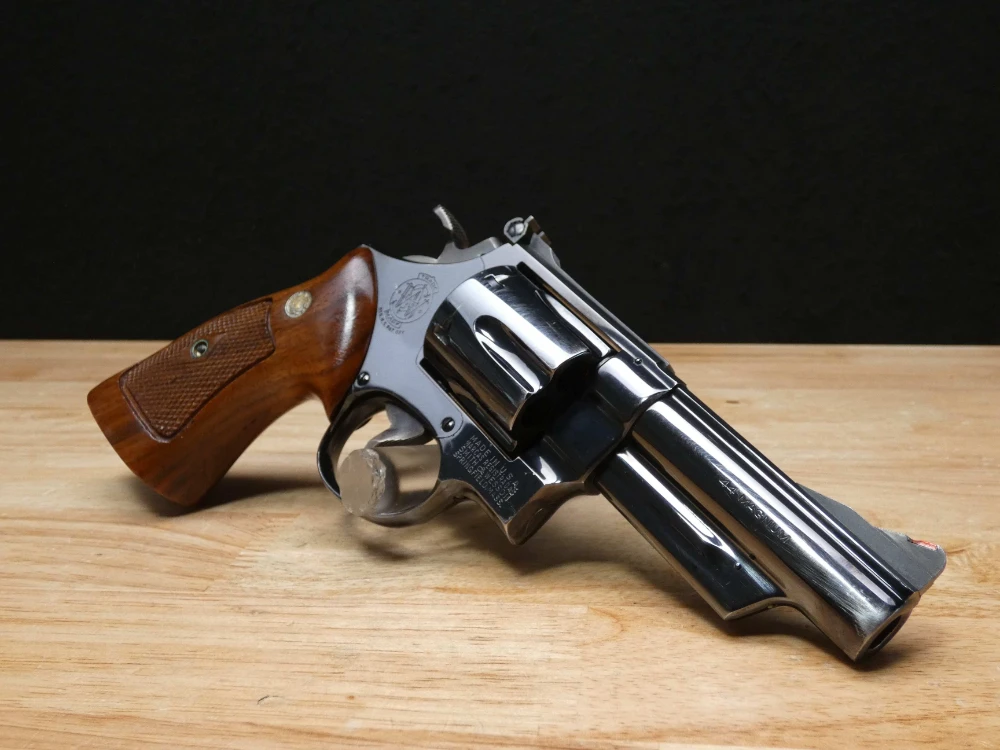
The Smith & Wesson Model 29 is an iconic handgun that has captivated shooters and collectors for decades. Understanding its market value involves more than just its powerful chambering; it requires a detailed look at its manufacturing history, condition, and the legal landscape governing its sale. This guide provides a comprehensive breakdown of the key factors that determine the worth of your Model 29, ensuring you are well-informed whether you are buying, selling, or simply appraising your firearm.
What Determines Your Smith & Wesson Model 29’s Worth
The value of a Smith & Wesson Model 29 is determined by a combination of factors, with its specific engineering revision, or “dash number,” being paramount. A standard Model 29 in very good to excellent condition typically retails for between $800 and $2,000. The final price is heavily influenced by the barrel length, overall physical condition, and the inclusion of original accessories like the box and papers. While a professional appraisal is often unnecessary for common models, using online resources to compare these key attributes can provide a reasonably accurate market value, with shooter-grade examples frequently selling for around $1,200.
2026 Price Breakdown by Generation
Early Pinned & Recessed Models (e.g., 29-2)
The most sought-after variations of the Smith & Wesson Model 29 are the early models, particularly the 29-2. These revolvers are highly prized by collectors for their classic manufacturing details, such as a pinned barrel and recessed cylinder chambers. Their value is significantly higher than later revisions, often commanding prices from $1,200 to over $2,000. The presence of the original mahogany presentation case is a critical factor for collectors and can substantially increase the final selling price, making these early models a top-tier collectible in the handgun market.
When evaluating an early Model 29, originality is key. Any modifications from its factory configuration can detract from its collector appeal, even if they were intended as functional upgrades. The market for these firearms is driven by enthusiasts who value the historical and manufacturing integrity of the piece. Therefore, a well-preserved, all-original 29-2 with its accompanying case and documentation will always achieve the highest valuation. Even minor wear is more acceptable to buyers than non-factory parts or refinishing, which can negatively impact its worth.
Transitional Models (e.g., 29-3)
Later revisions, such as the Smith & Wesson Model 29-3, represent a transitional period in the revolver’s manufacturing history. These models typically lack the pinned barrel and recessed cylinder that define the earlier, more collectible versions. As a result, their market value is generally lower, with prices for examples in good condition typically falling in the $800 to $1,200 range. These firearms are often considered excellent “shooter-grade” guns, offering the classic Model 29 experience without the premium price tag associated with the more collectible dash numbers.
While they may not command the high prices of a 29-2, the value of a 29-3 is still dependent on its condition and completeness. A clean example with minimal wear will always be more desirable. Although the original presentation case was phased out for less elaborate packaging during this era, having any original box and paperwork can still add a modest amount to the final sale price. These models appeal to buyers who prioritize function and performance over the finer manufacturing details of their predecessors.
Modern Classic Series
The modern “Classic” series of the Smith & Wesson Model 29 continues the legacy of the famed revolver, blending its timeless design with contemporary manufacturing techniques. These new production models have a manufacturer’s suggested retail price of approximately $1,379, with average market prices for new examples hovering around $1,414. Retailers may offer them in a range from about $1,179 to $1,379. Used demo models can sometimes be found for less, with listings between approximately $760 and $890, offering a more accessible entry point for enthusiasts.
While these modern firearms offer the reliability and performance expected from a new Smith & Wesson, they do not hold the same collectible appeal as the vintage pinned and recessed models. Their value is primarily based on their condition as a functional firearm rather than historical significance. For shooters looking to experience the power of the .44 Magnum in a brand-new revolver without paying a collector’s premium, the Model 29 Classic series presents a very attractive and readily available option in today’s market.
Special Editions & Performance Center Models
Beyond the standard production models, Smith & Wesson has periodically released special editions and Performance Center versions of the Model 29. These firearms often feature unique barrel lengths, specialized finishes, enhanced triggers, or other custom-tuned attributes that set them apart from their common counterparts. Their value is not determined by the same criteria as vintage models but rather by their rarity, specific features, and demand within niche collector circles. Pricing can be highly variable and does not always follow the predictable trends of the standard dash-number progression.
Assessing the worth of a special edition requires specific research into its production numbers and original market positioning. While some limited runs can appreciate significantly, others may only appeal to a small subset of collectors, making their resale market less predictable. These models are often purchased for their unique aesthetic or performance enhancements, and their value is best determined by examining recent sales of the exact same configuration rather than comparing them to standard production Model 29s of any era.
How Modifications Affect Value
For the Smith & Wesson Model 29, originality is paramount, and aftermarket modifications rarely add to the firearm’s resale value. Collectors and purists, who often drive the market for these revolvers, strongly prefer factory-original parts. While functional upgrades like aftermarket sights from brands such as Leupold or Trijicon can be added for user preference, they do not guarantee an increase in the base value and may even deter buyers seeking a historically accurate piece. The revolver’s worth is more consistently found in its pristine, unaltered condition rather than in any custom enhancements.
While the market data does not provide a clear consensus on specific modifications that hurt the Model 29’s value, a general rule in the collector firearm market applies: any permanent alteration is likely to decrease its worth. Changes such as drilling and tapping the frame for a scope mount, non-factory porting of the barrel, or custom refinishing can significantly reduce the revolver’s appeal to collectors. Reversible modifications are less detrimental, but the highest prices are consistently reserved for firearms that remain exactly as they left the Smith & Wesson factory.
Regional Price Variations in 2026
State and local firearm regulations can create significant regional price variations by impacting both the supply and the specific configuration of firearms available for sale. A prime example is California, where the Smith & Wesson Model 29 is available in a “California legal” configuration. This version is modified to be single-action only to comply with the state’s stringent handgun regulations. Such state-specific models can influence local market dynamics, as they are the only new versions legally available, potentially affecting the price and demand for both new and pre-owned standard-action models sold through private transfers.
The legal landscape is not uniform, and information on restrictions can be inconsistent across states. For instance, specific regulations or restrictions for the Smith & Wesson Model 29 in New York are not readily available from general market data. This highlights the importance for both buyers and sellers to research and understand their specific state and local laws thoroughly. These regulations can dictate how a firearm must be transferred, what features are permissible, and who is eligible to purchase it, all of which are factors that can influence its localized market value.
Online vs Local Sales
When selling a Smith & Wesson Model 29, the distinction between a local private sale and an online transaction involves significant legal and logistical differences. For a private, in-person sale, a bill of sale is strongly recommended to document the transfer of ownership. This document, containing details of the buyer, seller, and firearm, serves as a crucial record protecting the seller from future liability. However, state and local laws vary widely; some jurisdictions may mandate that even private transfers be conducted through a Federal Firearms License (FFL) holder to facilitate a background check.
Selling online to a buyer in another state introduces federal oversight. The Gun Control Act of 1968 mandates that firearms be shipped from the seller’s FFL to an FFL in the buyer’s state of residence. Furthermore, private individuals are generally prohibited from directly shipping handguns via common carriers like UPS and FedEx. These companies require the shipper to hold an FFL. Consequently, a private seller must use a local FFL to legally package and ship the Model 29, which must be sent unloaded via an expedited service with an adult signature required upon delivery.
This multi-step process for interstate sales ensures compliance with federal law but also adds costs and complexity compared to a local transaction. The buyer must then visit their chosen FFL to complete all necessary paperwork and undergo a background check before taking possession of the revolver. These requirements are designed to ensure that all firearm transfers, regardless of location, adhere to the legal standards of the buyer’s home state, making the FFL a critical intermediary in the national firearms market and a necessary partner for any online sale.
The FFL Buying Advantage
Utilizing a Federal Firearms Licensee (FFL) is not just an advantage but a legal necessity for most firearm transactions, particularly those conducted across state lines. The Gun Control Act of 1968 established the rule that a firearm must be shipped to an FFL in the buyer’s state of residence for legal transfer. This ensures that every purchase is subject to the relevant federal and state laws, including a mandatory background check. This regulated process provides a layer of security and legal compliance for both the buyer and seller, creating a documented and lawful chain of custody.
While an FFL is essential for facilitating transfers, selling your Model 29 directly to a dealer-operated FFL will yield a different financial outcome than a private sale. Gun dealers typically offer a trade-in value that is a percentage of the private party price to ensure they can make a profit upon resale. For a used Model 29, this trade-in value is estimated to be around 65% of its private market worth. For example, a revolver with a private party value of about $714 might only receive a trade-in offer of approximately $464 from a dealer.
What Increases Your Offer
One of the most significant factors that can increase the value of a collectible Smith & Wesson Model 29 is its completeness. The presence of the original presentation box, which was standard with earlier models, is highly valued by collectors. Not having this box can decrease the firearm’s value by at least $200. Therefore, ensuring that all original packaging, manuals, and accessories are included with the sale is a crucial step in maximizing the potential offer. This attention to detail signals to buyers that the firearm has been well-cared for and preserved in its original state.
Presentation is critical when selling online, and high-quality photography can directly translate to higher offers. To best represent your Model 29, use a simple, uncluttered background with soft, even lighting to avoid harsh shadows and accurately display the finish. Capturing multiple high-resolution images from various angles is essential. Include close-ups of all markings, the serial number, and any notable wear or damage to build transparency and buyer confidence. Using a tripod will minimize camera shake, ensuring your photos are sharp, clear, and professional, which can attract more serious buyers.
Before listing your Model 29 for sale, a thorough cleaning can significantly enhance its appeal. After confirming the revolver is completely unloaded, clean the bore, cylinder, and all external surfaces with appropriate gun solvents. Apply a light coat of lubricant to protect moving parts and prevent corrosion. For an extra touch, you can carefully polish the exterior with a product like Flitz and apply a protective layer of Renaissance Wax to enrich the finish. This small investment of time makes the firearm more attractive and demonstrates a high level of care to prospective buyers.
When to Sell Your Smith & Wesson model 29
Timing the sale of your Smith & Wesson Model 29 can have a tangible impact on the final price you receive. While the handgun market may be less susceptible to seasonal shifts than hunting rifles, a general consensus indicates that tax return season is an advantageous time to sell. This period, typically running from February through May, sees many potential buyers with more disposable income, which can stimulate demand and lead to quicker sales at favorable prices. This annual economic boost often creates a seller’s market for popular firearms.
Conversely, certain times of the year are frequently cited as slower periods for firearm sales. The summer months and the period immediately surrounding the major holidays are often characterized by reduced market activity as potential buyers focus their attention and finances on vacations and other seasonal expenses. Listing your Model 29 during these lulls may result in it sitting on the market longer or failing to attract the kind of competitive offers seen during peak seasons. Therefore, patience can be a valuable asset when planning your sale.
Beyond predictable seasonal trends, political events can be a major, often overriding, driver of firearm demand. A major election or discussions of new firearm legislation can create significant surges in the market, potentially outweighing any typical seasonal patterns. Sellers who are attuned to the political climate may find that these periods create unforeseen windows of opportunity to sell their firearms at a premium. Monitoring current events can be just as important as watching the calendar when deciding on the optimal time to list your Model 29 for sale.
Common Pricing Mistakes
A frequent pricing mistake sellers make is underestimating the impact of a high round count, especially with full-power magnum loads. Over time, extensive use can cause a revolver to “shoot loose,” potentially affecting its timing and lockup. While many shooters may not fire enough heavy ammunition to cause significant wear, it is a factor that knowledgeable buyers will consider. Assuming a well-used gun is worth the same as a pristine, low-mileage example can lead to overpricing and deter potential buyers who are wary of the firearm’s mechanical condition.
Another common error is paying for a professional appraisal on a standard, shooter-grade Model 29. While appraisals have their place for rare or exceptionally high-condition firearms, the market value for most common models can be accurately determined through online resources and auction site comparisons. For a standard Model 29, the cost of the appraisal is unlikely to be recouped in the sale price. Sellers can avoid this unnecessary expense by doing their own research on the specific “dash” model, condition, and included accessories to arrive at a competitive and realistic price.
Failing to account for incompleteness is a significant oversight that can lead to an inflated asking price. For a collectible firearm like the Smith & Wesson Model 29, the original presentation box and paperwork are not just trivial extras; they are integral components of its value. Not having the original box can reduce the revolver’s worth by $200 or more. Sellers who price their firearm as if it were complete, without acknowledging the absence of these items, will find their asking price out of line with market expectations for a similar, but incomplete, example.
Market Outlook for 2026
Predicting the future market value for any firearm, including the iconic Smith & Wesson Model 29, is an inherently speculative endeavor. The market is influenced by a complex interplay of factors, including prevailing economic conditions, potential changes in firearms legislation at both the state and federal levels, and shifting trends in collector interest. As there is no clear market consensus on future price predictions, any forecast for 2026 should be viewed with caution. The value could be driven up by increased demand from new collectors or legislative pressures, or it could stabilize based on broader economic health.
Historically, classic, high-quality American firearms like the Model 29 have proven to be a relatively stable store of value, particularly for early and well-preserved examples. While the market for modern “shooter-grade” variants will likely follow trends tied to the price of new firearms, the collectible 29-2 and other early models operate in a more specialized market. Their value in 2026 will largely depend on their continued appeal to collectors and the available supply of pristine examples. Owners should monitor auction results and market trends to stay informed as conditions evolve.
Frequently Asked Questions
How much does the original box add to the value of a Model 29?
The presence of the original presentation box and accompanying paperwork is a significant value-add for a Smith & Wesson Model 29, particularly for the earlier, more collectible models. According to market data, not having the original case can decrease the firearm’s overall value by a minimum of $200. For serious collectors who prioritize completeness and originality, the box is not just packaging but an essential part of the firearm’s history. Therefore, its inclusion is a major factor in achieving the highest possible valuation and should be heavily weighted when pricing the revolver for sale.
Does a high round count significantly hurt my Model 29’s value?
A high round count can lower the value of a Model 29, especially if it was frequently used with full-power magnum loads, which can cause the revolver to “shoot loose” over time. However, the overall condition, specific dash model, and completeness with original accessories are often more significant factors in determining its final price. Many firearms do not see enough use with heavy ammunition to cause substantial wear, so a high round count with lighter loads may not have a major impact. It is a factor to consider, but not always the most critical one.
Is it worth getting a professional appraisal for my Model 29?
For a standard, common Smith & Wesson Model 29, a professional appraisal is likely not worth the associated cost. The market value for these firearms, which typically retail between $800 and $2,000 in very good condition, can be reasonably determined by researching completed sales on online auction sites and forums. An appraisal is better suited for exceptionally rare variations or pristine, cased examples where small details can mean thousands of dollars in value. For a typical shooter-grade gun, diligent personal research will yield a sufficiently accurate price point without the extra expense.
Why are older “dash” models of the Model 29 more expensive?
The value of a Smith & Wesson Model 29 is significantly influenced by its engineering revision, or “dash number.” Early models, especially the 29-2, command higher prices because they feature manufacturing details that were later eliminated to cut costs, such as a pinned barrel and recessed cylinder chambers. These features are highly desirable to collectors who value the classic craftsmanship. Later revisions like the 29-3 and subsequent “Classic” models lack these details, making them less sought-after by collectors and thus generally valued lower, typically in the $800 to $1,200 range.
Do aftermarket sights increase the resale price of a Model 29?
No, aftermarket modifications like upgraded sights do not consistently add to the resale value of a Smith & Wesson Model 29. In the collector market, value is most often found in the revolver’s originality and overall condition. While high-quality optics can be added for a shooter’s personal preference, these are not guaranteed to increase the firearm’s base price upon resale. In fact, many collectors prefer the original factory parts, including the sights, and any alteration from the stock configuration can potentially deter these high-paying buyers, making originality a safer bet for value retention.
Get a Cash Offer Today
Ready to sell your Smith & Wesson Model 29? We make the process simple, secure, and transparent. Avoid the hassle of private listings and legal complexities by getting a fair, no-obligation cash offer from a trusted buyer. Our expertise ensures you receive a competitive price based on your firearm’s specific model, condition, and accessories.
Click the button below to submit your firearm’s information through our secure portal. We will review the details and provide you with a prompt cash offer. Experience the easiest way to turn your firearm into cash while ensuring a fully compliant and professional transaction from start to finish. Get your offer today!