
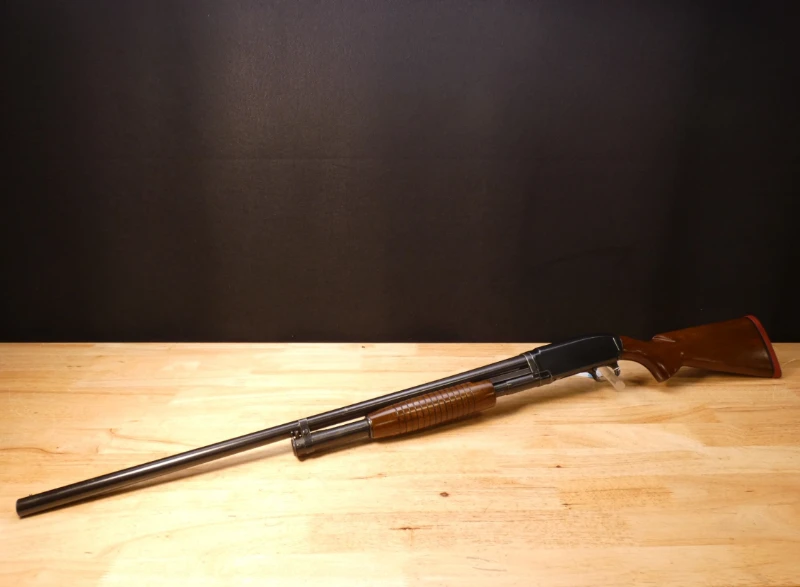
The Winchester Model 1912, a classic internal-hammer pump-action shotgun, holds a significant place in firearms history. As a long gun, its value is determined by a blend of historical significance, mechanical condition, and collector demand. Understanding these factors is crucial for any owner looking to sell. The price for this iconic firearm can range from a few hundred dollars for a well-used field gun to several thousand for a pristine, rare variant, making an informed valuation essential.
What Determines Your Winchester Model 1912’s Worth
The value of a Winchester Model 1912 is primarily dictated by its condition, originality, and specific configuration. Collectors heavily prioritize firearms in excellent, “98%” original condition, meaning the finish and parts are factory-original. Any significant wear from a high round count will decrease its appeal and price, especially for pre-1964 models which are highly sought after. The specific grade, such as a Standard Field Grade versus a more ornate Trap version, and the gauge also play a crucial role. For instance, less common gauges like the 28-gauge are exceptionally prized due to low production numbers, commanding a premium over more common 12-gauge models.
2026 Price Breakdown by Generation
Standard Field Grade Models
The most common variants of the Winchester Model 1912 are the Standard Field Grade models. These workhorse shotguns were produced in large numbers and are frequently encountered on the used market. For a standard model in good, functional condition, the typical value ranges from approximately $400 to $450. This price point assumes average wear consistent with age and regular use. While they are not the most valuable to high-end collectors, their reliability and classic design ensure they remain popular among shooters and entry-level collectors, providing a stable and accessible market value for well-maintained examples of the firearm.
The average used price for a common Winchester Model 1912 is around $362.50, with a 12-month average closer to $397.17. However, auction prices demonstrate significant variability, with sales for standard models ranging from $350 to over $950. This wide range is a direct reflection of the gun’s condition. A field-grade model with significant finish wear and signs of heavy use will fall into the lower end of this spectrum, while an example with pristine bluing, unmarred wood, and crisp mechanical function will command a price at the higher end, approaching the value of more specialized grades.
Trap Grade Models
Winchester Model 1912 shotguns produced in specialized grades, such as the Trap version, command significantly higher prices than their standard field-grade counterparts. These models were built with features tailored for competitive shooting, often including higher-quality wood, finer checkering, and sometimes factory-installed ribs. Due to their enhanced features and relative scarcity, a Trap model’s value can start at $1,300 and increase substantially from there. Condition remains paramount, but the baseline value is elevated purely by its designation as a premium, factory-configured competition gun, making it highly desirable for serious collectors and vintage firearm enthusiasts who appreciate its craftsmanship.
The distinction in value for Trap models underscores the importance of a firearm’s specific configuration. While a standard model might be valued primarily for its utility, a Trap Grade is assessed on its collector appeal and originality. Any modifications or excessive wear can still negatively impact its price, but its inherent rarity and specialized purpose create a much higher financial ceiling. Buyers for these models are often discerning collectors who are willing to pay a premium for well-preserved examples that represent the pinnacle of the Model 1912’s production quality, placing them in a different market tier entirely from the common field guns.
Rare Gauge Models (28-Gauge)
Among all the variations of the Winchester Model 1912, the 28-gauge models are the most prized and valuable to collectors. Their immense value stems directly from their rarity, as significantly fewer were produced compared to the more ubiquitous 12, 16, and 20-gauge versions. This low production number has created a highly competitive market among serious Winchester collectors who seek to complete their collections. The presence of a 28-gauge Model 1912 at auction often generates considerable excitement and bidding, driving prices far beyond what any other gauge or grade, save for the most ornate custom-shop models, could achieve.
Because of their scarcity, the condition of a 28-gauge Model 1912 has a profound impact on its final price, but even examples with moderate wear can be extremely valuable. A pristine, all-original 28-gauge is considered a top-tier collectible and can fetch thousands of dollars, representing the holy grail for many enthusiasts. Unlike more common gauges where a shooter-grade gun has a modest value, even a well-used 28-gauge retains a significant premium. Its value is less about its function as a shotgun and more about its status as a rare artifact from Winchester’s golden age of manufacturing.
High-Condition vs. Worn Models
The financial gap between a pristine and a heavily used Winchester Model 1912 is immense. A well-used example, often referred to as a “shooter” or a “truck gun,” may only be valued as low as $200. These firearms are mechanically functional but show significant cosmetic wear, finish loss, and potentially non-original parts. Their value lies solely in their utility. In stark contrast, a collector-grade Model 1912 in what is considered “98%” or better original condition can command a price exceeding $2,000. These top-tier examples retain their original factory finish, have minimal handling marks, and represent a snapshot of the firearm as it left the factory.
This valuation disparity highlights the market’s two primary segments: shooters and collectors. A shooter may not be significantly deterred by a high round count as long as the gun is mechanically sound, but for a collector, originality and condition are everything. The wear associated with extensive use, even if purely cosmetic, drastically reduces its appeal and price in the collector market. Therefore, the most critical factor in determining a Model 1912’s placement within its wide value range is a thorough and honest assessment of its overall condition and the originality of its finish and components.
How Modifications Affect Value
For a collectible firearm like the Winchester Model 1912, particularly pre-1964 models, originality is paramount. Consequently, most non-factory alterations will decrease its resale value rather than add to it. Collectors seek firearms that are as close to their original factory configuration as possible, and any modifications, such as the addition of aftermarket sights, recoil pads, or sling swivels, are generally viewed as damage. While factory-original features like a solid or vented rib would add significant value, the cost of any aftermarket additions is typically not recoverable. An owner should not expect to get their money back for “upgrades” they have installed.
While specific data on value-hurting modifications is not aggregated, the market consensus is clear: any deviation from the factory standard is detrimental. Since collectors prioritize originality above all else, any change—from refinishing the stock to drilling and tapping the receiver for a scope—will lower the firearm’s value. The act of modification itself, regardless of its intended purpose or quality, moves the shotgun from the higher-value collector category to the lower-value shooter category. Therefore, the best way to preserve the financial worth of a Model 1912 is to maintain it in its original, unaltered state, as any custom work will almost certainly result in a net financial loss upon resale.
Regional Price Variations in 2026
State and local laws can create significant regional price variations by affecting a firearm’s legality and desirability. In California, for example, a standard Winchester Model 1912 with its 6-round tubular magazine is generally considered illegal for sale. The state prohibits pump-action shotguns that have a fixed magazine capacity exceeding 5 rounds. This restriction effectively renders a standard-configuration Model 1912 valueless on the legal Californian market, as it cannot be legally transferred. This creates a stark price difference compared to states with no such magazine capacity restrictions, where the firearm’s value is determined by market demand and condition rather than legal prohibition.
Conversely, in a state like New York, the Winchester Model 1912 is typically compliant with state regulations. The New York SAFE Act primarily targets semi-automatic firearms with certain cosmetic or functional features, meaning a manually operated pump-action shotgun like the Model 1912 is generally not subject to the same stringent restrictions. As a result, its value in New York is determined by the same factors as in most other states—condition, gauge, and originality. This legal compliance ensures a stable market value, contrasting sharply with states where specific features of the shotgun may place it under heavy regulation or outright bans, thereby depressing its local price.
Online vs Local Sales
When selling a Winchester Model 1912 locally as a private individual, the paperwork requirements can vary significantly by state. While federal law does not mandate a bill of sale for a private transaction, it is highly recommended as it creates a legal record for both the buyer and seller. This document typically includes names, addresses, the firearm’s make, model, and serial number. However, some states and municipalities have much stricter laws, requiring that all private firearm sales be conducted through a licensed dealer. This process involves a background check and additional paperwork, adding a layer of complexity and cost to what might otherwise be a simple transaction.
Selling a firearm online to a buyer in another state introduces mandatory federal regulations. It is illegal for a private individual to ship a firearm directly to a non-licensed person in another state. The transaction must be processed through a Federal Firearms Licensee (FFL). The seller must ship the Winchester Model 1912 to an FFL in the buyer’s state of residence. The buyer then completes the required background checks and transfer paperwork at their local FFL to take legal possession. This two-step FFL process is non-negotiable for legal interstate transfers and is a key difference from a potentially simpler local sale.
Furthermore, the logistics of shipping a long gun like the Model 1912 have become more complex. Under federal law, a private seller must provide written notice to the carrier (e.g., UPS, FedEx) that the package contains a firearm. However, many common carriers have implemented their own restrictive policies that may prohibit firearm shipments from private, non-licensed individuals altogether. They often require the firearm to be shipped by an FFL holder. This policy can force a private seller to pay their local FFL not only to receive a firearm but also to ship one out, adding another expense to the online sales process.
The FFL Buying Advantage
Selling your Winchester Model 1912 directly to a Federal Firearms Licensee (FFL), such as a local gun dealer, offers a trade-off between convenience and price. Dealers will typically offer between 50% and 70% of the firearm’s current market value. For a desirable and fast-selling model like the Model 1912, the offer may be in the upper end of that range, from 65% to 70%. One valuation source suggests a trade-in value that is approximately 65% of the private party value. This lower offer reflects the dealer’s need to cover overhead, processing costs, and generate a profit upon resale.
The primary advantage for the seller in this transaction is the speed, security, and immediate removal of liability. The sale is instantaneous, with no need to find a private buyer, negotiate a price, or worry about the legality of the transfer. The FFL handles all the necessary paperwork and assumes all legal responsibility for the firearm once the transaction is complete. This eliminates the complexities and potential risks of navigating private sale laws, especially for interstate transfers, making it a hassle-free option for those who prioritize a quick and legally sound sale over achieving the highest possible price.
What Increases Your Offer
The single most important factor for increasing an offer on a Winchester Model 1912 is originality. Buyers who are collectors, or even those looking to restore a modified shotgun, will pay a premium for a firearm that includes all its original factory parts. The presence of these components, especially on a pre-1964 model, can significantly increase the firearm’s value and appeal. If any parts have been replaced, including the original components with the sale can help recoup some of the value that would otherwise be lost, as it gives the new owner the option to return the gun to its factory configuration.
Excellent presentation is also key to maximizing an offer. This starts with a thorough but careful pre-sale cleaning. Disassembling the firearm to clean the barrel, receiver, and action with a quality solvent removes grime and showcases the gun’s true condition. A light coat of grease on bearing surfaces and a wipe-down with an oiled cloth will protect the finish and remove fingerprints. This attention to detail should be captured with high-quality photographs taken in ample, indirect natural light against a simple background. Sharp, detailed images of all markings, the receiver, and any imperfections build buyer confidence and justify a higher asking price.
Finally, any accompanying documentation or accessories can add value. While not always possible with a vintage firearm, having the original box, owner’s manual, or sales receipts adds a layer of provenance that is highly attractive to collectors. Even a detailed bill of sale history can be beneficial. These items help to authenticate the firearm’s history and condition, distinguishing it from other similar models on the market. While the firearm itself is the main asset, these supplementary materials can often be the deciding factor that pushes a potential buyer to accept a higher price, as they complete the story of the gun.
When to Sell Your Winchester model 1912
While market timing can be nuanced, certain periods of the year may be more favorable for selling a firearm. General consensus suggests that tax return season, typically from February through May, is an excellent time to sell. During this window, many potential buyers have more disposable income, leading to increased demand and potentially faster sales at better prices. Additionally, for a shotgun like the Model 1912, the months leading up to hunting season, around August and September, can also see a spike in interest from buyers looking to acquire a classic firearm for use in the field.
It is important to note, however, that firearm sales are often more significantly influenced by the political climate than by seasonal trends. Major elections or discussions of new firearm legislation can create surges in demand that overshadow any typical seasonal patterns. These periods can create a seller’s market where prices rise due to consumer anxiety about future restrictions. While less predictable than seasonal cycles, monitoring the political landscape can reveal opportune moments to list a firearm for sale, potentially yielding a higher return than waiting for a specific time of year to arrive.
Beyond market trends, the best time to sell is when the firearm is in its optimal condition and you are prepared for the sale. Delaying a sale can risk accidental damage, rust, or other forms of deterioration that will inevitably lower the gun’s value. A well-maintained, clean, and properly photographed firearm will always attract more serious buyers. Therefore, instead of waiting indefinitely for a perceived market peak, it is often more profitable to sell when the asset is at its best and you can present it professionally to potential buyers, ensuring you capture its current maximum value.
Common Pricing Mistakes
One of the most frequent pricing errors is attempting to recoup the cost of aftermarket modifications. Owners often believe that adding new sights, a recoil pad, or custom wood will increase the firearm’s value. For a collectible like the Winchester Model 1912, the opposite is true. Collectors prioritize originality, and any non-factory alteration is seen as a detriment. Trying to add the cost of these “upgrades” to the asking price will alienate the most serious buyers and result in the firearm sitting on the market unsold. The money spent on modifications is almost never recoverable in the final sale price.
Another common mistake is failing to accurately assess the shotgun’s condition. Sellers may overlook the significant value difference between a true collector’s piece and a standard “shooter-grade” gun. A high round count, evidenced by wear on internal parts and thinning of the original finish, dramatically lowers the value for collectors who seek firearms in “98%” condition. An owner might price their well-used but functional shotgun based on auction results for pristine examples, leading to an unrealistic valuation that ignores the critical impact of condition and originality on the firearm’s actual market worth.
Neglecting to consult reliable valuation resources is a third critical error. While a formal, paid appraisal is likely not cost-effective for a standard Model 1912 valued between $300 and $500, failing to do any research is a recipe for failure. Sellers may rely on anecdotal evidence or outdated information, leading them to ask for a price that is either far too high or far too low. Using accessible tools like the Blue Book of Gun Values or observing recent sales prices on online auction sites provides a realistic baseline, preventing the mistake of misjudging the firearm’s place in the current market.
Market Outlook for 2026
Predicting the future market value for any specific firearm, including the Winchester Model 1912, is inherently challenging as there is no definitive market consensus. The value of used firearms is subject to a wide range of influences, including prevailing economic conditions, shifts in collector interest, and potential changes in firearm regulations at both the state and federal levels. These variables make a precise financial forecast for 2026 unreliable. The market can be volatile, and broad trends in the economy or political sphere often have a more significant impact on pricing than any factors intrinsic to the firearm itself.
Despite the lack of a concrete price prediction, certain characteristics of the Model 1912 suggest a stable to positive long-term outlook, especially for high-quality examples. As a classic, pre-1964 American firearm from a renowned manufacturer, it holds a secure place among collectors. Pristine examples and those in rare configurations, such as the 28-gauge, are likely to continue appreciating in value due to their fixed supply and enduring demand. More common field-grade models will likely see their value remain stable, tracking with inflation, ensuring they remain a solid, if not spectacular, store of value for years to come.
Frequently Asked Questions
Is it worth getting a professional appraisal for my Model 1912?
For a standard, used Winchester Model 1912, a professional appraisal is generally not worth the associated cost. The value for most of these shotguns typically falls within a well-documented range of $300 to $500. Excellent, readily available resources like the Blue Book of Gun Values or online price guides can provide a sufficiently accurate valuation for insurance or sale purposes. A formal appraisal should only be considered if the firearm has unique, verifiable features, exceptional condition, or historical provenance that might place its value significantly above the norm, justifying the expense of expert evaluation.
How much does a high round count affect my shotgun’s value?
A high round count will significantly decrease the value of a Winchester Model 1912, particularly for collectors who are the primary drivers of high prices. Collectors prioritize firearms in excellent, near-new original condition, often described as “98%.” The cosmetic and mechanical wear associated with extensive use, such as thinning bluing and worn internal parts, diminishes its appeal. While a shooter-grade gun may not be heavily devalued by a high round count if it remains mechanically sound, its value will be a fraction of a pristine example, potentially falling from over $2,000 to as low as $200.
Does the gauge of my Model 1912 change its worth?
Yes, the gauge has a substantial impact on the value of a Winchester Model 1912. While common gauges like 12 and 20 are valued based on their condition and grade, certain less common gauges command a significant premium. The 28-gauge models are the most prized by collectors due to their extremely low production numbers, making them the rarest and most valuable of all standard configurations. The value of a Model 1912 is often influenced more by its specific grade and gauge than by any other factor, with the 28-gauge variants sitting at the top of the valuation hierarchy.
Will adding a new sight or stock increase the resale price?
No, adding any non-factory alterations, including aftermarket sights or a new stock, will almost certainly decrease the resale value of a Winchester Model 1912. This is especially true for pre-1964 models that are sought after by collectors. The market for these firearms places the highest value on originality. Any deviation from the factory configuration is generally considered damage and detracts from its historical and monetary worth. While factory-original special-order features add value, the cost of any aftermarket additions is not recoverable and will lower the gun’s appeal to the most serious buyers.
Do I need the original parts if the gun has been modified?
Yes, if you have a modified Winchester Model 1912, possessing the original factory parts is crucial for maximizing its value. Many buyers are collectors or enthusiasts interested in restoring the firearm to its original condition. Providing the original parts alongside the modified gun allows them to perform this restoration, which can significantly increase its appeal and the price they are willing to pay. The absence of these parts permanently categorizes the gun as a modified “shooter,” which will always be valued lower than one that is, or can be made, factory-correct.
Get a Cash Offer Today
Ready to sell your Winchester Model 1912? We make the process simple, safe, and transparent. Avoid the hassle of private listings and legal complexities. Submit your firearm’s details on our website, and our experts will provide you with a fair, market-based cash offer quickly. We handle all the paperwork for a secure transaction.
Don’t let your classic firearm collect dust. Convert it into cash with a trusted, licensed buyer who appreciates its history and value. Click here to begin the easy submission process and receive your no-obligation offer today. We are committed to giving you the best possible price for your Winchester.