

Red flag laws change the risk profile for ordinary, good-faith selling, transferring, and storage because the rules around possession can shift fast, and the consequences for getting it wrong are serious. That’s the frustrating part: you can be acting responsibly and still end up in a situation where “just sell them quick,” “hand them to a buddy,” or “move them out of the house for now” stops feeling straightforward. The tension is simple: speed and simplicity vs. staying compliant and protecting what the guns are worth. This is practical, sale-focused guidance, not legal advice, and the details vary by state and by the specific order or case.
As of Feb 2026, NCSL’s ERPO tracker reports ERPO/red-flag laws in effect in 21 states plus DC: CA, CO, CT, DE, FL, HI, IL, IN, ME, MD, MA, MI, MN, NV, NJ, NM, NY, OR, RI, VT, VA, WA, and DC.
By the end, you’ll be able to confirm whether your state even has an ERPO/red-flag law (starting with NCSL’s tracker) and treat every next move as a compliance-plus-value decision, not just a sale.
How Red Flag Orders Work
If you assume a “red flag” case is only about who owns a gun, you miss the part that creates most of the real-world friction. An Extreme Risk Protection Order (ERPO) is built to control access, meaning possession, custody, control, and even receiving, so a “simple sale” can stop being simple fast when the order language reaches the gun in your safe, the ammo in the closet, and the transfer you were about to set up.
In practice, ERPO-style orders commonly bar the respondent from possessing or controlling firearms while the order is in effect, and many also sweep in ammunition. That “custody, control, or possession” phrasing matters because it is broader than title on a receipt; it is about who can physically access the items right now.
Many ERPO statutes also restrict acquisition, not just keeping what you already have. Washington is a clean example: RCW 7.94.040(2) bars purchasing or receiving firearms while the order is in effect, which means trying to “buy it back later” or having a buddy hand you something for “storage” can run straight into the same prohibition.
Who can petition is not uniform. The NCSL ERPO comparison shows the most common petitioners are law enforcement and family or household members, and some states expand that circle to additional categories such as certain clinicians or mental health professionals. The practical takeaway is that the person who starts the case depends on where you live, so you check your state’s framework in the NCSL tracker instead of guessing.
The judge is not deciding whether you are “a gun owner in good standing.” The judge is deciding whether the legal standard in that state is met for a temporary, court-ordered restriction based on a defined risk, and the order’s scope is written to cut off access during that period.
Most ERPO systems run in two stages: a fast, temporary order that can be issued quickly, then a fuller hearing where both sides have a chance to be heard before a longer order can issue. The catch is timing: the early order is the one that tends to collide with “I was just going to sell a few things this weekend.”
Due process usually looks like service or notice, a scheduled hearing, and an opportunity to respond in court. Some procedures explicitly tie the hearing date to service, for example a rule requiring the hearing to be set no sooner than 21 days after service unless that time is waived, so the restrictions can sit in place while the case moves.
California calls its ERPO-style order a Gun Violence Restraining Order (GVRO), which is a good reminder that names and details vary even when the concept is the same.
California’s GVRO framework illustrates how “selling” shows up inside the compliance options. Under Cal. Penal Code § 18120, after service the respondent must surrender firearms and ammunition to law enforcement or sell or transfer them to a licensed dealer within a short deadline, then provide proof to the court. That is access control in statutory form, not a casual private transaction.
Read the actual order language, assume it reaches access and control, not just ownership, and verify your state’s ERPO rules before you treat a transfer like routine paperwork.
Can You Sell During an ERPO
Once an order is in play, the practical question shifts from pricing and platforms to basic permission: what, if anything, can you do without violating the terms.

During an order, the question isn’t “Can I sell?” as much as “Can I do anything that leaves me with access or control?” because that’s where people accidentally violate orders.
A lot of ERPO (a court risk-based restriction order) paperwork uses the phrase firearms and ammunition in your “custody, control, or possession,” and orders often direct you to surrender them to a specified law enforcement agency. That language reaches beyond what’s physically in your hands. If you can get to the gun, direct someone else to get it for you, or keep it in a place you control, the order is trying to cover that.
That’s where “constructive possession” shows up in real life: it’s the idea that you can be treated as possessing something based on access or control even if you’re not holding it. Putting guns at a friend’s house but keeping the safe combination, keeping the keys, or being able to walk in and grab them is the kind of informal workaround that can look like prohibited access.
The honest answer is: it depends on your state statute and the exact terms in your order. Some orders allow a sale or transfer route. Others require surrender to law enforcement only. The practical principle is consistent either way: any “sale” that still leaves you with access, control, or an easy path to get the guns back is a bad plan.
Deadlines can also be tight. California’s GVRO requires surrender or sale/transfer to a licensed dealer within 24 hours of service, and you must file proof with the court within 48 hours (Cal. Penal Code § 18120). Miss the deadline or miss the proof, and you have a compliance problem even if your intentions were good.
Law enforcement surrender or storage is the cleanest line for “no access,” but the order and local procedure control what’s accepted, when, and how it’s documented.
FFL transfer for storage and or consignment is another common path when the order allows it, because it moves the firearms into a regulated channel that cuts off your physical access and creates formal records (including selling a gun on consignment through a licensed dealer when permitted).
Court-approved third-party arrangements exist in some places, but the approval part is the whole point. If the court or statute does not clearly authorize it, DIY third-party storage is where people get burned.
- Get a receipt or property record from law enforcement, or a transfer record from the licensed dealer.
- List what you surrendered or transferred, including make, model, and serial number when available.
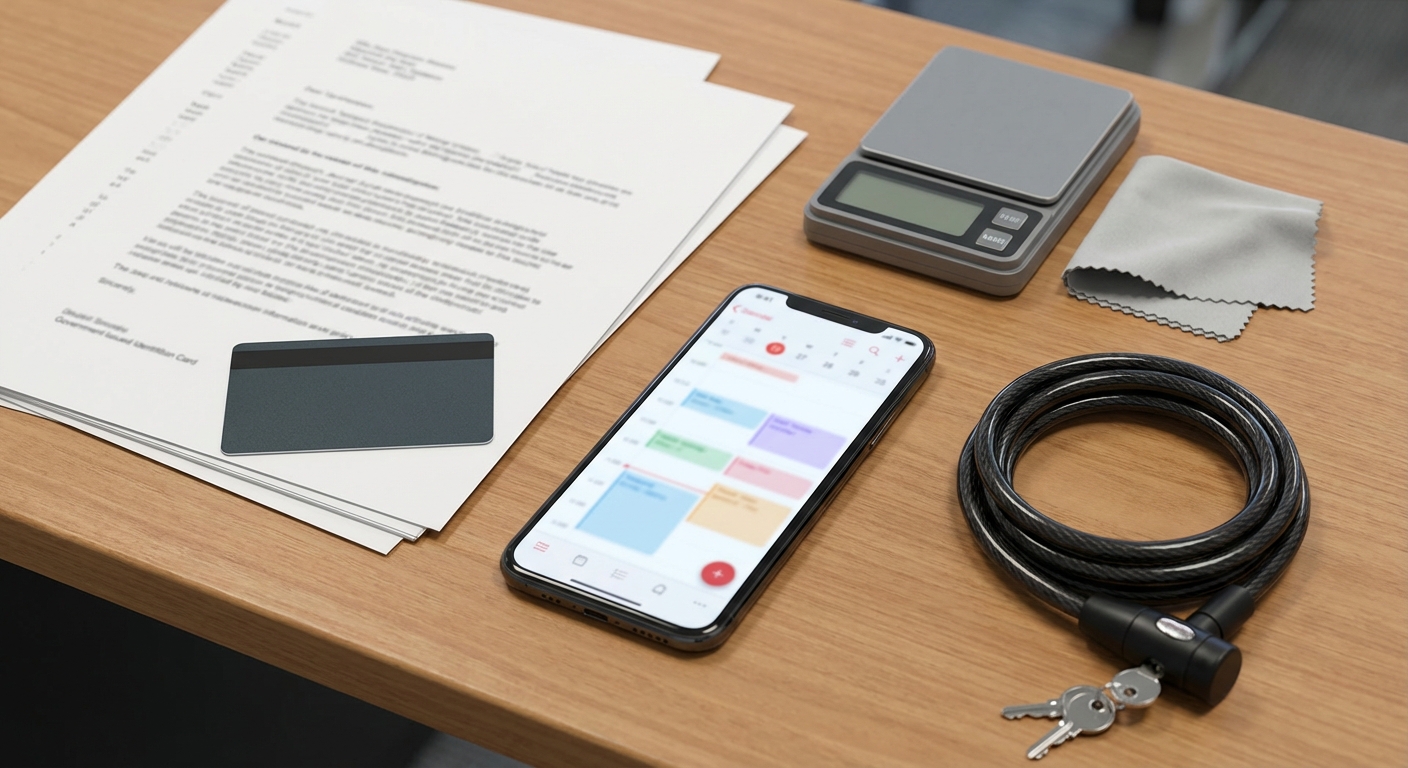
- File whatever the order requires, such as proof of surrender or an affidavit of compliance, by the stated deadline.
- Keep copies, plus dates, names, and case numbers, in one place in case the court or law enforcement asks.
Missing paperwork creates legal risk because compliance often has to be proven after the fact, and the court’s default assumption is the written record, not your memory.
Violations can carry criminal penalties that vary by state. Many statutes criminalize knowingly or willfully possessing or purchasing, or attempting to purchase, while the order is in effect. Read the order, don’t improvise, move fast through an approved channel, and follow legal transfer procedures and document everything.
Value, Timing, and Documentation
Even when you’re doing the compliance piece correctly, the next pressure point is value: the same urgency that pushes people into quick transfers also tends to push sale prices down.

When your timeline is forced, or even just uncertain, the fastest sale isn’t always the best-priced sale, and the difference often comes down to condition details and documentation. Under time pressure, you lose the ability to shop multiple channels, wait for the right buyer, or handle small fixes like replacing missing screws or finding the factory box. Buyers know that. If they sense urgency tied to ERPO (a court restriction order) uncertainty, offers tend to get conservative fast.
Clean documentation and clear configuration info is how you keep “unknowns” from turning into a discount. If a buyer isn’t sure what generation it is, what parts are original, or what’s included, they price in the risk. Your job is to remove the guesswork in ten minutes.
- Pull real sold data from completed sales and closed auctions, not asking prices.
- Match the exact variant (generation, caliber, finish, SKU, capacity compliant mags, optics cut, etc.).
- Adjust for condition and configuration, then add or subtract for accessories actually included.
One example of a pro-style approach: Cash My Guns states its valuations consider market data, including dealer listings and auctions, and factor make/model plus condition attributes (finish, bore, matching numbers, aftermarket parts). It also states valuation accounts for seasonality and regional demand, reflecting how supply and demand affect firearm resale prices. That’s why documenting configuration, condition, and included items is material, because those factors explicitly move the number.
Biggest price-movers are straightforward: finish wear at high-contact points, bore condition, matching numbers where the model cares about it, and aftermarket parts. Accessories change buyer confidence as much as they change value, especially extra mags, optics, original boxes, cases, and any receipts or service history. Collector-leaning guns also respond to provenance, meaning simple, believable ownership history and original paperwork.
Photograph and note: model and serial markings where appropriate, both sides, top, and controls; muzzle and crown; bore if you can; wear points; all included mags; optic make and mount; box label; and any documentation that ties the package together.
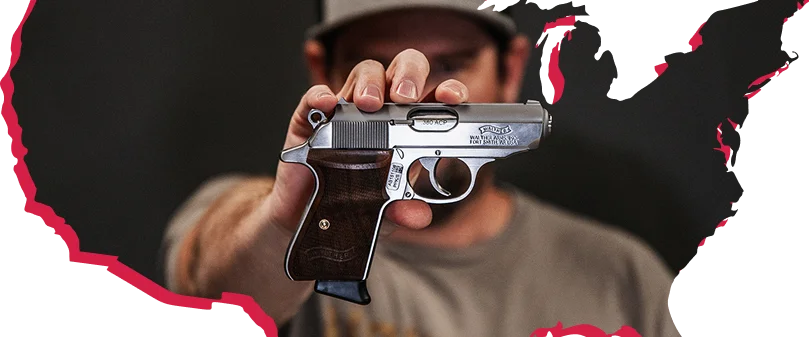
Searches like “what’s my Glock 19 worth” or “Glock 17 value” look simple until you compare generations, MOS versus non-MOS, and included mags. The same split happens with a Sig Sauer P320 current worth guide (different modules and optics cuts), Beretta 92 variants, CZ 75 configurations, or a Walther PPK where markings and originality matter more. Revolvers swing hard on condition and completeness too, especially a Colt Python or Ruger GP100. Even budget staples like the Taurus G3C or a Springfield 1911 can vary a lot once you account for finish wear, round count indicators, and added parts.
Document what you have, then get an objective valuation before you commit to a fast sale, ideally with expert appraisers in valuing firearm collections.
Safer Ways to Sell Legally
Once you’ve got a handle on what you’re selling and what it’s worth, the next choice is the route that keeps the transfer defensible if anyone questions it later.
The safest sale path is the one that leaves the least room for doubt later: clean chain-of-custody, solid records, and a transfer process that’s hard to second-guess. In red-flag-adjacent situations, that standard matters more because gaps become the story: who had the firearm, where it was stored, and when it changed hands. A documented handoff through a Federal Firearms Licensee (FFL) reduces ambiguity because the firearm moves into a licensed dealer’s custody and out of yours at a specific, provable point.
Here’s why this matters in real life: a casual “we met in a parking lot” deal can leave you with nothing but texts and a first name. A dealer-mediated transaction leaves invoices, intake logs, and a clear disposition record.
FFL buyout (sell to a dealer)
- Why people pick it: Fast, simple, one counterparty
- Real tradeoff under uncertainty: Speed usually costs top-dollar because the dealer prices in resale margin
- Paper trail strength: Strong: clear custody transfer to a licensee
Consignment through an FFL
- Why people pick it: Often nets more because you’re selling to an end buyer
- Real tradeoff under uncertainty: Time and terms vary by dealer agreement, consignment fees, duration, and storage policies aren’t federally standardized
- Paper trail strength: Strong: the dealer controls showing and transfer
Online marketplace sale fulfilled through an FFL
- Why people pick it: Biggest buyer pool
- Real tradeoff under uncertainty: More steps, more timing risk, you’re coordinating payment, shipping, and the receiving FFL
- Paper trail strength: Strong if shipped and transferred correctly
Private-party sale (where legal)
- Why people pick it: Can be highest net
- Real tradeoff under uncertainty: Highest friction under uncertainty, residency and transfer constraints can turn an “easy buyer” into an illegal transfer fast
- Paper trail strength: Weak to medium: depends on your documentation
If you want an example of an FFL-routed option that’s built around distance selling, Cash My Guns operates under Dunlap Gun Buyers, which is a federally licensed firearms dealer (FFL).
ATF guidance is clear: a nonlicensee may ship a firearm by common or contract carrier to an FFL in any state, as long as the shipment complies with federal, state, and local law (ATF Q&A). Federal law also sets two traps people miss under 18 U.S.C. § 922(e): you must notify the carrier the package contains a firearm, and you cannot mark the outside of the package in a way that indicates it contains a firearm.
USPS rules are stricter for handguns. Under USPS DMM 432.2, nonlicensees generally can’t mail handguns, while long guns have different conditions. If you’re trying to stay defensible, don’t improvise; confirm the carrier method and the receiving FFL’s preferences before you ship.
An FFL transfer creates a clean “before and after.” The buyer fills out ATF Form 4473, and the dealer runs a NICS background check (with limited lawful alternatives) before the firearm is transferred. That matters because it documents that you routed the sale through the standard eligibility screen and a recorded transfer process.
Interstate deals are where people get burned: under 18 U.S.C. § 922(a)(3) and (a)(5), interstate nonlicensee-to-nonlicensee transfers generally need an FFL in the recipient’s state.
Pick the path that minimizes ambiguity: formal custody transfer + documented sale + compliant shipping.
State Selling Rules That Matter
All of the “safe route” options still sit on top of state rules, and that’s where people make perfectly normal assumptions that turn into real problems.
The biggest mistake sellers make is assuming “gun sale rules are basically the same everywhere”; they aren’t, and the differences change your safest next step. Two people selling the same rifle can face totally different requirements based on four things: ERPO (a court restriction order) rules, whether private-party sales have to route through an FFL, waiting periods, and purchase permits.
Start with ERPO presence. Use the NCSL ERPO tracker (Feb 2026) to confirm whether your state has an ERPO statute in effect, then double-check on an official state source like the state judiciary, state legislature site, or your state DOJ or state police page.
Next, confirm how your state treats private-party transfers. Some states require every private sale to be processed by an FFL (universal background check states). Others don’t. Add in waiting periods and permit-to-purchase rules, and your “simple local sale” can turn into “schedule a dealer appointment and bring extra paperwork.”
Finally, watch for the extra tripwires: local city or county rules, state-specific forms, and buyer eligibility checks that are stricter than what you expected.
- Confirm ERPO status on the NCSL tracker, then verify on an official state site.
- Check whether private-party transfers must go through an FFL in your state.
- Look up any waiting period that affects when the transfer can complete.
- Verify whether your state requires a purchase permit or firearm owner card.
- Call an in-state FFL if anything is unclear, they can sanity-check the transfer path fast.
- TX: Verify on the Texas State Law Library guide, Texas does not require private-party transfers to be processed through an FFL and has no state universal background check requirement for private sales.
- FL: Verify on FDLE guidance, Florida does not require an FFL for a private-party sale under state law and does not impose a statewide universal background check requirement on private sales.
- CA: Verify private-party transfer routing and any required in-state dealer steps on the CA DOJ Bureau of Firearms site.
- GA, PA, OH, AZ, NC: Verify private-sale routing rules on your state police or attorney general site, then confirm any permit or waiting-period rules on the legislature site.
- NY, IL: Verify whether purchase permits or FOID-style requirements apply, and confirm any special state forms on official state resources.
Before you pick a buyer or a platform, confirm your state’s transfer requirements and whether ERPO rules exist (use a state-by-state guide to selling a gun as a starting point), then choose the simplest compliant path.
A Cautious Action Plan
If this feels like juggling legal rules, logistics, and pricing all at once, that’s because you are. The goal is to make decisions that hold up on paper and don’t give away value just because you’re under pressure.
When you’re selling under uncertainty, the goal is to protect yourself twice, legally and financially. Red flag orders can restrict possession or control, and some also restrict purchase or receipt, so a “normal sale” isn’t something you can assume. The tricky part is the wording: custody, control, or possession can sweep in access, not just ownership, and improvising the handoff is how people get burned. Time pressure also hits your wallet; forced timing can mean taking less than the firearm is worth, which is why clear photos, accessory lists, and configuration details matter. And because rules vary and ERPO coverage is state-specific, you only move fast after you’ve verified what your state actually requires using official sources.
- Read the order (if you have one) and follow the exact restrictions, don’t assume.
- Choose a compliant channel, often an FFL-centered path that creates cleaner records.
- Document what you’re transferring or selling, including identifiers and receipts.
- Verify your state’s selling requirements and whether an ERPO framework applies.
- Get help from an attorney, an FFL, or the court clerk when the stakes are high.
If you want a documented, FFL-based option that also keeps the process moving, Cash My Guns is one path to consider. The next safe step is simple: slow down long enough to verify the rules, get an objective valuation, then use a channel you can prove was compliant.