
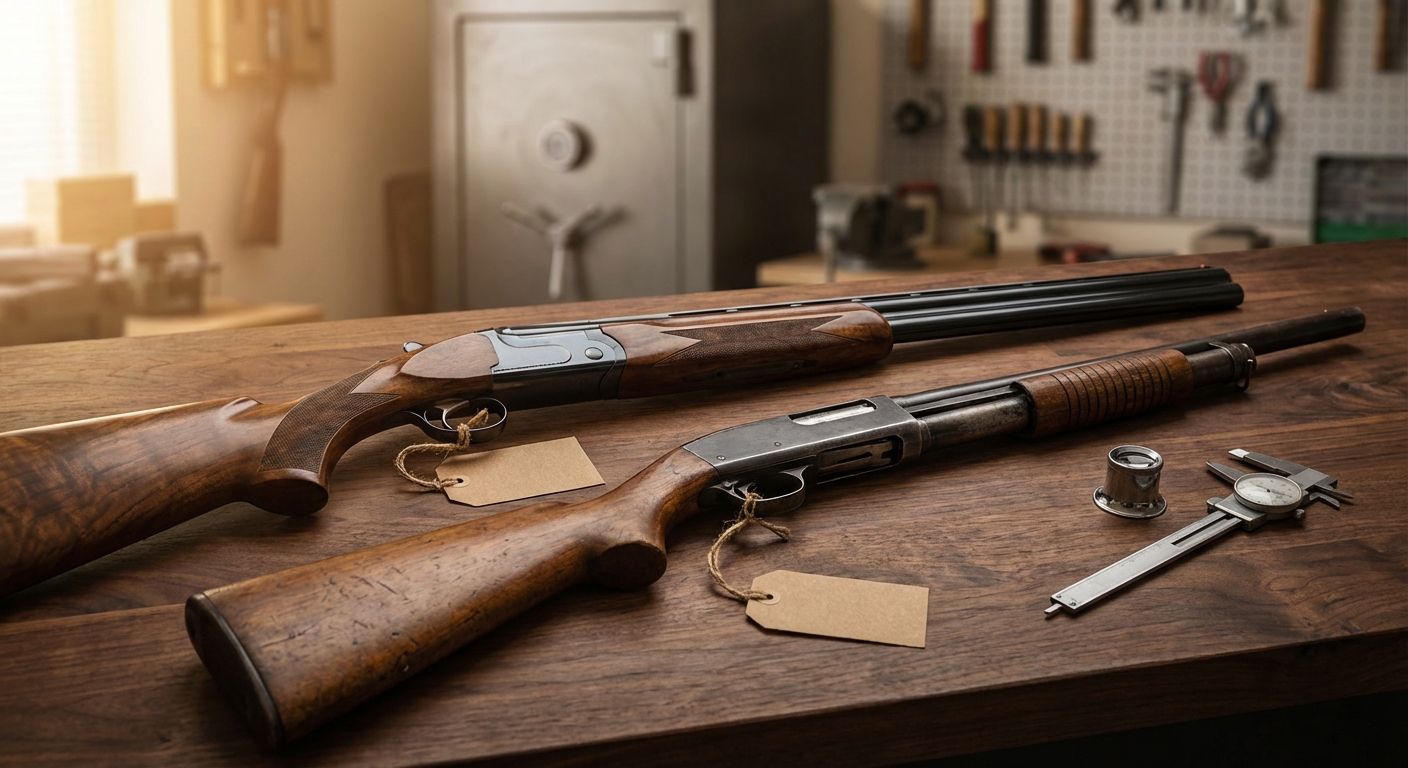

You pull up shotgun listings, and the price spread makes no sense: $300 here, $900 there, and both sellers swear theirs is “worth it.” The trap is thinking “value” means MSRP or whatever the most optimistic asking price says.
You’re usually trying to thread the needle: don’t get lowballed, but also don’t price it so high it sits for months while buyers scroll past. That’s the real tradeoff-maximizing price versus selling speed-and it gets worse when you fall into the asking price trap.
“Holds value” only means something on the secondary market, the resale marketplace where prices are set by what buyers actually pay, not MSRP. The clean way to benchmark it is two signals: lower depreciation vs. original MSRP and faster average liquidity (days-to-sale) once it’s priced at the market.
Here’s where most owners go wrong: they compare asking prices instead of the asking-vs.-sold gap. Two listings can look identical, but the sold comps-recent completed sales of the same or very similar model-show what money actually changed hands and how quickly.
Cash My Guns, operated by Dunlap Gun Buyers, an FFL, says its valuations consider market data (dealer listings + auctions) and factors like make/model and condition.
Once you think in depreciation plus liquidity (days-to-sale), you’ll know what kinds of shotguns tend to depreciate least and how to sanity-check your own pricing fast.
What actually drives shotgun value
Shotgun resale looks unpredictable until you watch what buyers actually reward. People get surprised because two shotguns that seem “the same on paper” sell two completely different ways once you factor in trust signals like model history, originality, and how confident the next owner feels about keeping it running.
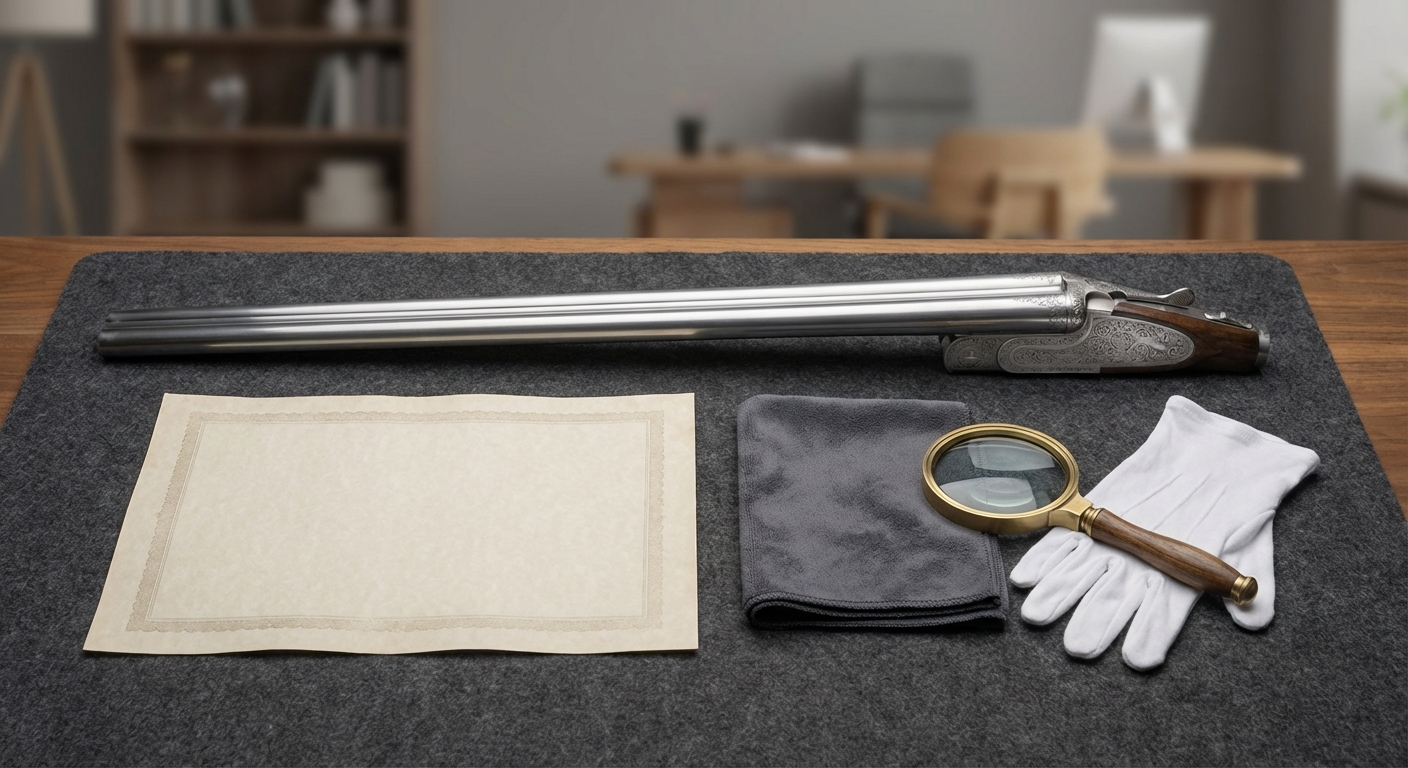
The Standard Catalog of Firearms (19th Ed., 2009) is blunt about what drives collectible value: demand, rarity, and condition (grade). It also includes an in-depth firearm condition grading system to create a general-consensus measurement of condition, so buyers and sellers aren’t arguing past each other with vague descriptions like “pretty clean.”
Here’s the nuance: rarity only pays when it comes with demand. A “common but loved” shotgun-the exact gauge and barrel setup most buyers want-often moves faster and for more money than a genuinely rare variant that only a narrow group is hunting for. Rarity without a deep buyer bench just sits.
After those three pillars, modern resale leans hard on confidence. Brand equity and model history matter because reputation is a shortcut for buyers who can’t test-fire your gun. Reliability record and the parts-and-support ecosystem matter for the same reason: if the gun is easy to service and parts are easy to source, buyers pay up because ownership feels low-risk.
Configuration desirability is the quiet multiplier. Mainstream use-cases drive mainstream prices, so the “normal” configuration people search for tends to hold stronger than a niche setup, even if the niche setup is cooler.
Originality is another split point. Aftermarket parts, meaning non-factory modifications or accessories added after purchase, can absolutely improve function, but they often narrow your buyer pool because the next owner is inheriting your taste and your choices.
Valuation inputs include make and model plus condition details like finish, bore condition, matching numbers, and aftermarket parts, and it also factors seasonality, recurring demand shifts during the year, plus regional demand. Macro demand moves too; how supply and demand affects firearm resale prices helps explain why those waves change both price and speed of sale.
- Demand: Is this a model buyers actively search for?
- Rarity: Is it rare and broadly wanted, or just obscure?
- Condition grading: Can you honestly call it NIB, Excellent, Good, etc., with photos to match?
- Support: Are parts and service straightforward, or a scavenger hunt?
- Configuration: Does it match common hunting, clay, or defensive setups?
- Originality: Are mods reversible, and do you still have factory parts?
- Timing: Are you selling into peak season for your region (and tracking broader cycles like the August 2025 gun market report)?
Shotgun types that retain value
Those value drivers show up pretty consistently once you zoom out and look at categories. Shotgun resale is less about the action type and more about the demand profile behind it-how many buyers want it, how often they shop for it, and how confidently they can price it as a “known quantity.”
Quality O/Us hold value because clays and upland buyers keep them in constant rotation, and longevity plus brand prestige makes pricing feel straightforward. Resale gets softer when the gun drifts into a niche setup, unusual features, or cosmetic choices that narrow what most shooters are shopping for.
Pumps retain value because “workhorse” demand is huge, they’re easy to keep running, and almost every buyer understands what a fair price looks like. Resale drops when you move away from mainstream, do-it-all configurations and turn it into something that only fits one very specific use.
Premium semi-autos stay strong when they’ve earned a reliability reputation with hunters and competitors, since repeat buyers chase the same proven platforms. Value slips when you pick a quirky configuration or stack on changes that make buyers worry about function, parts-fit, or warranty history.
Tactical and defensive shotguns can hold value in real demand pockets, especially when the setup matches what most buyers expect. They’re also the most configuration-sensitive category, so oddball furniture, non-standard features, or “project gun” vibes can slow the sale and force a discount.
Depreciation shows up fastest with budget imports, niche or odd configurations, and heavy customization that shrinks the buyer pool. That lines up with the same valuation inputs already discussed-condition, configuration, and aftermarket parts-because those are exactly the things that change how many buyers will even click your listing, and how quickly they’ll commit.
If resale strength is your goal, pick categories with broad demand and stick to mainstream configurations that most buyers recognize and trust.
Models known to hold value
Categories are the big buckets; specific model families are where buyers make snap decisions. If you’re thinking about resale, the safest odds usually start with models that have years of proven demand plus an ecosystem of parts, service, and buyer familiarity.
The 870 has sheer market saturation on its side: lots of buyers already know what they’re looking at, and the parts and service network is mature. Liquidity tends to improve when the gun is clearly a factory-recognized variant (for example, Wingmaster, Police, Express) with straightforward documentation and no mystery components.
The 500/590 family holds value because it’s familiar, durable in reputation, and easy for buyers to support long-term with readily available components. Variant clarity matters here too-500 vs. 590, 590 vs. 590A1-and factory furniture or sight packages are typically simpler to move than a one-off build with mixed parts.
A5s tend to stay liquid because the model name carries instant recognition and a long collecting and hunting footprint. Where sellers get hung up is glossing over which A5 they have; era and markings tend to drive buyer confidence, and clear identification speeds up the sale.
Premium Benelli models often keep demand because buyers associate them with hard-use reliability and are comfortable paying for a known quantity. The quick cue is originality: factory configurations and factory accessories are usually easier to evaluate than heavily customized setups, which can slow down days-to-sale even when the base gun is desirable (see a current worth guide for the M4 Super 90).
The 686/687 family is part of Beretta’s long-running, Italian-made 680-series, which is exactly the kind of lineage buyers trust on the used market. Within the 687 line, the 687 EELL is a higher-grade configuration with premium wood and extensive factory engraving compared with standard field and Silver Pigeon variants. Smaller gauges like 28 gauge and .410 bore are also produced in the 686/687 family and are often treated as premium configurations, which can tighten supply and keep demand strong.
Even inside “good resale” families, heavy modifications are where momentum dies. That’s why factory-original configurations are often easier to resell than a heavily altered example, even when the base gun is desirable.
Use this list as a shortlist, not a promise. Pick a few families that fit your use case, then validate your exact variant and condition by checking sold comps before you set expectations on speed or value (for over/unders, a value guide for a flagship over/under model can help).
How to estimate your shotgun’s worth
Once you’ve got a candidate value range in mind, the job becomes boring in a good way: match your exact shotgun to real sold comps, then adjust for the specifics that actually move price, like chamber length, finish, and originality.

- Pin down the exact variant. Write down every identifier a buyer will filter by: receiver and barrel markings, gauge, chamber length (for example 2 3/4-inch vs 3-inch), barrel length, and finish. If it’s a line with lots of sub-variants, grab clear photos of the markings so you’re not comping the wrong configuration.
- Check condition and originality. Focus on a quick reality check: exterior finish wear, bore condition (shine, pitting, rings), matching numbers where applicable, and any aftermarket parts like non-factory stocks, recoil pads, sights, or extended tubes. Those details separate “same model” from “same value.”
- Pull multiple recent sold comps. Use GunBroker’s Completed Items view and filter to listings that actually sold, then narrow by manufacturer, model, and matching specs like gauge and chamber, barrel length, finish, and condition based on the listing details. One comp is a trap because a single outlier sale, odd accessory bundle, or poorly described listing can skew your number.
- Adjust for what boosts buyer confidence. Original box and papers, spare chokes, and factory extras do not magically double value, but they routinely make your listing easier to trust and easier to sell at the going rate. Note them when comparing comps, especially on higher-end models.
- Know when to get an appraisal. If you’re dealing with a collection, a rare variant, a high-end gun, or any confusing originality or provenance question, use an expert appraisal so you do not price a standout piece like a standard one. Cash My Guns operates under an FFL (Dunlap Gun Buyers), and its experts/appraisers evaluate make and model and condition details like finish, bore condition, matching numbers, and aftermarket parts when an appraisal is warranted for collections and rare variants.
Quick sanity-check: if your estimate lands way above the cluster of recent comps, you’re probably anchored to an asking price, not what buyers actually paid, and seasonality is exactly why “recent” matters.
Selling options and legal basics
Pricing is only half the resale story; the other half is the selling channel you choose. The same gun can produce a very different net amount and a very different timeline depending on the route, because every option bakes in its own friction, fees, and compliance steps.
Private sales usually leave you the most room to negotiate and keep the spread that a middleman would take. The tradeoff is time and responsibility: you’re fielding messages, screening buyers, arranging meetups, and making sure the transfer is done in a compliant way for your state.
Consignment buys you visibility; the shop already has foot traffic and handles the showing. You pay for that reach with a commission and a slower payout, since you don’t get paid until it sells and the shop closes out the paperwork.
If your top priority is speed, a buyout is hard to beat. You’re trading price for simplicity: the shop has to leave room for overhead, inspection time, and resale margin, so the offer is typically the lowest-net path.
A remote buyer can be the cleanest middle ground: fewer meetups, fast turnaround, and the logistics are often bundled. For example, Cash My Guns states it provides a prepaid shipping label and full insurance coverage for shipments at no cost to the seller.
Federal law under the Gun Control Act (18 U.S.C. § 922) prohibits a private seller from transferring a firearm to anyone they know, or reasonably believe, is prohibited. Interstate transfers generally must go through an FFL transfer, meaning the handoff is processed through a Federal Firearms Licensee to complete required paperwork and background checks where applicable, and it’s the standard path for out-of-state sales (18 U.S.C. § 922(a)(5)) and for acquiring a firearm outside your state with limited exceptions (18 U.S.C. § 922(a)(3)). California is stricter: transfers generally must be processed through a CA FFL (Cal. Penal Code § 27545) and carry a 10-day waiting period (Cal. Penal Code § 26815(a)). Don’t wing it, double-check your state’s rules before you commit to a method.
Pick the route that matches your priority-max price, fastest sale, or least hassle-then confirm the required legal pathway in your state (often an FFL transfer) so the deal stays clean from first message to final handoff.
Value retention playbook
If you step back, the same themes keep repeating across types, models, and selling channels. Keeping value is mostly a repeatable playbook: buy what lots of people actually want, keep it original and clean, and price it to reality, not wishful thinking.
Ignore asking-price anchors and look at the secondary market where guns actually move; sold comps and liquidity (days-to-sale) tell you more than a “for sale” screenshot. The “why” stays consistent too: demand, rarity, and condition grade do the heavy lifting, then originality versus aftermarket parts-plus seasonality and regional demand-swing the outcome. That’s why the categories and model families called out here tend to behave better than the field, and why your selling route changes both your net and your timeline.
Seller checklist: exact model and variant markings or SKU; gauge; chamber length; barrel length; choke system; list any aftermarket parts. Photo checklist: both sides; close-ups of finish wear; bore; markings and serial; muzzle and rib; choke threads and included chokes; any boxes, manuals, or factory accessories; clear shots of every modification. Pricing checklist: pull multiple recent sold comps and adjust for your condition and originality; one listing is not a market.
Document your shotgun, pull comps, then pick the route that fits your priority. If you want a streamlined path, Cash My Guns is a nationwide online buying service that markets “Safe • Legal • Hassle-Free.”