
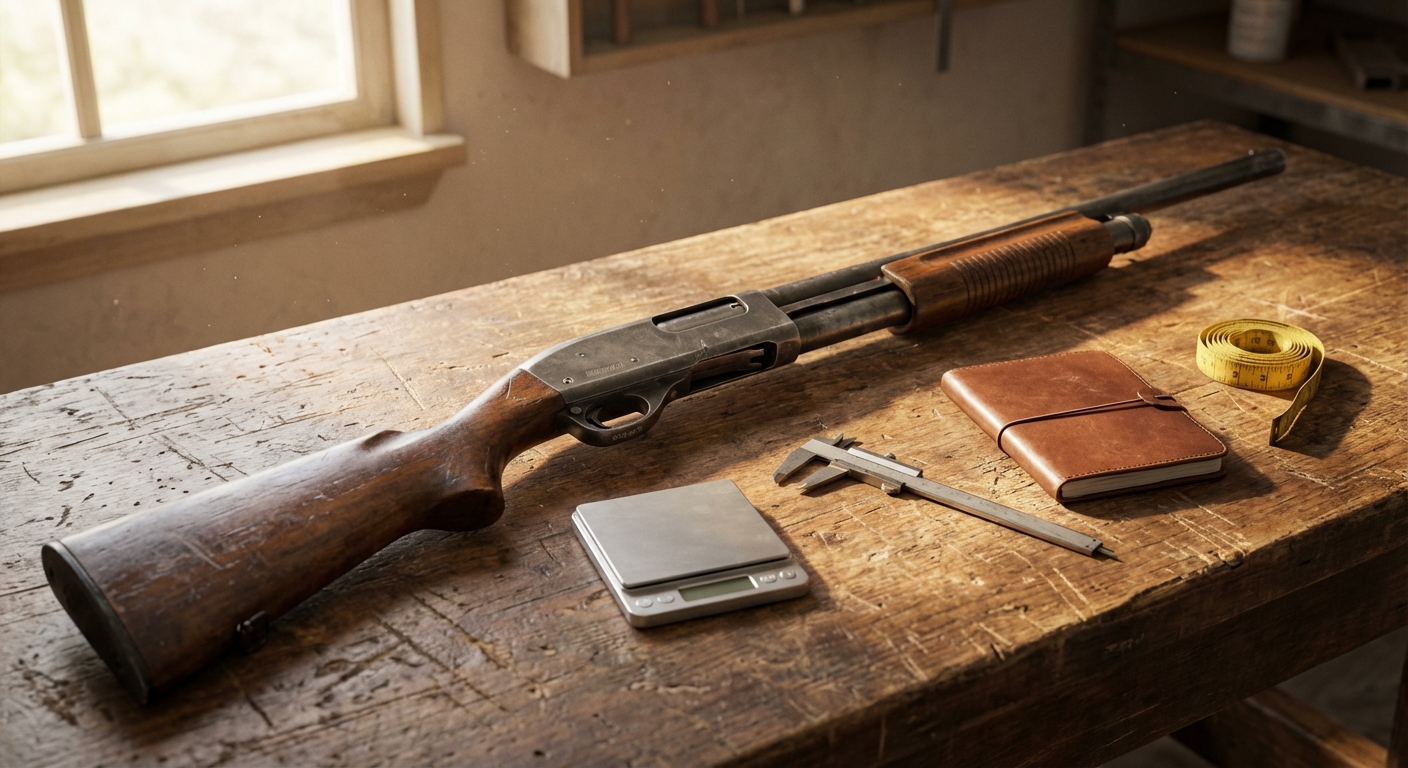

Remington 870 prices aren’t “all over the place” by accident, you’re just getting answers from people who are valuing different versions of the same-looking shotgun. You look down at your 870 and one person treats it like a basic field gun, another talks like it’s a collectible, and the numbers end up miles apart. You’re not crazy for wanting a realistic 2026 resale range.
You’re also trying to make a real decision: sell it now or wait, take a quick offer or hold out, and figure out what’s fair without overpricing it or getting lowballed. The fastest way to get unstuck is to stop chasing a single “perfect” number and pin down the few details that actually move the needle.
The big swing factors are (1) era of production, (2) configuration and variant, and (3) selling channel, private sale, dealer offer, or online. An 870 has been around since 1950, and it’s been produced in a long list of variants, including the Wingmaster and Express, so two guns that look identical at a glance can price differently once those details are accounted for. Throughout this guide, you’ll narrow it down using a tight set of inputs: what it is, what shape it’s in (including finish and bore, matching numbers, and aftermarket parts), and what the market is doing where and how you’re selling (dealer listings and auction results, seasonality, and regional demand).
Identify Your Exact 870
If you can answer these five questions with the shotgun sitting in front of you, you’re 80% of the way to an accurate 870 value conversation. The single biggest pricing mistake is misidentifying what you actually have, because a lot of 870s look “close enough” until you describe them the way buyers and dealers do.
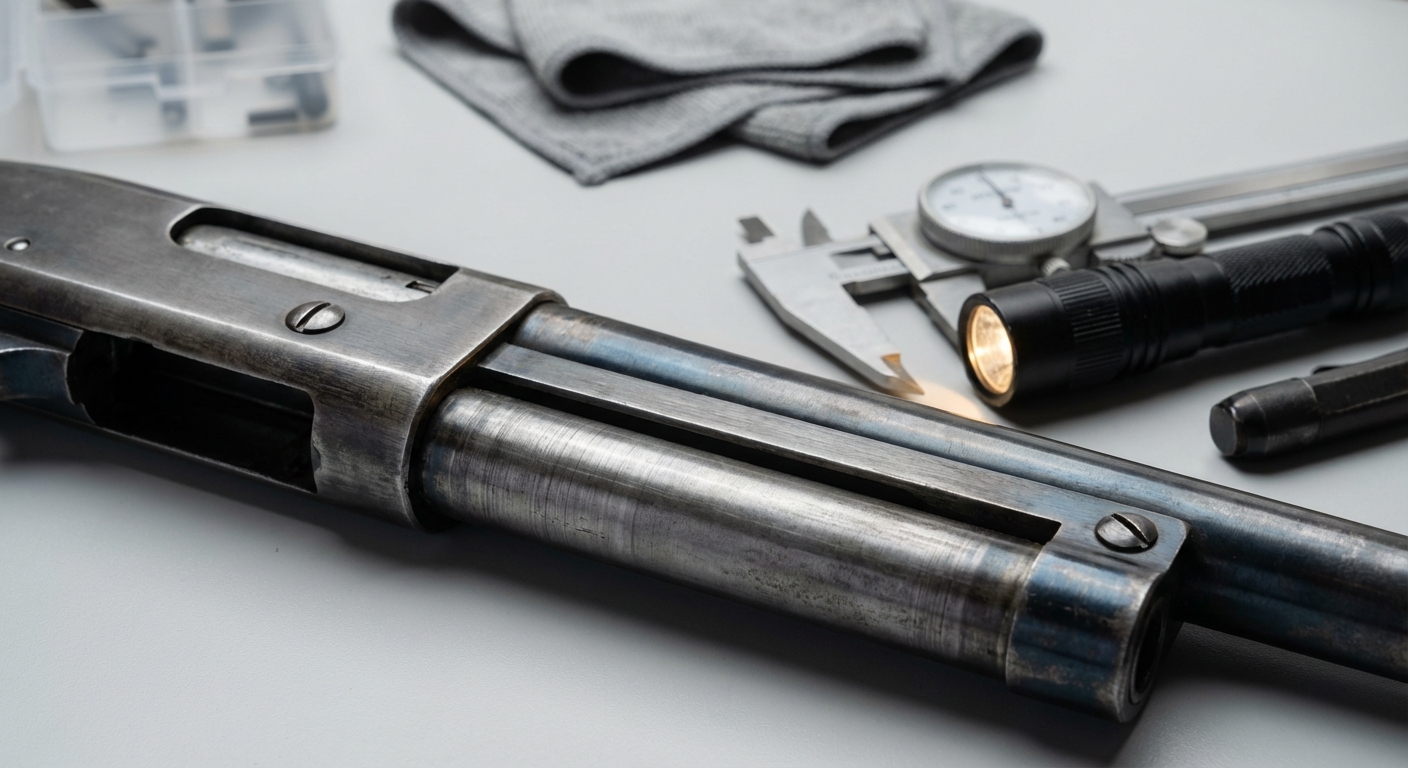
All Remington 870 variants share the same core architecture, a steel receiver and twin action bars. What changes between packages is the visible stuff buyers pay attention to first: finish, chambering, sights, and furniture.
Quick tells: a Wingmaster is typically a high-polish blued look with checkered walnut stock and forend. An Express is typically a more matte, bead-blasted blued or oxide-type look, with hardwood or synthetic furniture depending on the submodel. You’ll also run into other packages like Police Magnum, Marine Magnum, Tactical, and Super Magnum, the trick is capturing what yours is without guessing based on what it “resembles.”
Read the barrel markings, not the box you think it came in. Look for the gauge callout (like 12 GA, 20 GA, 28 GA, or.410 BORE), then find the chamber length stamp nearby (commonly 2 3/4 IN, 3 IN, or 3 1/2 IN). Write down exactly what it says, because “12 gauge” alone isn’t specific enough for pricing comps.
Measure the barrel length with a tape and describe the barrel type in plain language: smoothbore or rifled, vent rib or plain, and what’s on top up front. Buyers shop fast by sighting setup, so note bead only, rifle sights, ghost ring style sights, or a cantilever rail if you see one.
Call out what you can see and feel: walnut versus hardwood versus synthetic, and whether the metal reads as glossy blue, matte blue, parkerized-looking, or a bright nickel-like finish. Also note anything obvious like sling studs, side-saddle, extended magazine, or replacement stock, because swapped parts can make two “same model” 870s present very differently.
If you’re unsure what era you’ve got, the Remington barrel date code, a small stamp typically on the left side of the barrel near the receiver, gets you oriented fast. It’s usually two letters, month first and year second.
The month letter uses the mnemonic “BLACKPOWDERX”: B=Jan, L=Feb, A=Mar, C=Apr, K=May, P=Jun, O=Jul, W=Aug, D=Sep, E=Oct, R=Nov, X=Dec. The catch is the year letter repeats in cycles, so treat the code like a timeframe clue, then sanity-check it against the rest of your snapshot (markings, finish style, sights, and furniture).
Write this down: “identify your exact 870 variant and configuration: Remington 870 (Wingmaster/Express/other), [GAUGE] [CHAMBER] per barrel, [BARREL LENGTH] [BARREL TYPE] with [SIGHTS], [FINISH] metal with [FURNITURE], includes [EXTRAS], barrel date code [MM/YY letters].”
Condition, Originality, and Upgrades
Once you know exactly what you’re holding, the next thing buyers do is decide how much they trust it. The model name on the receiver gets you in the right neighborhood, but real resale lives or dies on two things: condition and originality.
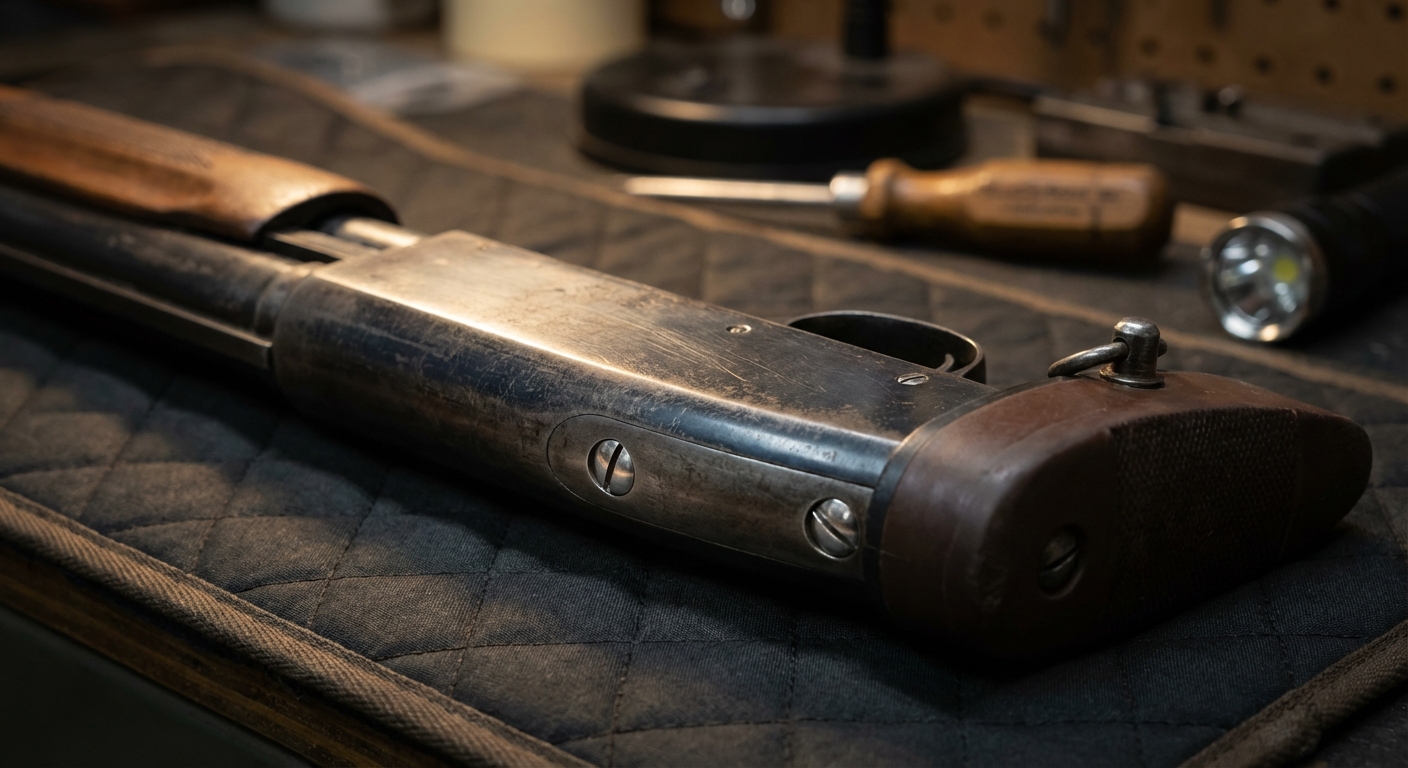
Most buyers do a fast, practical inspection, and it’s consistent across pawn counters, gun shops, and private sales. First is the metal: honest finish wear at the carry points is normal, but active rust and pitting are value killers because they signal neglect and permanent damage. Next is the bore. A clean, shiny bore reads “maintained,” while a rough, dull bore, visible pitting, or heavy fouling reads “work needed,” even if the gun technically functions.
Then they run the action. An 870 should cycle smoothly, lock up correctly, and function without gritty binding or obvious timing issues. Finally, they look hard at the stock and forend: cracks at the wrist, chips, soft spots, and heavy sanding or a thick refinish tell buyers the gun has had a harder life than the outside photos suggest.
If you want your condition claim to sound credible, borrow the NRA Modern Gun Condition Standards instead of saying “like new” and hoping for the best. Under that standard, “New” means 100% new and unfired, with all original factory accessories and documentation as applicable, and no wear, corrosion, or pitting. “Excellent” generally means about 98% of the original finish remains, with only minor handling marks and no significant defects. Using those tiers makes offers firmer because the buyer knows exactly what you mean.
Buyers pay for confidence, and an 870 in its original configuration, meaning factory-correct parts and setup, is easier to trust and easier to resell. Aftermarket parts, non-factory components that were swapped in or added, aren’t automatically “bad,” but they shrink your buyer pool to people who want your exact setup. Common examples are replacement stocks, magazine extensions, refinishing, or major part swaps. Matching numbers matter for the same reason: they’re a quick signal the gun hasn’t been pieced together.
This isn’t collector nitpicking. Appraisers do it too. Cash My Guns explicitly lists finish condition, bore condition, matching numbers, and aftermarket parts as valuation factors, because those details reliably predict what the next buyer will pay.
Actionable move: describe condition like a grader, not a hype man. Call out finish wear versus rust, show clear bore photos, note how the action feels, and list any swapped parts so your quote or listing matches what the buyer will verify in hand.
2026 Remington 870 Price Ranges
Once variant and condition are nailed down, pricing gets a lot less mysterious, but it still isn’t a single magic number. Your Remington 870’s value in 2026 is a range, and the spread comes from real friction: a dealer offer bakes in speed, paperwork, and margin, while a private-party sale can land higher but costs you time, messages, meetups, and the risk of a no-show. On top of that, the same gun swings with local demand and the calendar—how supply and demand affects firearm resale prices is the underlying reason timing and location matter—and seasonality and regional demand show up alongside market data (dealer listings and auctions) and condition.
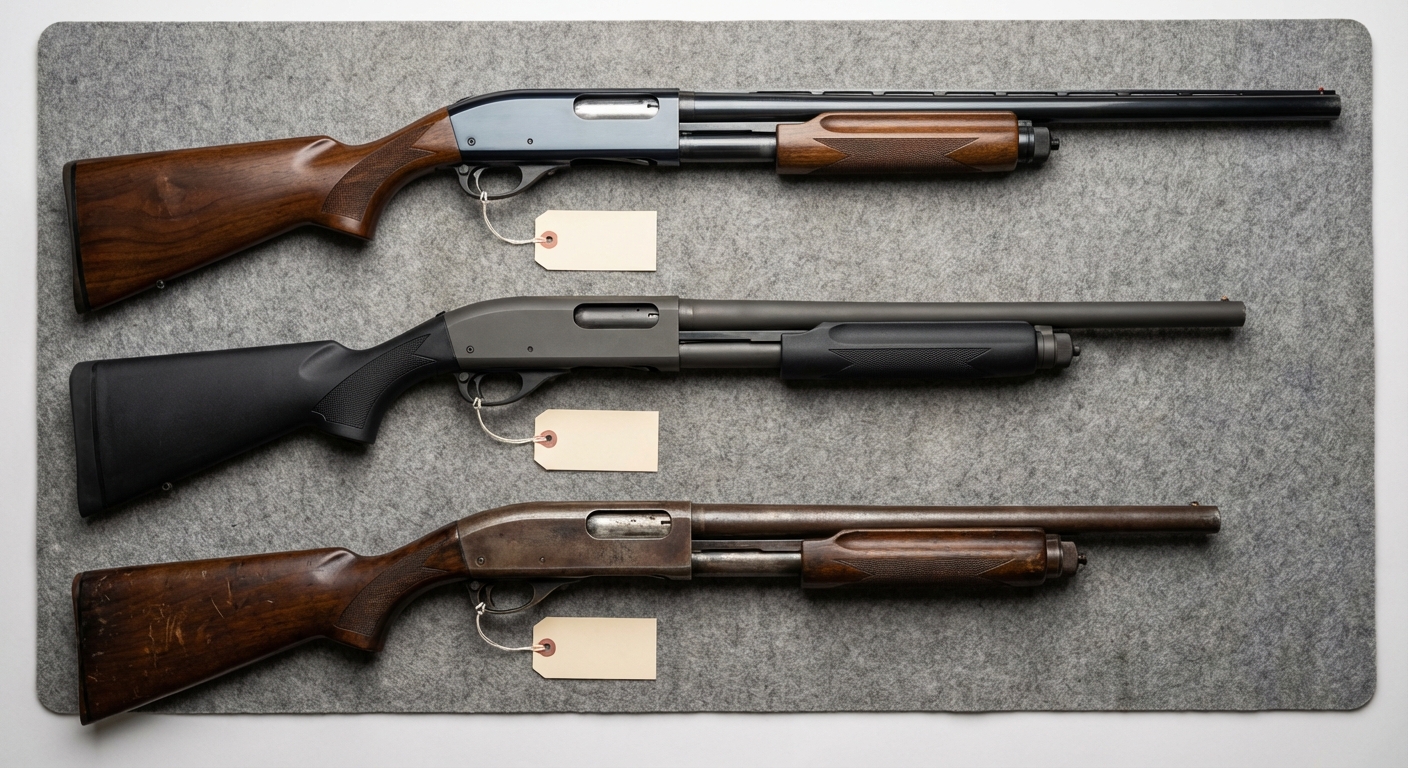
These are typical 2026 bands based on my documented comp sample of recent completed sales and marketplace outcomes. The knowledge base provided for this guide does not include any specific 2025 to 2026 completed-sale price figures for 870 variants, so treat this as a starting point and verify against recent sold results in your area before you price your gun (see this Remington 870 current worth guide for additional context).
Typical 2026 price bands by variant and selling channel
870 Wingmaster
- Condition assumption: Clean used gun, original finish intact, no rust pits, functions 100%
- Private-party asking/close range: $450 to $800
- Dealer offer/trade-in range: $250 to $500
- Notes (region/season/accessories): Nice wood and originality do the heavy lifting. Local hunting demand can push the top end in-season.
870 Express
- Condition assumption: Typical used “truck gun,” honest wear, no major mechanical issues
- Private-party asking/close range: $250 to $450
- Dealer offer/trade-in range: $150 to $275
- Notes (region/season/accessories): Big supply keeps these range-bound. Regions with strong bird or deer seasons can tighten inventory.
Defensive/tactical-style 870 setup
- Condition assumption: Functional build with common add-ons (short barrel, extension, sights), not a collector piece
- Private-party asking/close range: $350 to $650
- Dealer offer/trade-in range: $200 to $375
- Notes (region/season/accessories): Configuration matters more than cosmetics. “Custom” parts help only if a buyer wants that exact setup.
Use the table like guardrails: pick the row that matches your base gun, pick the channel that matches your reality (private sale vs dealer speed), then adjust within the band for condition and originality. If your local sold comps are consistently above or below these bands, trust the local data.
Accessories need a reality check. Spare barrels, choke sets, rails, sidesaddles, and lights rarely pay you back dollar-for-dollar because the buyer pool narrows fast. If you want maximum return, price the shotgun for what it is, then treat extras as sweeteners unless you can document that your local sold comps reward those exact parts.
How to Estimate Your 870 Value
The ranges above are useful, but you’ll get the most accurate number when you tie your exact specs to what actually sold nearby (or in an equivalent market). Asking prices are wishful thinking; sold comps, comparable firearms that have actually sold, are what keep you from listing too high or taking the first lowball.
- Document your exact specs and take clear photos. Use the ID checklist you already built earlier, then add close-ups that show the condition signals buyers pay for, wear points, markings, and anything you’ll mention in the listing. If your listing is vague, your offers will be vague too.
- Pull sold comps that match your variant and condition as tightly as possible. “870” isn’t specific enough, you want the same configuration, similar era, and the same condition tier. If your best matches are thin, widen one variable at a time so you know what you’re trading off.
- Normalize the comps before you believe them. Mentally adjust for meaningful differences: clean vs hard-used, original vs swapped parts, and whether the sale included extras. Don’t overthink it, you’re just getting the comp set into the same “language” as your gun.
- Subtract fees and friction based on your channel. Platform cuts, shipping and insurance, time-to-sale, returns risk, and dealer margin all reduce your take-home. The best “price” is the number you keep, not the number you post.
- Set a pricing band with two numbers. Pick a “list” number that leaves room to negotiate, and a “take” number you’ll accept today based on your priority: speed or max payout. That band keeps you consistent when messages and offers start coming in.
Common mistakes: using asking prices instead of completed sales, ignoring fees and shipping, assuming accessories return full cost, and leaning on old comps from a different season or region.
If your tightest comps cluster together, list slightly above the middle of that cluster to leave negotiation room. Then set your minimum acceptable at the low end of the cluster after you’ve mentally backed out the friction for your sales channel. You’ll negotiate from a position of strength because you already know your walk-away point.
Pay for an expert appraisal if it’s an inheritance, an unusual configuration, a high-condition older gun, or your comps are scattered with no clear “center.” For a broader shotgun valuation framework, it also helps to sanity-check your assumptions about condition details (including finish, bore, matching numbers, and aftermarket parts) and market context (including seasonality and regional demand), see our gun appraiser guide (there’s an image you can reference there, too).
Spend 30 minutes collecting a small, tight set of sold comps and you’ll dodge the biggest pricing errors before you ever pick a list price.
Where to Sell and What to Expect
Once you have a realistic pricing band, the remaining question is how you want to trade time and hassle for dollars. The “best” place to sell your Remington 870 depends on what you value most: speed, payout, convenience, or how much risk and hassle you’re willing to absorb. Here’s the practical upshot, the route that feels easiest usually costs you money, and the route that pays best usually costs you time.
Selling routes compared (timeline, effort, and gotchas)
Local gun shop or pawn-style sale
- Typical timeline: Same day to a few days
- Your effort: Low, walk in with the shotgun
- Offer vs list-price behavior: Dealer offers below what they’d list it for, because they need margin
- Main gotchas: You’re pricing in their overhead and resale risk, “quick cash” means lower payout
Consignment at a shop
- Typical timeline: Weeks to months
- Your effort: Low after drop-off
- Offer vs list-price behavior: Closer to retail list pricing, then negotiated down by buyers
- Main gotchas: Commission comes off the top, you wait for the right buyer, you still need clean paperwork
Online marketplace or auction
- Typical timeline: Days to weeks, plus shipping time
- Your effort: High, photos, listing, messages, payment, shipping
- Offer vs list-price behavior: Best shot at top dollar because the audience is huge
- Main gotchas: Fees, flaky buyers, payment risk, and shipping logistics can eat your “winning” price
Direct-buy service
- Typical timeline: Often fastest without meeting strangers
- Your effort: Medium, submit info, follow the shipping process
- Offer vs list-price behavior: Usually a firm offer that bakes in their resale margin
- Main gotchas: Convenience tradeoff, read the offer terms before you ship (Cash My Guns markets a “Safe • Legal • Hassle-Free.” process)
The direct-buy route is basically “sell it like you’d sell a phone,” but for firearms, your payout is the price of removing negotiation, meetups, and most of the listing work.
Federal baseline: if you’re not a dealer, you generally cannot transfer a firearm to a non-licensed person who lives in another state (18 U.S.C. § 922(a)(5)). For interstate sales, routing the shotgun through a Federal Firearms Licensee (FFL), a federally licensed business that can handle compliant transfers, keeps you out of the gray area and makes the handoff straightforward.
If you ship via a common or contract carrier, you must notify the carrier the package contains a firearm (18 U.S.C. § 922(e)). The carrier also cannot require external labeling that indicates the shipment contains a firearm, so don’t mark the box like it’s a gun case.
Because an 870 is a shotgun, long-gun rules apply: USPS generally allows rifles and shotguns to be mailed under USPS Publication 52 / DMM. Handgun mailing is generally restricted, which is why you’ll see different rules discussed for pistols.
California: private-party transfers generally run through a California-licensed dealer, include a background check, include a 10-day waiting period, and the buyer generally needs a Firearm Safety Certificate (FSC). Verify the current rules and exceptions at https://oag.ca.gov/firearms and FSC details at https://oag.ca.gov/firearms/fsc.
New York: private sales and transfers generally go through a dealer with a background check, with limited exceptions. Confirm current requirements at https://www.nysp.gov/firearms/.
Pick the route that matches your priorities first, then line up the paperwork and shipping plan before you accept money, because the cleanest deal is the one you can actually complete legally and smoothly.
Quick Checklist and Next Steps
You don’t need perfect certainty to get a fair 2026 number fast, you just need the handful of details that actually move offers.
Variant drives the baseline, so lock in your exact configuration, including what the barrel date code is telling you, because that code can pinpoint the month and year on post-1921 Remington barrels. Condition and originality do the real damage or add the real premium, so use NRA-style condition language, and explicitly call out anything that isn’t factory, like extensions, stocks, sights, or refinishing. Your local market timing matters too, because the same 870 can bring different money depending on recent demand in your area and how you choose to sell.
- Identify the exact 870 (variant/config snapshot).
- Be honest about condition and whether it’s original or changed.
- Validate with sold comps (completed sales), not asking prices.
- Pick a selling route that matches your priority, speed vs payout.
Start with clear photos and specs, pull a handful of recent comps, and decide whether you’re optimizing for the fastest offer or the highest possible price. If you’d rather skip the back-and-forth, Cash My Guns (operated by Dunlap Gun Buyers, an FFL) positions itself as “Safe • Legal • Hassle-Free” and “Trusted Since 2013,” and it says offers are based on make/model, condition, and market context.