
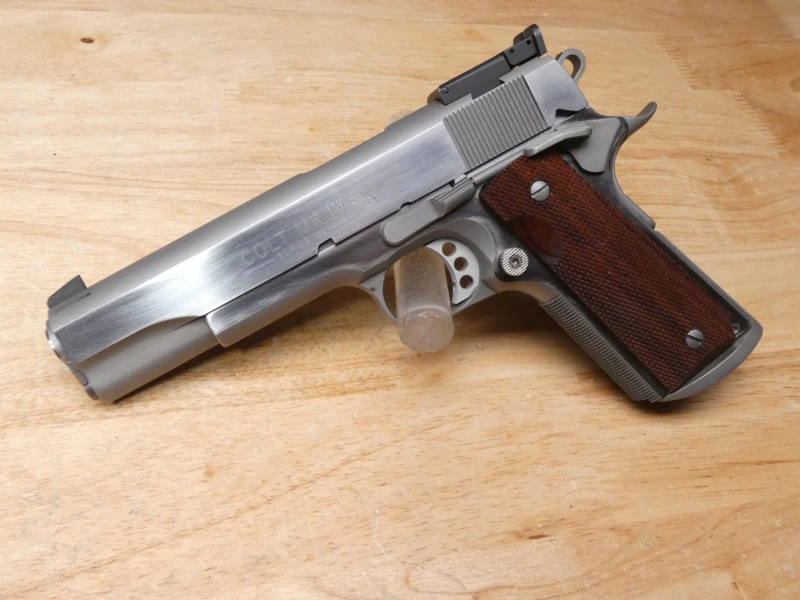
The Colt 1911 is more than just a firearm; it’s an American icon with a legacy spanning over a century. Its value is shaped by a unique blend of historical significance, mechanical design, and enduring popularity. Whether you own a vintage military piece or a modern tactical model, understanding the key factors that determine its worth is essential. This guide breaks down the market forces, modifications, and conditions that influence the resale value of your Colt 1911 today.
What Determines Your Colt 1911’s Worth
The value of a Colt 1911 is primarily determined by its manufacturing series, overall condition, and rarity, rather than its age alone. Collectors often place the highest value on Pre-Series 70 models (made before 1970) due to their historical appeal and craftsmanship. In contrast, shooters frequently seek out Series 70 pistols for their superior trigger feel. The firearm’s condition is paramount; a well-maintained pistol with minimal wear will always command a higher price. Interestingly, a high round count does not significantly lower the value, as a properly cared-for 1911 is considered durable, and consistent use is often seen as simply breaking it in.
2026 Price Breakdown by Generation
Pre-Series 70 Models (Pre-1970)
Pre-Series 70 Colt 1911s are highly prized by collectors and represent the gold standard for historical and investment-grade models. Manufactured before 1970, these pistols lack the firing pin safety introduced later and are revered for their fit, finish, and connection to a different era of gunsmithing. Their value is heavily dependent on originality and condition, with all-original examples in excellent shape fetching premium prices. These firearms are not just shooters but pieces of history, and their market value reflects this distinction, often making them the most expensive standard-production 1911s on the used market.
Due to their collector status, the price for a Pre-Series 70 model can vary dramatically, often exceeding the average used price of more modern counterparts. A pristine example with its original box and paperwork can easily command prices well over $2,500. Even models showing honest wear are sought after, as long as they haven’t been subjected to heavy-handed modifications. For owners of these pistols, documenting their provenance and maintaining their original condition is the most effective way to preserve and enhance their significant financial and historical value in the coming years.
Series 70 Models (1970-1983)
The Series 70 models, produced between 1970 and 1983, occupy a sweet spot for both shooters and collectors. They are renowned for their crisp triggers, a result of the collet-style barrel bushing and the absence of the later-introduced firing pin safety. This makes them exceptionally popular with enthusiasts who prioritize performance and a classic shooting experience. While they may not have the same historical gravitas as Pre-70 models, their reputation for accuracy and reliability makes them a highly desirable choice, maintaining strong resale value in the used market.
A used Colt Government Model from the Series 70 era typically has an average price ranging from approximately $960 to $1,070, though pristine examples can fetch more. These pistols are often seen as the ideal platform for custom builds or as excellent shooters right out of the box. Their value is well-established, and they remain a benchmark against which many other 1911s are judged. For sellers, highlighting the firearm’s Series 70 designation is a key selling point that appeals directly to a knowledgeable base of potential buyers.
Series 80 Models (1983-Present)
Introduced in 1983, the Series 80 Colt 1911s are defined by the addition of an internal firing pin safety. This mechanism was designed to prevent the firearm from discharging if dropped, but it also added complexity to the trigger pull. As a result, some purists and competitive shooters dislike the Series 80 trigger feel compared to its predecessors. Despite this, these models are incredibly common, have been in production for decades, and represent the modern standard for Colt’s 1911 lineup. They are reliable, functional, and widely available on the new and used markets.
Because they are the most recent and widely produced series, Series 80 models generally form the baseline for used Colt 1911 prices, averaging around $1,180 but with a wide range from $700 to over $2,500 depending on the specific model and condition. While the firing pin safety can be a point of contention for some, many owners do not notice a significant difference or find it to be a non-issue. Their value is less about collectibility and more about practical function, making them a solid choice for everyday carry or range use.
Modern & Custom Shop Models
Beyond the standard series, Colt offers a range of modern, feature-rich 1911s that command higher prices. Models such as the optics-ready versions or those in the Combat Elite series are priced new between $1,399 and $1,599. These pistols cater to contemporary shooters by including upgrades like improved sights, enhanced ergonomics, and the ability to mount red dot optics directly from the factory. Their value is tied to their advanced features and readiness for modern shooting disciplines, appealing to a different segment of the market than the classic models.
At the highest end of the spectrum are the Colt Custom Shop models, which can reach prices of $2,999 or more. These firearms are built with meticulous attention to detail, often featuring hand-fitting, premium components, and superior finishes. Their value is derived from their exceptional quality, performance, and exclusivity. When selling a modern or custom shop 1911, its specific features and factory-original upgrades are the primary drivers of its worth, and they often retain their value well due to their desirability and higher initial cost.
How Modifications Affect Value
Modifications to a Colt 1911 can have a mixed impact on its resale value, largely depending on the type and quality of the upgrade. Functional enhancements, such as installing high-visibility sights from reputable brands like Wilson Combat or Dawson Precision, are generally well-received. These upgrades make the firearm more practical and desirable to a broad range of buyers. However, while such modifications enhance usability, there is no clear market consensus that they definitively add a corresponding amount to the pistol’s monetary resale value. They make the gun easier to sell but don’t always guarantee a higher price.
Conversely, alterations that cater to personal preference, such as installing a specific aftermarket trigger, often do not increase and can potentially lower the firearm’s value. Collectors and purists seek original specifications, and any deviation can be a negative. For this reason, the consensus among sellers is that including all original factory parts with a modified 1911 is highly advantageous. Providing the original components allows a potential buyer to return the pistol to its stock configuration, preserving its value and widening its appeal to different segments of the market.
Regional Price Variations in 2026
The value and availability of a Colt 1911 can be significantly influenced by state and local laws, creating notable regional price variations. In California, for example, it is very difficult for most residents to purchase a new Colt 1911. This is because no Colt semi-automatic handguns are currently on the state’s Roster of Handguns Certified for Sale, which requires features like microstamping that these pistols lack. This scarcity can drive up the price of legally owned, pre-roster Colt 1911s in the state’s private market, as supply is severely limited while demand remains.
In other states with restrictive firearm laws, such as New York, 1911-style handguns are legal to own, but other regulations come into play. The most significant restriction in New York is the limit on magazine capacity. While this doesn’t ban the firearm itself, it can affect the value of a sales package. A Colt 1911 sold with several standard-capacity magazines might have to be sold with compliant, lower-capacity magazines instead, or without any at all, potentially altering its perceived value to a local buyer compared to a buyer in a less restrictive state.
Online vs Local Sales
When selling a Colt 1911 locally through a private sale, understanding the paperwork requirements is crucial. While federal law does not always mandate it, a bill of sale is highly recommended to document the transfer. This document should include the names and contact information of both the buyer and seller, the firearm’s details—including make, model, and serial number—and the date and price of the sale. State and local laws vary significantly, with some jurisdictions requiring private transactions to be conducted through a licensed dealer or mandating background checks, so sellers must be aware of their regional obligations.
Selling a handgun online introduces strict shipping regulations. Private individuals are prohibited by federal law from shipping handguns via the U.S. Postal Service. Furthermore, major carriers like UPS and FedEx have policies that prevent private sellers from directly shipping any handgun. To legally ship a Colt 1911, the seller must take the firearm to a Federal Firearms Licensee (FFL). The FFL will then handle the packaging and shipping, sending the pistol to another FFL in the buyer’s state, ensuring the entire process remains compliant with federal and corporate regulations.
To maximize your success in an online sale, high-quality photography is essential. Present your Colt 1911 against a simple, neutral background using bright, even lighting to make the firearm stand out. Capture clear, in-focus images of the entire pistol from both sides. It is equally important to take detailed close-ups of all markings, the serial number, and any specific areas of wear or modification. Including photos of the original box, accessories, and the box label provides a complete picture for potential buyers, building trust and accurately representing the firearm’s condition.
The FFL Buying Advantage
Utilizing a Federal Firearms Licensee (FFL) is not just an advantage but a legal necessity for many transactions, particularly interstate sales. If you sell your Colt 1911 to a resident of another state, the law requires the transfer to be processed through an FFL. As the seller, you must take the handgun to an FFL dealer in your state, who will then ship it to an FFL dealer designated by the buyer. The buyer must then visit their dealer, complete a federal background check, and fill out all required paperwork before taking legal possession.
Selling your firearm directly to an FFL dealer offers a distinct trade-off between convenience and price. The primary advantage is a fast, secure, and legally compliant sale without the complexities of finding a private buyer. However, dealers must account for business overhead and profit margins. As a result, their cash offers typically range from 50% to 65% of the Colt 1911’s retail market value. For a particularly desirable or quick-selling model, that offer might rise to 70%, but it will almost always be lower than what you could achieve in a private sale.
What Increases Your Offer
A thorough pre-sale cleaning can significantly increase the appeal and perceived value of your Colt 1911. Before listing it, field strip the pistol and use a quality solvent to clean the slide, frame, barrel, and all small components, removing any carbon buildup. Pay close attention to the feed ramp, slide rails, and breech face. A critical mistake to avoid is creating an “idiot scratch”—a scratch on the frame caused by improperly reinserting the slide stop lever. Preventing this by carefully guiding the pin into place preserves the firearm’s finish and value.
A complete package will always command a higher offer. This includes the original factory box, owner’s manual, all included accessories, and any documentation that came with the firearm. If you have modified the pistol, providing the original parts is a major advantage. Many buyers prefer the option to return the firearm to its stock configuration, and the absence of these parts can diminish its value. Presenting a comprehensive and original kit shows that the firearm has been well cared for and adds tangible value to your offer.
For online or remote sales, excellent photography is one of the most powerful tools for increasing buyer interest and securing a top-dollar offer. Use bright, even lighting to eliminate shadows and capture the true condition of the firearm’s finish. Take clear, high-resolution photos of the pistol from all angles, including close-ups of any markings, the serial number, and areas of wear. This level of transparency builds trust with potential buyers, removes uncertainty, and demonstrates that you have nothing to hide, often leading to a faster sale at your desired price.
When to Sell Your Colt 1911
Unlike certain types of firearms, the demand for handguns like the Colt 1911 is not heavily dictated by seasonal trends. Hunting rifles and shotguns see a clear spike in interest during the late summer and early fall months, from approximately August through October, as hunters prepare for their seasons. However, handguns are purchased for a variety of reasons, including personal defense, sport shooting, and collecting, which keeps demand relatively stable and consistent throughout the entire year. This gives sellers greater flexibility in choosing when to list their firearm for sale without worrying about missing a peak season.
Despite the lack of strong seasonality, there is one period that is frequently cited as a strong time for all gun sales: tax refund season. Typically running from February through April, this is when many consumers have an influx of disposable income. This financial boost often translates into increased spending on discretionary items, including firearms. Listing your Colt 1911 during this window can expose it to a larger pool of motivated buyers who are actively looking to make a purchase, potentially leading to a quicker sale and a better final price.
Beyond specific times of the year, sellers should also pay attention to broader market conditions. The demand for firearms can be influenced by political events, proposed legislation, and general economic sentiment. During periods of heightened uncertainty, demand often surges, creating a seller’s market where firearms can command premium prices. By staying informed about current events and market trends, you can strategically time your sale to capitalize on these periods of increased demand, potentially maximizing your return regardless of the month or season.
Common Pricing Mistakes
One of the most frequent errors owners make is overvaluing a common, standard-production Colt 1911. While the firearm has a storied history, most modern models are not rare collector’s items. For these pistols, which typically have a used retail value between $500 and $1,400, paying for a professional appraisal is an unnecessary expense. A more accurate valuation can be achieved by researching completed sales on online marketplaces and using free online valuation tools. This data-driven approach provides a realistic price point based on what the market is actually willing to pay.
Another common mistake is incorrectly assuming that a high round count automatically destroys a Colt 1911’s value. The platform is renowned for its durability, and a pistol’s overall condition, maintenance history, and cosmetic appearance are far more critical factors in determining its worth. As long as a 1911 has been properly cared for, many experienced buyers will not be deterred by a high round count. In fact, some view it as evidence that the pistol is well broken-in and reliable, especially since these firearms can function for tens or even hundreds of thousands of rounds.
Sellers often make the mistake of expecting private-party prices when selling to a licensed dealer. It is crucial to understand that an FFL is a business with overhead costs and a need to generate profit. Consequently, their cash offer will be significantly lower than the firearm’s retail market value, typically falling between 50% and 65%. While a private sale may yield more money, selling to a dealer offers speed, security, and convenience. Recognizing this distinction helps set realistic expectations and prevents disappointment when receiving a dealer’s quote.
Market Outlook for 2026
Looking ahead to 2026, the market for the Colt 1911 is expected to see continued price appreciation, in line with broader trends in the firearms industry. Market analysis and future price predictions suggest that a new base model Colt 1911 could be priced around $1,299. For more modern, feature-rich versions, such as those that are optics-ready from the factory, the anticipated price point is projected to be in the range of $1,599. These figures indicate a steady upward trajectory for one of America’s most iconic handguns.
This anticipated increase in price is not arbitrary but is driven by tangible economic factors. Persistent inflation continues to raise the costs of raw materials, manufacturing, and labor, which are then passed on to the consumer. This sentiment is widely echoed in online discussions among firearm enthusiasts and industry insiders, who have observed a consistent rise in prices across the board. Barring any major market shifts, the general consensus is that the value of both new and used Colt 1911s will continue to climb in the coming years.
Frequently Asked Questions
How much does a high round count affect my Colt 1911’s value?
A high round count has a surprisingly minimal impact on a Colt 1911’s value, provided the firearm is well-maintained. Unlike some other assets, overall condition, appearance, and proper care are the primary drivers of worth. Many enthusiasts consider a high-round-count 1911 to be well broken-in rather than worn out, as these pistols are known for their durability and can function reliably for tens of thousands of rounds. A clean, well-cared-for pistol will always hold its value better than a neglected one, regardless of how many rounds it has fired.
Is it worth getting my standard Colt 1911 professionally appraised?
For a common, standard model Colt 1911, a professional appraisal is generally not worth the expense. These firearms have a well-established market value, and you can get a reliable estimate through online research and free valuation tools. However, if you have reason to believe your 1911 is a rare variant, has historical significance, or is a custom shop model, a professional appraisal is highly recommended to accurately determine its true collector value and provide certified documentation to support its premium price.
Will installing an aftermarket trigger increase my pistol’s resale price?
While an aftermarket trigger may improve the shooting experience for you, it typically does not increase the resale value of a Colt 1911 and can sometimes lower it. Modifications like triggers are considered items of personal preference. Potential buyers, especially collectors, often seek firearms in their original factory configuration. If you do make such upgrades, it is always best to retain the original parts to include with the sale, as this gives the new owner the option to restore the pistol to its stock condition.
How much less will a gun dealer offer compared to a private sale?
When selling to a gun dealer, you should expect to be offered between 50% and 65% of your Colt 1911’s current retail market value. For a model that is in high demand or known to sell quickly, a dealer might increase their offer to as high as 70%. While this is less than you could get in a private sale, you are paying for the convenience, security, and immediacy of the transaction, as the dealer assumes all the risk and work of finding a final buyer.
Do I need to include the original parts if I’ve upgraded my 1911?
Yes, including the original factory parts with a modified Colt 1911 is highly recommended and can significantly impact its resale value. The consensus among buyers is that having the option to return the firearm to its stock configuration is a major advantage. The absence of these original components can deter potential buyers or lead to lower offers, as it limits their options and diminishes the pistol’s completeness. A full kit, including all original parts, will almost always fetch a better price.
Get a Cash Offer Today
Ready to sell your Colt 1911? We make the process simple and secure. Avoid the uncertainty of private listings and get a fair, no-obligation cash offer from a trusted source. Our professional team ensures you receive a competitive price for your firearm quickly and efficiently.
Simply submit your firearm’s details online to get started. We handle all the necessary FFL paperwork and logistics, guaranteeing a safe and compliant transaction from start to finish. Turn your used firearm into cash with confidence and ease. Get your quote today!