

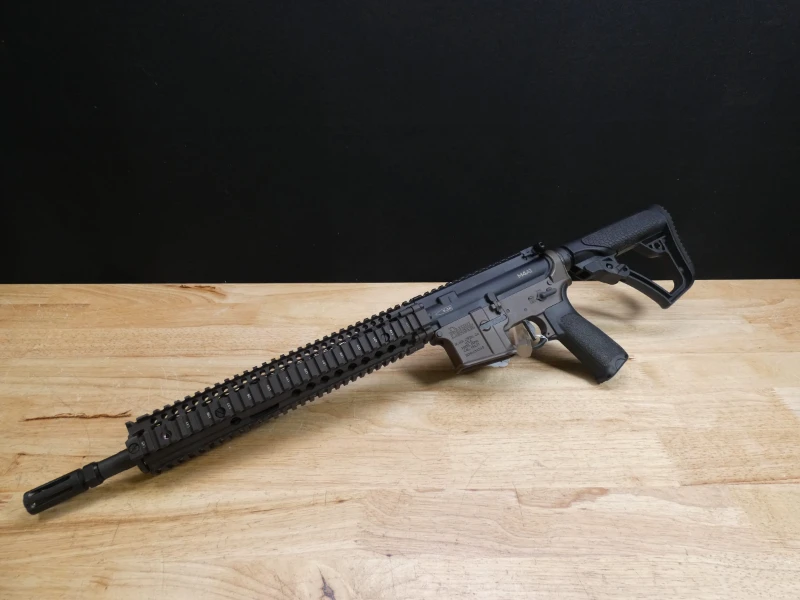
The Daniel Defense M4A1 is a top-tier rifle renowned for its build quality, reliability, and military pedigree, making it a highly sought-after firearm in the secondary market. Understanding its value involves more than just its condition; it requires knowledge of its specific configuration, market demand, and the legal nuances of firearm sales. This guide breaks down the key factors that determine the M4A1’s worth, ensuring you can accurately price your rifle for a successful and profitable sale.
What Determines Your Daniel Defense M4A1’s Worth
The value of a Daniel Defense M4A1 is primarily determined by its specific model, condition, and included accessories. As a firearm classified as a long gun or rifle, its standard configuration cleverly avoids NFA regulations. The 14.5-inch barrel has a permanently attached flash hider, bringing the total legal length to 16 inches and preventing it from being classified as a short-barreled rifle (SBR). This non-NFA status significantly broadens its market appeal and simplifies transfers. The most significant value differentiator between models is the rail system, with newer versions like the RIII commanding a premium over the classic RIS II quad rail, reflecting advancements in modularity and weight savings.
2026 Price Breakdown by Generation
Standard M4A1 (RIS II Rail) – New
A new, standard Daniel Defense M4A1 equipped with the iconic RIS II rail system has an average market price of approximately $1,878. While the Manufacturer’s Suggested Retail Price (MSRP) can be significantly higher, sometimes approaching $2,500 for newer variants, the actual street price is more competitive. It is not uncommon to find these rifles selling for between $1,600 and $1,700 during sales or from high-volume dealers. This price point reflects the firearm’s premium status, backed by Daniel Defense’s reputation for producing mil-spec quality components and exceptionally durable, reliable rifles that are ready for hard use straight out of the box.
The foundational value of this model is rooted in its battle-proven components and design. The heavy-profile, cold hammer-forged barrel is famous for its durability and accuracy, while the RIS II quad rail has been a staple of U.S. Special Operations Command (SOCOM) for years. These features are not just marketing points; they represent a standard of quality that experienced shooters recognize and are willing to pay for. This inherent quality ensures that even a base model M4A1 retains a high value floor, serving as a benchmark against which all other configurations and conditions are measured in the marketplace.
Standard M4A1 (RIS II Rail) – Used
In the used market, a standard Daniel Defense M4A1 typically fetches an average price of $1,469. However, the actual sale price can fluctuate based on its condition, round count, and any included accessories. Listings commonly range from around $1,200 for a private sale of a well-used rifle to over $1,370 for one in excellent condition with desirable extras. This resilience in value demonstrates the market’s confidence in the platform’s longevity and performance, making it a relatively safe investment for buyers and a valuable asset for sellers, as it depreciates far less than many competing AR-15 platform rifles.
A high round count does not dramatically decrease the M4A1’s value, a testament to its robust construction. The cold hammer-forged barrel is built for extreme durability, and the entire firearm is supported by a lifetime warranty from Daniel Defense. For instance, a used M4A1 with 1,000 rounds fired is still considered a great value, often selling for around $1,200. Buyers understand that this platform is designed for high-volume use, so as long as the rifle has been properly maintained, its functional lifespan is far from diminished, ensuring it retains a strong position in the used market.
M4A1 RIII (RIS III Rail) – New
The newer M4A1 RIII variant represents the evolution of the platform and commands a higher price accordingly. Its Manufacturer’s Suggested Retail Price (MSRP) is approximately $2,278, with some listings reaching up to $2,530. The primary upgrade and value driver for the RIII is its updated RIS III handguard, which is lighter than its predecessor and incorporates M-Lok attachment slots instead of the traditional Picatinny quad rail. This modernization appeals to shooters who prioritize a lighter front end and the lower-profile, direct-attachment benefits of the M-Lok system, positioning the RIII as the premium option in the M4A1 lineup.
This higher price point establishes a new ceiling for the M4A1 family’s value. Buyers interested in the RIII are typically seeking the latest advancements in firearm technology and are willing to pay a premium for features that enhance ergonomics and modularity. The introduction of the RIII has also subtly reinforced the value of the older RIS II models, framing them as the classic, battle-proven workhorse while the RIII stands as the cutting-edge successor. This product differentiation allows Daniel Defense to cater to different segments of the high-end rifle market, ultimately strengthening the brand’s overall value proposition.
M4A1 RIII (RIS III Rail) – Used
While specific market data for used M4A1 RIII models is still emerging due to their recent introduction, their value is expected to remain exceptionally strong. Given their higher initial MSRP of over $2,200, a used RIII in excellent condition will command a significantly higher price than a used standard M4A1. Its value will likely follow a similar, slow depreciation curve, retaining a large percentage of its original cost. The modern RIS III M-Lok rail is a major selling point that will keep it in high demand among discerning buyers looking for a slight discount on the latest model.
When selling a used M4A1 RIII, its value will be heavily influenced by the condition of the handguard and the inclusion of original accessories. Buyers will closely inspect the M-Lok slots for signs of wear or damage from improperly mounted accessories. Presenting the rifle with its original hard case, paperwork, and any included rail panels or accessories will be crucial for achieving a top-tier price. A well-maintained RIII will likely be one of the highest-valued, non-NFA production rifles on the used market, appealing to those who want the best of the M4A1 platform.
How Modifications Affect Value
Modifications can significantly influence the resale value of a Daniel Defense M4A1, with the outcome depending entirely on the quality and type of upgrade. High-quality, military-grade optics from reputable brands like Aimpoint, EOTech, and Trijicon are the most likely to add tangible value to a sale package. Similarly, premium iron sights from manufacturers such as Knight’s Armament, Magpul Pro, or Daniel Defense’s own factory sights are considered valuable additions. These components are recognized for their durability and performance, making the rifle more appealing and justifying a higher asking price compared to a stock configuration.
Interestingly, replacing the stock trigger—often considered a weak point by enthusiasts—with a quality aftermarket option from a brand like Geissele or LaRue is unlikely to hurt and may even increase its value. This is because a mil-spec trigger is a standard component that many owners upgrade anyway. However, it is highly advisable to include all original factory parts with the sale. The market consensus suggests that factory-built firearms hold their value better than custom or “Frankenstein” builds, and providing the original components gives the buyer the option to revert to the stock configuration, increasing their confidence in the purchase.
Regional Price Variations in 2026
The value and legality of a Daniel Defense M4A1 can vary significantly based on state and local laws, creating distinct regional markets. In states with strict firearm regulations, such as California, a standard M4A1 is not legal for sale to the general public. To be sold there, it must be a state-compliant model, which typically involves significant modifications like a fixed 10-round magazine and featureless components, such as a modified grip or the removal of the flash suppressor. These compliant models often have a different market value, dictated by the limited supply and specific demand within that state.
Similarly, New York’s assault weapon ban makes a standard M4A1 illegal to purchase for most residents. A legally owned version in New York would need to be a heavily modified, compliant rifle, often with a fixed magazine, and would require the owner to possess the necessary state-issued permit. These restrictions drastically limit the potential buyer pool and can complicate the valuation process. Sellers in these states must price their rifles according to the local compliant market, while sellers in less restrictive states enjoy a broader audience and a more standardized national market value.
Online vs Local Sales
Selling a Daniel Defense M4A1 online to a buyer in another state involves strict federal regulations. The seller is legally required to ship the firearm to a Federal Firearms Licensee (FFL) located in the buyer’s state of residence. The buyer cannot take possession of the rifle until they have completed all necessary paperwork, including the ATF Form 4473 and a federal background check, at the FFL’s location. This process ensures a legal and documented transfer of ownership, protecting both the buyer and the seller by adhering to federal law governing all interstate firearm transactions.
For local, in-state private sales, federal law does not mandate specific paperwork like a bill of sale, though it is highly recommended as a best practice to document the legal transfer of ownership. However, state and local laws vary significantly, and some jurisdictions may require private party transfers to be conducted through an FFL or mandate universal background checks. A comprehensive bill of sale should always be used, including the full names and addresses of both parties, the firearm’s make, model, and serial number, and the date of sale to create a clear record of the transaction.
When shipping the M4A1, whether to an FFL for an interstate transfer or for other legal purposes, specific rules must be followed. The private seller must inform the common carrier, such as UPS or FedEx, in writing that the package contains a firearm. The rifle must be completely unloaded, and no ammunition can be included in the same package. Furthermore, the exterior of the box must not have any markings that would indicate its contents, ensuring discreet and secure transport. Adhering to these shipping protocols is essential for a legal and safe transaction.
The FFL Buying Advantage
When selling your Daniel Defense M4A1 to a gun dealer or FFL holder, it is important to set realistic expectations regarding the offer price. Dealers typically purchase used firearms for between 50% and 65% of the current private party market value. This margin allows them to cover their overhead costs, such as rent, insurance, and employee salaries, while still making a profit upon resale. For a highly desirable and quick-selling rifle like the M4A1, you can expect an offer toward the higher end of this range, with some sources calculating a trade-in value that is approximately 65% of its used private sale price.
While the cash offer from a dealer will be lower than what you could achieve in a private sale, there are significant advantages to this route. Selling to an FFL is the fastest, most convenient, and most legally secure method of divesting a firearm. The transaction is immediate, eliminating the time and effort required to find a private buyer, negotiate a price, and arrange a meeting. Furthermore, the FFL handles all the required paperwork, and the sale legally transfers the firearm out of your name, removing any future liability associated with it.
What Increases Your Offer
To maximize the value of your Daniel Defense M4A1, professional presentation is key, especially for online listings. High-quality photographs are non-negotiable. The best results are achieved using soft, natural light, such as on an overcast day or during dusk, to prevent harsh shadows that can obscure details. Place the rifle on a simple, non-reflective background and use a tripod to ensure every image is sharp and in focus. Capture multiple angles, including full-length shots and close-ups of engravings, modifications, and any signs of wear to give potential buyers a complete and transparent view of the firearm’s condition.
Including the original factory parts with a modified rifle is highly advisable and can significantly increase an offer. Buyers prefer factory-built firearms, and providing the original components assures them of the rifle’s provenance and gives them the option to restore it to its stock configuration. This is particularly important for parts like the trigger, muzzle device, and furniture. Likewise, bundling high-quality accessories, especially premium optics from brands like Trijicon or Aimpoint, can substantially boost the overall value of the package, as these items are highly sought after and hold their value well.
While the market data shows no definitive consensus on a “completeness penalty” for missing items like the original hard case or manual, a comprehensive package will always be more appealing to a buyer and command a higher price. A rifle presented with all its original accessories, documentation, and packaging appears well-cared-for and complete. This attention to detail signals to a potential buyer that you were a meticulous owner, which builds trust and can be the deciding factor that encourages them to pay your full asking price rather than trying to negotiate for a lower amount.
When to Sell Your daniel defense m4a1
While certain types of firearms have distinct selling seasons, such as hunting rifles in the late summer and fall, the market for tactical rifles like the Daniel Defense M4A1 is less dependent on the calendar. Instead, its sales trends are more closely tied to economic cycles and consumer spending habits. Two periods often cited as strong sales windows are tax return season, typically from February through April, when potential buyers have more disposable income, and the holiday season from mid-November to mid-January, which sees a general increase in retail activity across the board.
Although market research did not yield a specific consensus on the value of pre-sale cleaning, it is a universally accepted best practice that a clean, well-maintained firearm will always present better and fetch a higher price. A rifle that is free of carbon buildup, properly lubricated, and visually pristine demonstrates pride of ownership and assures the buyer that they are purchasing a firearm that has been well cared for. Taking the time to thoroughly clean the rifle before photographing and listing it is a simple, no-cost step that can directly translate to a faster sale and a better offer.
Beyond general economic seasons, sellers should also remain aware of the broader political and social climate, as these factors can create sudden spikes in demand for firearms. Periods of legislative uncertainty often drive consumers to purchase popular and reliable platforms like the M4A1. While timing the market perfectly is impossible, being prepared to sell during these windows of heightened demand can result in a quicker sale at a premium price. Listing your well-maintained and professionally photographed rifle during one of these peak periods is the best strategy for maximizing your return.
Common Pricing Mistakes
One of the most frequent errors sellers make is overvaluing their personal modifications. While a high-end Geissele trigger or an EOTech optic certainly adds utility, you will rarely recoup the full retail cost of these upgrades in a resale. Buyers may not share your exact preferences or may be unwilling to pay a premium for used accessories. It is best to price the rifle based on its own established market value and list the high-end modifications as added benefits, or consider selling them separately to maximize the return on each item individually.
Another common mistake is ignoring the well-established market value of the M4A1. For a standard model, a professional appraisal is generally not worth the cost, as its price range is easily determined by researching online forums and completed sales on marketplaces. Setting an asking price that is significantly higher than the going rate of $1,200 to $1,500 for a used model will deter knowledgeable buyers. It is crucial to ground your price in current market data rather than emotional attachment or an inflated sense of what the rifle “should” be worth.
Finally, sellers often fail to understand the significant difference between private party value and a dealer’s trade-in offer. Expecting a gun store to pay you the same price you see on a private listing is unrealistic. Dealers must account for overhead and profit, so their offer will be substantially lower, typically in the 50-65% range of the private market price. Knowing this distinction beforehand can prevent disappointment and help you decide whether the convenience of a quick cash sale to a dealer is worth the lower financial return compared to a private transaction.
Market Outlook for 2026
While there is no definitive consensus or specific data to predict the future price of the Daniel Defense M4A1 in 2026, the market outlook remains strong based on the firearm’s enduring reputation. As a premium rifle with a direct lineage to military service, it occupies a desirable position in the market that is less susceptible to fleeting trends. Its reputation for bomb-proof reliability, accuracy, and quality construction ensures that it will continue to be a benchmark for high-end AR-15 platform rifles, which should help it maintain a stable and robust value in the coming years.
The firearm’s value will likely continue to be influenced by the introduction of new models and broader market conditions. The release of the M4A1 RIII has already shown how Daniel Defense can drive market interest and create a new, higher price tier. Barring any unforeseen and drastic shifts in federal firearms legislation, the demand for high-quality, military-style rifles is expected to persist. Consequently, the Daniel Defense M4A1, in both its classic RIS II and modern RIII configurations, is well-positioned to hold its value and remain a sought-after asset on the secondary market through 2026 and beyond.
Frequently Asked Questions
Does a high round count significantly lower my M4A1’s value?
A high round count does not appear to have a major negative impact on the Daniel Defense M4A1’s value. The rifle’s cold hammer-forged barrel is renowned for its exceptional durability and long service life, a fact well-known to informed buyers. Furthermore, the firearm is backed by Daniel Defense’s lifetime warranty, which provides an extra layer of confidence for a potential new owner. For example, a used M4A1 with 1,000 rounds is still considered a great buy, often selling for around $1,200, which is not far below the price of a lower-round-count equivalent in similar condition.
Is it worth getting a professional appraisal before selling?
For a standard used Daniel Defense M4A1, a professional appraisal is likely not worth the associated cost or effort. The market value for this popular rifle is very well-established and can be accurately determined by researching recent sales on online forums and dedicated firearm marketplaces. An appraisal is more suitable for valuing rare, collectible, or highly customized firearms where market data is scarce. For the M4A1, your time and money are better spent on presenting the rifle well and pricing it competitively based on readily available market information.
Will upgrading the trigger hurt the resale value?
Replacing the stock mil-spec trigger on a Daniel Defense M4A1 is unlikely to hurt its resale value and, in many cases, may actually increase it. The stock trigger is a standard component that many owners consider a primary candidate for an upgrade. Installing a desirable aftermarket trigger from a respected brand like Geissele or LaRue is often viewed as a significant improvement by potential buyers. This modification can make the rifle more appealing, especially to experienced shooters who appreciate the enhanced performance of a premium trigger, potentially leading to a faster sale at a better price.
How much less will a dealer offer me compared to a private sale?
When selling to a gun dealer (FFL), you should expect an offer that is between 50% and 65% of the firearm’s current private party market value. For a highly desirable and fast-selling rifle like the Daniel Defense M4A1, the offer may be at the higher end of that range, potentially around 65% of its used private sale price. This lower offer accounts for the dealer’s business costs and the need to make a profit on resale. The trade-off for the lower price is the convenience, speed, and legal security of an immediate and professional transaction.
Does the M4A1’s 14.5″ barrel make it an NFA item and affect its value?
No, the Daniel Defense M4A1 in its standard factory configuration is not an NFA item, which is a major factor that supports its high value and broad market appeal. Although the barrel itself is 14.5 inches long, the flash hider is permanently attached at the factory, bringing the total legal barrel length to 16 inches. This design ensures it is classified as a standard rifle, not a short-barreled rifle (SBR), under NFA regulations. This non-NFA status means it can be bought and sold without the additional taxes, paperwork, and wait times associated with NFA items.
Get a Cash Offer Today
Ready to sell your Daniel Defense M4A1? We make the process simple, safe, and fast. Avoid the hassle of private listings and legal complexities by getting a fair, no-obligation cash offer from us today. We are licensed professionals who value your firearm and your time.
Click the button below to submit your firearm’s information through our secure form. We will review the details and get back to you promptly with a competitive offer. Turn your Daniel Defense rifle into cash with a trusted and reliable partner. Get started now!