
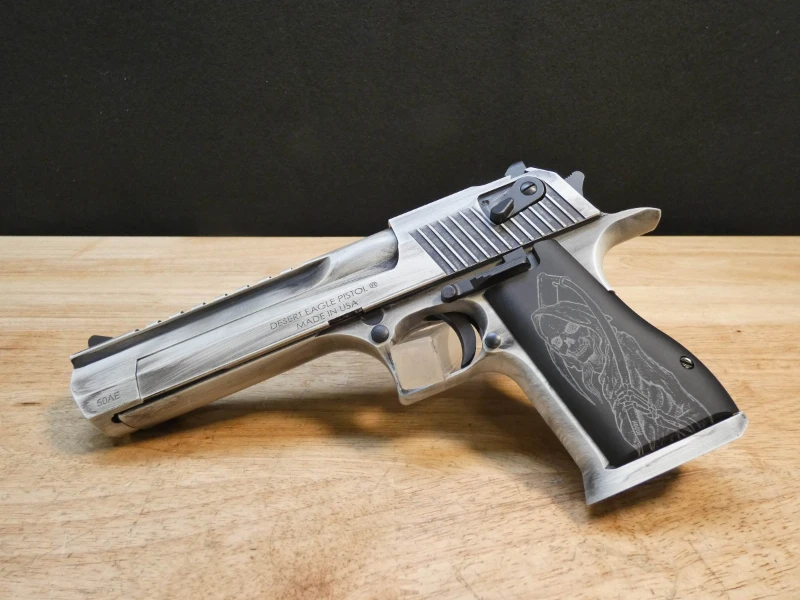
The Desert Eagle is an icon, a gas-operated behemoth recognized globally for its role in film and its massive caliber offerings. Understanding its true market value, however, goes beyond its on-screen fame. This guide delves into the critical factors that determine your Desert Eagle’s worth, from its specific generation and manufacturer to the impact of state laws and market seasonality. By exploring these details, you can accurately price your firearm and navigate the sales process with confidence.
What Determines Your Desert Eagle’s Worth
Several key factors dictate the value of a Desert Eagle pistol. Its generation and manufacturer are primary determinants, with older IMI-manufactured pistols often being preferred by collectors for their perceived quality over newer models. The specific caliber, with the .50 AE being the most prominent, and the factory finish also play significant roles in pricing. Legally, the Desert Eagle is classified as a gas-operated, semi-automatic pistol. Although it employs a rifle-style operating system, it is categorized as a handgun and is not considered a National Firearms Act (NFA) item, which simplifies its legal transfer and helps maintain a broad, accessible market for potential buyers.
2026 Price Breakdown by Generation
Mark I & VII (Early Models)
The earliest Desert Eagle models, particularly the Mark I, hold a special place for collectors. These pistols, often manufactured by Israel Military Industries (IMI), are sought after for their historical significance and perceived build quality. Their value can be distinct from later generations, with condition and originality being paramount. While specific sales data is limited, these early models in desirable calibers can command strong prices, often appealing more to collectors than to casual shooters. The manufacturer’s markings are a key point of interest and can heavily influence the final appraisal and market interest from knowledgeable buyers.
Bridging the gap to the modern era, the Mark VII introduced several key upgrades, including an improved trigger and an extended scope rail. Like the Mark I, its value is heavily influenced by its manufacturer, caliber, and overall condition. These models represent an evolution of the platform and are often valued for their blend of classic design and enhanced features. On the used market, a well-maintained Mark VII can be a desirable piece, offering a more refined experience than the original while still retaining the classic aesthetic that defines the Desert Eagle’s legacy among firearm enthusiasts.
Mark XIX (Modern Standard)
The Mark XIX is the most current and common generation, defining the modern Desert Eagle market. Its key feature is a standardized frame that allows for multi-caliber conversions, with the .50 AE being the most popular and recognizable chambering. Based on recent sales data, the average used price for a standard Mark XIX model is approximately $1,495. This generation’s value is heavily influenced by its finish, with options ranging from standard black to polished chrome or gold, each commanding a different price point based on rarity and consumer demand in the current market.
When purchased new, the Manufacturer’s Suggested Retail Price (MSRP) for a Desert Eagle Mark XIX pistol typically ranges from about $1,600 to over $2,700. The average new price currently sits around $1,980, though this can fluctuate based on the specific caliber, finish, and any included accessories. Special editions or complete component systems with multiple barrels can drive the MSRP significantly higher, with some exclusive models exceeding $3,900. This wide price range reflects the platform’s versatility and its status as both a functional firearm and a collectible showpiece for many owners.
Special Editions & Rare Calibers
Beyond standard production models, the value of a Desert Eagle can skyrocket with special editions and unique factory finishes. Limited runs, commemorative models, and elaborate finishes like gold or titanium nitride are highly sought after by collectors and can command significant premiums. These firearms are often treated as investments or centerpiece display items rather than regular shooters. Consequently, their prices are less tied to the general used market and more to their rarity and aesthetic appeal, often fetching prices well above the typical range for even new standard models in the current marketplace.
Rare calibers also create a niche market with distinct valuation. The .440 Cor-Bon, for example, is a less common chambering that can attract collectors looking to complete a set or acquire a unique piece of the Desert Eagle’s history. However, establishing a consistent market value for these firearms can be challenging due to limited sales data and a smaller pool of interested buyers. While a rare caliber can increase value, it may also require finding a very specific buyer who appreciates its unique status, making the sale process potentially longer than for a standard .50 AE or .44 Magnum.
L-Series (Lightweight Models)
The introduction of lighter-weight models, such as the L5, created a new segment in the Desert Eagle market. These pistols were developed in part to comply with weight restrictions in states like New York, making them legal for sale where their heavier counterparts were not. The L5 features a lightweight aluminum frame and a muzzle brake, reducing the overall weight significantly. This compliance-focused design gives these models a specific and strong market appeal in regions with stringent firearm laws, directly impacting their value and demand among buyers facing those particular legal constraints.
The value of an L-series Desert Eagle is therefore closely tied to its regional legality and its appeal to shooters seeking a more manageable version of the iconic handgun. While they may not have the same heft or traditional feel as the all-steel models, their enhanced practicality and legal status in certain states ensure they hold their value well. For buyers in places like New York, the L5 isn’t just an option; it’s one of the only ways to legally own a new Desert Eagle, which creates a stable and predictable demand for these specific lightweight variants.
How Modifications Affect Value
When it comes to selling a Desert Eagle, aftermarket modifications can be a significant liability. While there is no specific consensus on this firearm, the general rule in the gun market is that most buyers prefer the original factory configuration. Custom grips, sights, or internal parts, even if considered upgrades by the seller, often do not increase and can potentially hurt the resale value. Potential buyers may be wary of non-professional gunsmithing or simply prefer the aesthetic and proven reliability of the stock firearm, making a modified pistol harder to sell at a competitive price.
While the market lacks a clear consensus on specific modifications that add value to a Desert Eagle, the safest approach for sellers is to preserve the firearm’s original state. It is highly recommended to keep all original parts that have been replaced. Before listing the firearm for sale, reinstalling these factory components will almost always broaden its appeal to the largest possible audience of potential buyers. Presenting the firearm as it was originally manufactured ensures its value is judged on its own merits of condition, caliber, and finish, rather than on subjective and often detrimental customizations.
Regional Price Variations in 2026
State-specific firearm laws create significant regional price variations, and California is a prime example. The state’s roster of approved handguns dictates which new firearms can be sold by dealers. For the Desert Eagle, only certain .44 Magnum models are on this list. Consequently, other popular versions, like those chambered in .50 AE, cannot be purchased new from a dealer. This restriction creates a premium market for these “off-roster” models, which can only be acquired through private party sales from individuals who already own them within the state, often at a much higher price than in other regions.
Similarly, New York’s SAFE Act imposes a weight restriction that makes many standard Desert Eagle models illegal for sale, as they exceed the 50-ounce limit. This has created a specific market for compliant versions, such as the lighter L5 model, which was manufactured to meet these requirements. In New York, the demand for these legal variants is strong, and they hold their value well due to the lack of other options. This legislative landscape means a New York-compliant model will have a different market value and buyer base compared to states without such weight restrictions.
Online vs Local Sales
When conducting a private sale of a firearm like a Desert Eagle, paperwork requirements are dictated entirely by state and local laws, as there is no federal mandate for a bill of sale. While some jurisdictions have no specific mandates for private transfers, using a firearm bill of sale is a widely adopted best practice. This document serves as a crucial record for both parties, typically including the personal details of the buyer and seller, as well as the firearm’s make, model, and serial number, to formally document the transfer of ownership and provide a layer of legal protection.
Opting to sell your Desert Eagle to a local gun dealer offers a path of greater convenience and speed, but it comes at a financial cost. Gun dealers will typically offer between 50% and 70% of the firearm’s estimated private market value. The exact percentage of this offer depends heavily on the pistol’s condition, its caliber, the desirability of its finish, and the dealer’s current inventory needs. This trade-off between a lower cash offer and a faster, simpler transaction is a key consideration for any seller weighing their options between a private sale and a dealer sale.
If you sell your handgun to a buyer in another state, you must adhere to strict federal laws. The seller is required to ship the Desert Eagle to a Federal Firearms License (FFL) holder located in the buyer’s state of residence. The buyer must then visit that FFL, complete a federal background check (Form 4473), and satisfy all other federal and state paperwork requirements before they can legally take possession of the firearm. This regulated process ensures that all interstate handgun transfers are conducted legally and securely, protecting both the buyer and the seller from potential legal issues.
The FFL Buying Advantage
Utilizing a Federal Firearms License (FFL) holder is not merely an advantage but a legal requirement for private individuals shipping a handgun across state lines. Federal law generally prohibits non-licensees from directly shipping handguns via common carriers such as UPS and FedEx. Instead, the firearm must be sent from one FFL holder to another. This ensures the entire process is documented and handled by licensed professionals who are authorized to manage firearm transfers. The FFL system provides a secure and compliant framework that protects both the seller from liability and ensures the firearm is transferred legally.
The FFL holder plays a critical role in finalizing the transaction by verifying the buyer’s eligibility to own a firearm. Upon receiving the Desert Eagle, the destination FFL will have the buyer complete an ATF Form 4473 and undergo a NICS background check. This crucial step confirms the buyer is not a prohibited person. The FFL also ensures all state-specific requirements, such as waiting periods or additional permits, are met before transferring the firearm. This professional oversight guarantees the sale is completed in full compliance with all applicable laws, providing peace of mind for everyone involved.
What Increases Your Offer
A meticulously prepared firearm will always attract better offers. Before listing your Desert Eagle for sale, perform a thorough cleaning and lubrication. Pay special attention to critical areas like the gas piston, chamber, and slide rails, as their condition is a key indicator of proper maintenance. Use tools like polymer picks and Q-tips to access all the small nooks and crannies. After cleaning, wipe down the exterior finish to remove fingerprints and enhance its shine. This small effort demonstrates pride of ownership and suggests the firearm has been well cared for, boosting buyer confidence.
High-quality photography is non-negotiable for a successful online sale. To best showcase your Desert Eagle, use bright, natural light and place it against a simple, contrasting background that makes the firearm stand out. Capture multiple high-resolution images from various angles, ensuring the entire pistol fills the frame. Include detailed close-ups of engravings, sights, and any signs of wear to provide full transparency. Clear, functional photos give potential buyers a comprehensive view of the firearm’s condition, which builds trust and often leads to faster sales and higher offers from serious buyers.
While a professional appraisal is likely not worth the cost for a standard Desert Eagle, conducting your own market research is essential. Before setting a price, investigate online gun marketplaces and forums to see what similar models have recently sold for. Factors such as the firearm’s condition, caliber, and finish are the primary determinants of its value. Since many of these pistols are sold with minimal use, comparing yours to similar online listings is a reliable method for estimating its current market price and ensuring you set a competitive yet profitable asking price.
When to Sell Your desert eagle
Timing your sale can significantly impact your final return, as the used handgun market follows predictable seasonal trends. The most opportune times to sell are during two key periods of increased consumer spending. The first is the holiday season, which generally runs from mid-November through mid-January. The second major peak occurs during tax return season, typically spanning from February through April. Listing your Desert Eagle during these windows maximizes its exposure to motivated buyers who have disposable income, often resulting in a quicker sale at a higher price point.
Conversely, some seasons are less favorable for sellers. The summer months are consistently cited by dealers and private sellers as a slow period for firearm sales. During this time, potential buyers are often focused on vacations and outdoor activities, leading to a general downturn in market activity. Listing your firearm between May and August may result in fewer inquiries and lower offers. To maximize your financial return, it is advisable to avoid this slump and wait for the more active sales seasons to begin in the fall and winter months for the best results.
Beyond broad seasonal trends, savvy sellers should also pay attention to short-term market dynamics. Major industry events, such as SHOT Show, can generate buzz around new models, which can either increase interest in older generations or temporarily suppress it. Furthermore, the iconic status of the Desert Eagle means its popularity can spike due to appearances in major films or video games. While harder to predict, timing a sale to coincide with a surge in pop culture relevance can sometimes capture the attention of a new wave of enthusiastic buyers.
Common Pricing Mistakes
One of the most frequent pricing errors is assuming that aftermarket modifications add value. For a firearm like the Desert Eagle, most potential buyers are seeking the original factory configuration. Custom parts, however expensive or high-quality, can actually detract from the pistol’s value and narrow its appeal. A seller who adds the cost of their upgrades to the asking price is likely to be disappointed. The best strategy is to reinstall the original parts before the sale and offer the aftermarket components separately or as a free bonus to close the deal.
Neglecting proper presentation is another costly mistake that can significantly lower offers. A dirty, poorly maintained firearm suggests neglect and raises questions about its mechanical condition. A common oversight is failing to apply a light coat of oil after cleaning, which is crucial for preventing rust and giving the finish a well-cared-for appearance. This, combined with low-quality, poorly lit photographs, can make even a pristine Desert Eagle look unappealing, leading buyers to either pass on it or submit lowball offers based on a poor first impression.
Setting a price based on emotion or the original purchase price, rather than current market data, will almost certainly hinder a sale. The value of a standard Desert Eagle is not static; it fluctuates with market demand. Fortunately, its value is relatively easy to research on various online gun marketplaces. Ignoring this readily available data is a significant mistake. By comparing your firearm’s specific model, caliber, and condition to recent sales, you can establish a realistic price that is both fair to you and attractive to informed buyers in the market.
Market Outlook for 2026
While a precise future price prediction for the Desert Eagle is not available, its market value is strongly supported by its enduring status as a pop culture icon. Decades of appearances in movies, television shows, and video games have cemented its place in the public consciousness, ensuring a consistent level of demand from both collectors and enthusiasts. This fame provides a stable price floor, helping it retain value more effectively than many other semi-automatic handguns. Its unique design and powerful chamberings guarantee it will remain a desirable firearm for the foreseeable future.
Looking ahead, the market for large-caliber handguns like the Desert Eagle will likely be influenced by several factors. State-level firearms legislation could impact availability in certain regions, potentially increasing value in those areas. The cost and availability of ammunition for its large calibers will also play a role in its appeal to shooters. Furthermore, as older IMI-manufactured pistols become more scarce, their value is expected to gradually appreciate among collectors who favor their historical significance and perceived build quality, distinguishing them from the more common Mark XIX models.
Frequently Asked Questions
Does the .50 AE caliber always command the highest price?
While the .50 AE is the most prominent and popular caliber for the Desert Eagle, especially in the Mark XIX generation, it does not always command the absolute highest price. Value is a complex equation where rarity and collectibility play a major role. For instance, a model in a rare caliber like the .440 Cor-Bon may be more valuable to a specific collector. Similarly, an early-generation IMI-manufactured pistol in excellent condition, even in .357 Magnum, could be worth more than a common, used .50 AE model due to its historical significance and perceived quality.
How much does the original box and paperwork add to the value?
Having the original factory case, owner’s manual, tools, and any accompanying paperwork significantly increases the value of a used Desert Eagle. This “completeness” is highly desirable, especially for collectors, as it demonstrates that the firearm has been well-maintained and preserved. While the exact dollar amount varies, a complete package can easily add 10-15% or more to the final sale price compared to selling the handgun by itself. It signals to a potential buyer that they are getting a well-cared-for piece, which builds confidence and justifies a premium price.
Is an older IMI-made Desert Eagle worth more than a new one?
In many cases, an older Desert Eagle manufactured by Israel Military Industries (IMI) is considered more valuable than a newer, comparable model. This preference is driven by collectors and enthusiasts who believe the IMI-produced firearms have superior build quality, fit, and finish. This perception, combined with their relative scarcity compared to modern production runs, often causes them to command a premium on the used market. A well-preserved IMI Desert Eagle is often seen as a more collectible piece with greater historical significance, directly boosting its market value.
Will a high round count significantly lower my Desert Eagle’s value?
While there is no specific market consensus on the impact of a high round count for the Desert Eagle, the firearm’s overall condition remains the most critical value factor. Many of these pistols are purchased as “safe queens” and are sold with very little use, setting a high bar for condition on the used market. Therefore, a pistol showing significant finish wear on the slide rails, chamber, or exterior from extensive firing will almost certainly be valued lower. The visible condition is more important than a specific number in a logbook.
Do I need a professional appraisal to sell my Desert Eagle?
For most standard Desert Eagle models, a formal, paid appraisal is generally not necessary or cost-effective. The value for common configurations, calibers, and finishes can be reliably determined by researching recent sales on major online gun marketplaces and forums. These platforms provide a clear picture of the current market rate. A professional appraisal might only be considered for exceptionally rare, engraved, or historically significant variants where comparable sales data is unavailable. For the vast majority of sellers, personal research is sufficient to set an accurate price.
Get a Cash Offer Today
Ready to sell your Desert Eagle? We make the process simple and secure. Submit your firearm’s information and a few photos to receive a fair, competitive cash offer. Avoid the hassle of private listings and find out what your iconic handgun is worth today with our straightforward evaluation process.
Our streamlined system ensures you get paid quickly. Once you accept our offer, we provide you with a prepaid shipping label and clear instructions for a safe, legal transfer through a licensed dealer. Don’t let your firearm collect dust—turn it into cash with a trusted and efficient partner.