
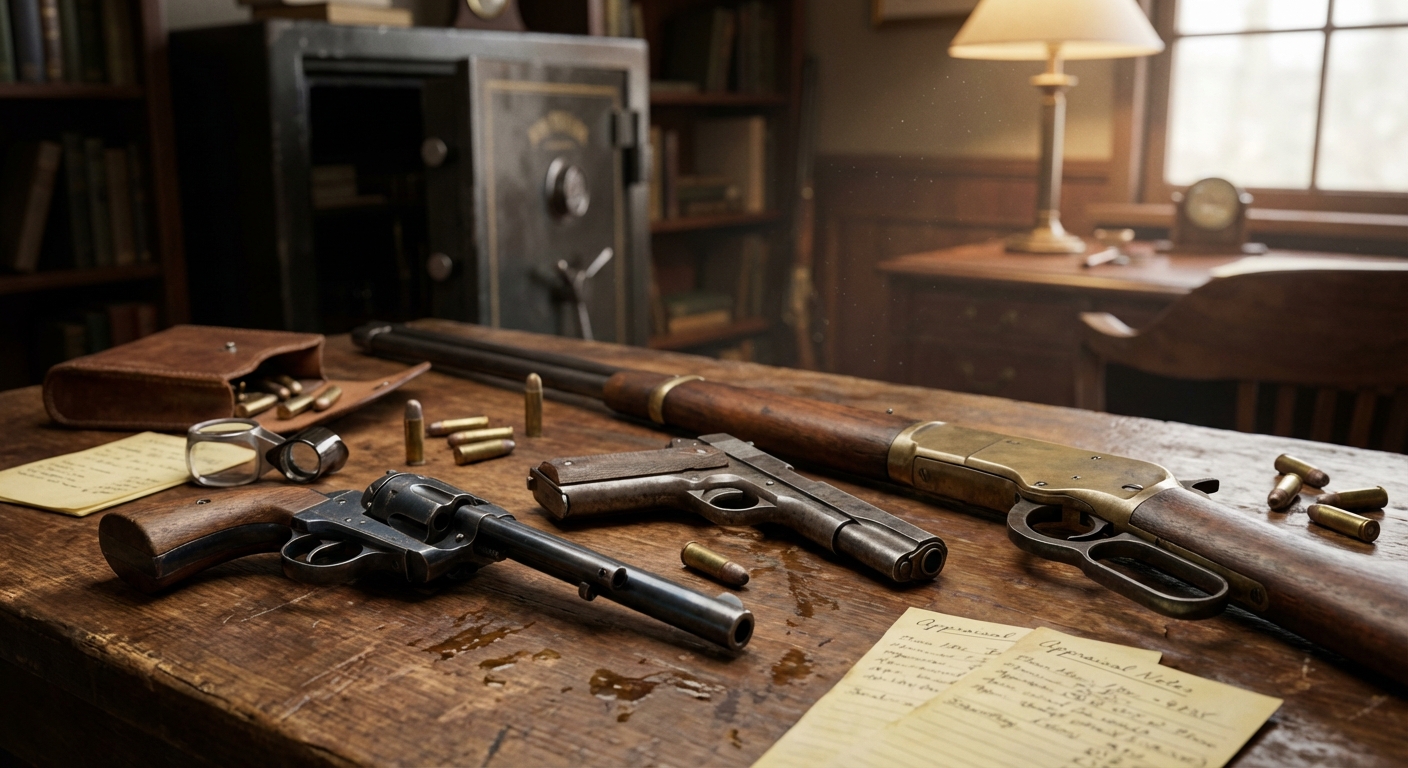

You open the safe, and it’s just… a gun. Nothing fancy. Then a buddy says, “Don’t sell that cheap, it might be valuable,” and suddenly you’re stuck between panic-selling and getting played by “worth a fortune” hype.
Here’s the real trick: the big money isn’t always in obvious museum pieces. It’s often in a discontinued variant, a specific configuration or production-era version that’s no longer made, even when the model name still exists, and two “same model” guns can land worlds apart in price because of it.
This demand is real. From October 2019 through the following 12 months, there were 2,291 completed online auction sales totaling $6.7 million for old Colt Pythons.
Value spikes also don’t happen just because something’s old. They happen when scarcity collides with demand, and scarcity can be policy-driven, like the Gun Control Act of 1968 creating the “sporting purposes” import test (18 U.S.C. § 925(d)(3)), and the 1989 Bush Administration direction to ATF that cut off importation of many semiautomatic rifles that failed that test.
You’ll walk away able to spot the signals that actually move value, learn which categories tend to spike, and sanity-check what you have. Treat this like an identification-and-proof problem, not a guessing game.
That starts with understanding what collectors are actually paying for-and what knocks the wind out of a price, fast.
What makes discontinued guns valuable
Discontinued isn’t automatically valuable. Discontinuation only matters when collectors can’t substitute something else, the price jump comes from real scarcity plus a specific reason people want that exact version, not just “an older one”—the same core factors that make a gun collectible.
Scarcity shows up in boring, practical ways: short production runs, a factory change that ends a particular configuration, import stoppages that cut off supply overnight, or an end-of-era manufacturing method that simply isn’t done the same way anymore. If the market can’t easily replace those details, the remaining examples stop behaving like used guns and start behaving like limited inventory.
Demand is the other half of the engine. Some discontinued guns earn it through performance and reputation, others through cultural association, historic relevance, or pure nostalgia tied to a hunting season or a competition era. If nobody is actively looking for that specific variant, scarcity alone just makes it “hard to find,” not “worth a fortune”—that’s the supply and demand lens for firearm resale prices.
- Multipliers: original box and papers, original finish, documented history, and being factory correct, meaning it still wears the period-appropriate parts and finishes for that exact model as it shipped.
- Killers: refinishing, aftermarket parts, drilled and tapped modifications, and missing original components. That “upgrade” sight might cost you money.
Condition talk gets specific fast, which is why the NRA Modern Gun Condition Standards are widely used to standardize value discussions: “New” means the same condition as it left the factory with no wear, often called “100%.” “Excellent” means minimal wear with major components and markings intact and no significant defects. “Very Good” shows noticeable finish wear or minor dings but stays serviceable with no abuse.
Pros also check originality details like matching numbers, where the factory serial or assembly numbers align across the major numbered parts, not just the receiver or frame, and they flag aftermarket changes as value negatives; Cash My Guns lists finish, bore, matching numbers, and aftermarket parts among its valuation factors. Before you do anything else, protect originality: don’t clean aggressively, don’t swap parts, and don’t refinish.
Discontinued handguns collectors chase
Once you zoom in on “scarcity plus demand,” handguns make the point painfully clear: the model name gets attention, but the exact variant gets paid.
On handguns, the money usually isn’t in the name on the slide, it’s in the exact generation and configuration. Two pistols that both say “Python” or “PPK” can be worlds apart to collectors, and the little tells, rollmarks, proof marks, safety parts, even frame geometry, are where sellers get underpaid or buyers overpay.
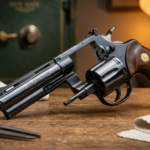
The original Colt Python hit in 1955 and is generally documented as produced through 2005, with regular, high-volume production largely ending by 1999 and later guns made in smaller numbers. Collectors chase originals because of their hand-fitted reputation and the level of polish and workmanship associated with that era. The common pitfall is treating the 2020 Python as “the same gun.” Colt reintroduced the Python in 2020 as a new-production model with a distinct internal design and parts that don’t interchange the same way with the 1955 to 2005 guns. If you’re looking at one on your table, start by verifying which production era it belongs to before you listen to any “it’s a Python, so it’s collectible” talk (and compare against a current Colt Python worth guide).
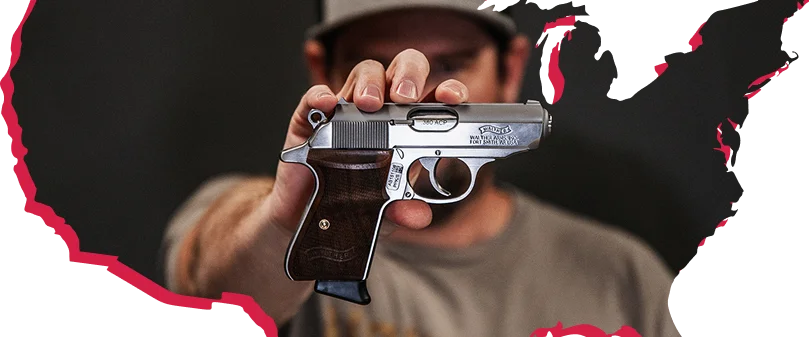
The Walther PP dates to 1929, and the PPK followed in 1931 as the shorter-barreled variant. For collector interest, pre-WWII German production is the pivot point. PP and PPK pistols made at Walther’s Zella-Mehlis plant commonly show slide rollmarks referencing “Zella-Mehlis (Thür.),” and German commercial proofing prior to 1939 commonly used the Crown/N nitro proof mark. Those marks are why people care, history and association are baked into the metal. The mistake is assuming any PP or PPK with honest wear is “pre-war,” when later production can look similar at a glance.
With the CZ 75, the high-value tells can be mechanical, not cosmetic. “Pre-B” models lack a firing pin block, while the CZ 75B incorporates a firing pin block safety, and the “B” literally denotes that firing pin block feature. Very early CZ 75s are also often called “short-rail” guns because the dust cover and rail section under the slide is shorter than later frames. The trap is transition-era mixing of features, so you’re better off confirming the firing pin block status and the early short-rail frame profile instead of relying on one superficial cue.
Modern exceptions / look-alikes people confuse for discontinued: Some current-production handguns reuse famous names, or copy the look closely enough to fool casual buyers. The collector premiums usually live in the earlier production markers, original rollmarks and proofs, and the specific internal safeties or frame features, not just the model name.
Your safest move before you assume “fortune-tier” value is to verify the exact variant and era, confirm it’s original (original parts and finish), and lean on documentation when you have it—especially for classics like the Luger P08 pricing and identification guide. Guesses are where the money leaks out.
Rifles and shotguns worth big money
The same “tiny details, big money” rule applies to long guns-except the tells often live in serial cutoffs, barrel stamps, and country-of-origin markings.
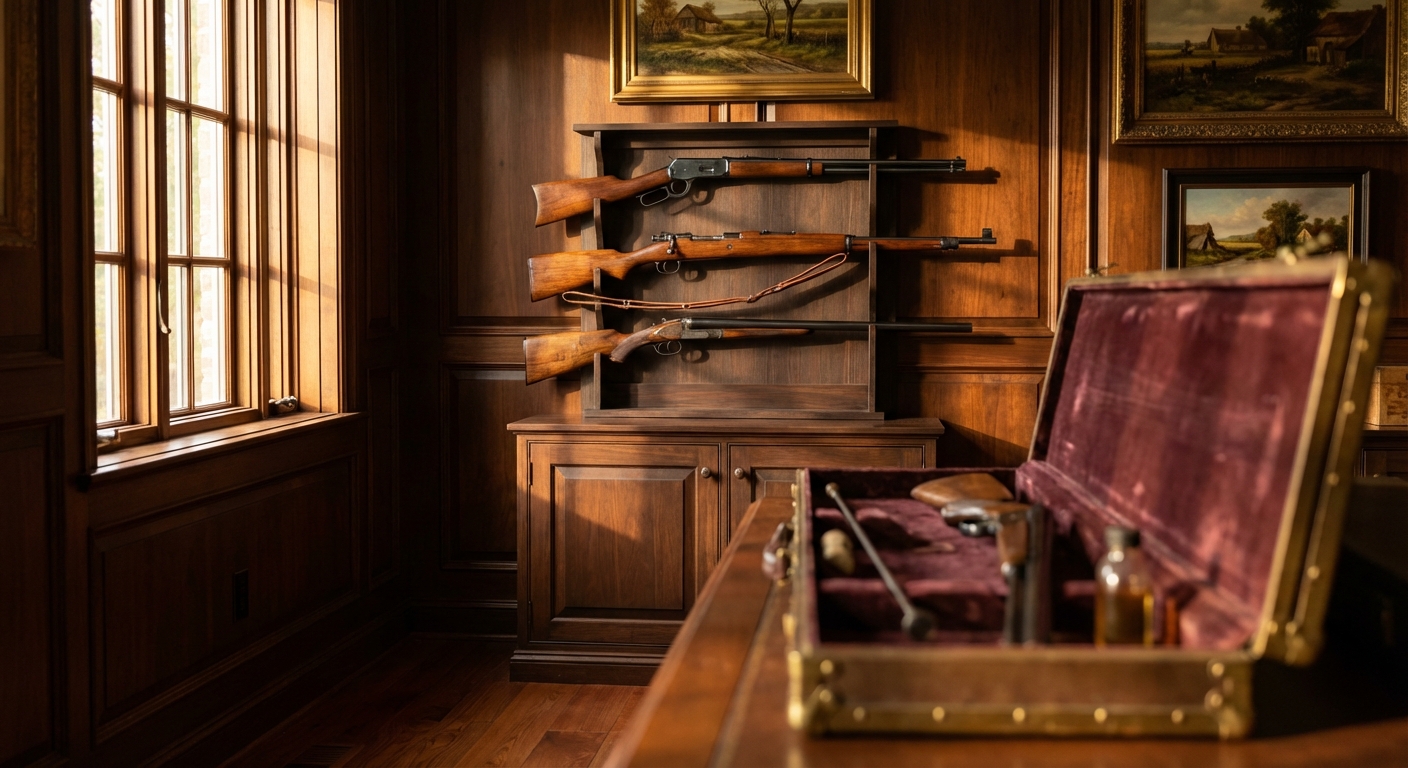
The biggest “worth a fortune” jumps in long guns rarely come from the model name alone. They come when a specific production era plus a specific configuration becomes the version collectors insist on, and tiny markings decide which story your rifle or shotgun is allowed to tell.
For Model 70s, “pre-64” means made through 1963, and the commonly accepted serial cutoff is 581,471, with serials 1-581,471 treated as pre-64. One fast, physical cross-check is the bolt: pre-64 rifles use controlled-round feed with a big Mauser-style claw extractor, while early post-64 guns are push-feed with a small hook extractor (see this Model 70 current worth guide for the collector-important split).
The common confusion is serial numbering itself. Post-64 production is typically identified by serial numbers beginning around 700,000 due to a numbering restart or shift, so you can’t assume the numbers simply continue upward past the pre-64 cutoff. Collectors care because “pre-64” is a shorthand for the era they actively chase, and being on the wrong side of that line changes demand immediately.
On the 336, the “JM” barrel stamp is widely used as an identifier for Marlin barrels made at North Haven, Connecticut, which is why it gets photographed first. A second, widely repeated collector shorthand is “pre-~2010 equals North Haven,” but treat that as a rule-of-thumb, not a guarantee of quality or originality.
The common confusion: no “JM” doesn’t automatically prove anything by itself, and “Remlin” is just the nickname collectors use for Marlin-branded guns produced under Remington-era management. It matters because many buyers sort listings by these cues before they ever ask about condition.
Auto-5s swing hard based on where they were made. Belgian-made guns typically show FN Belgian proofmarks such as the oval “ELG” proof from Liège, while Japanese-made A5s were produced by Miroku and commonly marked “Made in Japan.” Late-production guns can read “Parts made in Belgium, assembled in Portugal.”
Those rollmarks are the quick triage, and they’re backed up by proof marks, which are factory or national proof-house markings showing the gun was tested and inspected, and they often pin down origin and production era without turning your kitchen table into a museum catalog.
The common confusion is look-alike stamp placement and partial wording, so read the full line, not just the country name. It matters because Auto-5 demand splits by collector segment, hunters want field-ready classics, competitors chase reliable setups, nostalgia buyers want “grandpa’s exact one,” and military-surplus-adjacent collectors often buy by country and markings, which can vary by region.
Action step: confirm era and configuration from the serial and markings, avoid anything that removes or softens stampings, and photograph every rollmark, proof mark, and the full serial before you clean, refinish, or swap parts.
How to estimate your gun’s worth
All of those “tells” only help if you turn them into a value range you can defend. You can get surprisingly close to a realistic range if you treat valuation like a repeatable process, not a vibe.
The trap is that asking prices lie, and tiny differences in variant, originality, and what’s in the box can swing the number fast.
- Identify the exact model, variant, and configuration: caliber, barrel length, finish, sights, and what’s included (factory mags, box, papers).
- Date the gun using reputable manufacturer guidance. Ruger’s official Serial Number Lookup can return the model number, product line, caliber, production status, ship date, and an instruction manual link, and that ship date is when it left Ruger, not necessarily the exact manufacture or assembly date. Browning’s official serial-number and date-code guidance is another good example, it explains manufacture date by decoding the serial format for that era.
- Evaluate originality and condition using the framework you already applied, and flag anything that breaks “factory correct” (aftermarket parts, refinishing, mismatched serial-numbered parts).
- Comp it with completed-sales comps, meaning price comparisons from items that actually sold (not asking prices), adjusted for condition, completeness, and variant differences.
- Package your notes and photos into a one-page “info packet” for an appraiser or buyer, and sanity-check the range against local demand.
- Left and right full-profile shots
- Close-ups of receiver or frame markings and rollmarks (verify configuration, spot refinishing, confirm variant identifiers)
- Serial number and any other serial-numbered part locations
- Bore and muzzle crown photos, plus any proof or import marks
- Box end-label, manuals, and included magazines laid out in one shot
Your goal is to prove what it is, not persuade someone with adjectives.
Selling smart and safely by state
A solid estimate is what keeps you from getting lowballed-but getting paid (and staying out of trouble) is its own skill set. How you sell matters as much as what you sell.
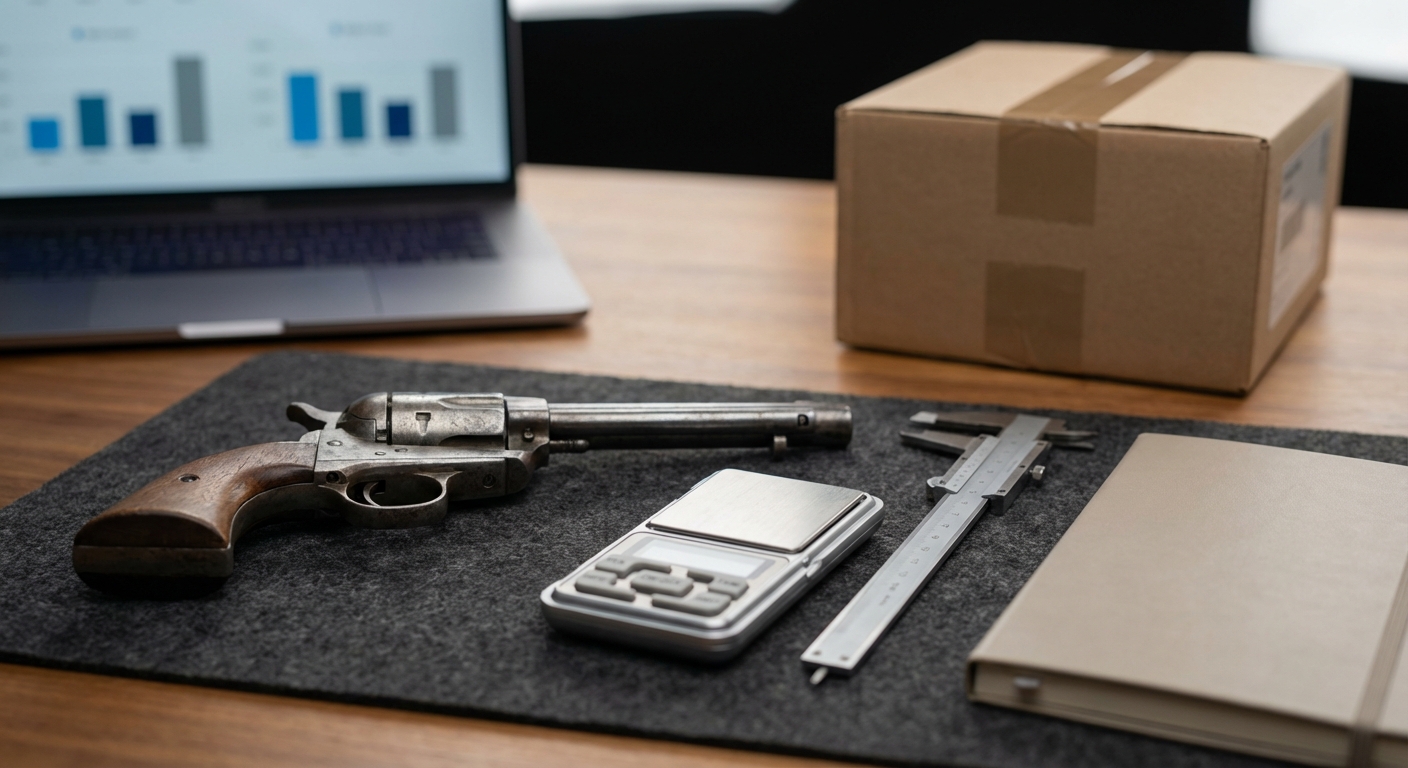
Once a gun is genuinely high-value, the downside risk climbs fast, scams, chargebacks, shipping losses, and simple transfer mistakes can erase the premium you worked to protect.
- Sell to a dealer/buyer: Fastest route with the most certainty, you trade some upside for a clean, professional transaction.
- Consignment: A shop lists it for you, you get more reach, but you’re waiting on the right buyer and paying a cut.
- Auction house: Best for top-end collector exposure, but timelines, fees, and reserve decisions matter.
- Private sale (where allowed): Highest control, but rules vary and the risk tolerance has to be yours.
Bring documentation and clear photos because provenance is what buyers pay for. On shipping, declared value sets the carrier’s maximum liability, while shipping insurance is separate and is meant to cover the item’s actual value; for rare pieces, many sellers prefer an FFL (Federal Firearms Licensee), a person or business licensed under federal law to engage in firearms transactions, to handle transfer and shipping.
- TX
- Private intrastate sales: Generally no FFL or background check required under state law
- Wait / permits / market constraints: No waiting period, no permit-to-purchase, no statewide “assault weapon” or magazine-capacity bans
- FL
- Private intrastate sales: Generally no FFL or background check required
- Wait / permits / market constraints: Dealer sales have a 3-day minimum waiting period (common exemptions, including many concealed weapon license holders); no permit-to-purchase; no statewide “assault weapon” or magazine-capacity bans
- CA
- Private intrastate sales: Nearly all transfers run through a CA-licensed dealer with a background check
- Wait / permits / market constraints: 10-day waiting period; eligibility docs (Firearm Safety Certificate for most); “assault weapon” and >10-round magazine sale/transfer restrictions affect marketability
Federal law generally allows an unlicensed person to transfer to an unlicensed resident of the same state if the seller has no reasonable cause to believe the buyer is prohibited (18 U.S.C. § 922), while interstate transfers between unlicensed people generally go through an FFL in the buyer’s state (18 U.S.C. § 922(a)(5)). Pick the path that matches your risk tolerance and timeline, then confirm current rules with an FFL and official sources (or consult state-by-state guidance on how to sell a gun) before you take payment or ship.
Turn rarity into real value
Discontinuation doesn’t create a fortune; rare variants, true originality, and documented condition do.
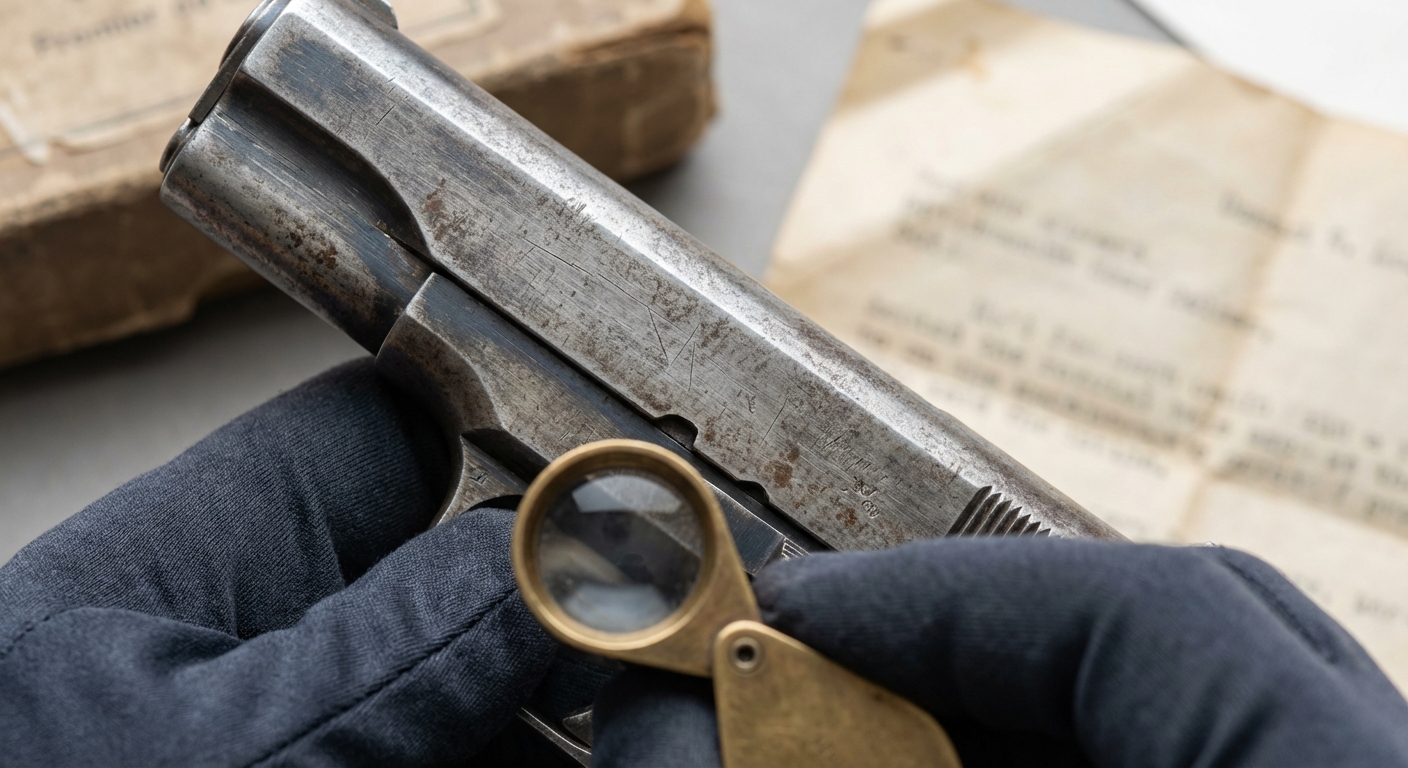
Your biggest multipliers are the boring stuff: original finish and parts, plus clean documentation; your biggest value killers are refinish work, swapped components, and “upgrades” that erase what collectors are paying for. Handguns and long guns both come down to era and configuration markers, and if you miss those markers, you end up comping and pricing the wrong gun-exactly how people get burned when a “Python” (or a “PPK,” or a “pre-64”) isn’t the one the market is chasing.
Keep your valuation disciplined by anchoring it to completed sales, like the kind of sold-auction data that drives the Python market, and remember the real selling world varies by state once transfers, shipping, and insurance enter the picture.
Protect value today by controlling storage humidity, preventive conservation commonly recommends keeping relative humidity below about 45% for most metals to reduce corrosion risk. Stainless resists corrosion better than blued carbon steel, but it’s not immune to rust.
Identify it correctly, document what’s original, and anchor your number to sold comps before you choose where to sell. If you want a single, safe option, Cash My Guns, operated by Dunlap Gun Buyers (a federally licensed FFL), markets a “Safe • Legal • Hassle-Free” nationwide mail-in buying service.