
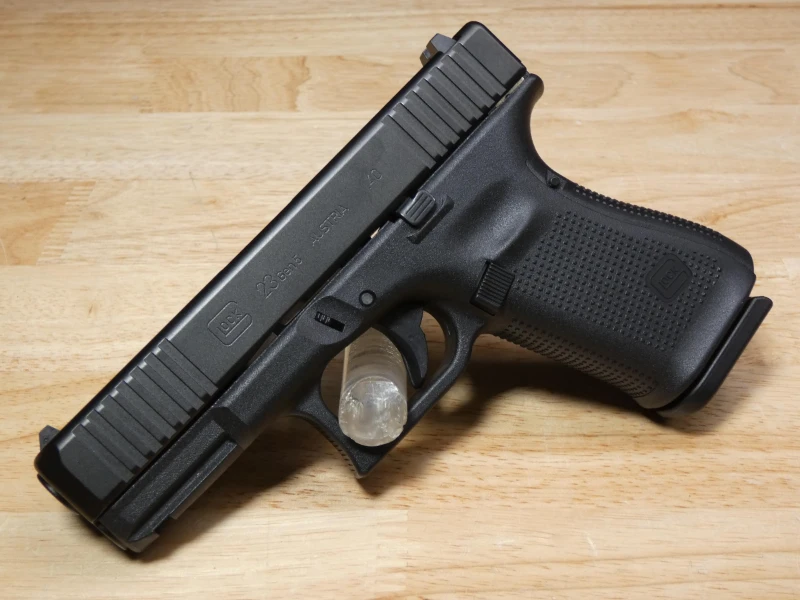
The Glock 23 stands as a benchmark for compact semi-automatic pistols, blending the potent .40 S&W cartridge with a manageable frame size ideal for duty and concealed carry. Its value in the used market is shaped by several key factors, including its specific generation, overall condition, included accessories, and prevailing market demand. Understanding these elements is crucial for any owner looking to accurately assess their firearm’s worth and navigate the selling process effectively.
What Determines Your Glock 23’s Worth
The primary drivers of a Glock 23’s value are its generation, physical condition, and any modifications made to the firearm. Newer generations with more modern features naturally command higher prices than their older counterparts. Because the market value for these pistols is so well-established, a professional appraisal is generally not worth the cost for a standard model. A used Glock 23 in good to excellent condition typically falls within a predictable range of $300 to $450, making its worth easy to determine by comparing it to current online listings and local dealer prices.
2026 Price Breakdown by Generation
Glock 23 Gen2
The Glock 23 was introduced as a second-generation model, establishing the compact .40 S&W platform that would become immensely popular. These early models feature the classic frame texture and a two-pin frame design, lacking the finger grooves and accessory rail found on later versions. While perfectly functional and reliable, their value is often tied more to their condition and appeal to collectors who appreciate the history of the Glock platform. Finding a Gen2 in pristine condition can be a challenge, but they represent the foundation of this iconic handgun line.
On the used market, a Gen2 Glock 23 is typically priced at the lower end of the value spectrum due to its age and lack of modern features. Buyers for these models are often looking for a functional, no-frills handgun or are Glock enthusiasts. Its value is highly dependent on its cosmetic and mechanical condition, as well as the inclusion of original factory items like the “Tupperware” style box. While less common than later generations, they remain a testament to the durability of Glock’s original design.
Glock 23 Gen3
The third generation marked a significant evolution for the Glock 23, introducing the now-familiar finger grooves on the grip and an integrated accessory rail on the frame for mounting lights and lasers. This model saw widespread adoption by law enforcement agencies and civilians alike, making it one of the most common and recognizable versions available on the used market. Its long production run and proven track record ensure a steady supply of pistols, parts, and accessories, which helps stabilize its value and maintain its popularity among shooters.
Due to its prevalence, the Gen3 Glock 23 often serves as the baseline for used pricing, with police trade-in models frequently available in the $360 to $450 range depending on condition. Its inclusion on the California roster of approved handguns (with a 10-round magazine) also sustains its demand in that restricted market. For many buyers, the Gen3 represents the perfect balance of classic Glock reliability and essential modern features, making it a consistently sought-after option that holds its value well over time.
Glock 23 Gen4
The Gen4 Glock 23 introduced several key ergonomic and functional upgrades that significantly enhanced the platform. The most notable change was the Modular Backstrap System, allowing users to customize the grip size for a better fit. It also featured a larger, reversible magazine catch and a dual recoil spring assembly, which helps mitigate felt recoil and increases the service life of the pistol. These improvements made the Gen4 a more versatile and comfortable firearm for a wider range of shooters, directly influencing its higher resale value compared to earlier generations.
On the secondary market, a Glock 23 Gen4 typically commands a slightly higher price than a Gen3 in similar condition, reflecting its enhanced features. It is a popular choice for buyers who want more modern ergonomics without opting for the newest generation. The combination of customizability and the robust dual recoil spring system makes it a highly desirable model for both personal defense and duty use, ensuring it remains a competitive and valuable option for sellers looking to get a strong return on their firearm.
How Modifications Affect Value
When it comes to modifications, not all upgrades are created equal in the eyes of a potential buyer. The most widely accepted value-adding modification for a Glock 23 is the installation of high-quality night sights from reputable manufacturers. Brands such as Trijicon, TruGlo, and Ameriglo are well-regarded in the firearms community, and their products are seen as a significant improvement over the standard factory sights. Adding a set of these sights can make a firearm more appealing and may allow a seller to ask for a slightly higher price than they could for a stock model.
While there is no definitive market consensus on which specific modifications hurt value, highly personalized changes like custom stippling or non-standard slide cuts can be subjective and may narrow the pool of potential buyers. For this reason, it is highly advantageous for a seller to include all original factory parts with the sale. Many buyers prefer the proven reliability of OEM components and appreciate having the option to return the firearm to its stock configuration, which can make a modified pistol a more attractive and valuable package overall.
Regional Price Variations in 2026
The value and legality of a Glock 23 can be significantly influenced by state and local laws. In California, for example, the Glock 23 Gen3 is on the state’s roster of approved handguns and is legal for dealers to sell, but it must be accompanied by a 10-round magazine. This specific legal status creates a unique market dynamic within the state. However, a new law is set to ban the sale of new Glocks by dealers starting in mid-2026, which will likely have a substantial impact on the value and availability of these firearms in the California used market.
Similarly, in New York, a Glock 23 is legal to own but is also restricted to a 10-round magazine capacity. Furthermore, the state requires a special license to possess any handgun, a significant legal hurdle that affects the local market. These types of restrictions in states with stricter gun control laws can influence demand and pricing, often creating a different value proposition for the same firearm compared to what it might be worth in a state with fewer regulations on handgun ownership and features.
Online vs Local Sales
When selling a Glock 23 locally as a private individual, the transaction is governed by state and local laws, which can vary significantly. While federal law does not require a bill of sale for a private transfer between two residents of the same state, creating one is highly recommended as it provides a legal record of the transaction for both the buyer and the seller. In some states, the law mandates that all private firearm sales must be conducted through a Federal Firearms Licensee (FFL), a process that involves a background check and the completion of ATF Form 4473.
Selling a Glock 23 online to a buyer in another state introduces federal regulations that must be strictly followed. To complete an interstate transfer legally, the handgun must be shipped from the seller to an FFL in the buyer’s state of residence. The buyer must then go to that FFL, complete all necessary paperwork, and pass a background check before they can take possession of the firearm. This federal requirement applies to all interstate handgun sales, ensuring that the transfer is compliant and properly documented from start to finish.
The logistics of shipping a handgun add another layer of complexity for private sellers. Major carriers like UPS and FedEx have policies that heavily restrict firearm shipments, now requiring them to originate from an FFL holder. This means a private individual must use a local FFL to send the firearm to the buyer’s FFL. Furthermore, handguns are required to be shipped using an expedited service, such as UPS Next Day Air or FedEx Priority Overnight. The package must be unloaded and cannot bear any markings indicating that it contains a firearm.
The FFL Buying Advantage
Selling your Glock 23 to a Federal Firearms Licensee, such as a local gun store or an online buyer, offers a significant advantage in speed and convenience compared to a private sale. The process is straightforward, eliminating the need to find a private buyer, navigate varying state laws, or handle complex shipping regulations. While this simplicity is a major benefit, it comes at a cost, as the cash offer from a dealer will be lower than what you could potentially get from a private party sale.
Typically, gun dealers will offer between 50% and 70% of the firearm’s estimated used retail value to account for their own overhead and profit margin. For instance, a used Glock 23 that might sell for between $400 and $475 in a private transaction could receive a trade-in or cash offer of approximately $250 to $350 from a dealer. In some cases, especially if the dealer’s inventory is high, the offer could be as low as 40% of their intended resale price, highlighting the trade-off between maximizing value and achieving a quick, hassle-free sale.
What Increases Your Offer
A critical first step to maximizing your offer is a thorough pre-sale cleaning. A well-maintained firearm makes a much stronger impression on potential buyers and appraisers. To properly clean your Glock 23, you should field-strip it and use a quality solvent to clean the barrel, slide, and frame, paying attention to hard-to-reach areas with patches and Q-tips. A common mistake to avoid is using too much solvent or oil inside the firing pin channel; cleaning the slide while it is inverted can help prevent this. Finish by applying a light coat of lubricant to key friction points like the slide rails.
High-quality photographs are essential for attracting the best offers, especially in online sales. Use bright, natural, and diffused light to eliminate harsh shadows and glare, such as positioning the firearm near a window on an overcast day. Place the Glock 23 on a simple, neutral background that provides good contrast. Take numerous clear, in-focus pictures from multiple angles, ensuring the firearm fills the frame. Be sure to include close-ups of any important markings, features, or imperfections to give potential buyers a comprehensive and transparent view of its condition.
Completeness of the package can significantly increase the appeal and value of your Glock 23. While there isn’t a specific penalty for missing items, including the original factory case, owner’s manual, all original magazines, and any included accessories like backstraps or a magazine loader presents a more attractive and valuable offering. A complete, well-cared-for package suggests a responsible owner and gives the buyer everything that came with the firearm when it was new. This attention to detail can set your firearm apart and justify a higher asking price.
When to Sell Your Glock 23
While the firearms market can be influenced by unpredictable political events, there are observable seasonal trends that can help you time your sale for a better return. Generally, the most opportune time to sell a used handgun like the Glock 23 is during tax return season, which typically runs from February through April. During this period, many potential buyers have more disposable income, leading to increased demand and a greater willingness to purchase. Listing your firearm for sale during this window can often result in a quicker sale at a higher price point.
Conversely, certain times of the year tend to be slower for firearm sales. The holiday season, from late November through December, and the summer months are often considered off-peak periods. During these times, consumer spending is often directed elsewhere, and potential buyers may be more focused on vacations or other activities. Selling your Glock 23 during these slower months might require more patience to find the right buyer or could necessitate listing it at a more competitive price to generate interest in a less active market.
It is also important to recognize that the handgun market is exceptionally sensitive to the political climate. Discussions surrounding new firearm legislation at the state or federal level can create sudden and significant spikes in demand. These periods, often driven by news cycles, can create short-term windows where the value of popular firearms like the Glock 23 increases due to consumer concern over future availability. While these events are impossible to predict, they can present a lucrative opportunity for a seller who is paying attention to the market.
Common Pricing Mistakes
One of the most common pricing mistakes is overvaluing aftermarket modifications. While a practical upgrade like quality night sights can add to the resale price, sellers should not expect to recoup the full cost of expensive custom work. Features like aftermarket triggers, custom slide milling, or elaborate frame stippling are highly subjective and may not appeal to a broad range of buyers. Pricing the firearm as if these personalizations add dollar-for-dollar value can deter potential customers who would prefer a stock configuration or have their own modification plans.
Another frequent error is ignoring the firearm’s true cosmetic condition. While a high round count does not significantly devalue a Glock 23 due to its renowned durability, visible wear and tear absolutely does. Scratches, holster wear, and dings on the slide or frame detract from the pistol’s value. Sellers must be objective when assessing their firearm’s condition and price it accordingly. Asking for a “like new” price for a pistol that shows clear signs of regular use is unrealistic and will likely result in the firearm sitting on the market for an extended period.
A critical and potentially illegal mistake is misrepresenting or being unaware of the firearm’s NFA status. A standard Glock 23 is classified as a handgun and is not an NFA item. However, if an owner has added a shoulder stock, they have legally created a short-barreled rifle (SBR), which is regulated under the National Firearms Act. Attempting to sell a homemade, unregistered SBR is a serious federal crime. Before listing, a seller must ensure that no modifications have inadvertently reclassified the firearm, as doing so carries severe legal consequences.
Market Outlook for 2026
Predicting the future value of any firearm with absolute certainty is impossible, as the market is subject to a host of unpredictable political, social, and economic influences. However, the Glock 23 is not a speculative or obscure firearm; it is a well-established, highly regarded workhorse pistol. Given its enduring popularity and reputation for reliability, its value is expected to remain stable and closely follow the general market trends for quality, used semi-automatic handguns. It is unlikely to see a dramatic drop in value barring any major technological shifts in the industry.
Several factors support a stable long-term value for the Glock 23. Its widespread adoption by law enforcement agencies has cemented its reputation for dependability, and the vast aftermarket support for parts, magazines, and accessories ensures it will remain a practical choice for years to come. The potent .40 S&W cartridge continues to be popular for self-defense, maintaining demand for the platform. While newer models and competing firearms will emerge, the Glock 23’s core identity as a durable and effective compact pistol will secure its place in the used firearms market.
Frequently Asked Questions
Is it worth getting a professional appraisal for my Glock 23?
No, a professional appraisal is generally not worth the cost for a standard-production Glock 23. The market for these handguns is extremely well-established, with used models in good to excellent condition consistently falling within a predictable price range of approximately $300 to $450. You can accurately gauge your firearm’s current market value for free by researching completed online auctions, browsing listings on firearms forums, and checking the prices at local gun stores. This readily available data makes a formal, paid appraisal an unnecessary expense.
How much does a high round count affect my Glock 23’s value?
A high round count has a surprisingly minimal impact on the monetary value of a Glock 23. These pistols are legendary for their durability and are engineered to withstand extremely high usage, often exceeding 100,000 rounds with proper maintenance. Key wear components, such as the recoil spring, are inexpensive and simple to replace, making mechanical longevity a minor concern for informed buyers. While significant cosmetic wear from heavy use can be a negotiation point, the round count itself is not a primary factor in the pistol’s price depreciation.
Will adding a stock to my Glock 23 increase its value?
No, adding a shoulder stock will not increase its value and will create a serious legal issue. This modification reclassifies the handgun as a short-barreled rifle (SBR), an item strictly regulated under the National Firearms Act (NFA). To be legal, the firearm must be registered with the ATF via a Form 1 and receive a tax stamp before the stock is attached. Attempting to sell an unregistered SBR is a felony. This modification severely complicates the selling process and does not add value for a conventional handgun sale.
Do I get more money selling to a dealer or a private individual?
You will almost always receive a higher price for your Glock 23 by selling it to a private individual. A gun dealer operates a business and must purchase inventory at a low enough price to cover overhead and generate a profit upon resale. Consequently, their offer will typically be between 50% and 70% of the pistol’s true used market value. While a private sale yields more money, the trade-off is that selling to a dealer is significantly faster, more convenient, and removes the complexities of navigating private sale laws.
Does the generation of my Glock 23 significantly change its price?
Yes, the generation is one of the most significant factors in determining a Glock 23’s value. Newer generations command higher prices due to their modern features. For example, a new Gen5 model, with its improved barrel and ergonomics, averages around $590. In contrast, older models like the popular Gen3 and Gen4 are more common on the used market and typically fall into the $350 to $450 price range. Each successive generation introduced key upgrades that directly influence its desirability and current market price.
Get a Cash Offer Today
Ready to sell your Glock 23? We make the process simple and secure. Avoid the hassle of private listings and shipping regulations. Our process is designed to get you a fair, competitive cash offer quickly, ensuring you get paid without the typical delays of online marketplaces or low trade-in values.
Submit your firearm’s information through our easy-to-use online form, and our experts will provide you with a no-obligation quote. We are a trusted Federal Firearms Licensee (FFL) dedicated to making the sale of your handgun straightforward and compliant with all federal and state laws. Get started now!