
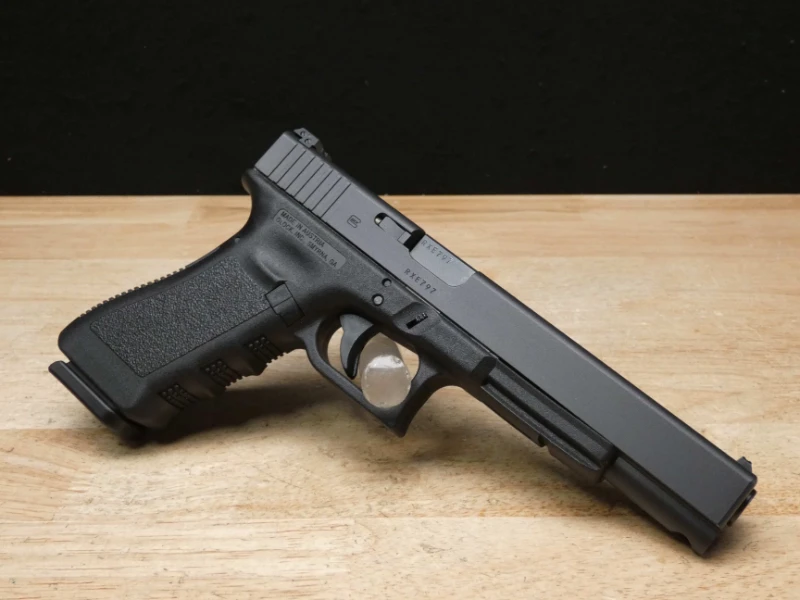
The Glock 24 is a semi-automatic, long-slide pistol designed primarily for competitive shooting. Classified as a handgun, its extended barrel and sight radius provide enhanced accuracy, making it a favorite in various shooting disciplines. Understanding the specific factors that influence its market value, from its generation and condition to regional laws and sales channels, is crucial for any owner looking to sell. This guide provides a comprehensive breakdown of the Glock 24’s worth in today’s market.
What Determines Your Glock 24’s Worth
The value of a Glock 24 is determined by a combination of key factors, with its generation being a primary driver. Newer models typically command a premium of $50 to $100 over older ones. The firearm’s overall physical condition is paramount; buyers will scrutinize the slide, frame, and barrel for wear. While a high round count can lower the price, Glock’s reputation for extreme durability means many buyers focus more on maintenance history, such as regular spring replacements, than the exact number of rounds fired. Finally, market demand, influenced by seasonal trends and the political climate, plays a significant role in its final sale price.
2026 Price Breakdown by Generation
Generation 1
The Glock 24 was not produced during the first generation of Glock pistols, which were characterized by their uniform pebble-grip texture and lack of an accessory rail. The first-generation models, primarily the Glock 17, were introduced in the early 1980s. The long-slide Glock 24 model was developed later. Consequently, there are no “Gen 1” Glock 24 pistols in existence, and therefore, no market data or established value for such a firearm. Any listing claiming to be a first-generation Glock 24 should be considered inaccurate or a custom-built firearm, which would have a highly subjective and unpredictable value.
Because no factory-produced Generation 1 Glock 24 exists, collectors and enthusiasts will not find this model in any official pricing guides or sales histories. The value of a firearm is intrinsically tied to its production history, rarity, and demand. Without a production history, a Gen 1 Glock 24 has no baseline value. Sellers should be aware of this fact to avoid misrepresenting their firearm, and buyers should be cautious of any claims regarding this non-existent model variant. The value discussion for the G24 begins with its actual production models from later generations.
Generation 2
The Glock 24 was introduced during the second generation, which brought changes like front and back strap checkering and an integrated recoil spring assembly. A used Glock 24 Gen 2 in good condition has an average market value of approximately $329. This price point reflects its age and the subsequent improvements made in later generations. However, its status as an earlier long-slide model can make it desirable to some collectors or shooters who prefer the ergonomics and simpler design of the Gen 2 frame. The final price will still heavily depend on its condition, the number of included magazines, and the presence of the original box and paperwork.
When selling a Gen 2 Glock 24, it’s important to set realistic expectations. While durable, these pistols are older and lack features like the accessory rail found on later models. A typical used price range for a very good to excellent condition G24 is between $325 and $600, and the Gen 2 model will fall at the lower end of that spectrum. Highlighting its clean condition and proper maintenance can help achieve a price closer to the top of its specific valuation, but it will not command the same premium as a newer-generation model in a similar state of wear.
Generation 3
The Generation 3 Glock 24 is the most commonly available version of this model and serves as the benchmark for its market value. A new Gen 3 typically has an MSRP ranging from $700 to $840, although some retailers may offer it for as low as $540 to $585. This generation introduced the now-standard accessory rail, thumb rests, and finger grooves on the grip, features that remain popular with many shooters. The widespread availability and established reputation of the Gen 3 make it a highly sought-after variant for both competitive use and general collecting, supporting its strong market position.
On the used market, a Glock 24 Gen 3 in good to excellent condition is valued between $400 and $600. This price range reflects the pistol’s durability and desirability. Sellers can expect to get a price within this bracket depending on the cosmetic condition, included accessories like original magazines and cases, and any documented maintenance. Because the G24 is a more specialized, competition-oriented model, its value holds relatively well compared to more common Glock models, especially if it has been well-cared-for by its previous owner and shows minimal signs of holster wear or abuse.
Generation 4
Similar to the first generation, the Glock 24 was not officially produced as a standard catalog model for Generation 4. The Gen 4 updates, which included the modular backstrap system, a new rough-textured frame, and a dual recoil spring assembly, were applied to many other models in the Glock lineup, but the G24 was largely phased out of regular production by this time. As a result, there is no established market or standardized pricing for a “Gen 4” Glock 24 because it is not a factory-produced firearm. Any such pistol would likely be a limited run or a custom build.
Because a factory Gen 4 Glock 24 is not a recognized model, assigning a value is impossible. Sellers and buyers will not find comparable sales data to establish a fair market price. If one were to appear, its value would be highly speculative, appealing primarily to a niche collector. For practical purposes, anyone looking to buy or sell a Glock 24 should focus on the readily available Gen 2 and Gen 3 models, as these are the versions with a predictable and established presence in the firearms marketplace, ensuring a transparent and data-driven transaction.
How Modifications Affect Value
When it comes to the Glock 24, the market shows no clear consensus on which specific modifications consistently add or detract from its value. Unlike some firearms where certain aftermarket parts from high-end brands can increase the price, the impact of modifications on a G24 is highly subjective and depends entirely on the buyer’s preference. Permanent alterations, such as custom stippling, slide cuts, or non-factory frame modifications, are almost universally viewed as detrimental to resale value, as they limit the pool of potential buyers to only those who share the original owner’s specific tastes and functional needs.
Conversely, high-quality, reversible modifications like upgraded sights, an improved trigger connector, or an extended slide release might appeal to some buyers, but you should not expect to recoup the full cost of these parts. It is generally advisable to retain all original factory parts. Including the original components with the sale allows the new owner to return the pistol to its stock configuration, which significantly broadens its appeal and helps preserve its baseline market value. Selling the aftermarket parts separately is often the most effective way to recover a portion of your investment in customization.
Regional Price Variations in 2026
The value and ease of sale for a Glock 24 can be significantly impacted by state and local firearm laws, creating notable regional price variations. In a state like California, the Glock 24 is not on the Roster of Handguns Certified for Sale. This means it cannot be purchased new from a dealer by a typical resident. This scarcity can sometimes drive up the price in private party transfers within the state, as it’s one of the few legal ways to acquire one. However, any such transaction must adhere to the state’s 10-round magazine capacity limit, potentially devaluing original, standard-capacity magazines.
In contrast, states with less restrictive firearm laws will have a market price that is more aligned with the national average. In these areas, the value is dictated more by the firearm’s condition and generation rather than its legal status. The absence of a handgun roster or magazine capacity limits creates a larger, more stable market. Sellers in restrictive states must be aware that their potential buyer pool is smaller, and legal compliance, such as transferring through an FFL for private sales where required, is a non-negotiable part of the process that can influence the final transaction details.
Online vs Local Sales
Selling a Glock 24 online requires strict adherence to federal law regarding interstate firearm transfers. A private individual cannot legally ship a handgun directly to a buyer in another state. The transaction must be facilitated by a Federal Firearms Licensee (FFL). The seller must take the pistol to a local FFL, who will then ship it to an FFL in the buyer’s state of residence. The buyer then completes the required background check and transfer paperwork at their designated FFL to legally take possession. This federally mandated process ensures all handgun sales across state lines are properly documented and legal.
When shipping the handgun, specific carrier rules must also be followed. Common carriers like UPS and FedEx have strict policies requiring private sellers to have an FFL ship the firearm on their behalf. Handguns must be shipped using an overnight service, declared as an unloaded firearm to the carrier, and packaged discreetly without any markings that indicate the contents. Ammunition is classified as hazardous material and is strictly prohibited from being included in the same package as the firearm; it must always be shipped separately according to its own set of regulations.
While federal law does not mandate a bill of sale for a private firearm transfer, creating one is a highly recommended best practice to protect the seller from future liability. This is especially important for local, face-to-face sales. A comprehensive bill of sale should document the full names and addresses of both the buyer and seller, the firearm’s details (make, model, and serial number), the sale date, and the price. Both parties should sign the document and retain a copy for their records, creating a clear paper trail of the legal transfer of ownership.
The FFL Buying Advantage
When selling your Glock 24, a key decision is whether to sell privately or to a Federal Firearms Licensee (FFL), such as a local gun store. Opting to sell to a dealer offers significant advantages in speed, safety, and legal security. The transaction is immediate, and the FFL handles all necessary paperwork, instantly removing you from legal ownership and any future liability associated with the firearm. This eliminates the complexities and potential risks of vetting a private buyer and navigating the legal requirements of a private transfer, which can vary greatly by state.
However, this convenience comes at a price. Gun dealers typically offer between 50% and 70% of the firearm’s current private market value. This reduced offer accounts for the dealer’s business overhead, the need to make a profit, and the time the gun may sit in their inventory. For a Glock 24, a dealer’s trade-in offer might be estimated at around 65% of its private party value. While a formal appraisal is generally not cost-effective for a standard G24, a dealer’s cash offer serves as a practical, real-world valuation of what your firearm is worth on the wholesale market.
What Increases Your Offer
To maximize the value of your Glock 24, a thorough pre-sale cleaning is essential. Field-strip the pistol and use a quality gun solvent and brushes to meticulously clean the barrel, slide, frame, and all small components. Removing all carbon fouling, powder residue, and grime demonstrates that the firearm has been well-maintained. A critical mistake to avoid is over-lubrication. After cleaning, apply only a very light film of gun oil to the specific metal-on-metal contact points as recommended by Glock’s manual, and then wipe away any and all excess. A clean, properly lubricated gun is far more appealing to potential buyers.
High-quality photographs are non-negotiable for attracting the best offers, especially in online listings. Use ample, diffused natural light, such as near a window, and avoid using a harsh flash, which can create glare and hide details. Place the Glock 24 against a simple, uncluttered, and contrasting background to make it the sole focus. Capture numerous high-resolution photos from every angle, including close-ups of the serial number, any markings, and detailed shots of areas prone to wear like the muzzle, slide rails, and breech face. Ensure the pistol fills the frame and is in sharp focus in every shot.
Beyond cleaning and photography, completeness and documented maintenance can significantly increase an offer. Including the original Glock case, owner’s manual, cleaning tools, and all factory-included magazines adds considerable value. Furthermore, a well-maintained firearm is more valuable, even with a high round count. If you have records of routine maintenance, such as the replacement of recoil springs or other wear parts, providing this history can reassure a buyer that the pistol has been cared for, justifying a higher asking price and setting your G24 apart from others on the market.
When to Sell Your Glock 24
Timing the sale of your Glock 24 can have a noticeable impact on the final price you receive. According to general market trends, the demand for handguns often peaks during specific periods of the year. The winter months, particularly from mid-November through mid-January, are frequently cited as a strong sales season, potentially driven by holiday spending and outdoor shooting activities being less common. This increased demand can lead to quicker sales and potentially higher offers from interested buyers who are actively looking to purchase firearms during this time.
Another prime opportunity for selling is during the early spring, coinciding with tax return season. Many individuals use their tax refunds for discretionary purchases, and firearms are a popular category. This influx of cash into the market can create a surge in demand, making it an advantageous time to list your pistol. Conversely, the summer months are generally considered a slower period for firearm sales, as people’s attention and budgets are often directed towards vacations and other outdoor activities, so it may be wise to avoid listing your G24 during this time if you are seeking the highest possible offer.
While these seasonal trends provide a useful guideline, it is crucial to recognize that the firearms market is often more significantly influenced by the political climate than by the time of year. Pending legislation, election cycles, and major news events can create sudden and dramatic spikes in demand that override any typical seasonal patterns. A savvy seller will pay attention to both the calendar and the current events to identify the most opportune moment to list their Glock 24 for sale, capitalizing on periods of heightened consumer interest to maximize their return.
Common Pricing Mistakes
One of the most common mistakes when pricing a Glock 24 is overvaluing personal modifications. While you may have spent hundreds of dollars on an upgraded trigger, custom slide work, or a new cerakote finish, these changes rarely add dollar-for-dollar value to the firearm. In fact, permanent modifications can significantly lower the value by shrinking the pool of potential buyers to only those who appreciate your specific customizations. It is crucial to price the pistol based on its base model, generation, and condition, viewing most aftermarket parts as a potential bonus for the right buyer rather than a guaranteed increase in price.
Another frequent error is failing to accurately assess the pistol’s condition relative to its round count. While Glocks are known for their durability, a high round count will still factor into the valuation. Sellers should be honest about the firearm’s usage history and focus on highlighting its excellent maintenance and cosmetic condition. Many buyers prioritize the physical state of the slide, frame, and barrel over the exact number of rounds fired. Ignoring visible holster wear, scratches, or signs of neglect and asking for a “like new” price is a quick way to deter knowledgeable buyers.
Finally, sellers often have unrealistic expectations when dealing with a licensed dealer (FFL). It’s a mistake to expect a dealer to pay the same price you see in a private party listing. Dealers must account for overhead, profit margins, and the time the gun may sit in inventory, so their offers will typically be between 50% and 70% of the private sale value. Understanding this difference is key to a smooth transaction. Walking into a gun store expecting a full retail offer will only lead to disappointment; recognize that you are trading a higher price for convenience and immediate, guaranteed payment.
Market Outlook for 2026
Predicting the future market value for a specific firearm like the Glock 24 is inherently difficult, as there is no industry-wide consensus on long-term price trajectories. The firearms market is notoriously volatile and is subject to a wide range of unpredictable influences. Factors such as potential changes in federal or state legislation, shifts in consumer demand towards newer models or different calibers, and broader economic conditions can all cause significant fluctuations in pricing. Therefore, a precise forecast for the G24’s value in 2026 remains speculative and is not based on established market data.
While specific predictions are unavailable, the Glock 24’s position as a well-regarded, competition-focused pistol suggests its value will likely remain stable relative to the overall used handgun market. Its reputation for accuracy and reliability, combined with the enduring popularity of the Glock brand, ensures a consistent level of interest from shooters and enthusiasts. The value will continue to be primarily dictated by the same factors it is today: its generation (with Gen 3 likely remaining the standard), overall condition, and the completeness of the original package, rather than any predictable market appreciation or depreciation.
Frequently Asked Questions
How much does a high round count affect my Glock 24’s value?
While a high round count generally lowers the resale value, its impact on a Glock 24 may be less significant than on other firearms due to Glock’s legendary durability. Many buyers are more concerned with the pistol’s overall physical condition and evidence of proper maintenance, such as regular spring replacements. Since Glocks can function reliably for tens of thousands of rounds, a high count isn’t necessarily a deal-breaker if the gun has been well-cared-for. However, a lower round count is always a positive selling point and will help you command a higher price within its valuation range.
Is it worth getting my Glock 24 professionally appraised?
For a standard, used Glock 24, a professional appraisal is likely not worth the cost. The market value for common production models like this can be accurately determined by researching recent sales of comparable firearms on online marketplaces and forums. A formal appraisal is typically reserved for rare, custom, or historically significant firearms. A gun dealer’s cash or trade-in offer can serve as a practical, informal appraisal of its wholesale value, but for private sales, your own market research will be the most effective tool for setting a fair price.
Will selling to a dealer get me less money than a private sale?
Yes, you will almost certainly receive a lower offer from a gun dealer (FFL) than you could achieve in a private sale. Dealers typically offer between 50% and 70% of the firearm’s current market value. This price difference accounts for the dealer’s business costs, profit margin, and the convenience they offer. The trade-off is that selling to a dealer is a fast, secure, and legally straightforward transaction, immediately transferring ownership and liability, whereas a private sale requires more effort and carries more personal responsibility.
Does the generation of my Glock 24 significantly change its price?
Yes, the generation is a key factor in the Glock 24’s value. The pistol was primarily produced in Gen 2 and Gen 3 variants. The Gen 3 models, featuring an accessory rail and updated grip texture, are more common and generally more desirable, commanding higher prices. A used Gen 2 model has an average value around $329, while a used Gen 3 can fetch between $400 and $600. In general, a newer generation in comparable condition can be worth $50 to $100 more than an older one, making the generation a significant pricing consideration.
Are there any modifications that will increase the resale value?
There is no market consensus that any specific modification will reliably increase the resale value of a Glock 24. Value from modifications is highly subjective and depends on the buyer. While high-quality, reversible upgrades like premium sights or a drop-in trigger might appeal to some, you should not expect to recoup their full cost. Permanent alterations like slide milling or frame stippling almost always decrease the value. The best strategy is to keep all original parts and include them with the sale, as the firearm is most valuable to the widest audience in its stock configuration.
Get a Cash Offer Today
Ready to sell your Glock 24? We make the process fast, safe, and simple. Avoid the hassle of private listings and legal complexities by getting a fair, no-obligation cash offer from us today. Click the button to see what your firearm is worth and let us handle the rest.
Our expert team understands the value of your firearm and is committed to providing a transparent and competitive offer. We are a trusted Federal Firearms Licensee, ensuring every transaction is 100% legal and secure. Turn your used Glock into cash with confidence and ease.