
Understanding the market value of your Glock 31 is essential for a successful sale. This full-sized, semi-automatic pistol, chambered in .357 SIG, holds a distinct place in the market. Its value is influenced by generation, condition, included accessories, and regional laws. A new Glock 31 has an MSRP of around $599, while used models typically sell for about $424. This guide provides a detailed breakdown of the factors that determine its final price, ensuring you are well-informed.
What Determines Your Glock 31’s Worth
Several key factors converge to establish the fair market value of a Glock 31. The firearm’s generation is a primary determinant, with newer generations often commanding slightly different prices than older ones. Overall condition is paramount; a well-maintained pistol with minimal wear will always be worth more than one showing significant use. Modifications also play a crucial role, as some aftermarket upgrades can add appeal while others may detract from the value depending on buyer preference. Finally, market demand, influenced by regional laws and seasonal trends, can cause prices to fluctuate, making timing and location important considerations in any sale.
2026 Price Breakdown by Generation
Glock 31 Gen 1 & Gen 2
The Glock 31 was not produced during the first or second generations of Glock pistol manufacturing. The model was introduced later, meaning that prospective buyers and sellers will not encounter Gen 1 or Gen 2 versions of this specific firearm. The earliest iterations of the Glock 31 available on the market are from Generation 3. When evaluating Glocks from this era, collectors and enthusiasts typically look for specific frame textures and features that define those early production periods, but these characteristics do not apply to the Glock 31 model itself.
Because the Glock 31 does not exist in these early generations, any valuation discussion must begin with the Gen 3 models. The absence of Gen 1 and Gen 2 variants simplifies the market for this particular handgun, focusing the value assessment entirely on the later generations. Sellers and buyers should be aware of this history to avoid confusion and to accurately identify the firearm they are dealing with. The value conversation for the Glock 31 is therefore concentrated on the features, condition, and market demand for its Gen 3 and Gen 4 iterations.
Glock 31 Gen 3
The Glock 31 Gen 3 remains a popular and widely available model on the used market. Its value is well-established, with the average price for a used Gen 3 in good condition hovering around $415. This generation is known for its durability and straightforward design, making it a trusted choice for many shooters. For those seeking a brand-new model, a new Glock 31 Gen 3 carries a higher price tag, averaging approximately $719. This price difference highlights the significant savings available when purchasing a pre-owned firearm that has been properly maintained by its previous owner.
The market for police trade-in models also influences the Gen 3’s value. These service pistols, while often showing some external holster wear, are typically well-maintained internally and offer excellent performance at a competitive price point. Refurbished or rebuilt models can sometimes be found for even lower prices, with some examples selling for as little as $374 to $382. These options provide an accessible entry point for buyers looking to acquire the potent .357 SIG chambering in a reliable, full-sized platform without paying the premium for a new-in-box firearm.
Glock 31 Gen 4
The Glock 31 Gen 4 introduced several key updates, including a modular backstrap system and a dual recoil spring assembly, which appeal to many modern shooters. These enhancements contribute to a slightly different valuation compared to the previous generation. On the used market, a Glock 31 Gen 4 can typically be found for sale within a price range of approximately $374 to $565. The final price within this range is heavily dependent on the pistol’s cosmetic condition, round count, and whether it includes the original box, extra backstraps, and magazines, which are all important factors for potential buyers.
The average market price for a new Glock 31 is around $671, which places the Gen 4 in a competitive position. Buyers often weigh the benefits of the Gen 4’s updated features against the proven simplicity of the Gen 3. For sellers, this means that presenting a Gen 4 in excellent condition with all its original accessories is key to achieving a price at the higher end of the used market spectrum. The Gen 4’s blend of modern features and established Glock reliability ensures it remains a sought-after model for both private sales and dealer trade-ins.
How Modifications Affect Value
Upgrading a Glock 31 with quality aftermarket parts can potentially make it more attractive to buyers, though it is not a guarantee that you will recoup the full investment. High-quality sight upgrades are a common and often appreciated modification. Reputable iron sight brands such as Trijicon, Ameriglo, and Dawson Precision are well-regarded and can add appeal. Furthermore, the addition of a red dot optic is a significant enhancement in today’s market, with brands like Holosun and Trijicon being popular choices that can positively influence a potential buyer’s decision, even if the sale price doesn’t cover the optic’s original cost.
Conversely, some modifications can be a matter of personal preference and may not add value, or could even detract from it. Aftermarket triggers, for example, can enhance performance for a specific user but might deter a buyer who prefers the stock factory feel or is concerned about reliability with non-original parts. For this reason, it is highly advisable to retain all original factory parts. Providing the original components with the sale allows the new owner to revert the firearm to its stock configuration, which broadens its appeal and can prevent a modification from becoming a value-hurting liability.
Regional Price Variations in 2026
The value and legality of a Glock 31 can vary significantly based on state and local laws, creating distinct regional price differences. In California, for instance, a Glock 31 is only legal for sale if it is on the state’s Roster of Handguns Certified for Sale and is equipped with a magazine limited to 10 rounds. This restricted availability can impact market prices. Furthermore, new legislation set to take effect in 2026 will ban the sale of new Glock models, which could drive up the price of existing, legally-owned Glocks within the state as supply becomes fixed.
Similarly, New York imposes strict regulations, requiring a valid pistol permit for possession and limiting magazine capacity to 10 rounds. Both New York and California have proposed or passed legislation aimed at banning the sale of new Glocks due to concerns over potential conversion to fully automatic firearms. Such legislative actions create uncertainty and can affect market dynamics, potentially increasing the value of grandfathered firearms in restrictive states while having little to no effect on prices in states with more permissive firearm laws, thereby creating a patchwork of regional price variations across the country.
Online vs Local Sales
When selling a Glock 31, the choice between an online or local transaction involves different logistical and legal considerations. For a private, local sale, federal law does not mandate specific paperwork, but a bill of sale is strongly recommended to create a record of the transfer. This document should include the buyer’s and seller’s information, the firearm’s make, model, and serial number, and the sale details. However, it is critical to remember that state and local laws can be much stricter, with some jurisdictions requiring background checks or the use of specific state forms even for private sales.
Selling online to a buyer in another state introduces mandatory federal regulations. A private individual cannot ship a handgun directly to another private individual across state lines. The Glock 31 must be shipped from the seller to a Federal Firearms Licensee (FFL) in the buyer’s state. The buyer then completes the required paperwork and background check at their designated FFL. This process adds complexity and cost, as carriers like UPS and FedEx require handguns to be shipped via expensive next-day air services and often restrict such shipments to be between FFL holders only, necessitating the seller’s use of a local FFL.
The legal requirements for shipping a handgun like the Glock 31 are stringent and must be followed precisely. Federal law strictly prohibits shipping handguns directly to non-licensed individuals in other states. Therefore, a private seller must arrange for the firearm to be sent to a valid FFL holder. Major carriers have their own policies on top of federal law; both UPS and FedEx mandate that handguns be shipped using their fastest next-day air services. Their policies also largely limit firearm shipments to be between licensed dealers, meaning a private individual will typically need to have their local FFL ship the gun for them.
The FFL Buying Advantage
Utilizing a Federal Firearms Licensee (FFL) is not just an advantage but a legal necessity for most firearm transactions, particularly those conducted across state lines. When selling a handgun like the Glock 31 to a resident of another state, the firearm must be transferred through an FFL. The seller ships the pistol to an FFL dealer located in the buyer’s home state. This ensures the transaction complies with federal law, as the buyer must then appear in person at that FFL, complete an ATF Form 4473, and pass a NICS background check before taking legal possession of the firearm.
Selling your Glock 31 directly to an FFL dealer, such as through a trade-in, offers convenience at the cost of a lower price. Dealers typically offer between 50% and 70% of a used firearm’s private sale value. For a Glock 31, the average trade-in value is estimated to be around 65% of its private party price. This translates to a trade-in offer of approximately $270, compared to a potential private sale value of about $415. This difference represents the dealer’s margin and the price of a fast, hassle-free, and legally compliant transaction without the complexities of a private sale.
What Increases Your Offer
A thorough pre-sale cleaning is one of the most effective ways to increase the perceived value of your Glock 31. Before listing it for sale, you should field strip the pistol and meticulously clean the barrel, slide, and frame to remove all carbon buildup and residue. Pay special attention to critical areas like the slide rails and the breech face. After cleaning, apply a very light amount of high-quality lubricant to the manufacturer-recommended points. Over-lubricating can attract dirt, so a minimalist approach is best. A clean, properly maintained firearm signals to a potential buyer that it has been well cared for.
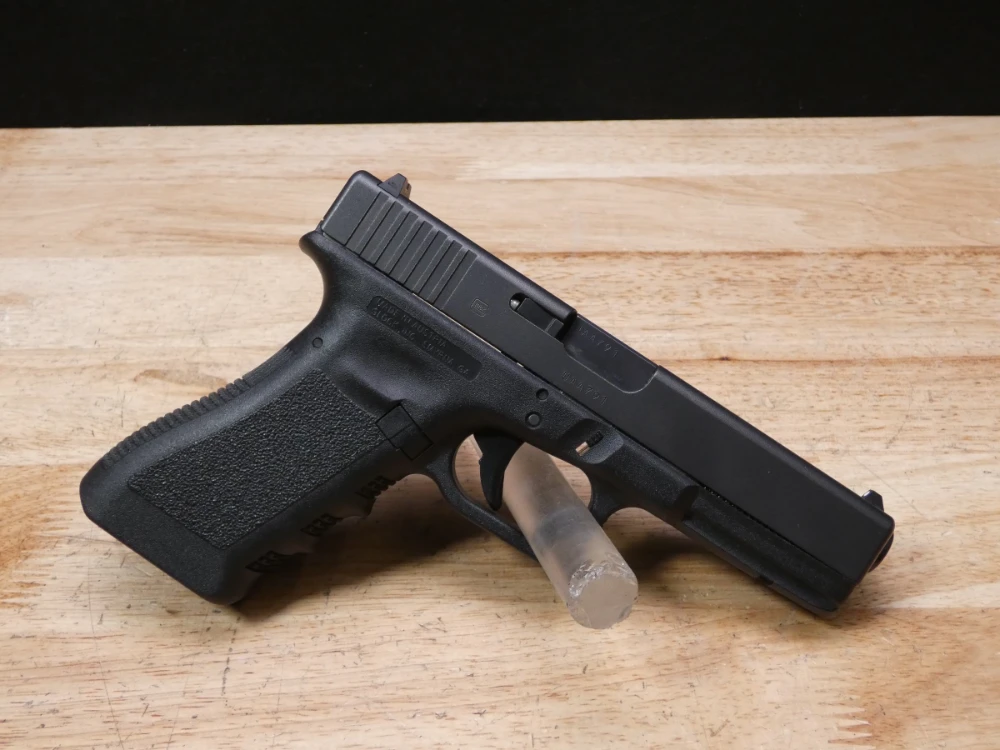
High-quality photographs are crucial for attracting buyers and securing a strong offer, especially in online marketplaces. Use a clean, uncluttered background like a plain poster board or a simple wood surface to ensure the focus remains on the firearm. Good, even lighting is essential to accurately represent the pistol’s condition and finish without harsh shadows. Use a modern smartphone or camera to take multiple sharp, clear photos from various angles. Include close-ups of any markings, the serial number, and any visible wear. An accurate, detailed description paired with excellent photos builds trust and justifies your asking price.
While the provided market data does not specify a direct financial penalty for an incomplete package, presenting the Glock 31 with its original case, owner’s manual, magazines, and any other factory-included accessories is a significant value-add. Buyers appreciate a complete set, as it reflects a well-maintained and cared-for firearm. If you have made any modifications, including the original parts (like sights or the trigger) is also highly advisable. This allows the new owner the option to return the pistol to its stock configuration, broadening its appeal and demonstrating a thoughtful approach to ownership, which can strengthen your negotiating position.
When to Sell Your Glock 31
The timing of your sale can have a noticeable impact on the final price and the speed of the transaction. Market data indicates that the most favorable period to sell a used handgun like the Glock 31 generally spans from late fall through the following spring. This broad window contains a couple of peak seasons for firearm sales. The first peak often occurs during the holiday season, from approximately mid-November through mid-January, as people are actively shopping. This period presents a strong opportunity to list your firearm when buyer interest is high and demand is elevated across the market.
Another prime selling period aligns with tax return season, which typically runs from February through April. During these months, many potential buyers have more disposable income, leading to an increase in firearm purchases. Listing your Glock 31 during this time can attract more serious offers and potentially lead to a quicker sale at your desired price point. Conversely, the summer months are consistently identified as a slower period for the firearms market. With many people focused on vacations and outdoor activities, demand tends to dip, making it a less optimal time to achieve the maximum value for your pistol.
To maximize your return, strategically listing your Glock 31 just before or during these peak seasons is the best approach. Aim for the late fall or early spring to capture the highest level of buyer interest. By avoiding the summer slump, you increase the likelihood of connecting with motivated buyers who are actively looking to make a purchase. This seasonal trend is a consistent pattern in the firearms industry, and leveraging it can make a tangible difference in your selling experience, helping you secure a better price in a more competitive marketplace where demand is on your side.
Common Pricing Mistakes
One of the most frequent pricing errors is overvaluing the firearm based on emotional attachment or the initial purchase price. For a standard used Glock 31, the market value is well-established, typically ranging from $300 to $500 depending on condition and generation. Investing in a professional appraisal is generally not cost-effective, as the fee for the appraisal could represent a significant portion of the gun’s actual value. Sellers should research current market listings for comparable models to set a realistic price rather than relying on outdated information or personal sentiment, which can deter potential buyers.
Another common mistake is assuming that all modifications add value. While high-quality sights might increase appeal, personalized upgrades like aftermarket triggers are subjective and can even lower the value for a buyer who prefers a factory configuration. It is a significant error to add the full retail cost of modifications to the pistol’s asking price. Most buyers are unwilling to pay a premium for someone else’s custom choices. To avoid this pitfall, it is best to price the gun based on its base model value and consider any upgrades as potential bonuses rather than guaranteed price inflators.
Misjudging the impact of wear and tear is also a critical error. While Glocks are renowned for their durability and ability to withstand high round counts, sellers should not dismiss the importance of cosmetic condition. An exceptionally high round count in the tens of thousands may be a negotiating point, but the overall maintenance history and visible condition are often more significant to a buyer. Pricing a firearm with significant holster wear or scratches as if it were in “like-new” condition is a mistake that will quickly be identified by knowledgeable buyers and will undermine the seller’s credibility.
Market Outlook for 2026
While a definitive consensus on future price prediction is not available, several market factors suggest a stable to potentially increasing value for the Glock 31, especially in certain regions. The firearm’s reputation for reliability and the potent performance of the .357 SIG cartridge ensure it maintains a dedicated following. In the broader market, Glock pistols consistently hold their value well compared to other brands, and there is no indication that this trend will change. The Glock 31’s durable construction and widespread parts availability contribute to its long-term viability and sustained demand in the used marketplace.
Legislative changes in key states are poised to have a significant impact on regional markets. In states like California and New York, proposed or enacted legislation aims to ban the sale of new Glock models. Should these laws take full effect by 2026, the supply of new Glocks will be cut off, likely increasing the demand and value of pre-existing, legally transferable models within those states. This could create a “California premium” for off-roster firearms like the Glock 31, making them more valuable inside the state’s borders than in less restrictive parts of the country.
Frequently Asked Questions
Does a high round count significantly lower my Glock 31’s value?
While an exceptionally high round count, particularly in the tens of thousands, can be used as a negotiating point, it doesn’t automatically cause a significant drop in value. Glocks are famous for their durability and ability to function reliably even after extensive use. The firearm’s overall condition, maintenance history, and visible wear are generally more impactful factors for buyers. A well-cared-for Glock 31 with routine parts replacement can be just as valuable as a lower round count example that shows signs of neglect. Therefore, focus on presenting a clean and well-maintained pistol.
Is it worth getting my Glock 31 professionally appraised before selling?
For a standard used Glock 31, a professional appraisal is likely not worth the expense. The market value for this model is well-established and typically falls within a clear range of $300 to $500, depending on its condition and generation. The cost of a formal appraisal could be a substantial percentage of the firearm’s total value, diminishing your net profit from the sale. You can determine a fair market price more efficiently by researching recent sales of comparable models on popular online firearm marketplaces and forums, saving you both time and money.
Will adding a red dot sight increase the resale price?
Adding a quality red dot sight from a reputable brand like Trijicon or Holosun can make your Glock 31 more attractive to a segment of buyers, but it is not guaranteed to increase the final sale price by the full cost of the optic. Many buyers see it as a valuable enhancement and may be more inclined to purchase your pistol over a stock model. However, you should view the upgrade as a way to make your listing more competitive rather than a direct investment you will fully recoup. It adds appeal but not always equivalent dollar-for-dollar value.
How much less will I get trading my Glock 31 into a dealer versus a private sale?
You can expect to receive significantly less when trading in your Glock 31 to a dealer. Gun dealers typically offer between 50% and 70% of a firearm’s private sale value to account for their overhead and profit margin. For the Glock 31 specifically, the average trade-in value is estimated to be around 65% of its private party price. This means if your pistol has a private sale value of about $415, a dealer might offer you approximately $270. The trade-off is convenience and speed versus achieving the maximum possible cash value.
Do I need to return my Glock 31 to its stock configuration to get the best price?
While not strictly necessary, returning a Glock 31 to its stock configuration is generally advisable for achieving the best resale price. Modifications like custom triggers are a matter of personal preference and can deter buyers who prefer the original factory setup or worry about reliability. By reinstalling the original parts, you broaden the pistol’s appeal to the largest possible audience. If you choose to sell it with modifications, it is highly recommended that you also include all the original parts so the new owner has the option to switch back.
Get a Cash Offer Today
Ready to sell your Glock 31? We make the process simple, safe, and transparent. Avoid the hassle of private listings and legal complexities. Click here to submit your firearm’s information, and our experts will provide you with a fair, competitive cash offer based on the latest market data.
Our streamlined process ensures you get paid quickly. We are a trusted, licensed dealer dedicated to providing a secure and professional experience. Let us help you turn your used firearm into cash today. Get your no-obligation offer now and see what your Glock 31 is truly worth.