
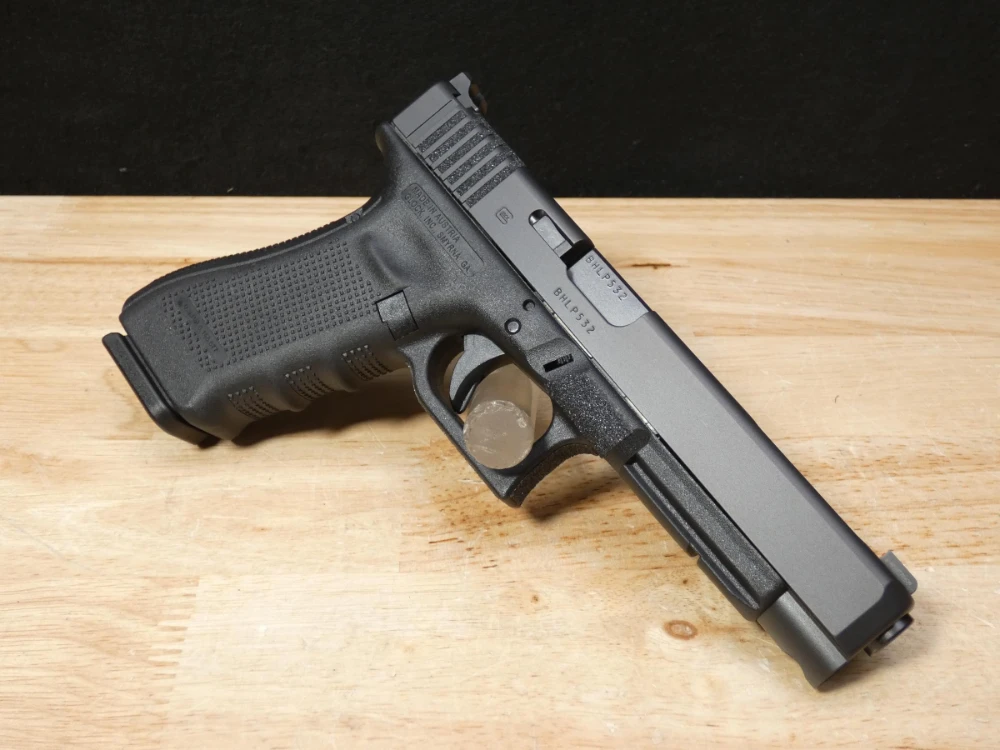
Understanding the value of your Glock 34 is essential for a successful sale. As a semi-automatic pistol known for its extended barrel and slide, the G34 is a “long slide” model designed for enhanced accuracy in competitive shooting. Its classification as a standard handgun, not an NFA item, simplifies the ownership process but doesn’t remove the complexities of a private sale. This guide will break down the key factors that determine its market price, from generation and condition to modifications and legal requirements.
What Determines Your Glock 34’s Worth
The resale value of a Glock 34 is determined by a combination of its physical condition, specific model, and market demand. Key factors include the pistol’s generation, with Gen 5 models often being more desirable, and whether it includes the Modular Optic System (MOS), which adds significant value. The overall condition, including any cosmetic wear and the state of internal parts, plays a crucial role. Furthermore, the completeness of the package, such as the inclusion of the original factory case and all standard magazines, can impact the final offer. Aftermarket modifications can either add or detract from the price, depending on their quality and appeal to potential buyers.
2026 Price Breakdown by Generation
Glock 34 Gen 5
The Glock 34 Gen 5, particularly the MOS (Modular Optic System) version, represents the most current iteration and often commands the highest prices. A new Gen 5 MOS has an MSRP of around $620, but average retail prices frequently range from $700 to $850. In the used market, these pistols hold their value well, with the average price for a used model hovering around $667. This value has reportedly increased over the last year, indicating strong and sustained demand. Buyers prioritize the Gen 5 for its updated features, including the Glock Marksman Barrel and improved ergonomics, making it a top choice for both competitors and enthusiasts.
The value of a used Gen 5 is more heavily influenced by its condition and included accessories than its round count, as Glocks are known for extreme durability. A model in excellent condition with its original case, magazines, and backstraps will fetch a price at the higher end of the used spectrum, potentially exceeding $750. The presence of the MOS cut is a significant value driver, as it allows for the direct mounting of popular red dot optics without permanent slide modification. Sellers with a complete, well-maintained Gen 5 MOS pistol are in a strong position in the current secondary market.
Glock 34 Gen 4
The Glock 34 Gen 4 occupies a solid middle ground in the used market, valued for its blend of modern features and widespread availability. While specific pricing data can fluctuate, its value is generally comparable to other generations, heavily dependent on condition, MOS availability, and included accessories. The Gen 4 introduced the dual recoil spring assembly, which reduces felt recoil, and the modular backstrap system, allowing for a customized grip. These features keep it relevant and desirable for many shooters who may not require the latest Gen 5 enhancements but still want a modern and reliable competition-ready pistol, placing its value slightly below a comparable Gen 5.
When selling a Gen 4, its price will typically fall between that of a Gen 3 and a Gen 5 model. A non-MOS version in good condition might sell in the $500 to $650 range, while a factory MOS model will command a premium. As with any generation, a complete package with the original box and accessories is crucial for maximizing its value. The Gen 4 remains a popular and capable platform, and its price reflects its position as a trusted workhorse that bridges the gap between the classic Gen 3 and the newer Gen 5.
Glock 34 Gen 3
The Glock 34 Gen 3 remains a highly relevant and sought-after model, largely due to its long-standing reputation for reliability and its status on the California handgun roster. A new Gen 3 is listed at approximately $600, indicating that even this older generation retains significant value. For residents in states with restrictive firearm laws like California, the Gen 3 is often one of the few high-performance options available for legal purchase, which buoys its demand and price in those specific markets. This regulatory factor ensures the Gen 3 maintains a stable position in the national used firearms market, appealing to a wide range of buyers.
In the used market, a Glock 34 Gen 3 in good condition can be expected to sell for a price not far below its original retail value, especially in restricted states. Its value is less about having the latest features and more about its proven performance and legal accessibility. Sellers should note that in states like California, the pistol must be sold with magazines limited to 10 rounds. The enduring popularity and legal standing of the Gen 3 make it a consistently valuable asset, with minimal depreciation compared to many other semi-automatic pistols of the same vintage.
How Modifications Affect Value
Modifications can significantly influence a Glock 34’s resale value, but the impact depends entirely on the quality and type of upgrade. Adding well-regarded aftermarket parts is likely to increase its appeal and price. For instance, upgrading the stock polymer sights to premium options is a common value-add. Dawson Precision fiber optic sights are considered a gold standard for competition, while Trijicon HD, TruGlo TFX Pro, and Ameriglo I-DOT are excellent night sight choices. For MOS models, including a quality red dot optic from respected brands like Trijicon (RMR, SRO) or Holosun can also boost the final offer, as these are desirable accessories for the platform.
While the market lacks a clear consensus on specific modifications that universally hurt value, a general principle is to always include the original factory parts with the sale. Many potential buyers prefer the proven reliability of OEM components and may wish to return the pistol to its stock configuration. Failing to include these parts can deter a significant portion of the market. Therefore, providing the original sights, trigger components, and other factory hardware alongside any installed upgrades can substantially increase the firearm’s appeal and secure a higher selling price by offering the buyer maximum flexibility and confidence in the firearm’s history.
Regional Price Variations in 2026
State-level regulations create significant regional price variations for the Glock 34. In California, the handgun roster is a primary market driver. The Glock 34 Gen 3 is legal for purchase in the state, but it must be on the official roster and sold with a magazine capacity of 10 rounds or less. This restriction on newer generations inflates the demand and, consequently, the market value for used Gen 3 models within California. Sellers in this region can often ask for a premium compared to sellers in less restrictive states, where buyers have access to Gen 4 and Gen 5 models, creating a unique and isolated market dynamic.
Similarly, New York’s strict gun laws impact local pricing and availability. A state-issued permit is required to possess any handgun, and the Glock 34 must adhere to a 10-round magazine capacity limit. Furthermore, features like a threaded barrel are prohibited, which limits the types of G34 configurations that can be legally sold. These regulations reduce the available supply and can affect pricing for compliant models. The additional legal hurdles and configuration restrictions mean that a New York-compliant Glock 34 may have a different market value within the state compared to its value in a state with more permissive laws like Texas or Arizona.
Online vs Local Sales
Selling a Glock 34 online introduces legal complexities that do not exist in a local face-to-face transaction. As a private seller, you cannot legally ship a handgun directly to another private individual in a different state using common carriers. Federal law mandates that any interstate firearm transfer must be processed through a Federal Firearms Licensee (FFL). Furthermore, major shipping companies like UPS and FedEx have their own strict policies, requiring handguns to be shipped via next-day air services and only from one FFL to another FFL. These regulations add significant logistical hurdles and costs to the process for private sellers.
The legally required procedure for an interstate sale involves a two-step FFL transfer. The seller must first take the Glock 34 to a local FFL dealer. That dealer will then log the firearm and ship it to an FFL dealer located in the buyer’s home state. Upon its arrival, the buyer must visit their designated FFL, complete the required federal paperwork (ATF Form 4473), and undergo a NICS background check before they can legally take possession of the pistol. This process ensures the transfer is compliant with federal law but adds transfer and shipping fees that can influence the final sale price.
By contrast, a local private sale can be simpler, though it is heavily dictated by state and local laws. While federal law does not mandate a background check for private transfers between residents of the same state, many states have enacted their own laws requiring such sales to be conducted through an FFL. Even when not legally required, using an FFL for a local transfer is a wise precaution. Additionally, creating a bill of sale is highly recommended. This document, containing the firearm’s details and information for both parties, provides a crucial record of the transaction and offers legal protection for both the buyer and seller.
The FFL Buying Advantage
Selling your Glock 34 directly to a gun dealer holding a Federal Firearms License (FFL) offers a distinct advantage in convenience and legal security, though it comes at a financial cost. Dealers typically offer between 50% and 70% of the firearm’s current market value, particularly if it is part of a trade-in for another purchase. However, for a direct cash sale, the offer can be significantly lower, sometimes dropping to as little as 30% to 40% of its value. The final offer is influenced by the pistol’s condition, its generation, included accessories, and the dealer’s current inventory and local market demand.
The primary benefit of selling to an FFL is the immediate and hassle-free nature of the transaction. The sale is completed on the spot, and the dealer handles all necessary paperwork, instantly transferring legal ownership and liability away from the seller. This eliminates the complexities and potential risks associated with finding a private buyer, verifying their eligibility, and navigating the legal requirements of a private transfer. For sellers who prioritize speed, simplicity, and peace of mind over maximizing their financial return, selling to a dealer is often the most practical and advantageous option available.
What Increases Your Offer
One of the most effective ways to increase the offer for your Glock 34 is to present it as a complete, factory-original package. The absence of the original case and magazines can lead to a significant deduction in value, typically ranging from $75 to $150. This penalty reflects the cost and inconvenience a new owner would incur to source these missing components. By including the original hard case, all standard-capacity magazines, the owner’s manual, and any included accessories like backstraps or a cleaning rod, you present a more attractive and valuable item, justifying a higher price and signaling that the firearm has been well-cared-for.
A meticulous pre-sale cleaning is another critical step that can directly impact the offer you receive. A firearm that is free of carbon buildup and grime not only looks better but also implies proper maintenance. You should field strip the Glock 34 and thoroughly clean the barrel, slide, recoil spring, and frame. However, it is crucial to avoid the common mistake of over-lubrication. Apply gun oil sparingly and only to the manufacturer-recommended points, as excess lubricant attracts dirt and can be a red flag for knowledgeable buyers. A clean, properly lubricated pistol demonstrates pride of ownership and gives the buyer confidence in its mechanical condition.
High-quality photographs are non-negotiable for maximizing value, especially in an online listing. To best represent your Glock 34, use ample natural light against a simple, contrasting background that makes the firearm the clear focus. Clean the pistol thoroughly before the photoshoot. Take numerous clear, well-lit photos from various angles, filling the frame with the pistol. Capture important details like slide markings, sights, and any signs of wear. Avoid using a harsh camera flash or overly artistic angles; the goal is to provide a transparent and accurate depiction that builds trust and encourages potential buyers to make a strong offer.
When to Sell Your Glock 34
Timing the sale of your Glock 34 can have a notable impact on the final price you receive, as the firearms market experiences distinct seasonal trends. Generally, sales activity sees a significant uptick during the period from mid-November through mid-January. This winter surge is driven by holiday shopping and end-of-year bonuses, leading to more buyers in the market. Another peak often occurs after tax refunds are issued in the spring, as many individuals use this extra income for firearm purchases. Listing your pistol during these high-demand periods increases the likelihood of a faster sale at a more favorable price.
Conversely, the summer months are consistently reported as the slowest period for firearm sales across the board. With potential buyers focused on vacations and outdoor activities, market demand tends to dip, which can lead to longer listing times and potentially lower offers. While it is still possible to sell during this time, sellers may need to be more patient or price their Glock 34 more competitively to attract the smaller pool of active buyers. Avoiding this seasonal lull can be a strategic move if you are not in a hurry to sell and want to maximize your return.
While the market for rifles is heavily influenced by the approach of hunting season in late summer and early fall, handguns like the Glock 34 are more closely tied to general consumer spending cycles. Therefore, the most strategic times to sell are when buyers have more disposable income. Aligning your sale with the holiday season or the post-tax-refund period positions your firearm in front of a larger, more motivated audience. Capitalizing on these predictable upswings in market activity is a key strategy for any seller looking to get the best possible price for their handgun.
Common Pricing Mistakes
A frequent mistake sellers make is overvaluing their personal modifications and attempting to recoup the full cost of aftermarket parts. While high-quality upgrades like Dawson Precision sights or a Trijicon RMR can add value, they rarely provide a dollar-for-dollar return on investment. Many buyers prefer a stock configuration or have their own modification preferences. Pricing your Glock 34 as the sum of the gun plus the full retail price of its upgrades often results in a price that is uncompetitive in the used market, causing the firearm to sit unsold for an extended period.
Another critical error is setting a price based on emotion or the original purchase price rather than current market data. The value of a used firearm is dictated by what buyers are currently willing to pay. A used Glock 34 Gen 5 MOS, for example, has an average market price of around $667, while a new one retails for $700 to $850. Ignoring these established benchmarks and listing the pistol for what you paid years ago will likely deter knowledgeable buyers who are aware of the going rates. Researching recent sales of comparable models is essential for setting a realistic and effective price.
Finally, a less common but still notable mistake is paying for a professional appraisal on a common, modern firearm like a Glock 34. While appraisals are valuable for rare, antique, or limited-edition guns, the market value of a standard production pistol can be easily and accurately determined through online research and by checking dealer prices. The cost of a formal appraisal would simply eat into the profits of the sale. The value of a Glock 34 is well-documented, and spending money to have an expert confirm this information is an unnecessary expense that reduces your net return.
Market Outlook for 2026
Predicting the future value of any firearm with absolute certainty is challenging, as the market is subject to a variety of influences. However, no data suggests a significant downturn for popular models like the Glock 34. Its strong reputation for reliability and its widespread use in competitive shooting circuits provide a stable foundation for its value. The pistol’s popularity ensures a consistent demand in the secondary market. As long as it remains a top choice for competitors and a trusted platform for enthusiasts, the Glock 34 is expected to hold its value well relative to the broader firearms market.
Looking ahead, the value of a used Glock 34 will likely be shaped by several factors, including potential new generation releases from Glock, shifts in firearm legislation, and overall economic conditions. The fact that the value of used models has shown an increase over the past year points to a robust and healthy secondary market. Barring any major market disruptions, the Glock 34 should continue to be a desirable and liquid asset, depreciating far less than many of its competitors and remaining a sound choice for both purchase and eventual resale.
Frequently Asked Questions
Does a high round count significantly lower my Glock 34’s value?
While an extremely high round count can be a factor, it doesn’t impact a Glock 34’s value as much as its physical condition. Glocks are renowned for their durability, often functioning reliably for tens of thousands of rounds with routine maintenance. Buyers are typically more concerned with visible wear on the slide and frame, the condition of the barrel’s rifling, and whether wearable parts like springs have been replaced as needed. A well-maintained Glock 34 with 10,000 rounds through it will likely be valued higher than a neglected one with only 1,000 rounds.
Is it worth paying for a professional appraisal for my Glock 34?
No, a professional appraisal is generally not worth the cost for a standard Glock 34. The market value of common, modern firearms is well-established and can be determined quickly and accurately by researching online marketplaces, forums, and dealer websites. Appraisals are more appropriate for older, antique, or rare limited-edition firearms where value is highly variable and not easily determined. For a Glock 34, the appraisal fee would likely exceed any potential gain in pricing accuracy, making it an unnecessary expense for the seller.
How much does not having the original case and magazines affect the price?
Missing the original factory case and magazines will result in a notable deduction from your Glock 34’s value, typically in the range of $75 to $150. This price reduction reflects the market cost for a buyer to acquire these missing items separately. A complete package signals to a potential buyer that the firearm has been well-cared for and is being sold as it was from the factory. Presenting the pistol with all its original components is one of the easiest ways to ensure you receive the highest possible offer.
Will installing an expensive red dot optic increase the resale value?
Installing a high-quality red dot optic from a reputable brand like Trijicon or Holosun can increase the resale value, but you should not expect a full return on your investment. While these are desirable accessories, many buyers have specific preferences for optics. The added value is often less than the retail price of the optic itself. To maximize your return, it is highly advisable to also include the original slide cover plate, allowing the new owner the option to remove the optic and return the slide to its factory configuration if they choose.
Do different generations of the Glock 34 have a big price difference?
The value of a Glock 34 is influenced more by its condition and features, like the Modular Optic System (MOS), than by its generation alone. While newer generations like the Gen 5 often command a slight premium, the price difference between a Gen 3, Gen 4, and Gen 5 in similar condition is not as significant as one might expect. For example, a new Gen 5 MOS and a new Gen 3 are priced relatively close to each other, indicating that market value is driven by overall utility and condition rather than just the generation number.
Get a Cash Offer Today
Ready to sell your Glock 34? We make the process fast, safe, and simple. Avoid the hassle of private listings and legal complexities by getting a fair, no-obligation cash offer from us today. Our streamlined process ensures you get paid quickly without the uncertainty of finding a private buyer.
Click here to begin the process. Just submit some information about your firearm, and our experts will provide you with a competitive offer. Sell with confidence and convenience, knowing that every transaction is handled professionally and securely. Turn your used firearm into cash the easy way.