


You list a suppressor or SBR, a buyer’s ready with cash, and then the questions start piling up: “How fast can we do this?” “Can you just hand it over while we wait?” “Why does your trust name matter?” Suddenly what felt like a simple sale turns into a slow-moving paperwork project.
NFA sales get complicated fast because they’re approval-based transfers tied to strict possession rules. The registered owner on the paperwork, especially when it’s a trust, is what controls who can lawfully possess the item while the transfer is pending. That’s the friction you don’t deal with in most ordinary firearm sales.
An “NFA firearm (NFA item)” is a federally defined bucket that includes suppressors, short-barreled rifles under 16-inch barrels, short-barreled shotguns under 18-inch barrels, machine guns, AOWs (any other weapons), and destructive devices, which is exactly why the sale isn’t “just a gun sale.” And when people say “Class III,” they’re using industry shorthand tied to SOT status, not naming a separate type of firearm, which is why the conversation often centers on “Class III dealers.”
Timeline-wise, ATF publishes rolling average processing times, and it splits eForms versus paper submissions. eForms is typically faster, the averages move, and none of them are a promise for your transfer.
This is educational info, not legal advice. The practical takeaway is simple: plan for delays, don’t promise a fast handoff, and follow the correct transfer path from the start so you sell efficiently without risking a possession or compliance mess. The sections below break down who can act for the trust, what the common transfer routes look like (including Form 3/Form 4 situations), and how pricing and state logistics shape real-world deals.
Gun Trust Basics for Sellers
The moment an NFA item is registered to a trust, the sale stops being about who “owns it” in the family sense and becomes a straight question of who has legal authority to possess it and transfer it right now. The registrant named on the paperwork is what controls the deal, not whoever paid for it, stored it, or feels entitled to it.

A gun trust is a legal “person” that can hold NFA registration, and the humans involved act for that trust. Federal regs explicitly include a trust in the definition of “person” for NFA purposes (27 CFR 479.11), which is why the trust can be the registrant or transferee. In real life, “selling from a trust” usually means a trustee is the one signing and coordinating the transfer on behalf of the trust, because the trust, not an individual family member, is the named party in the chain of possession.
Trustees are the people who can act for the trust during a sale, including dealing with the buyer or dealer and handling the NFA item as part of the transfer. Beneficiaries are different: they’re the people who may receive trust property later, but they typically do not have authority to possess or move the item during the sale just because they’re named to inherit.
ATF also cares about who counts as a “responsible person,” meaning an individual with the power to direct the trust’s management and policies as they relate to NFA firearms, including the authority to possess, receive, ship, transport, deliver, transfer, or otherwise dispose of the firearm for or on behalf of the trust (27 CFR 479.11). That’s the practical line between “allowed to handle this during a sale” and “should not have access.”
Access matters because constructive possession, having the power and intent to control the item even without physically holding it, is treated the same as actual possession under the NFA, a point often cited with U.S. v. Turnbough (114 F.3d 1192 (7th Cir. 1997)). If you’re selling, be deliberate about storage and keys, combinations, and unsupervised access.
Expect to prove trustee authority. In many everyday transactions, institutions commonly accept a Certification of Trust (or relevant excerpts) plus proof of trustee identity, but NFA transfers commonly call for a complete copy of the trust included with the transfer paperwork—especially for common items like suppressors and related NFA transfers.
- Confirm which trustee is actually authorized to act for the trust on this specific NFA item.
- Lock down access so only appropriate people can control or handle the item while it’s listed.
- Pull your trust documents and trustee ID before you discuss price or timelines.
How NFA Transfers Work When Selling
Once you know who can sign and who can possess the item for the trust, the sale lives or dies on the transfer path you choose. Most “Can we just do this quickly?” conversations are really about which forms are available and where the item is allowed to sit while you wait for approval.
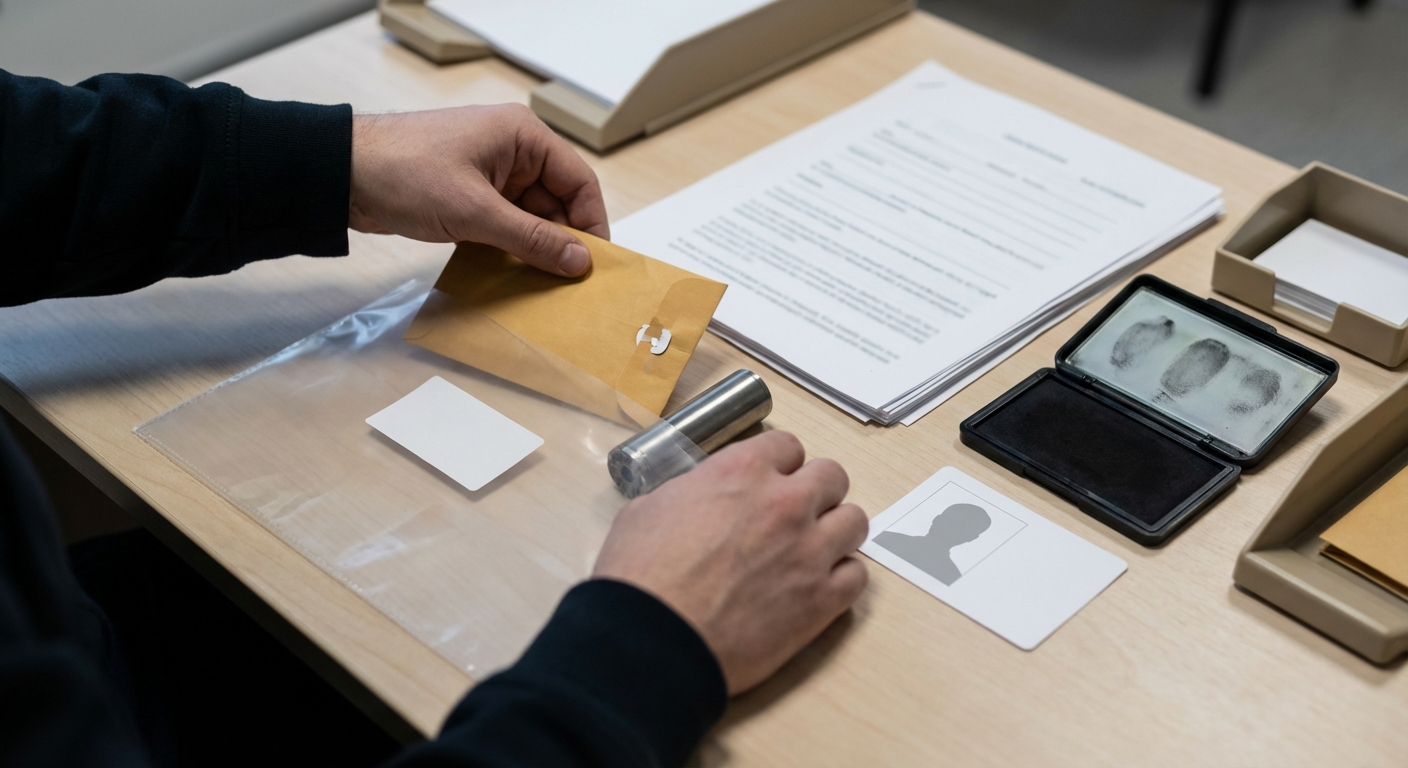
The “best” way to sell from a trust isn’t about what feels easiest to you, it’s about two hard constraints: is the buyer a dealer or a nonlicensee, and are they in your state or across state lines. Those answers determine which transfer forms are even available, and whether your “simple sale” turns into a staged handoff through a dealer.
No matter which route you pick, the practical reality stays the same: the item stays registered and in your possession until ATF approves the transfer and the new registrant has an approved tax stamp in hand.
1) Trust → dealer (often the cleanest operationally). You transfer to a buyer who is an FFL/SOT, meaning a Federal Firearms Licensee that also pays Special Occupational Tax to deal in NFA items. That combo is why these dealers become the hub for many NFA transfers, they can receive items, warehouse them, and move them through the system efficiently.
Seller upside: fewer “what do I do next?” moments, the dealer can handle the intake and downstream transfer to their customer. Seller friction: you’re selling at dealer pricing, and you’re handing control of the retail timeline to the shop.
2) Trust → individual buyer. This is the classic private-party sale. The transfer application you’ll hear about most is ATF Form 4, which is the standard way an NFA item gets transferred and registered to or from a non-FFL/SOT transferee like an individual or a trust, including the common dealer-to-customer transfer flow.
Seller upside: you can often negotiate closer to “end user” value. Seller friction: longer waiting, more chances for a deal to collapse while you still have the item.
3) Trust → trust buyer. Functionally similar to selling to an individual, but the transferee is the buyer’s trust. Seller upside: some buyers prefer trust ownership for ongoing possession planning. Seller friction: you’re dealing with trust paperwork and responsible person details on the buyer’s side.
Where does Form 3 show up? Inside the dealer pipeline. ATF Form 3 is used for tax-exempt transfers between FFLs who are SOTs, so SOT-to-SOT moves can happen without paying transfer tax each time.
State lines are the catch. ATF generally will not approve a Form 4 transfer to a non-FFL/SOT transferee who lives in a different state than the transferor.
If your buyer is out of state and they’re not an FFL/SOT, the sale usually becomes: your trust transfers to the buyer’s in-state FFL/SOT, then that dealer transfers to the buyer. In practice, people describe this as “two Form 4s” for the out-of-state, nonlicensee scenario. This is also why most nonlicensee-to-nonlicensee sales end up routing through an FFL/SOT even when both sides want a direct deal.
- Don’t hand it over early. No “holding it at their house,” no “borrow it at the range,” no “I’ll keep the can, you keep the host.” Possession changes only after approval.
- Don’t ship to a random address. If it’s moving, it moves to the right FFL/SOT or the approved transferee, exactly as the approved transfer allows.
- Don’t promise an approval date. Your deal terms should survive delays, because you cannot control the clock.
- Don’t treat an out-of-state buyer like an in-state buyer. Plan the two-step structure up front, including who pays which dealer fees (and how inherited firearms valuation and ownership transfer can change the paperwork path for beneficiaries).
Seller Checklist for Trust-Owned NFA Items
Those routes work best when you’re organized before the first phone call or text thread turns into “Can you send me a pic of the stamp?” or “Which trustee is signing?” The fastest, least-stress NFA sale usually goes to the seller who’s document-ready and controls possession cleanly from day one. Tiny paperwork mismatches, sloppy custody, or unplanned travel are the things that stall handoffs and spook good buyers.
- Grab your approved ATF form, usually an approved Form 1 or Form 4 showing the approval mark or tax stamp, then verify the serial number, model, and caliber match the item in your hands, and the registrant/transferee name is the trust (not you personally).
- Make clean copies of the approved form for sharing during verification, while keeping the original secured.
- Organize your trust paperwork, either a full copy of the trust and amendments, or a Certification of Trust style summary if that’s what your dealer requests.
- Inventory what’s included, list the serialized item plus accessories that will transfer with it (mounts, adapters, extra parts), so nothing “walks off” during inspection.
- Confirm who is a current trustee/responsible person under the trust documents you’ll be relying on for the sale.
- Lock down access while it’s listed, store the item and any key components so only authorized trustees can access them, following responsible gun storage best practices.
- Record the handoff, note date, time, who received it, and the serial number when you drop at an FFL or ship.
- Save tracking and receipt proof, keep carrier acceptance scans, delivery confirmation, and any intake confirmation from the receiving FFL.
- Minimize limbo time, avoid “buddy storage” or unsecured stops between your safe and the dealer.
- Know the rule-of-thumb before crossing state lines, SBR, SBS, machine gun, and destructive device movement generally requires prior ATF approval, while suppressors and AOWs are exempt.
- Use ATF Form 5320.20 when required, it’s the prior-approval request that keeps you from accidentally traveling or delivering out of compliance.
- Ask how they handle NFA paperwork, who prepares it, what they need from the trust, and how they avoid serial/model/caliber errors.
- Ask about insurance and confirmation, including how they handle shipping insurance for firearms and what coverage applies during shipment, plus how they confirm receipt and intake.
- Ask who takes possession and when, get clarity on where it will be stored and who controls it during processing. If you’re using a remote, mail-in buyer, an example is Cash My Guns (operated by Dunlap Gun Buyers), described as an FFL and marketing a “Safe • Legal • Hassle-Free.” process.
If you do only three things…
- Match the item to the approved Form 1/Form 4, especially serial, model, caliber, and trust name.
- Have your trust authority documents ready, and keep access limited to authorized trustees.
- Plan interstate movement early, and file ATF Form 5320.20 when your NFA category requires it, and follow how to package and ship a firearm guidance when transferring to an FFL/SOT.
Pricing NFA Items and Related Firearms
With NFA items, the number on the tag is only half the story because special registration and a tax stamp are part of what makes possession lawful.
The friction is what reshapes the negotiation. The tax stamp you already paid stays tied to your approved paperwork, it does not follow the item to the next owner. When you sell to a new non-FFL buyer, the transfer generally runs on a new Form 4 (transfer application) and a new tax payment by the buyer. Buyers bake that extra cost and delay into their offer, which is why supply and demand can affect firearm resale prices even when the item itself is clean.
For machine guns, legal transferability is the lever that dominates everything else. Under 18 U.S.C. § 922(o), civilians generally cannot possess machine guns made after May 19, 1986. That hard cap on transferable supply is why “transferable” status drives a very different price conversation than “dealer sample” or other restricted categories.
For suppressors, most buyers stay focused on two things: condition and manufacturer support. Show clear photos of threads and any wear points, disclose any known issues like baffle strikes, and include the original mounts, end caps, and tools. Missing accessories reads like future hassle, and hassle gets priced in.
For standard firearms you’re selling alongside the NFA item, core valuation factors like make and model, condition (finish), bore condition, and matching numbers still apply. That’s why sellers asking “how much is my Glock worth” or “what’s my Remington 700 worth” usually get better answers with crisp, specific details instead of a single bundle number.
Price the package like a buyer will. List clean line items for the easy-to-sell pieces (optics, mags, non-NFA guns), then treat the NFA item as its own negotiation bucket with its own friction. Bundles move faster, but only if you don’t accidentally give away the liquid stuff to “make the NFA deal work” (and it helps to sanity-check against current gun market trends).
- What exactly is transferable, and is that status documented clearly?
- What condition and completeness proof can you show in photos and included parts?
- Are you negotiating as separate line items, or a package with a clear breakdown?
State Rules and Sale Logistics
Pricing and paperwork are only part of the picture, because the buyer still has to be able to legally receive and possess the item where they live. Even when your federal transfer path is clean, state law is the hidden lever that can make the whole plan fail. Here’s why this matters to you: two sellers can follow the same federal steps, then hit totally different outcomes because the buyer’s destination state restricts possession or transfer of that exact NFA category. The destination state’s legality is what determines what a buyer can actually receive, which determines what you can realistically sell and how fast it can happen.
Suppressors are commonly stated to be legal to own and possess in 42 U.S. states, which is why they come up so often in trust sales.
Practical logistics are simpler than people assume, a suppressor can be transported across state lines without special paperwork.
That convenience only helps if the destination state allows suppressor possession, so confirm legality before you ship or travel. If your route passes through a restrictive state, verify current rules before you roll out.
Texas Penal Code §46.05 and Florida Statutes §790.221 both read like broad bans on items like silencers and short-barreled firearms, then carve out exceptions or defenses for federally compliant possession. If you’re searching “how to sell a suppressor in Texas” or “sell an NFA item in Florida,” that carveout is the difference between a viable transfer and a dead end.
Takeaway: verify destination-state rules early (see how to sell a gun by state), and confirm your dealer or buyer can accept that specific item before you commit to a timeline, even with a nationwide buyer like Cash My Guns.
Sell Safely Without Trust Missteps
The same issues that start the questions at the beginning of a deal are the ones that decide whether it closes cleanly: who has authority under the trust, whether the buyer and state lines force a dealer route, and how long approval may take. Safe trust-owned NFA sales come from process discipline, not shortcuts. Stick to what you already set up in the trust so only the right trustee or responsible person controls access and possession, and keep the item where it belongs until the approved transfer says it can move. Show up document-ready, with the approved registration matching the trust and a clean chain-of-custody, then set price expectations around transfer friction, the stamp does not carry over, and market caps like transferable MG limits.

Do three things before you move a dollar or a firearm: organize your paperwork, verify your dealer, and run the handoff through an NFA-capable process. Use ATF FFL eZ Check with the first 3 and last 5 digits of the FFL, then confirm the license is Active and the premise address matches. After the sale, keep a clean record set, including approved transfer forms, receipts, and supporting documents.
If you want a dealer-routed sale for the rest of the collection, Cash My Guns offers “Safe • Legal • Hassle-Free.” and “Trusted Since 2013.”